
Mystery of “Mostly Harmless”

For many years, hikers along the Appalachian Trail frequently encountered a gentle soul known by the nickname “Mostly Harmless.” This traveler was recognized for his kind, expressive eyes and polite, unassuming demeanor. He often engaged in conversations with strangers near prominent landmarks such as Bear Mountain and other scenic overlooks. Those who met him between 2017 and 2018 described a man who appeared to be deliberately seeking a simple, off-the-grid lifestyle. He deliberately avoided modern technology and urban connections. He carried no cell phone, GPS device, or other electronic aids, relying instead on the kindness of fellow hikers, natural navigation skills, and his own physical endurance to guide him through the wilderness.
However, the narrative took a tragic turn when his body was discovered inside a tent at Florida’s Big Cypress National Preserve in July 2018. Despite having interacted with dozens of people over the years, authorities were unable to identify him for more than two years. This sparked a widespread internet investigation involving social media, online forums, and public appeals. It wasn’t until January 2021 that DNA testing conclusively identified him as Vance Rodriguez, a 35-year-old computer programmer originally from New York City. Further research into his background uncovered a complex history marked by personal struggles, mental health issues, and estrangement from his family, which had long gone unresolved. What initially seemed to be an inspiring story of a man escaping the digital world to find peace in nature, ultimately revealed a somber reflection on loneliness, identity, and human connection, leaving many questions about his life unanswered.
Tragedy of the Jersey Woods

In the fall of 1972, what should have been a typical weekend for a family in Springfield, New Jersey, unexpectedly turned into a nightmare. Jeannette DePalma, a sixteen-year-old girl with a keen interest in community activities and a close relationship with her family, told her parents she was going to visit a friend’s house after school. This was a common routine for teenagers in the area. When she failed to return home that evening, her parents immediately alerted local police, and a search party composed of law enforcement officers, friends, neighbors, and even volunteers was organized. For several weeks, the entire community clung to hope that Jeannette had simply run away or was staying temporarily with someone she trusted.
The mystery deepened when her remains were discovered several weeks later, lying atop a rugged cliff at Houdaille Quarry, a well-known local spot just outside town. Initial reports from investigators described disturbing scenes: her body was purportedly found surrounded by wooden crosses and strange symbols painted on nearby rocks. These details were quickly sensationalized by early media coverage, which fueled rumors of occult rituals. Subsequent investigations by journalists and historians revealed that many of these ritualistic elements were likely exaggerated or fabricated by local teenagers seeking notoriety. Despite these clarifications, the case remained unsolved, haunting the community for decades. It stands as a chilling reminder of how a simple walk to a friend’s house can unexpectedly unravel into a mystery that leaves an indelible mark on a town’s collective memory for generations.
Midnight Walk That Never Ended

College life in the lively college town of Bloomington, Indiana, commonly revolves around late-night study sessions, social outings, and campus events. On the evening of June 3, 2011, Lauren Spierer was out enjoying a typical night with friends near the Indiana University campus, a bustling hub of student activity. Witnesses later reported seeing the young woman, a fashion merchandising student known for her friendly demeanor, leaving a local sports bar around 2 a.m. and walking alone toward her apartment, which was just a short distance away. In an environment that many considered “safe”, and characterized by well-lit streets and active campus security, a brief walk home is a routine part of student life for thousands, embodying the vibrant spirit and youthful energy of college living.
However, everything changed when Lauren failed to arrive at her front door the following morning. Her sudden disappearance prompted one of the largest and most intensive search efforts in Indiana’s history. Authorities, including the FBI, mobilized thousands of volunteers, community members, and law enforcement agencies in a widespread search across Bloomington and surrounding areas. Despite extensive media coverage, numerous search parties, and sophisticated forensic investigations into the activities of everyone she was with that night, no concrete leads led to her whereabouts, and no arrests were ever made. The case sparked significant national conversations about campus safety, the dangers facing young women, and the phenomenon often referred to as “missing white woman syndrome” in media reporting. Today, the unresolved mystery of what transpired on those quiet streets of Bloomington remains an emotional wound for her family.
Legend of the Bell Family
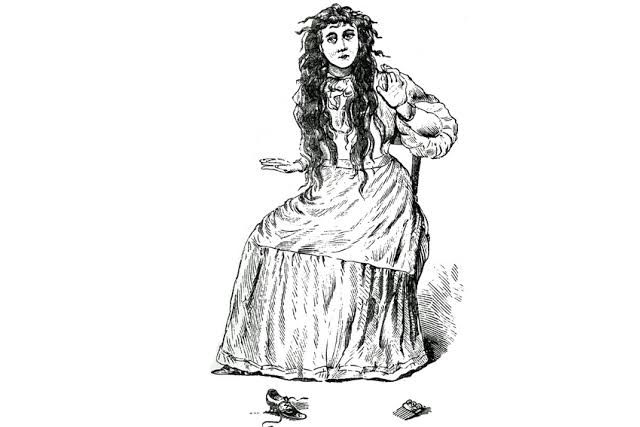
During the early 19th century, the American frontier was a rugged and largely undeveloped region where families tirelessly worked to establish stable lives amidst untamed wilderness. In 1817, John Bell, a farmer and landowner, and his family resided on a sprawling 300-acre farm in Adams, Tennessee, where they believed they were experiencing the typical hardships and routines of pioneer life, including planting crops, tending livestock, and enduring the challenges of frontier solitude. However, their sense of normalcy was shattered when they began hearing inexplicable beating sounds echoing around their cabin’s exterior, such as loud thuds, rhythmic pounding, and occasional rhythmic knocking, which seemed to originate from the woods nearby. These disturbances soon intensified, transitioning from outside the house to inside, with reports of unseen dogs barking fiercely, furniture rattling violently, and heavy objects like pots and tools being dragged across wooden floors in the dead of night.
The legend of the “Bell Witch” gained such prominence that it allegedly drew the interest of future President Andrew Jackson, who reportedly traveled from Nashville to the Bell farm in 1819, eager to witness the supernatural disturbances firsthand. While modern skeptics attribute the events to elaborate family hoaxes, mass hysteria, or strategic land disputes disguised as paranormal activity, the story endures as one of the most famous ghost stories in United States history. The case of the “witch” supposedly causing John Bell’s death in 1820 remains a rare instance where a supernatural entity was blamed for a person’s demise, highlighting the power of myth and fear. This narrative exemplifies how a quiet, isolated homestead can transform into a legendary symbol, shaping collective memory and cultural identity.
Secrets of the Bunny Man

Fairfax County, Virginia, is home to the Colchester Overpass, a straightforward concrete railway bridge spanning a small creek on the outskirts of the town of Fairfax. Its utilitarian design makes it visually unremarkable, blending into the surrounding suburban landscape. For decades, daily commuters driving along the busy road beneath it have passed without giving it a second thought. However, since the early 1970s, an intriguing urban legend has transformed this ordinary location into a site of mystery and thrill-seeking. The legend revolves around a figure dressed in a white rabbit suit, who is said to lurk in the shadows and threaten passersby with an axe. Although it resembles a plot from a low-budget horror film, the story is anchored in a series of actual police reports that captured public attention.
The true origins trace back to October 1970, when a young couple reported separate encounters with a man wearing a rabbit costume who threw a hatchet at them in the vicinity of the overpass. A security guard at a nearby construction site also purportedly saw a similar figure. These incidents were reported in local newspapers, including the Washington Post, which helped establish the factual basis for the infamous “Bunny Man” legend. Over time, the original stories were distorted and exaggerated, morphing into a gruesome narrative about escaped convicts and deadly crimes of elements that never actually took place. This evolution demonstrates how a handful of verifiable, odd events in a suburban setting can be amplified and misconstrued by a community, eventually giving rise to a chilling legend that obscures the original facts and the true history of the area.
Mystery of the Enfield Creature
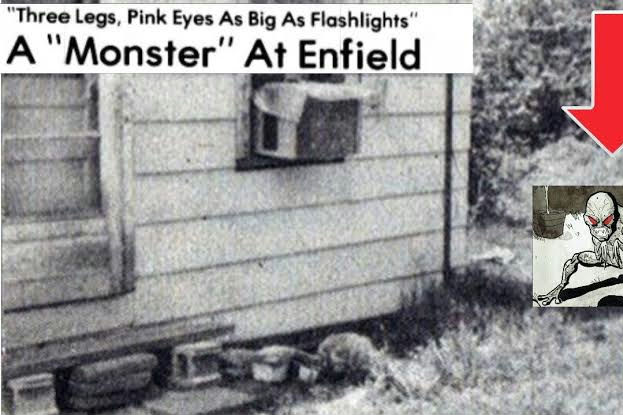
In the spring of 1973, the small, rural town of Enfield, Illinois, experienced a series of bizarre events that seemed straight out of science fiction. It all began when Greg Garrett, a 28-year-old farmer’s son known for his practicality, reported that a strange, three-legged creature had stepped on his bare foot while he was working in his lush backyard garden, which was bordered by tall oak trees and cornfields. Shortly afterward, Henry McDaniel, a 45-year-old retired schoolteacher with a reputation for skepticism, claimed to have seen a similar creature with glowing pink eyes and tiny, almost insectoid arms darting behind his barn. For a quiet Midwestern community where the usual news involved county fairs, local football scores, or harvest festivals, these sightings sparked an immediate sensation, attracting journalists from major newspapers and radio stations across the country.
The sightings of the so-called “Enfield Monster” persisted over several intense weeks, prompting residents to organize search parties with flashlights, binoculars, and homemade traps, while local police increased patrols in the area. Researchers from Western Illinois University’s anthropology department even investigated the claims, suggesting that the creature might have been an escaped exotic pet, such as a kangaroo or an oversized feral cat with unusual markings, or possibly a collective display of misidentification caused by the dusky light at dusk. Despite the absence of concrete physical evidence like footprints or biological samples, the stories persisted, fueled by the fear and curiosity of residents who believed they had glimpsed something extraordinary. This episode remains a captivating example of how a series of unexplained sightings can suddenly transform an ordinary American backyard into the focal point of a bizarre, nationwide mystery, capturing the imagination and fears of a small community.
Discovery at the Boat Ramp
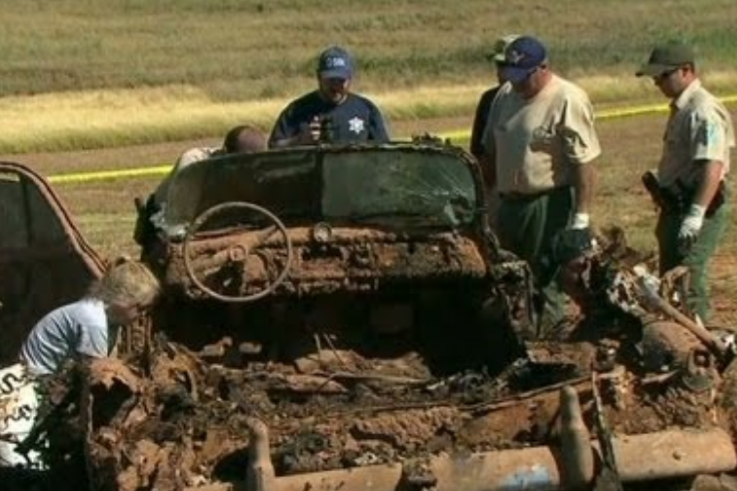
Oklahoma is renowned for its expansive landscapes and numerous man-made lakes that serve as popular destinations for weekend fishing excursions and family boating outings. For many years, residents near Foss Lake went about their daily lives unaware that beneath the surface lay secrets from two distinct eras. In 1970, the mysterious disappearance of three teenagers driving a 1969 Camaro drew little attention at the time, while in the late 1960s, an elderly couple and their friend also vanished without a trace. These incidents were regarded as separate, tragic cold cases, leaving families with unanswered questions and vacant chairs at their dinner tables.
The mystery was ultimately unraveled in September 2013, when state highway patrol divers experimenting with new sonar technology unexpectedly discovered two rusted vehicles submerged near a boat ramp. Inside these vehicles, the remains of the six missing individuals were found, parked side-by-side in the sediment. Subsequent investigations revealed that both drivers likely became disoriented during poor weather conditions and inadvertently drove into the lake years apart. The unlikely coincidence of two separate tragedies ending in the same underwater location is both heartbreaking and extraordinary. What began as a routine training exercise transformed into a pivotal discovery, providing closure to two communities haunted by these unresolved cases.
Mike the Headless Wonder
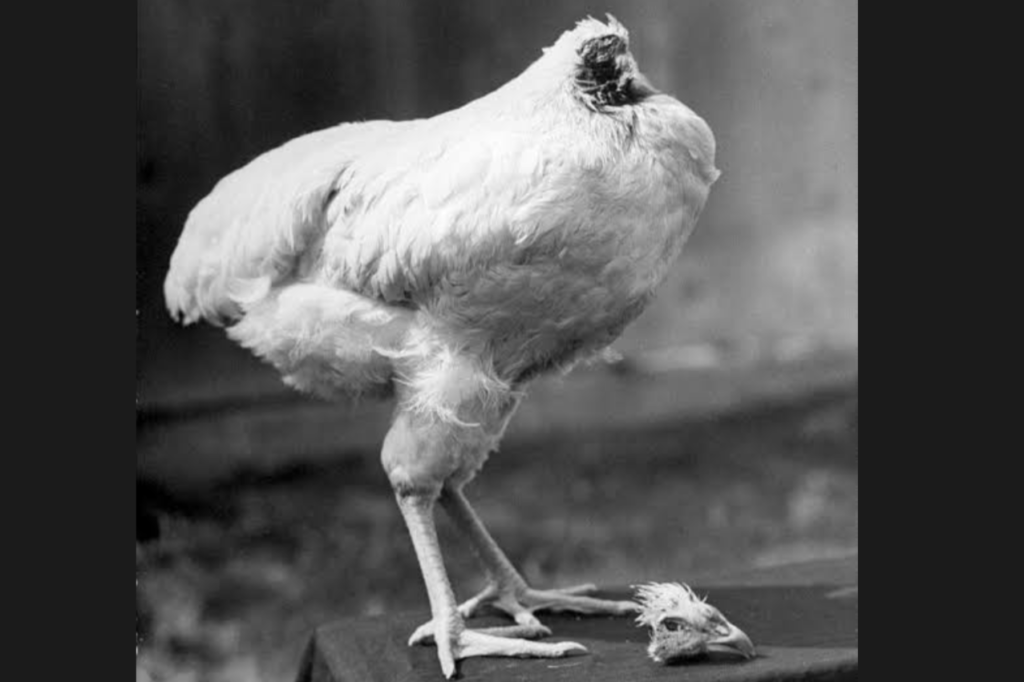
In 1940s Colorado, agricultural work was typically straightforward and routine. On September 10, 1945, farmer Lloyd Olsen intended to prepare poultry for market, selecting a five-month-old Wyandotte rooster named Mike for dinner. After swinging his axe, Olsen was stunned to see the bird not succumb; instead, Mike shook his feathers and continued to walk as if nothing had occurred. Olsen immediately realized his aim had missed the jugular vein, leaving the bird’s brain stem largely intact, which allowed Mike to maintain basic motor functions and bodily health despite being headless. What began as an unintended farmyard anomaly rapidly garnered nationwide attention.
Known thereafter as “Mike the Headless Chicken,” the bird survived for an additional 18 months. During this time, it traveled across the United States, performing as a sideshow attraction, and gained features in major publications like Time and Life magazines. Olsen carefully fed Mike using an eyedropper and monitored its health until, in 1947, the bird died peacefully in an Arizona hotel room. Today, the town of Fruita, Colorado, commemorates Mike annually with a festival in his honor. This extraordinary tale remains one of the most bizarre and captivating stories in American history, illustrating how even simple chores can unexpectedly lead to miraculous outcomes that challenge conventional medical understanding.
Spirit of the Government Visit

In the early 20th century, a census worker in rural America had a predictable job: knocking on thousands of rural and small-town doors, politely introducing himself, and meticulously recording residents’ names, ages, occupations, and other basic demographic data. His work was characterized by detailed forms, brief yet courteous interactions with families, and a routine driven by strict government protocols. During the 1920s, a period marked by spiritualist movements gaining popularity across the United States, this particular census worker in Pennsylvania encountered an unexpected household. Instead of a typical family scene, he encountered a woman who insisted her home served as a portal to the afterlife, echoing with the voices of spirits long departed.
The woman, who was believed to be involved with the then-emerging mediumship movement, transformed what was normally a straightforward government interview into an exhibit of her claimed supernatural abilities. She asserted she could communicate with spirits and channel their messages, as the worker struggled to note her age and occupation amidst her demonstrations. This encounter illuminated the cultural tensions of the era, contrasting the rigid, bureaucratic approach of the federal government with the wild, unproven beliefs surrounding the supernatural. These stories reveal how even the most mundane professional tasks can sometimes uncover glimpses into the unusual and unexplained.
Cats of the Cold War

The 1960s was a decade characterized by the intense geopolitical rivalry between the United States and the Soviet Union, marked by covert operations and technological advancements. In Washington, D.C., intelligence officers at the CIA were constantly seeking innovative and discreet methods to gather intelligence without detection. Their efforts typically involved sophisticated high-tech satellites capable of panoramic earth imaging and daring human spies embedded in foreign governments, which were considered standard tools for espionage during that era. However, one project ventured into the surreal realm of unconventional espionage when officials speculated whether common household pets could be employed to eavesdrop on sensitive conversations in diplomatic quarters. This unconventional idea led to the development of a top-secret program that sounded more like a cartoon plot than a serious government operation.
Project “Acoustic Kitty” involved surgically implanting a miniature microphone and a tiny battery pack inside a cat, with an antenna discreetly hidden in its tail. The goal was to train the feline to sit quietly near foreign officials during diplomatic meetings or social gatherings, allowing the team to record their conversations and transmit the audio back to CIA handlers through a concealed transmitter. Millions of dollars were allocated to this project over several years before its first field test in 1967, which reportedly ended in disaster when the cat was hit and killed by a taxi almost immediately after being released. The program was eventually abandoned, serving as a bizarre and humorous footnote in American intelligence history.
Florida Beach Guest From Hell

Florida is famous for its sun-drenched coastlines where families gather to build sandcastles and splash in the Atlantic surf. On a typical summer day in 2016, the beaches of Melbourne, Florida, were crowded with tourists enjoying what they assumed was a perfectly safe environment. For most Americans, the biggest worries at the beach are sunburns or perhaps a stray jellyfish. The rhythmic sound of the waves and the laughter of children create a sense of security that makes the ocean feel like a backyard playground. It is the quintessential vacation scene that millions of families look forward to every year.
The tranquility was shattered when a large alligator was spotted emerging from the surf, crawling along the sand among the beach towels and umbrellas. While Florida is known for its alligator population, these reptiles typically stick to freshwater marshes and lakes, making a saltwater beach appearance extremely rare and unsettling. Wildlife officials were called to the scene on that day to safely remove the animal, which had likely been pushed out of a nearby canal. This event reminds us that even in the most familiar and curated vacation spots, the wild side of the American landscape can make a sudden, uninvited appearance.
Legend of the Melon Heads
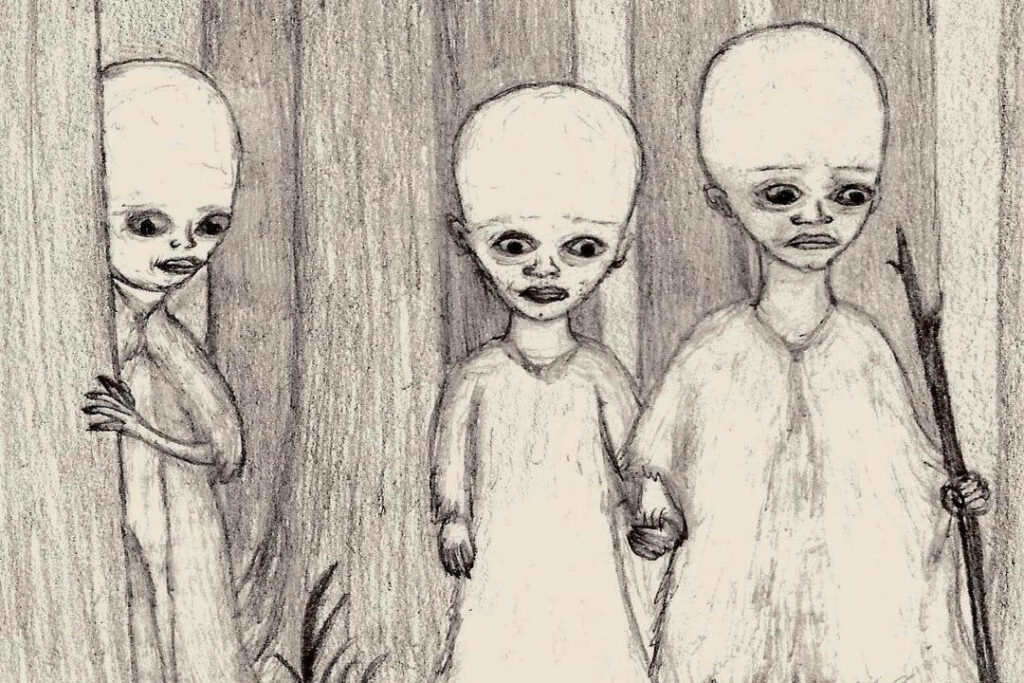
Deep in the wooded corridors of Connecticut and Ohio, there are winding backroads that look like they belong on a vintage postcard. During the day, these routes are used by commuters and hikers who appreciate the lush New England foliage and the quiet charm of the countryside. To the average traveler, these are just ordinary stretches of asphalt bordered by ancient trees and stone walls. However, as the sun sets and the shadows lengthen, these same roads become the setting for one of the region’s most persistent and eerie urban legends involving creatures known as the “Melon Heads.”
According to local lore, these small, humanoid figures with unnaturally large heads hide in the dense brush, watching cars pass by. While the stories vary, some say they are the result of secret government experiments in the 1960s, while others claim they are part of an old family lineage, the fascination with them has never faded. Researchers suggest these tales likely stem from a mix of local ghost stories and the natural human fear of the dark, isolated woods. Whether fact or fiction, the legend of the Melon Heads has turned ordinary forest roads into a place where imagination and reality blur for every passing driver.
Dream of the Everest Slope

For many people, dreams are just a confusing jumble of the day’s events, quickly forgotten after the morning coffee. We often dream of places we have never visited or people we have never met, dismissing them as simple products of a tired mind. In a notable case from the late 1990s, an individual reported a vivid, recurring dream about a desperate struggle on a snowy mountainside. In the dream, they were providing comfort to strangers trapped in a bright yellow tent during a howling blizzard. It felt incredibly real, yet the person had no connection to mountaineering or high-altitude climbing.
The story took an unsettling turn years later when the dreamer read an account of the 1996 Mount Everest disaster. The descriptions of the “South Col” camp and the specific placement of the tents matched their dream with startling accuracy, right down to the weather conditions on May 10th of that year. While psychologists often point to “cryptomnesia” where the brain recalls information it saw elsewhere and presents it as a new thought, the level of detail remained haunting. It stands as a fascinating example of how our internal lives can sometimes mirror tragic world events in ways that science cannot fully explain.
The Mad Gasser Story
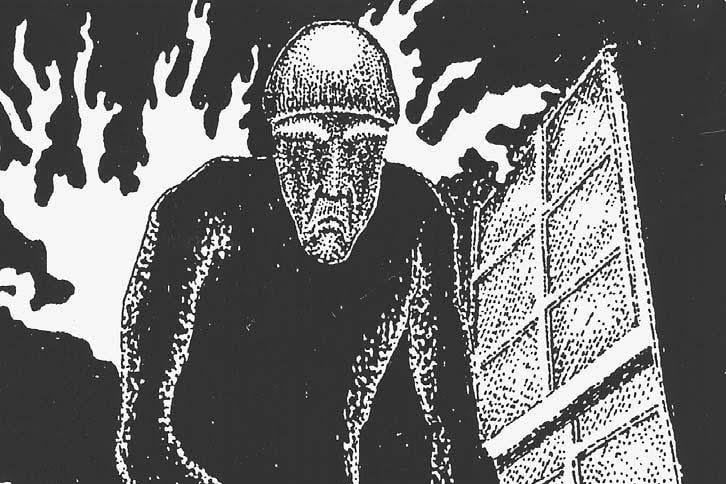
In the heart of the American Midwest, small-town life is often built on a foundation of shared history and tight-knit social circles. In many of these communities, news travels fast, and a simple observation over a backyard fence can become the lead story at the local diner by noon. For decades, sociologists have studied how these environments are the perfect breeding ground for “folklore in the making.” What begins as a slightly unusual event, perhaps a strange light in the sky or an unfamiliar car parked at a closed business can quickly be reshaped into something much more significant.
A classic example occurred in a small Illinois town during 1994, where Mattoon, Illinois, was gripped by panic over the “Mad Gasser,” a mysterious figure in a trench coat allegedly spraying sweet-smelling, noxious gas into homes. Over 30 incidents occurred, causing nausea and temporary paralysis, largely seen today as a case of mass hysteria. Despite police finding no evidence of any crime or even a suspicious person, the story became “truth” through the power of repetition. Historical research into these phenomena shows that the details of a rumor often shift to reflect the current fears of the community, such as economic instability or social change. This illustrates that the most powerful mysteries aren’t always found in the shadows, but in the stories we tell each other.
Patterns in the Random Noise
Life is often a series of predictable routines: work, family, and the occasional celebration. We find comfort in the idea that the world operates on a sense of order and logic. However, every so often, a string of events occurs that feels so perfectly timed or connected that it challenges our understanding of probability. Across the United States, there are countless stories of people who have experienced “clusters” of luck or tragedy that seem to defy the laws of mathematics. These moments can make even the most practical person wonder if there is a hidden hand at play.
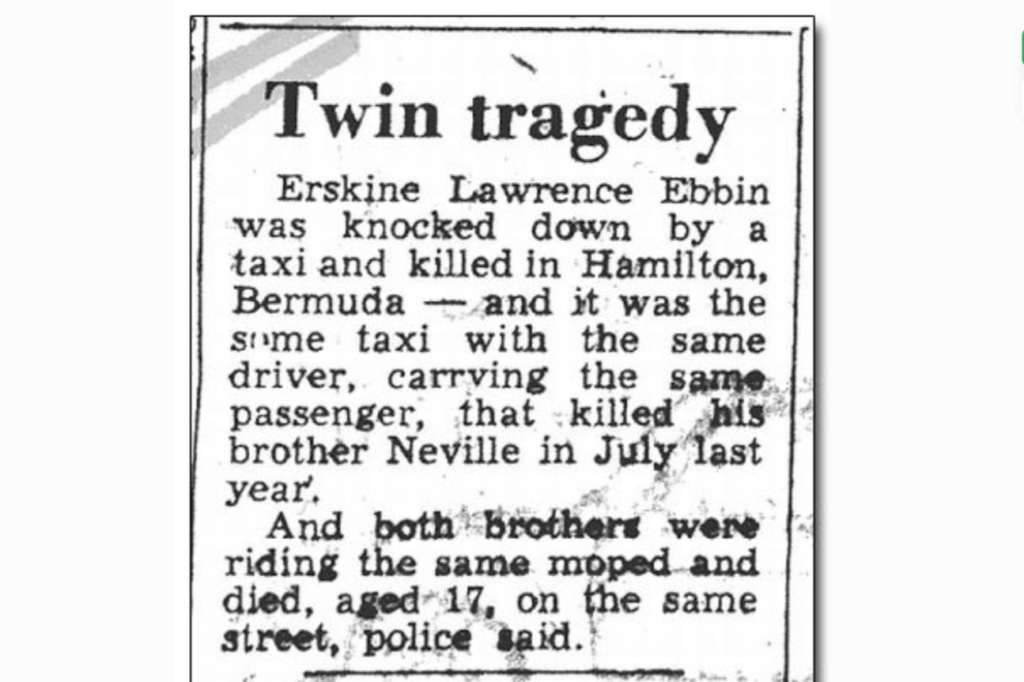
In one famous 1970s case in Bermuda, two brothers were killed in nearly identical moped accidents exactly one year apart. They were struck on the same street, by the same taxi driver, who was carrying the same passenger. This “marked” occurrence is often used by mathematicians to illustrate the Law of Truly Large Numbers, which states that with a large enough population, even the most outrageous coincidences are actually inevitable. Mathematicians and researchers often refer to this as the Law of Truly Large Numbers, which states that with a large enough population, even the most outrageous coincidences are actually inevitable. Despite the scientific explanation, the human brain is hardwired to look for meaning in the chaos.


