
The Physics of the Click
Filling up the gas tank is one of those mundane chores we do on autopilot, yet the technology remains hidden inside that heavy metal nozzle. For decades, drivers have relied on that satisfying “click” to tell them their journey can continue without a single drop of fuel spilling onto the pavement. This small mechanical miracle is a cornerstone of American car culture, whereby complex physics and everyday convenience meet, to keep our commutes safe and our environment clean.
The significance of this mechanism goes beyond mere convenience. By preventing overfills, these pumps protect the evaporative systems in our modern vehicles, and they simultaneously reduce the risk of hazardous surface runoff at the station. Understanding how this process works reveals a story of a design that relies entirely on the movement of air and liquid rather than a single computer chip or electrical sensor.
The Ingenious Venturi Principle
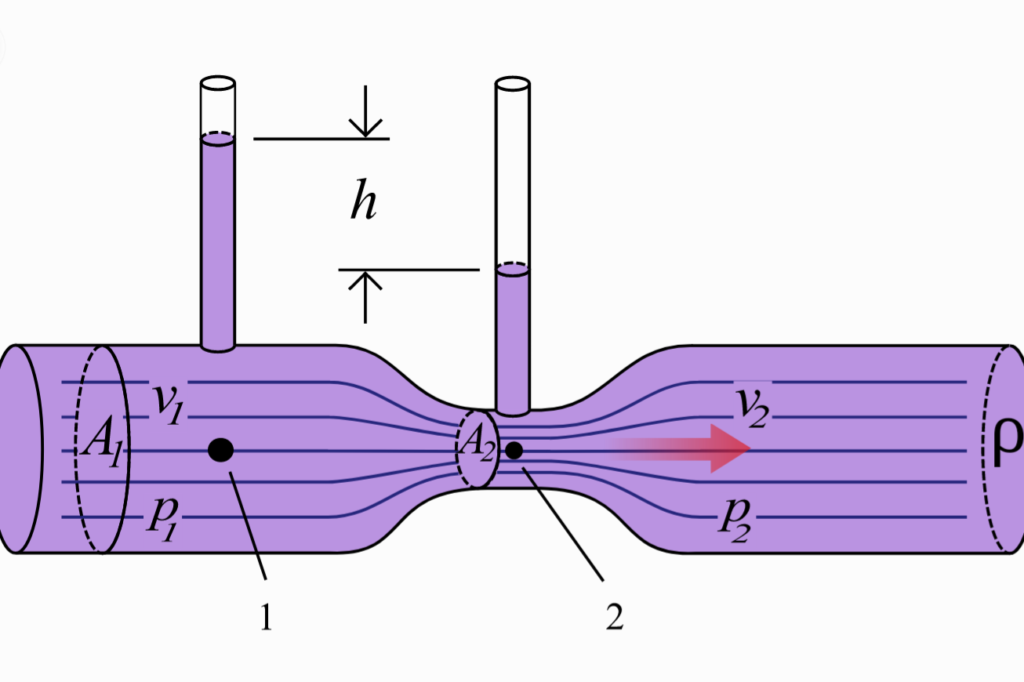
The secret behind the automatic shut-off lies in a clever physics concept known as the Venturi effect, which describes how fluid pressure changes when it passes through a constricted space. Inside every standard gas nozzle, there is a tiny secondary tube called a sensing port that runs right alongside the main fuel path. As gasoline flows rapidly through the nozzle, it creates a natural vacuum that pulls air through this small opening at the tip.
This constant stream of air is what allows the internal mechanical components to remain in an open position while you squeeze the handle. As long as air is moving freely through that sensing tube, the pump stays engaged and the fuel keeps flowing into your tank. It is a brilliant example of using the properties of motion to control a heavy-duty process without needing any external power source or digital sensors, which makes the system incredibly durable and reliable for millions of drivers every single day.
Reaching Full Tank Submergence
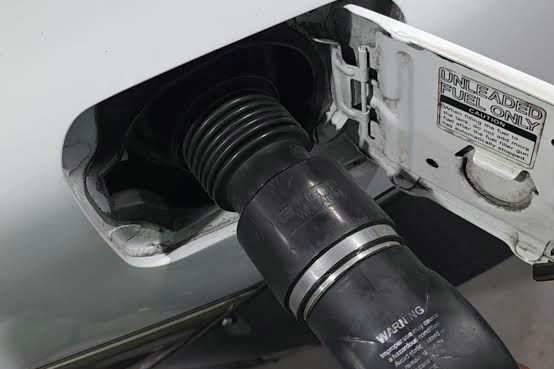
This happens the moment the gasoline inside your car’s filler neck rises high enough to cover the very tip of the nozzle. Once the liquid reaches that tiny sensing hole, the air supply is instantly cut off because the denser gasoline cannot be sucked into the tube as easily as air. This sudden blockage creates an immediate change in the internal pressure dynamics of the nozzle assembly, and the fuel flow continues for just a fraction of a second longer.
This physical transition is the “trigger” that tells the hardware your tank has reached its safe capacity. Because the liquid has submerged the port, the vacuum pressure inside the nozzle spikes dramatically, leading to the mechanical sequence that stops the pump. It is a purely reactive process that results in a system that is almost impossible to fool, as long as the equipment is in good working order.
The Vacuum Latch Release
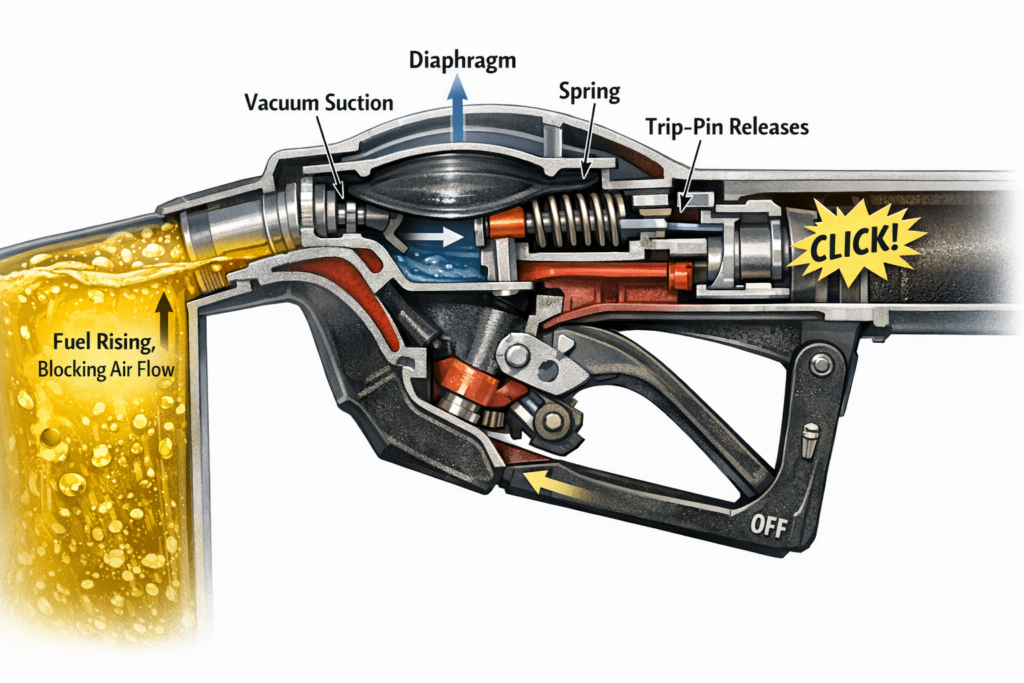
When the air flow is blocked by rising fuel, the resulting surge in vacuum pressure acts directly upon a flexible rubber component called a diaphragm. This diaphragm is connected to a mechanical trip-pin that holds the main valve open while you are fueling. As the vacuum pulls on the diaphragm, it overcomes the spring tension and forces the trip-pin to release its hold, which causes the handle to snap back and the internal valve to slam shut.
That familiar “click” sound you hear is actually the sound of these mechanical parts moving into their locked positions to stop the flow of gasoline. This entire sequence happens in a heartbeat, ensuring that the pump stops before the fuel has a chance to back up and spill out of the vehicle. This system avoids any risk of sparks or electronic failure in a highly flammable environment, resulting in a much safer experience for everyone at the station.
Preventing Expensive Overfill Damage
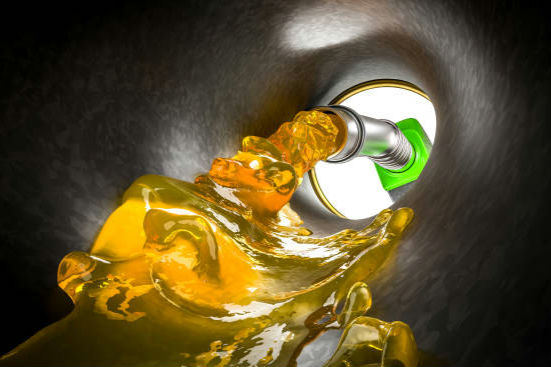
Most drivers think the automatic stop is just about preventing a mess on their shoes, but it actually protects a very sensitive part of the car called the Evaporative Emissions system. This system is designed to trap and recycle gasoline vapors using a charcoal canister. It is definitely not meant to handle raw, liquid fuel. If the pump didn’t stop and liquid gas entered this system, it could saturate the charcoal and cause significant engine performance issues or even trigger a check engine light.
Repairing a compromised EVAP system can be an incredibly expensive ordeal that is often not covered by standard warranties since it usually results from “user error.” Therefore, this engineering harmony between the gas station equipment and your car’s internal plumbing is essential for maintaining vehicle longevity and keeping your repair bills at a minimum over the life of the automobile.
Anti-Siphon Device Conflict
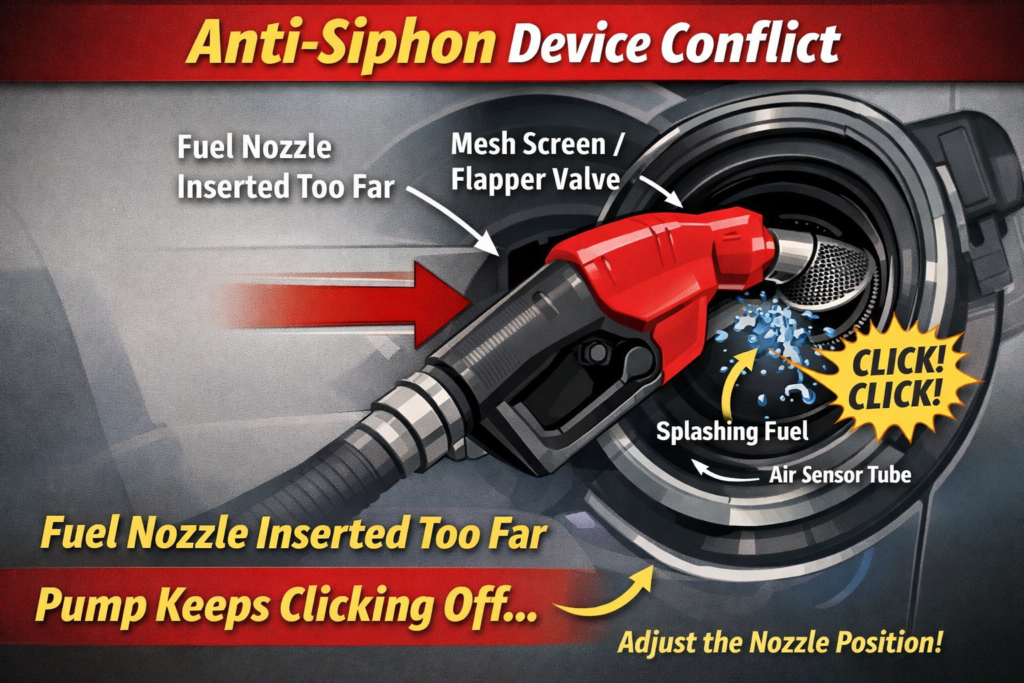
Modern American vehicles are often equipped with internal mesh screens or “flapper” valves located deep within the filler neck to prevent fuel theft. While these anti-siphon devices are great for security, they can occasionally interfere with the fueling process if the nozzle is not seated at the correct depth. If the nozzle tip is jammed against this mesh, the gasoline can splash back toward the sensing port, which tricks the system into thinking the tank is already full.
This splash-back effect causes the air tube to be covered prematurely, resulting in those annoying instances where the pump clicks off every few seconds even though you just started. It can be a frustrating experience for a busy driver, but it is actually the safety system working exactly as intended to prevent what it perceives as an impending overflow. Usually, a slight adjustment of the nozzle’s position will clear the obstruction and allow the air to flow freely again so you can finish your fill-up.
Topping Off Safety Failure
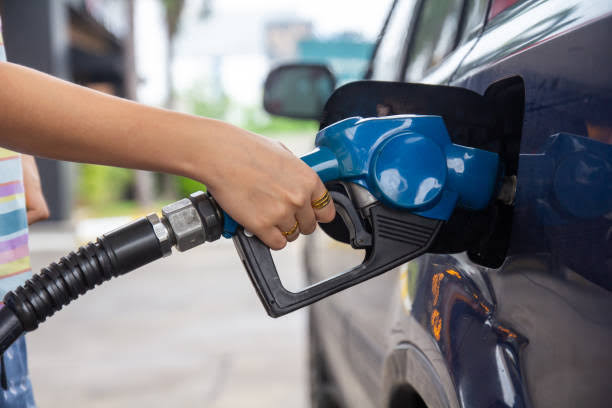
We have all been tempted to squeeze the handle a few more times after the first click to round up the price or squeeze in a bit more range. However, this practice of “topping off” is actually a safety failure because it overrides the carefully designed vapor space that every gas tank requires for thermal expansion. Gasoline expands as it warms up, whereas the air pocket at the top of the tank provides the necessary room for this change in volume without forcing fuel out.
When you force more gas into the tank after the nozzle has already signaled a stop, you risk pushing liquid into the vapor recovery lines or causing a spill once the car sits in the sun. This habit can eventually lead to the same charcoal canister damage mentioned earlier, resulting in a car that struggles to start or runs poorly. It is always best to trust the mechanical wisdom of the pump and stop at the first click to ensure your vehicle remains in peak operating condition.
High Pressure Splash Back
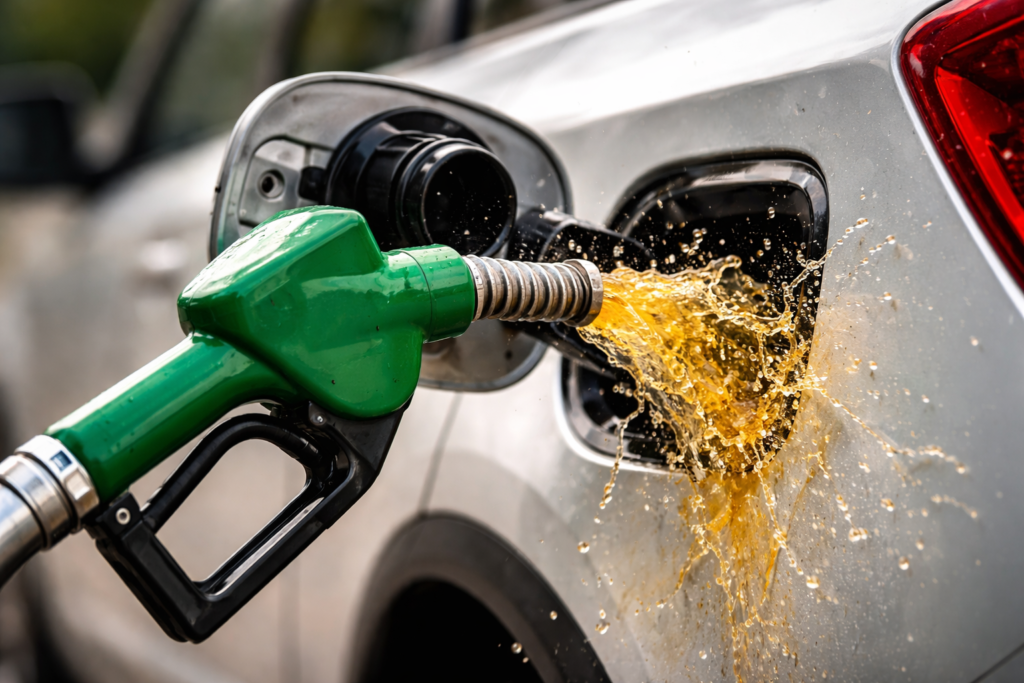
Sometimes the speed at which the fuel leaves the pump can actually be its own undoing, particularly if the pump is set to its highest flow rate. When gasoline enters a narrow filler neck at full throttle, it can create a turbulent “burp” of liquid that splashes back toward the nozzle tip. If a stray droplet covers the sensing hole for even a millisecond, the vacuum will spike and trigger the shut-off valve, which brings the entire process to a sudden and unexpected halt.
This is a common occurrence at high-volume stations where the pumps are maintained at very high pressures to get customers through the lines faster. If you find your pump constantly clicking off despite having a near-empty tank, the simplest solution is to avoid using the highest notch on the handle’s hold-open clip. By slowing down the flow rate, you allow the fuel to settle more smoothly into the tank, resulting in a consistent fill that doesn’t trigger the sensitive safety sensors prematurely.
Vapor Lock in Tank
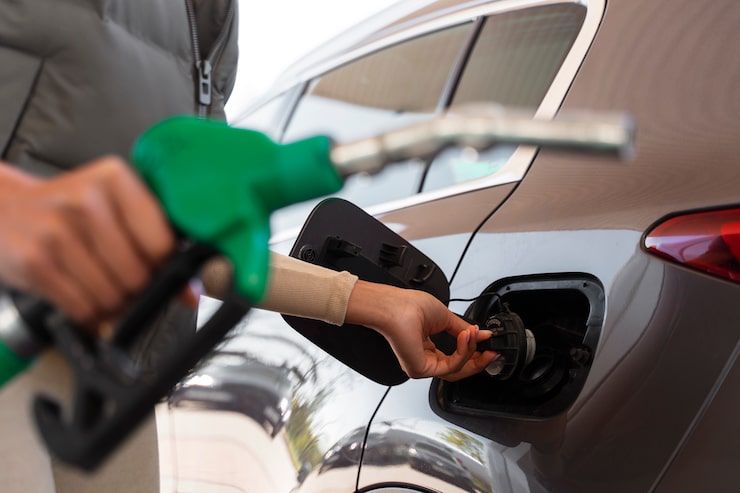
For a gas tank to accept fuel properly, the air that is currently inside the tank has to have a way to escape as the liquid takes its place. If your vehicle’s vent lines or the charcoal canister are blocked, the air becomes trapped and creates a pocket of high pressure that resists the incoming gasoline. This pressure can push the fuel back up the filler neck with enough force to cover the nozzle tip, which triggers the automatic shut-off immediately.
In older cars, it is surprisingly common for small insects like spiders to build webs inside these vent tubes, whereas in newer cars, a clogged vent valve is usually the culprit. If your car consistently refuses to take gas regardless of the pump you use, it is a strong sign that your vehicle’s internal venting system needs a professional inspection. This mechanical feedback is essentially your car’s way of communicating that it can’t “breathe” properly, resulting in a necessary trip to the mechanic to clear the obstruction.
Worn Out Nozzle Equipment
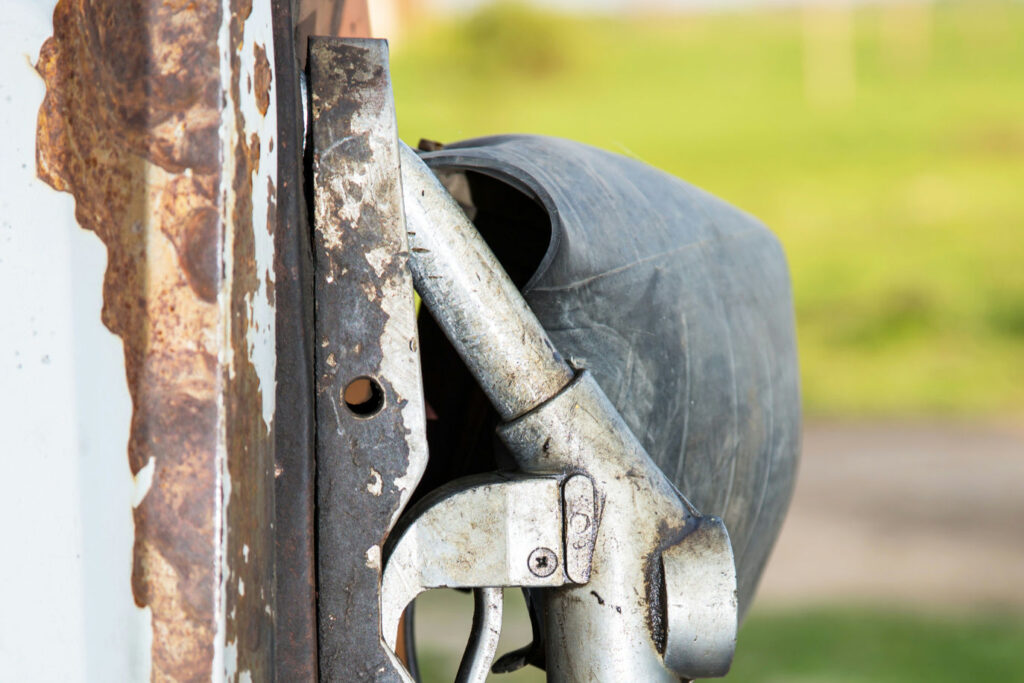
Not every fueling issue is the fault of the car, as the gas station equipment itself can eventually wear out after thousands of uses. The sensing tube inside the nozzle is a delicate component that can become cracked or clogged with debris over time, whereas the internal diaphragm can lose its elasticity or develop small tears. If the diaphragm is weak, it may not be able to hold the trip-pin against the force of the fuel, resulting in a pump that clicks off constantly for no apparent reason.
Station owners are responsible for maintaining these nozzles to EPA standards, but heavy wear and tear can sometimes outpace the maintenance schedule. If you suspect a nozzle is faulty, it is often helpful to move your car to a different pump to see if the problem persists. Reporting a malfunctioning nozzle to the station attendant helps keep the equipment safe for everyone whereas ensuring that the next customer doesn’t have to struggle with a faulty “click” that makes a simple fill-up a major headache.
Angle and Positioning Issues

The physical relationship between the nozzle and your car’s filler neck is more important than most people realize when it comes to a smooth fueling experience. Because the sensing port is located at a specific spot on the tip, a nozzle that is inserted at a sharp angle might hit the side of the metal tube. This contact can obstruct the air flow or cause fuel to pool around the sensor, which triggers the automatic shut-off long before the tank is actually full.
Every car model has a slightly different geometry for its fuel intake, whereas some nozzles have shorter or more curved spouts that might not sit perfectly in every vehicle. If you encounter frequent “false clicks,” try rotating the nozzle slightly to the side or pulling it out just an inch to change the internal alignment. Finding the “sweet spot” ensures that the sensing tube has a clear path to draw in air, resulting in a steady flow of fuel until the tank is genuinely ready for the pump to stop.


