
Vatican City
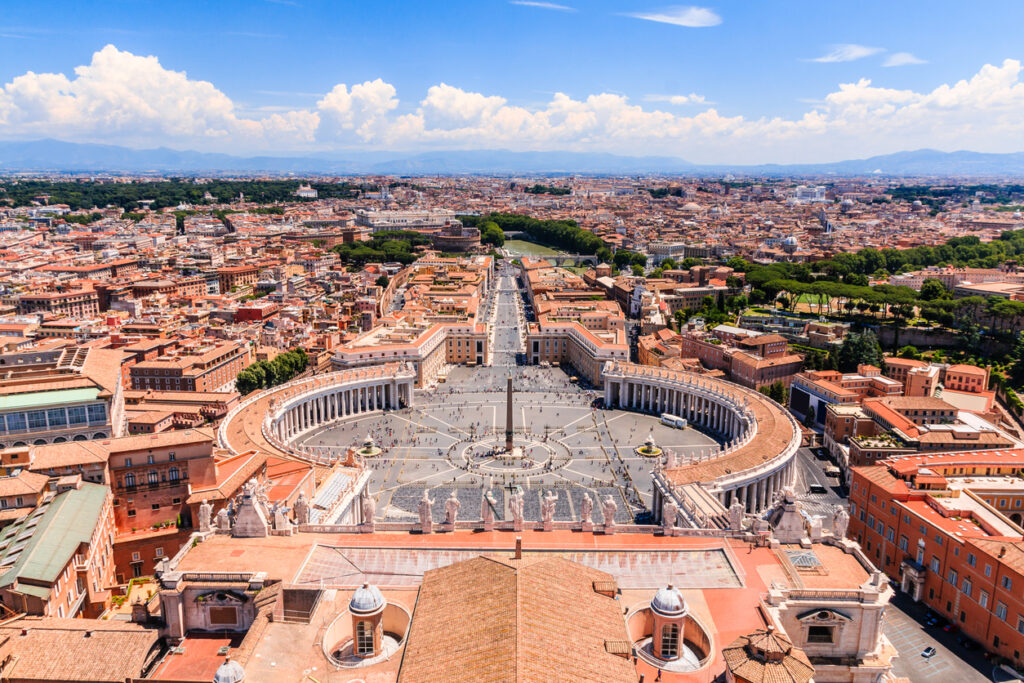
Vatican City holds the record as the smallest independent nation on Earth, occupying a tiny landmass of only 0.44 square kilometers. Located entirely within the city of Rome, Italy, its modern borders were formally established on February 11, 1929, following the signing of the Lateran Treaty. This historic agreement between the Holy See and the Kingdom of Italy granted the Vatican full sovereignty, ensuring the Pope could exercise his religious authority without interference from external political powers. Today, it operates as an absolute elective monarchy, where the Pope serves as both the spiritual leader of the world’s Roman Catholics and the head of state.
While the permanent population usually stays under 800 residents, the tiny country is a global heavyweight in terms of culture and tourism. It houses the world’s largest Christian church, St. Peter’s Basilica, which was completed in 1626, and the famous Sistine Chapel, featuring Michelangelo’s iconic ceiling painted between 1508 and 1512. Despite having no taxes or traditional industry, the Vatican generates revenue through the sale of postage stamps, tourist mementos, and museum admission fees. It even has its own banking system and issues its own Euro coins, proving that a nation doesn’t need vast territory to maintain a massive presence on the world stage.
Monaco
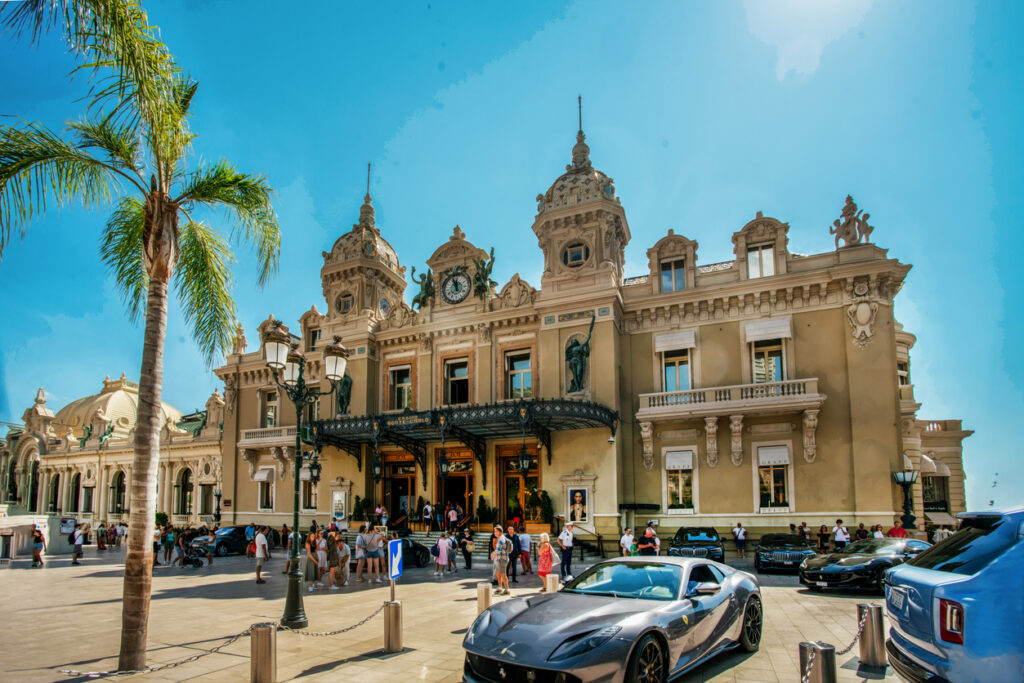
Monaco is a sparkling gem on the French Riviera, ranking as the second-smallest country globally with a land area of just 2.02 square kilometers. This Mediterranean principality has been famously ruled by the House of Grimaldi since 1297, making it one of the oldest ruling lines in Europe. Its current leader, Prince Albert II, took the throne in 2005. Despite its miniature size, Monaco is one of the most expensive and densely populated places on the planet, known worldwide as a “billionaire’s playground” due to its lack of personal income tax, a policy that has been in place since 1869.
The country’s identity is synonymous with high-octane luxury and prestige. Every year since 1929, the narrow, winding streets of the city-state have been transformed into a racing circuit for the Monaco Grand Prix, one of the most prestigious events in motorsports. Beyond the races, the Monte Carlo Casino, opened in 1863, remains a primary pillar of the economy and a symbol of Belle Époque architecture. Although it is not a member of the European Union, Monaco uses the Euro and maintains an open border with France. It is a unique example of how a tiny territory can leverage its location and financial policies to become a global center for wealth and glamour.
Nauru
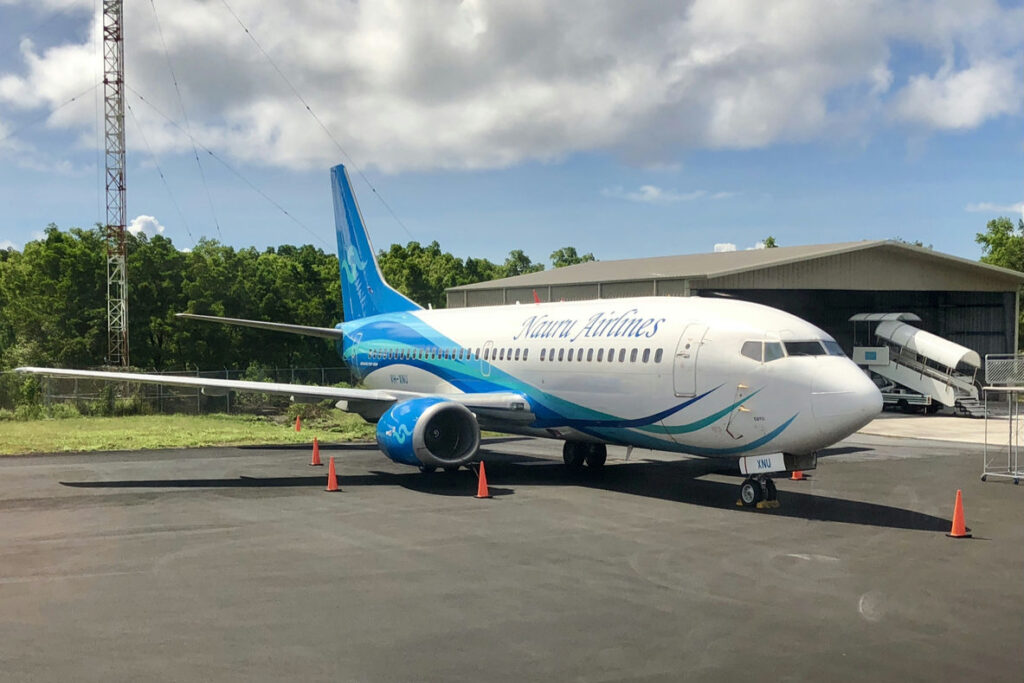
Nauru is a remote island nation in the Central Pacific, distinguished as the smallest republic in the world and the third-smallest country overall, covering 21 square kilometers. It gained its independence from a joint trusteeship of Australia, New Zealand, and the United Kingdom on January 31, 1968. Interestingly, Nauru is one of the few nations without an official capital city, though the district of Yaren houses most of the government offices. For a brief period in the late 1960s and early 1970s, Nauru boasted the highest per capita income in the world, thanks to its massive deposits of high-grade phosphate.
However, the story of Nauru is also a cautionary tale about environmental sustainability. Decades of intensive open-pit mining stripped the island’s interior, leaving about 80% of the land a barren, jagged wasteland of coral pinnacles. As phosphate reserves dwindled toward the end of the 20th century, the nation faced severe economic hardship. Today, the population of roughly 12,000 people relies heavily on foreign aid and creative fishing licenses to sustain the economy. Despite these environmental and financial hurdles, the people of Nauru remain deeply proud of their Micronesian heritage, working hard to rehabilitate their land and secure a sustainable future for the next generation.
Tuvalu
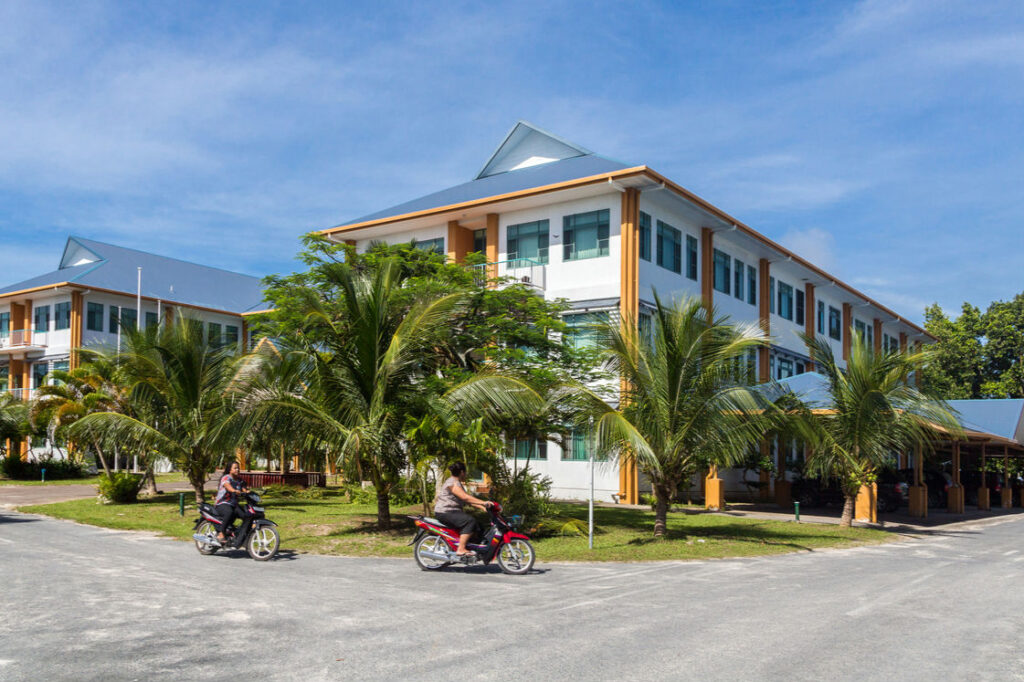
Tuvalu is a stunning but fragile archipelago in the South Pacific, consisting of three reef islands and six true atolls spread across 26 square kilometers of land. Formerly known as the Ellice Islands, it separated from the Gilbert Islands and gained full independence from British colonial rule on October 1, 1978. The capital, Funafuti, is home to more than half of the nation’s 11,000 residents. Life here is defined by the ocean, which provides both the primary source of food and the biggest threat to the country’s long-term survival due to its extremely low elevation.
In recent years, Tuvalu has become a leading voice in the global conversation regarding climate change. With its highest point sitting only 4.6 meters above sea level, the nation faces the very real possibility of being completely submerged by the end of the century. To combat economic isolation, the government famously struck a deal in 2000 to lease its lucrative “.tv” internet domain extension to a California-based company, generating millions in annual royalties. This “digital territory” provides a vital lifeline for the country’s infrastructure. While the future of the physical land remains uncertain, the resilience of Tuvaluan culture remains a powerful testament to the human spirit in the face of environmental adversity.
San Marino
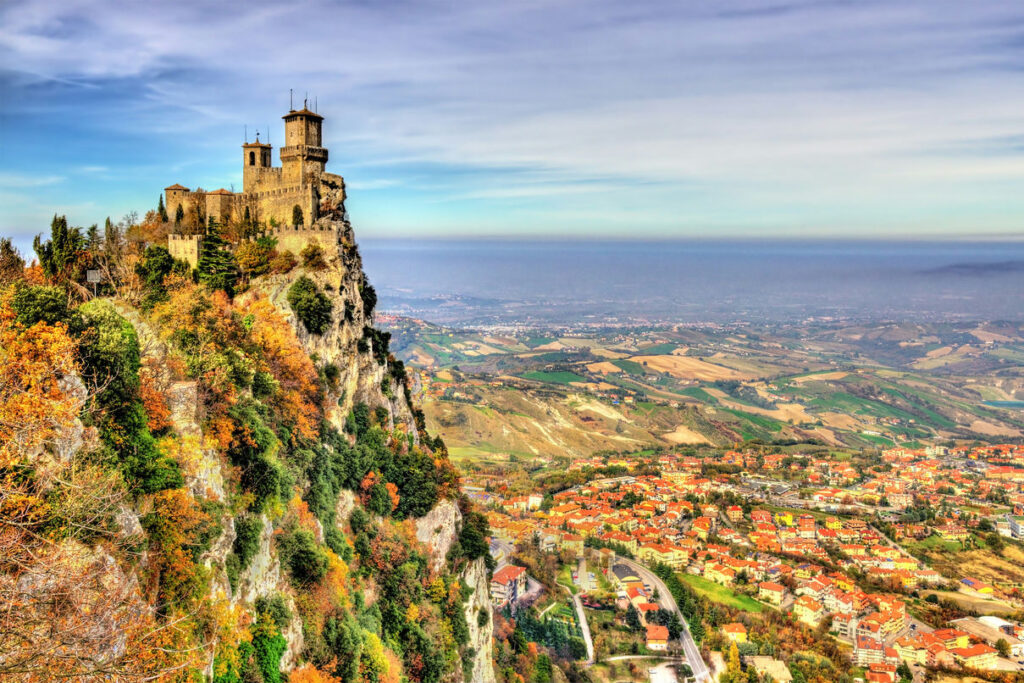
San Marino is a landlocked microstate completely surrounded by Italy, claiming the title of the world’s oldest surviving republic. According to tradition, it was founded on September 3, 301 AD, by a Christian stonemason named Marinus who was fleeing religious persecution. Covering approximately 61 square kilometers, this mountainous nation has successfully defended its independence for over 1,700 years. Its political structure is incredibly unique; the country is governed by two “Captains Regent” who are elected every six months, a tradition designed to prevent any single person from holding too much power for too long.
The landscape of San Marino is dominated by the Three Towers, situated on the peaks of Mount Titano, which has been a UNESCO World Heritage site since 2008. These medieval fortresses offer sweeping views that stretch all the way to the Adriatic Sea. While the country is not an official member of the European Union, it uses the Euro and is fully integrated into the regional economy. Tourism and the sale of collectible coins and stamps are major economic drivers, drawing over two million visitors annually. San Marino serves as a living museum of European history, proving that a commitment to democratic values can sustain a nation through centuries of continental upheaval.
Liechtenstein
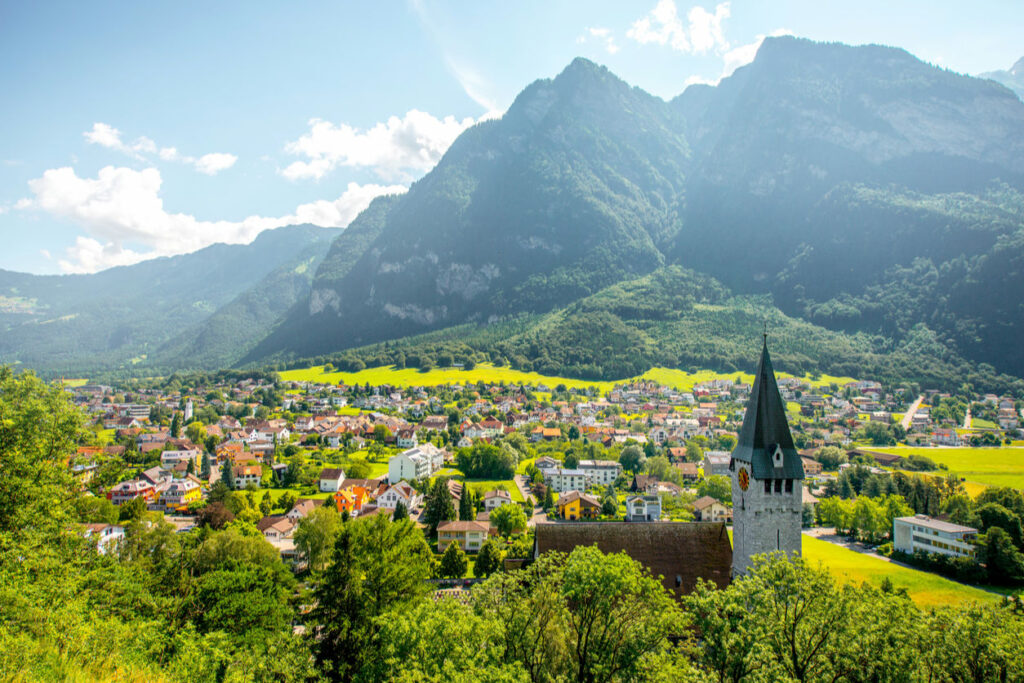
Liechtenstein is a picturesque, doubly landlocked country tucked away in the Alps between Switzerland and Austria, spanning roughly 160 square kilometers. It was established as a sovereign principality within the Holy Roman Empire in 1719 and achieved full independence in 1806. Today, it remains a constitutional monarchy led by the Prince of Liechtenstein, who resides in the historic Vaduz Castle overlooking the capital. Despite its small size and population of about 39,000 people, it is one of the wealthiest nations on Earth per capita, boasting more registered companies than actual citizens.
While many people associate the country with its Alpine beauty and skiing resorts, Liechtenstein is actually a highly industrialized powerhouse. It is a world leader in the production of specialized machinery, dental products, and high-tech electronics. The nation also maintains a customs union with Switzerland and uses the Swiss Franc as its official currency. Interestingly, Liechtenstein is one of the few countries in the world with no standing military, having abolished its army in 1868 to save costs. This peaceful, prosperous nation perfectly illustrates how a tiny territory can leverage stability, education, and specialized industry to achieve a standard of living that is the envy of much larger nations.
Marshall Islands
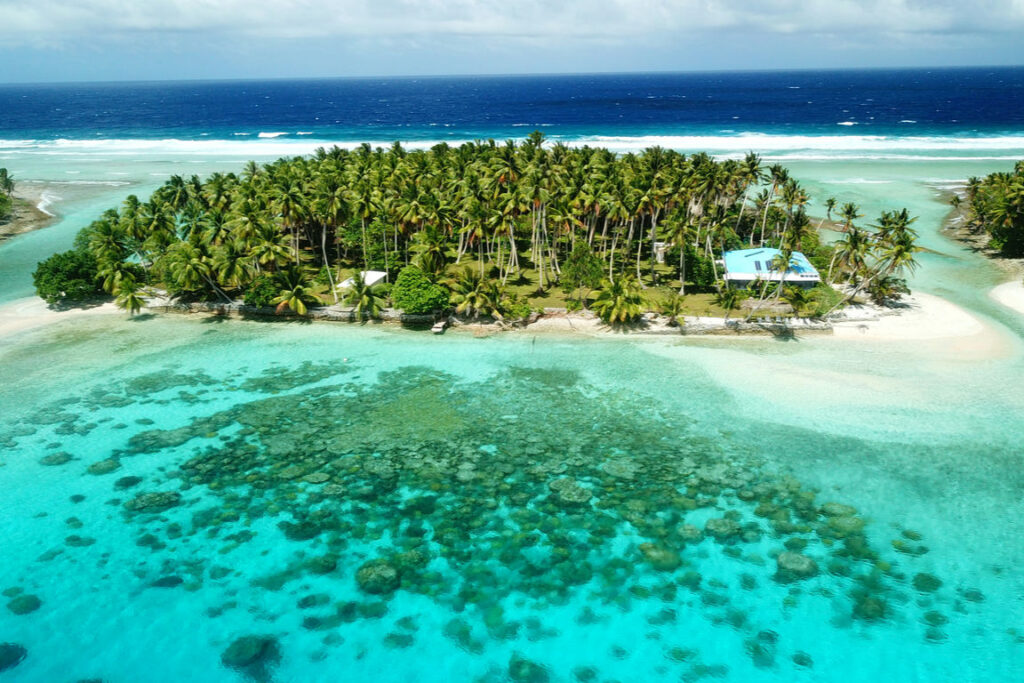
The Marshall Islands is a sprawling oceanic nation in the Central Pacific, made up of 29 coral atolls and five isolated islands that together total about 181 square kilometers of land. After centuries of shifting colonial influence, the islands gained their independence from the United States on October 21, 1986, through the Compact of Free Association. This agreement allows the U.S. to provide defense and social services while the Marshallese maintain their own government. The capital, Majuro, is a bustling hub built on a thin ribbon of land that arches around a turquoise lagoon.
The history of the Marshall Islands is deeply intertwined with the Cold War, as the U.S. conducted 67 nuclear tests in the region between 1946 and 1958, including the “Castle Bravo” blast at Bikini Atoll. Today, the nation is dealing with the environmental legacy of those tests while facing the modern threat of rising sea levels. Despite these challenges, the Marshallese people have a vibrant culture centered around traditional navigation and seafaring skills that have been passed down for generations. They are also major players in the shipping world; the Marshall Islands registry is one of the largest in the world, with thousands of commercial vessels flying their flag as they traverse the globe’s oceans.
Saint Kitts And Nevis
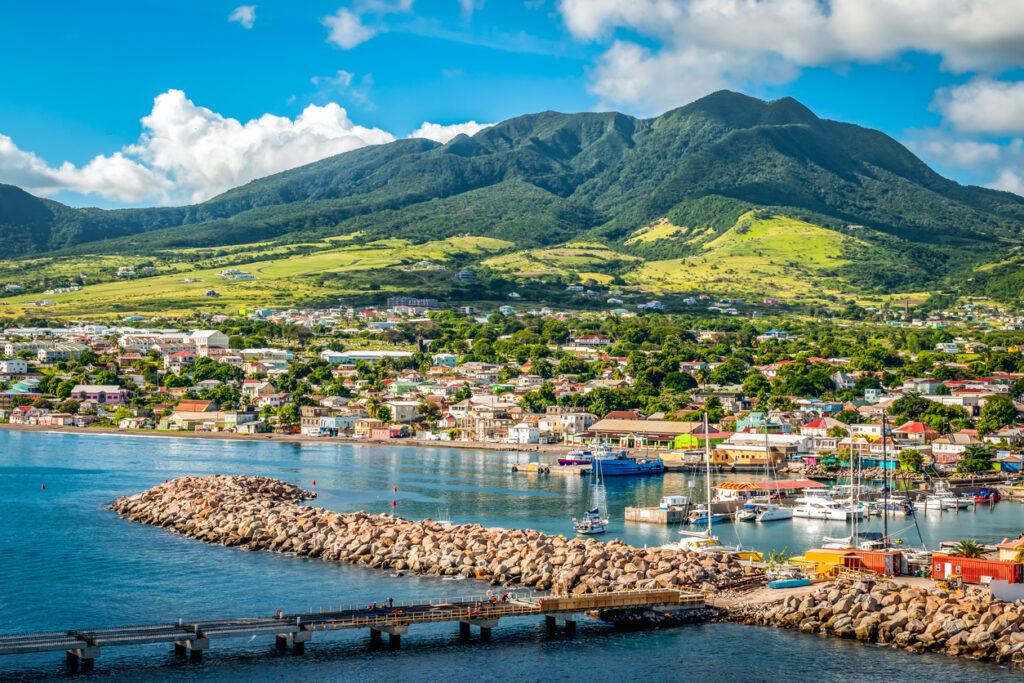
Saint Kitts and Nevis is a twin-island federation located in the West Indies, holding the distinction of being the smallest sovereign nation in the Western Hemisphere at 261 square kilometers. These lush Caribbean islands were the first to be colonized by both the British and the French, earning them the nickname “The Mother Colony of the West Indies.” The nation finally achieved full independence from the United Kingdom on September 19, 1983. Basseterre, the capital city located on the larger island of Saint Kitts, serves as a vibrant center for trade and tourism, featuring a mix of colonial architecture and modern amenities.
For centuries, the economy was almost entirely dependent on the sugar industry, but the government made the bold decision to close the last state-owned sugar factory in 2005 to pivot toward tourism and services. Today, the islands are famous for their “Citizenship by Investment” program, which was the first of its kind in the world when it launched in 1984. This program has helped fund major infrastructure projects and luxury developments. With the dormant Mount Liamuiga volcano providing a dramatic backdrop and the smaller, quieter island of Nevis offering a peaceful retreat, this nation has successfully rebranded itself as a high-end travel destination while preserving its rich colonial and volcanic history.
Maldives
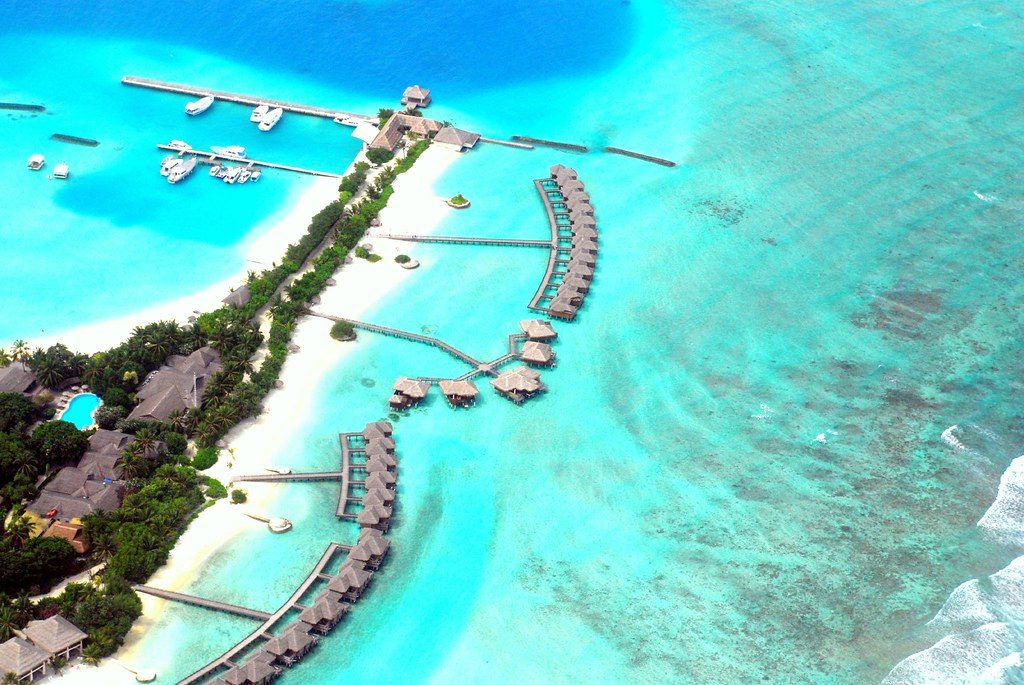
The Maldives is a breathtaking archipelago in the Indian Ocean, consisting of 26 natural atolls and over 1,000 coral islands, covering about 298 square kilometers. It became a fully independent sultanate on July 26, 1965, after decades of being a British protectorate, and eventually transitioned into a republic in 1968. The capital, Malé, is a marvel of urban engineering, where nearly 200,000 people live on a single square mile of land, making it one of the most crowded cities in the world. As the lowest-lying country on the planet, its survival is intricately linked to the health of the ocean.
Tourism is the undisputed engine of the Maldivian economy, accounting for a massive portion of its GDP since the first resort opened in 1972. Travelers flock to the islands for their famous overwater bungalows and world-class diving spots. However, because the average ground level is only 1.5 meters above the sea, the government has been a global pioneer in environmental policy. In 2009, the nation held the world’s first underwater cabinet meeting to draw attention to the threat of climate change. From building artificial islands like Hulhumalé to investing in coral restoration, the Maldives is working tirelessly to ensure that its natural beauty remains a sanctuary for both its citizens and visitors for centuries to come.
Malta
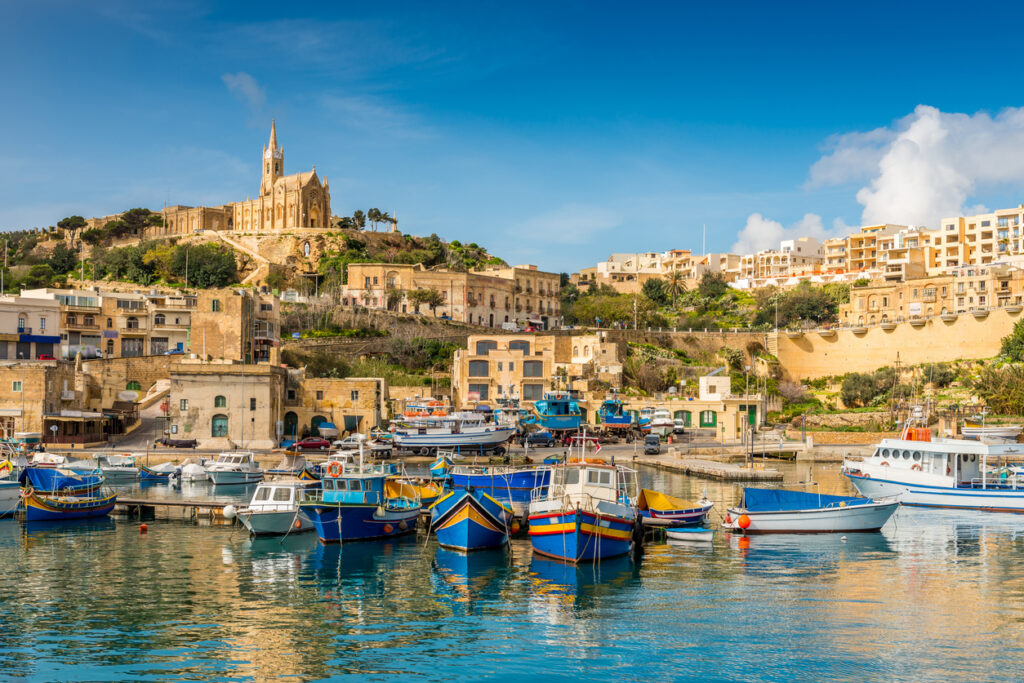
Malta is a strategically located island nation in the heart of the Mediterranean Sea, covering 316 square kilometers of land across three inhabited islands: Malta, Gozo, and Comino. Because of its location between Europe and Africa, it has been conquered by almost every major power in history, including the Phoenicians, Romans, Moors, and the Knights of St. John. Malta finally gained its independence from the United Kingdom on September 21, 1964, and became a republic a decade later. Its capital, Valletta, was built in the 16th century and is often described as an “open-air museum” due to its concentration of historical monuments.
Today, Malta is a member of the European Union and the Eurozone, boasting a diversified economy that goes far beyond just sun and sand. While tourism remains a staple, the country has become a major hub for financial services, online gaming, and film production, many famous movies like Gladiator and Game of Thrones were filmed among its ancient limestone walls. With a history spanning over 7,000 years, including megalithic temples that are older than the pyramids of Egypt, Malta offers a dense layer of culture within a very small area. It is a vibrant, modern nation that successfully honors its deep Mediterranean roots while thriving in the digital age.
Grenada
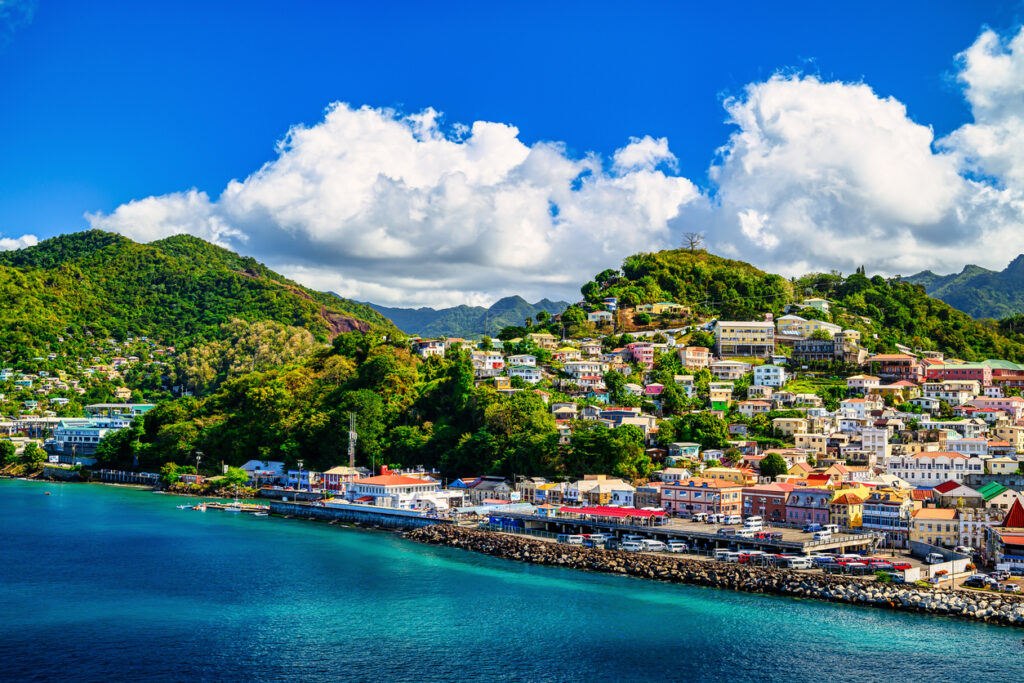
Grenada, famously known as the “Spice Isle,” is a stunning Caribbean nation consisting of a main island and several smaller islands, totaling approximately 344 square kilometers. It gained its full independence from British colonial rule on February 7, 1974, a landmark date that began its journey as a sovereign state. The capital city, St. George’s, was founded by the French in 1650 and is widely considered one of the most beautiful harbor towns in the West Indies. With a population of over 125,000 people, the country has managed to maintain a peaceful parliamentary democracy while navigating the complexities of post-colonial growth and regional Caribbean politics.
The nation’s nickname is well-earned, as Grenada remains one of the world’s largest exporters of nutmeg and mace, crops that were introduced to the island in the mid-1800s. In recent decades, the economy has shifted significantly toward tourism, with the world-famous Grand Anse Beach and the world’s first underwater sculpture park, created in 2006, serving as major global attractions. Despite facing significant challenges, such as the political unrest of 1983 and the devastating impact of Hurricane Ivan in 2004, the Grenadian people have shown incredible resilience. Today, the island is a thriving destination that perfectly balances its deep agricultural roots with a modern, welcoming service economy.
Saint Vincent and the Grenadines
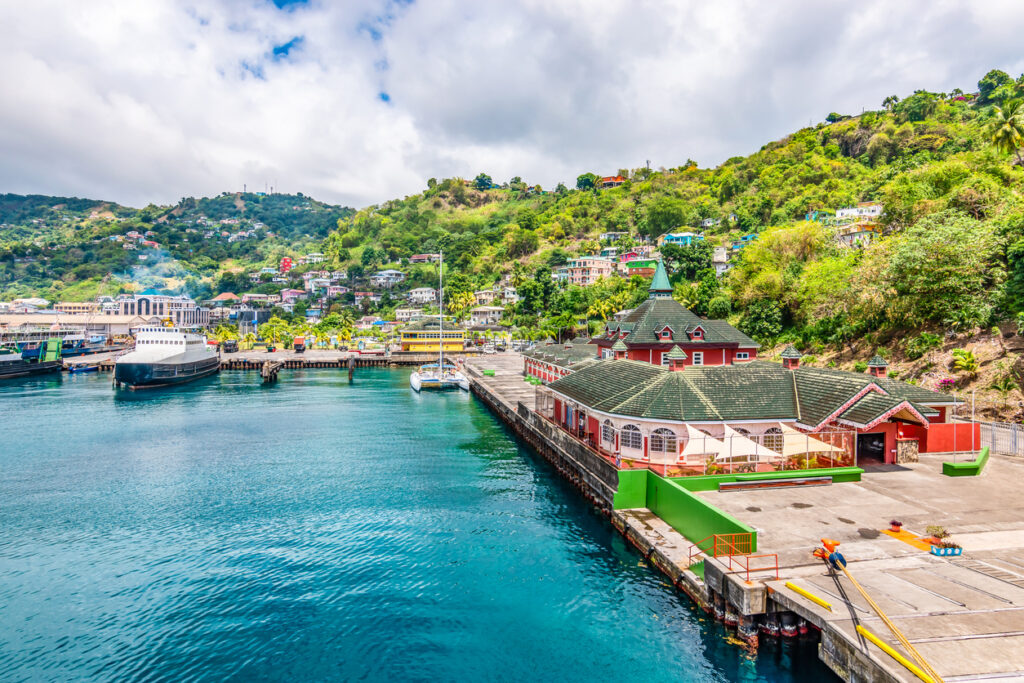
Saint Vincent and the Grenadines is a diverse volcanic archipelago in the Lesser Antilles, spanning a total land area of roughly 389 square kilometers. This nation, which includes the large island of Saint Vincent and a string of 32 smaller islands and cays, officially achieved independence from the United Kingdom on October 27, 1979. The capital, Kingstown, is known as the “City of Arches” due to its historic stone architecture and serves as a bustling center for trade and government. While it remains a member of the Commonwealth, the country has a distinct cultural identity shaped by its unique blend of African, Carib, and European heritage.
The geography of the islands is dominated by the majestic La Soufrière, an active volcano that last erupted significantly in April 2021, showcasing the raw natural power that defines the region. While the main island is rugged and mountainous, the smaller Grenadines, such as Bequia and Mustique, are world-renowned for their white-sand beaches and exclusive yachting culture. Historically dependent on banana exports, the nation has successfully diversified into high-end tourism and offshore financial services. Even as it faces the environmental pressures of the hurricane belt, Saint Vincent and the Grenadines continues to stand as a symbol of Caribbean strength, offering a rich tapestry of natural beauty and historical depth.


