
Columbus Found America
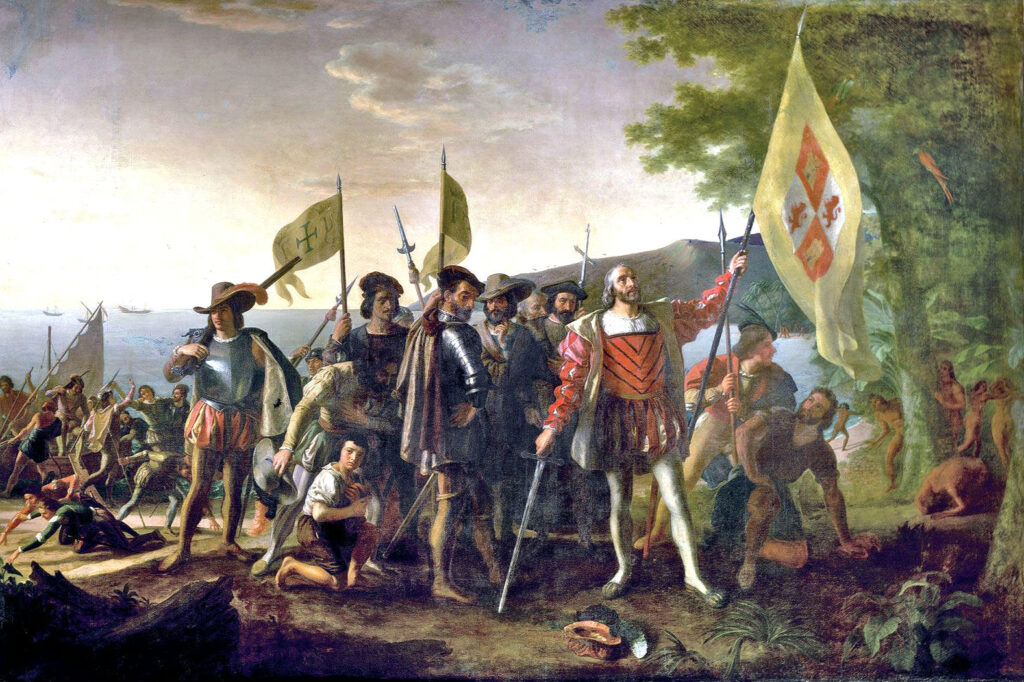
For generations, the classroom story was simple: Christopher Columbus “discovered” America in 1492. While this date is a major turning point in world history, the idea that he was the first to find the continent ignores millions of people. Indigenous civilizations, such as the Maya and the Mississippian culture, had been building complex cities and trade routes for thousands of years before any European ships appeared on the horizon.
History has since been updated with archaeological proof that Norse explorer Leif Erikson reached Newfoundland, Canada, around the year 1000. This means Europeans had actually visited the “New World” nearly five centuries before Columbus. Furthermore, Columbus never actually set foot on the mainland of North America; his four famous voyages primarily landed him in the Caribbean and Central America. His arrival changed the world forever, but it was an encounter between two existing worlds rather than a brand-new discovery.
Washington’s Cherry Tree
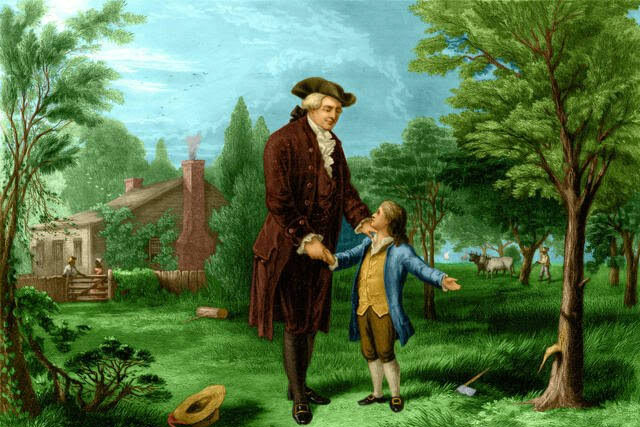
We all remember the moral lesson of a young George Washington cutting down his father’s cherry tree and confessing, “I cannot tell a lie.” It is a charming story used to teach children the value of honesty, but historians have confirmed it is entirely a myth. The event never happened, and it wasn’t even mentioned until after Washington passed away in 1799. It was a clever piece of storytelling designed to turn a political leader into a legendary hero.
The tale was actually invented by a biographer named Mason Locke Weems, who included it in the 1806 edition of his book, The Life of Washington. Weems wanted to provide the young United States with a moral role model, and the cherry tree anecdote fit perfectly. While the real Washington was known for his integrity, this specific event was a fictional invention of the 19th century. It serves as a great example of how folklore can sometimes replace reality in our national memory.
Salem Burnings Myth
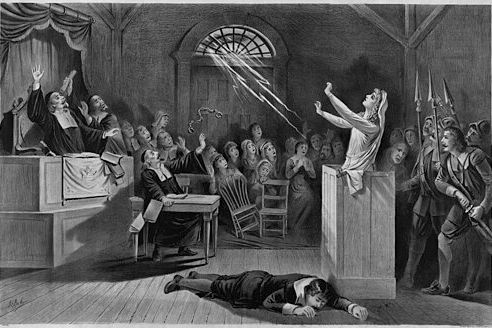
When people think of the Salem Witch Trials of 1692, they often imagine dark scenes of victims being burned at the stake. This image is deeply rooted in popular culture and films, likely borrowed from the history of witch hunts in Europe. However, in the English colonies of North America, the legal system functioned differently. During that terrifying period in colonial Massachusetts, no one convicted of witchcraft was actually executed by fire.
The grim reality is that nineteen people were taken to Proctor’s Ledge and hanged. One elderly man, Giles Corey, suffered a different fate; he was “pressed” to death under heavy stones in September 1692 because he refused to enter a plea in court. While the events remain a tragic stain on American history, the “burning” element is a historical inaccuracy. Correcting this detail helps us better understand the specific legal and social environment of the 17th-century New England colonies.
Peaceful First Thanksgiving
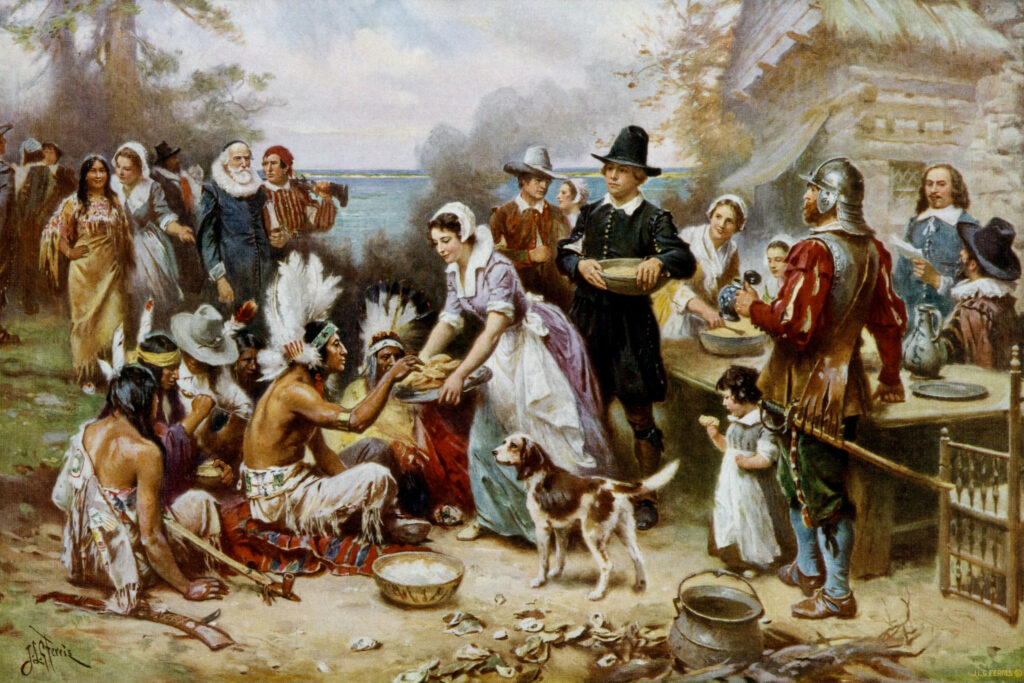
The classic school play version of Thanksgiving usually features a harmonious 1621 dinner where Pilgrims and Native Americans sat down as best friends. While a three-day harvest celebration did occur between the Plymouth settlers and the Wampanoag people, it wasn’t the start of a permanent peace. The gathering was more of a diplomatic alliance born out of necessity, as both groups were struggling to survive and navigate a changing landscape.
In the years following that meal, relations became increasingly strained as more settlers arrived and took over Indigenous lands. By 1637, following the Pequot War, colonial leaders even declared “days of thanksgiving” to celebrate bloody military victories over native tribes. This shows that the holiday has a much more complicated and often painful history than the colorful decorations in a classroom might suggest. Understanding the full timeline helps us respect the resilience of the Indigenous peoples involved.
Pocahontas Romance
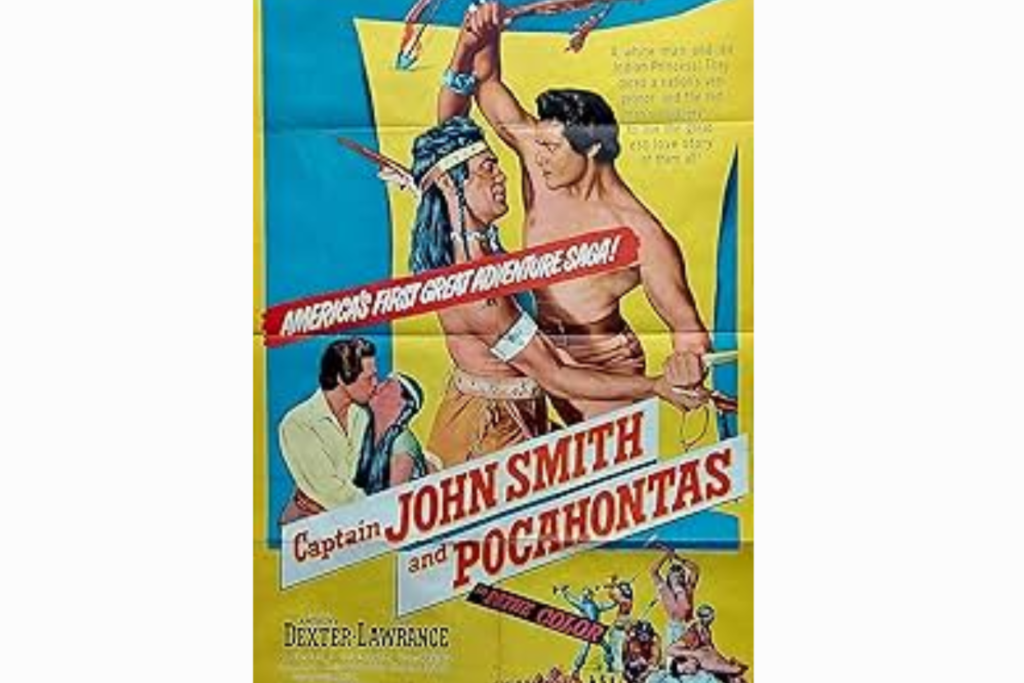
The legend of Pocahontas and Captain John Smith is often told as a sweeping historical romance, a narrative fueled by the 1995 Disney film. However, the real story of the daughter of Chief Powhatan is far more somber. When Smith arrived in Virginia in 1607, Pocahontas was a child of about ten or eleven years old, while Smith was a 27-year-old soldier. There is no historical evidence of a romantic bond between them during their brief acquaintance.
Most of what we know about their interaction comes from Smith’s own writings, which many historians believe were exaggerated for dramatic effect. In 1613, Pocahontas was captured by colonists and eventually married a tobacco planter named John Rolfe in 1614. She traveled to England in 1616 as a symbol of “civilized” natives but tragically died there in 1617 at the young age of 21. Her life was a story of political struggle and cultural survival rather than a storybook romance.
Lincoln’s Napkin Speech
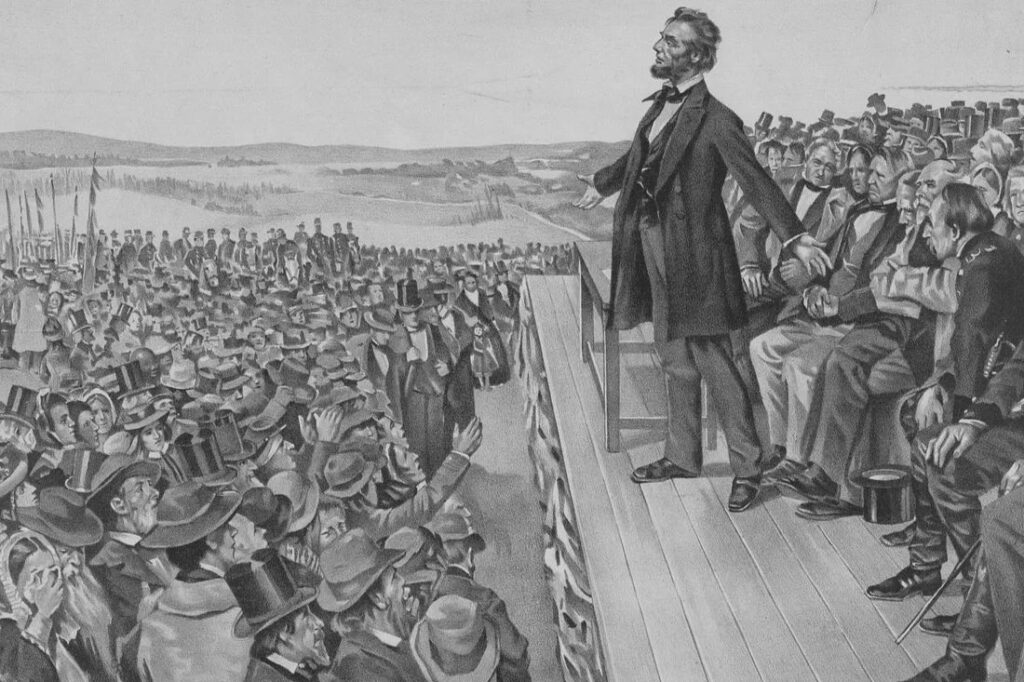
There is a persistent myth that Abraham Lincoln was so brilliant that he scribbled the Gettysburg Address on the back of an envelope or a napkin while riding the train to the ceremony. This makes for a great story about a spontaneous genius, but it undermines the hard work Lincoln actually put into his craft. In truth, the President was a meticulous writer who spent a great deal of time polishing his words for such a somber occasion.
Lincoln began drafting the speech at the White House and continued working on it after arriving in Gettysburg. He delivered the final version on November 19, 1863, at the dedication of the Soldiers’ National Cemetery. Despite being only 272 words long and lasting less than three minutes, the speech was the result of careful thought and multiple drafts. The “napkin” story is likely just a bit of folklore that grew because the speech was so short and impactful.
Edison Invented Bulb
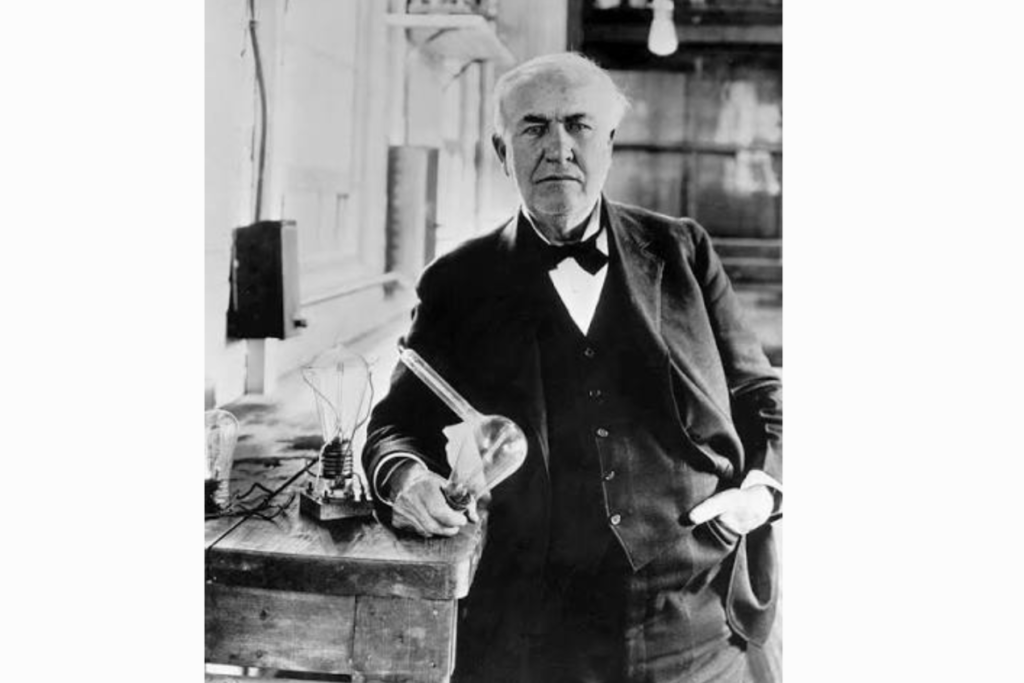
Thomas Edison is often hailed in science textbooks as the man who invented the light bulb in 1879. While Edison was an incredible innovator, he didn’t actually come up with the concept of electric light. Scientists had been experimenting with “arc lamps” and early incandescent bulbs for nearly 80 years before Edison’s famous breakthrough. Inventors like Humphry Davy and Warren de la Rue had created working versions as early as 1802 and 1840.
Edison’s true genius was making the light bulb practical and affordable for the average home. He spent years testing different materials for the filament before settling on carbonized bamboo, which allowed the bulb to burn for over 1,200 hours. He also designed the entire electrical system, including wiring, meters, and generators, to power those bulbs. So, while he didn’t “invent” the light itself, he was the one who successfully brought the world out of the age of candlelight.
Ford Built First Car
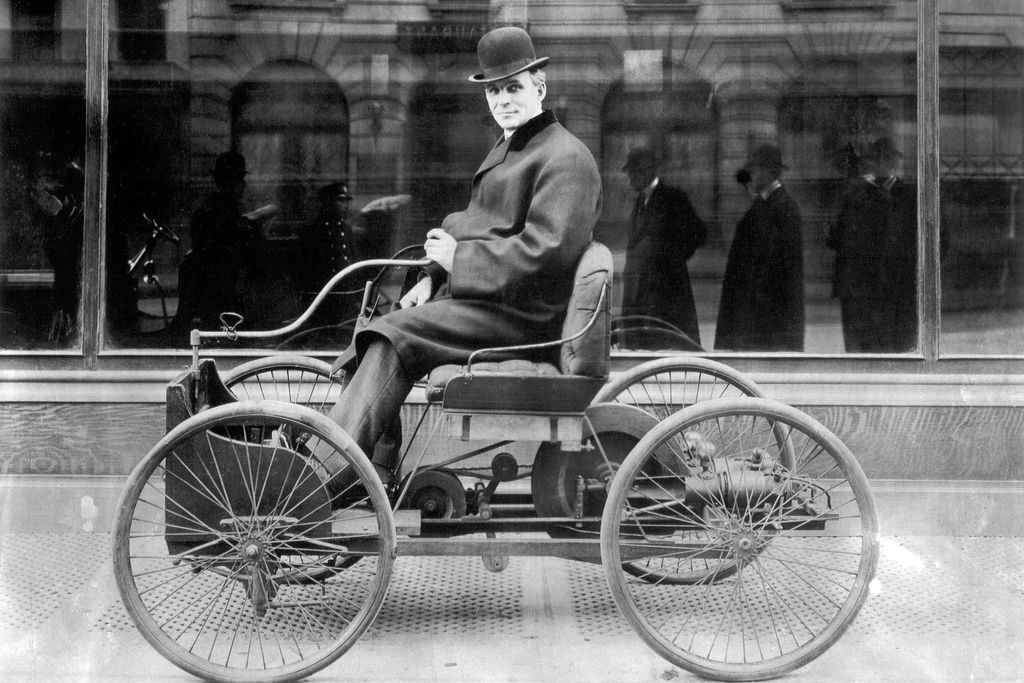
It’s a common mistake to credit Henry Ford with inventing the very first automobile. Because his name is so synonymous with car culture, many people assume he was the pioneer of the engine. In reality, the credit for the first modern, gasoline-powered car belongs to Karl Benz. He received a patent for his “Motorwagen” in January 1886, several years before Ford finished his first “Quadricycle” in his backyard workshop in 1896.
Henry Ford’s real contribution was much more revolutionary for the average person. In 1913, he introduced the moving assembly line at his Highland Park plant, which allowed his company to mass-produce the Model T. Before this, cars were luxury items built by hand; Ford’s methods made them affordable for the working class. He didn’t give us the car, but he gave us the “car culture” we live in today by making vehicle ownership a reality for everyone.
Baseball’s False Origin
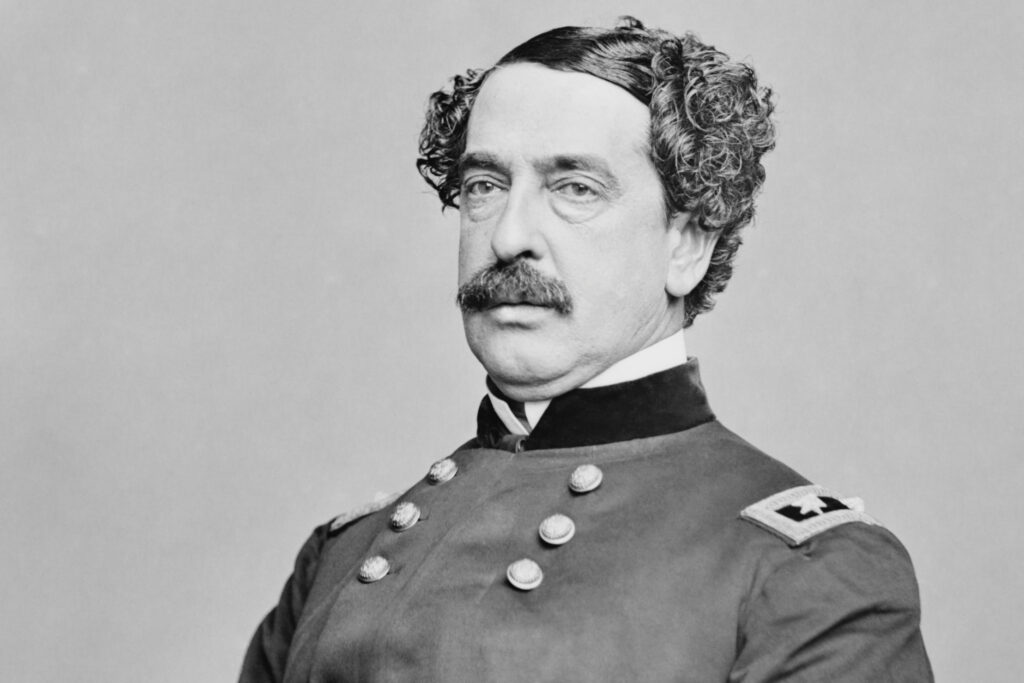
For a long time, the official story of America’s pastime was that a man named Abner Doubleday invented baseball in 1839 in Cooperstown, New York. This story was so widely accepted that the National Baseball Hall of Fame was established in Cooperstown to honor this history. However, modern researchers have found that this “origin story” was largely a marketing ploy created by a commission in 1907 to give the sport a purely American beginning.
In truth, baseball was not invented by a single person on a specific day. It evolved gradually from older British games like “rounders” and “cricket” that were played by colonists. References to games called “base-ball” appear in English diaries as early as 1744. While Doubleday was a real Civil War hero, there is no evidence he ever even played the game. Baseball is a perfect example of how a sport can grow and change over centuries through different cultures.
Taft’s Bathtub Story
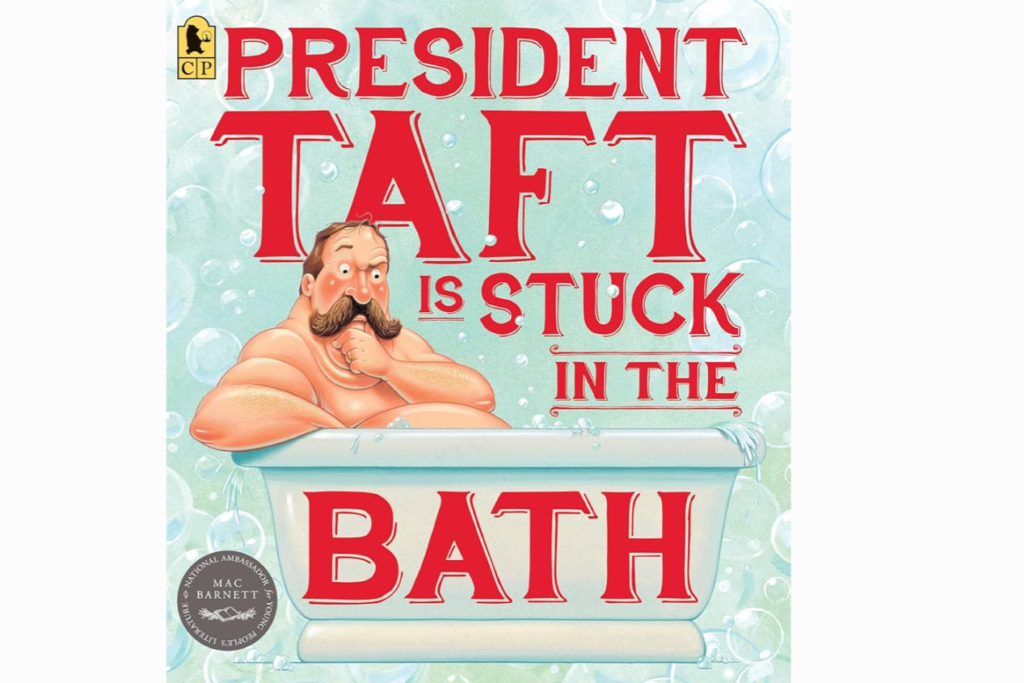
One of the funniest pieces of White House trivia is the story that the 27th President, William Howard Taft, once got stuck in his bathtub and had to be pried out by several aides. Since Taft weighed over 330 pounds, the story seemed plausible and has been shared in classrooms for over a century. However, there is no record from Taft’s staff or family that this embarrassing event ever actually took place.
The story likely originated because Taft actually was very proactive about his size. Before he moved into the White House in 1909, he ordered a massive, custom-built bathtub that was seven feet long and four feet wide, large enough to hold four average-sized men. Photos of the tub with four workers sitting inside it were published in journals at the time. Ironically, the very tub he bought to avoid getting stuck is likely what started the rumors that he had.
Tongue Taste Zones
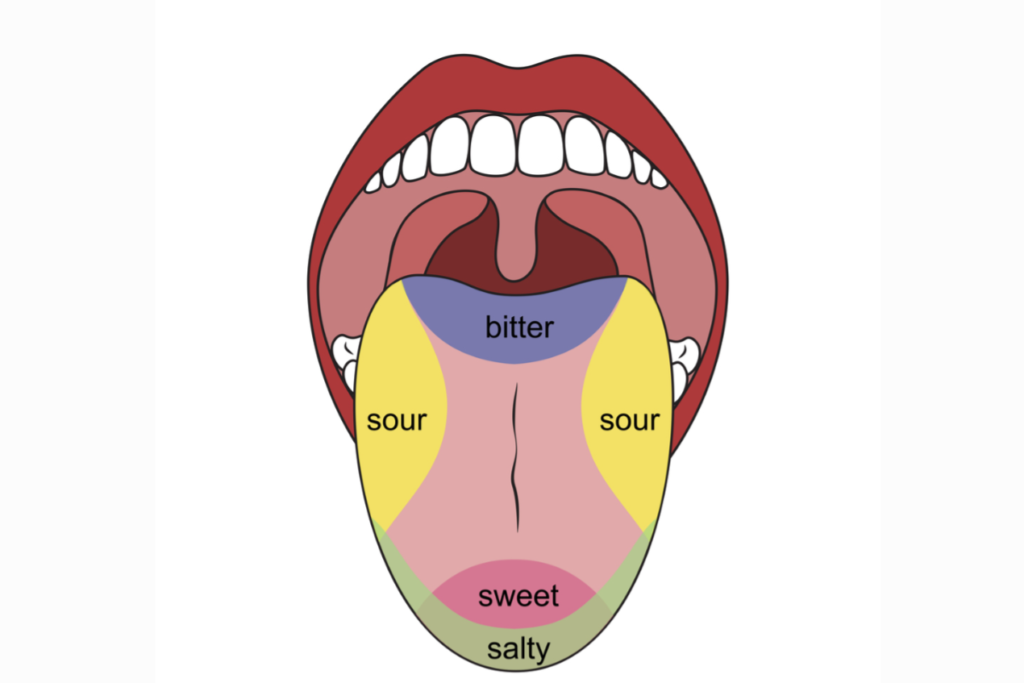
For a long time, school science posters showed the human tongue divided into neat, colorful zones. We were taught that the tip was for sweets, the back for bitter flavors, and the sides for salty or sour tastes. This “tongue map” was a staple of biology lessons for decades, making the complex sense of taste seem easy to memorize. However, modern researchers have confirmed that this diagram is a complete misunderstanding of how our bodies actually function.
The myth actually started with a mistranslation of a 1901 German paper by scientist David Hänig. In reality, taste buds containing receptors for all flavors are scattered across the entire surface of the tongue. Furthermore, in 1908, Japanese chemist Kikunae Ikeda identified a fifth taste called “umami” (savory), which wasn’t even included in the original maps. Today, we know that every part of your tongue can detect every flavor, proving that our sensory systems are much more integrated and versatile than those old classroom drawings suggested.
Only Five Senses
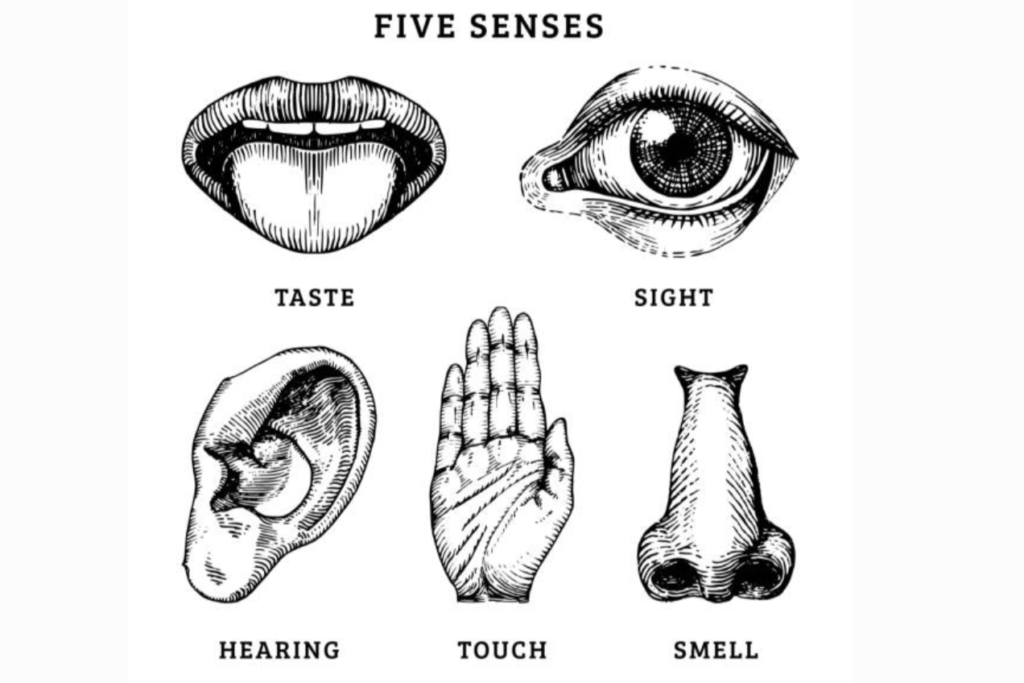
Most of us grew up learning that humans possess exactly five senses: sight, hearing, smell, taste, and touch. This idea dates all the way back to the writings of the Greek philosopher Aristotle around 350 B.C. While these five are certainly the most famous, modern neurology and biology tell a much more fascinating story. Scientists now generally agree that humans actually have between 9 and 21 distinct senses that help us navigate our daily lives.
Beyond the “Big Five,” our bodies rely on senses like proprioception, which is the internal awareness of where your limbs are without looking at them. We also have equilibrioception for balance, which is managed by the inner ear, and thermoception for sensing temperature changes. Other vital senses include nociception (the ability to feel pain) and interoception, which tells you when you are hungry or thirsty. Recognizing these additional layers of perception helps us appreciate just how complex the human nervous system really is.
Chameleons Change Colour

The classic classroom explanation for a chameleon changing color is that it wants to hide from predators by blending into its background. It is a perfect example of camouflage that everyone can understand, but it is largely inaccurate. While some color shifting might help them stay hidden, the primary reason these reptiles change their appearance is actually to communicate their feelings and regulate their physical health.
Research has shown that chameleons use their skin like a mood ring or a thermostat. For example, a male might turn bright, bold colors to show dominance or attract a mate, while a submissive or stressed chameleon might turn dark or dull. Because they are cold-blooded, they also turn darker to absorb more heat from the sun or lighter to reflect it. This discovery, detailed in studies as recently as 2015, shows that their skin is an advanced biological communication tool rather than just a simple “cloaking device” for hiding in the leaves.
Humans From Monkeys
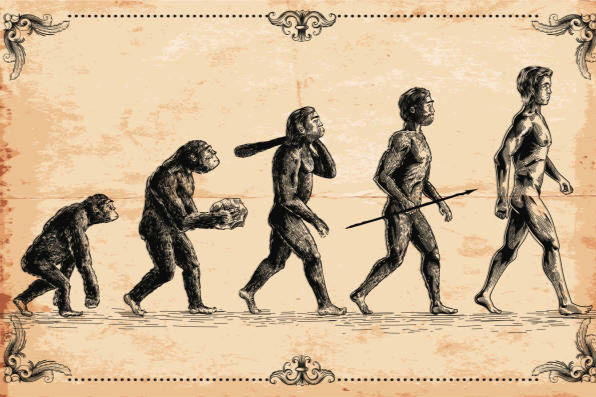
One of the most misunderstood concepts in biology is the idea that humans evolved directly from the monkeys we see at the zoo today. Many of us remember seeing the “March of Progress” illustration showing a monkey slowly standing up and becoming a human. While it makes for a clean visual, it is a scientific inaccuracy. Evolution does not happen in a straight line where one living species simply transforms into another existing species over time.
In reality, humans and modern monkeys are more like distant cousins rather than grandparents and grandchildren. Scientific evidence, including DNA sequencing, shows that we share a common ancestor that lived roughly 6 to 7 million years ago. From that ancestor, the evolutionary tree branched out in different directions, one leading to modern apes and another leading to humans. This means we didn’t “come from” monkeys; instead, we both followed our own unique paths from the same starting point millions of years in the past.
No Gravity In Space
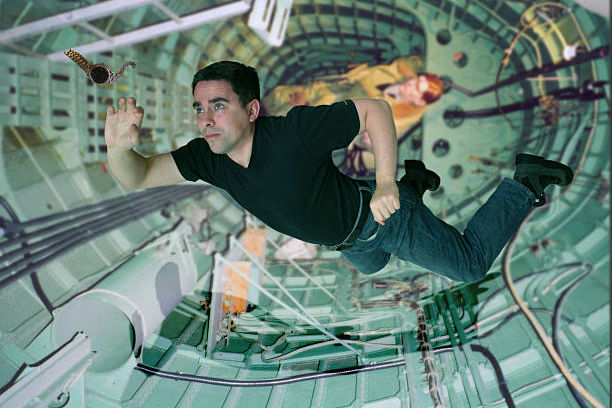
It is a common belief that gravity stops working once you leave the Earth’s atmosphere. We’ve all seen videos of astronauts floating effortlessly inside the International Space Station, which makes the idea of “zero gravity” feel like a fact. However, gravity is actually everywhere in space. In fact, at the altitude where the Space Station orbits (about 250 miles up), Earth’s gravity is still roughly 90% as strong as it is on the ground.
The reason astronauts float is not because gravity is gone, but because they are in a constant state of “freefall.” The Space Station is moving sideways so fast (about 17,500 miles per hour) that as it falls toward Earth, it keeps missing the surface and curving around the planet. Because the astronauts are falling at the exact same rate as their ship, they experience weightlessness. Without gravity, the Moon would drift away into deep space and the Earth wouldn’t stay in orbit around the Sun.
Blood Is Blue

Many of us were told in school that the blood inside our bodies is blue and only turns red when it hits the oxygen in the air. This seemed to make sense because the veins visible through our skin often look like blue or purple lines. It was a simple way to explain the circulatory system, but it is a biological myth. Human blood contains hemoglobin, a protein that uses iron to carry oxygen, and that iron-rich protein is always red.
When blood is full of oxygen, it is a bright, vibrant red; when it has dropped off its oxygen and is headed back to the heart, it becomes a much darker, deep maroon color. The reason your veins look blue is actually due to an optical illusion caused by the way light waves travel through your skin and fat. Blue light has shorter wavelengths and is reflected back to your eyes, while red light is absorbed by the tissue. So, while your veins might look blue from the outside, the fluid inside is always a shade of red.


