
Dogs Know Their People
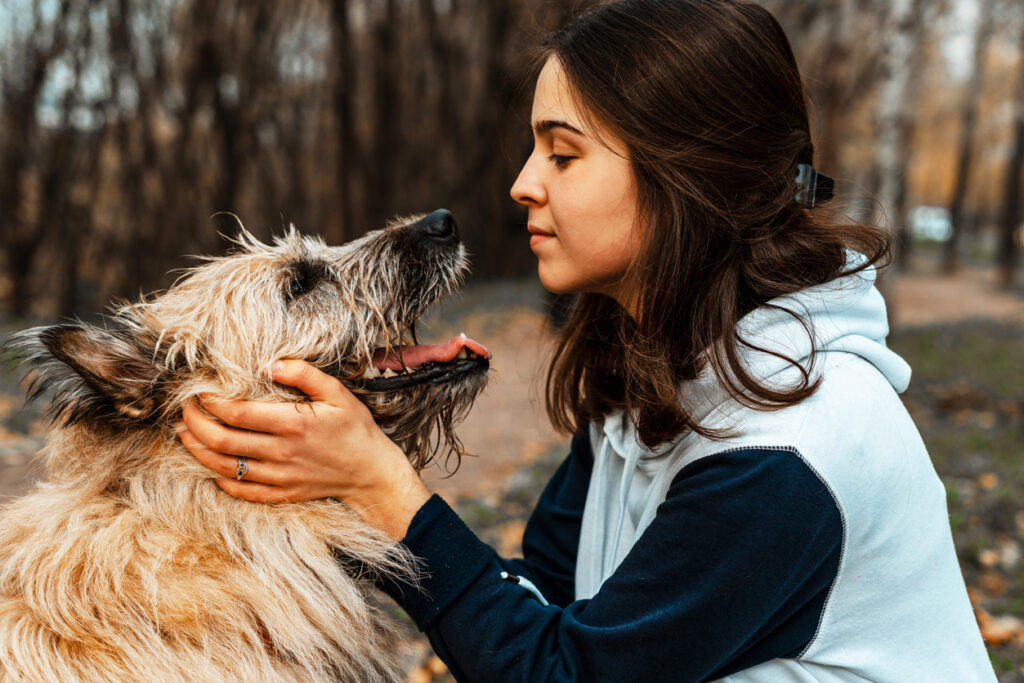
Dogs are arguably the most iconic example of animals that can identify individual humans, but their skills extend far beyond simple obedience. In a groundbreaking 2015 study published in Animal Cognition, researchers utilized fMRI scans to prove that dogs possess a specialized brain region for processing faces. This means when your golden retriever looks at you, their brain isn’t just seeing a generic human; it is firing in a way that specifically recognizes “you.” They synthesize visual landmarks with your unique scent and the frequency of your voice to build a foolproof identification profile that lasts a lifetime.
Even stray or free-ranging dogs, which lack the pampered life of a pet, display this sophisticated trait. Research from 2010 indicates that these dogs can categorize humans based on previous behavior, quickly learning to distinguish a “feeder” from a “threat.” This evolutionary adaptation has occurred over roughly 15,000 years of domestication, allowing dogs to navigate human societies with surgical precision. By reading our facial expressions and body language, they have become the ultimate biological experts at understanding who we are and, more importantly, what we intend to do next.
Cats Recognize Familiar Voices
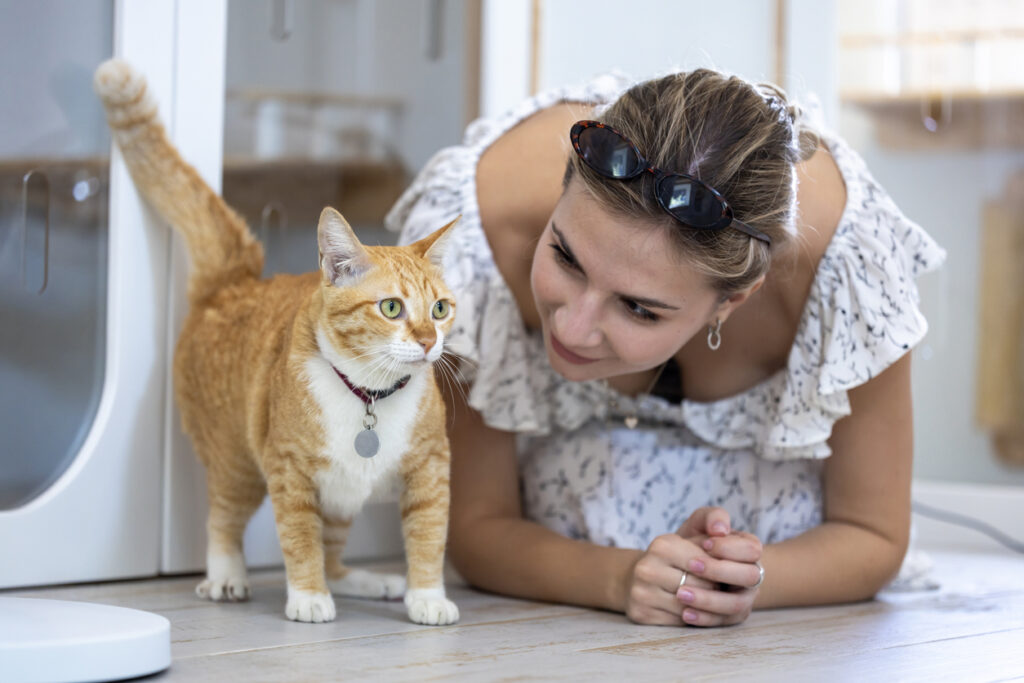
While cats often carry a reputation for being aloof or indifferent, scientific data suggests they are deeply observant of their human companions. A 2013 study conducted at the University of Tokyo revealed that domestic cats can distinguish their owner’s voice from those of complete strangers. Interestingly, the researchers found that while the cats recognized the specific vocal patterns of their owners, they often chose not to respond with physical movement. This proves that a lack of visible reaction is not a lack of intelligence, but rather a different style of social engagement.
Beyond just sound, cats utilize a “scent-first” approach to solidify their recognition of individuals. They possess a vomeronasal organ that allows them to process the unique chemical signatures humans leave behind. By 2019, further studies confirmed that cats form secure attachments to their primary caregivers similar to the bonds seen in infants and dogs. Whether they are hiding from a loud visitor or purring at a familiar friend, their behavior is a calculated response to a specific person’s history with them. They might not always come when called, but they certainly know exactly who is doing the calling.
Crows Never Forget Faces
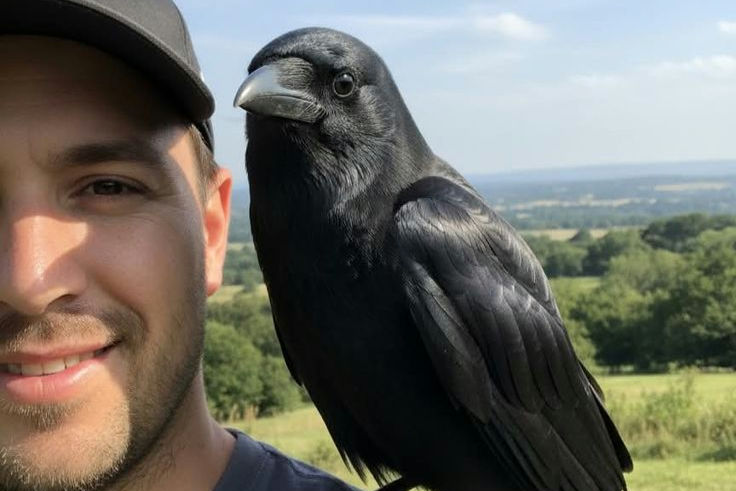
Crows are widely considered the “primates of the bird world” due to their startling cognitive abilities. A famous long-term study at the University of Washington, which began around 2006, proved that American crows could recognize the faces of people who had previously captured or threatened them. Researchers wore specific masks while handling the birds, and years later, the crows would still “scold” and dive-bomb anyone wearing that specific mask, even if the person inside was different. This confirms that their visual memory for human features is incredibly sharp and remarkably durable over several years.
What makes this behavior truly friendly and fascinating is the social nature of their intelligence. Crows actually gossip; they communicate the identity of “dangerous” humans to their offspring and other members of the flock. This means a crow that has never even met you might treat you with suspicion because its elders “told” it you were trouble. This collective memory allows crow populations to navigate urban environments safely. By distinguishing between the kind neighbor who tosses peanuts and the person who shooed them away, they turn individual recognition into a vital tool for community survival.
Horses Remember Human Faces
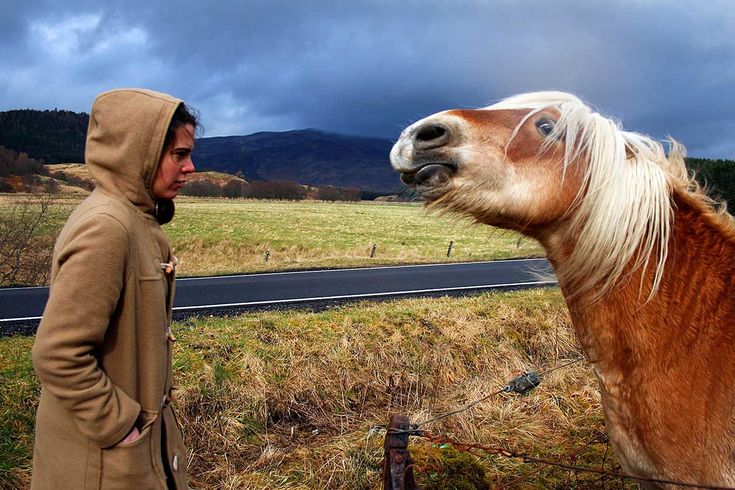
Horses possess a social sensitivity that allows them to bridge the communication gap between species. In a 2016 study, researchers demonstrated that horses can look at a photograph of a person and later recognize that same individual in real life. Even more impressively, they can remember the emotional expression the person had in the photo. If shown a picture of a person looking angry, the horse would display signs of stress and caution when meeting that person hours later. This indicates that horses aren’t just identifying a face; they are cataloging a person’s perceived temperament.
These memories are not fleeting; evidence suggests horses can retain the memory of a specific human for several months or even years. Because horses are prey animals, being able to identify a “safe” human versus an “unpredictable” one is a key survival mechanism. On a typical farm, a horse will often adjust its posture and heart rate based on which handler enters the stable. This deep-seated cognitive ability explains the profound bonds formed in equine therapy, where the animal’s recognition of a specific human’s voice and face creates a foundation of mutual trust and emotional healing.
Elephants Recall People
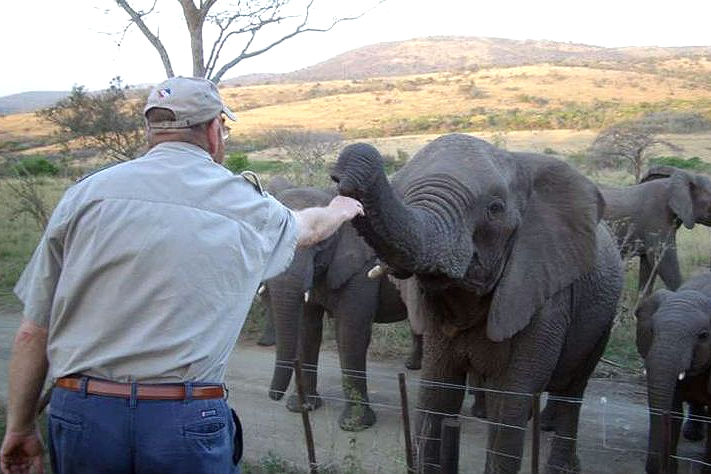
The old saying that an elephant never forgets is backed by significant biological evidence. Elephants have the largest brain of any land mammal, and their temporal lobes, the area associated with memory, are exceptionally well-developed. In the wild, African elephants have demonstrated the ability to distinguish between different human groups based on the color of their clothing and their scent. For example, a study in Kenya showed elephants reacting more defensively to the scent of clothing worn by groups that traditionally hunted them compared to groups that did not, showing a high level of situational awareness.
This recognition extends to individual humans over vast stretches of time. There are numerous documented cases of rescued elephants recognizing their former keepers after decades of separation, responding with vocalizations and physical affection that they do not show to strangers. Because elephants can live for 60 to 70 years, their ability to store information about specific people is vital for their social structure. They view the human world through a lens of past experiences, proving that their interactions with us leave a permanent mark on their sophisticated and highly emotional minds.
Chimpanzees Spot Individuals
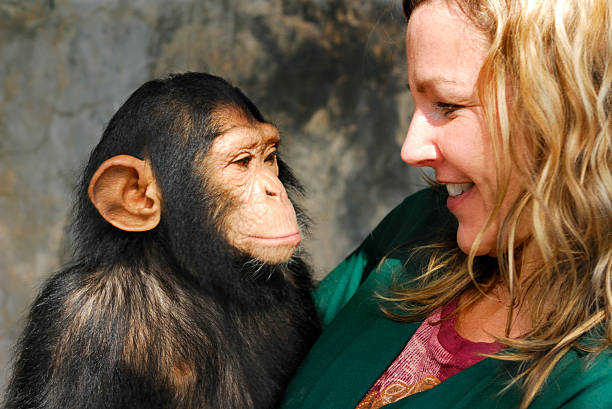
As our closest biological relatives, chimpanzees share many of the same neurological pathways we use for social recognition. Research has shown that chimpanzees process faces holistically, much like humans do, rather than looking at individual features in isolation. In captive settings, such as research centers and sanctuaries, chimpanzees can easily distinguish between dozens of different staff members. They often develop “favorites,” showing a clear preference for individuals who have treated them with kindness or engaged them in play in the past.
This ability is rooted in their complex social lives in the wild, where recognizing friends and rivals is a matter of life and death. When applied to humans, this skill allows them to navigate the nuances of caretaker relationships. A 2017 study even suggested that chimpanzees can recognize the behinds of their peers as easily as faces, but when it comes to humans, they focus primarily on the eyes and facial structure. Their capacity for long-term memory means a chimpanzee can recognize a researcher after years of absence, proving that the bond between primate species is built on a foundation of genuine individual recognition.
Dolphins Recognize Humans
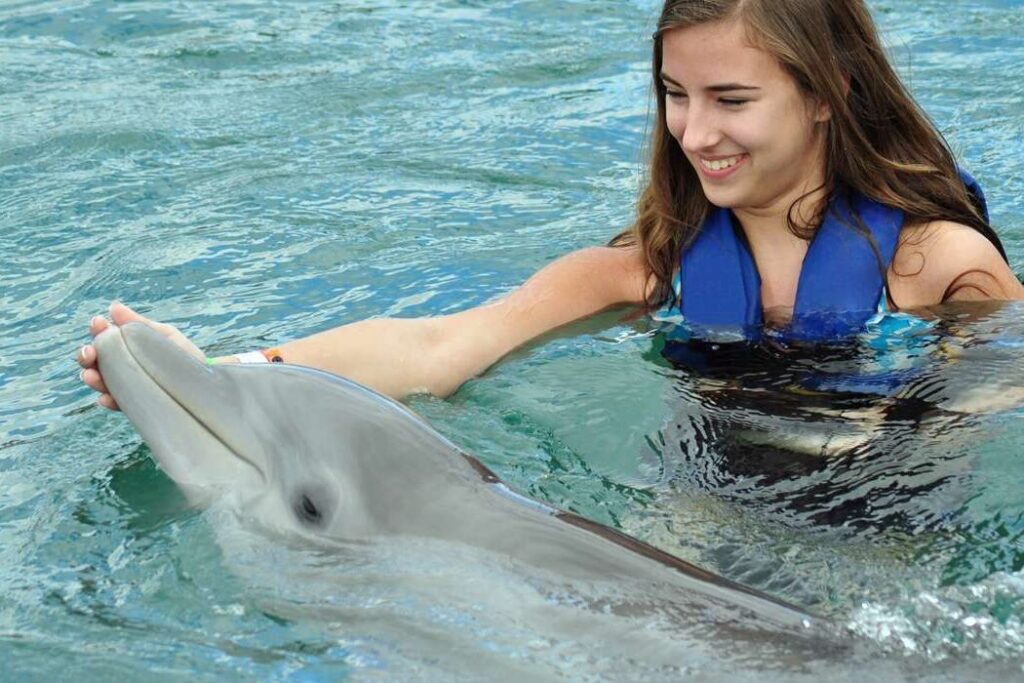
Dolphins are celebrated for their high “Encephalization Quotient,” a measure of brain size relative to body mass that suggests extreme intelligence. In aquatic facilities, dolphins have shown the ability to recognize their trainers not just by their wetsuits, but by their specific facial features and the unique sounds of their whistles or voices. Because dolphins use echolocation, they are also sensitive to the physical presence of humans in the water, often behaving more playfully or gently with individuals they have known for a long time compared to new guests.
In the wild, there are documented instances of “resident” dolphins in places like Shark Bay, Australia, developing unique relationships with specific researchers over decades. These dolphins may approach the boats of familiar people while avoiding others, suggesting they keep a “mental rolodex” of the humans they encounter. Their social intelligence allows them to understand human pointing gestures and commands, which requires them to first identify the human as a reliable source of information. This level of cognitive sophisticated highlights that the ocean is home to beings who see us as distinct individuals.
Octopuses Prefer Certain People
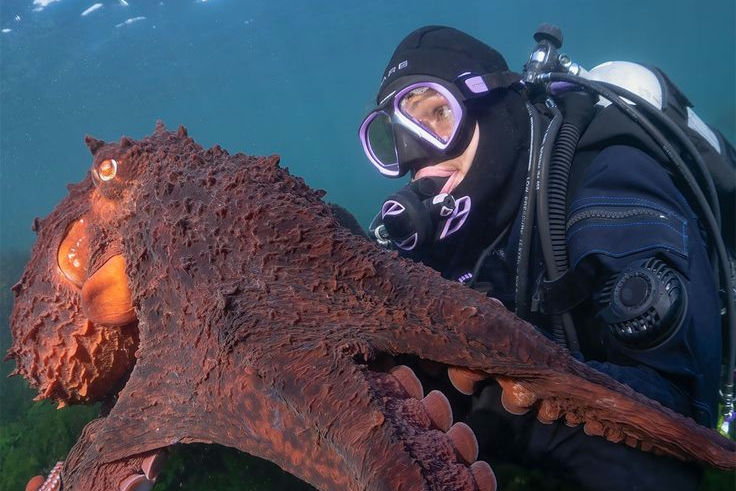
The octopus is the only invertebrate on this list, making its ability to recognize humans even more startling. Despite having a nervous system distributed mostly in their arms, octopuses possess a centralized brain capable of high-level learning. At the New England Aquarium, researchers conducted an experiment where two different people interacted with an octopus: one was “nice” and provided food, while the other was “mean” and touched the octopus with a bristly stick. Very quickly, the octopus began to approach the “nice” person and hide or spray water at the “mean” person.
This behavior proves that octopuses can distinguish between humans even when those humans are wearing identical uniforms. They likely use a combination of visual recognition and their incredibly sensitive sense of touch and taste located in their suction cups to identify the chemical signature of a person’s skin. Since octopuses are generally solitary and short-lived, this capacity for individual recognition isn’t for social bonding, but rather for navigating a world of potential threats and rewards. It serves as a powerful reminder that intelligence can evolve in very different ways across the tree of life.
Parrots Identify Familiar Humans
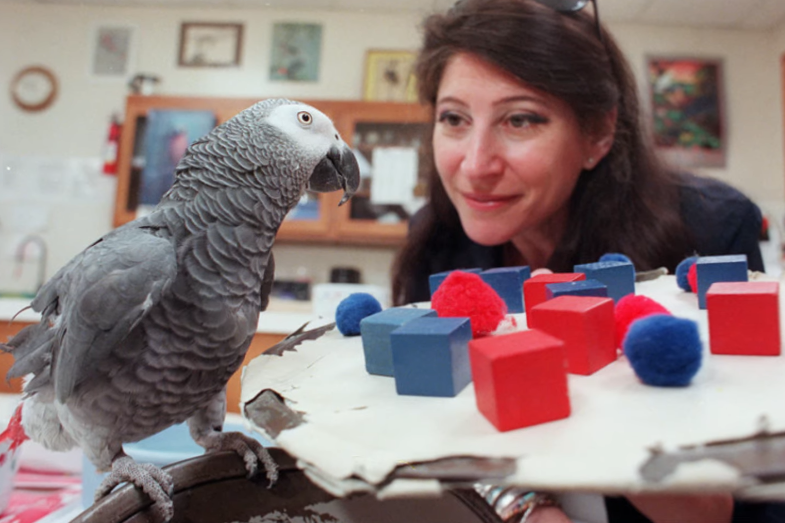
Parrots are famous for their vocal mimicry, but their true intelligence lies in their social awareness. Because parrots are flock animals with long lifespans, some living over 80 years, they have evolved to recognize individual members of their group. When kept as pets, they transfer this skill to their human “flock.” A parrot can distinguish between family members and visitors with ease, often reserving specific songs, words, or affectionate behaviors for their primary caregiver. They rely heavily on visual cues and the distinct pitch and tone of a person’s voice.
A study published in Current Biology highlights that parrots, specifically African Greys, possess cognitive abilities similar to those of a 5-year-old human child. This includes the ability to remember the specific behaviors of humans over time. If a person is consistently gentle, the parrot will show signs of excitement, such as dilating its pupils (known as “pinning”) or fluffing its feathers. Conversely, they can hold grudges against people who have stressed them. This high level of emotional intelligence means that to a parrot, you aren’t just a food provider; you are a specific social partner with a unique identity.
Pigs Know Their Caretakers

Pigs are frequently ranked among the most intelligent domesticated animals, often outperforming dogs in certain problem-solving tasks. Research conducted at various agricultural universities has shown that pigs can distinguish between different people based on their size, the color of their clothes, and their facial features. In a 2015 study, pigs were shown to be able to tell the difference between a familiar handler and a stranger even when the humans were wearing the same clothing, suggesting they use subtle visual or olfactory cues to identify “their” person.
This recognition is deeply tied to the pig’s emotional state. Pigs that have been handled with care and positive reinforcement show significantly lower stress levels when they recognize a familiar caretaker approaching. They are even known to seek out physical contact, such as belly rubs, from people they trust. This capacity for memory and recognition underscores the importance of consistent, humane treatment in farming environments. To a pig, a human is not a generic figure but a specific entity associated with either safety or fear, proving their world is much more socially complex than many realize.
Sheep Recognise Faces
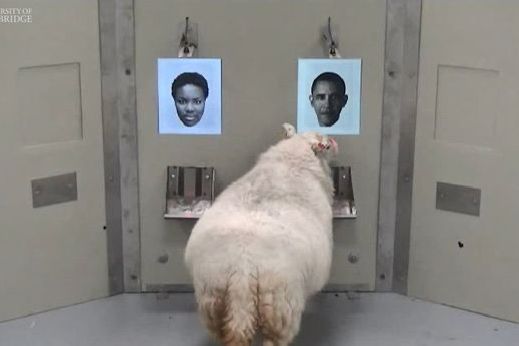
Sheep are often dismissed as simple followers, but they possess a sophisticated “facial recognition module” in their brains similar to that of humans. A landmark 2017 study from the University of Cambridge revealed that sheep can be trained to recognize the faces of celebrities like Barack Obama and Emma Watson from 2D photographs. More impressively, they could identify these people from different angles, a task that requires complex mental mapping. This proves that sheep see the world, and the humans in it, with a high degree of visual specificity.
In a farm setting, this ability translates to long-term social memory. Research has shown that sheep can remember the faces of up to 50 other sheep and several humans for over two years. They use these memories to navigate their social hierarchy and to identify which humans bring food versus those who bring stress, such as a shearer or a veterinarian. By focusing on the shape of the eyes and mouth, sheep build a reliable “database” of familiar faces, proving that their quiet nature hides a very observant and analytical mind.
Ravens Recall Individuals
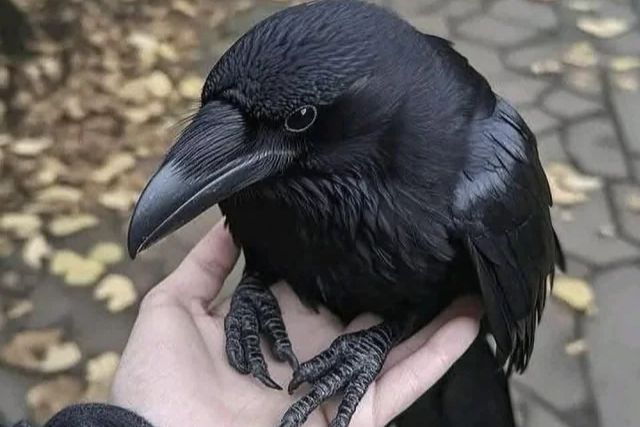
Ravens are the heavyweight champions of bird intelligence, frequently demonstrating problem-solving skills on par with great apes. Research published in Nature Communications in 2017 highlighted that ravens can remember humans who have “cheated” them in experimental trades for at least a month. If a person offered a piece of bread and then took it back, the raven would refuse to “work” with that specific individual in future sessions. This shows they don’t just recognize your face; they remember your reputation and your past actions.
This recognition is vital for ravens living in the wild or near human settlements. Because they are highly social, they observe how humans interact with the environment and each other. If a specific person consistently leaves out scraps, ravens will learn to identify that person’s gait, clothing, and facial features from a distance. Their ability to distinguish between a “friend” and a “foe” is a key survival strategy, allowing them to thrive in diverse habitats by maintaining a mental catalog of the individuals they encounter.
Archerfish Pick Faces
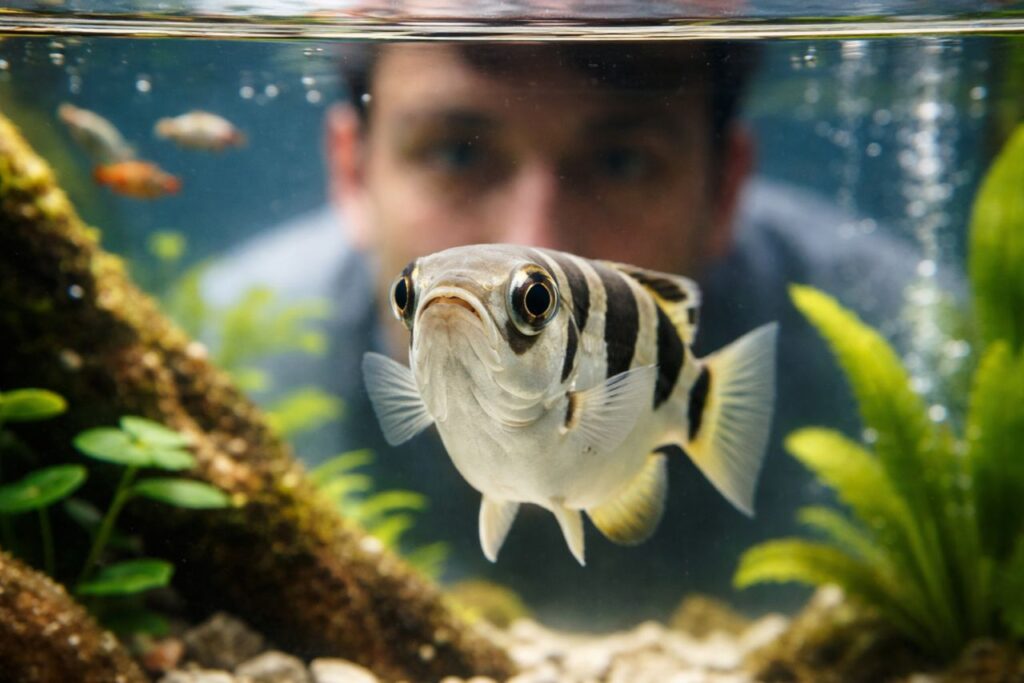
The archerfish is a master of precision, famous for spitting jets of water to hunt insects, but its most surprising skill is facial recognition. In a 2016 study conducted by researchers at the University of Oxford and the University of Queensland, archerfish were trained to “shoot” at a specific human face on a monitor. Even when the researchers mixed that face with 44 new ones, the fish consistently hit the correct target with up to 86% accuracy. This was a massive discovery because it proved that complex brain structures like the neocortex aren’t strictly necessary for recognizing humans.
For a creature that lives underwater, the ability to distinguish between individual humans is an incredible feat of pattern recognition. The archerfish likely treats a human face as a complex series of shapes and colors, much like it would evaluate the silhouette of a potential prey item. While they may not “bond” with humans in the way a dog does, their capacity to learn and remember specific visual markers challenges our traditional understanding of fish intelligence. It suggests that the “simpler” branches of the animal kingdom are much more aware of us than we ever imagined.
Mockingbirds Target People

Mockingbirds are fiercely territorial, and they don’t treat all intruders equally. A 2009 study at the University of Florida proved that these birds can distinguish between a “threatening” human and a “neutral” one in as little as 60 seconds of interaction. When a researcher repeatedly approached a mockingbird’s nest, the bird would quickly learn to recognize that specific individual. Even if the person changed their clothes or approached from a different direction, the bird would ignore other passersby and specifically dive-bomb the “intruder.”
This targeted behavior shows that mockingbirds possess a high-resolution memory for human features. Instead of wasting energy attacking everyone who walks through a park, they conserve their defensive efforts for the specific individuals they perceive as a danger. This level of discrimination is a brilliant adaptation for life in urban areas, where thousands of humans pass by daily. By focusing on the “bad actors,” mockingbirds demonstrate a level of cognitive focus that ensures their offspring stay safe without the bird becoming exhausted by constant alarm.
Cattle Know Caretakers
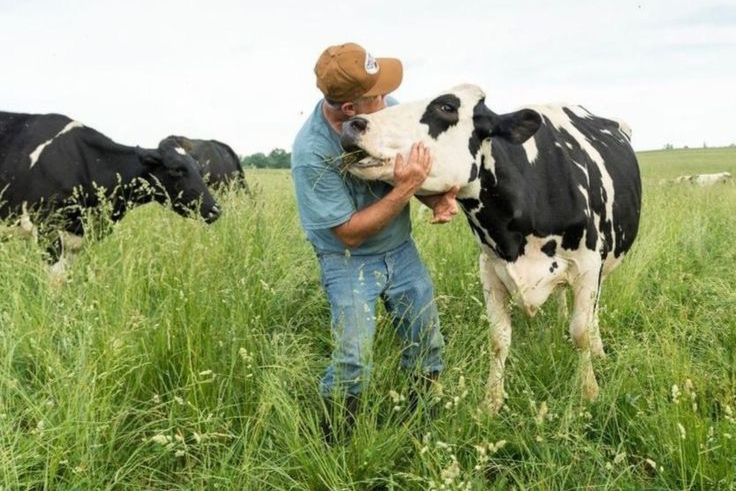
Cattle are remarkably perceptive animals that rely on a combination of sight and sound to identify the people in their lives. On modern farms, cows have been observed reacting differently to handlers based on their past experiences; they are noticeably calmer around people who use a soft voice and gentle touch. A 2011 study confirmed that cattle can distinguish between a familiar person and a stranger based solely on facial features. They often use the human’s height and vocal pitch as secondary confirmation to ensure they are interacting with someone they trust.
This recognition plays a massive role in the productivity and health of the herd. When a cow recognizes a “friendly” handler, its heart rate remains steady and it produces less cortisol, the stress hormone. In contrast, the presence of an unfamiliar or “rough” individual can trigger a flight response that ripples through the entire group. Because cattle are social herd animals, they likely share information about “safe” humans through their body language. Their ability to form these individual associations highlights the deep emotional capacity of livestock and the importance of positive human-animal bonds.
Rhesus Macaques Identify Humans
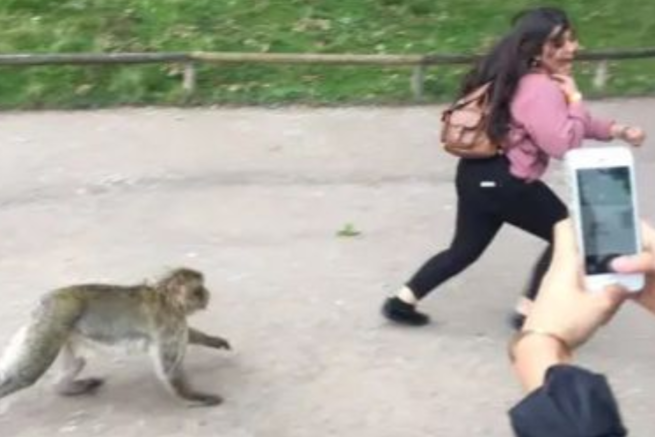
Rhesus macaques are among the most studied primates in the world, and their ability to identify individual humans is a cornerstone of their survival in both the wild and laboratory settings. These monkeys use a “holistic” approach to facial recognition, meaning they look at the entire face at once rather than just the nose or eyes. Research has shown that they can recognize familiar humans in photographs, even after not seeing them for long periods. This skill is supported by specialized neurons in their brains that are finely tuned to process facial information.
In urban areas, such as cities in India, macaques live in constant contact with humans and have learned to distinguish between tourists who offer food and locals who might shoo them away. They are also known to recognize specific researchers or caretakers who provide enrichment or medical care. This level of individual awareness allows them to navigate complex social landscapes where humans are just another species in their environment. Their sharp memories and ability to categorize people based on behavior prove that these primates are constantly “people-watching” with a very high level of intelligence.
Tokay Geckos Learn Handlers
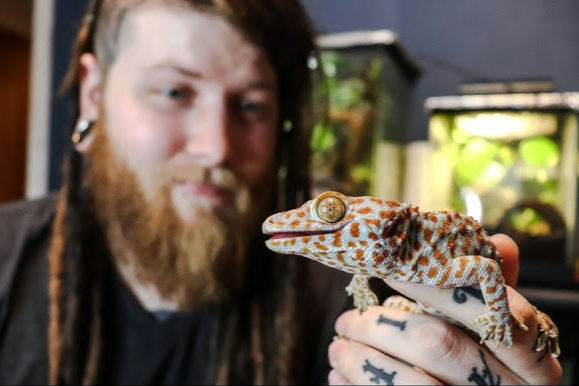
Tokay geckos are often feared for their loud “to-kay” call and their tendency to bite when threatened, but they are more observant than their reputation suggests. Experienced reptile keepers have long noted that these geckos can “tame down” with a specific person while remaining aggressive toward others. This suggests that the gecko has learned to identify its primary handler as a non-threat. While they don’t have the emotional brain of a mammal, they use their sharp eyesight and chemical sensing to build a profile of the humans they interact with most frequently.
This form of recognition is likely based on “habituation,” where the animal stops reacting to a specific stimulus because it has learned that stimulus is safe. Over months of consistent interaction, a Tokay gecko may stop its defensive posturing when it sees its familiar owner approach the enclosure. This shows a level of discrimination that many people don’t expect from a lizard. By distinguishing between the hand that feeds them and the hand of a stranger, these geckos prove that the ability to recognize individuals is a trait that crosses the boundary between warm-blooded and cold-blooded animals.
Honeybees Recognise Faces
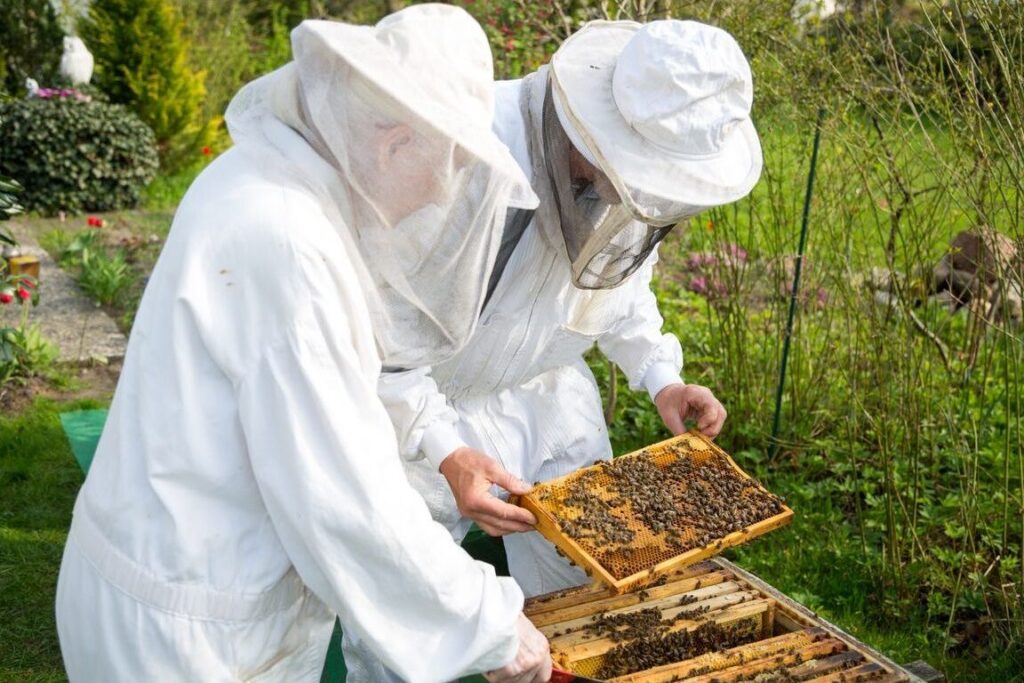
It might seem impossible for an insect with a brain the size of a grass seed to recognize a human, but honeybees are full of surprises. In a famous 2005 experiment, researchers used “shaping” techniques to train bees to associate photos of specific human faces with a sugar reward. The bees were able to pick out the “reward face” from a group of distractors, even when the images were manipulated. This suggests that bees aren’t just seeing a blur of colors; they are identifying specific spatial arrangements of eyes, noses, and mouths.
Bees use “configural processing,” which involves looking at the relationship between different parts of a face. This is the same technique humans use, though on a much smaller scale. While a bee in your garden likely isn’t “friends” with you, this research proves that the fundamental building blocks for recognizing individuals are present even in the smallest of creatures. It opens up fascinating questions about how insects navigate their world and whether they use these same skills to recognize different flowers or even individual members of their own hive.


