
1. A Wingspan That Rivals Small Birds
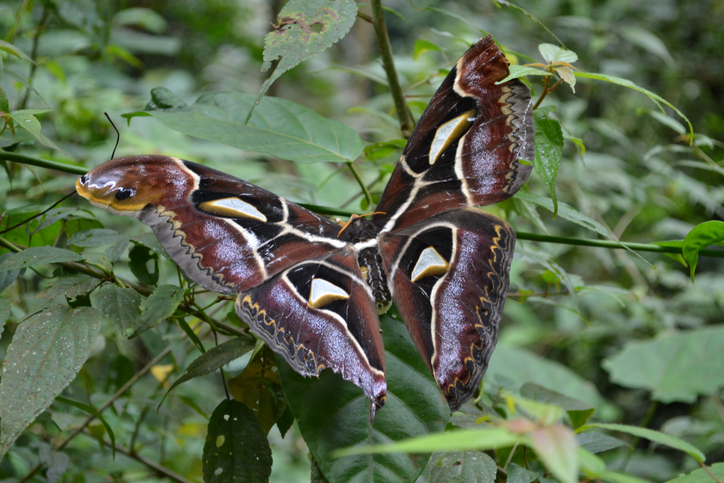
Most people do not expect a moth to stop them in their tracks, but the Atlas moth often does exactly that. If you have ever seen a photo of one resting quietly on a tree trunk, the first thing that stands out is its size. These moths can stretch their wings nearly a foot across, reaching around 25 to 30 centimeters from tip to tip. That is about as wide as a large dinner plate, which explains why people sometimes mistake them for birds at first glance. Their wings carry warm shades of copper, brown, and cream that seem almost painted by hand. When an Atlas moth rests with its wings open, it can look like a large leaf pressed gently against bark. Even people who are not particularly fond of insects often pause when they see one because its presence feels surprisingly calm and striking at the same time.
What makes the experience even more memorable is how still the insect appears when resting. Atlas moths rarely flutter around in a frantic way like many smaller moths do. Instead they remain calm for long stretches of time, almost as if they understand their size already makes them impossible to ignore. The wide wings create a soft shadow on whatever surface they choose, which adds to the quiet sense of scale people notice immediately. Seeing one up close can change the way you think about insects because the Atlas moth feels almost gentle rather than intimidating. For many people, that moment becomes a reminder that nature still holds surprising beauty in places we rarely expect.
2. Their Wings Look Like Snake Heads
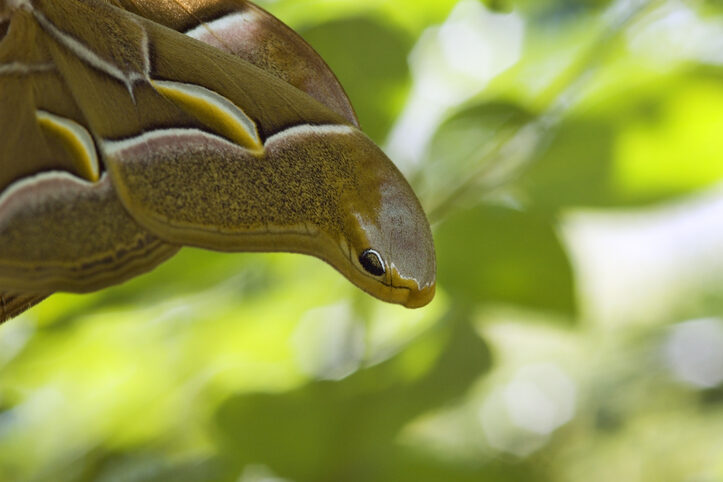
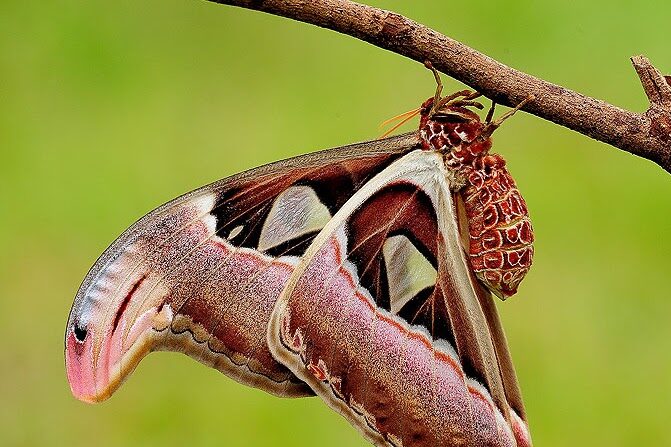
When people look closely at the wings of an Atlas moth, they often notice something unusual about the tips. The ends of the wings curve and narrow in a way that strongly resembles the shape of a snake’s head. The patterns and colors around those edges help complete the illusion. Dark patches look like eyes, while curved lines resemble the markings you might see on a reptile. It is an odd detail at first, but it begins to make sense when you think about how animals survive in the wild. A moth this large would normally attract a lot of attention from predators such as birds or small mammals searching for food in the forest.
This strange wing design appears to serve as a form of visual protection. When threatened, the moth may gently move its wings in a way that highlights the snake shaped tips. A predator approaching what seemed like an easy meal might suddenly hesitate when it notices something that looks like a snake’s head staring back. That brief moment of confusion could give the moth just enough time to slip away unnoticed. Many insects rely on similar tricks to stay safe, but the Atlas moth example is especially striking. Once you notice the snake like shapes on the wings, it becomes hard to look at the moth without seeing them every time.
3. They Do Not Eat As Adults
One of the most surprising things about the Atlas moth is what happens after it becomes an adult. Most insects spend their lives searching for food, but adult Atlas moths do not eat at all. When they emerge from their cocoons, their mouthparts are extremely small and not built for feeding. Everything the moth will need to survive its adult life has already been stored earlier while it was still a caterpillar. During the caterpillar stage the insect eats constantly, storing energy that will later support the final stage of life.
Because of this design, the adult moth has a very focused purpose. Instead of feeding or wandering widely, it spends its short life finding a mate and continuing the next generation. The adult stage usually lasts only one to two weeks. In that brief time the moth must locate a partner, reproduce, and lay eggs before its life naturally ends. Many people find this life cycle surprising because it feels so different from the way most animals live. Yet it works perfectly for the Atlas moth. The caterpillar stage gathers the resources needed, and the adult stage quietly completes the cycle.
4. Their Caterpillars Are Huge Too
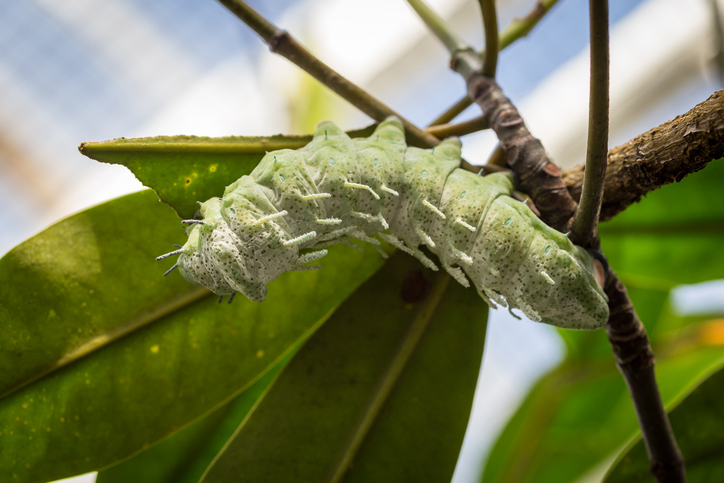
Long before the Atlas moth spreads its enormous wings, it begins life as a caterpillar that is already quite impressive. Atlas moth caterpillars can grow to around 12 centimeters in length, making them far larger than many of the caterpillars people see in gardens. Their bodies are pale green and slightly thick, with small fleshy spikes along the surface. These spikes are harmless to humans but give the caterpillar a distinctive appearance. At this stage the insect focuses on one thing above all else, which is eating leaves and growing steadily.
The caterpillar feeds on plants such as citrus, guava, and cinnamon trees. Each meal helps it store energy that will later sustain the adult moth. Over several weeks the caterpillar becomes plumper and heavier as it prepares for the next stage of life. Watching the change can be surprisingly interesting because the transformation feels gradual yet dramatic at the same time. By the time the caterpillar is ready to spin its cocoon, it already carries the stored energy needed for its future life as a giant moth. That early growth is the foundation that makes the Atlas moth possible.
5. They Spin Large Silk Cocoons
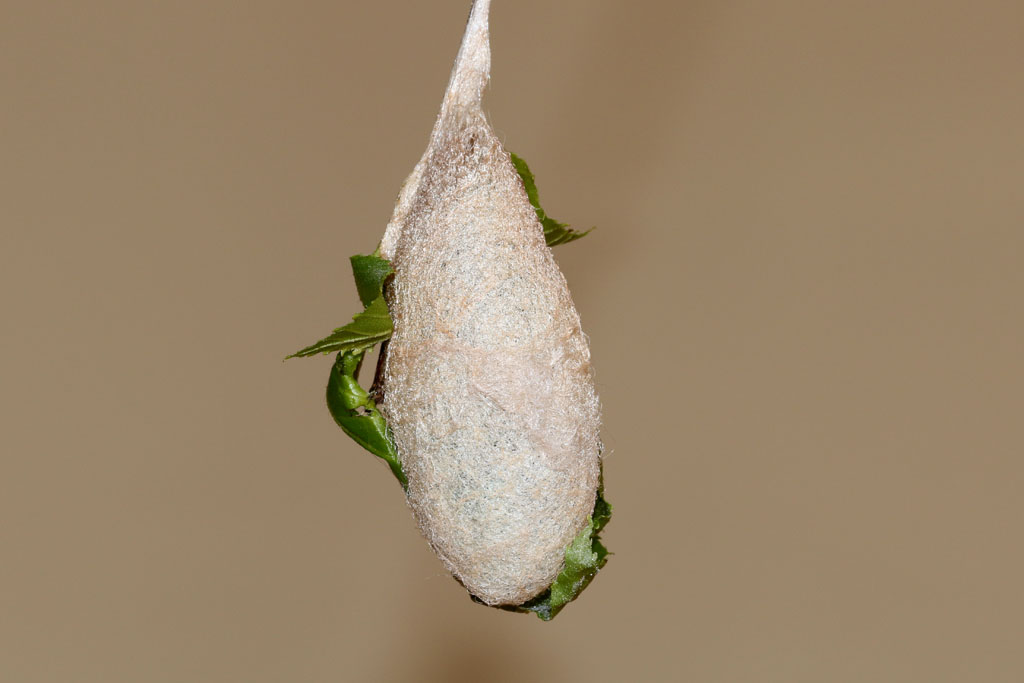
When the Atlas moth caterpillar reaches the end of its feeding stage, it begins preparing for one of the most remarkable parts of its life cycle. The caterpillar produces silk from special glands and slowly wraps itself inside a protective cocoon. These cocoons are larger and thicker than many people expect. Their color often appears brown or tan so they blend easily with dried leaves. The silk threads form a strong layer that protects the insect during its transformation into an adult moth.
Inside the cocoon something extraordinary begins to happen. The caterpillar gradually reorganizes its body and develops wings, antennae, and other adult features. This transformation can take several weeks while the moth remains safely hidden. In some regions of Asia, the cocoons of Atlas moths are collected and used to produce a durable material called fagara silk. Once the transformation is complete, the moth pushes its way out of the cocoon and slowly unfolds its wings. At first the wings appear soft and wrinkled, but they soon expand to their full impressive size.
6. They Live Mostly In Asian Forests
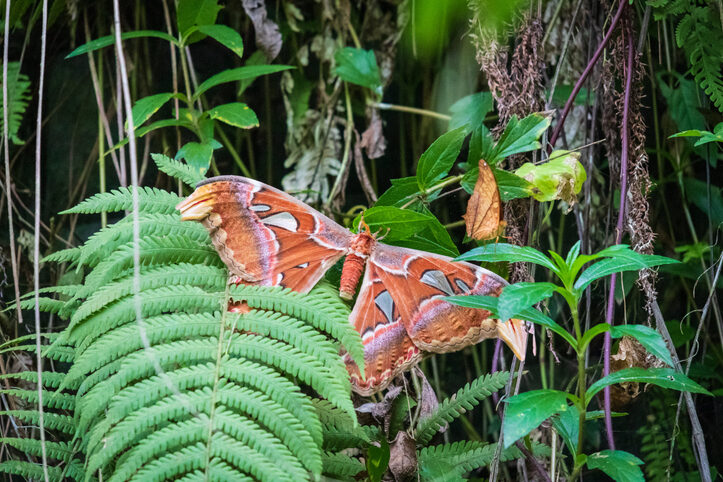
Atlas moths are native to warm tropical and subtropical regions across South and Southeast Asia. They are commonly found in countries such as India, Thailand, Indonesia, and Malaysia. These regions offer the warm temperatures and rich plant life that the moths need throughout their life cycle. The caterpillars rely on specific trees and shrubs for food, so forests provide the ideal environment. Even in areas where Atlas moths live, many people rarely see them because the insects are mostly active at night.
During the day Atlas moths rest quietly on tree trunks, leaves, or nearby surfaces. Their wing colors help them blend in with bark and dried foliage, which makes them surprisingly difficult to notice. At night they move slowly through the forest, gliding between branches in search of mates. Occasionally they wander into gardens or towns located near wooded areas. When that happens people are often amazed to see such a large moth resting nearby. The encounter feels unexpected, especially for those who never imagined insects could reach such impressive size.
7. They Are Surprisingly Gentle Flyers
For an insect with such enormous wings, the Atlas moth moves through the air in a surprisingly calm way. Many people expect a creature that large to fly heavily or make loud movements, but the Atlas moth does neither. Its flight is slow and drifting, almost like watching a leaf float through the air on a quiet evening. The wide wings allow it to glide gently instead of flapping constantly. This style of movement helps the moth conserve the limited energy it carries from its caterpillar stage.
Because adult Atlas moths do not eat, every bit of stored energy matters. Their slow and careful flight allows them to travel short distances without wasting that precious reserve. The movement also helps them avoid attracting too much attention from predators. Fast flying insects often stand out against the background of the forest, but the Atlas moth blends into the quiet rhythm of the night. Seeing one glide past can feel strangely peaceful. The motion looks effortless, which makes the moth appear almost like a drifting shadow rather than a giant insect.
8. Females Are Larger Than Males
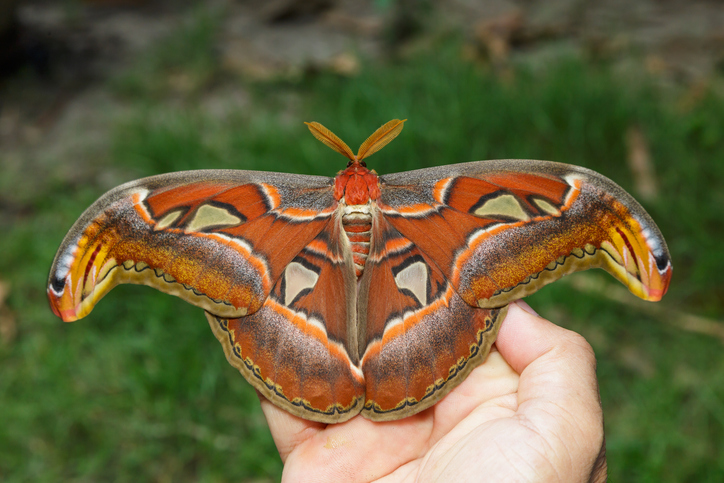
When people see Atlas moths together, they may notice a difference in size between the two. Female Atlas moths are usually larger and heavier than the males. Their broader bodies help them carry the hundreds of eggs they will lay after mating. The wings of females are often slightly wider as well, which gives them a fuller appearance when resting. Males, on the other hand, are somewhat smaller but have a very important advantage that helps them find females.
Male Atlas moths have large feathery antennae that look almost like tiny fern leaves. These antennae allow them to detect chemical signals called pheromones released by females. When a female is ready to mate, she releases these signals into the air. The male moth can detect the scent and follow it through the forest until he reaches the source. This ability is essential because the moth’s adult life is very short. Without those sensitive antennae, finding a mate in such a limited time would be extremely difficult.
9. Their Antennae Work Like Chemical Sensors
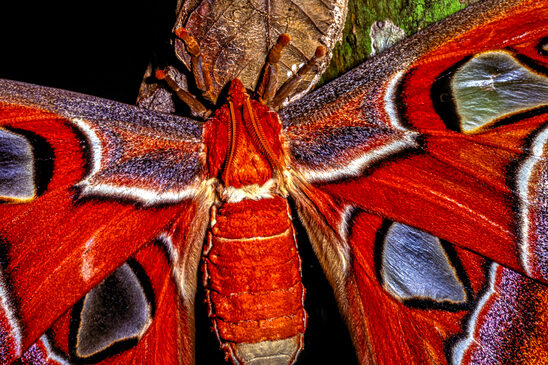
The antennae of Atlas moths are more than decorative features. They function as highly sensitive sensors that help the moth understand its surroundings. Male moths in particular rely on their antennae to locate females during the brief adult stage of life. Each antenna contains thousands of tiny receptors that respond to chemical signals carried through the air. These signals, known as pheromones, are released by females when they are ready to mate.
When the male detects this scent, he begins following the trail through the night air. Even a faint signal can guide him in the right direction. The antennae help him determine the strength and direction of the scent so he can move closer to its source. This system allows moths to communicate over surprisingly long distances without sound or sight. It is a quiet form of communication that happens constantly in forests after sunset. For the Atlas moth, these antennae act like a navigation tool that guides the male toward the female during the short time they have to reproduce.
10. Their Colors Help Them Hide
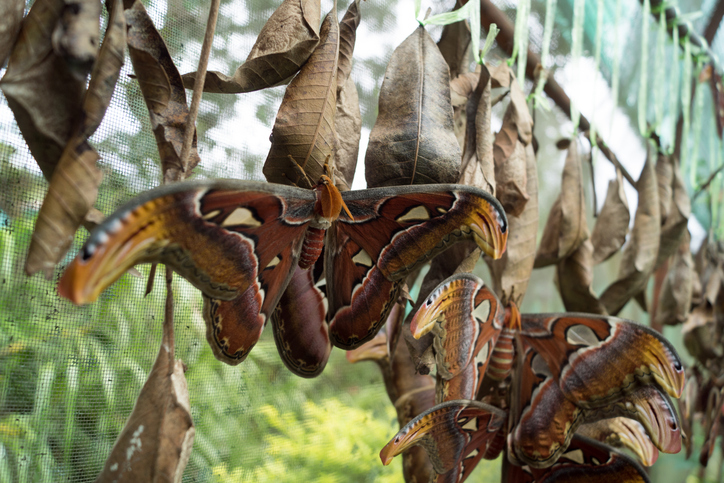
At first glance the Atlas moth appears striking because of its large patterned wings. Yet those colors actually serve an important purpose in the wild. The mixture of browns, rust tones, and soft cream patterns closely resembles dried leaves or tree bark. When the moth rests during the day, it spreads its wings flat against a surface and remains very still. This posture allows the colors to blend naturally with the surroundings.
Predators such as birds often rely on quick movement or strong outlines to spot prey. The Atlas moth avoids attention by doing the opposite. Its still posture and leaf like patterns make it difficult to distinguish from the background. Even a large moth can disappear visually when its colors match the textures of bark or foliage. People who search for Atlas moths sometimes walk past them without realizing one is right nearby. Only when the moth moves or changes position does its true shape become clear. This quiet camouflage is one of the moth’s most effective defenses.
11. They Lay Hundreds Of Eggs
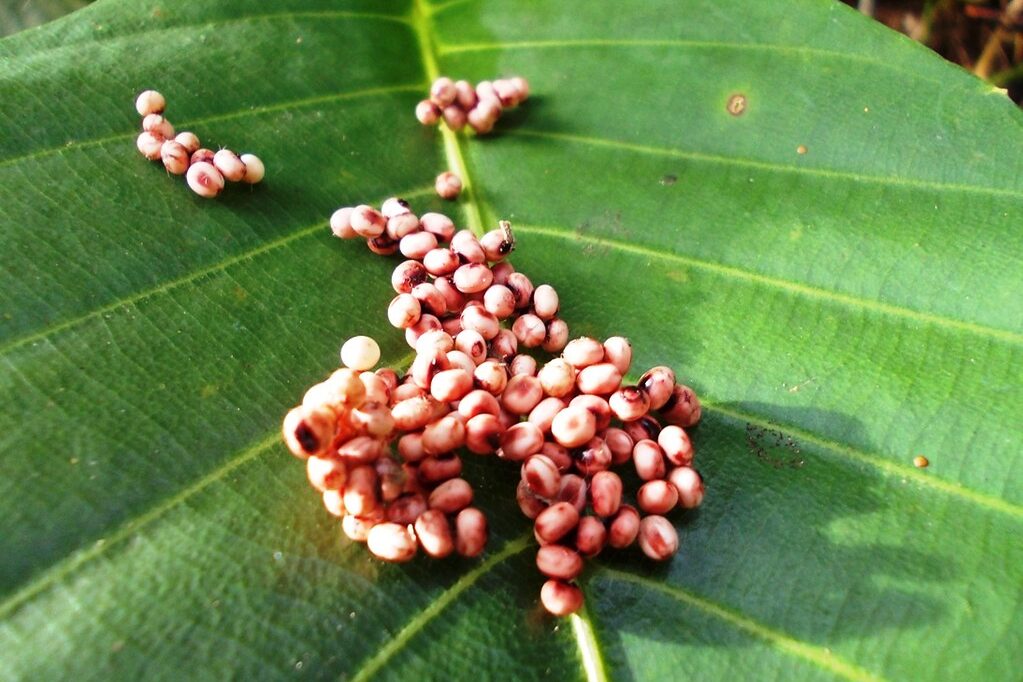
Once a female Atlas moth has successfully mated, her next task begins almost immediately. She starts laying eggs on the underside of leaves where the future caterpillars will have food nearby when they hatch. A single female can produce between two hundred and three hundred eggs during her short adult life. Each egg is small and pale, making it easy to overlook unless you are looking carefully.
This large number of eggs increases the chances that at least some will survive to adulthood. In the wild many eggs and caterpillars are eaten by predators or affected by environmental conditions. By producing many eggs, the species ensures that the life cycle continues even if only a small portion reach maturity. Within several days the eggs hatch and tiny caterpillars emerge. These new caterpillars immediately begin feeding on nearby leaves, starting the process that will eventually lead to another generation of Atlas moths.
12. They Can Be Mistaken For Butterflies
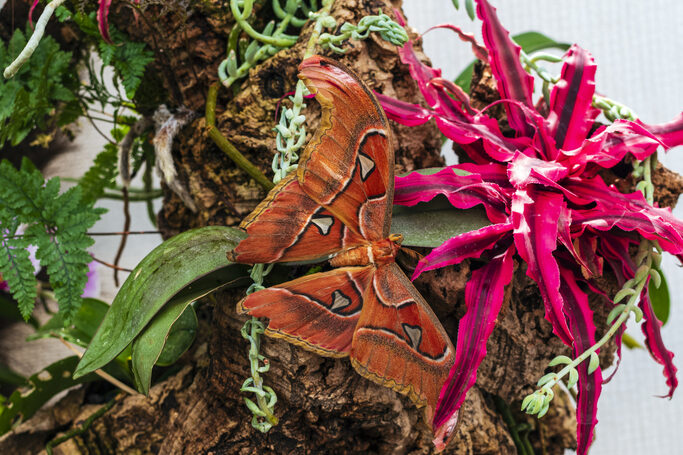
People who encounter an Atlas moth for the first time sometimes assume they are looking at an unusually large butterfly. The wings are broad and colorful, and the insect can appear surprisingly graceful when resting. This confusion is understandable because both butterflies and moths belong to the same scientific order called Lepidoptera. However, there are a few simple differences that help distinguish them.
Atlas moths have thicker bodies and feathery antennae, while butterflies usually have slimmer bodies and antennae with rounded tips. Moths are also more active at night, which is another key difference between the two groups. When an Atlas moth is seen during the day it is usually resting rather than flying. Once people learn these details, the distinction becomes easier to recognize. Still, the Atlas moth’s beauty often surprises observers who never expected a moth to look so impressive.
13. They Sometimes Appear In Cities
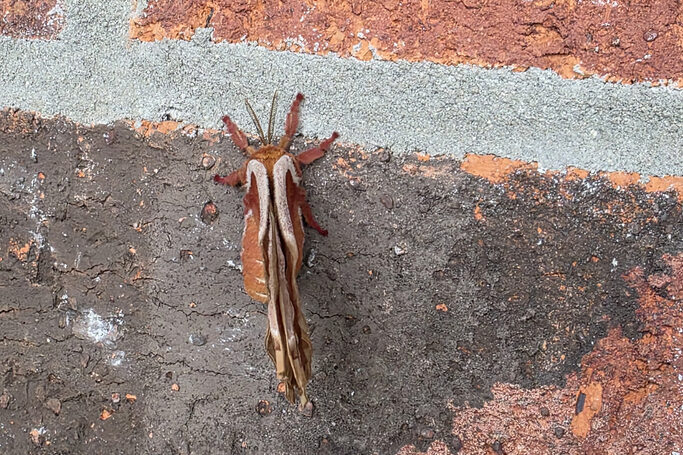
Although Atlas moths belong mainly to forest environments, they sometimes appear in towns or cities located near natural habitats. This usually happens at night when bright lights attract them. Many moth species navigate using natural light from the moon and stars. Artificial lights can confuse this system and draw them toward buildings and streets.
When a giant Atlas moth appears on a wall or near a street lamp, people often gather around to take photos. The size alone makes it feel like a rare sight. Residents may not realize that these moths quietly live in nearby forests and simply wandered closer to human spaces by chance. After resting for a while, the moth may continue its journey once night falls again. These unexpected encounters often leave people with a new appreciation for the wildlife that exists just beyond the edges of everyday life.
14. Their Life Cycle Moves Quickly
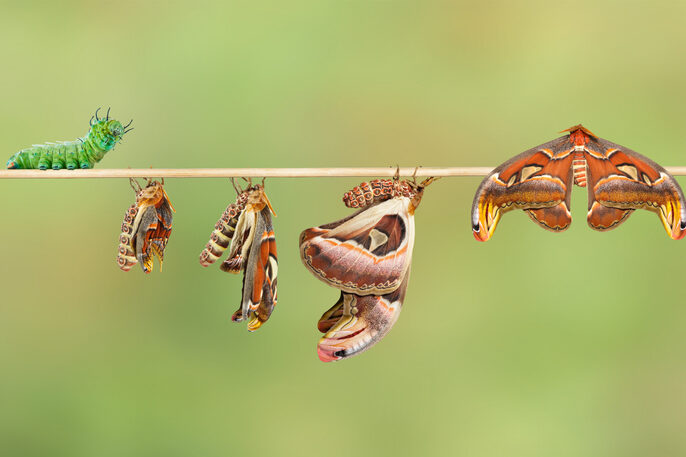
The life cycle of the Atlas moth progresses through several stages, beginning with eggs laid on leaves. Once the eggs hatch, the caterpillars spend weeks feeding and growing. This stage is the longest part of the moth’s life because it is when energy is stored for the future. After reaching full size, the caterpillar spins its cocoon and enters the pupal stage where the transformation into an adult begins.
Inside the cocoon the body reorganizes and develops wings, antennae, and other features of the adult moth. When the moth finally emerges, its time becomes very limited. The adult stage typically lasts only one or two weeks. During that short period the moth must locate a mate and reproduce before its life ends. The cycle may seem brief, but it allows new generations of Atlas moths to appear regularly in their natural habitats.
15. They Play A Role In Forest Ecosystems
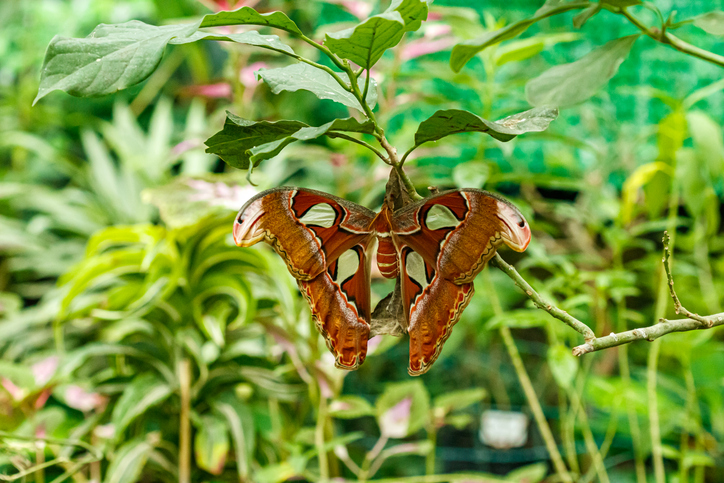
Even though Atlas moths live quietly and for a relatively short time, they play an important role in forest ecosystems. As caterpillars they feed on leaves from various plants, which helps regulate plant growth. While feeding they also become part of the food chain, providing nourishment for birds and other small animals that rely on insects.
Later in life the adult moths also become prey for animals such as bats and birds. This connection places the Atlas moth within the larger network of relationships that sustain forest life. Every species contributes something to the balance of the environment. The Atlas moth may appear delicate and short lived, but its presence supports the health and diversity of the ecosystems where it lives.
16. They Have Fascinated Scientists For Centuries
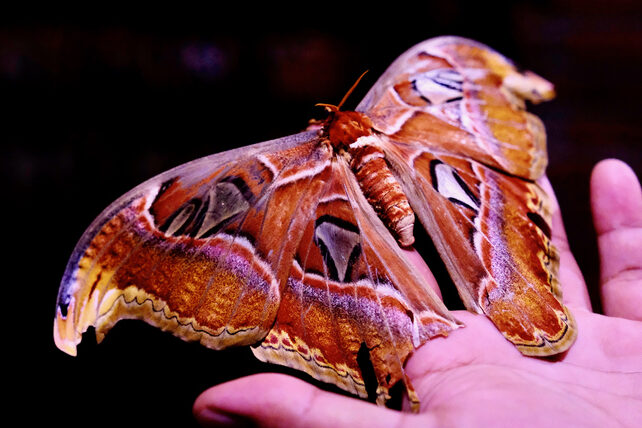
The Atlas moth has captured the curiosity of naturalists and scientists for many generations. Early travelers in Asia often wrote about these enormous moths because they seemed almost unbelievable at first sight. Specimens eventually found their way into museums and research collections around the world. Their unusual size and patterns made them an interesting subject for study.
Researchers continue to examine their life cycle, behavior, and evolutionary traits today. The Atlas moth remains one of the most recognizable giant moth species known to science. Studying insects like this helps scientists understand how species adapt to their environments and how ecosystems function as a whole. What began as simple curiosity centuries ago has grown into ongoing research that continues to reveal new details about these remarkable insects.
17. Seeing One In Person Is Unforgettable
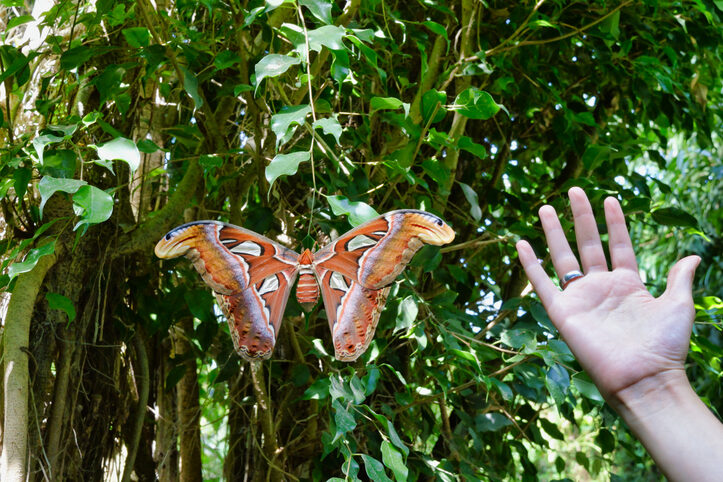
Reading about Atlas moths can be interesting, but seeing one in real life leaves a very different impression. When those wide patterned wings open, the insect looks almost unreal. Many people remember the moment clearly because it feels unexpected and quietly beautiful at the same time. The moth does not rush or create noise. It simply rests there, allowing its size and patterns to speak for themselves.
Moments like that often change how people think about insects. The Atlas moth reminds us that even the quietest creatures can carry extraordinary detail and presence. It lives briefly, appears unexpectedly, and then disappears again after completing its life cycle. Yet the memory of seeing one tends to linger long afterward. Encounters like this show that nature still holds remarkable surprises for anyone willing to notice the small details around them.


