
A Day In The Life
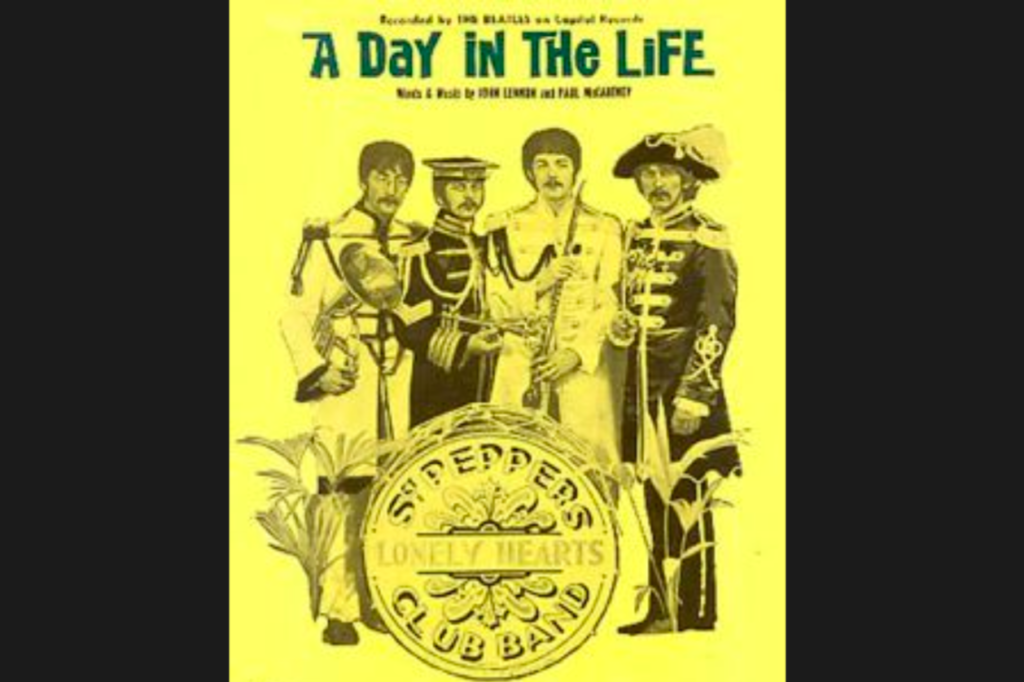
Whenever people begin talking about the Beatles, the conversation usually drifts toward the songs that feel bigger than ordinary pop music, and A Day In The Life often appears early in that discussion. It quietly captures the spirit of the band at their most thoughtful and adventurous. First released on the album Sgt. Pepper’s Lonely Hearts Club Band in 1967, the song blends two different creative voices. John Lennon brings reflective verses inspired by newspaper stories and everyday observations, while Paul McCartney adds a brisk middle section that suddenly wakes the listener up. The song begins like someone gently telling a story and then slowly unfolds into something much larger.
What makes it linger is the way the music grows around those words. The orchestra does not simply accompany the band. It climbs, swells, and stretches until the entire piece feels like it is holding its breath. By the time the final piano chord rings out, the song feels strangely complete and mysterious at the same time. Even today many listeners sit quietly through that long ending, almost as if the music is asking them to pause and think for a moment before moving on. It still feels bold decades later.
Yesterday
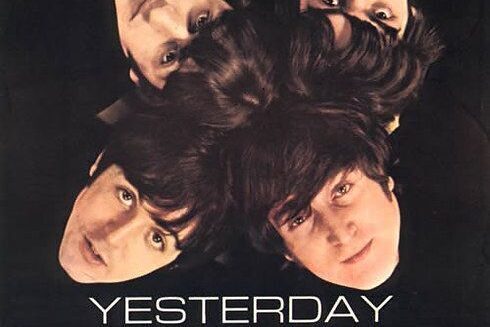
Yesterday is one of those songs that feels so natural that people sometimes forget how unusual it was when it first appeared. Released in 1965, it sounded very different from the loud guitars and youthful energy most people expected from the Beatles at the time. Instead, Paul McCartney stepped forward with a quiet performance built around acoustic guitar and a small string quartet. The story behind the song adds another layer of charm. McCartney has often said that the melody came to him in a dream, and he spent days asking people if they had heard it before because he was certain he must have borrowed it by accident.
Once he realized it was truly his own, the song slowly became something timeless. The lyrics are simple and deeply human, speaking about regret and the sudden realization that something precious has slipped away. Many listeners connect with it instantly because the emotion feels so honest. Over the years Yesterday has been covered by hundreds of artists across different genres, yet the original recording still feels the most intimate. There is something about its gentle melody and plainspoken words that continues to resonate with listeners who may not even consider themselves Beatles fans.
Strawberry Fields Forever
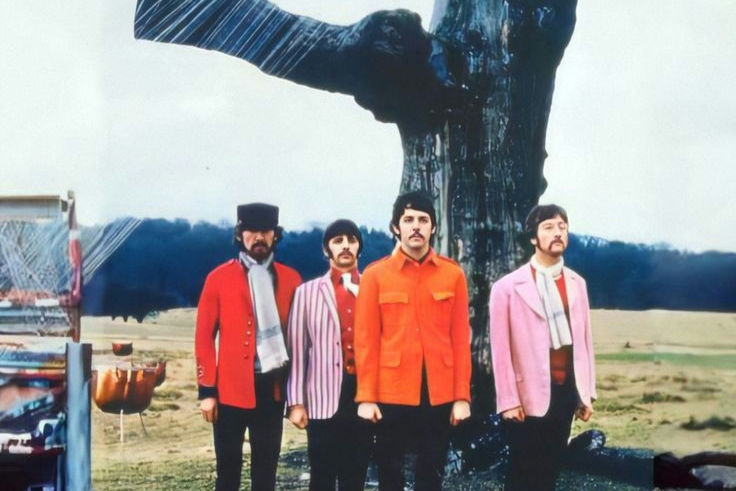
Strawberry Fields Forever has a way of pulling listeners into a dreamlike space where memories feel slightly blurred and emotions drift quietly through the music. John Lennon wrote the song while thinking about a place near his childhood home in Liverpool where he used to wander as a boy. Instead of telling a straightforward story, the lyrics move through fragments of thoughts and feelings that capture the strange way memories often behave. The recording itself became one of the Beatles’ most fascinating studio creations. Two different versions of the song were recorded, each with its own tempo and arrangement.
Producer George Martin and engineer Geoff Emerick carefully combined them into a single performance that shifts almost invisibly as it plays. The result is a sound that feels both familiar and mysterious. Mellotron tones, layered instruments, and Lennon’s thoughtful voice all blend together into a musical landscape that feels personal and reflective. When the song fades out it leaves the listener with the quiet sense of having wandered through someone else’s thoughts for a few minutes. It remains one of the most imaginative recordings the band ever created.
Let It Be
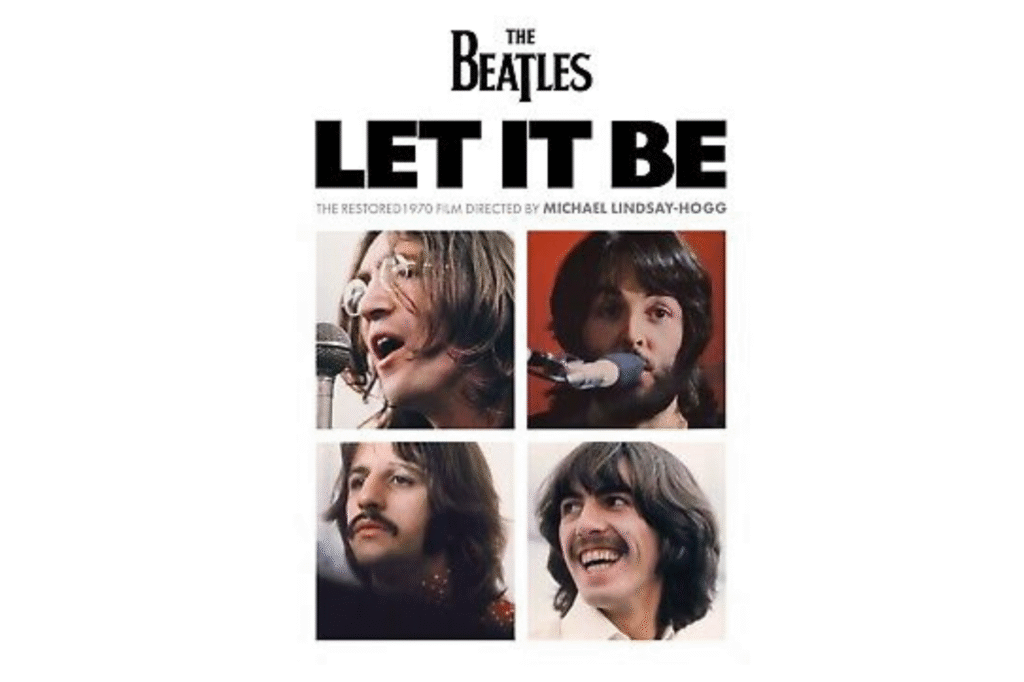
Let It Be carries a calm and reassuring feeling that many people turn to when life becomes uncertain. Paul McCartney wrote the song during a difficult time when the Beatles were struggling with disagreements and creative tension. In later interviews he explained that the idea came from a dream about his mother Mary, who had died when he was young. In the dream she appeared peacefully and told him that everything would be alright. That simple message stayed with him and eventually became the heart of the song. Built around piano and gentle chords, Let It Be begins quietly before gradually opening into something that feels almost spiritual.
The melody rises slowly, inviting listeners to settle into the words rather than rushing through them. By the time the guitar solo arrives, the song feels like a comforting conversation between old friends. Over the years it has become one of the Beatles’ most beloved recordings, often played during moments when people need reassurance or reflection. The phrase itself has entered everyday language, reminding listeners that sometimes the best response to uncertainty is simply patience and acceptance.
Hey Jude
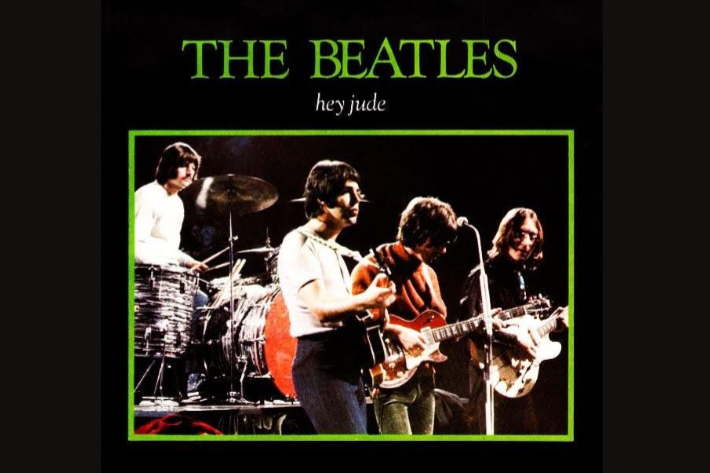
Hey Jude begins with a simple voice and piano, almost like someone sitting beside you offering quiet encouragement. Paul McCartney wrote the song while thinking about Julian Lennon, the young son of John Lennon, during the painful period when John and his first wife were separating. McCartney wanted the message to feel supportive and hopeful without sounding heavy or complicated. The early verses carry that gentle tone, encouraging the listener to open their heart and move forward even when things feel confusing. As the song progresses, something remarkable happens.
The arrangement gradually grows until it reaches one of the most memorable endings in popular music. For several minutes the band repeats a joyful chorus that invites everyone to join in. What began as a personal message slowly becomes a shared musical moment. Audiences around the world still sing along to the closing section with enthusiasm, often stretching the moment even longer than the original recording. It is one of those songs where the boundary between performer and listener disappears, leaving behind a feeling of connection that perfectly captures the warmth of the Beatles’ music.
Wild Honey Pie
Wild Honey Pie is one of those unusual moments in the Beatles catalog that often surprises listeners who are exploring the White Album for the first time. The track is extremely short and built around playful guitar sounds and scattered vocal lines that feel almost spontaneous. Paul McCartney recorded most of it himself during a break in the White Album sessions, experimenting with different tones and rhythms simply to see what might happen. Instead of developing into a full song with verses and a clear structure, the recording remained a brief musical sketch.
For some fans that spontaneity is part of its charm. The White Album itself moves through many different moods and styles, and this tiny burst of sound fits into that unpredictable spirit. Still, many listeners tend to skip past it when revisiting the album. Compared with the rich songwriting found elsewhere on the record, Wild Honey Pie feels more like a moment of studio curiosity than a fully realized piece. It shows the Beatles enjoying their freedom to experiment, even if the final result feels more playful than essential.
Revolution 9
Revolution 9 stands apart from almost everything else the Beatles recorded. Rather than presenting a melody or traditional lyrics, the piece unfolds as a collage of voices, sound effects, orchestral fragments, and repeating phrases layered together in an unsettling soundscape. John Lennon created it during a period when he and Yoko Ono were deeply interested in experimental art and avant garde music. The goal was not to write a catchy song but to capture the chaotic atmosphere of political unrest and social tension during the late nineteen sixties.
Listening to it can feel like walking through a strange audio landscape where bits of conversation and music appear and disappear without warning. The repeated phrase number nine drifts through the recording like an echo in a hallway. For music historians the piece is fascinating because it shows how far the Beatles were willing to stretch the boundaries of what could appear on a popular album. For everyday listeners, though, it can be challenging to revisit. Many fans appreciate the boldness behind it while admitting they rarely press play a second time.
Maxwell’s Silver Hammer
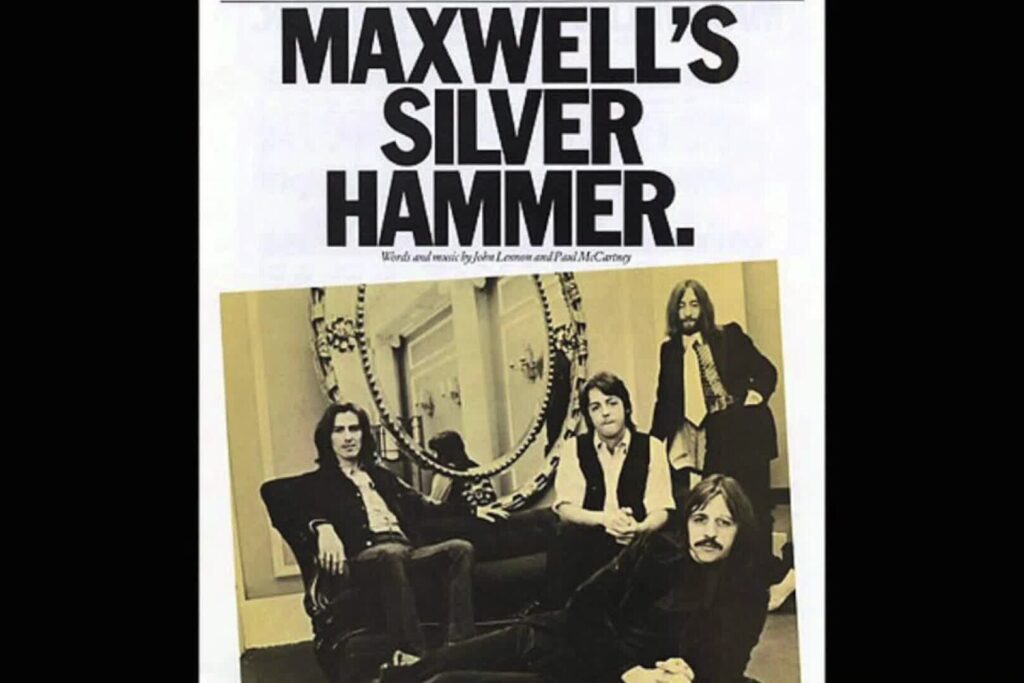
Maxwell’s Silver Hammer is one of the Beatles songs that often sparks debate among fans because of the unusual contrast between its music and its story. The arrangement is cheerful and light, driven by a bright piano melody that almost feels like a playful stage tune. Yet the lyrics follow a character named Maxwell who repeatedly commits violent acts with surprising calmness. That mismatch between upbeat sound and dark storytelling left some listeners puzzled. Recording the track also became a lengthy process in the studio because Paul McCartney wanted every detail to sound polished.
Other members of the band reportedly grew impatient during the sessions, which added to the tension surrounding the recording. When people listen to the song today they sometimes hear it as an example of McCartney’s whimsical songwriting style, which occasionally leaned toward theatrical storytelling. Others simply find the tone confusing. While it certainly stands out within the album Abbey Road, many fans feel it interrupts the smoother flow of songs surrounding it. It remains memorable, though perhaps not for the reasons the band originally intended.
Little Child
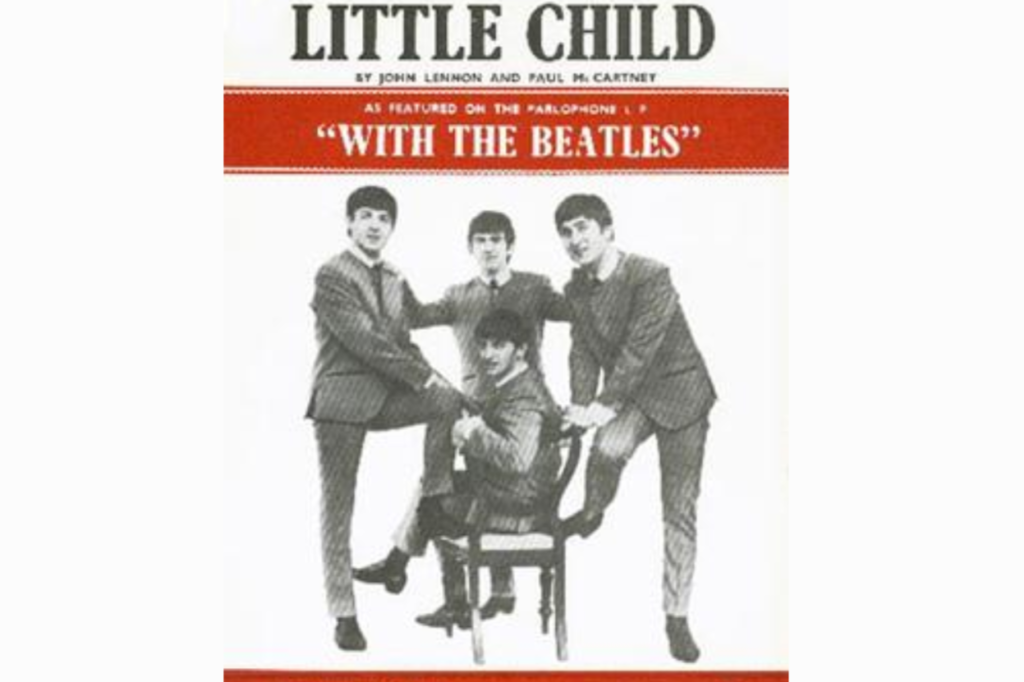
Little Child comes from the Beatles’ early years when the band was recording quickly and releasing new albums at an astonishing pace. During that period they often needed to fill albums with energetic songs that could capture the excitement of their live performances. Little Child fits squarely into that approach. Built around a lively harmonica line and straightforward rhythm, the song was designed to keep listeners moving rather than sitting back to reflect. At the time it worked well within the context of the band’s youthful sound.
Yet when people revisit the Beatles catalog today, the track tends to feel somewhat ordinary compared with the songwriting brilliance that soon followed. John Lennon later admitted he had little affection for the song and felt it was written quickly simply to complete the album With The Beatles. The performance still carries the enthusiasm of the band’s early days, when their energy alone could drive a recording. Even so, it lacks the emotional depth and musical creativity that soon made Lennon and McCartney one of the most celebrated songwriting partnerships in modern music.
Run For Your Life
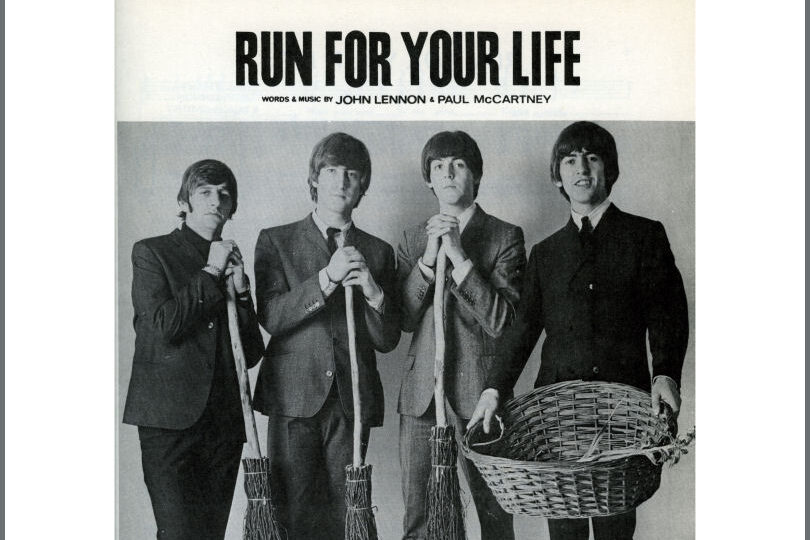
Run For Your Life closes the album Rubber Soul, which makes its presence feel slightly surprising considering how thoughtful and influential the rest of that record is. Musically the song fits comfortably within the album’s blend of folk and country inspired sounds. The guitar rhythm moves smoothly and the melody follows a familiar pattern that feels easy to absorb. The lyrics, however, have often drawn criticism over the years. The opening line includes a threat of violence toward a romantic partner, which many listeners find uncomfortable today.
John Lennon later expressed regret about writing the song and admitted he never considered it one of his better efforts. Looking back at the Beatles catalog now, Run For Your Life often feels like a reminder that even great artists sometimes produce work they later question. It does not erase the strength of Rubber Soul as a whole, yet it quietly closes the album on a note that feels slightly out of step with the thoughtful tone of the songs that came before it.


