
The Edge Of Human Daring
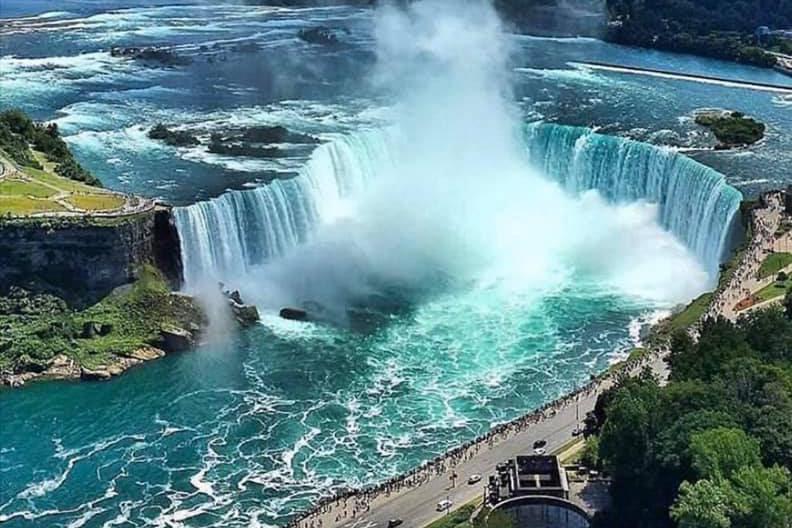
Few natural landmarks on our planet command the same blend of awe, peril, and mystery as the crashing waters of Niagara Falls. Every year, millions of tourists stand on the edge to watch the massive curtain of water tumble more than 160 feet into the churning river below. However, for over a century, a select group of people looked at that roar and wondered if they could beat the odds. Some built reinforced barrels or high-tech capsules, while others simply leaped into the mist, trusting in fate.
These stories have become a permanent part of the falls’ strange history. Since the early 1900s, dozens of daredevils and dreamers have attempted the plunge, but only a small fraction survived. Historians note that only about sixteen people have intentionally gone over and lived to tell the tale, with almost all of them choosing the Canadian Horseshoe Falls. Survivors describe the experience as a deafening, violent, and disorienting tunnel of water that swallows all sense of direction until they reappear downstream.
Annie Edson Taylor: The First Survivor
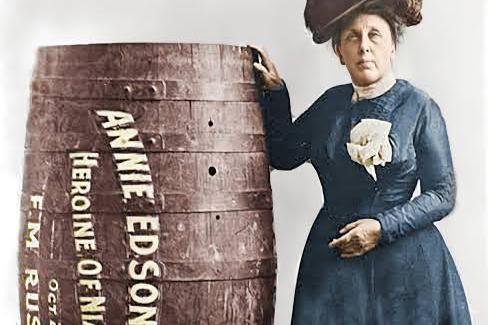
On October 24, 1901, a retired schoolteacher named Annie Edson Taylor secured her place in history. At 63 years old, she was looking for a way to avoid the poorhouse and hoped the fame from a stunt would provide financial comfort in her old age. She climbed into a custom-made oak barrel lined with a mattress. To ensure she had enough air, her assistants used a bicycle pump to compress the air inside before sealing her in and pushing the vessel into the river.
Thousands of witnesses held their breath as the barrel vanished into the white mist at the base of the falls. After several tense minutes, the barrel was spotted bobbing downstream. When rescuers pried the lid open, Taylor emerged alive, suffering only from a few small cuts and a bit of shock. She later told reporters that the descent felt like a chaotic whirlpool. Sadly, while she became a global sensation, the riches she sought never came; she spent her final years selling postcards and mementos to tourists.
Bobby Leach: The Steel Barrel Ride
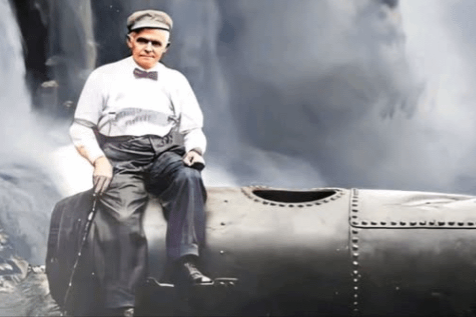
Exactly a decade after Taylor’s success, an English circus performer named Bobby Leach decided to up the ante. On July 25, 1911, Leach climbed into a heavy, reinforced steel barrel and launched himself toward the brink of the Horseshoe Falls. Unlike Taylor, Leach was a seasoned professional used to the world of spectacles and stunts, but even his experience couldn’t prepare him for the sheer violence of the water. The impact at the bottom was absolutely devastating to his body.
When his steel craft was finally recovered from the rapids, Leach was in terrible shape. The force of the 167-foot drop had shattered both of his kneecaps and broken his jaw, leading to a six-month stay in the hospital. He eventually recovered and toured the world with his battered barrel, recounting the terrifying moment the vessel began to spin out of control. In a twist of dark irony, Leach survived the falls only to die in 1926 after slipping on an orange peel in New Zealand, which led to a fatal infection.
Charles Stephens: The Fatal Barrel
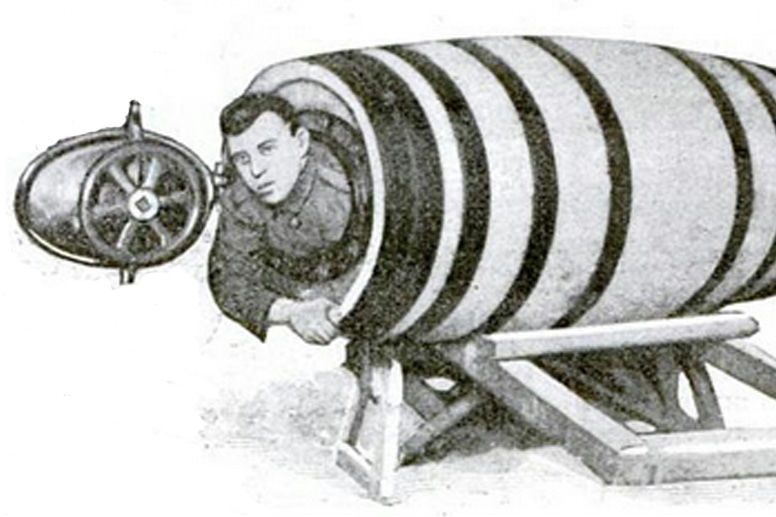
In July 1920, an English barber known as the “Demon Barber,” Charles Stephens, attempted the drop to seek fame and support his family of eleven children. Stephens was convinced that his engineering would keep him safe. He built a thick wooden barrel and, in a misguided attempt to keep the vessel upright, strapped a heavy iron anvil to his feet to act as a ballast. He ignored the advice of experts who warned him that the weight was a death trap.
The decision proved to be a fatal mistake. As the barrel hit the water at the base of the falls, the massive anvil acted like a cannonball, punching right through the bottom of the barrel and dragging Stephens down with it. When the wreckage drifted into view, the only thing left of the daredevil was his right arm, still strapped to a piece of wood. His death served as a grim reminder that no amount of human engineering is a guaranteed match for the raw physics of Niagara.
Jean Lussier: The Rubber Ball
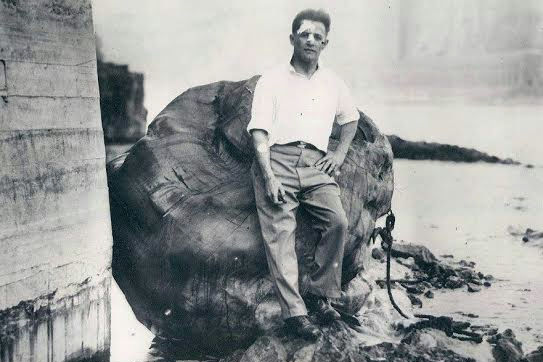
In 1928, a French-Canadian daredevil named Jean Lussier decided to try a completely different approach. He realized that rigid wood and steel often broke upon impact, so he designed a six-foot rubber sphere. The “ball” was built with a double steel frame and lined with thirty-two inner tubes to act as shock absorbers. On July 4, 1928, Lussier waved to a crowd of thousands before rolling his strange invention into the river and heading for the edge.
The rubber ball bounced through the upper rapids and sailed over the brink, disappearing into the spray. To the delight of the spectators, the sphere popped back up almost immediately, looking like a toy in the surf. Lussier emerged with only minor bruises and a very high heart rate. He was savvy enough to turn his survival into a business, later cutting the rubber tubes into small pieces and selling them as “genuine souvenirs” of his death-defying leap to curious crowds for years.
George Stathakis: Trapped Behind The Falls
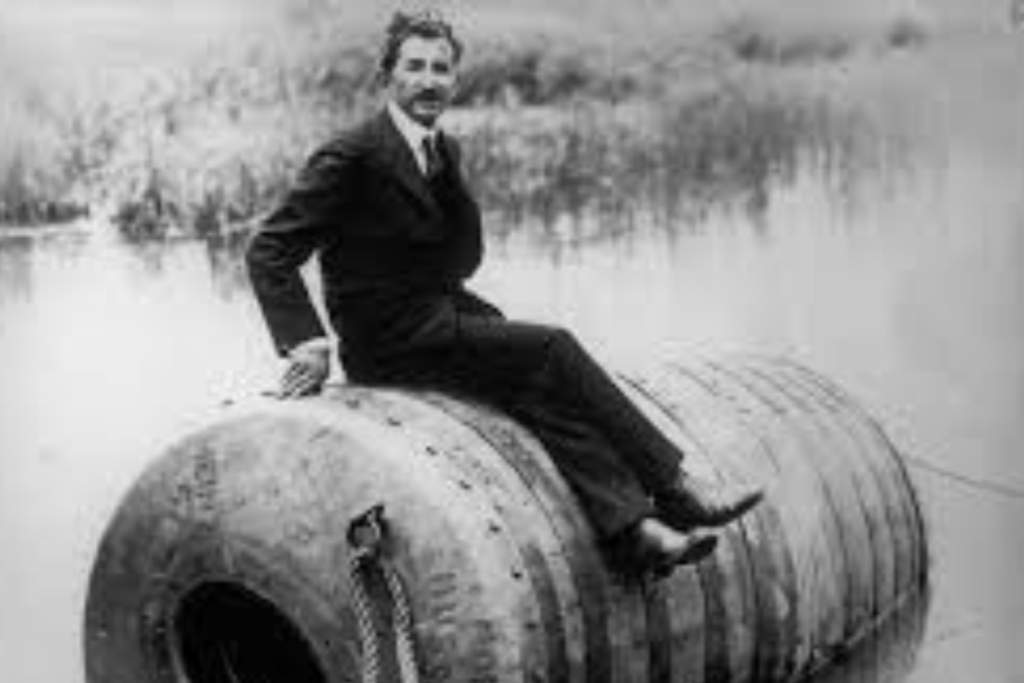
On July 5, 1930, a Greek immigrant named George Stathakis took his turn at the falls in a massive oak and steel barrel that weighed nearly a ton. Stathakis was a mystic and a writer who believed he was destined for greatness. He even brought a 150-year-old pet turtle named Sonny along for the ride, believing the animal would bring him good luck. The barrel was built to be nearly indestructible, which ironically contributed to the tragedy that followed.
Stathakis survived the initial 170-foot plunge, but his heavy barrel became lodged behind the thick curtain of falling water. For eighteen agonizing hours, rescue crews could see the barrel but were unable to reach it due to the crushing weight of the falls. By the time the barrel finally drifted free and was opened, Stathakis had died from suffocation. In a bittersweet twist, the pet turtle Sonny survived the ordeal completely unharmed, becoming a living witness to a journey his owner didn’t finish.
William “Red” Hill Jr.: The Thing
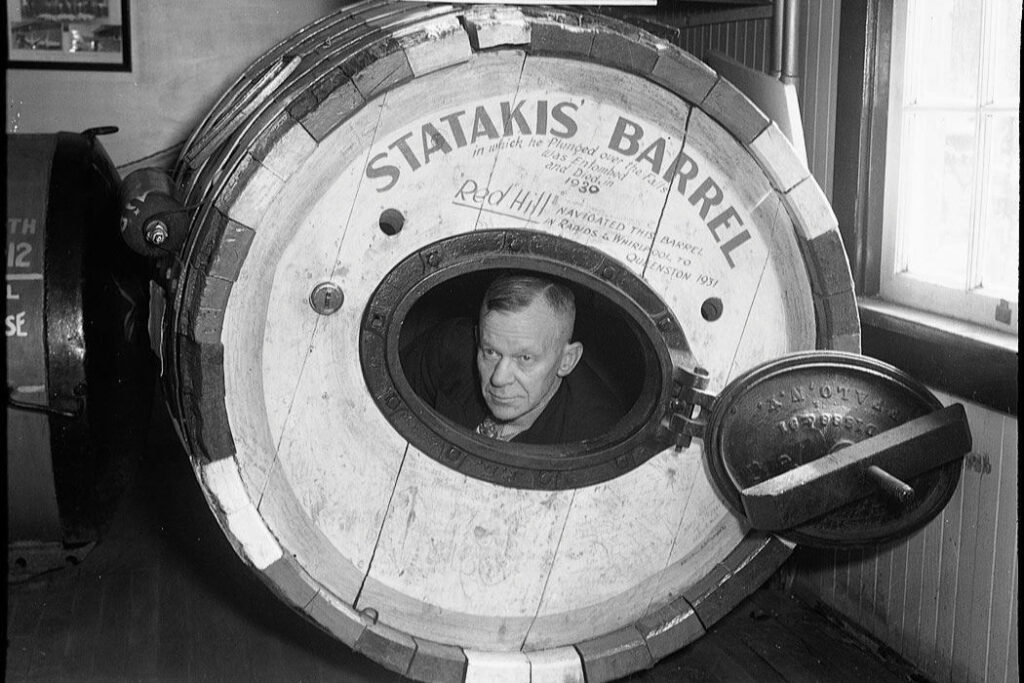
In the summer of 1951, William “Red” Hill Jr. attempted the falls using a makeshift craft he nicknamed “The Thing.” Hill came from a legendary family of rivermen who had saved dozens of people from drowning over the decades. However, money was tight, and Hill hoped a successful stunt would bring in enough cash to support his family. “The Thing” was a flimsy-looking contraption made of thirteen large truck inner tubes held together by heavy canvas and netting.
Despite warnings from his mother and local authorities, Hill launched on August 5, 1951. The stunt ended in disaster almost instantly. As “The Thing” went over the Horseshoe Falls, the pressure of the water tore the inner tubes apart like paper. Hill vanished into the river, and his body was found the following day. The public outcry over his death was so intense that it led to the passage of strict laws in both the U.S. and Canada banning stunts at the falls.
Roger Woodward: The Accidental Survivor
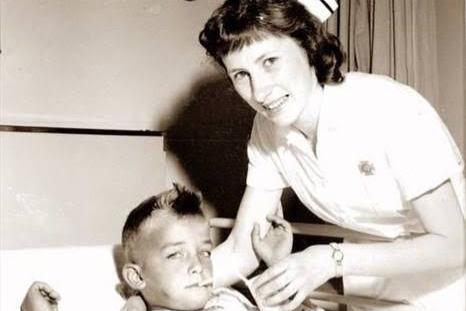
Not every person who goes over the falls chooses to be there. On July 9, 1960, seven-year-old Roger Woodward was involved in what many call the “Miracle at Niagara.” Roger was on a small boat with his sister and a family friend when the motor failed. The boat capsized in the upper rapids, throwing all three into the water. While his sister was heroically pulled to safety by onlookers just feet from the edge, Roger was swept over the massive Horseshoe Falls.
The boy was wearing only a simple life jacket and a pair of swimming trunks. Miraculously, the water’s path spared him from hitting the jagged rocks at the bottom. The crew of the Maid of the Mist tour boat spotted a small orange dot bobbing in the water and realized it was a child. They rescued him from the swirling currents, and aside from a slight concussion, he was completely uninjured. To this day, he remains the youngest person to survive the falls without a protective vessel.
Nathan Boya: The Plunge-O-Sphere
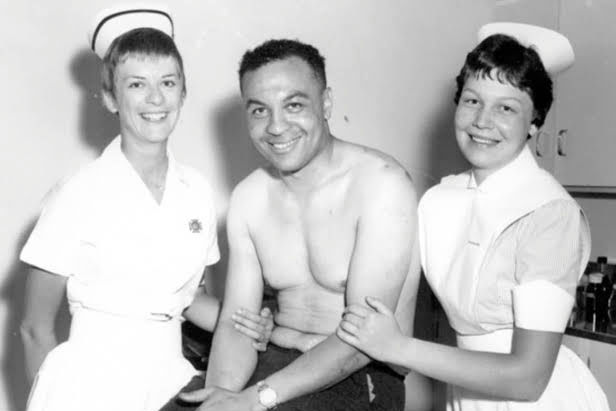
In July 1961, an American named Nathan Boya became the next person to test his luck using a sphere he called the “Plunge-O-Sphere.” It was a heavy steel ball, six feet in diameter, and featured an inner seat designed to rotate so he would always remain upright. Boya’s motivation was deeply personal; he later stated he simply had to know if he could face his fears. He launched his craft into the river on July 15, hoping to avoid the police.
Boya successfully cleared the drop and survived with only a few bumps and bruises. However, because he had violated the new laws against stunts, he was greeted at the bottom by police officers instead of just fans. He was arrested and fined $100, which was a significant amount at the time. Despite the legal trouble, Boya felt a sense of peace after the event, and his spherical design is still remembered by historians as one of the most effective crafts ever used at the site.
Karel Soucek: The Bright Red Barrel
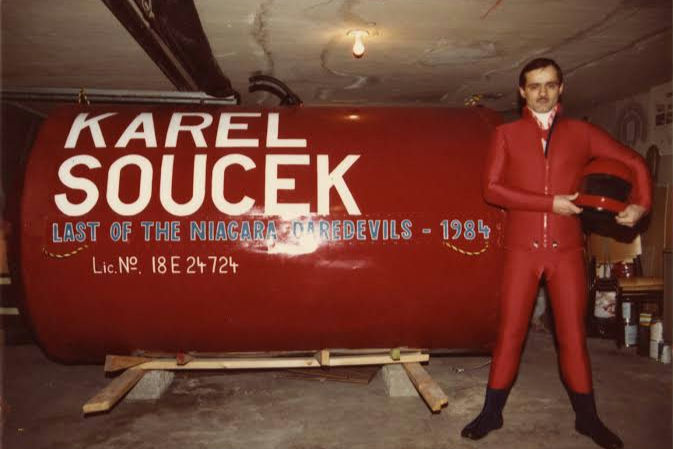
In July 1984, a professional stuntman named Karel Soucek decided to bring a modern touch to the Niagara legacy. He spent years designing a high-tech, bright red cylindrical barrel made of lightweight materials and foam insulation. The barrel was equipped with a two-way radio and an oxygen supply, making it one of the most sophisticated vessels to date. On July 2, 1984, Soucek successfully made the leap over the Horseshoe Falls, surviving with only minor facial cuts.
Following his success, Soucek became a minor celebrity and looked for a way to capitalize on his fame. Sadly, this led to his downfall just six months later. In January 1985, he attempted to recreate the drop by being released from the top of the Houston Astrodome into a giant water tank. The barrel hit the rim of the tank instead of the center of the water. Soucek was fatally injured in front of a live audience, proving that even a “Niagara survivor” isn’t invincible against t he laws of gravity.
John “David” Munday: Twice Over
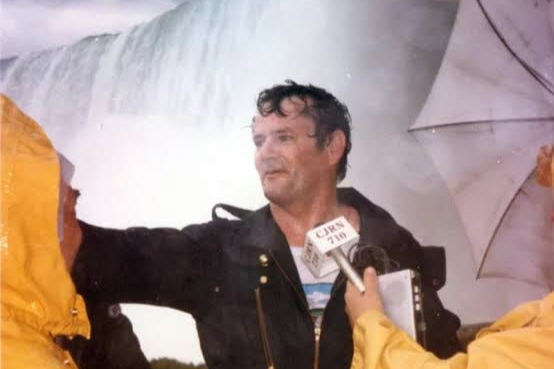
Canadian skydiving instructor John David Munday holds a legendary and somewhat controversial spot in Niagara history. On October 5, 1985, Munday made his first successful trip over the edge in a silver-and-red aluminum pressure vessel he called the “Jet Stream.” He survived the 170-foot drop with only minor injuries, despite the violent tumbling of his craft. However, Munday wasn’t satisfied with just one trip; he became obsessed with the challenge, leading to multiple failed attempts that were thwarted by police before he could hit the water.
His persistence finally paid off, or perhaps his luck held out on September 26, 1993. This time, he used a converted 1,000-pound steel diving bell to take the plunge again. He became the first person in history to intentionally go over the Horseshoe Falls twice and survive. While the crowds cheered his survival, local authorities were far from impressed. Munday was hit with heavy fines and legal fees for his repeated defiance of safety laws, though he always maintained that his background in skydiving gave him the discipline to plan the stunts safely.
Peter DeBernardi And Jeffrey Petkovich: The Two-Man Barrel
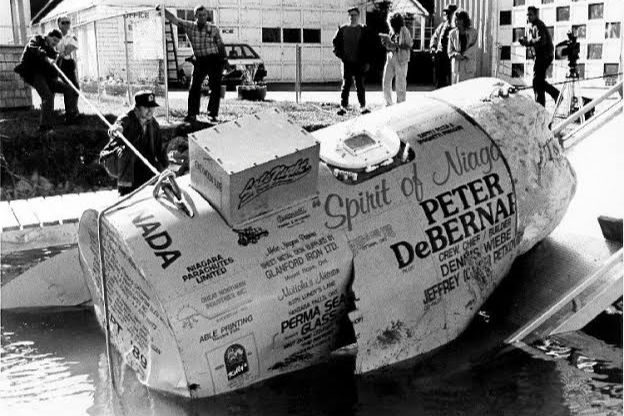
On September 28, 1989, a 42-year-old former race car driver named Peter DeBernardi and a 24-year-old student named Jeffrey Petkovich made history. They became the first duo to go over the falls together in a single barrel. Their vessel was a high-tech, reinforced steel cylinder designed with two separate plexiglass ports so they could see the terrifying drop as it happened. DeBernardi claimed the stunt was intended to be a “protest against drugs,” though most observers saw it as a classic quest for adrenaline and fame.
The pair launched their ten-foot-long yellow barrel into the Niagara River and were quickly swept over the brink of the Horseshoe Falls. After a heart-stopping descent, the barrel resurfaced at the base, and both men were found to be in remarkably good health with only small scratches. They were immediately taken into custody by the Niagara Parks Police and faced thousands of dollars in fines. Their successful mission remains a rare example of a shared survival story, highlighting the unpredictable nature of the falls’ currents.
Robert Overacker: The Jet Ski Attempt
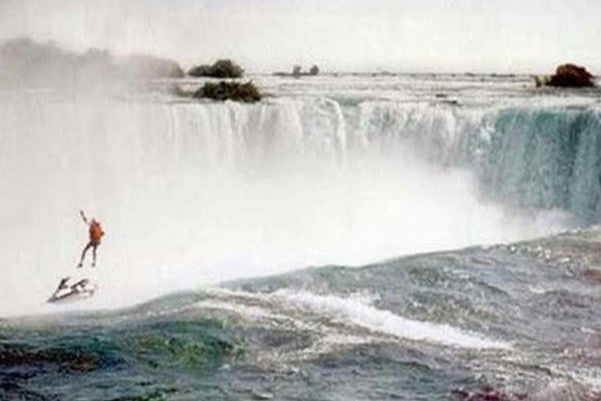
In 1995, a Californian named Robert Overacker attempted one of the most visually stunning but dangerous stunts the falls had ever seen. Overacker was an experienced jet ski rider who wanted to use his skills to raise awareness for the homeless. His plan involved riding a jet ski at full speed off the lip of the Horseshoe Falls and then deploying a rocket-propelled parachute to drift safely to the water below. He had spent years testing the parachute system and felt confident that the technology would save him.
Tragedy struck on October 1, 1995, in front of a horrified crowd of tourists. As Overacker accelerated into the abyss, he successfully launched from the jet ski, but the critical rocket-fire mechanism for his parachute failed to deploy. Without the canopy to slow his fall, he plummeted 167 feet directly into the churning rapids. He was pulled from the water by the crew of the Maid of the Mist, but he was pronounced dead shortly after. His death stands as a sobering warning that even the most modern technology can fail against the power of nature.
Kirk Jones: The Man Without Protection
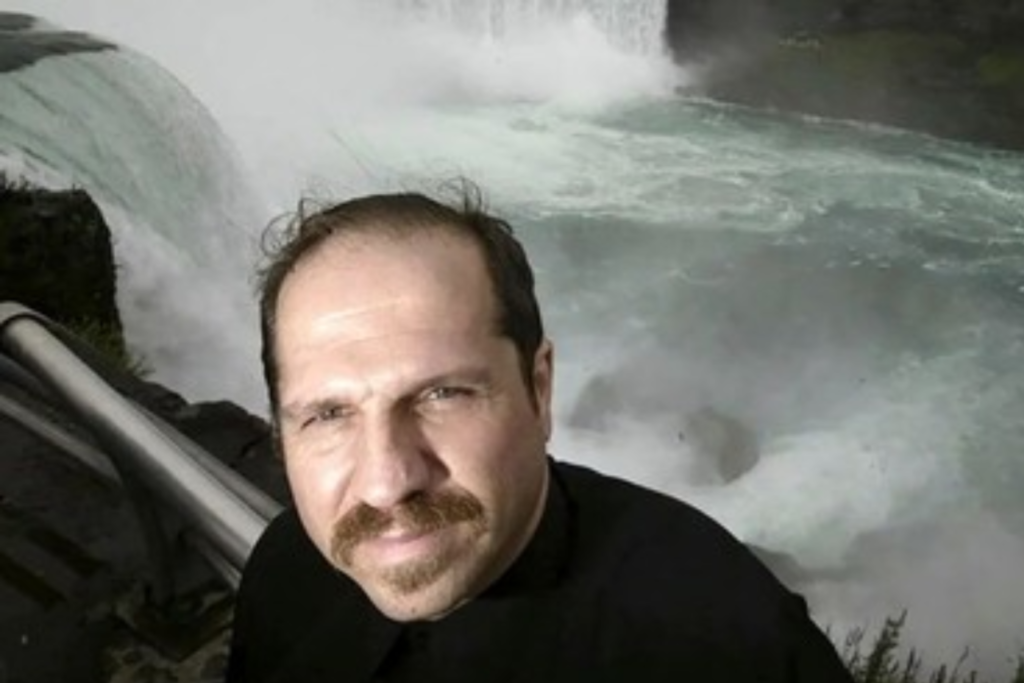
On October 20, 2003, Kirk Jones did the unthinkable: he went over the Niagara Falls wearing nothing but his everyday clothes. Unlike the daredevils who spent thousands on barrels, Jones simply climbed over the safety railing and jumped into the freezing river. Witnesses watched in shock as he floated on his back, seemingly calm, until the current dragged him over the massive edge of the Horseshoe Falls. Most people watching that day assumed they were witnessing a certain death.
Against all scientific logic, Jones survived the 17-story drop without a life jacket or a craft. He managed to swim to a group of rocks where rescuers were able to reach him; he suffered only bruised ribs and some minor internal soreness. He later admitted that he had been struggling with personal issues and hadn’t expected to live through the fall. While he became a “miracle” survivor, he was banned from the park for life and fined $3,000. Sadly, Jones’s luck eventually ran out years later when he attempted the falls again inside a large inflatable ball and did not survive.
Today, the falls are more heavily monitored than ever, with sophisticated surveillance and strict legal penalties designed to prevent anyone from attempting the plunge. Yet, as long as the water continues to roar over the edge at 75,000 gallons per second, people will likely continue to stand at the railing and wonder what lies beneath the mist.


