
The Afghan Girl
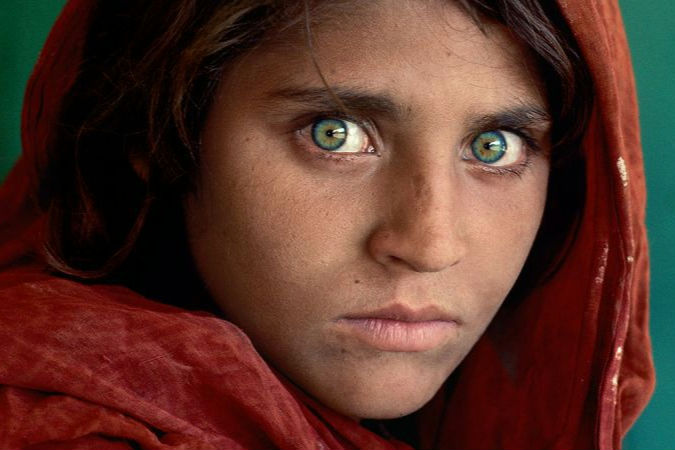
In June 1985, National Geographic published a cover that would become one of the most recognized portraits in history. Captured by photographer Steve McCurry in 1984 at the Nasir Bagh refugee camp in Pakistan, the image featured a young girl with haunting, sea-green eyes. At the time, she was a 12-year-old orphan who had fled the Soviet-Afghan War. For nearly two decades, she was known simply as “The Afghan Girl.” Her intense, wary gaze became a global symbol of the plight of refugees and the hidden faces of those displaced by international conflict. The mystery of her identity only added to the photo’s legendary status as it appeared on posters and in art galleries worldwide.
It wasn’t until 2002 that the world learned her name was Sharbat Gula. A National Geographic team tracked her down in a remote region of Afghanistan, confirming her identity through iris recognition technology. Gula had lived a quiet, difficult life as a mother and wife, unaware that her face was famous across the globe. Her life took another dramatic turn in 2016 when she was arrested in Pakistan for using illegal identity papers, leading to her deportation back to her homeland. Following the political shifts in Afghanistan in 2021, the Italian government granted her asylum, and she moved to Italy to seek a safer future for her family. Her story remains a powerful bridge between iconic art and the harsh realities of global migration.
Napalm Girl Survivor
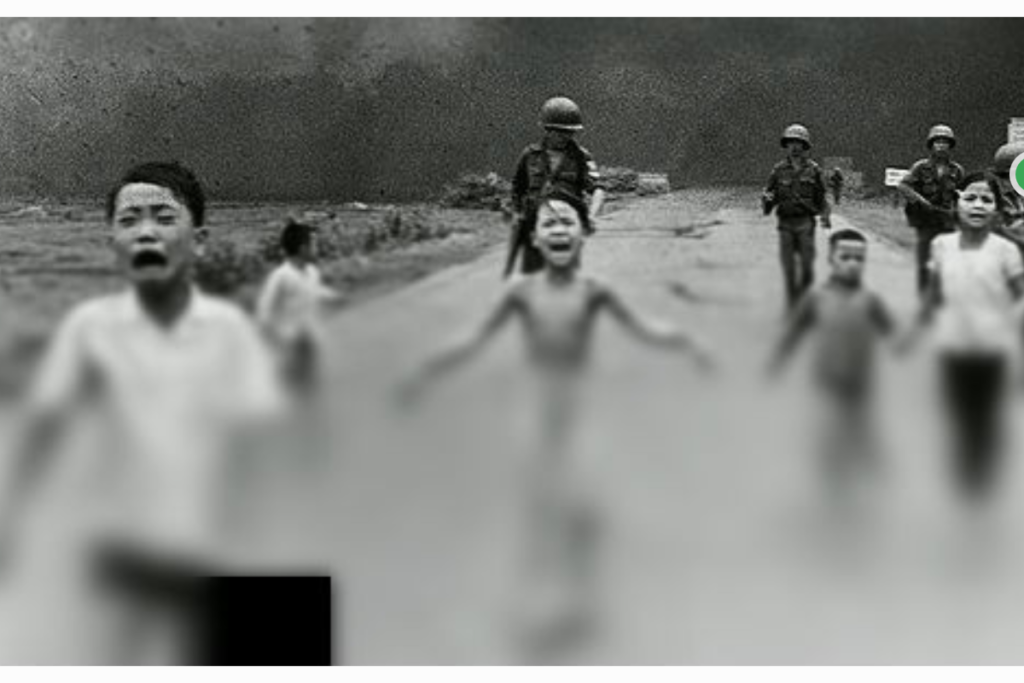
On June 8, 1972, a terrifying moment was frozen in time during the Vietnam War. Nine-year-old Phan Thị Kim was photographed running down a road near the village of Trảng Bàng, her clothes burned away by a napalm attack. The image, titled The Terror of War, was captured by photographer Nick Ut. It showed the pure agony of an innocent child caught in the crossfire of a chemical explosion that scorched her skin. This single picture traveled across the globe, landing on the front pages of major newspapers and fundamentally shifting how the public viewed the brutality of the conflict. It eventually earned a Pulitzer Prize and remains a haunting symbol of the human cost of war.
Kim’s journey after that shutter clicked was one of incredible pain and eventual triumph. Doctors initially doubted she would survive the third-degree burns covering 30% of her body. She spent 14 months in the hospital and underwent 17 grueling surgeries to regain her health. While the Vietnamese government later used her as a propaganda tool, she sought a fresh start, eventually moving to Canada in 1992. On November 10, 1997, she was named a UNESCO Goodwill Ambassador for her efforts to promote peace. Today, she runs the Kim Foundation, which provides medical and psychological aid to children victimized by war. Her life has evolved from a portrait of victimhood into a legacy of healing and international activism.
V-J Day Nurse
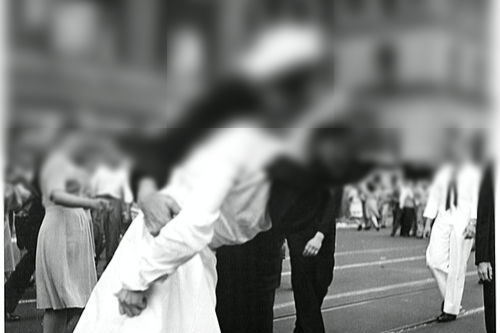
On August 14, 1945, the streets of New York City erupted in joy following the news of Japan’s surrender, marking the end of World War II. Photographer Alfred Eisenstaedt captured what became the ultimate symbol of American relief: a sailor dipping a nurse in a white uniform for a spontaneous kiss in Times Square. Published in Life magazine, the photo, titled V-J Day in Times Square, perfectly bottled the euphoria of a nation finally at peace. For years, the identities of the pair remained a mystery, with several people claiming to be the subjects of the famous embrace. However, a woman named Edith Shain eventually became the most prominent figure associated with the legendary image.
Edith Shain was working as a dental assistant at a local hospital when she joined the crowds celebrating in the streets that Tuesday afternoon. She recalled that a sailor she didn’t know grabbed her and kissed her, a moment she allowed out of gratitude for his service. After the war, she moved to California, married, raised three sons, and spent over 30 years working as a kindergarten teacher. It wasn’t until the late 1970s that she wrote to Eisenstaedt to identify herself. Shain became a beloved figure at veterans’ parades and commemorative events until her passing on June 20, 2010, at the age of 91. Her participation in that unscripted moment remains the world’s favorite visual representation of wartime victory and heartfelt celebration.
Tiananmen’s Tank Man
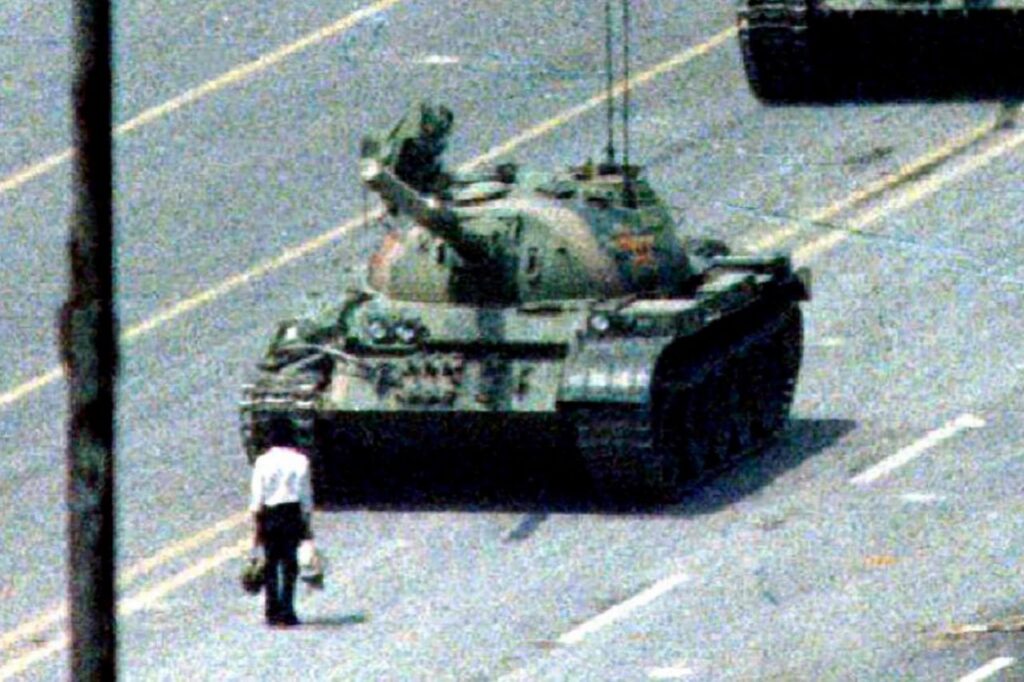
On June 5, 1989, just one day after a violent military crackdown on protesters in Beijing’s Tiananmen Square, an anonymous man stepped into history. Carrying nothing but two shopping bags, he stood alone in the middle of Changan Avenue, directly blocking a line of massive Type 59 tanks. As the lead tank tried to maneuver around him, the man stepped again to stay in its path, eventually climbing onto the vehicle to speak with the crew. This quiet act of defiance was captured by several photographers, most notably Jeff Widener, and it immediately became a global emblem of individual courage against the overwhelming power of a state.
Despite the photo’s worldwide fame, the identity and fate of “Tank Man” remain one of the 20th century’s greatest mysteries. Some intelligence reports suggested his name was Wang Weilin, but this has never been officially confirmed. Speculation about what happened to him ranges from immediate execution to a life spent in hiding or even living quietly in Taiwan. The Chinese government has largely censored the image within its borders, yet for the rest of the world, the “Tank Man” stands as a timeless symbol of peaceful resistance. His bravery continues to inspire activists globally, serving as a reminder that a single person can stop the gears of a powerful machine, if only for a few significant minutes.
Migrant Mother
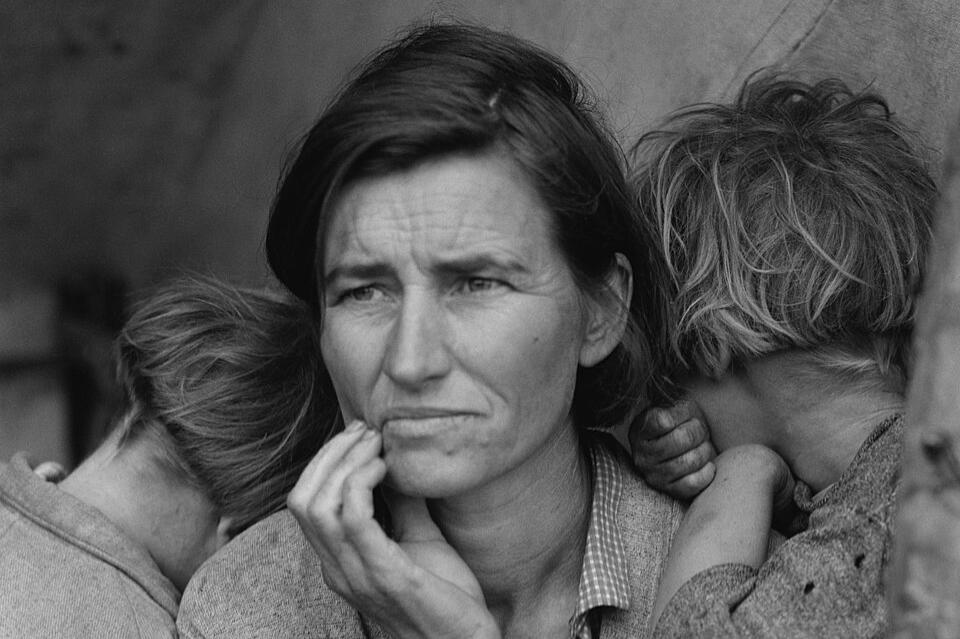
In March 1936, during the height of the Great Depression, photographer Dorothea Lange visited a frozen pea-pickers’ camp in Nipomo, California. There, she encountered Florence Owens Thompson, a 32-year-old mother of seven who appeared weary and anxious. Lange took a series of photos, but one in particular, showing Thompson gazing into the distance while two of her children tucked their faces away, became the definitive face of American hardship. Titled Migrant Mother, the image was published in the San Francisco News and quickly prompted the government to send 20,000 pounds of food to the starving workers in the camp. It transformed the abstract suffering of the Depression into a deeply personal, relatable story.
Florence Owens Thompson’s life was a testament to the resilience of the working class. A member of the Cherokee Nation, she spent years traveling between farms to pick cotton and vegetables to keep her children fed. Surprisingly, she never saw a dime from the photo’s fame, as Lange was working for the government at the time. Thompson later expressed some bitterness that she was the “poster child” for poverty while she continued to struggle financially. However, in 1983, when she fell ill, her children used her fame to raise over $35,000 for her medical bills through public donations. She passed away on September 16, 1983, in Modesto, California, forever remembered as the woman whose tired face changed how America viewed its own struggling citizens.
The Falling Man
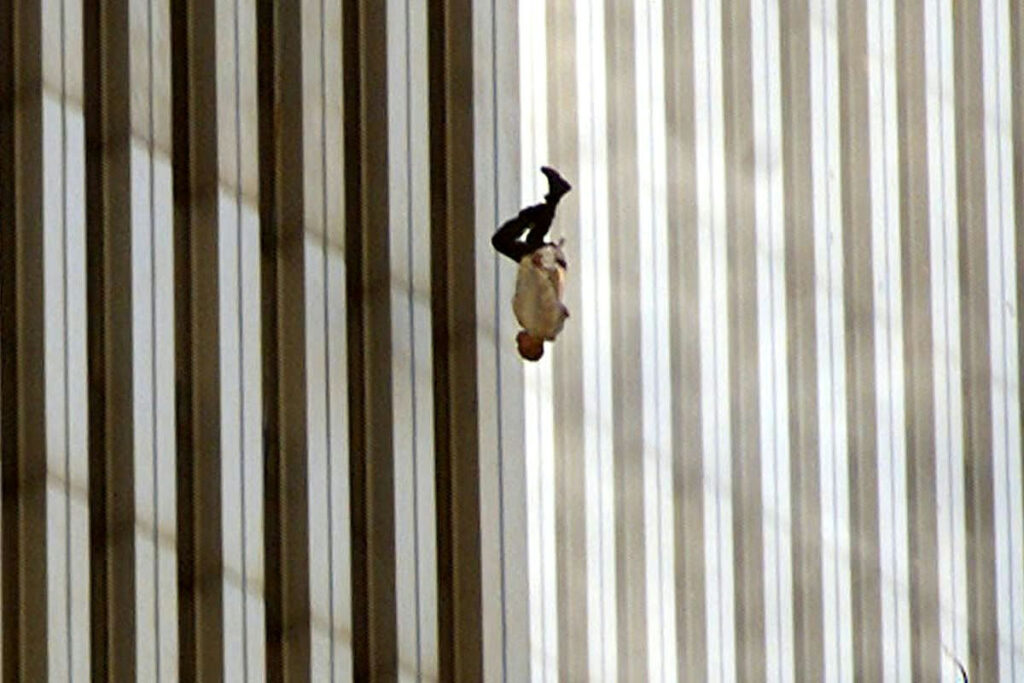
On the morning of September 11, 2001, as the world watched the tragedy at the World Trade Center unfold, photographer Richard Drew captured an image that would haunt the public consciousness. At 9:41 a.m., he photographed a man falling perfectly vertical, headfirst, against the backdrop of the North Tower’s steel girders. Published the next day in the New York Times, the photo provoked an immediate and intense backlash. Many readers felt it was too intrusive or disturbing, as it captured the final, desperate choice of a victim facing an impossible situation. Consequently, the image was largely scrubbed from American media for years, becoming a “silent” piece of history that many were afraid to discuss.
Over time, journalists worked to give the anonymous figure a name, seeking to restore his humanity. Many investigators, including reporter Peter Junod, believe the man was Jonathan Briley, a 43-year-old sound engineer who worked at the Windows on the World restaurant on the 106th floor. Briley was a husband and a brother who was known for his lighthearted personality and love of music. While his family initially struggled with the image, they eventually found a sense of peace in the possibility of its identification, viewing it as a testament to his bravery in his final moments. Today, The Falling Man is regarded by historians as a stark, honest reflection of the human experience during one of modern history’s darkest hours.
Omayra Sánchez
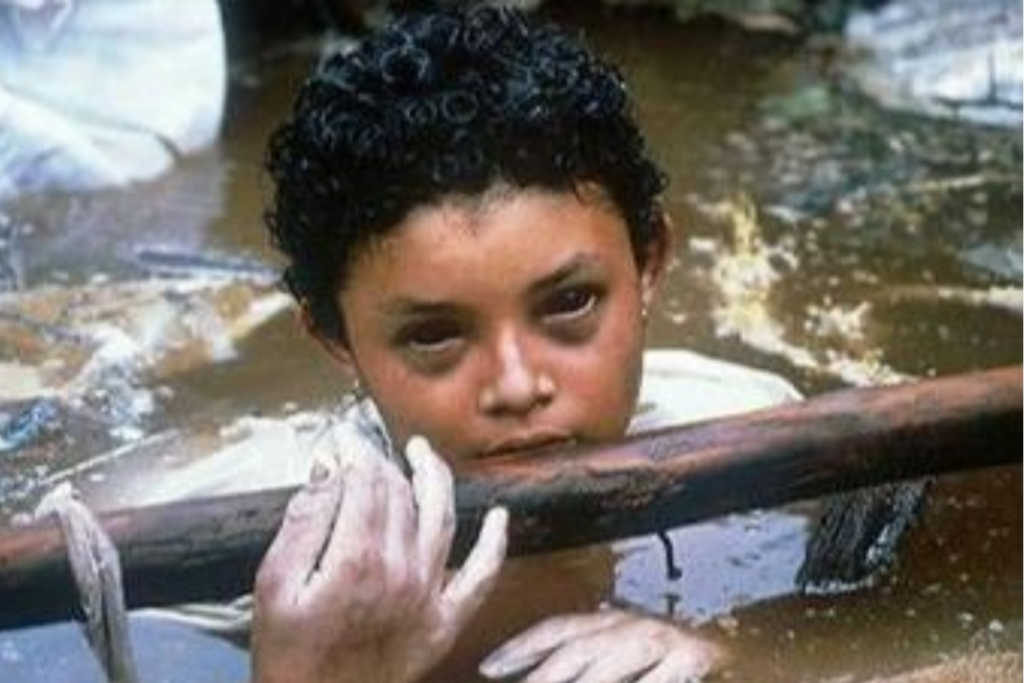
In November 1985, the Nevado del Ruiz volcano in Colombia erupted, triggering a massive mudslide that buried the town of Armero. Thirteen-year-old Omayra Sánchez became the face of this disaster when she was found trapped up to her neck in water and concrete debris. For 60 hours, she remained pinned while rescue workers desperately tried to free her. Despite her dire situation, Omayra remained remarkably calm, singing to journalists and even joking with her rescuers. Photographer Frank Fournier captured her image, showing her dark, reddened eyes and weary face, shortly before she succumbed to her injuries. The photo won the 1986 World Press Photo of the Year, sparking a global conversation about disaster response.
Omayra’s death on November 16, 1985, was a devastating blow that many felt could have been prevented with better equipment and faster government intervention. Her final hours were broadcast to millions, making her a symbol of the tragedy and the failures of the bureaucratic systems meant to protect people. Following the disaster, her story prompted significant changes in how international aid and local emergency services coordinate during volcanic events. Today, her gravesite in Armero is a place of pilgrimage for many Colombians who view her as a “small saint” or a symbol of incredible endurance. The photograph serves as a heartbreaking reminder of the vulnerability of children and the urgent need for timely humanitarian action during natural catastrophes.
Kevin Carter’s Photograph
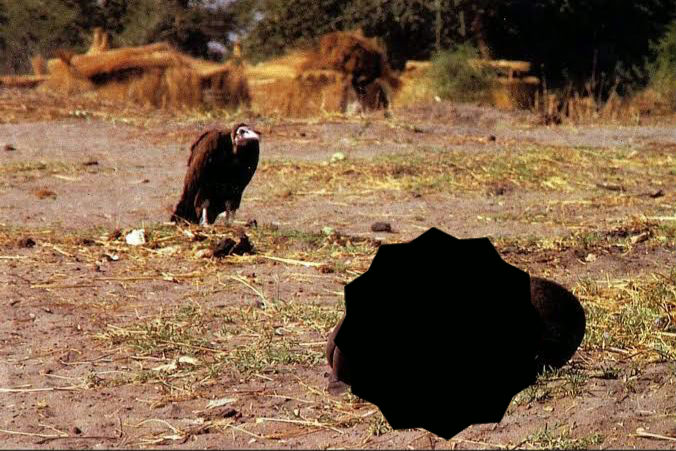
In March 1993, South African photojournalist Kevin Carter traveled to Sudan to document the devastating famine. Near the village of Ayod, he came across a small, emaciated toddler who had collapsed on the way to a feeding center. As he prepared to take the photo, a vulture landed nearby, watching the child. Carter waited 20 minutes for the bird to spread its wings, which it didn’t, and then took the shot before chasing the predator away. The image was published in the New York Times on March 26, 1993, and it immediately sparked a firestorm of debate. While it raised millions for famine relief, Carter was heavily criticized by those who felt he should have helped the child rather than taking a picture.
The emotional toll of the photograph, combined with the horrors he witnessed as a “Bang-Bang Club” member covering apartheid, took a heavy finish on Carter. He won the Pulitzer Prize for the image in May 1994, but the accolades couldn’t heal his internal struggles. Tragically, on July 27, 1994, just months after his big win, Carter took his own life at the age of 33. It was later revealed that the child in the photo, a boy named Kong Nyong, had actually survived the famine but passed away years later in 2007 due to a fever. Carter’s story remains a cautionary and complex tale about the ethical dilemmas of journalism and the deep psychological burden carried by those who document the world’s most painful moments.
Che Guevara Portrait

On March 5, 1960, Cuban photographer Alberto Korda was attending a memorial service in Havana for victims of a ship explosion. During the event, he spotted Ernesto “Che” Guevara and captured two quick frames of the revolutionary leader. Guevara’s expression was one of “absolute implacability,” pain, and anger. At the time, the photo was ignored by Korda’s editors and sat on his wall as a personal favorite for years. It wasn’t until after Guevara’s death in Bolivia on October 9, 1967, that the image was widely circulated. Titled Guerrillero Heroico, it was soon stylized into a high-contrast graphic that became the face of student protests and anti-establishment movements worldwide.
Interestingly, Alberto Korda never received royalties for the most reproduced image in the history of photography. Because Cuba did not recognize international copyright laws at the time, the image was free for anyone to use. Korda didn’t mind the photo being used for social justice causes, but he drew the line at commercial exploitation. In 2000, he successfully sued a vodka company for using the image in an advertisement, arguing that using Che’s likeness to sell alcohol was a slur on his legacy. Korda passed away in 2001, but his accidental masterpiece continues to live on. Today, the image is found on everything from revolutionary banners to high-fashion t-shirts, proving how a single portrait can transform a man into a permanent cultural icon.
Boston Fire Escape
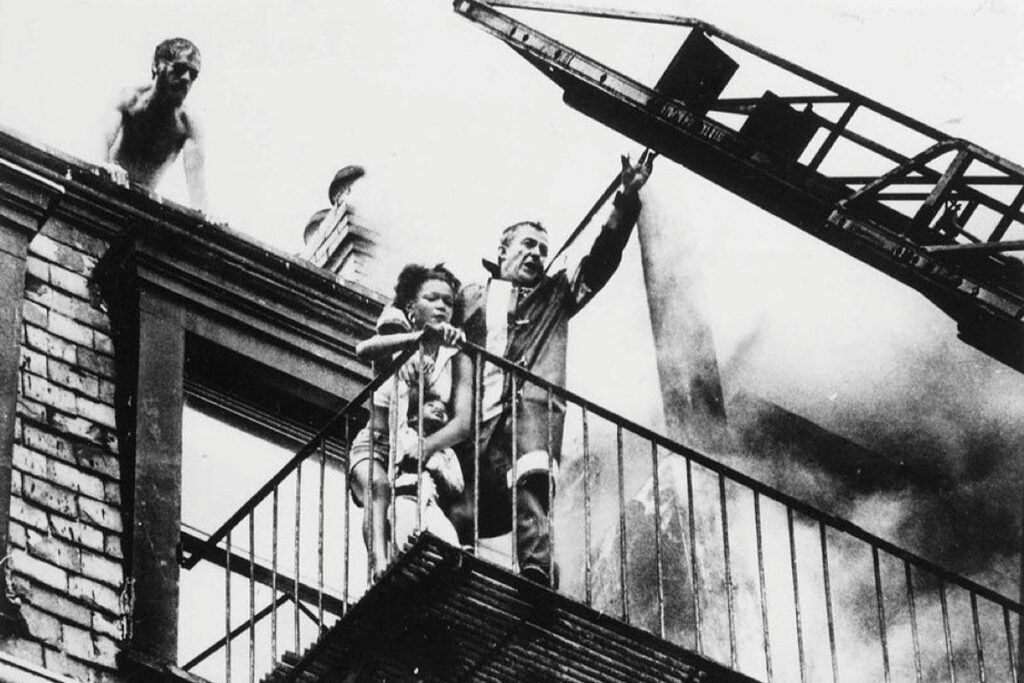
On July 22, 1975, a fire broke out in an apartment building in Boston’s Back Bay. Photographer Stanley Forman of the Boston Herald followed a fire truck to the scene, where he saw 19-year-old Diana Bryant and her two-year-old goddaughter, Tiare Jones, waiting for rescue on a fire escape. As a firefighter reached out to help them, the iron structure suddenly buckled and collapsed. Forman’s camera captured the terrifying second the pair fell toward the ground. The series of photos, particularly the one showing them mid-air, was published the next day and sent shockwaves through the city of Boston. It won the 1976 Pulitzer Prize for Spot News Photography and remains a chilling example of photojournalism.
The aftermath of the fall was a mix of tragedy and a miracle. Diana Bryant died from her injuries later that day, but her body had acted as a cushion for little Tiare, who survived the fall with relatively minor injuries. Beyond the personal story, the photograph had a massive social impact. Within 24 hours of the photo’s publication, the city of Boston began an aggressive campaign to inspect and repair every fire escape in the city. Public safety groups across the United States used the image to push for stricter building codes and fire safety legislation. While the photo is difficult to look at, it directly led to legal changes that have since saved countless lives, turning a private tragedy into a public catalyst for safety.
Lunch On A Beam
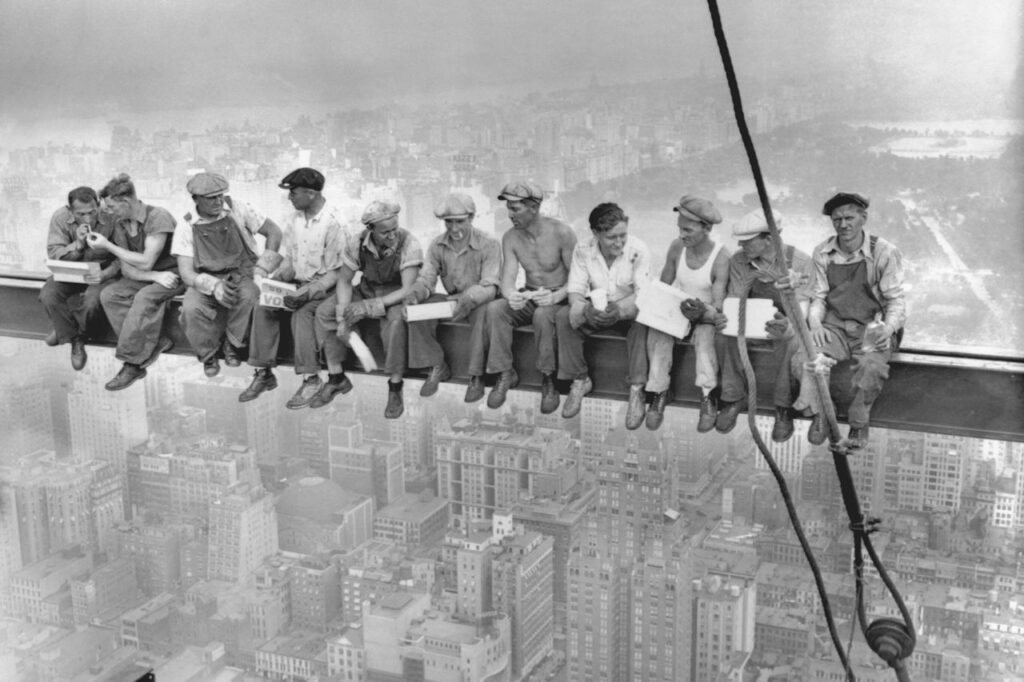
One of the most famous construction photographs ever taken appeared in newspapers on October 2, 1932. Known as Lunch Atop a Skyscraper, the image shows eleven ironworkers sitting casually on a steel beam high above Manhattan while eating their midday meal. The photograph was taken on September 20, 1932, during the construction of the RCA Building at Rockefeller Center, roughly 850 feet above the streets below. It was created as part of a publicity campaign promoting the new skyscraper, yet the men themselves were genuine construction workers who regularly moved across the girders while building the massive structure.
Although the photograph became a global symbol of courage and working-class determination during the Great Depression, many of the men remained unidentified for decades. Historical research has since confirmed the identities of a few workers, including Joseph Eckner and Joe Curtis, while another man is believed to have been Slovak immigrant Gustáv Popovič. Most of the others remain uncertain, which adds to the mystery surrounding the image. What is known is that these ironworkers were part of the vast immigrant labor force that helped construct New York’s iconic skyline in the early twentieth century. Their relaxed pose on a narrow beam high above the city still captures the daring spirit of those who built modern Manhattan.
Birmingham Protest Image

In May 1963, the American civil rights movement reached a critical turning point in Birmingham, Alabama. During demonstrations organized by civil rights leaders, local police used attack dogs and high-pressure fire hoses to disperse protesters, many of whom were teenagers and schoolchildren. One photograph taken by journalist Charles Moore captured a young protester named Walter Gadsden being pinned against a wall by a police dog while officers stood nearby. The stark and brutal image quickly circulated in newspapers and magazines across the United States, sparking immediate outrage from the public.
The photograph shocked many Americans who had previously ignored the reality of segregation and racial violence in the southern states. Seeing a teenager attacked during a peaceful protest made the situation impossible to dismiss. This public reaction helped increase support for civil rights legislation and added immense pressure on the federal government to take action. Within a year, the Civil Rights Act of 1964 was passed, outlawing segregation in public places. Walter Gadsden later lived a quiet life, yet his moment in front of the camera became one of the defining visual records of the struggle for equality in twentieth-century America.
Dead On The Beach
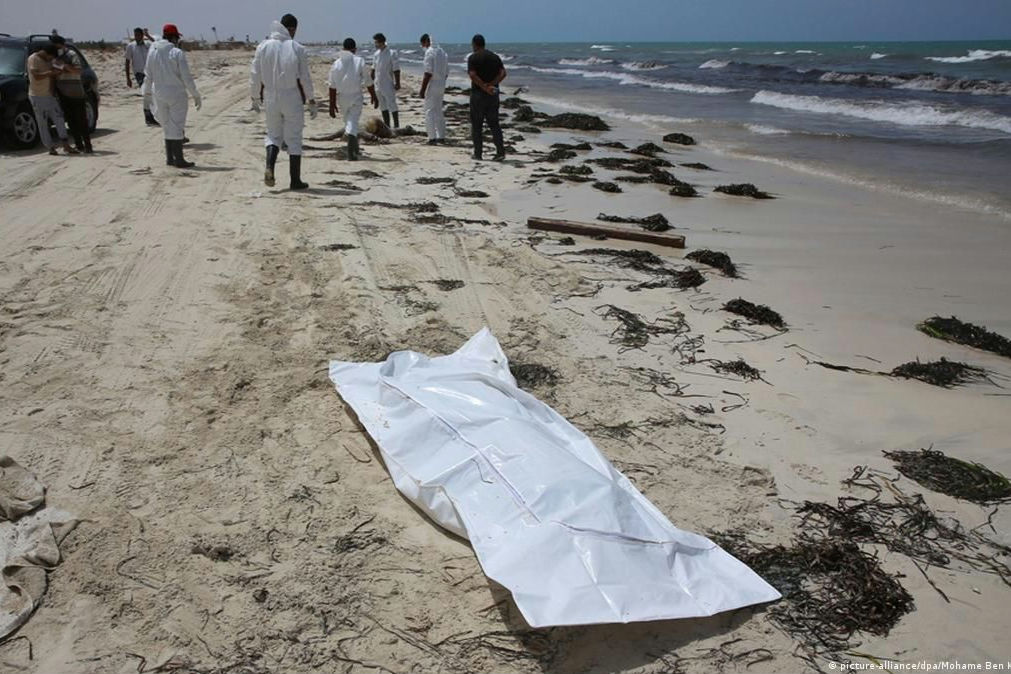
During the Second World War, images of fallen soldiers were rarely shown to the public because governments feared they might weaken national morale. That policy changed in September 1943 when Life magazine published a photograph taken by George Strock on Buna Beach in Papua New Guinea. The image showed three American soldiers lying dead on the sand after fierce fighting against Japanese forces. For many readers back home, it was the first time they had seen the true, unvarnished cost of the war so plainly displayed in their local media.
The photograph was approved by the United States government as part of a strategic decision to allow more realistic coverage of the conflict. Officials believed that showing the ultimate sacrifice of soldiers would remind the public why the war effort required continued support and hard work. Although the identities of these specific soldiers were not widely publicized at the time, the image became a sobering symbol of wartime loss. It marked an important shift in how war photography was presented to the public and influenced later generations of photojournalists who sought to document conflict with total honesty.
Cotton Mill Girl
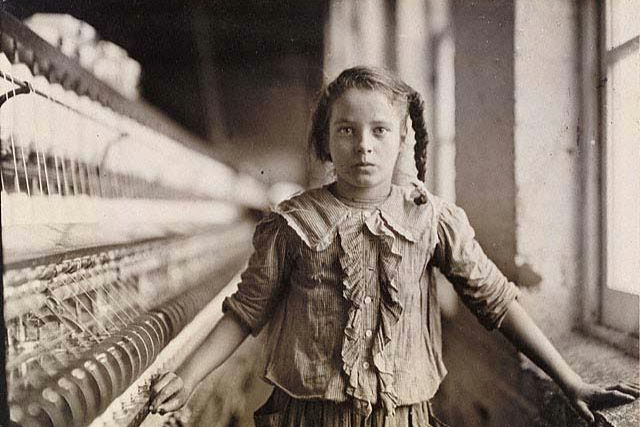
At the beginning of the twentieth century, child labor remained common in American factories and textile mills. Photographer Lewis Hine worked for the National Child Labor Committee and traveled across the country documenting the lives of young workers in difficult conditions. In November 1908, he photographed a small girl standing beside a large spinning machine in a cotton mill in Lancaster, South Carolina. Her tired expression and small frame beside the heavy, dangerous equipment made the image especially striking to those who viewed his collection.
Hine carefully recorded details of the factories he visited, but the identities of many children were never fully documented, including the girl in this famous photograph. However, recent research has identified her as Addie Card, who was just twelve years old at the time. The image became part of a powerful campaign to reform labor laws in the United States. By exposing the harsh conditions faced by children working long hours, Hine’s photographs helped build support for regulations that eventually restricted child labor. Addie Card represents thousands of young workers whose difficult lives contributed to lasting labor reforms that protect children today.
The Einstein Tongue

On March 14, 1951, the world’s most famous scientist was celebrating his 72nd birthday at Princeton University. As Albert Einstein left the event, he was surrounded by reporters and photographers hoping for one last shot of the genius. Tired of smiling for the cameras all night, Einstein jokingly stuck out his tongue at the crowd just as photographer Arthur Sasse snapped the shutter. While his colleagues initially worried the photo was too undignified for a Nobel Prize winner, Einstein loved it so much that he ordered nine prints for his personal use. The image instantly humanized the man associated with complex physics, turning him into a global pop-culture icon.
Beyond the humor, the photograph captured Einstein’s rebellious and playful spirit during a tense era of the Cold War. He famously used the image on greeting cards he sent to friends, signaling his refusal to conform to the stiff expectations of the academic elite. Einstein passed away four years later, on April 18, 1955, but the “tongue” photo ensured his legacy was not just about the theory of relativity, but about a man who encouraged people to stay curious and a bit non-conformist. Today, the original negative sold at auction for over $125,000, and the image remains the most recognizable portrait of a scientist in human history, proving that even a genius likes to have a little fun.
The Burning Monk
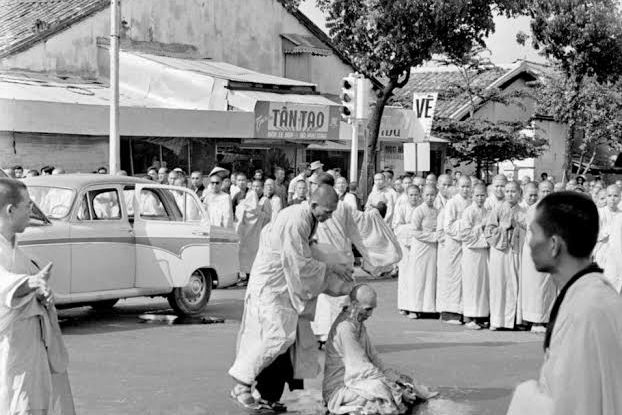
On June 11, 1963, a dramatic protest took place on a busy street intersection in Saigon, South Vietnam. A Buddhist monk named Thích Quảng Đức calmly sat in a meditation posture while fellow monks poured petrol over his robes. He then set himself on fire to protest the South Vietnamese government’s persecution of Buddhists and its restrictive religious policies. American journalist Malcolm Browne photographed the event as it unfolded, capturing one of the most powerful and shocking images of political protest in modern history.
The photograph shocked audiences around the world because it showed both the intensity of the protest and the calm determination of the monk. Reports indicated that Quảng Đức remained silent and motionless throughout the act, which lasted for several minutes. The image quickly spread through newspapers and television broadcasts, drawing global attention to the religious tensions within South Vietnam. It also influenced international perceptions of the regime, contributing to growing political pressure on the government and eventually leading to significant political changes during the early years of the Vietnam War.
When we look at these photographs today, we are not just seeing history; we are witnessing human stories that unfolded in real-time and left lasting marks on the world.


