
The First Radio Claim
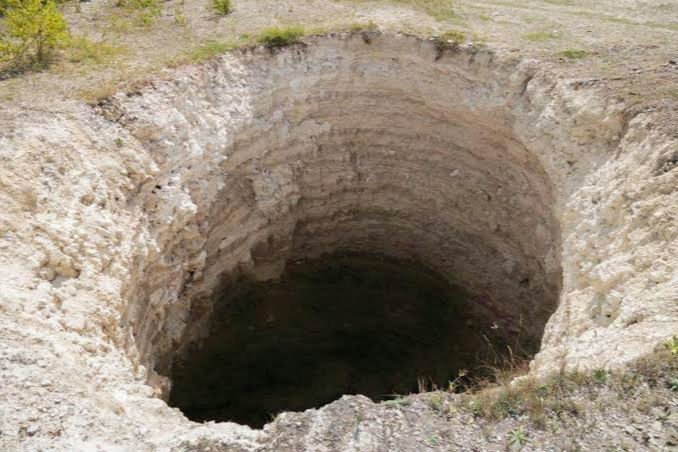
The legend officially began on February 21, 1997, during a broadcast of the popular paranormal radio show Coast to Coast AM. The program’s host, Art Bell, took a call from a man identifying himself as Mel Waters, who claimed to own a piece of property in Kittitas County, Washington, featuring a hole with no detectable bottom. Waters explained that he had discovered the shaft on rural land roughly nine miles west of Ellensburg. He noted that previous residents had used the site as a convenient trash dump for decades, yet it curiously never seemed to fill up regardless of how much debris was tossed inside.
During the interview, Waters claimed he became so intrigued by the pit’s depth that he decided to conduct his own experiments. His calm but insistent tone immediately hooked the show’s massive audience, as he described a geographical feature that defied every conventional rule of geology. In the weeks following the initial 1997 broadcast, tapes of the conversation were shared widely among enthusiasts of the unexplained, and the “Mel’s Hole” phenomenon began to spread far beyond the reach of the original radio airwaves. This single phone call effectively birthed one of the most persistent myths of the Pacific Northwest.
The Location Mystery
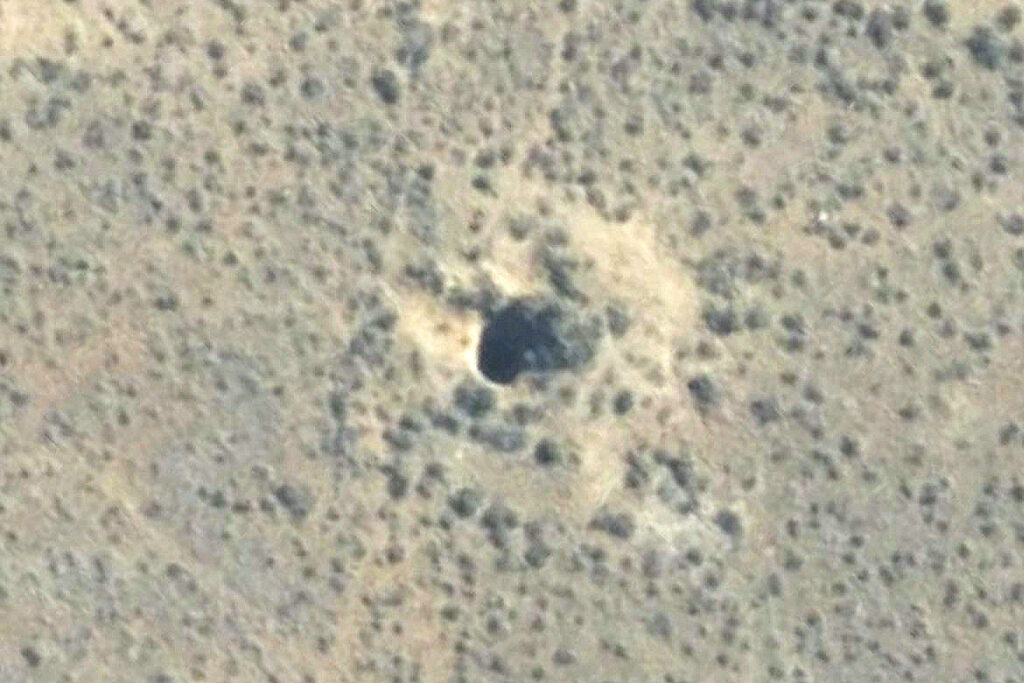
A significant part of the intrigue surrounding this story was the specific yet elusive location provided by the caller. Mel Waters described the pit as being situated in the rugged terrain near Ellensburg, a small city in central Washington known for its rolling hills and agricultural valleys. Because the region has a genuine history of mining activity and complex geological formations, many listeners found the claim of a hidden shaft somewhat believable. The idea of a “bottomless” hole tucked away in the Manastash Ridge area felt like a discovery that had simply been overlooked by modern maps and surveyors.
However, the exact coordinates of the site were never disclosed to the public, which served to protect the mystery while preventing any immediate verification. Waters claimed he kept the location secret to prevent hoards of “lookie-loos” from trespassing on his private property. While many amateur explorers and local residents have spent decades scouring the hillsides of Kittitas County for the opening, no one has ever successfully produced a photograph or GPS data for the site. Some skeptics believe the story was loosely inspired by actual abandoned mine shafts in the area, which can be dangerously deep but certainly not bottomless.
The Depth Experiment
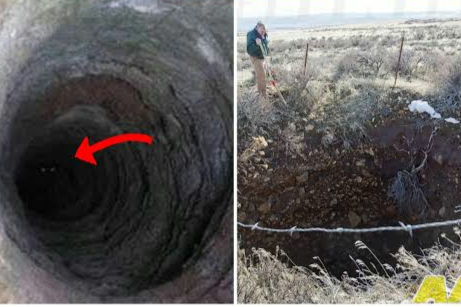
The most famous detail of the Mel’s Hole saga involves the caller’s attempt to measure the pit’s true depth using a DIY method. During his 1997 radio appearance, Waters claimed he used several miles of high-tensile fishing line and a heavy weight to find the bottom. He told the audience that he spent hours lowering the line into the darkness, expecting to feel the weight hit a floor at any moment. To his shock, he reported that he eventually lowered approximately 80,000 feet of line, nearly 15 miles, without ever reaching a solid surface or feeling the line go slack.
To put this claim into perspective, the deepest hole ever drilled by humans is the Kola Superdeep Borehole in Russia, which reached about 40,230 feet after two decades of work. Waters’ claim of a 15-mile-deep open shaft would mean the hole extended far deeper than the highest mountain is tall and even surpassed the depth of the Mariana Trench. Geologists were quick to point out that at such depths, the intense heat and pressure of the Earth’s crust would cause any open hole to collapse in on itself. Despite these scientific impossibilities, the image of a 15-mile descent into the Earth remains a central pillar of the legend.
Silence From The Pit
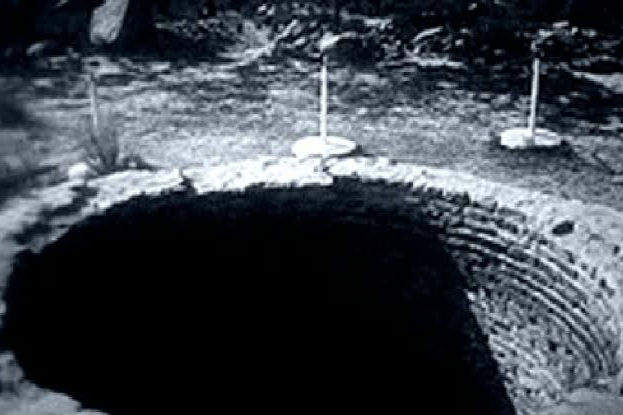
Another chilling detail that added to the eerie reputation of the hole was the reported lack of sound emanating from its depths. Mel Waters told Art Bell that whenever he or his neighbors threw heavy objects into the pit, they never heard the sound of an impact. In a normal cave or deep well, a falling rock would typically produce an echo or a distinct “thud” or “splash” upon reaching the bottom. However, Waters insisted that the hole swallowed everything in total silence, as if the objects were falling into a literal void that absorbed all acoustic energy.
This specific claim led to various theories among the Coast to Coast AM listener base, ranging from the presence of a “soft” bottom to more fringe ideas about interdimensional portals. Scientifically, sound waves are expected to bounce off the walls of a vertical shaft, creating a resonant echo that humans can hear from the surface. The total silence described by the caller suggested a phenomenon that was not just a geological oddity, but something that ignored the standard rules of physics. Without a physical location to test, these acoustic claims remain purely anecdotal, contributing to the “ghost story” atmosphere of the entire narrative.
The Strange Dog Story
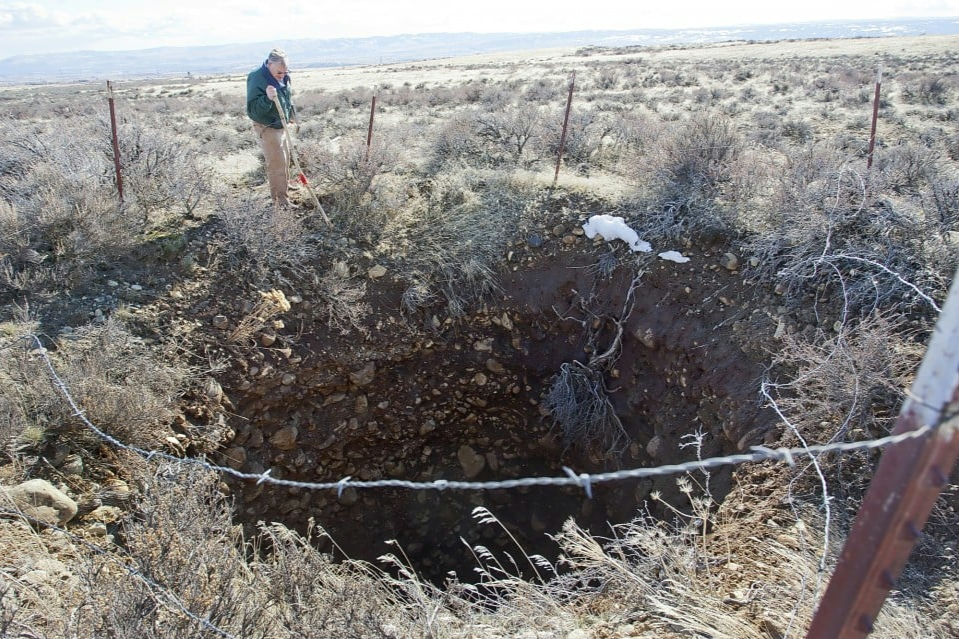
One of the most unsettling and frequently discussed parts of the Mel’s Hole legend involves a story about a neighbor’s deceased pet. According to the caller, a local man had allegedly thrown his dead hunting dog into the pit to dispose of the remains, a common practice for locals using the hole as a trash site. A short time later, the caller claimed he saw the exact same dog alive and well, wandering through the woods nearby. He noted that the dog appeared to be wearing its original collar but behaved in a strange, detached manner toward its former owner.
This narrative of “resurrection” turned the story from a geological mystery into a supernatural thriller. Stories of the hole having life-restoring properties spread quickly, though no one ever came forward with a name for the neighbor or a photograph of the miraculously returned animal. Like many urban legends, the “zombie dog” story relies entirely on word-of-mouth testimony without a shred of documented evidence. Still, the emotional weight of a beloved pet returning from a bottomless void ensured that this specific entry in the Mel’s Hole timeline became one of its most memorable and discussed chapters.
Bizarre Material Changes
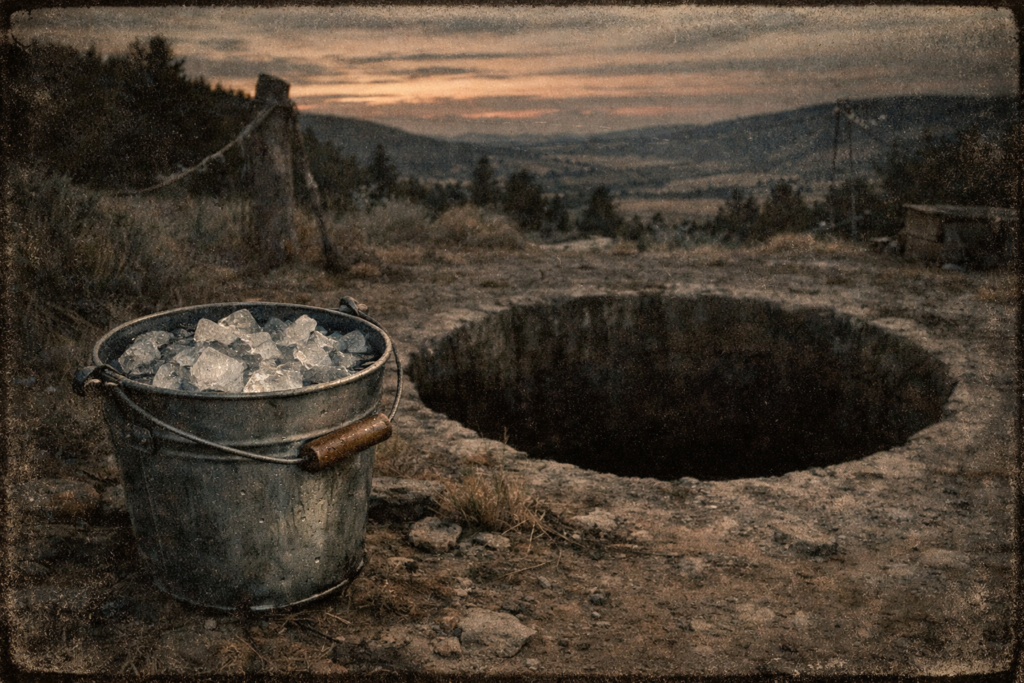
As the mystery of the hole evolved through subsequent radio interviews, the claims regarding its properties became even more outlandish. Mel Waters eventually claimed that the area surrounding the pit possessed the ability to alter the physical properties of matter. He told listeners that metal objects left near the opening for extended periods would undergo a transformation; for instance, he alleged that steel would gradually take on the appearance and properties of copper. These claims suggested that the hole was emitting some form of unknown energy or radiation that could trigger molecular changes.
In another bizarre update, the caller described lowering a bucket of ice into the hole to see how the temperature affected it. He claimed that when he pulled the bucket back up, the ice had not only melted but had turned into a strange, lukewarm liquid that would not freeze and was actually flammable. From a scientific standpoint, these “transmutations” would require massive amounts of energy typically found only in nuclear reactors or stars. Since no samples of these “changed” materials were ever provided for laboratory analysis, these stories are generally classified as pure fiction by the scientific community and geological experts.
Animals Avoided It
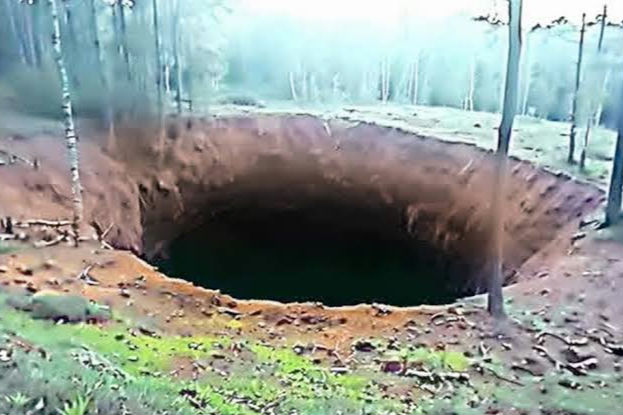
A common trope in paranormal stories is the idea that animals possess a “sixth sense” for danger or the supernatural, and Mel’s Hole is no exception. Waters claimed that his own dogs, which were otherwise brave and obedient, were absolutely terrified of the pit. He reported that as he approached the site, the dogs would begin to whimper, dig their paws into the ground, and refuse to move any closer. Even when he tried to lead them toward the opening, they would reportedly bolt in the opposite direction, sensing something that humans could not perceive.
While this makes for a compelling addition to the legend, animal experts note that there are many logical reasons for such behavior. If the area contained deep mine shafts, there could be pockets of “dead air” or heavy gases like carbon dioxide that animals can smell, or the steep, unstable ground might simply trigger their natural survival instincts. Because the site was never officially located, no independent animal behaviorists could ever study these reactions. Consequently, the image of the “terrified dog” remains a powerful, if unverified, element that reinforces the idea that the hole was something truly unnatural.
Government Seizure Claim
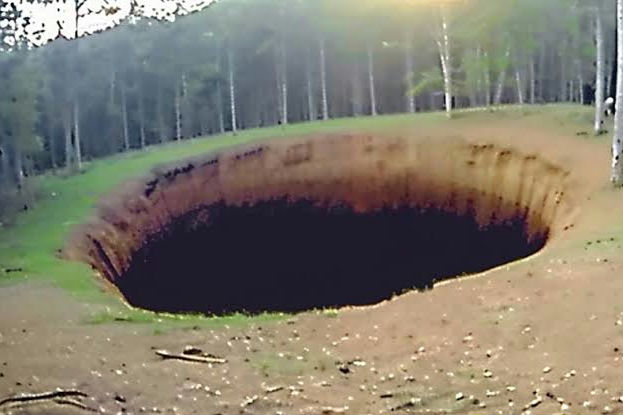
The Mel’s Hole saga took a sharp turn into the world of conspiracy theories when Waters claimed the authorities had intervened. In later radio appearances, he told Art Bell that the U.S. government had discovered the pit and moved quickly to secure the area. He alleged that unmarked black vans and men in suits arrived under the guise of investigating a downed aircraft, only to seize his property and prevent him from returning. This development fit perfectly with the themes of government cover-ups that were highly popular on late-night radio during the late 1990s.
Waters further claimed that the government eventually paid him a massive sum of money, millions of dollars, to walk away from the land and relocate to Australia. Despite these dramatic assertions, investigative journalists who looked into Washington State land records found no evidence of a “Mel Waters” ever owning property in Kittitas County. Furthermore, there were no public filings regarding a government seizure of land for a plane crash or any other secret project in that specific area. This lack of a paper trail strongly suggests that the “government cover-up” was a narrative device used to explain why the hole could no longer be found.
Investigations Begin

In the early 2000s, as the legend reached its peak, a group of dedicated researchers decided to take action. In 2002, an expedition was organized by a man known as “Red Elk” (Gerald Osborne), who claimed to have seen the hole himself years prior. He led a group of approximately thirty people into the wilderness near Ellensburg to find the site once and for all. They spent days trekking through the Manastash Ridge area, searching for any sign of a 15-mile-deep abyss or a government-guarded facility, hoping to bring back definitive proof of the phenomenon.
The expedition, however, ended in disappointment, as the group failed to find anything resembling the bottomless pit described by Mel Waters. This failure underscored the biggest problem with the entire legend: for all the thousands of words spoken about it on the radio, there was not a single coordinate or physical landmark that could be verified. Local news outlets also joined the hunt, interviewing residents who had lived in the area for generations. While some recalled old mining holes, none had ever heard of a “bottomless” one until the radio show aired, leading many to believe the story was a clever work of fiction.
Science And The Verdict
Geologists have been quite clear about the impossibility of a hole like the one Mel Waters described. Jack Powell, a geologist with the Washington State Department of Natural Resources, explained that the Earth’s crust is not a hollow shell; rather, it becomes increasingly hot and plastic the deeper you go. At a depth of 15 miles, the temperature would be hundreds of degrees, and the pressure would be so immense that any vertical shaft would be crushed shut instantly. No known natural or man-made material could maintain an open “hole” at those extreme depths.
Beyond the geological hurdles, the physical mechanics of the fishing line experiment also fail to hold up to scrutiny. A 15-mile length of fishing line would weigh so much that it would likely snap under its own weight long before reaching the bottom. Because of these scientific “red flags” and the complete absence of any physical evidence or a verifiable person named Mel Waters, the consensus is that the story is a modern myth. It likely began as a tall tale or a prank that resonated with a public eager for mystery, eventually cementing itself as one of the internet’s first viral legends.
Ultimately, the story tells us more about the power of the media, and it reminds us that sometimes, a good story is more important to the public than the cold, hard facts of the matter.


