
Nature At The Edge Of Our Doorstep
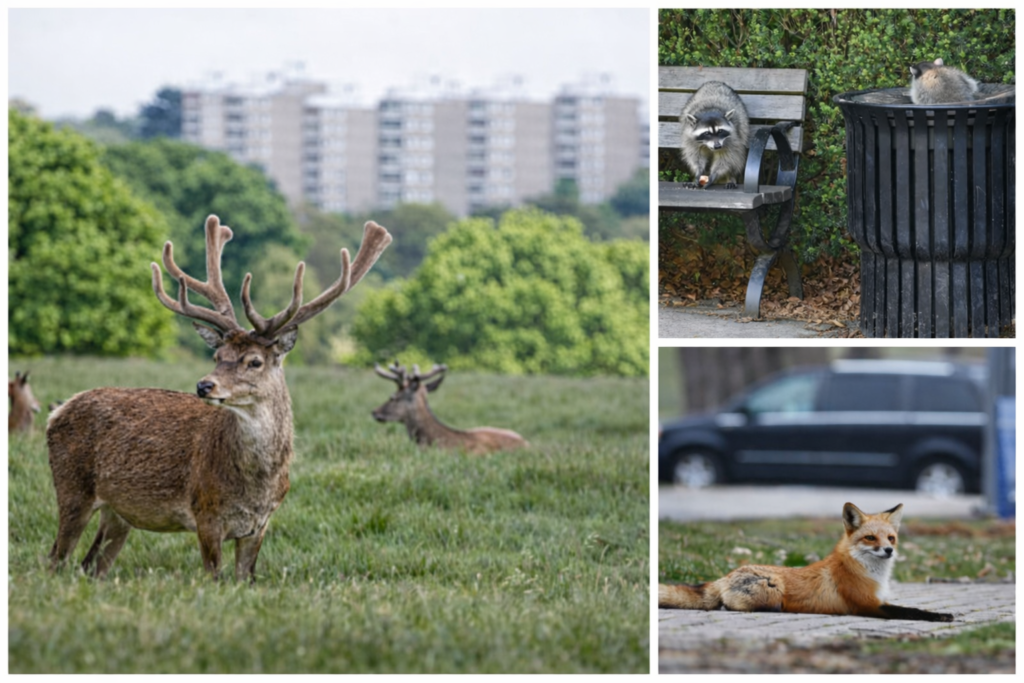
Many people believe that big cities are the final achievement of human beings, where bright lights and concrete have totally replaced the wild. We tend to think that when we build skyscrapers and paved roads, the animals simply pack up and leave. However, the natural world hasn’t actually gone anywhere; it has just changed its strategy. Many clever predators decided not to retreat when our towns expanded. Instead, they stayed behind and quietly adjusted their daily habits to fit our world. They have learned our traffic patterns, figured out our work schedules, and even memorized which nights we put our rubbish bins out on the curb for collection.
Understanding this shift is very important because living together is no longer just an idea, it is our daily reality. From the tallest office towers to quiet backyard gardens, wildlife now lives right alongside millions of people. While most of these encounters happen without any trouble, we must remember that these animals are still hunters driven by deep instincts. By recognizing how they have adapted since the late 20th century, we can reduce our own fears and avoid making dangerous mistakes. Learning to share our space helps us stay safe and gives us a much deeper respect for how tough and resilient nature can be, even in the middle of a busy city.
Coyotes in the City
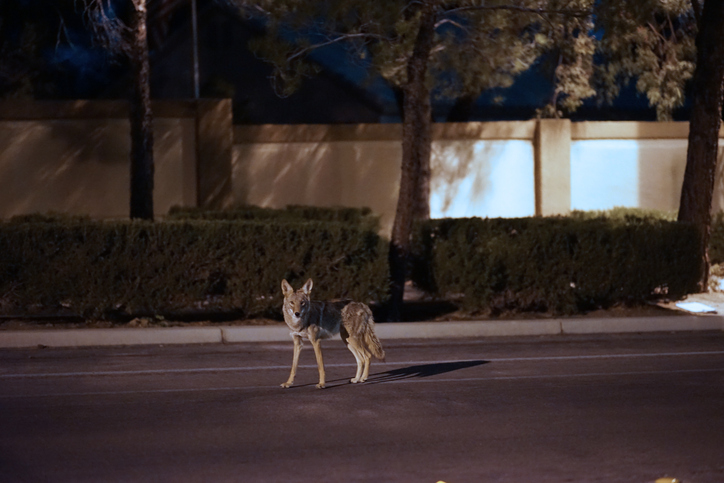
The coyote is easily one of the most successful urban predators in North America today. Originally, these “song dogs” were mostly found in the open prairies of the West. However, during the 1900s, they began a massive expansion across the continent as wolf populations declined and human farming created new food sources. By the early 1990s, scientists were surprised to find large numbers of coyotes living deep inside major hubs like Chicago and Los Angeles. Today, they are everywhere, roaming through golf courses, following old railway tracks, and trotting down quiet residential streets under the cover of darkness. Their diet has shifted from wild rabbits to include fallen fruit, insects, and even the leftovers we throw away.
Urban coyotes survive because they are incredibly smart and very cautious. Modern GPS tracking studies have shown that these animals go out of their way to avoid humans by staying active mostly between dusk and dawn. They are experts at memorizing “green corridors” like drainage ditches and park edges to move around unseen. However, they are still opportunistic hunters and may view small pets as prey if given the chance. Wildlife experts strictly advise against leaving pet food outside, as this teaches coyotes to lose their natural fear of people. Their success proves that human buildings didn’t destroy their world; it just gave them a brand-new kind of territory to conquer.
Garden Red Foxes
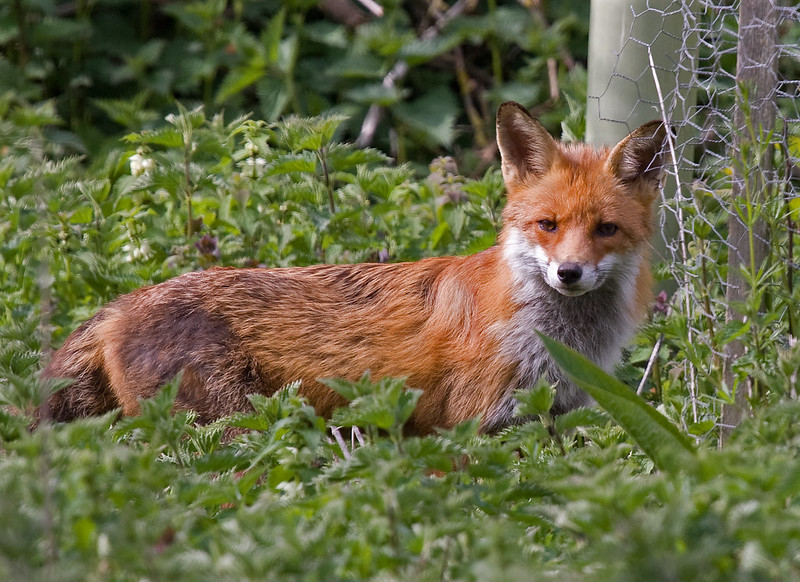
Red foxes have lived near human homes for hundreds of years, but their move into big cities became very noticeable in Britain during the 1930s and 1940s. As suburbs pushed out into the old countryside, the foxes simply stayed put and moved into the new gardens. By the end of the 20th century, it was estimated that London alone was home to several thousand foxes living entirely within the city limits. During the day, they stay hidden in clever spots like under garden sheds or along quiet railway embankments. Once the sun goes down, they emerge to forage for a varied diet of rodents, earthworms, and whatever scraps they can find in household bins.
While urban foxes almost never threaten humans, their bold behavior can sometimes be a surprise. Because they have grown so used to seeing people, some foxes will even sunbathe openly on back lawns during the afternoon. Researchers studying London’s fox population in the early 2000s found that some individuals have tiny territories only a few streets wide. Most problems with foxes are minor, usually involving noisy barking during the winter mating season or a mess from a knocked-over bin. They aren’t the biggest or strongest predators, but their incredible ability to adapt shows that being flexible is the best way to survive in a world dominated by humans and concrete.
Raccoons in Daylight
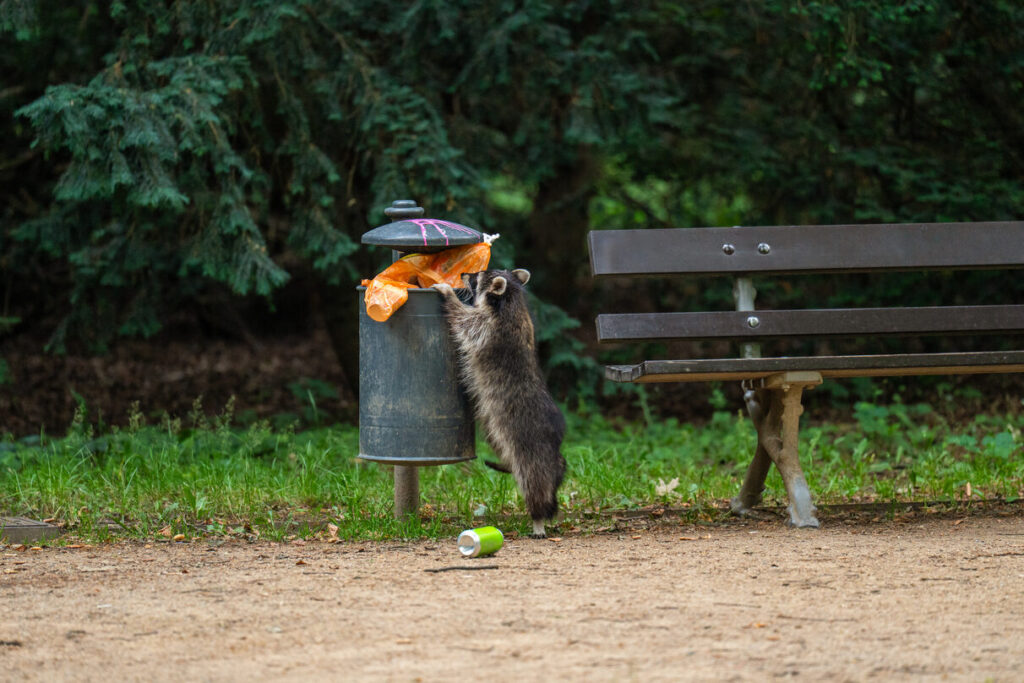
The raccoon is frequently called the “trash panda” and is widely considered the ultimate urban survivor in North America. These masked bandits were originally native to forests and swampy wetlands, but they began moving into towns in the early 1900s. By the 1950s, they were a common sight in almost every suburban neighborhood. What makes them so successful are their incredibly nimble front paws, which act almost like human hands. They can easily open latches, lift heavy bin lids, and even turn doorknobs. This physical skill, combined with a very high level of intelligence, has given them a reputation as the cleverest raiders of our attics and garages.
Scientists have discovered that raccoons are excellent learners with long-term memories. In various tests, they have been recorded returning to the exact same houses on specific nights because they remembered the rubbish collection schedule. They also love to make dens inside chimneys or abandoned buildings because these spots stay warm and dry throughout the cold winter months. While they might look cute and charming, they are wild animals that can carry diseases like rabies, so they should never be handled or approached. Keeping your waste containers tightly secured is the most effective way to prevent a confrontation. Their presence in our cities is a constant reminder that being smart is a powerful tool for any predator.
Suburban Alligators
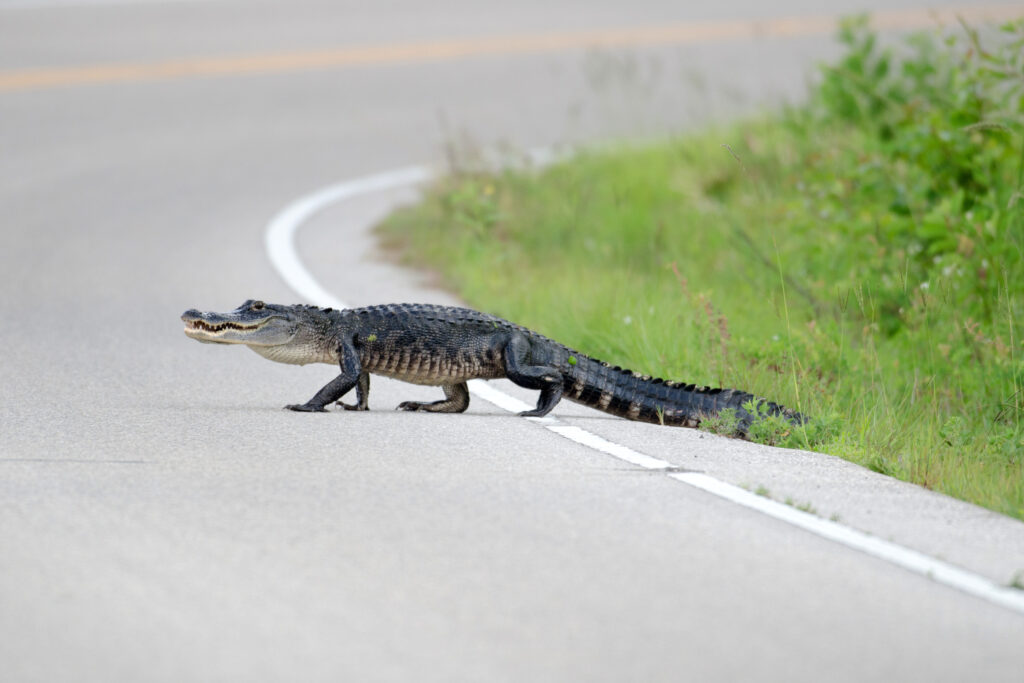
In the southeastern United States, especially in Florida, it is very common for people and alligators to share the same road and water every day. This wasn’t always the case, as the American alligator was actually pushed toward extinction by the mid-1960s due to heavy hunting. However, they were placed on the endangered species list in 1967, and thanks to strong protections, their numbers bounced back incredibly fast. As humans started building massive housing developments over old wetlands, the alligators didn’t leave; they just moved into the new man-made ponds, golf course hazards, and backyard canals that were built right in the middle of these new neighborhoods.
Today, these artificial waterways provide perfect hunting grounds for alligators to find fish, turtles, and birds. Most problems occur when people make the mistake of feeding them, which causes the animals to lose their natural fear of humans and start associating us with a free meal. Wildlife authorities constantly warn residents that “a fed gator is a dead gator” because they often have to be removed if they become too bold. While actual attacks are very rare, these reptiles are still powerful, prehistoric hunters that can move surprisingly fast. The alligator is a perfect example of how successful conservation can sometimes bring a very large, toothy predator right to your back door.
Mountain Lions Nearby
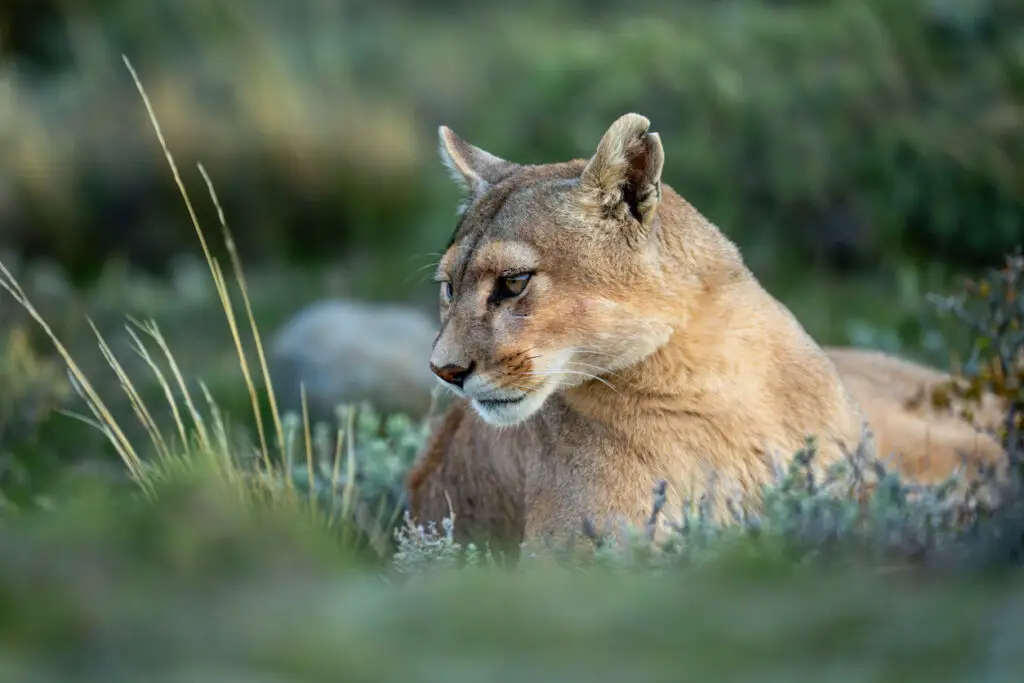
Cougars, which are also known as mountain lions or pumas, once lived across almost all of North and South America. While hunting in the 1800s wiped them out in most eastern states, they remained quite strong in the wild West. In recent decades, sightings have spiked near expanding suburbs in places like California, Colorado, and the Rocky Mountains. Using high-tech camera traps and GPS collars, researchers have watched these large cats move quietly through housing developments at night. They aren’t usually looking for people; they are simply following their main food source, which is the local deer population that loves to eat suburban garden plants.
Mountain lions are naturally shy and prefer to stay away from humans, being most active during the “golden hours” of dawn and dusk. However, small pets can sometimes attract them into backyards, leading to scary encounters. Because of this, wildlife agencies suggest that people in these areas keep their pets inside at night and install bright motion-sensor lights to scare the cats away. While an attack on a human is extremely rare, seeing one of these powerful carnivores reminds us that the line between “the woods” and “the suburbs” is often invisible. The cougar’s quiet presence shows that we are often living right on the edge of a very wild and ancient hunting ground.
Wandering Black Bears
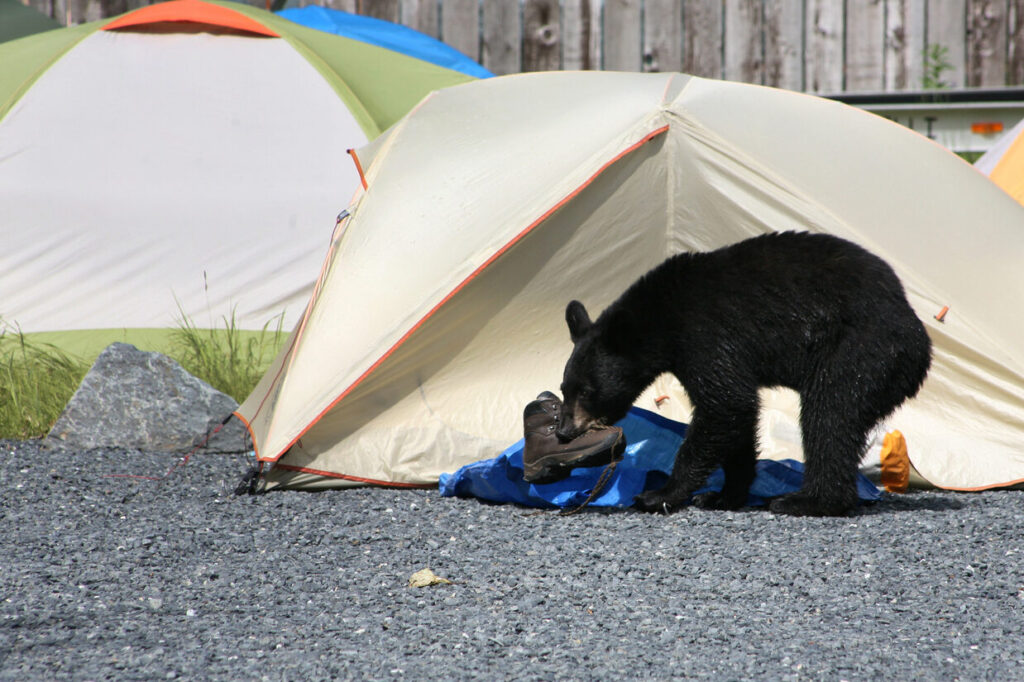
Black bears have proven to be remarkably good at living in the suburbs. After conservation laws in the 1970s helped their populations grow, they started showing up more often in states like New Jersey, New York, and California. These bears quickly figured out that human neighborhoods are like a giant buffet. Instead of spending all day hunting in the woods, they found that household rubbish, greasy pizza boxes, and bird feeders offer thousands of calories for very little effort. At times, they also visit tramping sites and rummage through bags. This is especially true in the late summer and autumn when they are trying to fatten up as much as possible before they go into their winter sleep.
Modern tracking data shows that some bears have actually memorized the specific routes of rubbish trucks through neighborhoods. They move mostly under the cover of night and know exactly which houses have easy-to-reach bins. Despite their massive size and strength, they usually try to avoid a fight with people, but a bear that feels trapped or cornered can become very dangerous. To help everyone get along, many communities have started using bear-resistant bins and passed laws against feeding wildlife. The lesson here is quite simple: if you leave food out, a bear will eventually find it and keep coming back. Their success isn’t about being mean; it’s just about taking a golden opportunity.
Falcons on Skyscrapers
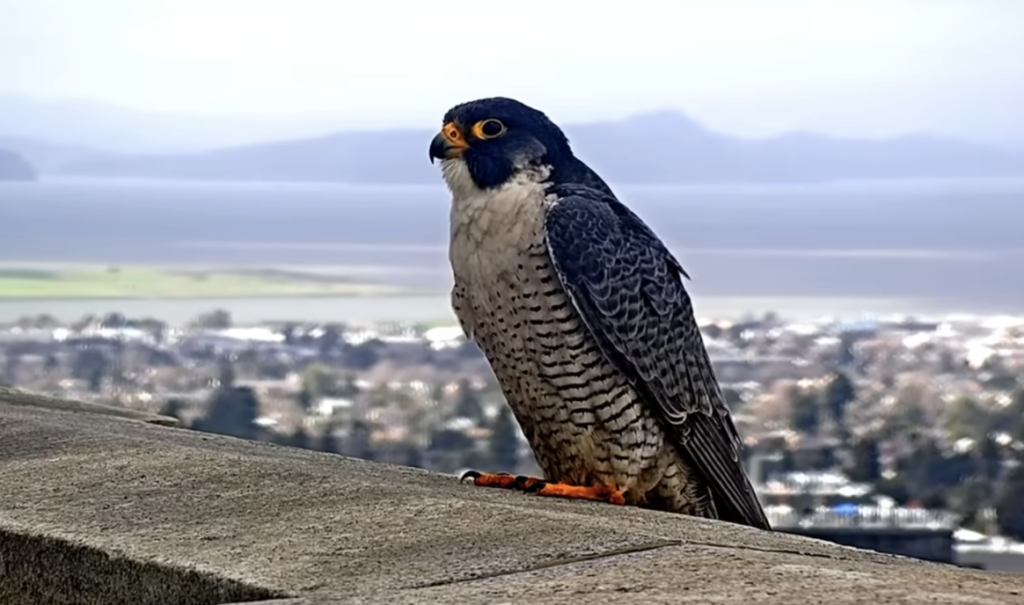
The peregrine falcon is one of the most impressive animals on the planet, capable of diving through the air at speeds of over 300 kilometers per hour. Back in the 1950s, these birds almost disappeared entirely because of a pesticide called DDT that made their eggshells too thin to survive. However, after the chemical was banned and major reintroduction programs started in the 1970s and 1980s, these birds were brought into big cities. Surprisingly, the concrete jungle turned out to be the perfect home for them. The tall office buildings and bridges were a great match for the high, rocky cliffs where they naturally like to nest.
In cities like New York, London, and Toronto, peregrine falcons now live on top of skyscrapers, where they have a perfect view of their favorite prey: pigeons. Today, many of these nesting sites are equipped with live “falcon cams” so that thousands of people can watch the chicks hatch and grow every spring. These birds almost never interact with the humans living below them, but they do a great job of naturally controlling the pigeon and starling populations. Their return from the brink of extinction is considered one of the greatest wins in conservation history. It proves that even the most elite wild predators can thrive in the heart of a city if we give them a little help.
Red-Tailed Hawk Patrols
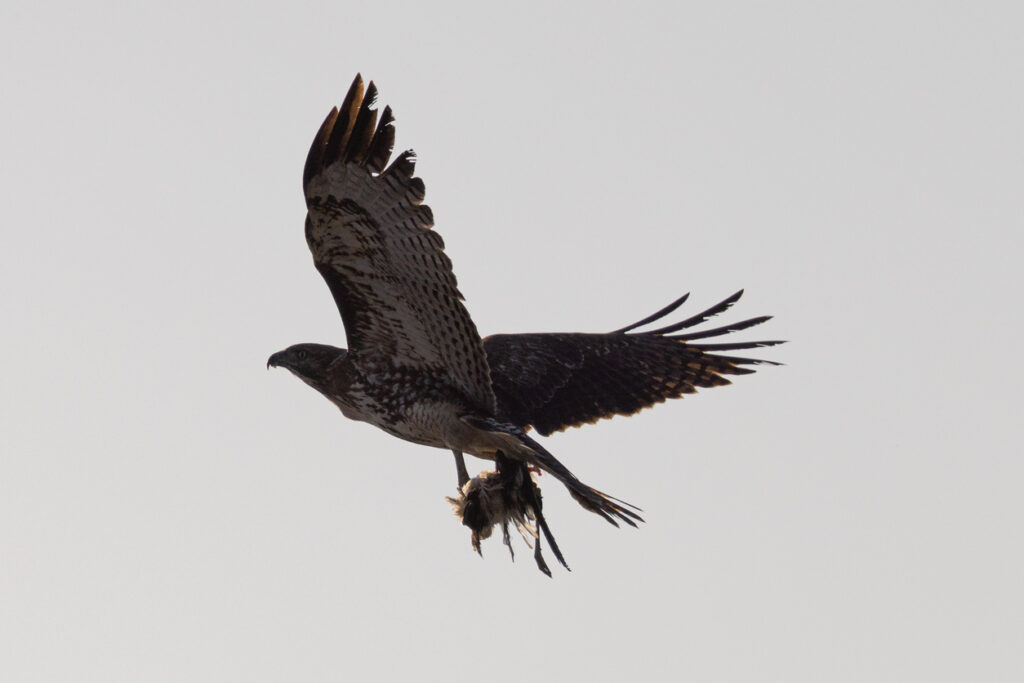
Red-tailed hawks have become a very common sight for anyone driving along a highway or walking through a city park in North America. These adaptable birds of prey love to perch on top of lamp posts, telephone poles, and tall trees, where they use their incredible eyesight to scan the ground for movement. Urban areas are actually great hunting grounds for them because the mowed grass along roads and the open spaces in cemeteries are full of mice, rats, and squirrels. Since they hunt during the day, they are much easier for people to spot than the secretive owls that come out at night.
Their numbers started to climb steadily after the 1972 ban on harmful pesticides. While many hawks fly south when the weather gets cold, a lot of urban hawks have decided to stay in the city all year round because the food supply is so steady. One of the most famous examples was a hawk nicknamed “Pale Male,” who became a celebrity in the 1990s for nesting on a fancy apartment building in New York City. These hawks are helpful neighbors because they help keep pest populations under control without the need for poison. Their steady, silent watch from above is a constant reminder that the cycle of nature continues even in our busiest, loudest environments.
Saw-Scaled Vipers
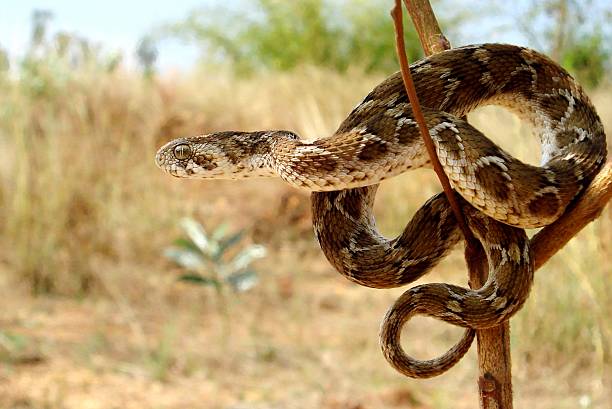
In parts of India, Africa, and the Middle East, the saw-scaled viper lives much closer to people than most would realize. This snake is relatively small, but it is very well-known because it likes to live in dry fields, near stone walls, and on farms where rodents are plentiful. Because villages and farms often sit right on top of its natural habitat, people run into these snakes quite frequently. Unfortunately, this species is responsible for a large number of snakebite cases every year, especially in rural parts of India. It is a master of blending in, and its sandy colors make it almost invisible against the dirt and rocks.
When this viper feels threatened, it doesn’t just run away; it coils up and rubs its rough scales together to make a loud, rasping sound that serves as a warning. Most bites happen at night when people are walking outside without shoes or a light and accidentally step on the snake. To help keep people safe, health organizations have launched big campaigns since the early 2000s to encourage everyone to wear sturdy boots and carry torches after dark. It is important to remember that these snakes aren’t out to hunt humans; they are just being defensive. With the right awareness and a bit of caution, people and vipers can exist in the same areas with much less risk to everyone.
Backyard Skunks
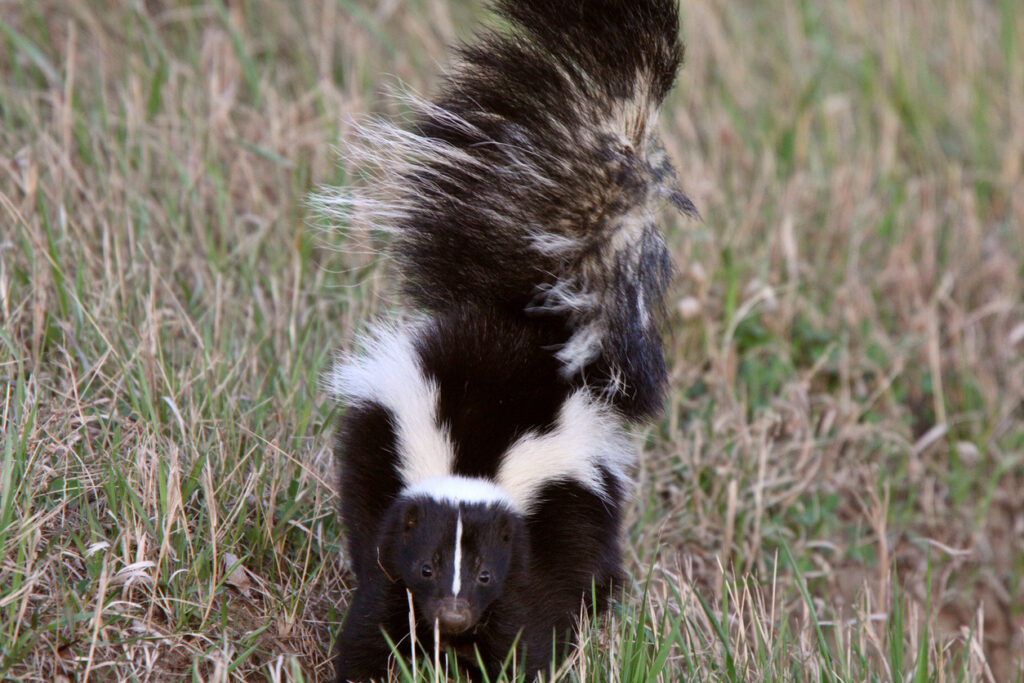
Striped skunks have become a permanent fixture in North American suburbs, often making their homes directly beneath our porches, decks, and garden sheds. These black-and-white neighbors moved into residential areas in large numbers during the mid-20th century as neighborhoods replaced their natural woodland edges. While they are famous for their powerful defensive spray, which can travel up to five meters and leave a smell that lasts for weeks, they are actually very beneficial to have around. Skunks spend their nights hunting for garden pests like grasshoppers, beetles, and small rodents, acting as a natural form of pest control for local homeowners.
Skunks are nocturnal and quite shy, usually only emerging from their dens well after the sun has set. Most problems in neighborhoods happen when curious pets, like dogs, corner a skunk and get sprayed in the face. To prevent this, wildlife experts since the 1990s have suggested that homeowners secure any crawl spaces and stop leaving bowls of pet food outside. While they are capable of carrying diseases like rabies, most skunks will do everything they can to avoid a fight if they are given a clear path to escape. Their presence in our yards shows that even small predators have a job to do in the city’s ecosystem.
African Leopards Nearby
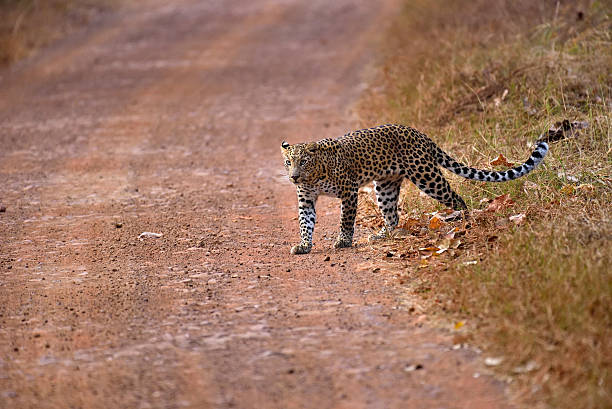
In parts of Africa and India, the leopard has quietly become one of the most successful large predators living near humans. This is most famously seen in Mumbai, India, where the Sanjay Gandhi National Park is surrounded by some of the most crowded housing on Earth. Research conducted in the 2010s revealed that dozens of leopards live within the park while regularly slipping into the city streets at empty roads or at night. They aren’t usually looking for people; instead, they hunt stray dogs and small livestock. By preying on feral animals, these big cats actually help reduce the spread of diseases like rabies in certain urban districts.
Leopards are successful because they are incredibly secretive and move mostly when everyone else is asleep. Modern camera traps often capture amazing footage of leopards walking through narrow city alleys just hours before the morning commuters arrive. While attacks on humans are rare, they usually happen when a leopard is accidentally cornered or surprised in a dark area. Since 2011, local authorities have run successful awareness programs to teach residents how to stay safe, such as avoiding walking alone in unlit areas at night. The leopard’s story is a powerful reminder that even a large, spotted predator can survive right next to millions of people by staying hidden.
Monk Parakeet Colonies
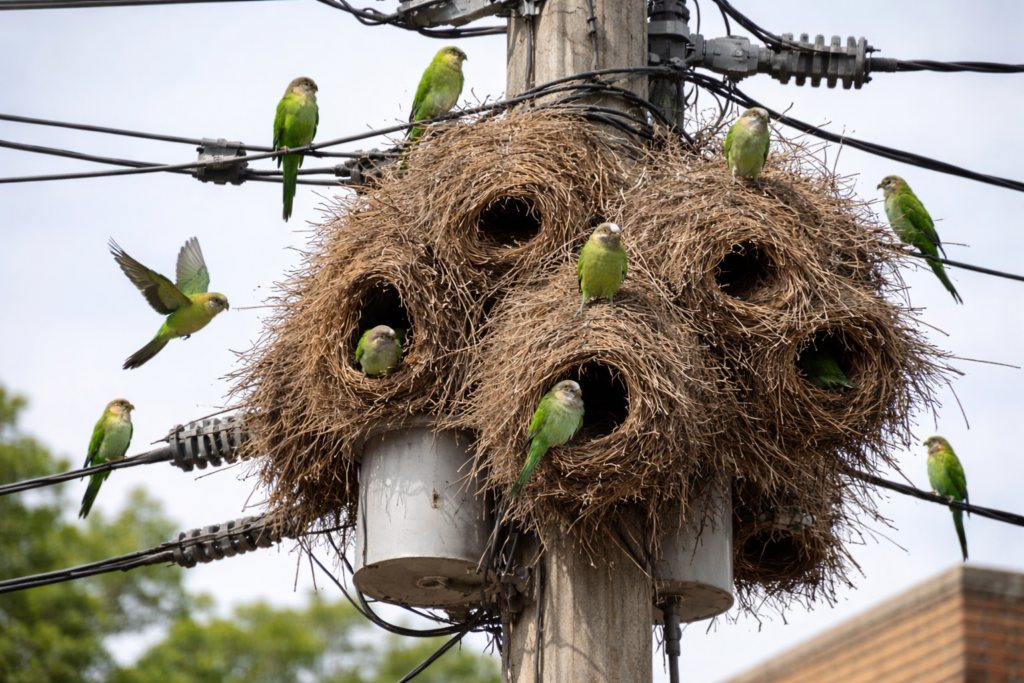
The monk parakeet, which is sometimes called the Quaker parrot, is a unique addition to the urban predator list. Originally from South America, thousands of these bright green birds were brought to the United States during the 1960s and 1970s for the pet trade. Many escaped or were released, and they soon began building wild colonies in cold-weather cities like Chicago, New York, and even parts of Europe. Unlike most parrots that hide in tree holes, monk parakeets build massive communal nests out of sticks. These nests are often built on utility poles and cell towers because the electrical equipment provides extra warmth during the winter.
While they mostly eat seeds and fruit, they are considered small predators because they also hunt insects and aggressively defend their nesting territory from other animals. Their nests can grow to be several meters wide and house dozens of different bird families, which can sometimes cause small fires or power outages on electrical lines. Despite these issues, many city residents have grown very fond of the parakeets because they bring a touch of tropical color to the snowy winter months. Their expansion over the last fifty years shows how quickly a species can adapt when human infrastructure provides them with the perfect combination of shelter and heat.
Great Horned Owls
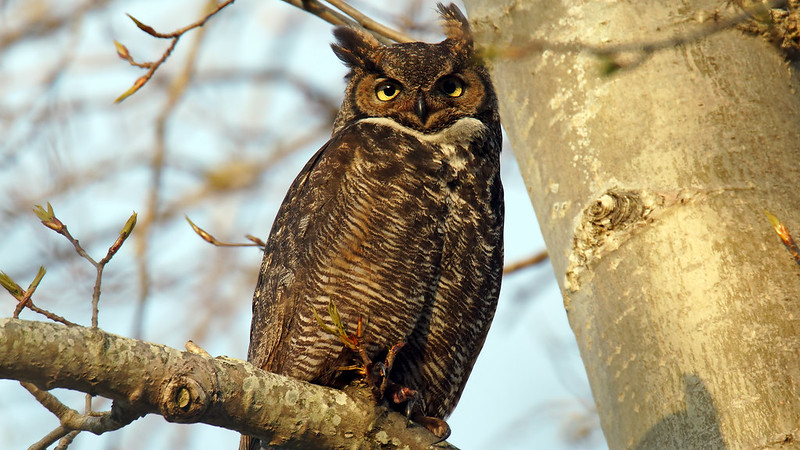
The great horned owl is one of the most powerful and successful nocturnal hunters in all of North America. These birds have adapted perfectly to life in the suburbs, moving into the tall trees found in cemeteries, golf courses, and neighborhood parks. They are often called “the tiger of the sky” because they are capable of taking down prey much larger than themselves. Since the late 20th century, their populations have remained stable because they are very flexible about where they live. They hunt mostly at night, catching rats, rabbits, and even other birds, which helps keep the local rodent population from getting out of control.
Scientists have used radio trackers to follow urban owls and found they can raise their chicks just a few meters away from busy, noisy highways. You will rarely see them, but you might hear their deep, rhythmic hooting during the winter nesting season. Because their feathers are designed for silent flight, their prey almost never hears them coming until it is too late. While there are occasional stories of small pets being snatched, these incidents are quite uncommon if pets are kept inside after dark. The owl’s success in our cities comes from its incredible patience and its ability to use our artificial streetlights to help spot a moving meal from high above.
Opossums Under Houses
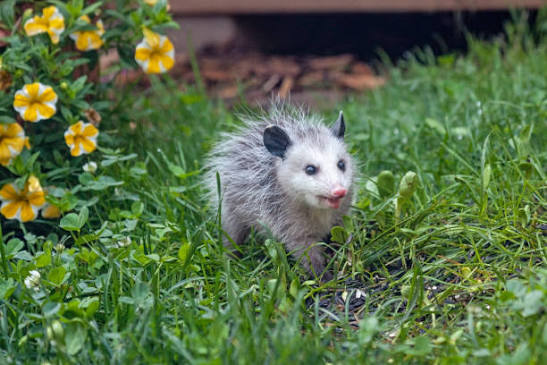
The Virginia opossum is the only native marsupial in North America, and it has become a very common sight in suburban neighborhoods. These quiet creatures often make their dens in the dark spaces beneath our houses, inside old sheds, or in abandoned burrows. They are famous for being nature’s “clean-up crew” because they eat almost anything, including fallen fruit, insects, mice, and even dead animals. Because they eat so many different things, they play a huge role in keeping our local environments clean and healthy. They have expanded their range significantly over the last century, moving further north as winters have become slightly milder.
Opossums are very rarely a danger to humans or pets because their main way of defending themselves is to “play dead” when they feel scared. One of the best facts about having them in your yard is that a single opossum can eat thousands of ticks in a single season, which helps stop the spread of Lyme disease. However, they are easily attracted to neighborhoods by smelly rubbish bins and outdoor pet food. Wildlife experts recommend simply leaving them alone, as they are nomadic and will usually move on to a new spot within a few days. Their quiet scavenging reminds us that not every predator in our world is aggressive or scary.
The Maned Wolf Of Farmland
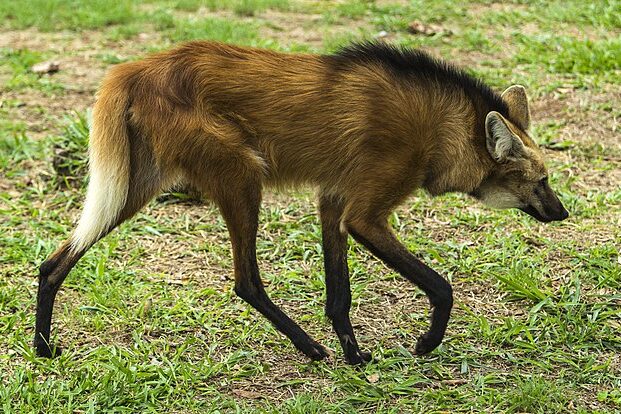
The maned wolf of South America is often described as a “fox on stilts” due to its remarkably long, slender legs and vibrant reddish-orange fur, yet it belongs to a unique genus all its own. Primarily found in the vast grasslands of Brazil, this striking predator, known scientifically as Chrysocyon brachyurus, has undergone a significant behavioural shift as its native Cerrado habitat has been converted into agricultural land. Throughout the late twentieth century and into the 2020s, these animals have become increasingly common sights near rural settlements and vast crop fields where they navigate the fringes of human development.
They are particularly active during the twilight hours, using their impressive height to peer over tall grasses and crops while searching for small rodents, ground-nesting birds, and the occasional discarded snack near farm buildings. Despite their intimidating stature and the dark mane of hair along their neck, maned wolves are notoriously shy and solitary creatures that go to great lengths to avoid direct human contact. It has simply learns to walk a little taller among the rows of corn and soy.
Like this story? Add your thoughts in the comments, thank you.


