
1. Kendrick’s Discovery in the Gym Mat
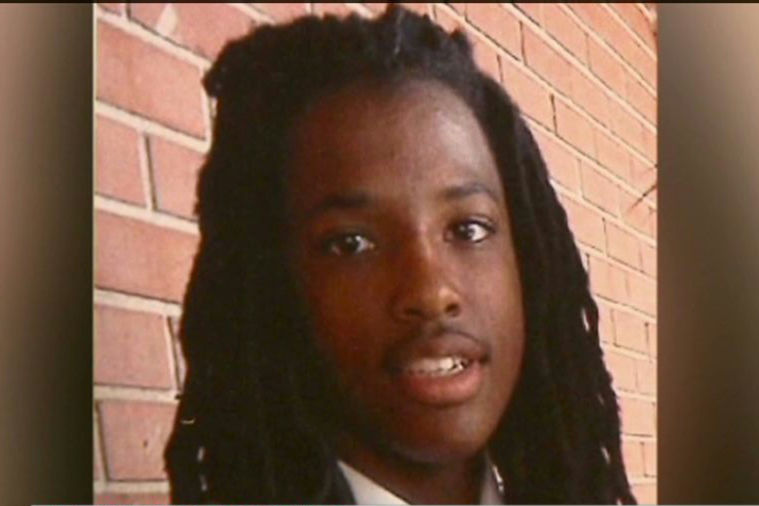
In the morning of January 11, 2013, classmates at Lowndes High School in Valdosta, Georgia, found Kendrick Johnson’s body inside a vertical, rolled-up wrestling mat in the school’s gymnasium. He was a 17-year-old student and athlete whose life was cut tragically short. Local investigators reported he was inside the mat head-first and stuck there when discovered. This startling scene became the focal point of nationwide attention and speculation about how a student could end up in such a situation.
2. Initial Ruling: Accidental Death by Positional Asphyxia

Shortly after Kendrick’s body was found, the Georgia Bureau of Investigation (GBI) and local law enforcement concluded that his death resulted from “positional asphyxia,” meaning he became trapped in a position where he couldn’t breathe. According to official reports, Kendrick may have been attempting to retrieve a sneaker from inside the mat when he became stuck and suffocated.
3. The Family’s Second Autopsy and Blunt Force Trauma Findings

Unconvinced by the accident ruling, Kendrick’s parents paid for a private autopsy by Dr. William Anderson. His report claimed evidence of blunt force trauma to the teen’s neck, suggesting a non-accidental cause of death. This contradicted the official findings and fueled alternative theories about what happened that day. But no one was there to say otherwise.
4. Missing Organs and the Body’s Condition

During the second autopsy, questions arose about the condition of Kendrick’s Positional Asphyxia. Reports indicated several internal organs were not present when the private pathologist examined him, and materials like newspaper had been found inside the body cavities. This discovery led to intense scrutiny of the handling of Kendrick’s remains and legal actions alleging mishandling or organ trafficking.
5. Federal Review and Closure Without Charges

In late 2013, the U.S. Attorney for the Middle District of Georgia announced a formal review of Kendrick’s death that included interviews, evidence reviews, and even consultation with independent experts. However, in June 2016, the Department of Justice announced it would not file federal criminal charges related to his death, citing insufficient evidence to prove a crime beyond a reasonable doubt.
6. The Family’s Long Legal Battles
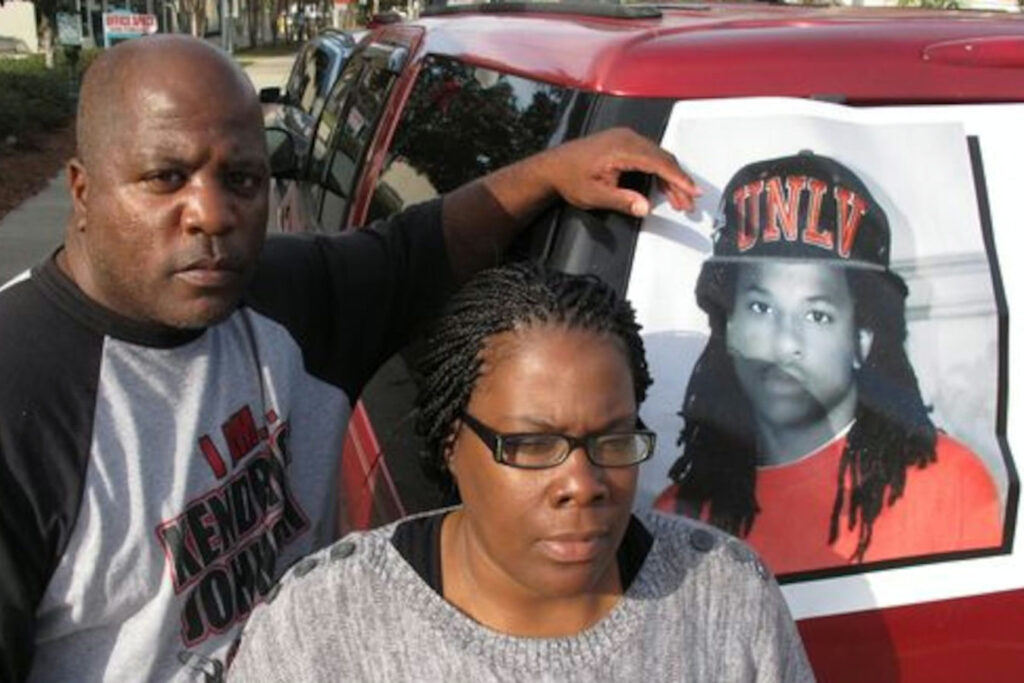
After initial investigations closed without criminal charges, Kendrick’s parents pursued civil legal action. In 2015, they filed a $100 million wrongful death lawsuit naming 38 individuals and entities, from school officials to law enforcement, alleging murder and a cover-up. That suit drew national attention but was dismissed, and a judge ordered the Johnsons and their attorney to pay more than $292,000 in legal fees for fabricating evidence. The family later filed additional suits against the school board and others, continuing their push for accountability.
7. Reopened Investigation by Local Sheriff

In 2021, Lowndes County Sheriff Ashley Paulk announced the case would be reopened after reviewing long-sought official files and investigative records that had been hard to obtain. Paulk invested his own time and resources, claiming a fresh look was needed due to public scrutiny and ongoing questions by the Johnson family. However, after working the case for months, he again concluded no homicide, no cover-up, and no conspiracy, reaffirming the original conclusion of a tragic accident.
8. Persistent Dispute Over Cause of Death Certificate
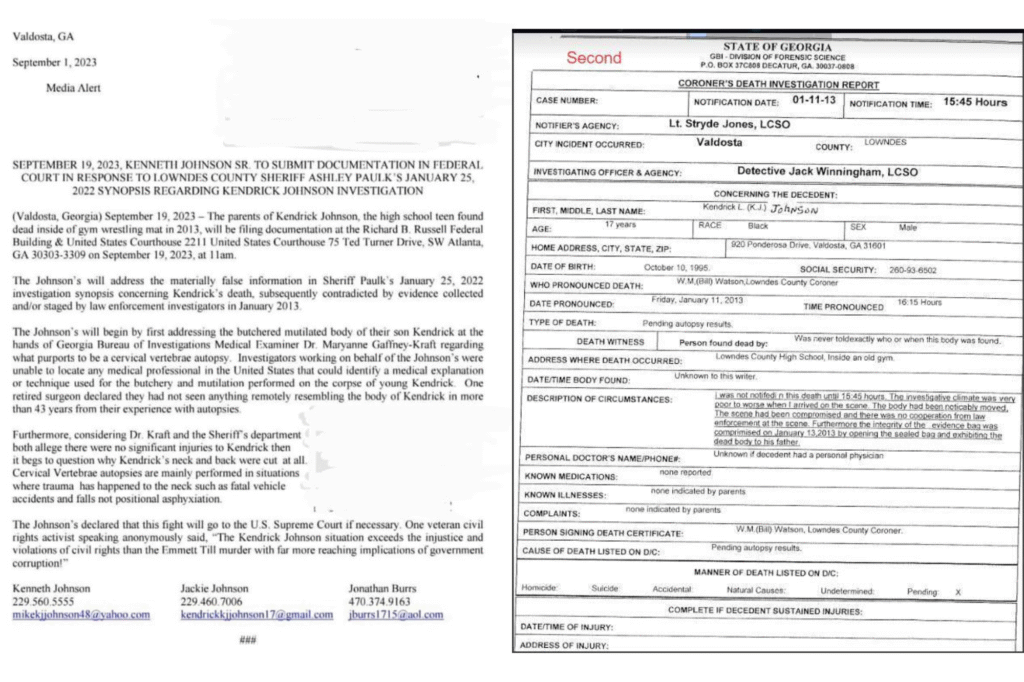
More than a decade after Kendrick’s death, his parents continued to challenge official records. In 2025, they filed an amended $12 million lawsuit against the Georgia Department of Public Health, arguing that the state’s refusal to change Kendrick’s death certificate from “accidental positional asphyxia” to reflect blunt force trauma was unjust and violated state law and federal rights. They highlighted independent autopsy findings and other disputed evidence, and have repeatedly sought to correct the official cause of death.
9. Ongoing Claims, Controversies, and Community Support

Despite multiple investigations and legal rulings, public debate around Kendrick’s death continues. The family and supporters have organized rallies and drawn comparisons between his case and other historic deaths that raised questions about justice and race, fueling ongoing discussion in the media and community forums. Advocates continue to point to questions about missing organs, conflicting autopsy results, and alleged discrepancies in investigative findings as reasons the story remains unresolved for many.
10. What Officials Say About the Evidence

Multiple agencies, local sheriff’s investigators, the Georgia Bureau of Investigation, and the U.S. Department of Justice have repeatedly reviewed evidence and reached similar conclusions: they found no definitive proof of foul play and cited a lack of sufficient evidence to charge anyone with a crime. The DOJ review in 2016 involved interviews, surveillance video analysis, and medical review but still determined that federal charges could not be supported beyond a reasonable doubt. Authorities emphasize the high standard of proof required in criminal cases compared to civil disputes.
The story of Kendrick Johnson is marked by tragedy, conflicting investigations, and determined pursuit of answers by a grieving family. Whether viewed through legal rulings, forensic reports, or continued advocacy, the case remains deeply compelling, and a reminder of how some mysteries in the justice system persist long after the headlines fade.
Do you think Justice for Kendrick Johnson is far-fetched or closer? Drop your thoughts in the comments!


