
The Woman Behind The Red Robe
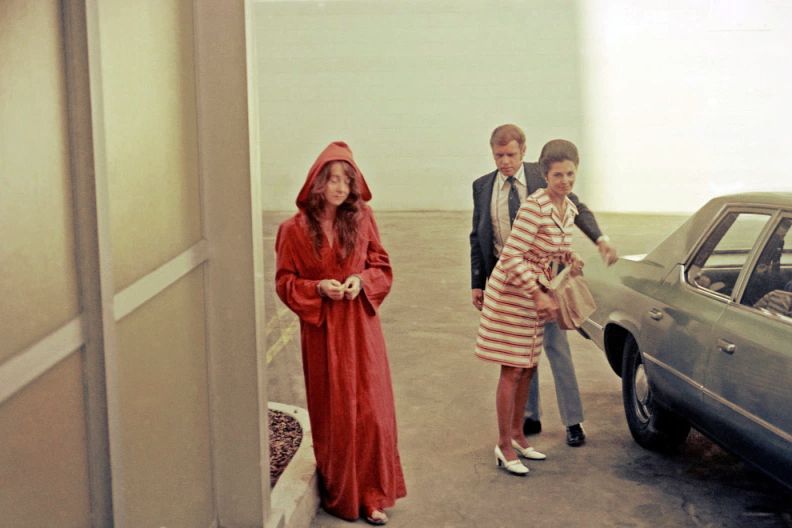
When we look back at the turbulent political landscape of the 1970s, few images remain as haunting as that of a young woman in a bright red robe pointing a semi-automatic pistol at the President of the United States. Lynette “Squeaky” Fromme was not just another face in the crowd because she was a dedicated disciple of the notorious cult leader Charles Manson. Her attempt on Gerald Ford’s life in September 1975 sent shockwaves through America, and yet the story of what happened to her after the headlines faded is perhaps even more curious than the event itself.
Understanding Squeaky’s journey matters because it offers a rare glimpse into the lifelong commitment of a cult follower and the complexities of the American justice system over four decades. While many of her contemporaries from the Manson Family eventually expressed remorse or faded into total obscurity, Fromme’s path was marked by defiance, a daring prison escape, and a steadfast refusal to abandon her radical beliefs. Following her story allows us to explore how a person moves from being the most dangerous woman in America to a quiet, elderly neighbor living in a small town in upstate New York.
The Fateful Sacramento Morning
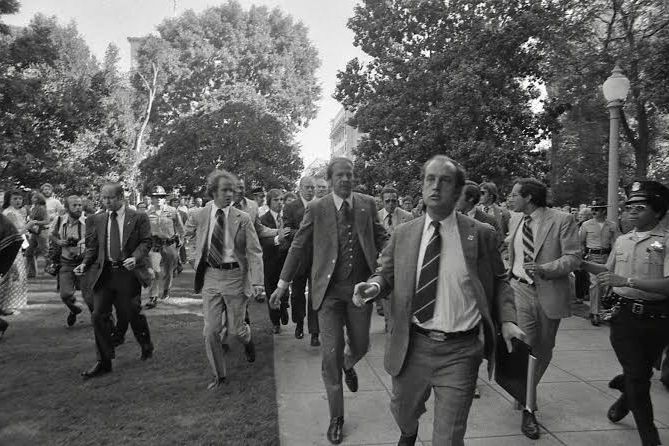
The date was 5 September 1975 when Lynette Fromme changed the course of her life forever while standing amongst a crowd of well-wishers in Sacramento’s Capitol Park. Dressed in a striking red robe that was intended to symbolise the “earth colours” of her environmentalist mission, she drew a .45-calibre Colt M1911 pistol as President Gerald Ford approached. The atmosphere was light and sunny until the moment the heavy metal of the gun glinted in the light, and yet the weapon did not fire because there was no round in the chamber.
Secret Service agents reacted with incredible speed to tackle the 26-year-old to the ground before she could remedy the situation or cause any physical harm to the President. During her arrest, she shouted about the environment and the “Air, Trees, Water, and Animals” philosophy that she and Manson championed, and she later claimed she had intentionally left the gun uncocked. This moment of high drama served as the catalyst for a legal battle that would eventually see her become the first person sentenced under a special federal law designed specifically to protect sitting presidents from such violent assaults.
A Life Sentence Handed Down
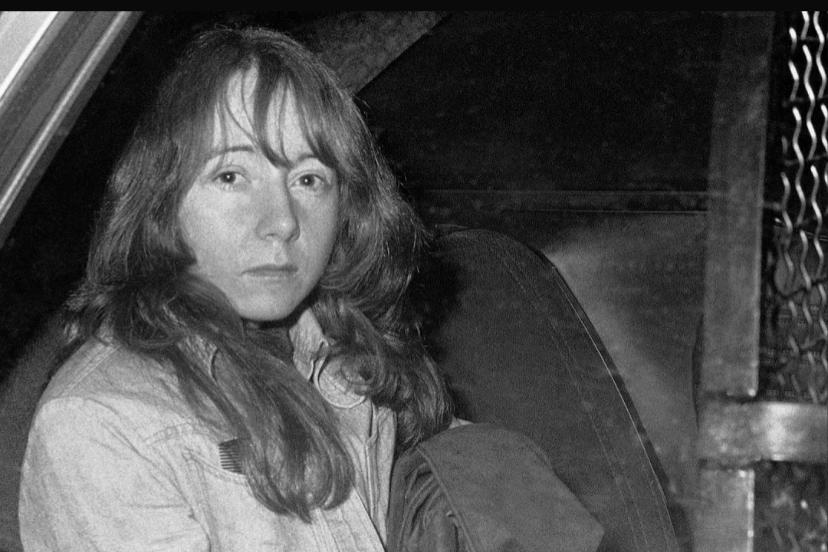
Following the dramatic events in the park, the legal proceedings against Fromme began in earnest on 4 November 1975, and she remained as defiant as ever throughout the trial. She refused to cooperate with her own legal team and repeatedly demanded that Charles Manson be allowed to testify as a witness, and when this was denied, she often disrupted the courtroom with outbursts. Despite her claims that she never intended to actually kill Ford but rather wanted to draw attention to Manson’s plight, the jury found her guilty of attempted assassination on 26 November 1975.
The presiding judge sentenced her to life imprisonment, and this marked a historic moment as she was the first woman to receive such a penalty for an attack on a world leader. At the time, many believed she would spend the rest of her natural life behind bars because of her unrepentant attitude and continued devotion to the Manson Family’s ideologies. She was initially sent to a federal facility in California, and yet this was only the beginning of a long and storied journey through various correctional institutions across the United States over the next thirty-four years.
The Hammer Incident In Prison

Life behind bars did not immediately dampen Squeaky’s volatile spirit, and she soon found herself in further trouble after an altercation with another inmate in 1979. While serving her time at the Federal Correctional Institution in Dublin, California, she became involved in a violent dispute with Julienne Bušić, a woman who was imprisoned for her involvement in a plane hijacking. In a sudden moment of aggression, Fromme attacked Bušić with a hammer, and this act of violence proved that she remained a high-risk prisoner who struggled to coexist peacefully within the general population.
Because of this incident, prison officials decided that she needed to be moved to a more secure environment where her influence and potential for violence could be better managed. She was eventually transferred to the Federal Prison Camp in Alderson, West Virginia, which was a facility that housed many high-profile female offenders at the time. This move was supposed to be a fresh start for her, and for several years, she appeared to be a model inmate who followed the rules and kept to herself, and yet the ghost of Charles Manson continued to haunt her thoughts.
A Daring Christmas Eve Escape
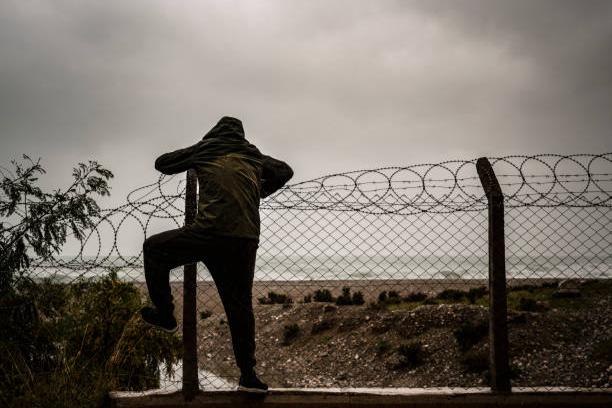
In December 1987, the quiet routine of the Alderson prison was shattered when Fromme decided to take matters into her own hands after hearing rumours that Manson was dying of cancer. Driven by a desperate need to see her mentor one last time, she managed to scale an eight-foot barbed-wire fence on 23 December and disappeared into the rugged West Virginia wilderness. The escape triggered a massive manhunt involving local police and federal agents who scoured the muddy terrain with bloodhounds during a period of freezing rain and biting cold.
She managed to stay hidden for nearly two days, and yet her bid for freedom ended on Christmas Day when searchers found her wandering along a road only two miles from the prison. She was soaking wet and exhausted but appeared strangely calm as she was taken back into custody by the authorities who had been searching for her. This brief taste of liberty added an extra fifteen months to her life sentence, and she was subsequently moved to the Federal Medical Centre, Carswell, in Texas, where she would spend many more years in a much more restricted environment.
The Long Road To Parole
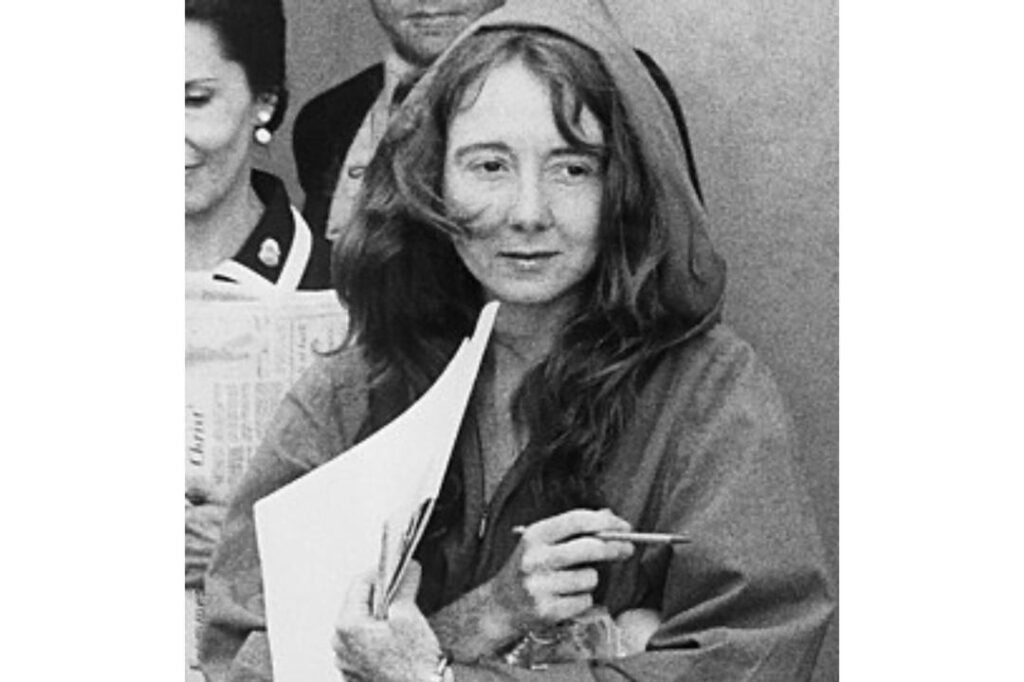
As the decades passed and the 1970s became a distant memory for most Americans, Squeaky Fromme remained a permanent fixture in the federal prison system while her peers were slowly released. She had waived her right to parole hearings for many years because she felt the process was a sham, and yet she eventually changed her mind as she approached her sixties. Her case was reviewed multiple times, and while she was granted parole in July 2008, she had to serve additional time for the 1987 escape before she could walk free.
By the time her release date finally arrived on 14 August 2009, she had served approximately thirty-four years of her life sentence and was now sixty years old. The woman who left the prison gates was very different from the fiery young revolutionary in the red robe, and she appeared frail and grey-haired as she was escorted to a waiting vehicle. Her release sparked significant debate about whether a person with such a radical past could ever truly be rehabilitated, and many wondered where a woman with no modern life skills would go.
A New Life In New York
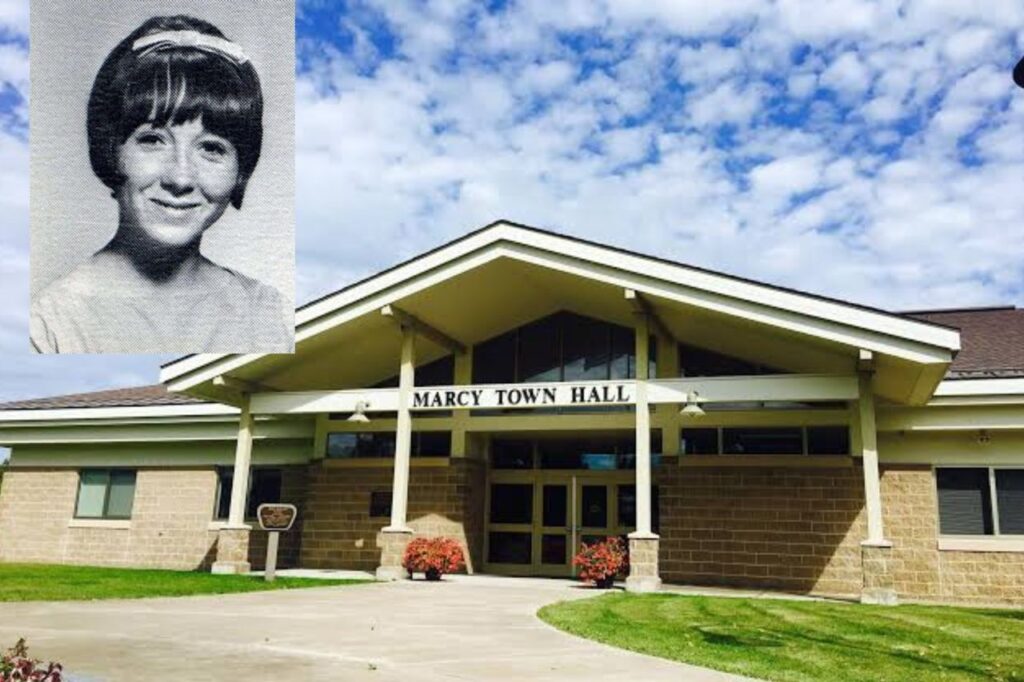
After her release, Fromme did not return to the sun-drenched hills of California where her journey with the Manson Family began, but instead, she chose a quiet life in rural New York. She settled in the small town of Marcy, which is located near Syracuse, and she moved into a modest, ramshackle home that she shared with her boyfriend, Robert Valdner. Interestingly, Valdner himself was an ex-convict who had served time for manslaughter and was known to be an admirer of Charles Manson, and this connection suggested that she had not entirely cut ties with her past.
The couple lived a reclusive existence in their skull-decorated home, and they mostly kept to themselves while avoiding the prying eyes of the media and curious locals. Neighbours described her as a “very friendly” woman who enjoyed walking her dog and chatting about mundane topics like the weather or gardening, and yet her history was a secret that everyone in the town eventually discovered. It was a bizarrely domestic ending for a woman who had once been at the centre of a national security crisis, and she seemed content to live out her days in relative obscurity.
Documenting The Manson Years

In 2018, Squeaky finally decided to tell her own side of the story by publishing a memoir titled Reflexion, which focused on her early years with Charles Manson between 1967 and 1969. The book provided a psychedelic and often vivid account of the “Family” before the infamous Tate-LaBianca murders, and she painted a picture of a group of people searching for a new way of living. She didn’t use the pages to repent or distance herself from Manson’s influence, but rather, she doubled down on her perception of him as a visionary leader who was misunderstood by society.
The memoir was nearly 500 pages long and contained detailed descriptions of the landscapes and events that shaped her youth, and yet it notably downplayed the violence and criminal activities associated with the cult. For many readers, the book was a frustrating look into the mind of someone who remained under a spell even after decades of incarceration and the death of Manson himself. It served as a reminder that some bonds are never truly broken, and that her loyalty to the man who gave her the name “Squeaky” was as strong as ever in her old age.
The Mystery Of The Unfired Gun
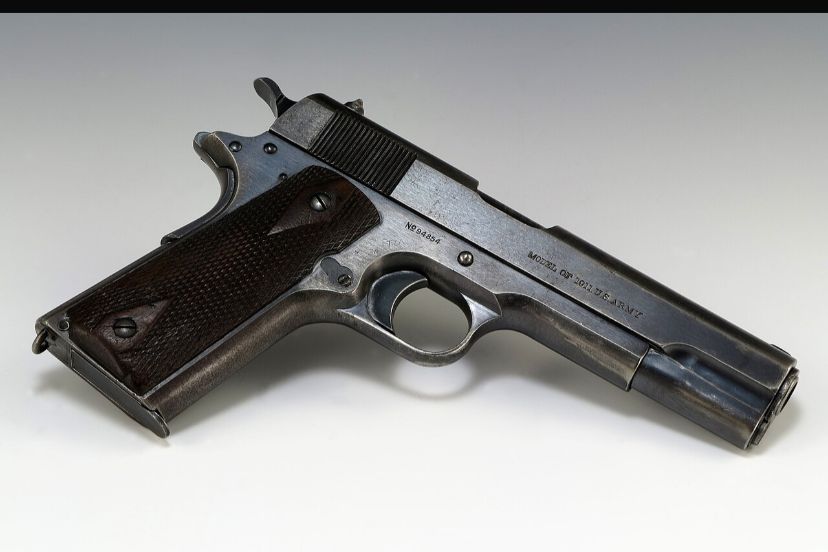
One of the most enduring questions surrounding Fromme’s legacy is whether she actually intended to kill President Ford or if the whole event was a carefully staged piece of political theatre. During her trial, she maintained that she had intentionally ejected the top round from the magazine to ensure the gun would not fire, and yet forensic experts later discovered that the weapon was so old and poorly maintained that the bore was actually filled with dust. This physical evidence suggested that even if she had tried to fire, the gun might have malfunctioned or exploded in her hand.
Regardless of her intent, the act itself was enough to change the way the Secret Service handled presidential security forever, as they realised that even a seemingly harmless-looking woman could pose a lethal threat. The debate over her true motives continues to this day, and she has given conflicting accounts in various interviews over the years, sometimes claiming she was undecided and other times suggesting it was all for show. This ambiguity has allowed her to remain a figure of fascination for true crime enthusiasts who are obsessed with the psychological motivations behind political violence.
Life In Her Seventies
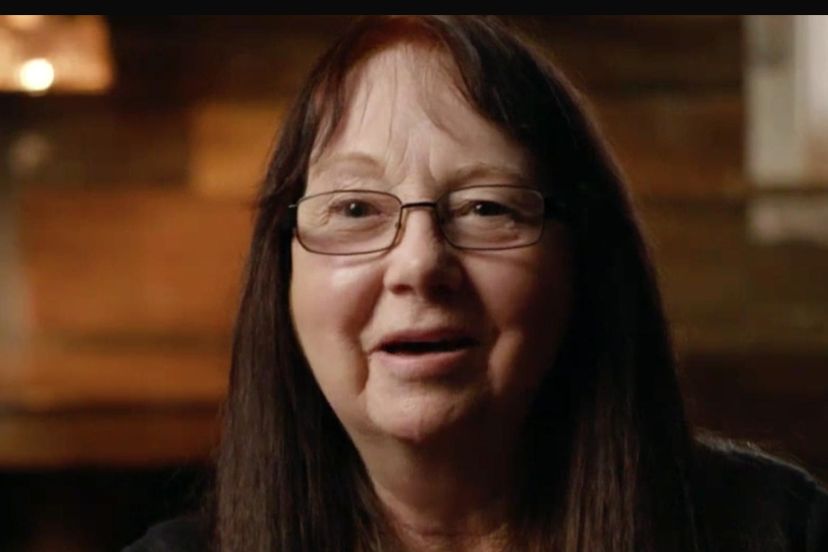
As of 2026, Lynette Fromme is in her late seventies and continues to live a quiet life in upstate New York while maintaining a very low profile. She has outlived many of her contemporaries from the Manson era, including Charles Manson himself, who passed away in 2017, and yet she remains one of the few living links to that dark chapter of American history. She is rarely seen in public these days, and when she is, she appears to be just another elderly woman going about her daily chores in a small town.
Her story serves as a powerful reminder of how a single moment of madness can define an entire lifetime, and how the echoes of the 1960s counterculture continue to resonate in the most unexpected places. While she may never be able to fully escape the shadow of the red robe and the .45-calibre pistol, she has managed to find a strange kind of peace in the twilight of her life. She remains a controversial figure, a symbol of a radicalised youth, and a woman whose life was forever altered by her devotion to a man who led his followers into the depths of infamy.
A Legacy Of Radical Devotion
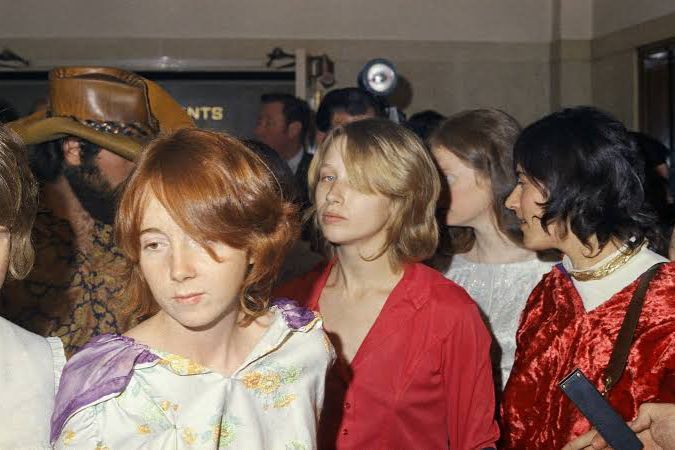
Reflecting on Squeaky Fromme’s life reveals a startling truth about the power of belief and the enduring nature of cult influence, as she never truly wavered in her loyalty to Manson. Her journey from a middle-class upbringing to a presidential assassin and then to a quiet New York neighbor highlights the unpredictable nature of human experience and the long reach of the law. It is a tale of missed shots and second chances, and it forces us to consider whether a person can ever truly be free of their past when their identity is so deeply tied to a single, violent act.
Ultimately, her story warns us about the dangers of extreme isolation and the way radical ideologies can take root in the minds of the vulnerable. She remains a haunting figure from a bygone era, and her survival into the modern age is a testament to the resilience of the human spirit, however misguided it may be. Her life transition reminds us that the headlines of today often become the quiet secrets of tomorrow, and that even the most notorious figures can eventually find a place to hide in plain sight. We must remain vigilant against the forces that drive individuals toward such desperate acts of political theatre.
The Shadow Of The Manson Family
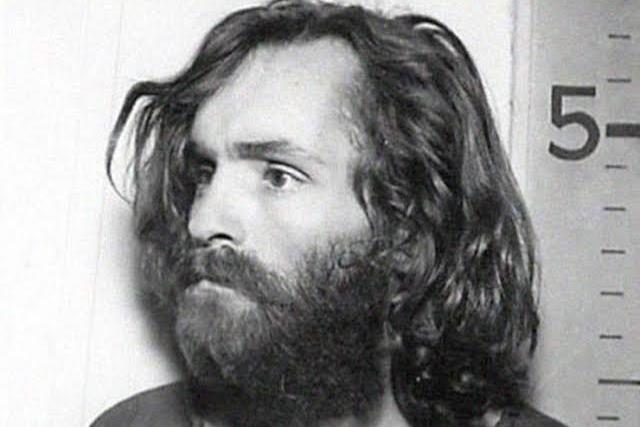
Even though the tragic events of the late 1960s were long behind her, Fromme remained a steadfast and controversial figure in her later years by refusing to denounce Charles Manson. After the notorious cult leader passed away in November 2017, she continued to speak about him with a sense of reverence that baffled many who had followed the dark history of the Family. In various interviews, she described him not as a monster but as a man who possessed a unique and powerful understanding of the world, and she often suggested that the public’s perception of him was entirely misguided.
Her unwavering loyalty meant that she stayed a prisoner of her own history long after she had physically left the federal correctional system, and she seemed to find comfort in maintaining those old connections. This radical devotion served as a stark reminder of how deeply cult indoctrination can take root in an individual’s mind and how it can persist for a lifetime despite isolation and age. While other former members of the group sought redemption or faded into the background, she chose to keep the flame of Manson’s legacy alive in her own quiet way, and this decision ensured that she would never be viewed as a typical retiree.
A Legacy Of Political Mystery
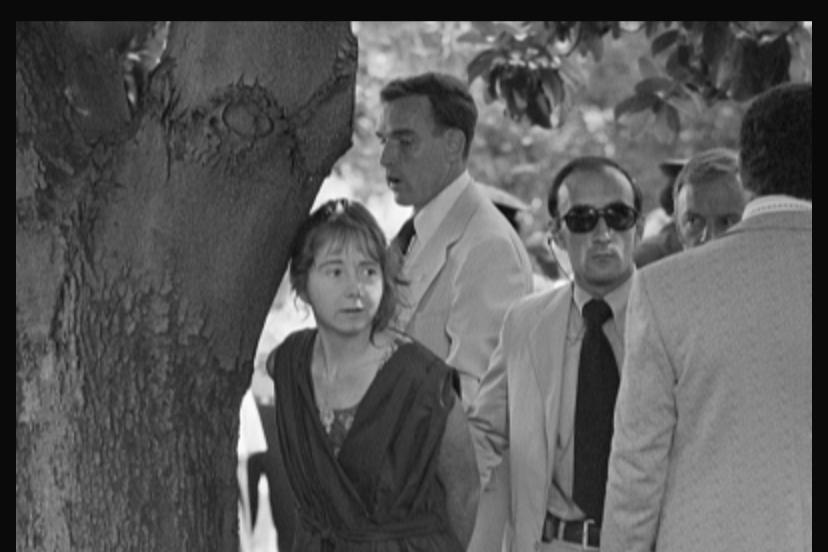
Reflecting on the final chapter of Squeaky Fromme’s public life reveals a woman who was comfortable living in the grey areas of her own narrative while the rest of the world sought clear answers. She never truly explained the contradictions of that morning in Sacramento, and she allowed the mystery of the unfired gun to remain one of the most debated aspects of the 1970s political scene. Her existence in upstate New York became a living testament to the fact that some stories do not have a satisfying or conventional conclusion, and she appeared content to let her silence speak for her.
The implications of her life go beyond a single failed assassination attempt because they force us to confront the reality of lifelong radicalisation and the challenges of reintegrating notorious figures into society. She moved through the world as a ghost of a more turbulent time, and yet her presence was a constant prompt for reflection on how much America has changed since the days of the Manson Family. Her story ends not with a grand gesture of remorse but with a quiet and resilient survival in a small town, and she remains an enigmatic figure who reminds us that the past is never truly dead.
Like this story? Add your thoughts in the comments, thank you.


