
The Arctic Tern
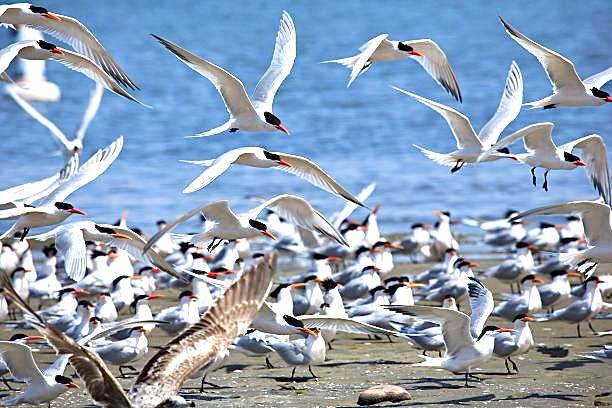
This elegant seabird is the undisputed heavyweight champion of long-distance travel because it manages to see more daylight than any other creature on Earth. By flying from the high Arctic during the northern summer all the way down to the Antarctic ice for the southern summer, the Arctic tern covers a staggering distance of up to 59,000 miles every single year. These birds essentially live in a state of perpetual summer, which is a remarkable feat for a creature that weighs only about as much as a small computer mouse. They navigate using the Earth’s magnetic field and the position of the sun while occasionally stopping to glide on wind currents to save energy during their months-long transit across the open ocean.
Scientists tracking these birds have discovered that they do not fly in a straight line but rather follow a convoluted “S” shaped path across the Atlantic Ocean to take advantage of prevailing global wind patterns. This clever use of atmospheric highways allows them to travel much further without burning through their vital fat reserves. During their journey, they hunt for small fish and crustaceans near the water’s surface while rarely touching dry land until they reach their destination. It is truly humbling to consider that a single Arctic tern might fly the equivalent of three round trips to the moon over its thirty-year lifespan.
Sooty Shearwater

The sooty shearwater is a magnificent mariner that follows a massive circular route over the Atlantic and Pacific oceans, covering approximately 40,000 miles annually. These birds are remarkable for their ability to dive deep into the freezing waters to catch squid and fish, yet their primary claim to fame is the sheer relentless pace of their migration. They typically breed in colonies in New Zealand and the Falkland Islands during the southern summer before heading north to take advantage of the rich feeding grounds in the North Pacific and Atlantic. This journey ensures they are always in a place where food is most abundant, even if it means crossing the equator twice in a single year.
What makes their flight particularly interesting is the way they harness the power of the wind through a technique called dynamic soaring, which allows them to stay aloft for days with minimal flapping. They move in vast, sweeping arcs that mirror the grand cycles of the ocean’s currents and weather systems. Recent studies using electronic tracking tags have revealed that these birds can cover up to 500 miles in a single day, often moving in synchronised patterns that look like a giant figure-eight across the globe.
Short-Tailed Shearwater
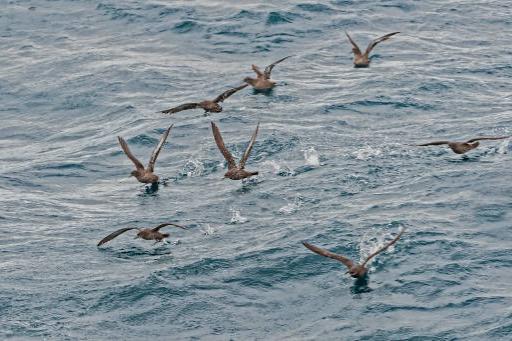
Commonly known as the muttonbird in its native Australia, the short-tailed shearwater undertakes a breathtaking pole-to-pole journey that spans roughly 27,000 miles. These birds begin their trek in the coastal regions of south-eastern Australia and Tasmania, heading north past Japan and into the Arctic waters of the Bering Sea. They spend the northern summer feasting on the massive blooms of krill and small fish that appear as the ice melts, gaining the necessary weight to make the return trip. The journey is a masterclass in timing because they must arrive back at their nesting burrows in the south almost on the exact same day every year to begin breeding.
The return leg of their journey is equally impressive as they fly across the vast expanse of the central Pacific, often encountering fierce storms and unpredictable weather. Despite these challenges, the shearwaters remain focused on their destination, using their keen sense of smell and celestial cues to navigate the featureless blue horizon. It is quite a spectacle to see them gather in millions, forming dark clouds over the ocean surface as they prepare for the next leg of their flight.
Northern Elephant Seal
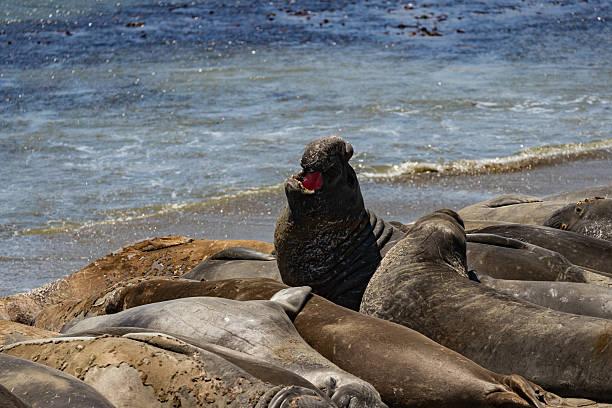
The northern elephant seal is a true heavyweight of the deep that conducts two separate migrations every year, resulting in a total round-trip distance of about 18,000 miles. These massive marine mammals spend most of their lives in the open ocean, diving to incredible depths of over 5,000 feet to hunt for squid and deep-sea fish. They depart from their breeding beaches in California and travel all the way to the nutrient-rich waters of the Gulf of Alaska and the Aleutian Islands. Unlike many other migrators, they do not travel in large social groups but instead navigate the vast Pacific alone, spending up to ten months of the year at sea.
Their migration is unique because it is split into two distinct phases: one for foraging after the breeding season and another after they have moulted their fur. This means they are almost constantly on the move, returning to land only twice a year to rest and reproduce. While at sea, they have the remarkable ability to sleep with only half of their brain at a time, allowing them to continue swimming and avoid predators like great white sharks. This lonely and arduous lifestyle is necessary for them to maintain their massive body mass, as the energy required to sustain a three-ton bull elephant seal is immense.
Gray Whale
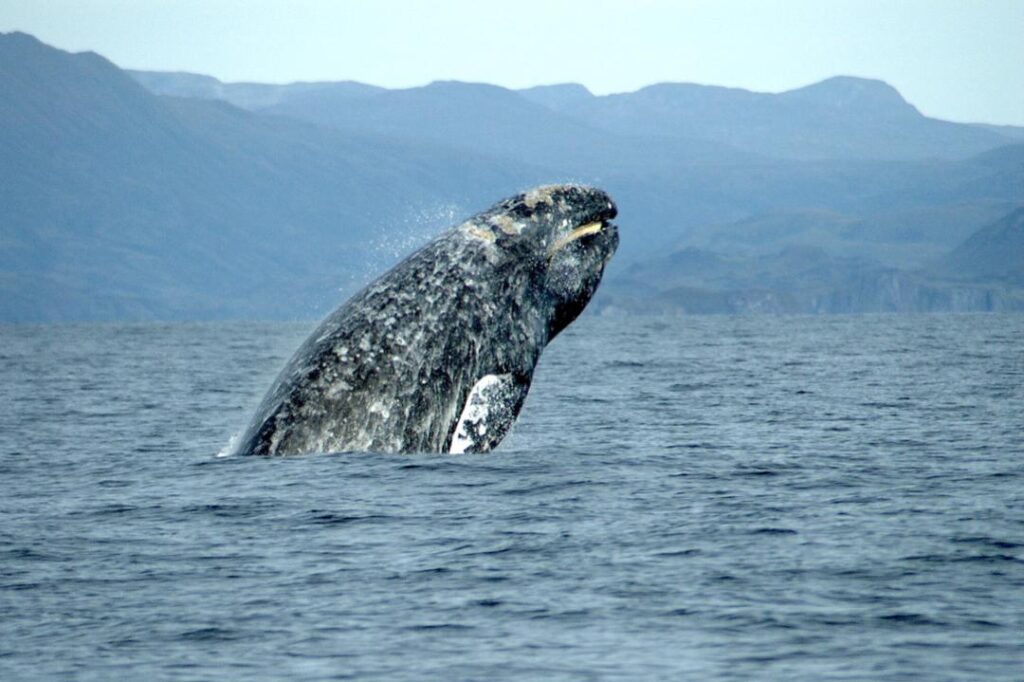
The gray whale holds the record for the longest known migration of any mammal, covering a round-trip distance of up to 14,000 miles between its feeding and breeding grounds. These gentle giants spend their summers in the chilly, food-filled waters of the Arctic’s Bering and Chukchi Seas, where they filter tiny organisms from the muddy seafloor. As the ice begins to form in the autumn, they start their long trek south along the western coast of North America. Their destination is the warm, shallow lagoons of Baja California in Mexico, where they give birth to their calves in a protected environment away from the reach of hungry orcas.
The journey is a social affair, with whales often seen breaching and blowing close to the shoreline, much to the delight of coastal residents and whale watchers. Because they stay relatively close to the coast, they are one of the most well-studied migratory species in the world. Interestingly, gray whales mostly fast during their months-long journey, relying on the thick layers of blubber they built up during the Arctic summer. This means that by the time they return to the north in the spring, they have lost a significant portion of their body weight.
Bar-Tailed Godwit
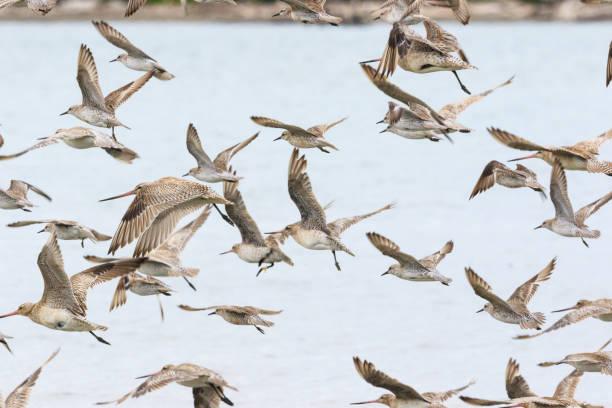
While many animals take breaks during their travels, the bar-tailed godwit is famous for its ability to fly non-stop for thousands of miles without a single moment of rest. This medium-sized wading bird performs a feat of aeronautical engineering that seems almost impossible, flying over 7,000 miles from Alaska to New Zealand in just eight or nine days. During this time, the bird does not eat, drink, or sleep, but instead keeps its wings beating constantly as it crosses the vast, empty expanse of the Pacific Ocean. To prepare for this marathon, the godwit doubles its body weight in fat and actually shrinks its internal organs to make room for more fuel.
This extreme physiological transformation is what allows the godwit to survive such an intense journey. They wait for perfect wind conditions before taking off, often hitching a ride on weather fronts that push them toward the southern hemisphere. If they encounter a storm or lose their way, they have no place to land, as they are not seabirds and cannot rest on the water. Their arrival in the estuaries of New Zealand is a celebrated event, marking the end of one of the most demanding physical performances in the entire animal kingdom.
Globe Skimmer Dragonfly
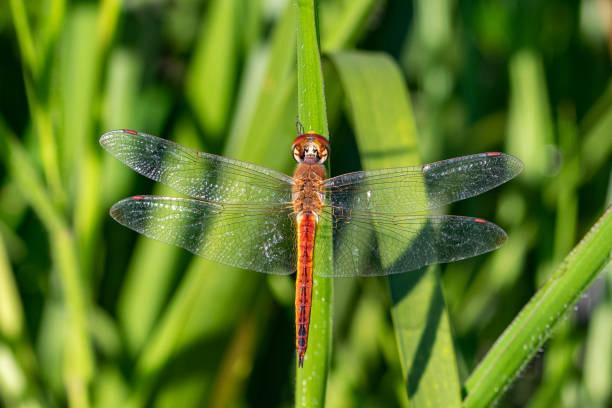
The globe skimmer dragonfly may be small, but it holds the record for the longest migration of any known insect, covering an incredible 11,000 miles. These four-winged wonders embark on a multi-generational journey that takes them across the Indian Ocean from India to East Africa and back again. What is truly mind-boggling is that no single dragonfly completes the entire circuit; instead, it takes four generations to finish the loop. They follow the seasonal rains of the Intertropical Convergence Zone, which provides the freshwater pools they need to lay their eggs and for their larvae to develop before the next generation takes to the sky.
These dragonflies are exceptional gliders, using high-altitude winds at elevations of over 6,000 feet to carry them across the ocean. Because they are so light, they can travel vast distances with very little effort, essentially hitchhiking on the monsoon winds. This migration was a mystery to scientists for a long time until they realised that the sudden appearance of millions of dragonflies in Africa coincided with their departure from India.
Leatherback Sea Turtle
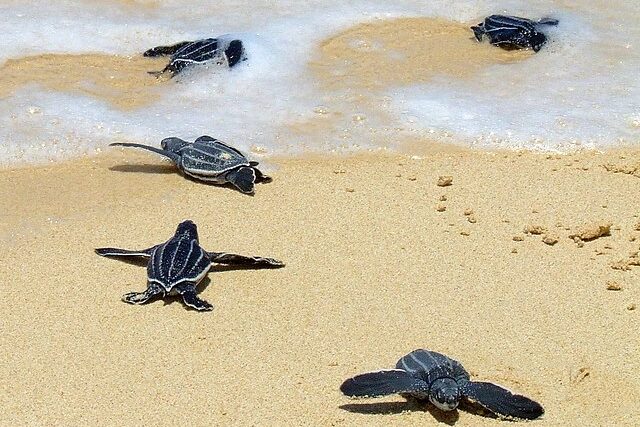
The leatherback sea turtle is a prehistoric-looking voyager that travels more than 10,000 miles across the Pacific Ocean between its nesting beaches and its foraging grounds. Unlike other sea turtles, leatherbacks have a thick, leathery skin instead of a hard shell, which allows them to dive into much colder and deeper waters in search of their favourite food, which is jellyfish. They might nest on the tropical beaches of Indonesia or the Solomon Islands and then swim all the way to the cool waters off the coast of California or Oregon to feed. This journey takes them through some of the most treacherous parts of the ocean, where they must dodge fishing nets and plastic pollution.
Navigating such a vast distance requires an internal GPS that scientists are still trying to fully understand. It is believed that these turtles use a combination of magnetic sensing and chemical cues to find their way back to the very same beach where they were born decades earlier. Because they are cold-blooded, they have unique adaptations, such as a counter-current heat exchange system, that allow them to keep their body temperature above that of the surrounding seawater.
Humpback Whale
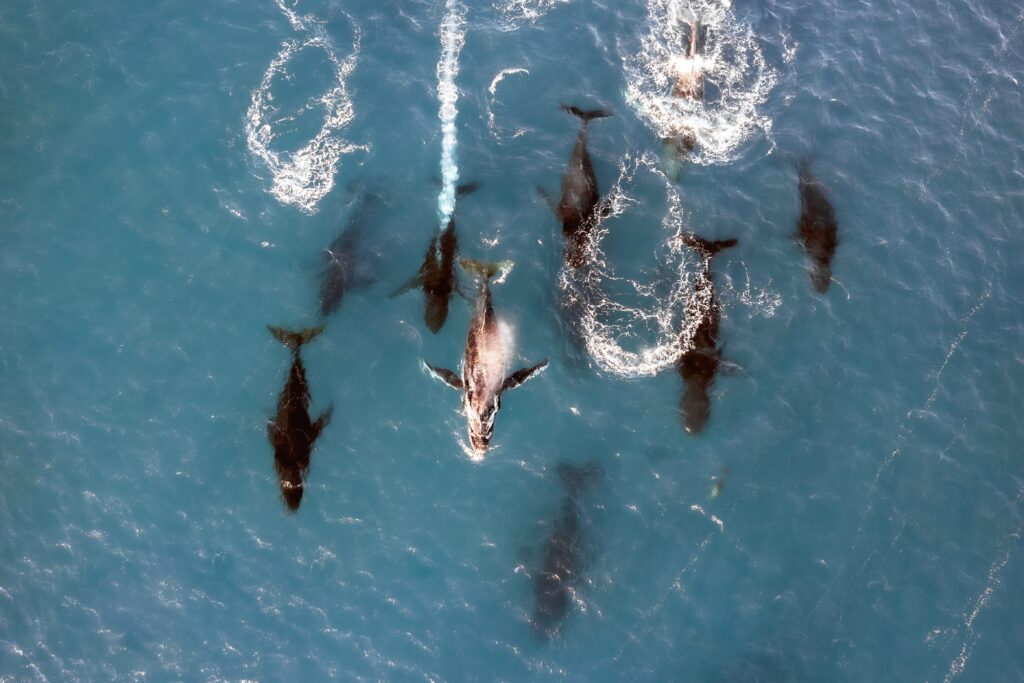
The humpback whale is famous for its haunting songs and its acrobatic leaps, but it is also one of the most dedicated long-distance travellers in the sea. These whales migrate up to 11,000 miles annually, moving between the nutrient-rich polar waters where they feed and the warm tropical lagoons where they breed and give birth. For example, populations in the North Pacific travel from the coast of Alaska down to Hawaii or Mexico every winter. During the summer feeding season, they work together to create “bubble nets” to trap schools of fish, building up the massive fat reserves they will need for the long journey ahead.
What makes the humpback’s migration so poignant is that the mothers make the entire return trip while nursing a calf that can weigh a ton at birth. The warm tropical waters are poor in food but provide a safe, predator-free environment for the young whales to grow strong before facing the open ocean. Humpbacks are known to follow very specific migratory corridors, often passing close to shorelines where they can be observed by land-based watchers. The sight of a mother and calf swimming side-by-side across thousands of miles of ocean is one of nature’s most moving displays of endurance.
Great White Shark
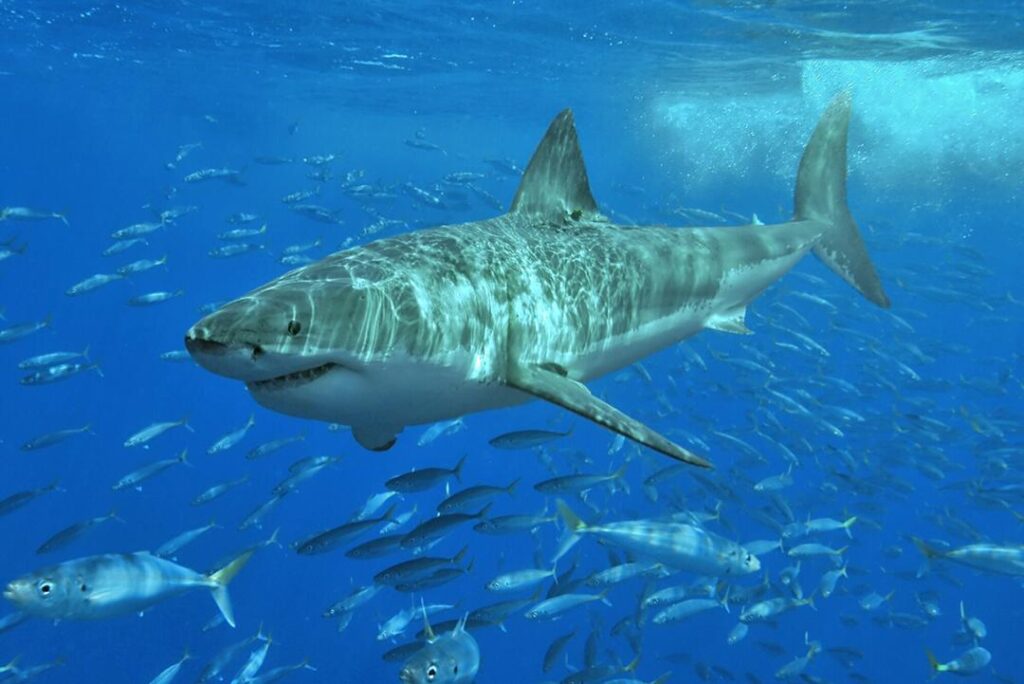
While we often think of the great white shark as a coastal predator, research has shown that they are actually capable of incredible “trans-oceanic” journeys. One famous shark, nicknamed Nicole, was tracked travelling from South Africa to Australia and back again, a total distance of 12,400 miles in just nine months. This discovery shattered the previous belief that these sharks stayed within a limited territory and revealed that they are true global wanderers. They move through the open “blue desert” of the ocean with surprising speed and purpose, often diving deep during the day and staying closer to the surface at night to regulate their temperature.
The reasons for these long-distance treks are still being debated by marine biologists, but it is likely that they are following seasonal pulses of food or seeking out specific mating grounds. These journeys prove that the great white is not just a mindless hunter but a sophisticated navigator with a complex life history. By crossing entire oceans, they link distant ecosystems and act as top predators that help maintain the balance of marine life on a global scale. Protecting these sharks requires international cooperation, as they frequently move between the jurisdictions of different countries.
Wandering Albatross
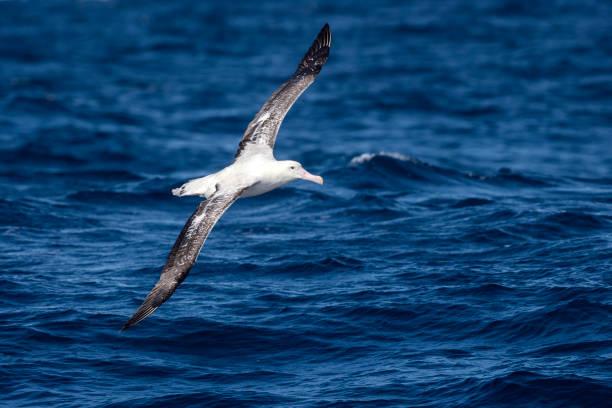
The wandering albatross is a true marvel of the southern oceans because it possesses the largest wingspan of any living bird, measuring up to eleven feet from tip to tip. This incredible physical adaptation allows the bird to glide for hundreds of miles without flapping its wings once, effectively using the wind to circumnavigate the entire Antarctic continent. They spend the vast majority of their lives in flight, often travelling more than 10,000 miles in a single foraging journey to find squid and fish for their chicks. Because they can lock their wings in place like a glider, they exert very little energy while soaring over the waves, which is why they are often referred to as the ultimate nomads of the sky.
These birds are known for their remarkable longevity, with some individuals living for over sixty years while maintaining their rigorous travel schedules. They return to small, isolated islands in the Southern Ocean only to breed, a process that takes over a year from egg-laying to the fledgling stage. During this time, one parent may fly thousands of miles across the open sea just to bring back a single meal for their growing offspring. This life of constant motion is dictated by the restless winds of the “Roaring Forties,” and it highlights the sheer scale of the oceanic wilderness that these birds call home.
Adélie Penguin
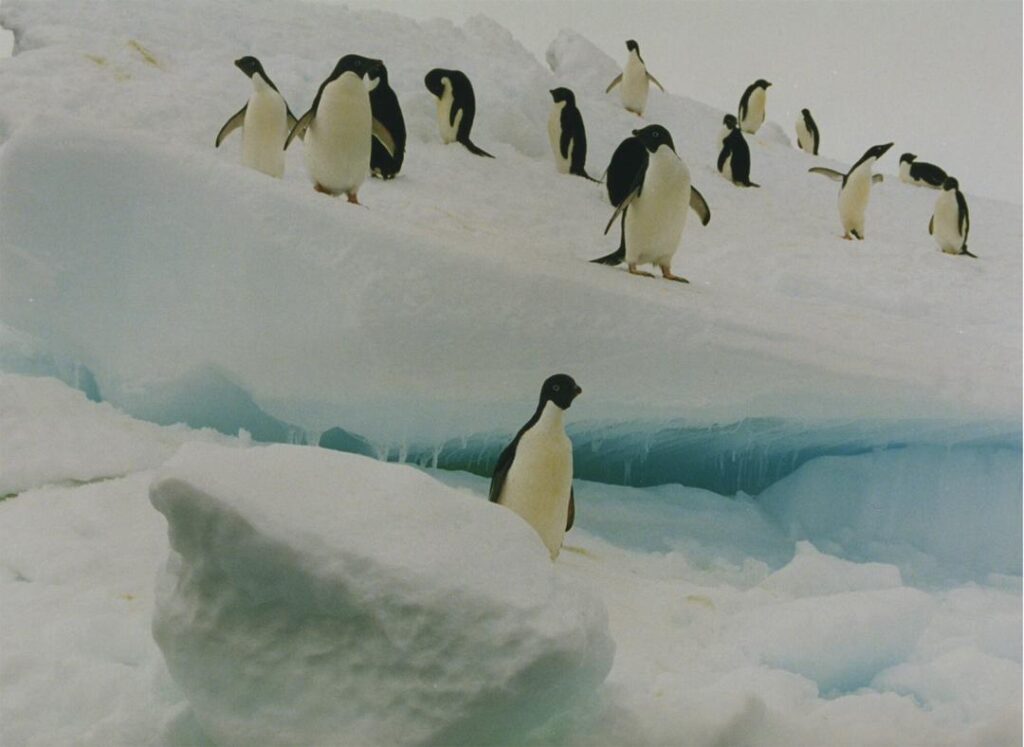
While we usually think of penguins as flightless birds that stay relatively close to their colonies, the Adélie penguin is actually a formidable long-distance trekker. These hardy birds undertake the longest migration of any penguin species, travelling up to 10,900 miles annually around the Ross Sea in Antarctica. As the winter ice expands, the penguins must move north to stay near the edge of the pack ice where they can still access the open water to hunt for krill and silverfish. They follow the seasonal growth and retreat of the ice with surprising precision, often walking across the frozen landscape or swimming through the frigid Southern Ocean to reach their wintering grounds.
The journey is an arduous one that requires immense physical stamina, especially since the penguins must navigate through 24-hour darkness during the peak of the Antarctic winter. They use the position of the sun when it is visible and likely rely on biological clocks to maintain their direction across the featureless white expanse. Once the spring arrives and the ice begins to melt, they start the long journey back to their rocky nesting sites to begin the breeding season. This cyclical migration is essential for their survival, as it allows them to avoid the most extreme winter conditions while remaining in the most productive feeding areas.
Monarch Butterfly

The monarch butterfly completes one of the most famous and visually stunning migrations in the natural world, covering up to 3,000 miles between North America and the oyamel fir forests of central Mexico. What makes this journey truly unique is that it is a multi-generational relay race, meaning that the individual butterflies that arrive in Mexico are the great-grandchildren of those that left the previous year. The “super generation” of monarchs that flies south in the autumn is physically different from its ancestors, possessing a longer lifespan and the stamina to fly for months. They navigate using a combination of a solar compass and a magnetic sense to find the exact same trees where their ancestors overwintered.
As they travel, these delicate insects face numerous threats from habitat loss and extreme weather, making their successful arrival in the Mexican highlands a minor miracle. They cluster together in the thousands on tree trunks to stay warm, creating a shimmering orange and black tapestry that blankets the forest. When spring arrives, these same butterflies head north to lay eggs on milkweed plants, starting the cycle anew for the next generation. This migration is a fragile and beautiful phenomenon that relies on a continuous chain of healthy habitats across three different countries.
Caribou (Reindeer)
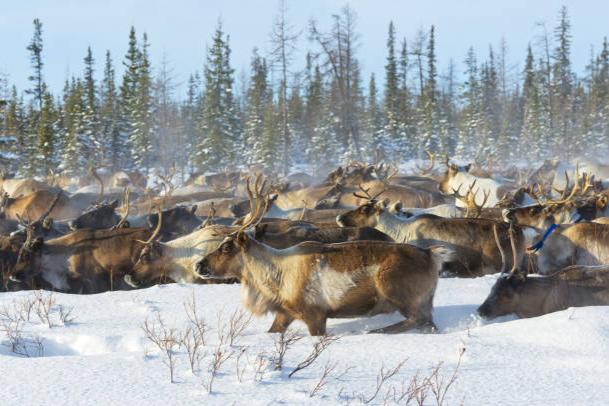
The caribou, or reindeer, holds the title for the longest terrestrial migration of any land mammal, with some herds in the Arctic walking over 2,000 miles every single year. These massive herds move across the vast, treeless tundra of Alaska and Canada, driven by the need to find fresh grazing grounds and to escape the relentless clouds of summer insects. They follow ancient paths that have been etched into the landscape by countless generations before them, crossing wide rivers and scaling mountain ranges to reach their calving grounds. This movement is perfectly timed with the emergence of nutrient-rich lichens and grasses that provide the energy needed for the females to nurse their young.
The journey is fraught with danger, as the herds are constantly trailed by predators like wolves and grizzly sharks that pick off the weak and the young. Despite these pressures, the caribou remain focused on their destination, using their wide, hollow hooves to walk easily over soft snow and boggy ground. These hooves also act as paddles, making the caribou excellent swimmers when they need to cross the frigid Arctic waterways. Their migration is a vital part of the Arctic ecosystem, as the movement of thousands of animals helps to distribute nutrients across the landscape and supports a wide variety of other wildlife.
Pacific Bluefin Tuna
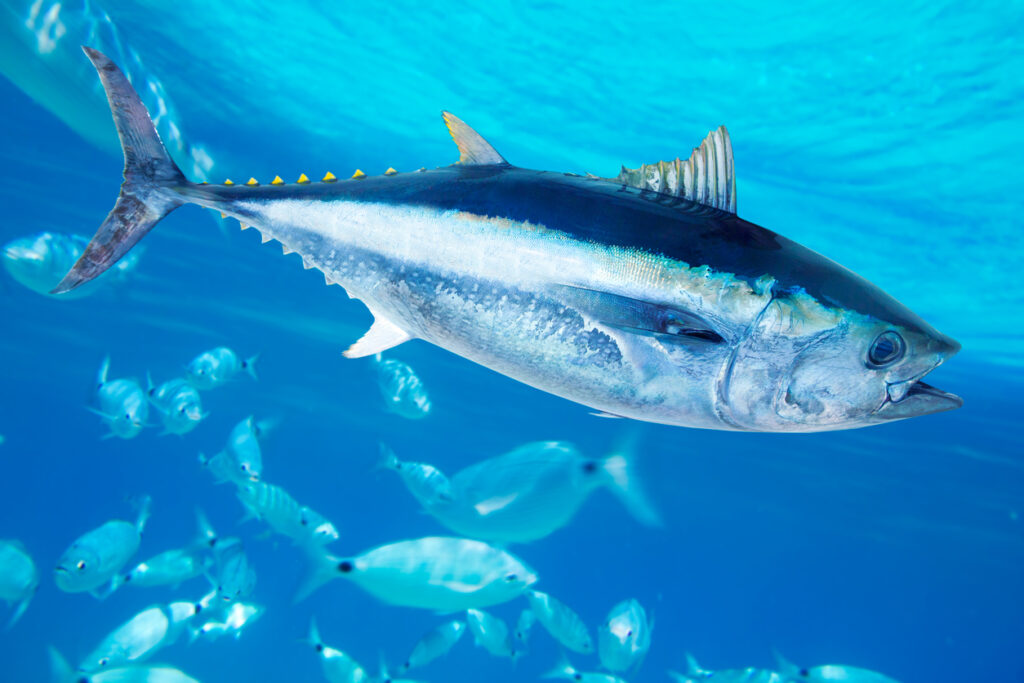
The Pacific bluefin tuna is a high-speed athlete of the ocean that is capable of making multiple 5,000-mile trips across the Pacific during its lifetime. These powerful fish often start their lives in the waters near Japan before embarking on a massive journey across the open sea to reach the nutrient-rich coastal waters of California and Mexico. They are built for endurance and speed, with a streamlined body and a unique circulatory system that allows them to keep their muscles warmer than the surrounding water. This “warm-blooded” trait gives them the energy needed to hunt agile prey like mackerel and squid in the cold, deep layers of the ocean.
Interestingly, not every tuna makes the trip at the same time, and some may spend several years on one side of the ocean before deciding to cross back to their spawning grounds. This flexibility allows the population to take advantage of different environmental conditions and food sources across the entire Pacific basin. When they do decide to migrate, they swim at a relentless pace, often covering the distance in just a few months. The bluefin tuna is a true global citizen of the sea, and its survival depends on the health of the entire Pacific Ocean.
Blue Wildebeest
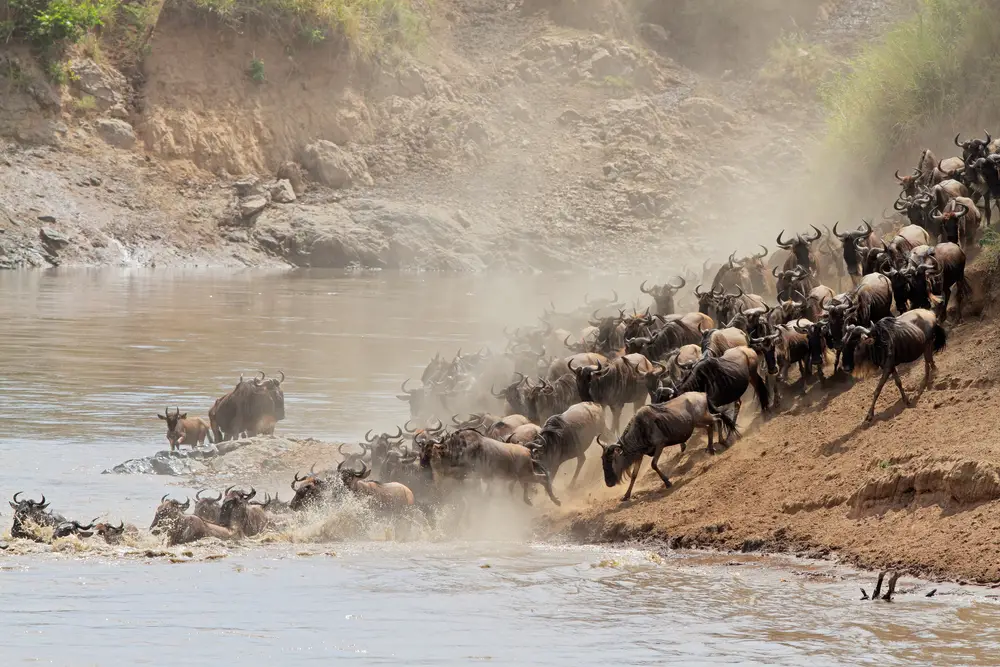
The blue wildebeest is the star of the “Great Migration” in East Africa, a circular journey of 500 to 1,000 miles that involves over a million animals. This is a continuous search for green grass and fresh water across the Serengeti of Tanzania and the Maasai Mara of Kenya. The herds follow the rains, moving in a massive, noisy columns that can be seen from space. Along the way, they must face some of the most dramatic obstacles in nature, including the famous Mara River crossings where crocodiles lie in wait for the thirsty and the tired.
This migration is a cornerstone of the African savannah, as the wildebeest act as “natural lawnmowers” that keep the grasslands healthy and provide a steady food source for lions, hyenas, and leopards. The sheer noise and dust created by the moving herds is a sensory experience like no other, representing the raw pulse of the wild. Because they are constantly on the move, the wildebeest prevent any one area from being overgrazed, which allows the vegetation to recover and supports a massive diversity of other species.


