
Mobility While Talking
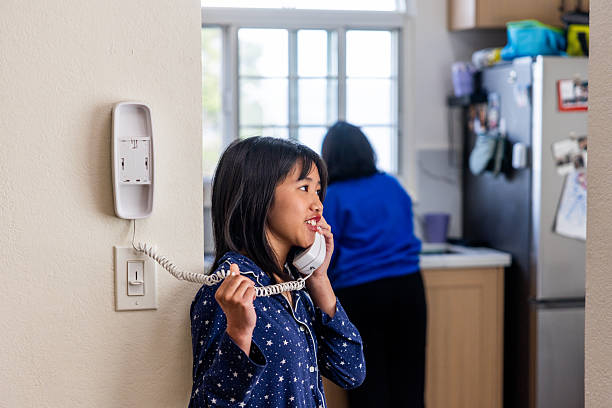
The most obvious reason for those iconic coiled cords was the simple human desire to move around while engaged in conversation. In an era where the telephone base was a heavy object permanently plugged into a wall jack, a straight cord would have kept the speaker pinned to a single spot. The helical design allowed a person to pace back and forth or reach for a notepad across the room, which provided a much-needed sense of physical freedom during long calls.
Because these cords could stretch up to four times their resting length, a three-foot cable suddenly offered twelve feet of range for the user. This flexibility meant that a teenager could pull the handset around a corner for a bit of privacy or a parent could keep an eye on a simmering pot while chatting. The stretchable nature of the thermoplastic jacket ensured that the cord would return to its compact shape once the call ended, resulting in a tidy look for the household hub.
Anti Tangle Functionality

While many people remember spending hours untwisting “kinks” in their phone lines, the coiled design was actually intended to prevent a much worse mess. If a standard straight wire were ten feet long, it would constantly lay in a heap on the carpet, which led to significant knotting and household accidents. The spiral shape acted as a self-retracting mechanism that pulled the excess slack back toward the base unit whenever the handset was returned to its cradle.
This design was a clever solution for managing a large amount of wire in a small footprint. By forcing the wire into a permanent spring shape, engineers ensured that the cord would naturally want to stay bunched up rather than spreading out across the floor. This kept the living space looking organized, whereas a long straight cable would have been an eyesore and a constant source of frustration for anyone trying to vacuum or walk through the hallway.
Space Management At Rest
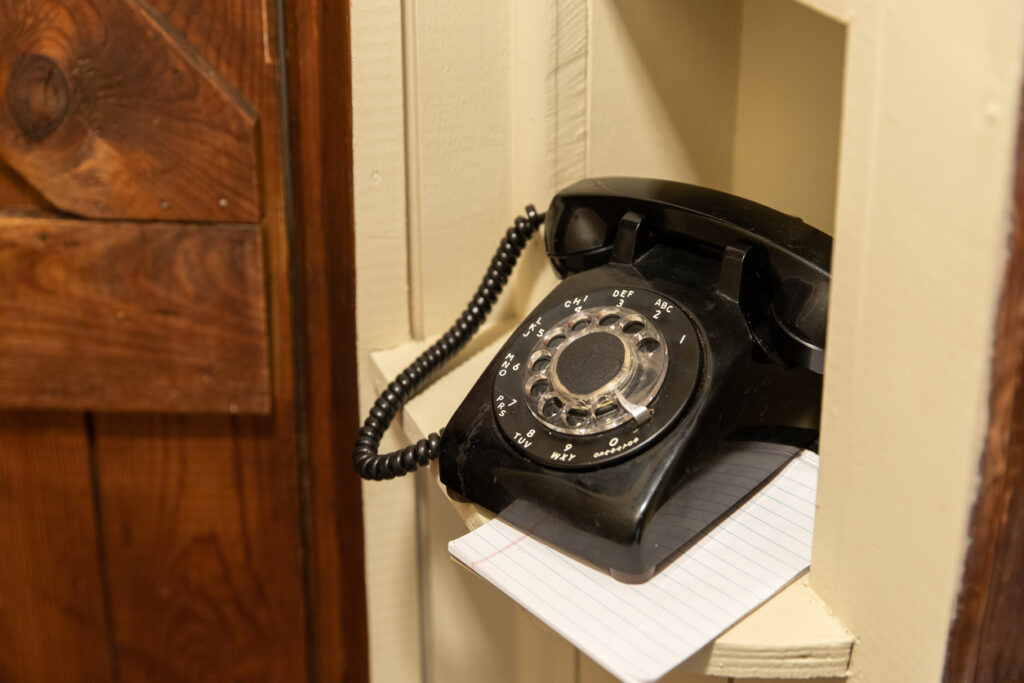
The physical footprint of a telephone was a major consideration for interior design in the mid-twentieth century. Most homes had a dedicated “phone nook” or a small side table where the device lived, leaving very little room for dangling accessories. A coiled cord solved this by staying remarkably compact when the phone was at rest, usually hanging only about two feet down from the wall or desk.
This compact nature allowed the phone to blend into the home environment without cluttering the decor. If the cord had been a straight ten-foot line, it would have required a reel or a hook to keep it from becoming a chaotic pile on the furniture. Instead, the springy tension of the PVC jacket held the wire in a neat vertical line, which maintained the aesthetic integrity of the room while keeping the technology ready for immediate use.
Privacy In One Phone Homes

In the decades following the war, it was common for an entire family to share a single telephone located in a central hallway or the kitchen. This lack of hardware meant that a long, stretchable cord was the only way for a caller to find any semblance of privacy from siblings or parents. A well-stretched cord allowed a user to duck into a nearby closet or hide behind a door frame to discuss sensitive matters.
This physical stretch became a symbolic reach for personal space in a crowded household. Without the ability to pull the receiver several feet away from the base, every conversation would have been entirely public to whoever was in the room. The long reach of the coiled cable enabled a generation of users to have intimate conversations, resulting in the telephone becoming a primary tool for social bonding and secret-sharing among the youth of the time.
Protection Against Sharp Pulls
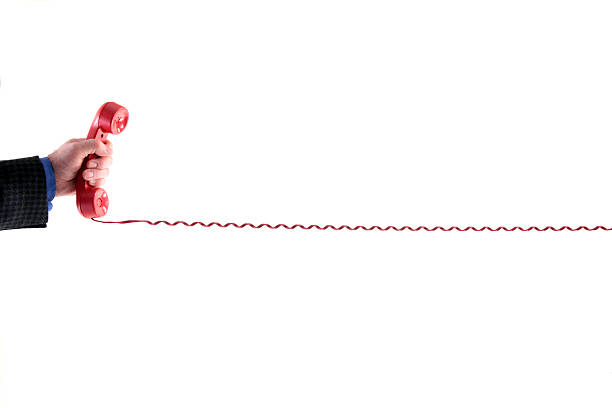
Telephone equipment was built to last for decades, which required protection against the sudden movements of distracted users. If someone walked too far while holding a straight-corded handset, the sudden stop could yank the base off the table or rip the wires out of the wall. The coiled cord acted as a mechanical shock absorber or a spring that distributed the force of a sudden pull along its entire length.
This elasticity provided a safety buffer that protected the delicate internal connections of the telephone. When a user reached the end of the cord’s range, they would feel a gentle increase in resistance rather than a jarring snap. This tactile feedback warned the caller they were nearing the limit of their mobility, preventing damage to the hardware and ensuring that the phone remained a reliable fixture in the home for many years.
Cable Durability And Longevity
The internal anatomy of a phone cord consisted of thin copper conductors that were prone to breaking if bent at sharp angles. Coiled cords were engineered to prevent these “hard kinks” by spreading any bending stress over a wide, curved area. This helical structure meant that the metal inside was never subjected to the kind of repetitive, sharp folding that eventually snaps metal fibers in straight power cables or modern chargers.
By utilizing thermoplastic elastomers, manufacturers created a jacket that could endure thousands of stretches without losing its original shape. This durability was essential because the telephone was often a rented piece of equipment from the service provider, which meant it had to survive heavy daily use without needing repair. The coiled design was a masterpiece of longevity, ensuring that the voice signal remained clear and the connection stayed intact through years of stretching and recoiling.
Even Tension Distribution

When a person pulls on a straight wire, the tension is almost entirely concentrated at the points where the wire enters the plugs. This often leads to the outer casing pulling away from the connector, exposing the raw wires underneath. Coiled cords avoided this common failure point because the helical shape distributed the tension evenly across every single loop of the spiral.
This engineering feat meant that no single part of the cord bore the brunt of the user’s movement. As the cord stretched, every coil expanded slightly to share the load, which significantly reduced the wear and tear on the plastic “modular” clips at the ends. This design philosophy resulted in a cord that felt substantial and high-quality, reflecting the industrial standards of an era when products were designed for permanence rather than planned obsolescence.
Kitchen or Office Productivity

The golden age of the coiled cord coincided with a time when people were beginning to multitask more frequently in their daily routines. In a busy kitchen, a cook might need to check the oven or reach for a spice rack while still holding the phone to their ear with a shoulder. The long, springy cord made this possible by expanding and contracting as the person moved around their workspace.
In professional environments, this mobility was even more critical for office productivity. A secretary could reach for a file cabinet or grab a stapler from a distant drawer without having to hang up the call or put the person on hold. The cord essentially acted as a flexible tether that enabled a more dynamic way of working, whereas a short or straight cord would have restricted the worker to a seated position and limited their efficiency.
Prevention Of Tripping Hazards

Safety was a significant concern in the household, particularly in homes with small children, elderly residents, or active pets. A long straight cord lying across a walkway was a recipe for a dangerous fall, but the coiled cord mitigated this risk by keeping itself elevated. Because the coils naturally wanted to pull back toward the handset, the wire rarely touched the floor unless it was being actively stretched to its limit.
This “auto-retracting” quality kept the walkways clear and prevented the cord from being stepped on, which also protected the wire from being crushed by heavy foot traffic. By staying off the ground, the cord remained clean and free from the dust and grime that tends to accumulate on floor-level cables. It was a simple but effective way to integrate a high-tech communication tool into a high-traffic family environment without introducing a constant physical hazard.
The Party Line Era
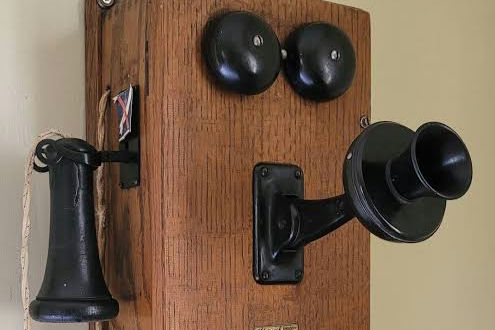
During the middle of the 20th century, many rural and suburban areas still operated on “party lines,” where several neighbors shared a single telephone circuit. Because the phone was a shared community resource within the home, it was often placed in a central, neutral location like a hallway. A long, stretchable cord was vital to make the phone accessible to everyone in the family regardless of their height or specific location.
The cord allowed the phone to “travel” to different users without moving the heavy base unit. Whether it was a child sitting on the floor or an adult standing at a tall counter, the coiled wire adjusted to their specific needs. This versatility was essential in a time when having multiple phone jacks in a single house was a luxury, making the long reach of the curly cord a practical necessity for communal living. As we look back, we can see that the disappearance of the curly cord marked more than just a change in hardware, yet the memory of untangling a long kitchen cord remains a shared touchstone of a simpler, more connected time.
Like this story? Add your thoughts in the comments, thank you.


