
One of the Biggest Trends of the 1970s
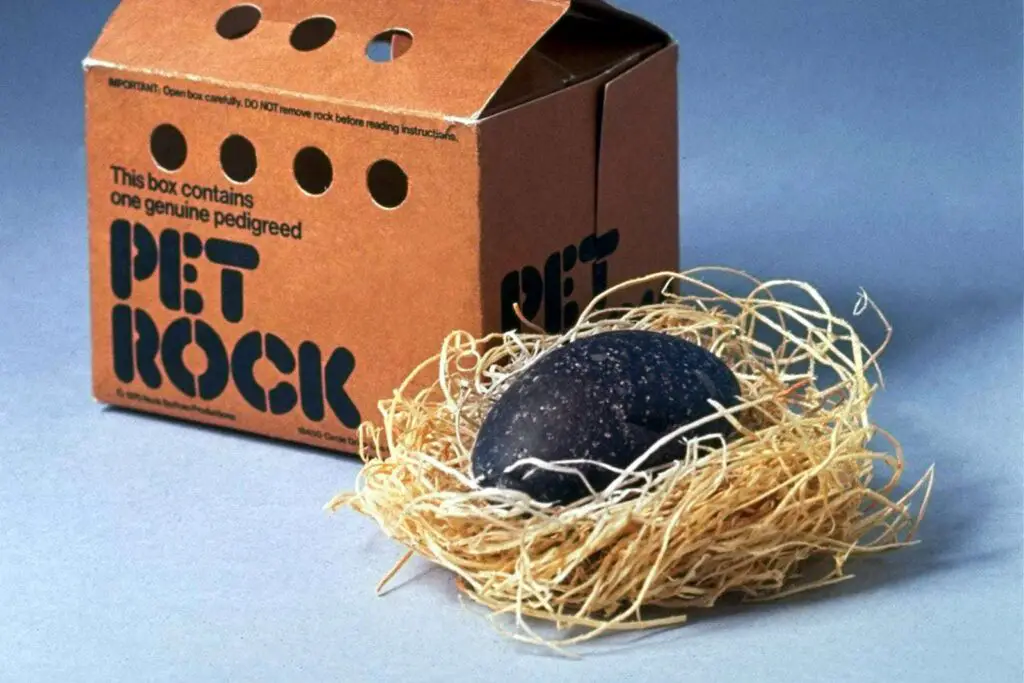
In the mid-1970s, very few people could have guessed that a plain stone would become one of the most famous novelty items in modern history. However, the “Pet Rock” grabbed the public’s attention almost instantly. At a time when silly ideas and humor-driven ads were becoming popular, this concept hit the perfect cultural note. The story of the Pet Rock is not just about a weird product; it is a lesson in perfect timing, creative thinking, and the wild, unpredictable nature of what becomes trendy.
The man who thought of it was Gary Dahl, a 38-year-old advertising copywriter from California whose joke about a pet that didn’t need any work turned into a million-dollar hit. By late 1975, millions of people were buying ordinary rocks packed in cardboard boxes, which came with a funny manual on how to care for them. Even though the fad didn’t last very long, the story of Dahl’s invention still fascinates people fifty years later. His massive success raised many interesting questions about marketing and the strange ways a simple idea can sometimes change popular culture forever.
A Joke That Made Millions

The idea for the Pet Rock reportedly started in April 1975 during a casual chat at a bar in Los Gatos, California. Gary Dahl and his friends were complaining about the hard work of owning pets like dogs or cats. They hated the feeding, walking, and constant cleaning, so Dahl joked that the perfect pet would be a rock. What started as a funny comment soon turned into a real business plan when Dahl realized the joke could sell if the packaging was clever enough.
Over the next few months, he wrote a hilarious 32-page instruction manual that explained how to “train” a rock. The booklet featured silly commands like “sit” and “stay,” which the rock would obviously do perfectly every time. Dahl’s marketing background told him that people weren’t really buying a stone; they were buying the humor and the experience. By August 1975, he officially launched the product at a San Francisco gift show, and it became an instant sensation that proved how a great laugh could be worth millions of dollars.
The Man Behind The Rock
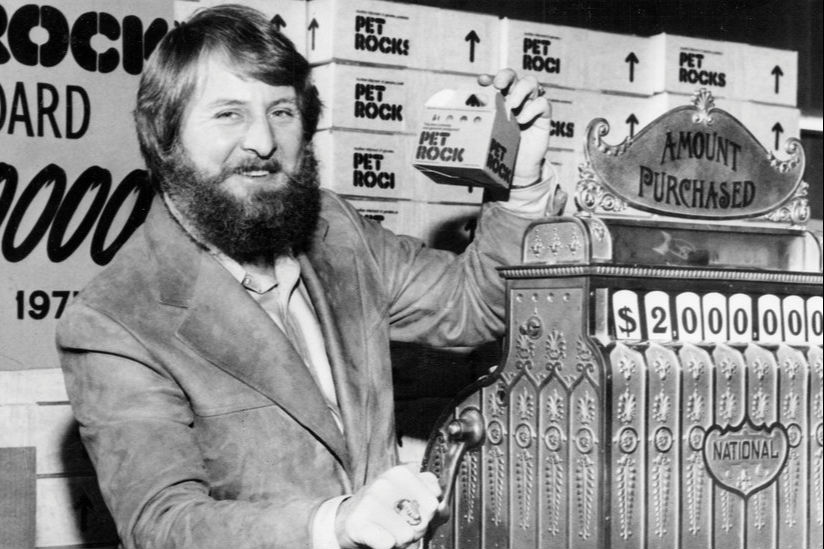
Gary Ross Dahl was born on December 18, 1936, in Bottineau, North Dakota, and grew up in Spokane, Washington. His father worked at a lumber mill while his mother was a waitress, and Gary showed a talent for writing early on. He eventually studied at Washington State University before starting a career in the advertising world. This professional background in communication was the secret weapon that allowed him to turn a basic household object into a legendary product that everyone wanted to own.
By the early 1970s, Dahl was working as a freelance copywriter in Northern California. Like many creative workers at the time, he took on different projects to make ends meet and lived a fairly quiet life. He wasn’t rich or famous back then, but his years of writing slogans and catchy ads gave him a deep understanding of how to grab someone’s attention. These specific skills were exactly what he needed to transform a random bar-room joke into one of the most successful and unusual business stories of the entire decade.
The Brilliant Packaging
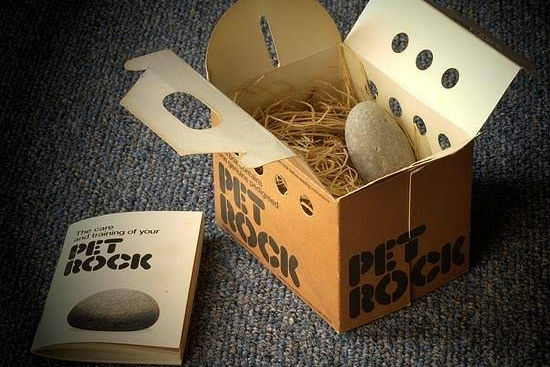
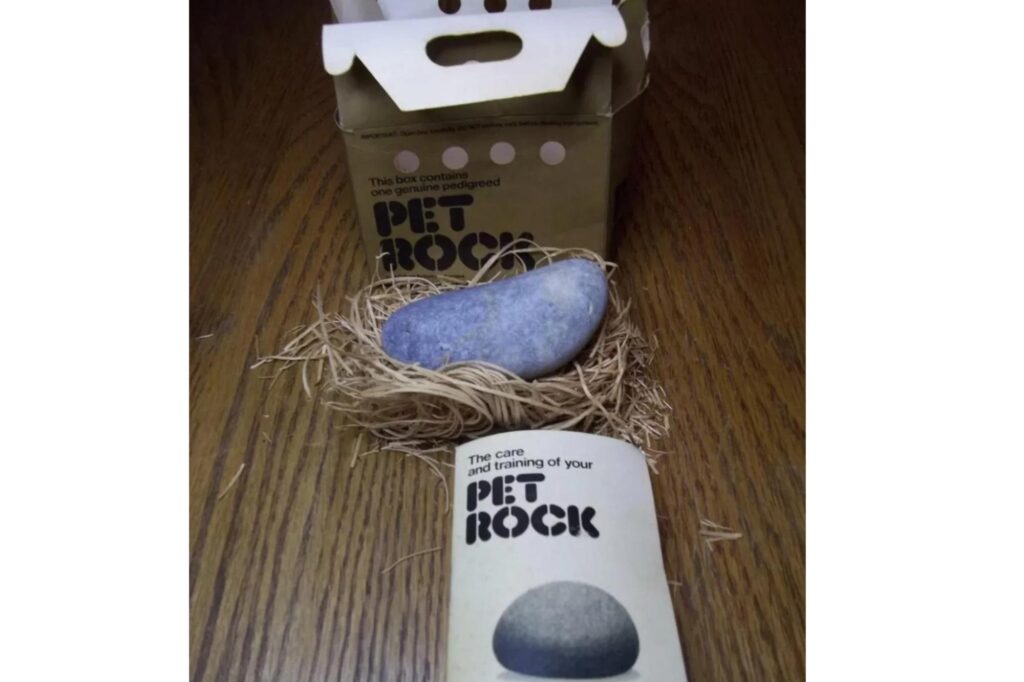
One of the biggest reasons the Pet Rock worked so well was the way it looked. Dahl knew the joke would only land if the packaging treated the rock like a living animal. Each stone was placed inside a custom cardboard box made to look like a pet carrier, featuring actual air holes and a bed of wood shavings for the rock to “sleep” on. This visual gag helped sell the idea and made the product feel like a high-quality gift rather than just a rock from the ground.
The package also included the famous instruction book, which was the real star of the show. Instead of being a boring set of rules, the manual was full of wit, explaining that rocks were easy to housebreak and very loyal. The text was written in a fun, breezy style that showed off Dahl’s advertising talent. Customers were happy to pay about $3.95 for the item because the punchline was so well-executed. In the end, the rock was just a prop for a very successful comedy routine.
A Holiday Season Craze
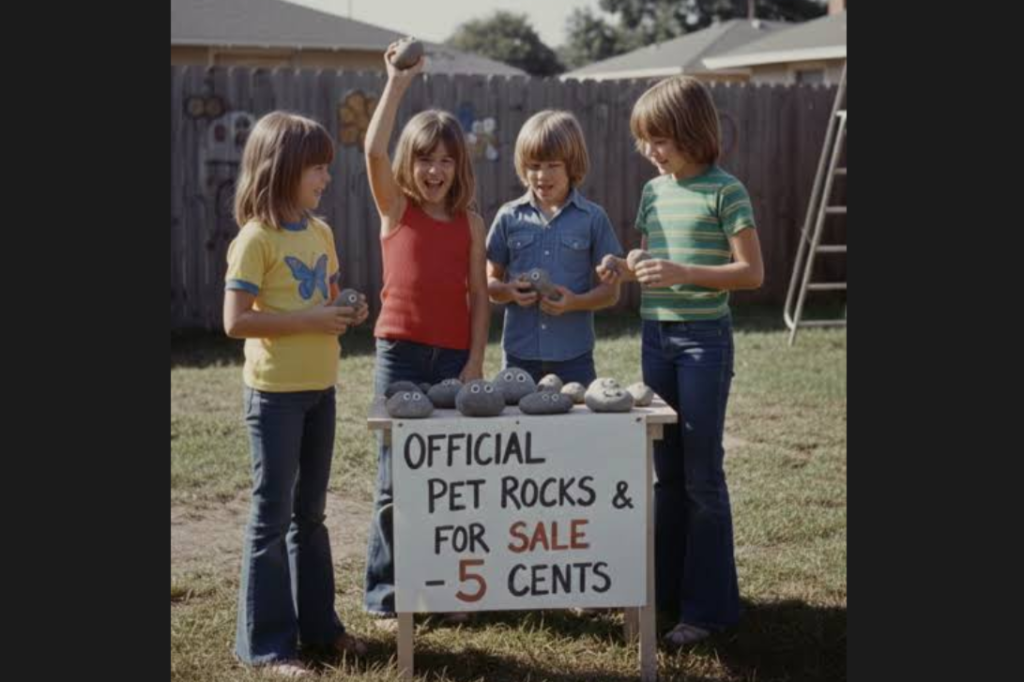
The Pet Rock made its big debut in the late summer of 1975, and store owners loved it right away. As the Christmas shopping season got closer, the product became a massive national trend across the United States. Stores couldn’t keep them on the shelves as people rushed to buy them as funny “gag gifts” for their friends and family. It was the “must-have” item of the year, appearing in newspapers and on news programs across the country during the winter months.
In just a few months, Dahl sold between 1.3 and 1.5 million units. Since the rocks were simple stones gathered from Rosarito Beach in Mexico, they cost almost nothing to source. Dahl reportedly made a profit of about 95 cents on every single sale, which quickly added up to over a million dollars in earnings. This incredible success story showed the world that smart marketing could take the simplest, cheapest object on earth and turn it into a highly profitable business that everyone talked about.
Overnight Celebrity
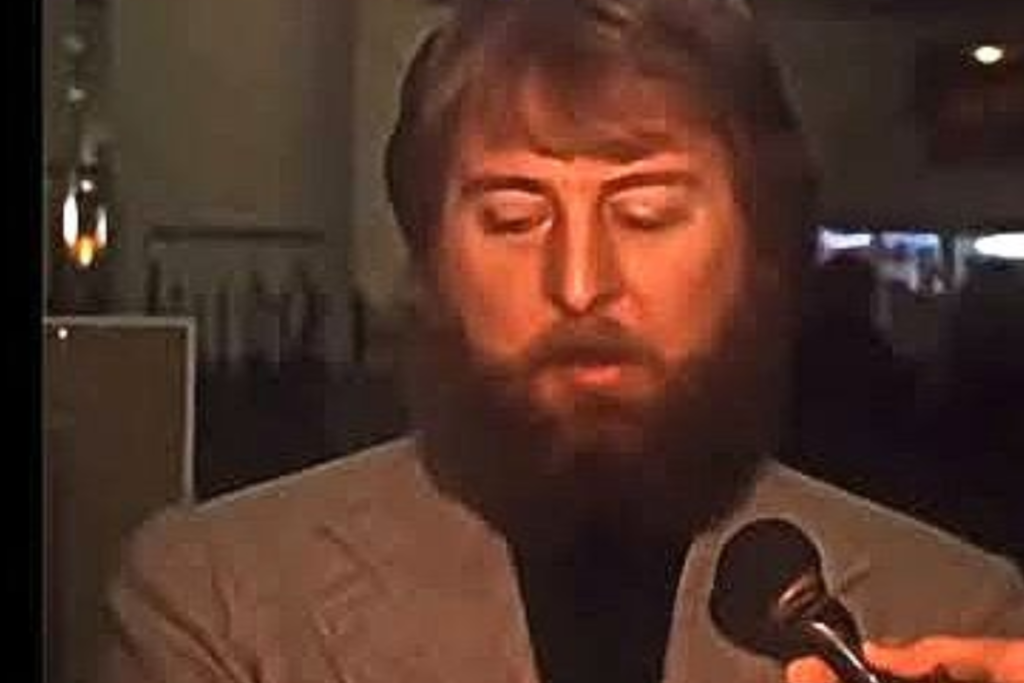
The wild success of his invention turned Gary Dahl into a household name almost overnight. Media outlets everywhere wanted to talk to the man who sold rocks, and he appeared on major television programs like The Tonight Show Starring Johnny Carson. For a short time, he was the face of American creativity and entrepreneurship. He was praised for his ability to see value in something that most people would just step over while walking down the street or through a park.
However, being famous also brought a lot of pressure. Dahl was constantly flooded with calls from reporters, business owners, and fans who wanted a piece of his time. To handle the stress, he once joked that he hired an assistant to pretend to be him just to answer the phone calls. While he enjoyed the money and the excitement, the sudden fame was overwhelming. It was a whirlwind experience that took him from being an unknown copywriter to a national celebrity in the span of a single holiday season.
The Fad Ends Quickly
Even though it was incredibly popular, the Pet Rock craze only lasted about six months. By the start of 1976, the joke had started to get old, and shoppers were looking for the next big thing. Stores began to lower the prices to clear out their stock, and the rocks soon vanished from the shelves. Like most “fad” products, the excitement was intense but very brief, proving that it is hard to keep the public interested in a novelty item for long.
Despite the short life of the trend, the financial rewards were life-changing for Dahl. By the time the craze ended, he was already a millionaire and had secured a permanent place in pop culture history. Business schools still study the Pet Rock today to explain how products go viral and how consumer psychology works. It remains the ultimate example of how to make a massive amount of money in a very short amount of time by using nothing but a clever idea and great timing.
Trying To Repeat Success
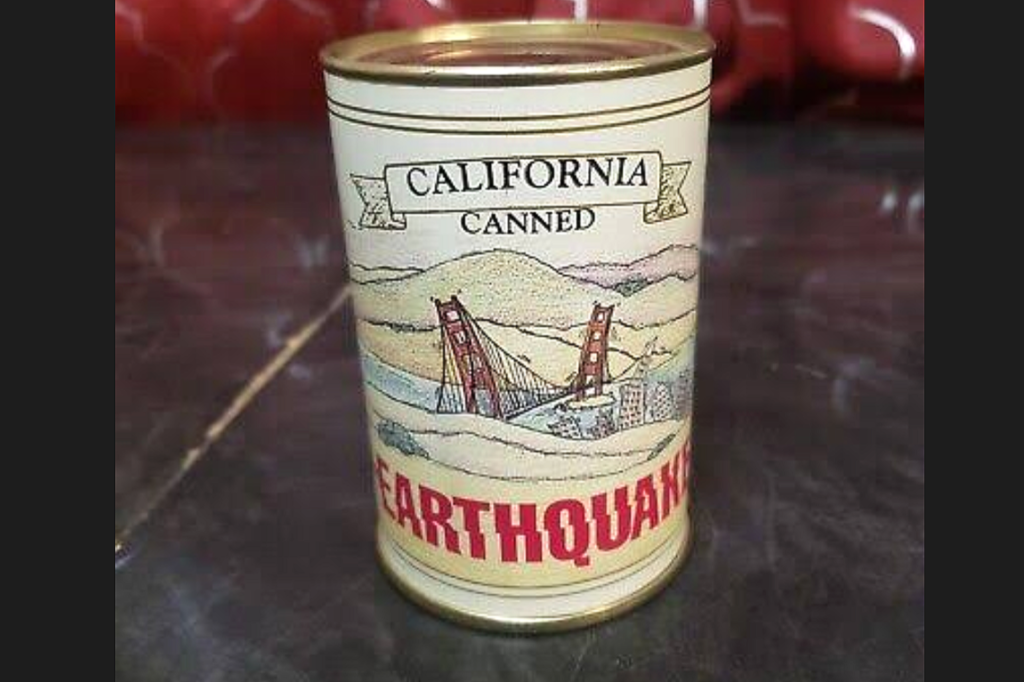
After the initial Pet Rock fever died down, Dahl tried to use his fame to launch other funny products. He came up with several new ideas, such as “Canned Earthquakes,” “Sand Breeding Kits,” and a product called “Red China Dirt.” He used the same type of silly humor that worked for the rocks, hoping that the public would be ready for another round of laughter. He invested his time and energy into these projects, believing he could capture lightning in a bottle for a second time.
Unfortunately, none of these follow-up inventions ever became popular. The public had already seen the joke, and it was impossible to recreate that specific cultural moment from 1975. Dahl eventually admitted that following up the Pet Rock was one of the hardest things he ever had to do. While some people were curious about his new items, the sales were nowhere near his first big hit. It proved that sometimes, a creator only gets one chance to truly change the world with a viral sensation.
A Bar Owner’s Experiment

Using the money he made from his millions of rock sales, Dahl decided to try his hand at different types of businesses. In 1977, he opened a saloon in Los Gatos, California, which he named “Carry Nations.” The name was a funny reference to Carrie Nation, a famous historical figure who spent her life fighting against the sale of alcohol. This ironic choice of name was classic Dahl, showing that he never lost his sense of humor even when he was moving into more serious business.
However, running a bar was a lot more difficult than selling rocks in a box. While the tavern was a local interest for a while, it didn’t turn into a permanent success story. Dahl eventually decided to sell the business and look for other things to do. The experience taught him that being a genius at marketing doesn’t always mean you will be good at every other kind of business. It was a humbling reminder that every industry has its own unique set of challenges.
Returning To Advertising

After trying his hand at various ventures, Dahl eventually went back to the career he was best at: advertising. He returned to working as a creative professional, helping many different companies build their brands and reach customers. His agency eventually focused on electronic media, where he produced catchy commercials for radio and television. He was much more comfortable in this world, using his natural gift for words to help other businesses succeed through smart communication and creative strategies.
In 2001, he even wrote a book called Advertising for Dummies, which became a helpful guide for people wanting to learn about marketing. This allowed him to share his decades of knowledge with a new generation of creators. Although he will always be remembered as the “Pet Rock guy,” Dahl spent the majority of his life contributing to the professional advertising industry. He proved that even after a massive viral success, it is possible to have a long, productive career doing what you truly love.


