
Brad Pitt’s Chicken Suit
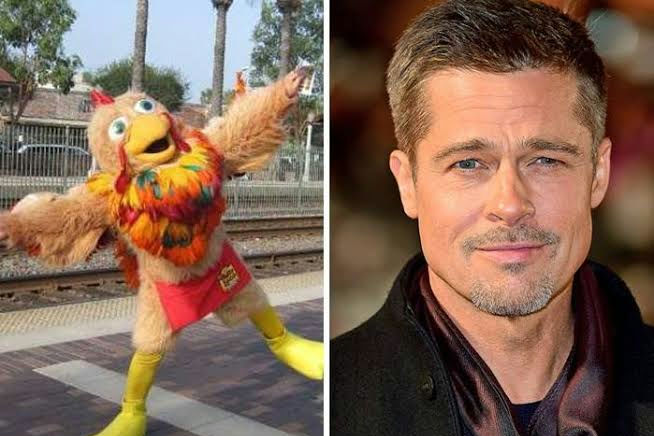
Before he was a household name and a two-time Academy Award winner, Brad Pitt was just another aspiring artist struggling to make rent in Southern California. After dropping out of the University of Missouri in 1986, just two weeks shy of graduation, Pitt packed his belongings into a car he named “Runaround Sue” and headed for Los Angeles with only $325 in his pocket. To fund his acting lessons and basic living expenses during those lean years, he took on several unglamorous survival jobs that were a far cry from the red carpets of Cannes.
His most famous pre-fame gig involved donning a giant, feathered yellow suit to work as a mascot for the fast-food chain El Pollo Loco on Sunset Boulevard. Throughout the late 1980s, Pitt stood on the hot California sidewalk, waving at passing cars to drum up business for the chicken restaurant. While the costume was stifling and the work was repetitive, it provided the financial stability he needed until his 1991 breakout role in Thelma & Louise. Today, that chicken suit serves as a humorous symbol of the grit required to make it in Hollywood.
Stallone’s Zoo Cleaning
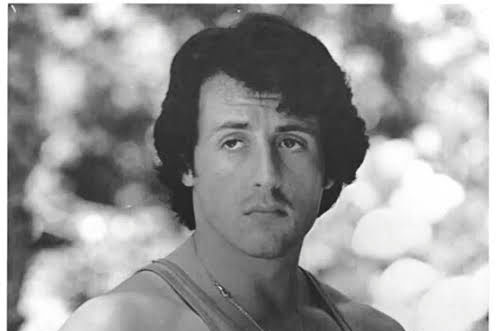
The story of Sylvester Stallone is the ultimate “rags-to-riches” tale, but his life in New York City during the early 1970s was incredibly bleak. Long before he became a global icon for his portrayal of Rocky Balboa in 1976, Stallone was frequently homeless and desperate for any source of income. During this era of intense struggle, he accepted a job at the Central Park Zoo that most people would find stomach-churning. His daily responsibilities included entering the enclosures to shovel waste and clean the lion cages.
Working among the big cats was physically demanding and dangerous, but it paid the bills while he focused on his true passion: screenwriting. Stallone famously wrote the script for Rocky in a feverish three-day sprint after watching the 1975 boxing match between Muhammad Ali and Chuck Wepner. Despite being broke, he refused to sell the script unless he was cast as the lead. His gamble paid off when the film won Best Picture at the 1977 Oscars, proving that the man who once cleaned cages was destined for the world stage.
Walken The Lion Tamer
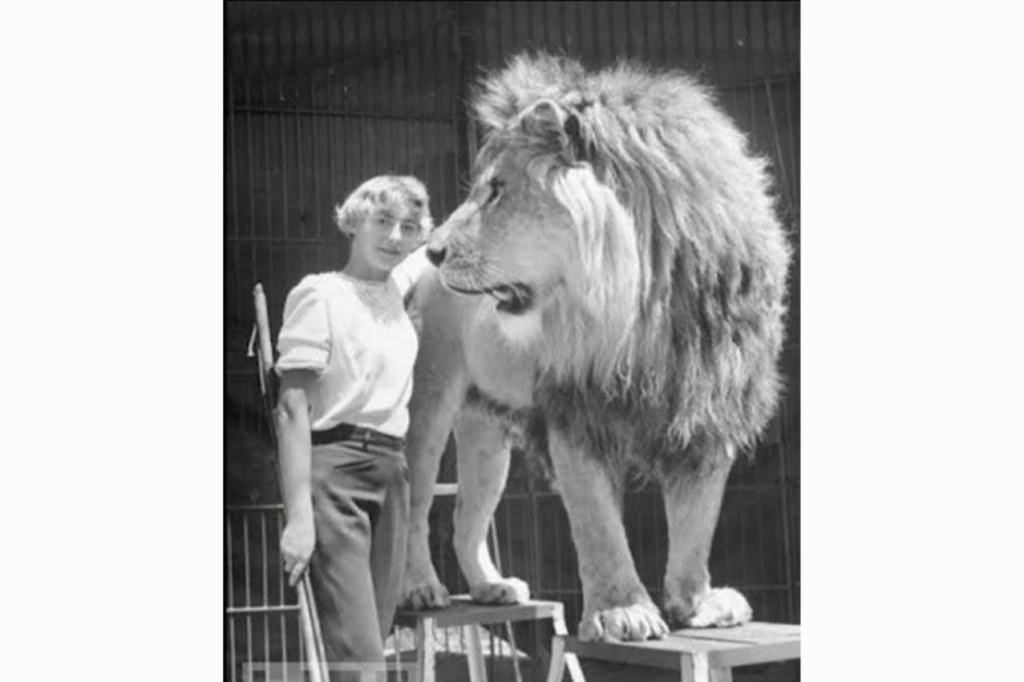
Christopher Walken possesses a cinematic intensity that is truly one of a kind, a trait that might be traced back to a very unusual summer job he held as a teenager. In the late 1950s, long before he captivated audiences in the 1978 classic The Deer Hunter, a fifteen-year-old Walken joined a traveling circus. This wasn’t a typical summer internship; he was hired as an assistant to a lion tamer named Terrell Jacobs. Every night, the young actor would step into the ring to perform alongside the circus’s main attractions.
Walken has since looked back on this period with a mix of nostalgia and dry humor, noting that the lion he worked with, a female named Sheba, was remarkably docile. He described her as being more like a “big dog” than a ferocious beast, though the spectacle was enough to thrill the crowds of that era. This early exposure to performance and danger helped shape his fearless approach to acting. By the time he transitioned to Broadway and eventually Hollywood, he had already mastered the art of holding an audience’s attention under pressure.
Connery The Milkman
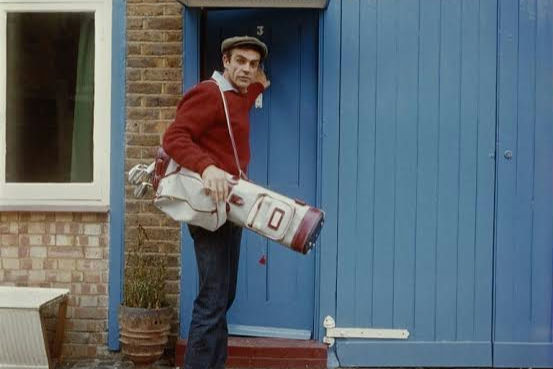
Sir Sean Connery is remembered as the definitive James Bond, a role he first inhabited in the 1962 film Dr. No. However, his upbringing in the Fountainbridge area of Edinburgh, Scotland, was rooted in the harsh realities of working-class life. Born in 1930, Connery grew up in a home so modest that the family used a chest of drawers as a makeshift crib for his younger brother. To help his parents stay afloat, he dropped out of school at age thirteen to begin working full-time.
His primary job during those formative years was as a milkman for the St. Cuthbert’s Co-operative Society. In the early 1940s, a young Connery would traverse the cobblestone streets of Edinburgh in the pre-dawn hours, delivering heavy glass bottles of milk to local doorsteps. This labor-intensive start gave way to other manual roles, including a stint in the Royal Navy and time spent as a bricklayer and coffin polisher. These rugged beginnings provided him with the physical presence and grounded discipline that would later make him one of the most respected and charismatic leading men in film history.
Jon Hamm’s Set Work
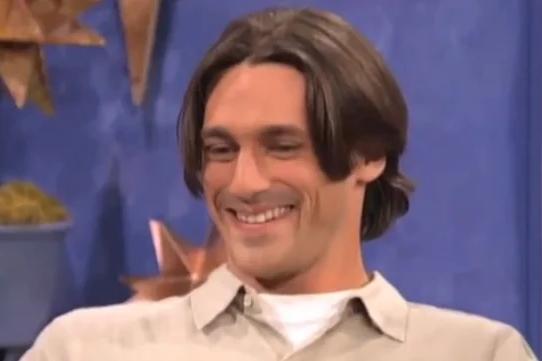
For many years, it seemed as though Jon Hamm was destined to remain a “working actor” who never quite made it to the big leagues. After moving to Los Angeles in 1995, he famously gave himself a five-year deadline to find success or move back home. During that decade of anonymity, he waited tables and worked as a set decorator to survive. One of his more eyebrow-raising jobs during the late 1990s involved moving furniture and arranging props on the sets of low-budget, softcore adult films.
Hamm has been candid about this period, viewing it simply as a practical necessity rather than a source of embarrassment. He spent years auditioning for roles that went to other people, nearly reaching his breaking point before he finally landed the career-defining role of Don Draper in Mad Men in 2007. His portrayal of the enigmatic ad man earned him a Golden Globe in 2008 and eventually an Emmy. His journey is a testament to the fact that success often arrives much later than expected, fueled by years of behind-the-scenes hard work.
Harrison Ford The Carpenter
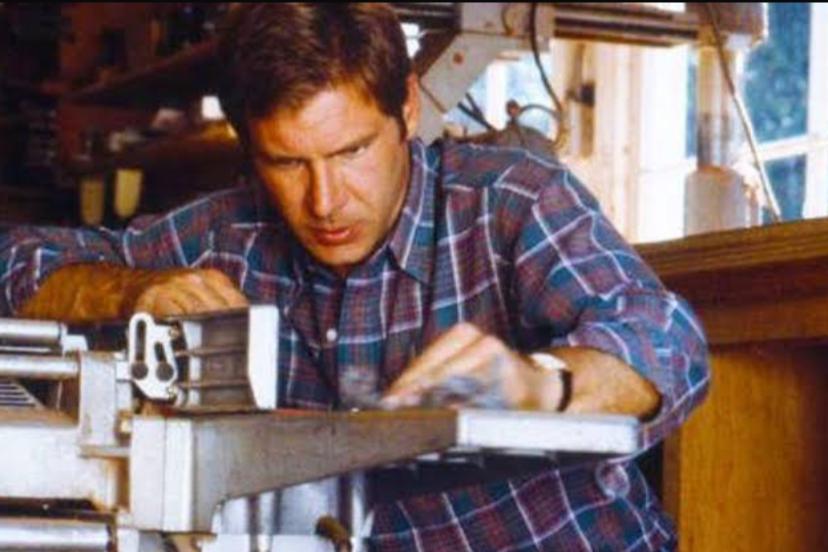
In the early 1970s, Harrison Ford was a frustrated actor who was tired of taking small, insignificant television roles to support his wife and two young sons. Feeling that he wasn’t getting the opportunities he deserved, he decided to teach himself professional carpentry. Using books from the local library, Ford mastered the craft and soon became a highly sought-after carpenter for the Hollywood elite. His clients included famous musicians and filmmakers, which allowed him to stay within the industry’s orbit while earning a steady living.
A pivotal moment occurred in the mid-1970s when director George Lucas hired Ford to install cabinets in his office. This chance encounter led to Ford being asked to read lines for other actors auditioning for a new sci-fi project. Lucas was so impressed by Ford’s natural delivery that he cast him as Han Solo in 1977’s Star Wars. This transition from a master woodworker to a galactic hero is one of the most famous stories in cinema, proving that a backup plan can sometimes lead directly to a dream come true.
Sandra Bullock’s Restaurant Years
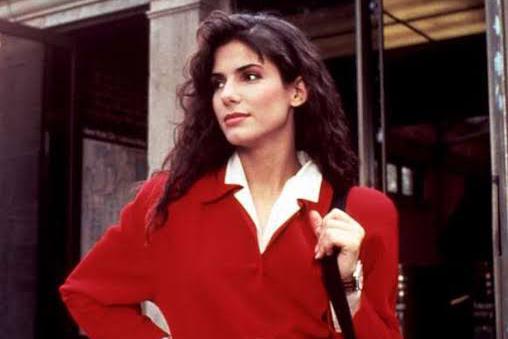
Sandra Bullock is widely regarded as “America’s Sweetheart,” but her path to the A-list involved many late nights serving drinks and clearing tables in New York City. After graduating from East Carolina University in 1987 with a degree in drama, she moved to the Big Apple with high hopes. Throughout the late 1980s, Bullock balanced acting classes with grueling shifts as a waitress and bartender. She became known among her coworkers for her efficiency and her ability to handle the high-pressure environment of Manhattan nightlife.
These years in the service industry provided her with a unique perspective on human behavior, which she later applied to her diverse acting roles. Her perseverance eventually paid off when she began landing television work, leading to her breakout performance in the 1994 high-octane thriller Speed. The film’s massive success turned her into a global superstar overnight, but Bullock has never forgotten her roots. She often speaks fondly of her restaurant days, crediting that time for teaching her the resilience needed to survive the ups and downs of a long Hollywood career.
Danny DeVito’s Salon Work

Danny DeVito has enjoyed a prolific career as an actor, director, and producer, but his professional life actually began in a beauty parlor. In the early 1960s, a young DeVito worked as a hairdresser at his sister Angela’s salon in New Jersey. Known affectionately as “Mr. Danny” by the local clientele, he spent his days styling hair and providing beauty treatments. His talent in the salon eventually led him to enroll at the American Academy of Dramatic Arts in 1966, primarily to study professional makeup artistry.
While attending the academy, DeVito discovered that he had a natural gift for acting and decided to pivot his career goals. He spent the next decade working in theater before landing his iconic role as the abrasive dispatcher Louie De Palma on the hit sitcom Taxi in 1978. This role earned him both an Emmy and a Golden Globe, cementing his status as a comedic powerhouse. From the salon chair to the director’s chair, DeVito’s unconventional start shows that creative skills in one field can often blossom into a legendary career in another.
Jim Carrey’s Factory Nights
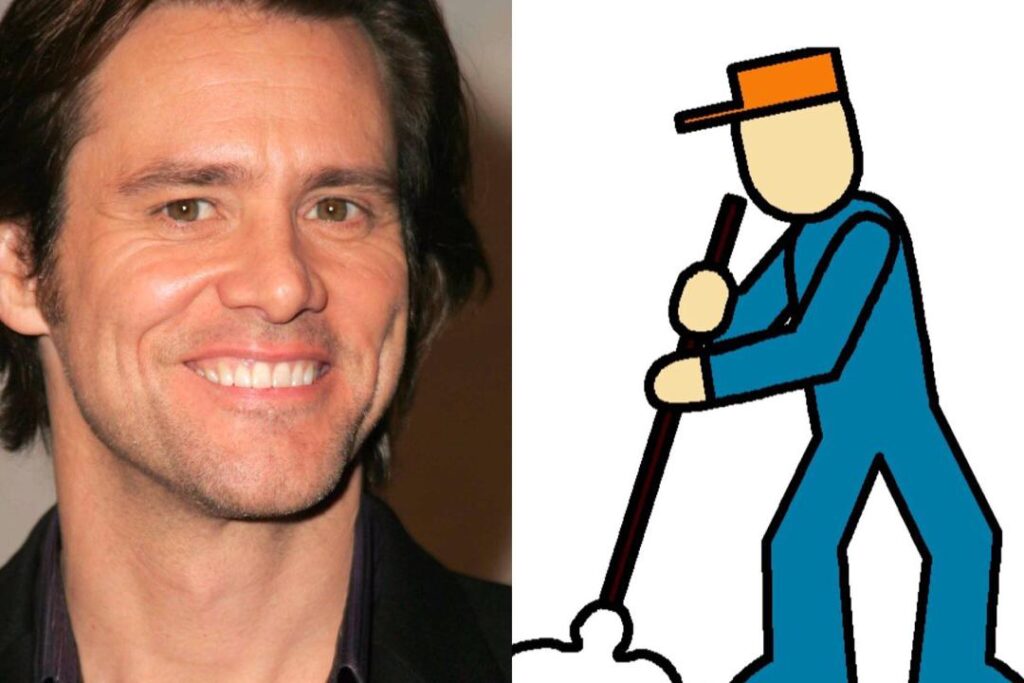
The rubber-faced comedy of Jim Carrey has brought joy to millions, but his teenage years were defined by a family crisis that forced him to grow up very quickly. In the late 1970s, Carrey’s father lost his job as an accountant, and the family eventually lost their home, living in a van for a period of time. To help the family survive, a sixteen-year-old Carrey dropped out of high school to work an eight-hour night shift at a Titan Wheels factory in Ontario, Canada.
Carrey worked as a janitor and security guard, spending his nights cleaning heavy machinery and floors. He admitted that the experience initially made him angry and resentful, but it also fueled his desire to escape through performance. He would practice his impressions and stand-up routines during his breaks, eventually finding his way into the Toronto comedy scene. By 1994, he had achieved an unprecedented “triple threat” year with the releases of Ace Ventura: Pet Detective, The Mask, and Dumb and Dumber, transforming from a factory worker into the world’s highest-paid comedian.
Liam Neeson’s Early Work
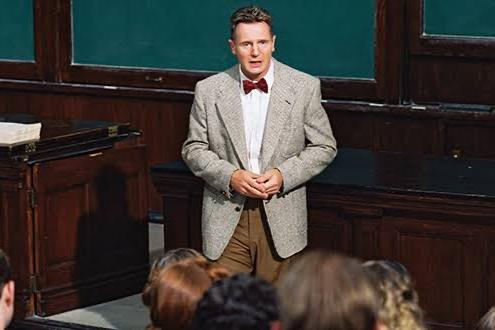
Liam Neeson is known for his gravelly voice and his reputation as a formidable action star, but his early career path was surprisingly academic. After enrolling at Queen’s University Belfast in 1971 to study physics and computer science, Neeson realized he wasn’t passionate about the laboratory. He transitioned into a teacher training college in Newcastle, briefly working as a student teacher. However, his time in the classroom was short-lived, as he struggled with the lack of discipline among some of his students and realized his heart belonged elsewhere.
During this period of soul-searching in the mid-1970s, Neeson also took on manual labor to support himself, including a job as a forklift operator at the Guinness Brewery in Dublin. This grounded, blue-collar experience helped shape his rugged screen persona. In 1976, he joined the Lyric Players’ Theatre in Belfast, which eventually led to his film debut. His breakthrough performance in the 1993 masterpiece Schindler’s List earned him an Oscar nomination and proved that the former teacher and brewery worker was one of the finest dramatic actors of his generation.
Madonna’s Donut Counter

Before she was crowned the “Queen of Pop,” Madonna Ciccone was a nineteen-year-old college dropout who arrived in New York City in 1978 with just $35 and a pair of ballet shoes. Her early days in the city were a far cry from the multi-million-dollar tours she would eventually headline. To survive while taking modern dance classes at the Alvin Ailey American Dance Center, she took on several low-wage service jobs. One of the most famous was her brief stint working behind the counter at a Dunkin’ Donuts located in the heart of Times Square.
Her career in the pastry industry was famously short-lived, lasting only one day. According to legendary accounts of her pre-fame life, Madonna was fired after she accidentally, or perhaps impulsively, squirted jelly filling all over a difficult customer. While she wasn’t cut out for food service, her relentless drive led her to the downtown club scene, where she eventually caught the attention of Sire Records. By 1983, her self-titled debut album was climbing the charts, proving that the girl who couldn’t serve a donut was destined to change the landscape of pop music forever.
Rick Astley’s Taxi Routes
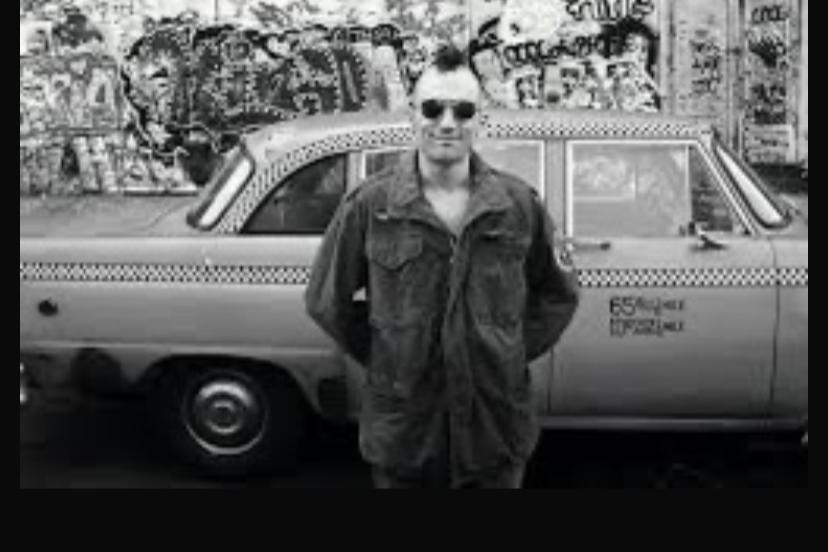
Rick Astley became an overnight sensation in 1987 with the release of “Never Gonna Give You Up,” a song that topped the charts in 25 countries and eventually became an immortal internet meme. However, just a few years before his deep soulful voice conquered the airwaves, Astley was living a very quiet life in the small town of Newton-le-Willows in Lancashire, England. After leaving school at sixteen, he joined his father’s market gardening business, but he soon sought out other ways to make a living while playing drums in local soul bands.
One of his primary sources of income during the mid-1980s was working as a local taxi driver and delivery man. Astley spent his days navigating the narrow streets of Northern England, often transportng passengers who had no idea their driver would soon be a global superstar. His big break came when he was working as a “tea boy” and assistant at the PWL recording studio, where producers finally realized his vocal talent. By the time he won the Brit Award for Best British Single in 1988, his days of driving taxis were a distant memory, though he remained one of the most down-to-earth stars in the industry.
Channing Tatum’s Strip Club
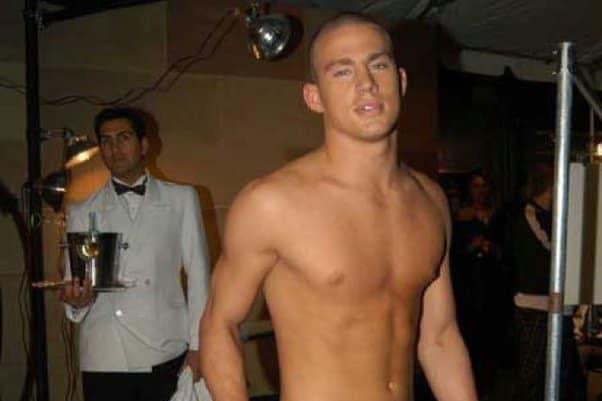
Channing Tatum is one of Hollywood’s most versatile leading men, but his most famous “ordinary” job was anything but typical. After dropping out of Glenville State College in West Virginia in 1999, Tatum returned home to Florida and bounced between several manual labor jobs, including roofing and sales. At the age of nineteen, he began working as a male entertainer at a local nightclub in Tampa under the stage name “Chan Crawford.” He earned roughly $50 a night, plus tips, performing choreographed routines for enthusiastic crowds.
Unlike many actors who might try to hide such a past, Tatum eventually leaned into it. In 2012, he co-wrote and starred in Magic Mike, a film directed by Steven Soderbergh that was loosely based on his real-life experiences in the Florida stripping circuit. The movie was a massive critical and commercial success, spawning two sequels and a live stage show in Las Vegas and London. Tatum’s journey from a teenage club dancer to a major movie star and producer is a unique example of how a “taboo” early job can be transformed into a billion-dollar entertainment franchise.
Nawazuddin’s Security Booth

Nawazuddin Siddiqui is widely considered one of the finest actors in modern Indian cinema, but his path to the screen was paved with extreme hardship. Born in a small town in Uttar Pradesh in 1974, he initially worked as a chemist in a petrochemical company in Baroda. However, the pull of the performing arts led him to New Delhi, where he had no money and no connections. To pay for his tuition at the National School of Drama, he spent nearly two years working as a night watchman and security guard at various offices and residential buildings.
Siddiqui’s life as a security guard was grueling, often involving long shifts with very little sleep, but it gave him a wealth of “life material” that he would later use to bring depth to his characters. After moving to Mumbai in 2000, he spent over a decade playing blink-and-miss roles before his massive breakout in the 2012 epic Gangs of Wasseypur. Today, he is a mainstay at international film festivals like Cannes, yet he frequently reminds his fans that the discipline he learned while guarding gates was what ultimately allowed him to survive the toughest years of his career.
Jamie Oliver’s Kitchen Start
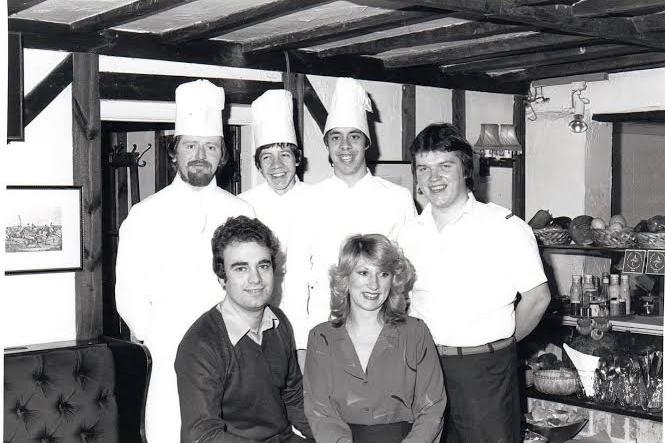
Jamie Oliver is a global culinary brand, but his relationship with the kitchen began as a childhood chore rather than a glamorous career choice. Growing up in Essex in the 1980s, Oliver was the son of pub owners who ran “The Cricketers” in Clavering. From the age of eight, he was expected to help out, starting with peeling potatoes and washing dishes. By the time he was a teenager, he was working full shifts in the kitchen, learning the frantic pace and technical skills required to run a successful restaurant under his father’s watchful eye.
While his friends were out playing, Oliver was mastering the foundations of British cooking, a background that gave him a significant head start when he eventually attended Westminster Catering College. His “common man” approach to food was showcased to the world in 1999 when he debuted as The Naked Chef. The show’s massive success made him a millionaire by the age of 25 and allowed him to launch global campaigns for better nutrition in schools. Even with his vast fame, Oliver’s cooking style remains rooted in the practical, no-nonsense lessons he learned in his parents’ pub kitchen decades ago.


