
Abandoned By Mother
The arrival of Punch on July 26, 2025, was initially a cause for celebration at the Ichikawa City Zoo, but the mood shifted when his mother failed to show typical maternal instincts. While Japanese macaques are famous for their sophisticated social structures and deep family bonds, maternal rejection can occur in captive environments due to stress or a lack of experience in first-time mothers. Recognizing the emergency, zoo specialists moved Punch to a nursery setting. This intervention was vital because macaques are highly social animals that can suffer permanent psychological distress if they are isolated or neglected during the “critical period” of their infancy.
Throughout the late summer of 2025, keepers worked tirelessly to stabilize Punch’s health. He was placed on a strict feeding schedule and monitored for healthy weight gain, but the staff knew that human interaction alone wasn’t enough for a growing primate. They needed a way to simulate the constant physical contact a mother monkey would provide. By the time October 2025 arrived, Punch was physically thriving, but he showed signs of searching for something to hold onto. This led to the creative decision to introduce a soft substitute, marking the beginning of a unique rehabilitation process that would eventually turn him into an international symbol of resilience and hope.
The Comforting Orangutan
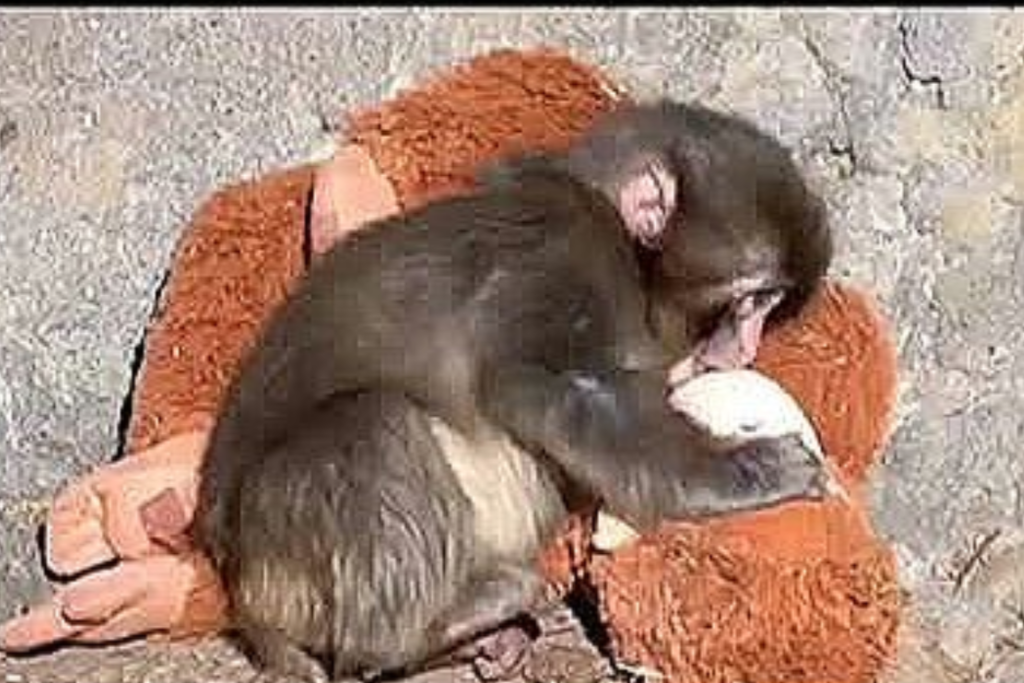
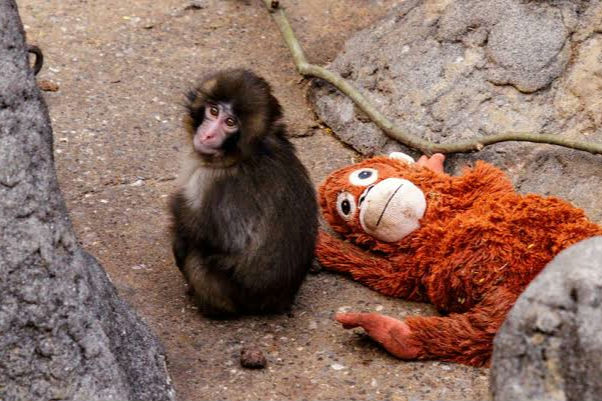
In an effort to heal the emotional wounds of his early abandonment, caretakers provided Punch with a soft, brown plush orangutan. Introduced in September 2025, the toy was intended to act as a security blanket, providing the tactile stimulation that infant primates crave. In the wild, baby macaques spend nearly all their time clinging to their mother’s underside; without this physical “anchor,” they can become withdrawn or develop anxious behaviors. The IKEA toy, with its long arms and friendly face, offered Punch a consistent source of warmth and a place to hide his face when he felt overwhelmed by his surroundings.
The bond between the monkey and the toy grew rapidly, and by late 2025, the duo was inseparable. Observers noted that Punch would refuse to move across his enclosure unless he could drag the plush “Oran-Mama” along with him. While some critics wondered if a toy could hinder his growth, animal welfare experts argued that the surrogate actually gave him the confidence to explore. By having a “safe base” to return to, Punch felt empowered to observe his environment more closely. This creative approach to animal husbandry highlights the evolving methods zoos use to ensure the mental well-being of animals that face early-life trauma or social displacement.
Viral Global Attention
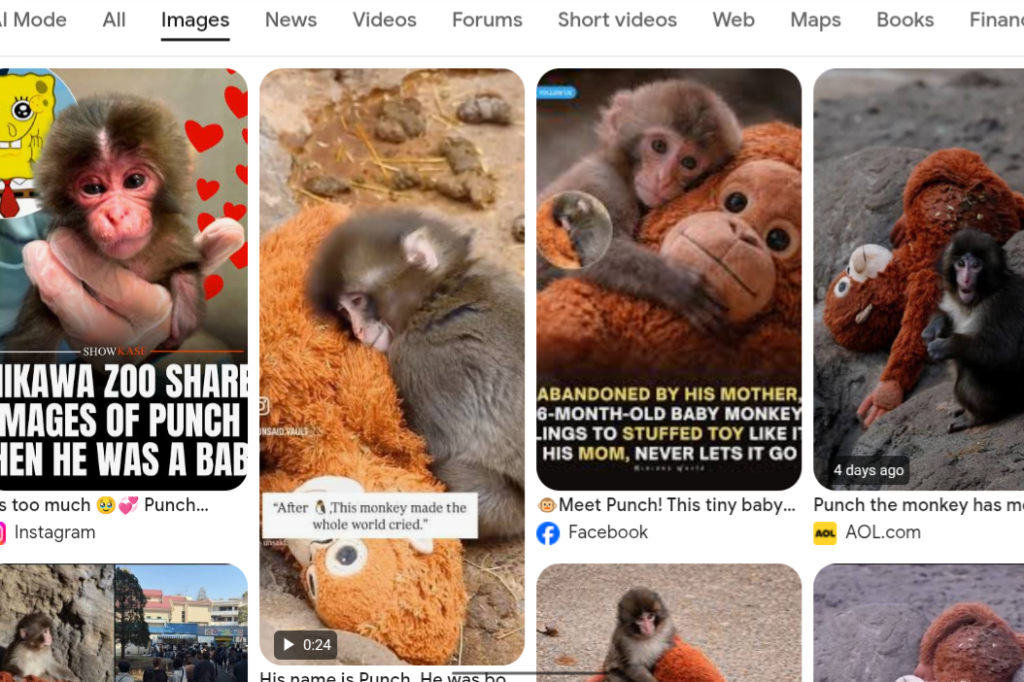
What began as a local story in Chiba Prefecture quickly exploded into a worldwide phenomenon in November 2025. When images of Punch clutching his oversized stuffed friend hit the internet, they were shared millions of times across platforms like Instagram and TikTok. By December, major news outlets in the United States and the United Kingdom had picked up the story, casting a spotlight on the small zoo in Japan. The public was moved by the raw vulnerability of the young monkey, and the hashtag #HangInTherePunch became a trending topic, with supporters from around the globe sending digital well-wishes and praising the zoo’s compassionate care.
This sudden fame brought a massive influx of attention to the Ichikawa City Zoo, which saw its social media following triple in just a few weeks. While the viral fame was largely positive, it also put the zoo under a microscope, as thousands of new fans began closely monitoring Punch’s every move. This global engagement underscored the power of animal stories to transcend language barriers and unite people in a shared sense of empathy. For many, Punch became a mascot for overcoming adversity, proving that even a small creature can find the strength to carry on with a little bit of help and a lot of heart.
Daily Life With Toy
As of early 2026, Punch’s daily routine remains centered around his beloved plush companion. He treats the toy with the same care a wild macaque would show its mother, often grooming the synthetic fur and positioning the toy carefully before settling down for a nap. Zoo reports from January 2026 indicate that the toy accompanies him during feeding times and play sessions, acting as a constant shadow. This behavior is a fascinating display of “attachment theory” in action, showing how a non-living object can provide genuine psychological relief to a developing mammal during a high-stress period of growth.
Despite his reliance on the toy, Punch is meeting all his physical benchmarks. He is described as an active, curious, and hungry young monkey who enjoys a variety of fruits and specialized primate pellets. His keepers ensure the toy is kept clean and safe, occasionally swapping it for a fresh version to maintain hygiene without causing him distress. While his life is unconventional, it is filled with care and enrichment. The sight of him dragging the orangutan across the climbing structures has become a signature image for the zoo, representing a successful, if unusual, path toward a stable and healthy adulthood for the young macaque.
Bonding With Peers
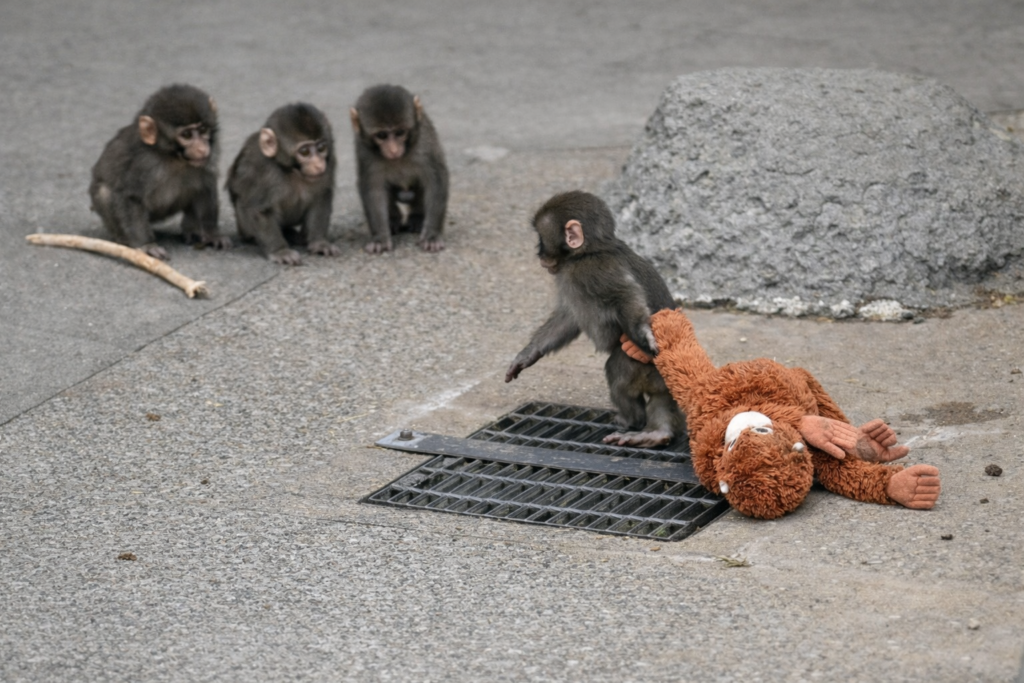
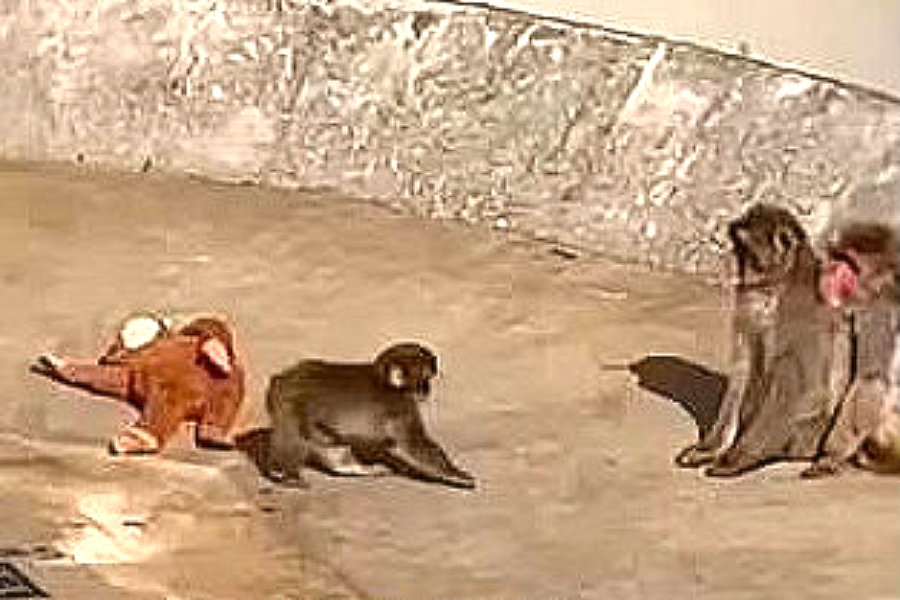
A major turning point in Punch’s journey occurred in early 2026 when keepers began the delicate process of “socialization.” Since Japanese macaques are communal animals, Punch cannot spend his entire life with only a toy for company. Recent updates from February 2026 show heartening footage of Punch interacting with other juvenile macaques in a shared space. Remarkably, Punch often brings his plush toy to these “playdates,” and his peers have shown a surprising amount of curiosity and tolerance toward the object. These interactions are vital for him to learn the “language” of his species, including vocalizations and body posture.
The goal of these sessions is to gradually decrease Punch’s dependence on the toy as he forms real bonds with his own kind. So far, the results are promising; he has been seen engaging in “chase” games and grooming other monkeys while keeping the toy within eyesight. Experts suggest that the toy acted as a confidence booster, allowing him to approach others without the paralyzing fear that often affects rejected infants. As he continues to integrate into the troop throughout the spring of 2026, the zoo hopes that his furry friend will eventually be left behind in favor of the warmth and companionship of his fellow macaques.
Learning Social Rules
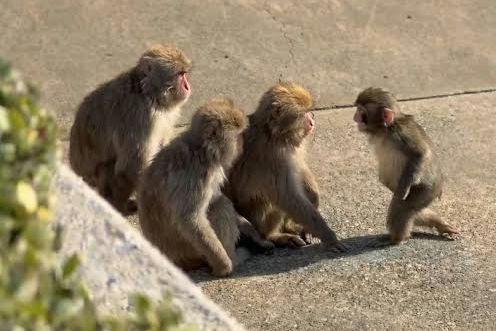
Integration into a macaque troop is not always a gentle process, as these primates have a strict social hierarchy. Throughout February 2026, Punch has begun to learn the “unwritten rules” of monkey society. This includes understanding when to back away from a more dominant peer and how to share food. On several occasions, older juveniles have given Punch a quick “nip” or a push to correct his behavior, standard primate etiquette that teaches boundaries. Initially, fans online were worried, but the zoo clarified that these lessons are essential for Punch to become a functional member of the troop who can survive and thrive.
Interestingly, Punch’s response to these social corrections has been very healthy. Instead of retreating or showing signs of extreme fear, he often returns to his plush toy for a brief moment of comfort before jumping back into the fray with the other monkeys. This resilience is a sign that his early hand-rearing and the “surrogate mother” strategy worked well. By the time the summer of 2026 arrives, the zoo expects Punch to have a much firmer grasp of social dynamics. The toy is no longer his entire world; it is now simply a security blanket he uses while he learns how to be a “real” Japanese macaque.
Addressing Welfare Concerns
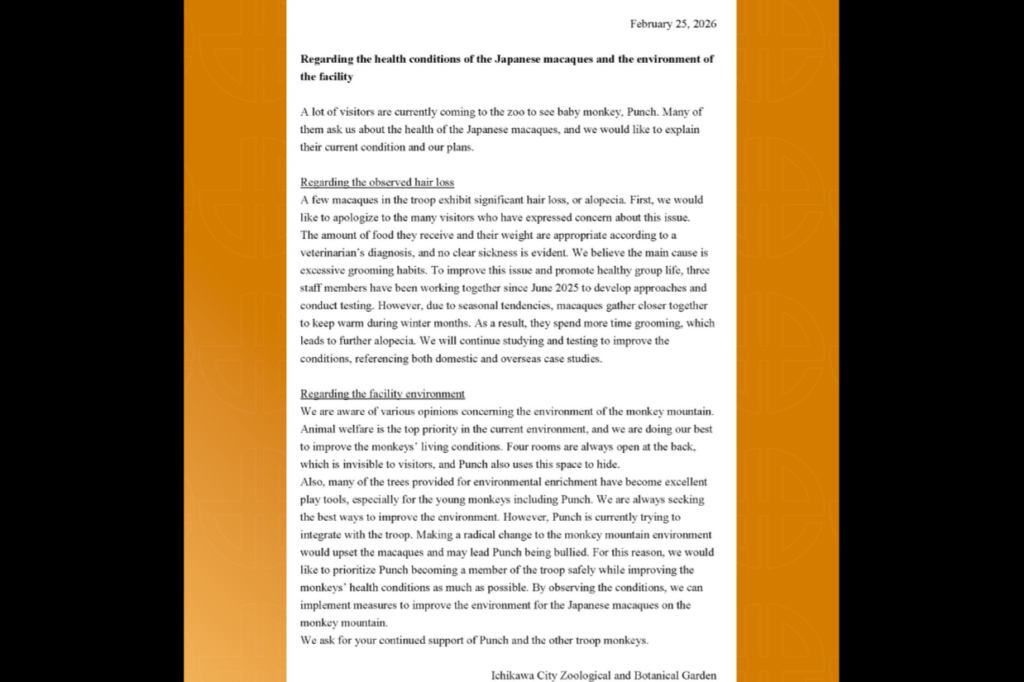
With international fame comes intense scrutiny, and the Ichikawa City Zoo has had to address various concerns regarding Punch’s health. In late 2025, some social media users pointed out patches of thin hair on Punch’s coat, leading to rumors about his health. The zoo quickly issued a statement in December 2025, explaining that “molting” or seasonal coat changes are perfectly normal for Japanese macaques as they transition between seasons. They reassured the public that Punch undergoes weekly health checks by specialized veterinarians and that his nutrition is carefully managed to support his rapid growth and active lifestyle.
The zoo has used this platform to educate the public on the complexities of captive animal management. They have been transparent about his enclosure size, the frequency of his enrichment activities, and the long-term plan for his reintroduction to a full troop. By providing these facts, the zoo has turned a viral moment into an educational opportunity. They emphasize that while Punch looks adorable with his toy, the ultimate goal is his long-term welfare and a life that mimics his natural habitat as closely as possible. This commitment to transparency has helped maintain the trust of millions of followers worldwide.
Visitor Numbers Surge
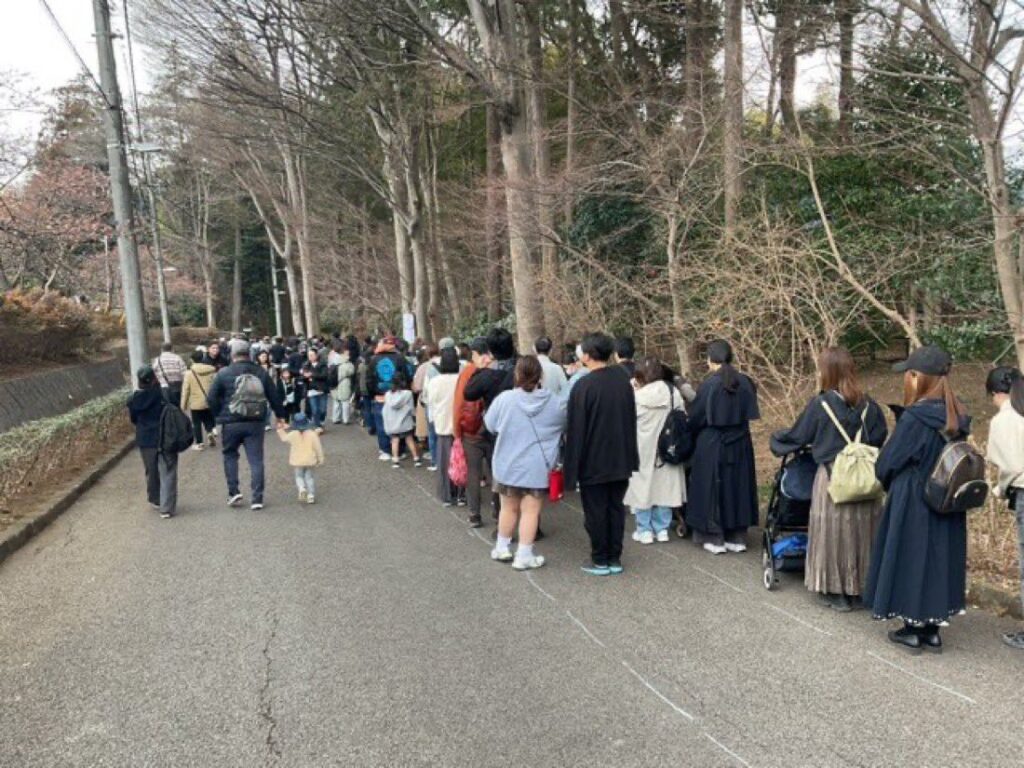
The “Punch Effect” has had a massive impact on the Ichikawa City Zoo’s attendance. During the holiday season of December 2025, the zoo reported a record-breaking surge in visitors, with many families traveling from across Japan and even abroad just to catch a glimpse of the famous macaque. To manage the crowds, the zoo had to implement new “quiet zones” and timed entry tickets for the primate section. This was done to ensure that the noise and excitement of the fans did not overwhelm Punch or the other animals, who are sensitive to loud environments and sudden movements.
The increased revenue from these visitors has been funneled back into the zoo’s conservation and enrichment programs. In January 2026, the zoo announced upgrades to the macaque habitat, including new climbing structures and improved heating systems for the winter months. While managing the logistics of a “viral” animal is difficult, the zoo staff has expressed gratitude for the support. The public’s interest has not only helped Punch but has also shed light on the importance of protecting the Japanese macaque species, which faces habitat loss and human-wildlife conflict in various parts of Japan.
Toy Sell-Out Frenzy
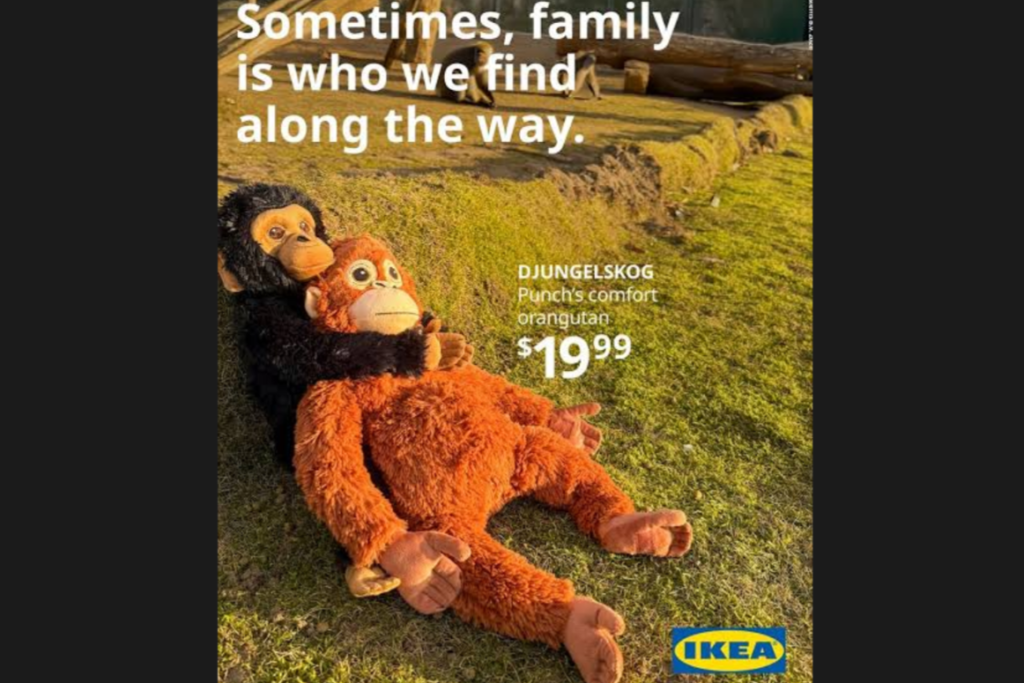
One of the most surprising side effects of Punch’s story was the sudden “run” on IKEA stores. As images of the macaque clutching his Djungelskog orangutan went viral in late 2025, the toy became an overnight must-have item. By December 2025, the plush primate was sold out in many locations across Asia and Europe. On secondary market websites, the toys were being listed for three to four times their original retail price. Fans were eager to own a piece of the story, with many parents buying them for their children as a way to talk about empathy and kindness toward animals.
While this commercial boom was unexpected, it highlighted the deep emotional connection the public felt with Punch. For many, owning the same toy was a way to feel connected to the young monkey’s journey of recovery. IKEA, while not officially part of the zoo’s program, saw a significant boost in its “soft toy” category during the 2025 holiday season. This phenomenon is a prime example of how a single, powerful narrative can ripple through the global economy, turning a simple children’s product into a symbol of comfort and survival for an orphaned animal halfway across the world.
Online Community Support
As we move further into 2026, the digital community surrounding Punch remains more active than ever. Dedicated fan pages and forums have been created where users share “Punch-style” art and stories of their own rescued pets. The comment sections of the Ichikawa City Zoo’s official updates are filled with pictures and messages of encouragement in dozens of different languages. This supportive environment has turned Punch’s story into a collective experience, where people from different cultures can celebrate the small victories of a single animal. It proves that positive, human-centered animal stories have a unique place in today’s digital landscape.
The zoo continues to provide regular updates, recognizing that the public is deeply invested in Punch’s future. These updates often focus on his “graduating” from certain behaviors, such as spending more time away from the toy or successfully navigating a social interaction with a dominant male. For the millions of people following his progress, Punch is more than just a monkey; he is a reminder that even when things go wrong at the very beginning, there is always a chance for a new start. His story continues to inspire a global audience, proving that compassion and a little bit of creativity can truly change a life.


