
The Math Behind Your Missing Footwear

Have you ever pulled a warm load of laundry out of the dryer only to realize a favorite sock has vanished into thin air? It is a universal frustration that feels like a prank being played by your appliances. While we often joke about “sock monsters” living in the laundry room, researchers have actually taken this seriously. In April 2016, psychologist Simon Moore and statistician Geoff Ellis teamed up to solve this household mystery once and for all. Their study, which surveyed thousands of people, revealed that the average person in the UK loses about 1.3 socks every single month.
While that might not sound like much at first, it adds up to roughly 15 socks a year and a staggering 1,264 socks over a typical lifetime. They even created a mathematical formula called the “Sock Loss Index (SLI = (L + C) – (P × A)” to prove that the more complex your laundry routine is, the more likely you are to end up with a drawer full of singles. Also, when you consider that a standard washing machine spin cycle can reach speeds of 1,000 rotations per minute, it is easy to see how small items get displaced. Between centrifugal force and the way we sort our clothes, the odds are often stacked against keeping a pair together.
Trapped In Gaskets

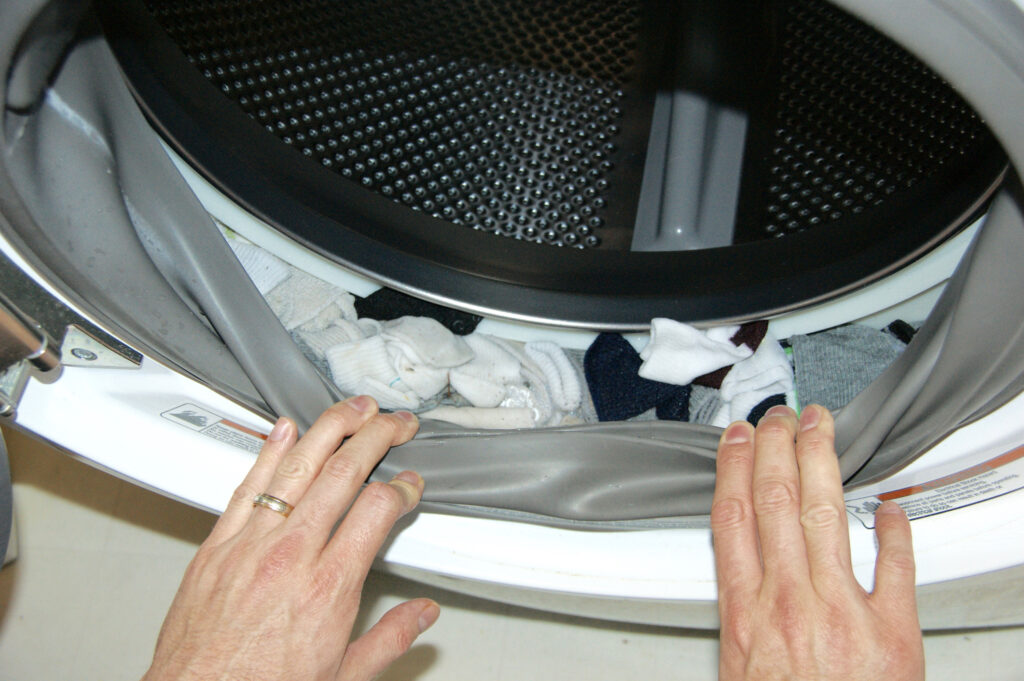
If you own a front-loading washing machine, your missing socks might be hiding in plain sight within the rubber door seal. These machines use a thick, flexible gasket to prevent water from leaking out during the wash cycle. Since the mid-2000s, front-loaders have become increasingly popular in American homes for their water efficiency, but their design features deep folds that are perfect for catching small items. During a heavy 40-minute wash cycle, the constant tumbling can easily shove a lightweight ankle sock deep into these crevices. It stays there, damp and forgotten, while the rest of the laundry moves on to the dryer.
Most people rarely think to peel back the rubber seal to check for debris, which is why these socks seem to vanish. Over time, a sock trapped in the gasket can even lead to mold or odors if left in the moisture for too long. Appliance technicians often suggest checking this area after every load to ensure nothing has been “eaten” by the machine. It is a simple habit that can save your favorite pairs from a watery grave. By taking just five seconds to run your hand along the seal, you can recover those lost items and keep your machine running fresh and clean.
Slipped Into Machine Gaps
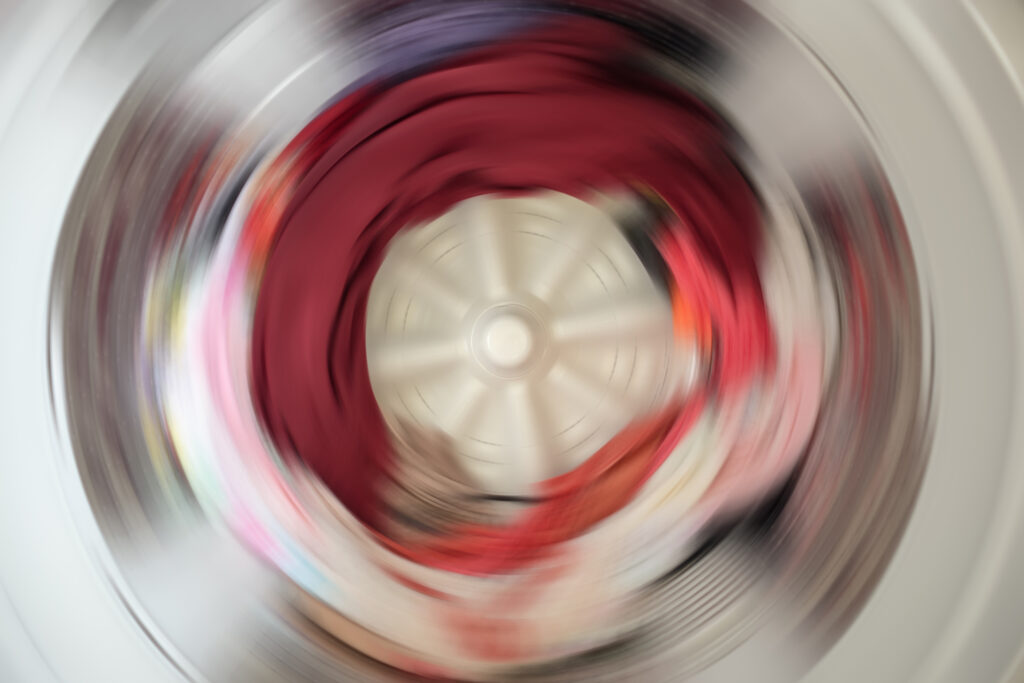
Modern washing machines are marvels of engineering, but they aren’t completely airtight when it comes to small pieces of clothing. During the high-speed spin cycle, which is essential for extracting water from your clothes, smaller items like thin socks can be pushed with incredible force against the drum. If there is even a tiny gap between the inner spinning drum and the outer stationary tub, a sock can get sucked through. Once it slips into that internal “no man’s land,” it is effectively gone from the physical world unless you are willing to hire a professional to take the entire appliance apart.
This mechanical quirk is one of the most common reasons socks truly disappear rather than just being misplaced. Since the drum spins so fast, often exceeding 60 miles per hour at the outer edge, the centrifugal force is more than enough to wedge a soft fabric into a narrow opening. This is why many experts recommend using small mesh laundry bags for delicate items and socks. By grouping them together in a zippered pouch, you prevent individual socks from getting isolated and forced into the machine’s internal gaps. It is a low-tech solution for a high-speed problem that keeps your wardrobe intact.
Hidden In Larger Items

Sometimes the simplest explanation is the right one: your sock isn’t gone; it’s just hitching a ride. On a typical laundry day, we often mix small items with bulky ones like fitted sheets, duvet covers, and heavy towels. During the drying cycle, static electricity becomes a major factor, especially in the dry winter months or when using high heat settings. This static charge acts like a temporary glue, causing lightweight socks to cling tightly to the inside of larger fabrics. A sock can easily get rolled up inside the corner of a bedsheet, staying hidden through the folding process and ending up in the linen closet.
Finding a “lost” sock weeks later inside a pillowcase is a common surprise for many families. To prevent this, it helps to give every large item a good shake before you move it from the washer to the dryer, and again when you are folding. Using dryer balls or fabric softener can also reduce the static cling that causes these items to stick together. By being a little more mindful during the transition between machines, you can catch these stowaways before they make it all the way to the dresser. It turns out that most missing socks are just shy, preferring to hide inside your favorite pair of jeans.
Lost In Dryer Seals
Dryers might seem like simple heated boxes, but they rely on internal seals to keep the hot air circulating correctly. These seals are often made of felt or specialized wool and are located at the front and back of the drum. Over years of use, especially in machines that handle multiple loads a week, these seals can wear down or shift slightly. When a gap opens up, it creates a small portal where a thin sock can slip out of the drum and fall into the dryer’s interior housing. Once a sock drops into the cabinet, it is essentially unreachable without a screwdriver.
While it is rare for a sock to cause a mechanical failure, having items trapped inside the dryer cabinet isn’t ideal for airflow. This is why regular maintenance is so important for the longevity of your appliances. If you notice your dryer is getting noisier or your socks are disappearing more frequently, it might be time to have those felt seals inspected. Keeping the seals in good shape ensures that your clothes stay where they belong, inside the drum. It is a small detail that makes a big difference in keeping your laundry routine running smoothly and your sock drawer full of matching pairs.
Dropped Along The Way

We often blame the machines for our missing laundry, but the truth is that the journey from the hamper to the closet is full of hazards. Socks are small, lightweight, and surprisingly slippery, making them easy to lose during transport. Whether you are carrying an overstuffed basket down a hallway or transferring wet clothes between machines, it is incredibly easy for a single sock to fall unnoticed. Because they don’t make a sound when they hit the floor, they can sit behind a door or under a piece of furniture for months before being discovered during a deep clean.
The space between the washer and dryer is a notorious “black hole” for fallen laundry. These narrow gaps are hard to reach and often dark, making it the perfect hiding spot for a stray sock. In many households, these items aren’t truly lost; they are just waiting for the next time the appliances are moved. To avoid this, try not to overload your laundry basket and keep the floor area around your machines clear. A little bit of organization goes a long way in ensuring that every sock that goes into the wash actually makes it back to your feet.
Tangled In Agitators
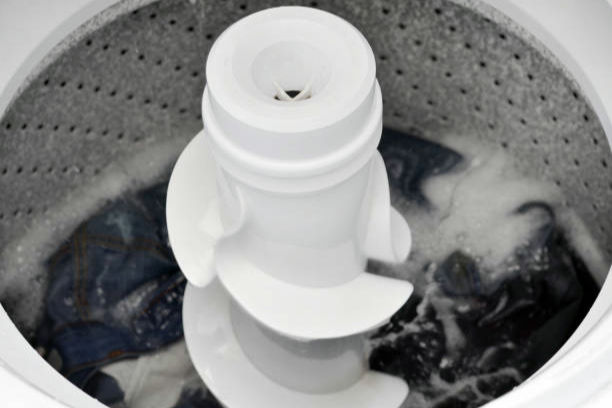
For those who use traditional top-loading washing machines, the central agitator, the tall spindle in the middle, can sometimes be the culprit. These machines have been a staple in American homes for decades, valued for their heavy-duty cleaning power. However, the moving parts of the agitator can occasionally catch on small, loose items. A thin dress sock or a tiny baby sock can get wrapped around the base of the spindle or even pulled underneath it during a vigorous cycle. Once caught, the sock remains hidden from view even after you have emptied the rest of the load.
If a sock gets lodged beneath the agitator, it might stay there for several washes, gradually wearing down or causing the machine to work a bit harder. Most modern agitators are designed to prevent this, but older models or those with worn components are more susceptible. If you suspect your machine is “eating” your socks, you can sometimes pop the cap off the agitator to see if anything is trapped inside. Being careful not to overload the machine also helps, as it gives the clothes more room to move freely without being forced into the mechanical parts of the washer.
Overloaded Wash Cycles

In our busy lives, it is tempting to cram as much laundry as possible into one load to save time. However, overloading your washing machine is one of the primary reasons socks go missing. When the drum is packed too tight, there is nowhere for the clothes to go as they tumble. This creates immense pressure that forces smaller items toward the edges of the machine. Under these conditions, a sock is much more likely to be squeezed into a gasket, pushed through a gap, or trapped against the door where it can’t be cleaned or dried properly.
A good rule of thumb is to leave at least six inches of space at the top of the drum so the clothes can move and circulate. This not only protects your socks from being pushed into hiding spots but also ensures that your detergent can reach every fiber for a better clean. Overloading can also lead to more static cling in the dryer, which, as we know, helps socks hide inside larger items. By taking the time to run two medium loads instead of one giant one, you are much more likely to end up with an equal number of left and right socks.
Lost In Lint Systems

Every dryer has a lint trap designed to catch the tiny fibers that break off your clothes, but these systems aren’t always perfect. The housing that holds the lint filter can sometimes have small gaps or become misaligned over time. While a thick wool sock isn’t going to pass through a lint screen, very thin “no-show” socks or nylon liners can occasionally slip past the edges of the filter. Once they enter the venting system, they can become stuck in the ductwork or the internal blower fan, making them nearly impossible to find.
This is another reason why cleaning your lint trap after every single load is a vital safety and maintenance habit. Not only does it prevent fires, but it also gives you a chance to see if any small items are trying to make a getaway. If you notice a lot of lint building up around the edges of the trap, it might mean the seal is loosening, providing a path for small socks to disappear. Keeping the vent system clear and the filter properly seated is a great way to ensure that the only thing your dryer “eats” is the moisture from your clothes.
Separated By Sorting

Sometimes the mystery of the missing sock isn’t mechanical at all, it’s statistical. When we sort our laundry into different piles, like whites, colors, and delicates, we often accidentally split up pairs of socks. One sock might end up in the “hot wash” while its partner waits in the hamper for a “cold wash” later in the week. This separation creates a window of time where one sock is clean and put away while the other is still dirty or lost in the shuffle. This delay can make it feel like the first sock has vanished forever.
This is what researchers call the “Sock Loss Index,” which suggests that the more complex your laundry routine is, the more likely you are to lose things. To combat this, many people have started using dedicated “sock clips” or safety pins to keep pairs together from the moment they hit the hamper. Others simply buy multiple pairs of the exact same style and color, so it doesn’t matter if one goes missing. By simplifying how you handle your footwear, you can reduce the mental stress of hunting for a match and keep your morning routine moving along smoothly.


