
1. The Pebble Smartwatch Revolution
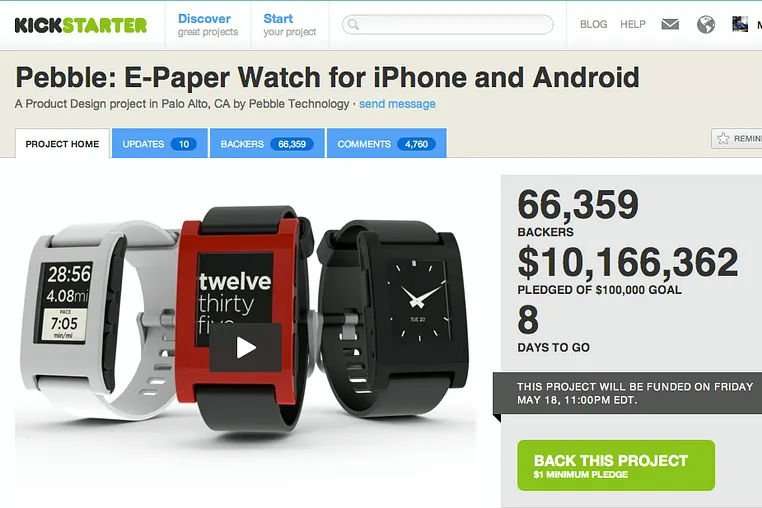
In April 2012, long before the Apple Watch was a household name, a small startup called Pebble Technology launched a Kickstarter campaign that would change the tech industry forever. Their goal was a modest $100,000 to produce a customizable, e-paper smartwatch that could sync with both iPhone and Android devices. To the Eric Migicovsky’s shock, they hit that target in just two hours. By the time the campaign closed in May 2012, they had raised over $10.2 million from 68,929 backers, making it the most successful Kickstarter project of its time.
The Pebble wasn’t just a gadget; it was the spark that ignited the modern wearable tech market. It proved to major electronics companies that consumers were hungry for wrist-worn notifications and apps. However, despite its early lead and a second record-breaking campaign in 2015 for the “Pebble Time,” the company struggled to compete with tech giants like Samsung and Apple. By December 2016, Pebble announced it would shut down and sell its intellectual property to Fitbit. While the hardware is no longer produced, the Pebble remains a legend in the crowdfunding world for proving that a small team with a great idea could out-innovate the world’s biggest corporations.
2. The Oculus Rift VR Dream
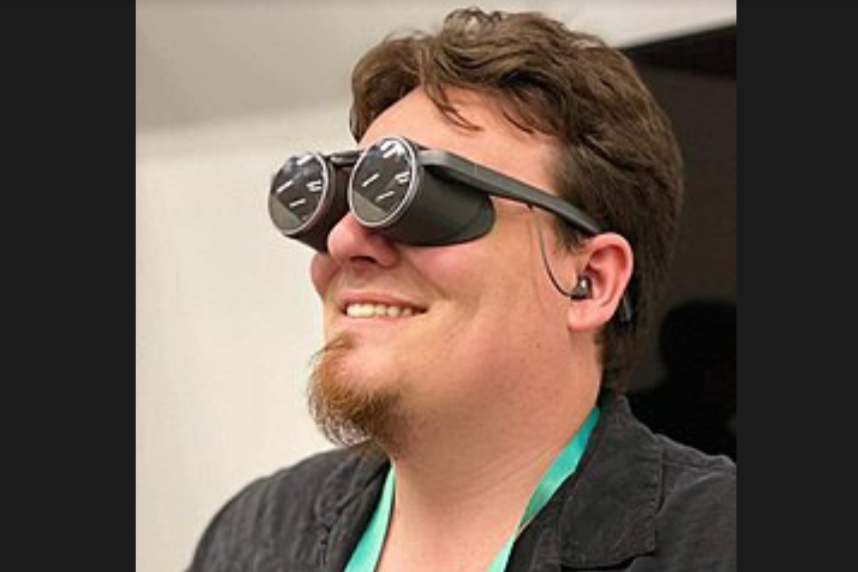
In August 2012, a young inventor named Palmer Luckey launched a Kickstarter for the Oculus Rift, a virtual reality headset that promised to finally deliver the immersive experience gamers had dreamed of for decades. Seeking $250,000 to build development kits, the project tapped into a massive well of nostalgia and futurism. The campaign was an instant sensation, endorsed by industry legends like John Carmack. By September 2012, it had secured $2.4 million in funding, proving that virtual reality was no longer a failed experiment of the 1990s but a viable future for digital entertainment.
The story took a dramatic turn in March 2014 when Facebook (now Meta) acquired Oculus for a staggering $2 billion. This move sent shockwaves through the crowdfunding community; while some early backers felt “sold out,” the acquisition provided the massive resources needed to refine the technology into a consumer product. The original Kickstarter Rift led directly to the release of the Oculus Rift CV1 in 2016 and eventually the popular Quest series. Today, the 2012 campaign is viewed as the official starting gun for the modern VR industry, showing how a community-funded prototype could grow into a multi-billion dollar cornerstone of the “metaverse.”
3. The Coolest Cooler Disaster
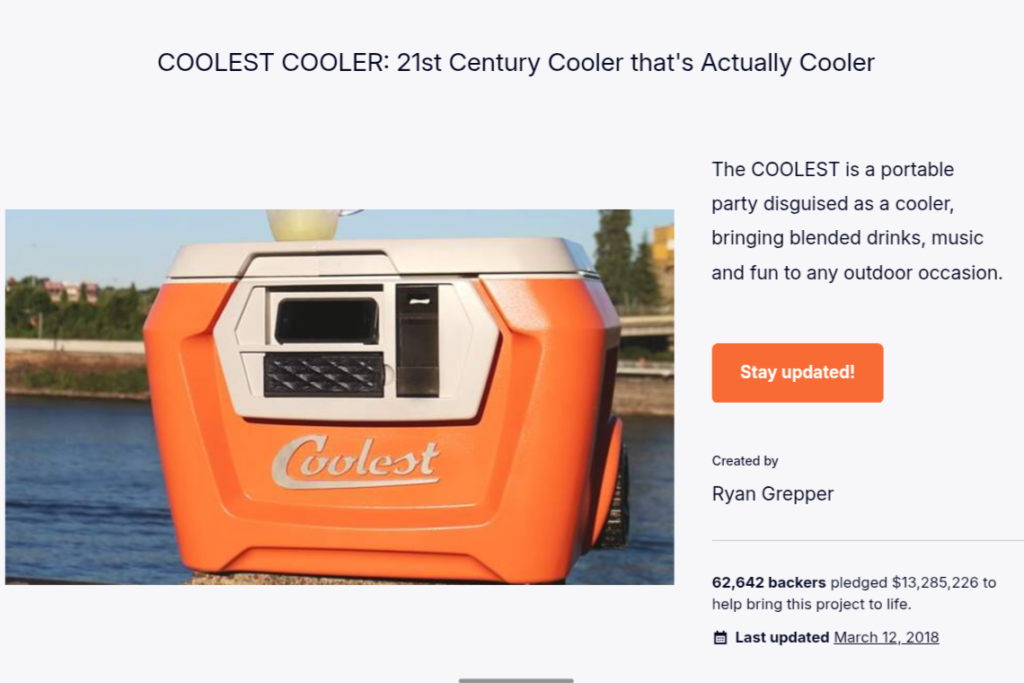
The “Coolest Cooler” is often cited as the ultimate cautionary tale of crowdfunding. Launched in July 2014 by Ryan Grepper, the campaign promised a high-tech cooler equipped with a built-in blender, waterproof Bluetooth speakers, and a USB charger. It was an irresistible pitch for summer parties, and it quickly became the most-funded Kickstarter project ever at the time, raising over $13.2 million from more than 62,000 backers. The original delivery date was set for February 2015, but as the scale of production became clear, the dream quickly turned into a logistical and financial nightmare.
By late 2015, thousands of backers had still not received their coolers. The company faced rising manufacturing costs and shipping delays, leading to a public relations disaster when they asked backers to pay an additional $97 to “expedite” their rewards. The situation grew so dire that the Oregon Department of Justice had to intervene. In December 2019, the company officially shut down, leaving roughly 20,000 backers without the product they had paid for years prior. The Coolest Cooler remains a stark reminder that raising millions of dollars is only the first step; the real challenge lies in the complex reality of global manufacturing and shipping.
4. Star Citizen: The Infinite Fundraiser

In October 2012, legendary game designer Chris Roberts launched a campaign for “Star Citizen,” a massive, multiplayer space simulation game. Unlike other projects that end their fundraising after 30 days, Star Citizen never stopped. After raising $2.1 million on Kickstarter, Roberts moved the funding to the game’s own website, where it has continued for over a decade. By early 2026, the project has raised nearly $1 billion from millions of “citizens,” making it the most successful crowdfunded project in human history. The game’s scope is unprecedented, promising entire star systems, realistic ship physics, and a deep economy.
However, the project is as controversial as it is successful. Despite the massive funding, the game remains in an “Alpha” state as of 2026, with no official release date for the full version or its single-player companion, “Squadron 42.” Supporters argue that the developers are building a revolutionary technology that no traditional publisher would ever fund. Critics, meanwhile, point to the “feature creep” and the high price of virtual ships, some costing thousands of dollars, as a sign of mismanagement. Whether it eventually becomes the greatest game ever made or a permanent work-in-progress, Star Citizen has completely redefined what it means to fund a project through a dedicated community.
5. The Exploding Kittens Record

In January 2015, a simple card game about “kittens, explosions, and laser beams” broke the internet. Created by Elan Lee, Shane Small, and The Oatmeal creator Matthew Inman, “Exploding Kittens” sought a modest $10,000 to print a fun, strategic card game. Within 20 minutes, they reached their goal. Within an hour, they were at 1,000% funding. By the time the campaign ended in February 2015, it had raised $8.7 million. More impressively, it broke the record for the most individual backers in Kickstarter history, with 219,382 people signing up to get a copy of the game.
The success of Exploding Kittens showed that crowdfunding wasn’t just for high-tech gadgets or expensive movies; there was a massive market for shared, physical experiences. The creators used the surplus funds to add more cards, hire better artists, and even include a “meow” sound effect in the shipping box. Unlike many over-ambitious tech projects, the team delivered the game on time in July 2015. The campaign’s legacy is the “Exploding Kittens” brand, which has since grown into a massive tabletop gaming empire with dozens of expansions and even a Netflix series, proving that a strong community and a bit of humor can go a very long way.
6. The Reading Rainbow Reboot
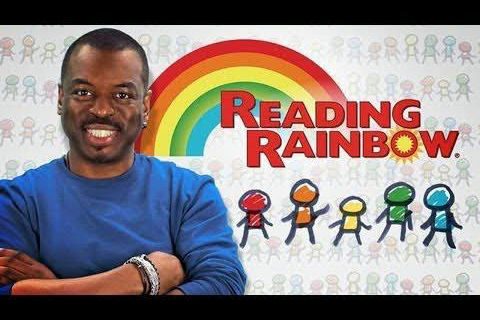
In May 2014, beloved host LeVar Burton launched a Kickstarter campaign to bring the iconic educational series “Reading Rainbow” back for a new generation. The show had been off the air for years, and Burton wanted to create a digital version that would be accessible to every child, specifically targeting low-income classrooms. The goal was $1 million, a target that was smashed in less than 12 hours. By July 2014, the campaign had raised over $5.4 million from 105,857 backers. Even celebrities like Seth MacFarlane joined in, promising to match donations up to $1 million to ensure the project’s success.
The campaign was a massive win for educational technology. The funds were used to build a web-based version of the Reading Rainbow app and provide free access to over 10,000 classrooms in need. While the project later faced a legal dispute over the “Reading Rainbow” brand name with the broadcaster WNET, the core mission remained intact. Burton eventually transitioned the project into “Skybrary,” a massive digital library for children. This campaign remains one of the most heartwarming examples of crowdfunding, demonstrating how collective nostalgia can be harnessed to solve modern educational gaps and promote literacy for millions of kids across the country.
7. The Flow Hive Beekeeping Revolution
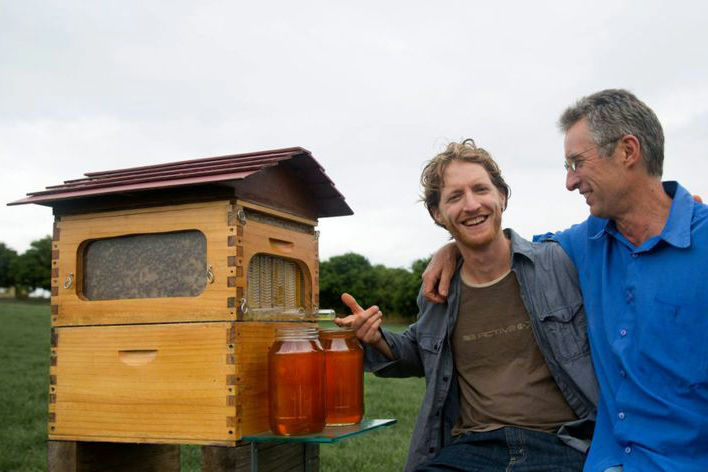
In February 2015, an Australian father-and-son duo, Stuart and Cedar Anderson, introduced a project that promised to “revolutionize” beekeeping. The “Flow Hive” featured a unique “honey on tap” system that allowed beekeepers to harvest honey without opening the hive or disturbing the bees. Seeking $70,000 on Indiegogo, they were stunned when they raised $2 million in the first day alone. By the end of the campaign in April 2015, they had secured over $12.2 million from 38,000 backers, setting a record for the most successful international crowdfunding campaign on the platform at the time. The Flow Hive sparked a massive debate within the beekeeping community.
While many amateur enthusiasts praised the invention for making beekeeping more accessible, traditionalists worried it would lead to “lazy beekeeping” where owners neglect the health of the hive. Despite the controversy, the Andersons successfully fulfilled their orders, shipping hives to over 130 countries. The success of the Flow Hive didn’t just fund a product; it created a global movement of urban and backyard beekeepers. To this day, the company continues to innovate in sustainable agriculture, proving that a decades-old family invention could find a worldwide audience through the power of a compelling video and a supportive crowd.
8. The Zano Drone Collapse
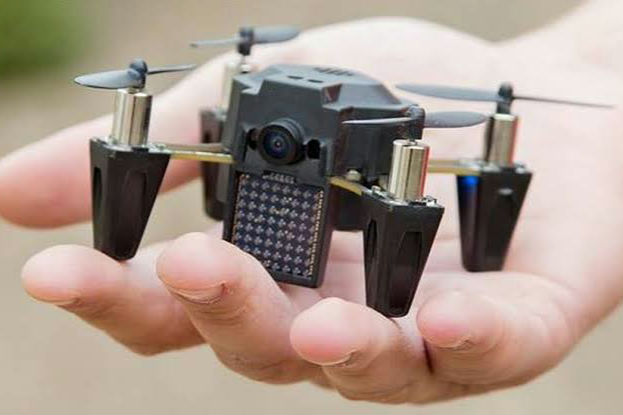
The “Zano” was supposed to be the ultimate palm-sized drone: a smart, autonomous quadcopter that could follow you and take high-definition selfies. Launched in November 2014 by the UK-based Torquing Group, it became Europe’s most successful Kickstarter project, raising over £2.3 million (about $3.4 million) by January 2015. The drone was praised by tech journalists and was even a “staff pick” on Kickstarter. However, the company had promised advanced features, like obstacle avoidance and swarm technology, that were far beyond the capabilities of the hardware they were actually building.
The project collapsed in spectacular fashion in November 2015. The CEO resigned citing “irreconcilable differences,” and the company went into liquidation shortly after. Of the 15,000 drones ordered, only a few hundred were ever shipped, and those that did arrive were barely functional, often crashing or failing to connect to Wi-Fi. The fallout was so significant that Kickstarter hired an investigative journalist to write a 13,000-word report on what went wrong. The Zano failure became a defining moment for the platform, leading to stricter rules about “working prototypes” and more transparency from creators, serving as a warning that a flashy video doesn’t always equal a finished product.
9. The BauBax Travel Jacket
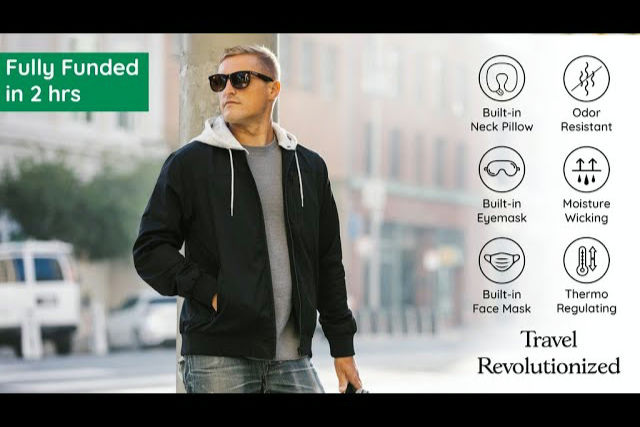
In July 2015, BauBax launched a campaign for “The World’s Best Travel Jacket,” a piece of apparel packed with 15 features, including a built-in neck pillow, eye mask, gloves, and a dedicated pocket for a tablet. The creators, Hiral Sanghavi and Yoganshi Shah, set a goal of $20,000. By the time the campaign ended in September 2015, they had raised over $9 million on Kickstarter and another $11.5 million on Indiegogo, making it the most-funded clothing project in history. The sheer volume of orders, over 70,000 jackets, was both a dream and a massive manufacturing challenge.
Managing such a massive order for a first-time company led to inevitable delays. While the original shipping date was November 2015, many backers didn’t receive their jackets until well into 2016. Despite the logistical hurdles and some complaints about the quality of the built-in pillow, BauBax succeeded where many other viral projects failed: they actually delivered. The company used the momentum to launch a full line of travel gear and remains a successful brand today. Their story is a rare example of a “viral hit” that managed to survive the transition from a crowdfunding sensation to a legitimate, long-term retail business in the competitive fashion world.
10. The Fidget Cube Phenomenon
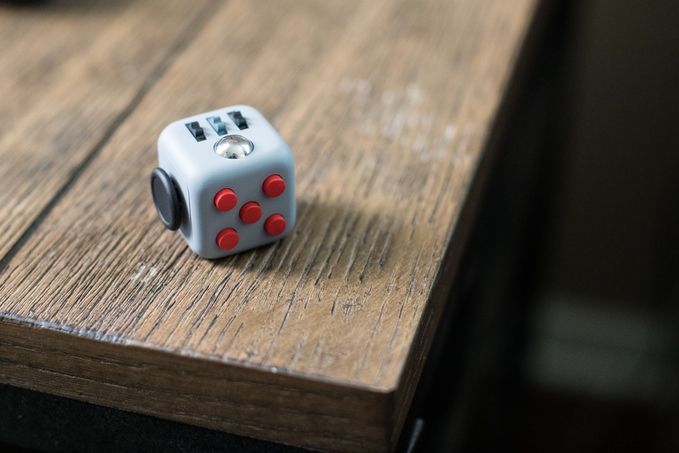
In August 2016, two brothers, Matthew and Mark McLachlan of Antsy Labs, introduced a small, six-sided desk toy called the “Fidget Cube.” The goal was to provide a professional-looking tool for people who needed to “fidget” to stay focused. They asked for $15,000. Within 30 days, they had raised a staggering $6.4 million from 154,926 backers. It was a cultural lightning bolt that officially kickstarted the “fidget toy” craze of 2017. The simple design, featuring buttons, dials, and a joystick, resonated with everyone from office workers to students looking for a way to relieve stress.
The massive success of the campaign created a unique problem: the Fidget Cube was so simple that “knockoff” versions began appearing on Amazon and in retail stores before the original creators could even finish their first production run. This led to a difficult period for Antsy Labs as they fought to protect their intellectual property while dealing with shipping delays for their thousands of backers. Despite the flood of imitations, the official Fidget Cube was eventually delivered and remains the “gold standard” of the genre. The campaign proved that sometimes the most successful products aren’t high-tech computers, but simple, well-designed objects that solve a universal human habit.
11. The Veronica Mars Movie Miracle
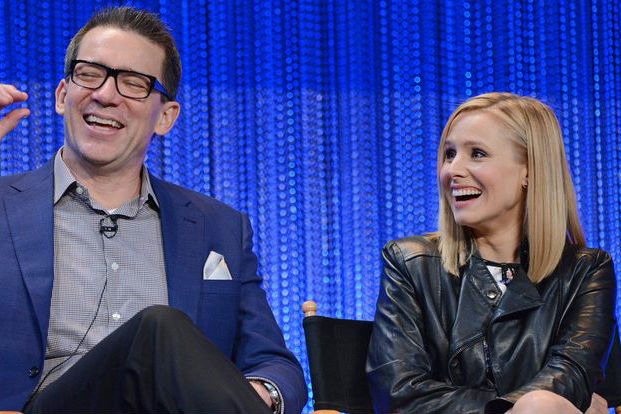
In March 2013, actress Kristen Bell and creator Rob Thomas did something that was considered impossible in Hollywood: they bypassed the big studios to bring back a cancelled TV show. “Veronica Mars” had a cult following but had been off the air since 2007. The pair launched a Kickstarter campaign to fund a feature film, asking for $2 million to prove to Warner Bros. that an audience still existed. The response was historic. The project reached its goal in just 11 hours, breaking the record for the fastest campaign to hit $1 million. By the time it closed in April 2013, it had raised over $5.7 million.
This campaign changed the relationship between creators and fans forever. It was the first time a major entertainment property used crowdfunding to resurrect a “dead” franchise. While some critics argued that big studios shouldn’t use fan money to fund their projects, the backers were thrilled to finally get closure for their favorite characters. The movie was filmed quickly and released in March 2014, making it one of the most successful “fan-funded” projects in history. It paved the way for other shows, like Mystery Science Theater 3000, to use similar models to bypass traditional television networks and go directly to their most loyal supporters.
12. The Dash: Wireless Smart Earphones
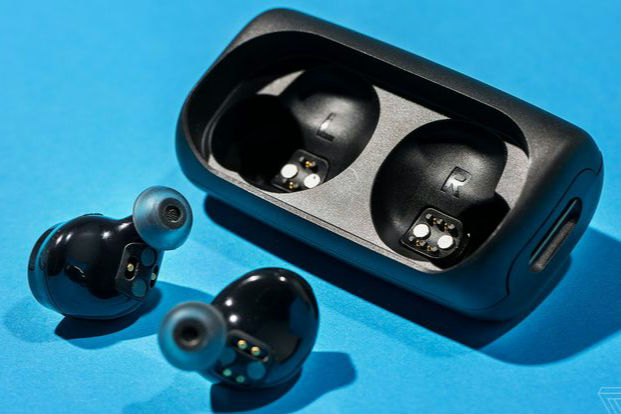
In early 2014, a German startup called Bragi launched a campaign for “The Dash,” which they claimed were the world’s first truly wireless smart earphones. Long before Apple released AirPods, Bragi promised a device that could play music, track fitness metrics, and even act as a waterproof earphone for swimmers. The pitch was incredibly futuristic for the time, and the Kickstarter community responded by pledging $3.3 million by March 2014. It was a massive win for European tech, showing that Silicon Valley didn’t have a monopoly on the next generation of personal audio.
However, the reality of cramming a computer, a battery, and a Bluetooth radio into a tiny earbud proved to be an engineering nightmare. The project faced significant delays as the team struggled with connectivity issues and battery life. While they did eventually ship the product to backers in 2016, the experience was a reminder of how difficult it is to build “first-of-its-kind” hardware. Despite the struggles, Bragi is credited with inventing the “Hearables” category. Although the company eventually pivoted away from consumer hardware to focus on software, the 2014 campaign remains a landmark moment that forced the entire audio industry to ditch the wires and embrace the smart earbud future.
13. The PonoPlayer High-Fidelity Dream
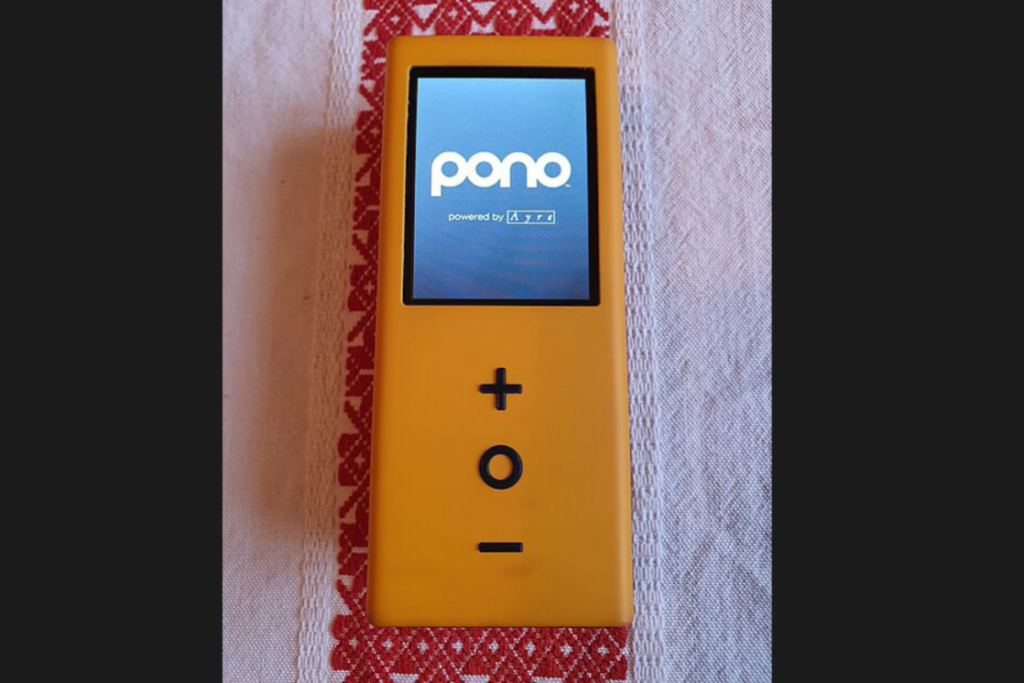
In March 2014, legendary rock musician Neil Young took to Kickstarter to “save the sound of music.” He believed that MP3s and streaming services were stripping the soul out of music by compressing audio files into low-quality formats. His solution was the PonoPlayer, a prism-shaped portable device designed to play high-resolution studio-quality audio. Young’s star power and his passion for sound quality resonated with audiophiles and fans alike. The campaign was a massive hit, raising $6.2 million from over 18,000 backers by April 2014, becoming one of the most-funded music projects in the history of the platform.
The PonoPlayer was successfully manufactured and shipped to backers in early 2015. However, it faced an uphill battle in a market dominated by the convenience of smartphones. Critics argued that most people couldn’t tell the difference between Pono’s high-res files and standard high-quality streams, especially when using average headphones. The PonoMusic store eventually shut down in 2017 after its platform partner was acquired by another company. While the device itself is now a collector’s item, the campaign was a significant cultural moment. It forced a conversation about audio quality that eventually led to the “lossless” audio tiers we see today on major platforms like Apple Music and Tidal.
14. Double Fine Adventure: The Indie Spark
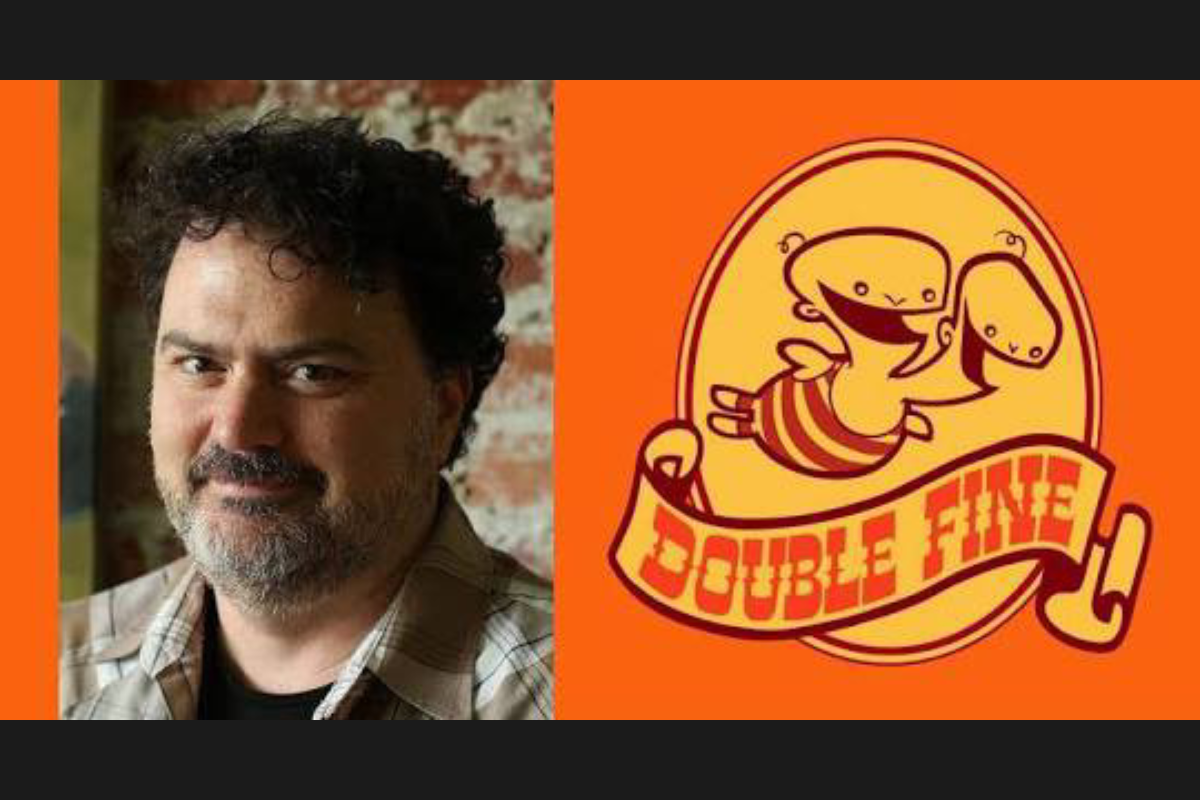
In February 2012, game developer Tim Schafer and his studio, Double Fine, launched a campaign that many experts believe “saved” the adventure game genre. Schafer, the mind behind classics like Grim Fandango, wanted to make a traditional point-and-click adventure game, a style that big publishers claimed was “dead” and unprofitable. He asked for $400,000 to fund the game and a documentary about its creation. Instead, the project raised $3.3 million in just over a month. It was the first time a video game had ever crossed the million-dollar mark on Kickstarter, proving that niche audiences were willing to pay upfront for the games they loved.
The project, which was eventually titled Broken Age, faced several hurdles. The massive influx of cash actually made the project more complicated, leading to “scope creep” and a delay that required the game to be split into two parts to manage costs. The first half was released in 2014, followed by the second in 2015. Despite the delays, the game was a critical success and proved that independent developers could thrive without corporate gatekeepers. The “Double Fine Adventure” remains a foundational story in crowdfunding history, as it inspired thousands of other indie developers to take their ideas directly to the public rather than waiting for a publisher’s permission.
15. The OUYA Video Game Console
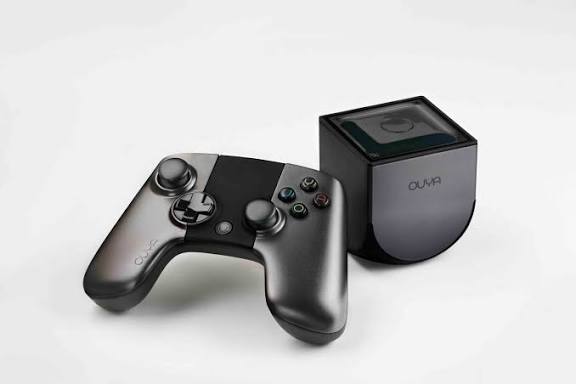
The OUYA was one of the most ambitious hardware projects in crowdfunding history. Launched in July 2012, it was a $99 Android-based game console designed to be “open” and hackable, allowing anyone to develop games for the big screen without expensive dev kits. The pitch for a cheap, indie-friendly alternative to PlayStation and Xbox captured the imagination of the gaming world. The campaign raised a staggering $8.5 million in just 30 days. It was a golden example of how much people wanted to disrupt the “closed” systems of the major gaming corporations and give more power to small creators.
However, once the console launched in June 2013, it struggled to find its footing. The controller was criticized for its build quality, and the library lacked the “killer app” needed to keep players engaged. While it had a dedicated community, the rapid evolution of mobile gaming and the launch of the PlayStation 4 and Xbox One made the OUYA feel outdated quickly. By 2015, the company’s assets were sold to Razer, and the service was eventually discontinued. The OUYA serves as a vital lesson in the tech world: while crowdfunding can launch a platform, long-term success requires a sustainable ecosystem of content and constant hardware refinement to survive against established giants.
16. The Micro Phone Lens
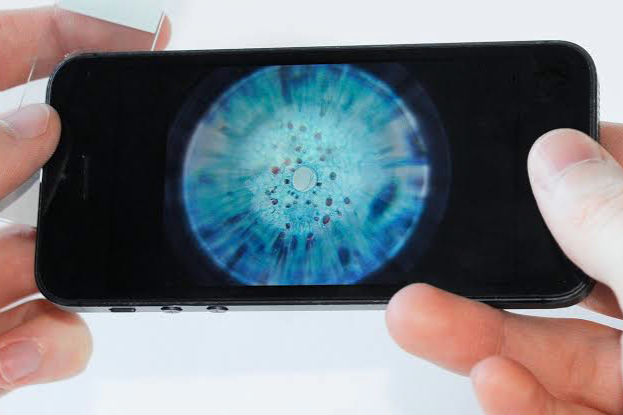
In 2013, a graduate student named Thomas Larson launched a simple but brilliant Kickstarter campaign for the “Micro Phone Lens.” It was a tiny, soft plastic lens that could be stuck onto the camera of any smartphone, instantly turning it into a 15x microscope. Larson only asked for $5,000 to get the manufacturing started. The project’s simplicity and the incredible photos it produced caused it to go viral among science teachers, hobbyists, and curious kids. By the end of the campaign, he had raised over $92,000, nearly 2,000% of his original goal.
Unlike many of the multimillion-dollar disasters of the era, the Micro Phone Lens was a success story of responsible scaling. Larson used the funds to move production into a professional facility and began developing more powerful versions, including a 150x lens. The product was delivered to backers on time and received high praise for its ease of use and affordability. This campaign is a perfect example of what crowdfunding was originally intended for: helping an individual inventor turn a clever idea into a small, sustainable business without needing venture capital. Today, the lenses are used in classrooms all over the world to inspire a love of science and microscopic exploration.
17. The Kingdom Come: Deliverance Realism
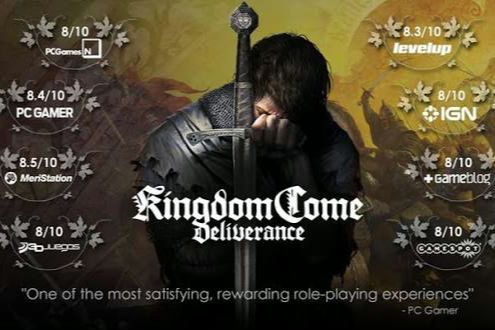
In January 2014, a Czech studio called Warhorse Studios turned to Kickstarter to fund a project that major publishers had rejected for being “too boring.” The game, Kingdom Come: Deliverance, was an open-world RPG set in the medieval Kingdom of Bohemia. The catch? It had absolutely no magic, dragons, or fantasy elements. It was a strictly historical simulation focused on realism, from the way armor functioned to the way food spoiled. The developers asked for £300,000 to prove to a private investor that there was an audience for a “hardcore” historical game. They ended up raising over £1.1 million ($1.8 million) by February 2014.
The game’s development was long and difficult because of the high level of detail the team promised. When it finally released in February 2018, it was a massive hit, selling millions of copies and proving that there was a huge market for mature, realistic historical fiction in gaming. The success of Kingdom Come showed that crowdfunding wasn’t just for small “indie” projects, but could also be used to validate big, risky ideas that the traditional industry was too afraid to touch. It remains a testament to the power of a dedicated audience that knows exactly what it wants, even when the “experts” disagree.
18. The Smithsonian’s “Reboot the Suit”
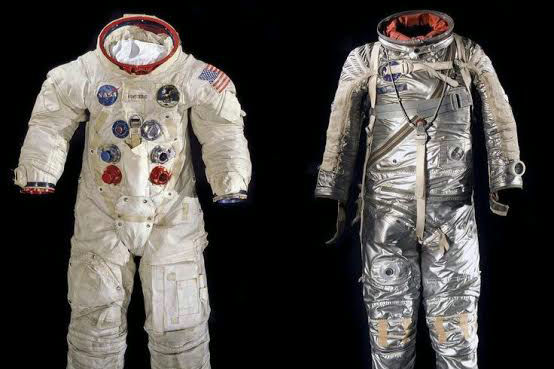
In July 2015, the Smithsonian Institution did something unexpected: it launched a Kickstarter campaign. The goal was to raise $500,000 to conserve and digitize Neil Armstrong’s Apollo 11 spacesuit. While the Smithsonian receives federal funding for its basic operations, it often relies on private donations for major conservation projects. The “Reboot the Suit” campaign was a masterclass in public engagement, allowing everyday citizens to feel a sense of ownership over a piece of American history. Within days, the goal was surpassed, and the campaign eventually raised over $719,000 from 9,480 backers by August 2015.
The project was a resounding success. The funds allowed experts to use advanced 3D scanning and specialized climate-controlled displays to preserve the fragile suit for future generations. Because they exceeded their goal, the Smithsonian was also able to fund the conservation of Alan Shepard’s Mercury spacesuit. Neil Armstrong’s suit was returned to public display at the National Air and Space Museum in 2019, exactly 50 years after the moon landing. This campaign demonstrated that crowdfunding could be a powerful tool for non-profit institutions and museums, bridging the gap between national treasures and the digital community that values them.


