
The Clock Scene That Made Audiences Hold Their Breath
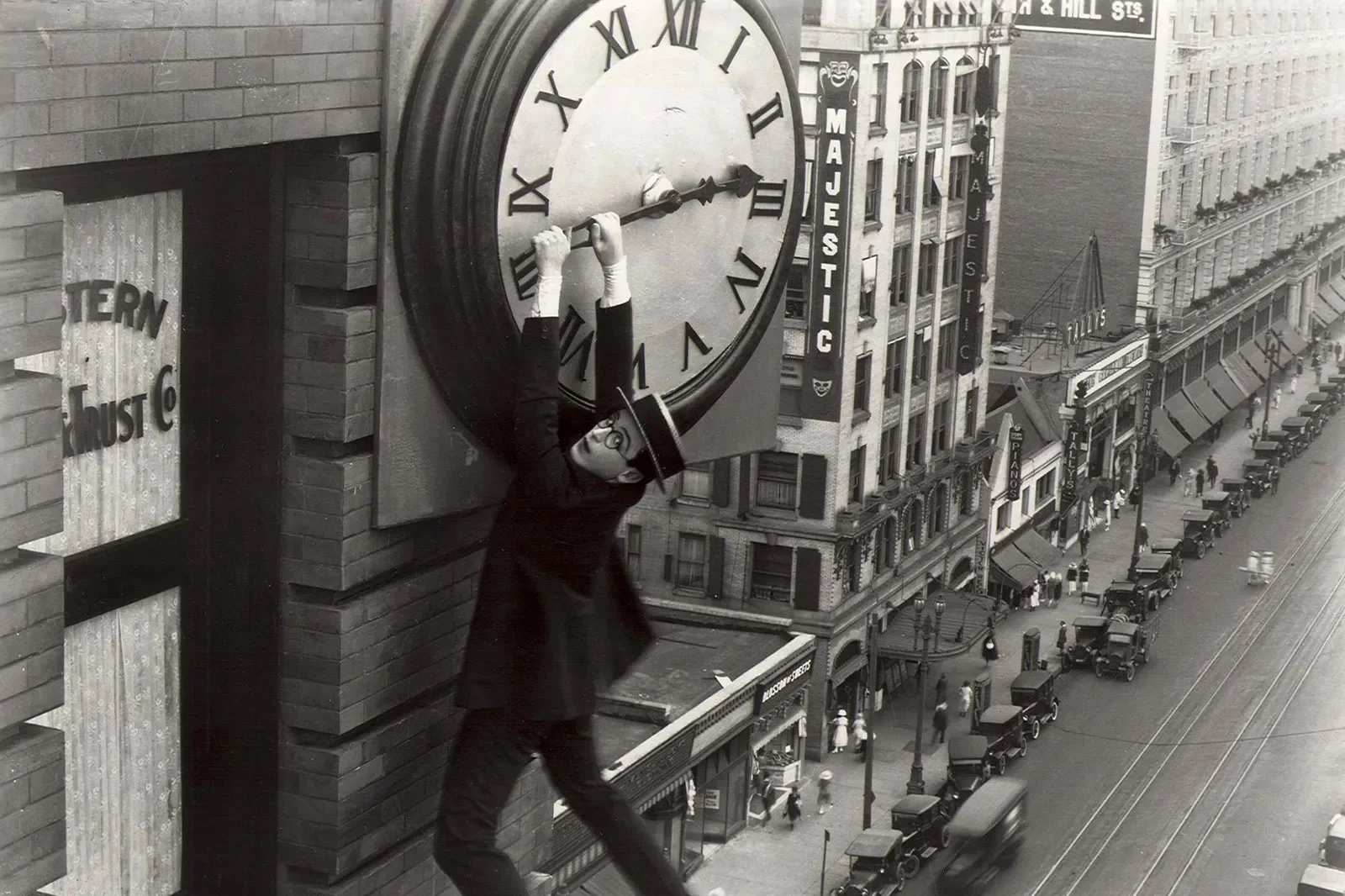
If old Hollywood had a way of pulling audiences right into the story, it often started with a moment that felt almost too real to be safe. One of the clearest examples is Harold Lloyd climbing the side of a busy city building in Safety Last and ending up dangling from a giant clock high above the street while tiny figures move far below. The power of the scene comes from how ordinary he feels in that situation. He is not acting like a fearless hero. He looks like a regular man who suddenly realizes he may have climbed much higher than he planned and now has to figure out how to survive it.
The crew placed hidden platforms well below him, but Lloyd still had to climb, grip, swing, and hold his body weight while performing the nervous comedy that made the scene unforgettable. His feet scramble, his coat pulls, and his face shows that mix of panic and determination that feels completely human. Even viewers today who understand movie tricks often feel their hands tense while watching. That reaction proves something simple about early filmmaking. When real effort shows on screen, the audience does not just watch the danger. They feel it with him.
Falling House Facade In Steamboat Bill Jr
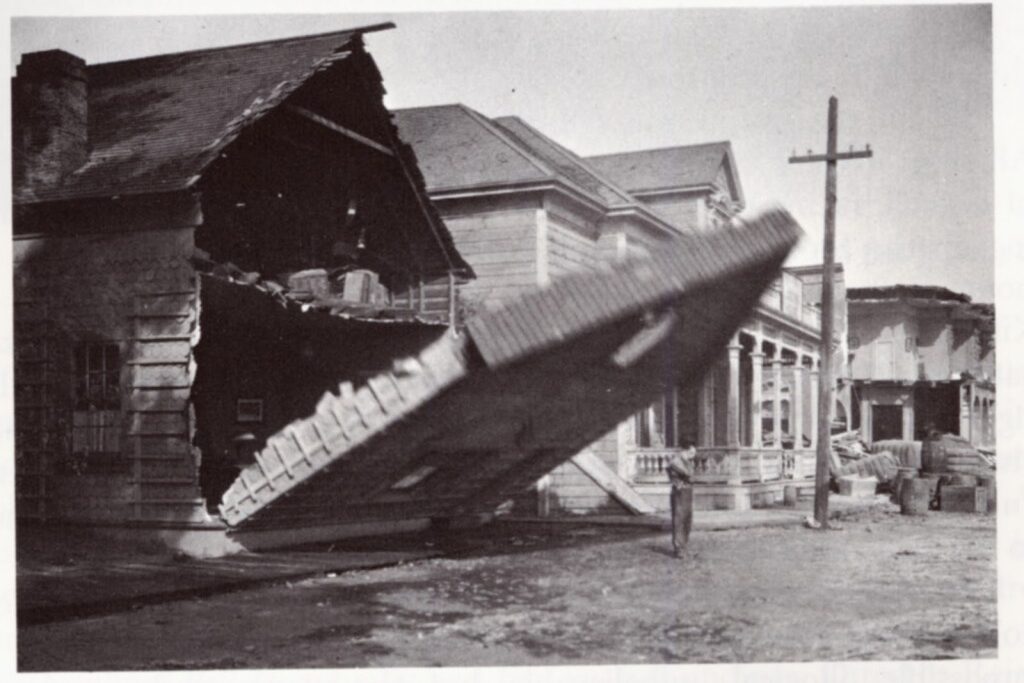
Some performers created excitement with big reactions, but Buster Keaton built suspense by doing almost nothing at all. In Steamboat Bill Jr, he stands calmly while the entire front wall of a house collapses forward toward him. The only thing that saves him is a single open attic window that drops perfectly around his body. The structure was real, heavy, and measured carefully, yet everyone on set understood that if he stood even slightly off the marked position, the impact could be fatal. What makes the scene feel even more unreal is the way Keaton barely flinches while waiting.
That stillness is exactly why the moment works. When the wall crashes down and dust bursts outward, the audience feels the shock first and relief a second later. Keaton trusted his preparation and his sense of timing, skills he learned from years of physical stage performance. Watching the scene now, it still feels strangely tense because nothing about it looks softened or staged. It feels like a man calmly letting physics test him, and somehow walking away from the test without a scratch.
Horse Drag Stunt In Stagecoach
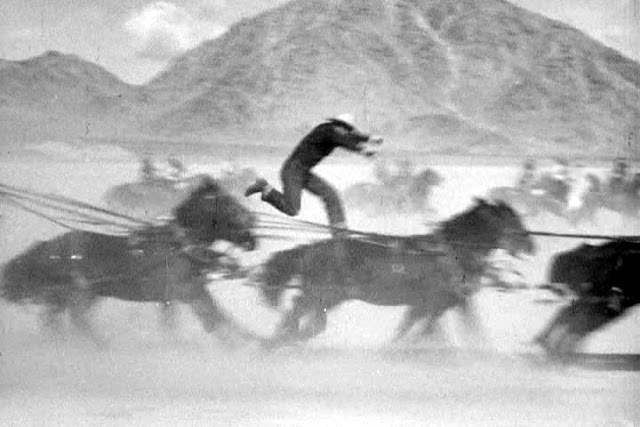
Western films promised rough action, but Yakima Canutt delivered something audiences had never quite seen before when he designed the famous Stagecoach stunt that required him to leap from a galloping horse, fall under the running team, get dragged along the dirt, and then pull himself back onto the speeding coach while everything kept moving. The ground was hard, the horses were fully trained but still powerful, and the speed meant there was no safe pause once the movement began. Every second depended on muscle control and precise timing.
What makes this stunt still impressive today is how raw it looks on screen. The dust kicks up unevenly, the wheels bounce violently, and his body moves with the quick survival instincts of someone reacting in real time rather than following a perfect rehearsal. Canutt approached stunt work like engineering, studying angles and body motion so the risk stayed calculated rather than reckless. Even now, the scene feels less like a performance and more like watching someone pass through a dangerous moment using skill, strength, and a deep understanding of how fast things can go wrong.
Roller Skating Near The Ledge In Modern Times
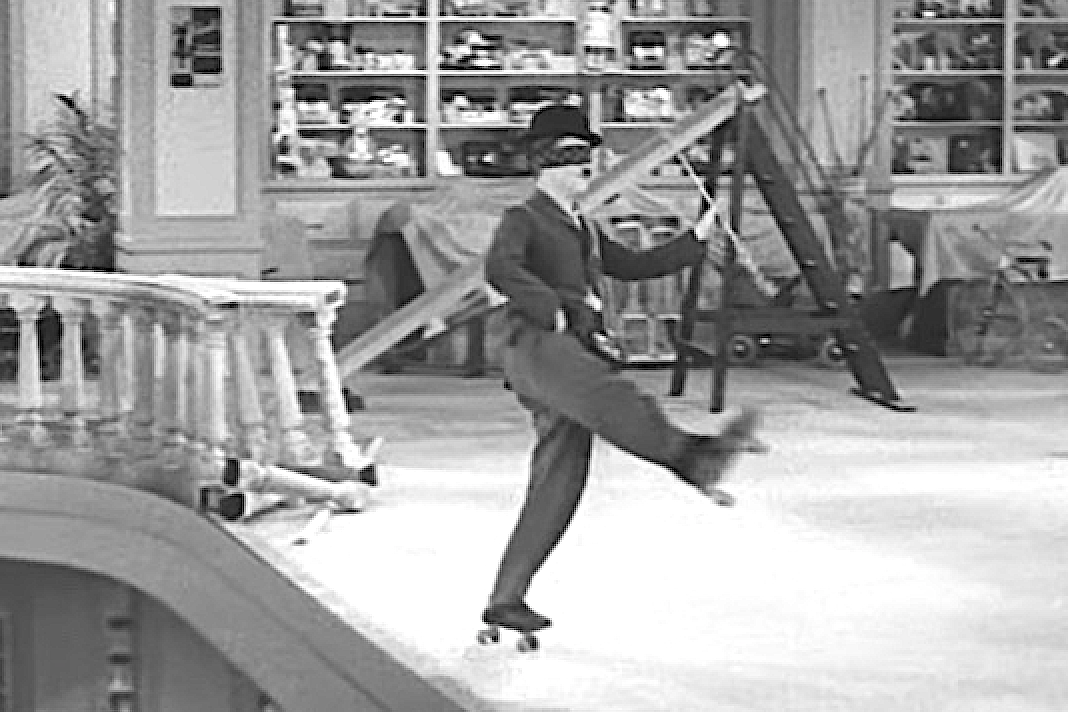
Charlie Chaplin always understood that the funniest situations often sit right beside the possibility of something going terribly wrong. In Modern Times, he performs a roller skating sequence inside a department store while blindfolded, gliding freely across the polished floor and drifting dangerously close to an upper level drop that appears completely open. The set was built to create that convincing height so the danger would register naturally on camera. As he spins and rolls forward, the audience laughs, yet at the same time quietly hopes he does not glide one step too far.
Chaplin handled the skating himself and relied on practiced choreography along with careful camera framing to maintain the illusion while still moving naturally enough for the comedy to feel relaxed. What makes the moment last in people’s memories is the gentle pace of the tension. Nothing explodes and nobody shouts. Instead, viewers slowly notice how close he is getting to the edge. That soft realization builds a surprisingly strong nervous energy, showing how Chaplin could mix humor and risk so smoothly that the audience barely noticed when their laughter turned into concern.
Chariot Race In Ben Hur
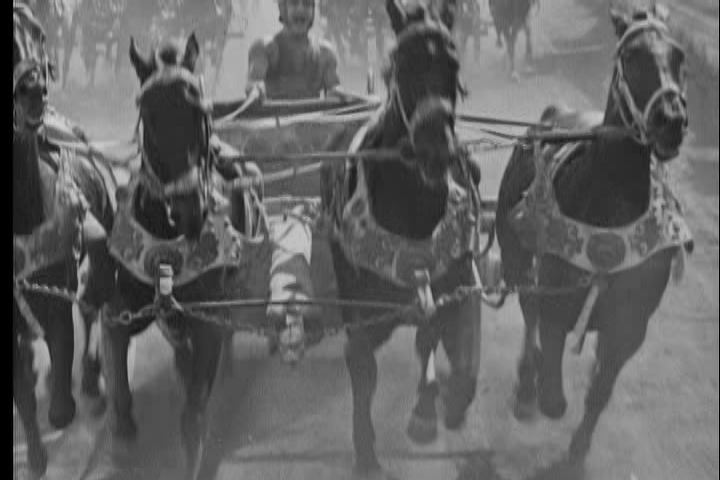
Epic films often promise huge spectacle, but the 1925 Ben Hur created its famous chariot race by building a massive arena and sending real horses charging at full speed while stunt drivers fought to control wooden chariots across packed earth that could easily throw a wheel loose or tip the entire vehicle. The scale required dozens of racers moving together while cameras tried to follow the chaos without interfering. Instead of relying on miniature models, the production chose to let the real motion unfold in front of the lens.
That decision gave the finished sequence a weight that still surprises modern viewers. Horses surge unevenly, wheels slam into ruts, and thick clouds of dust swallow parts of the frame as if the camera itself is struggling to keep up. Nothing moves with artificial smoothness. Every turn feels like it requires strength and quick judgment from the drivers. The result is not just a race but a physical struggle between speed, balance, and endurance. Even today, the scene carries a sense of uncontrolled energy that makes it feel far larger than many later historical spectacles.
Gene Kelly Dancing Through Rain On A Slippery Street Set
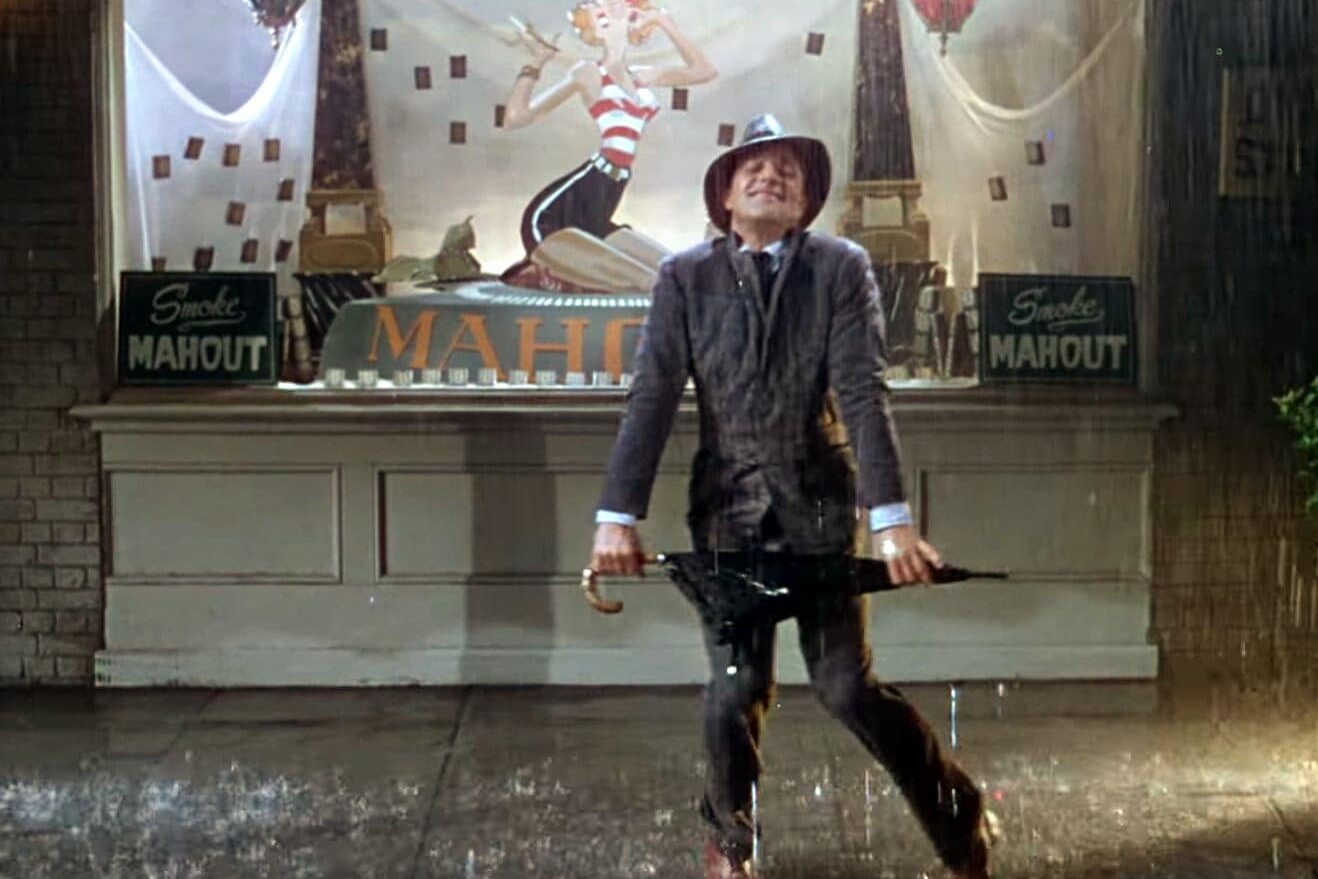
Musical performances rarely get discussed as stunt work, yet Gene Kelly’s famous dance in Singin In The Rain demanded enormous physical control because the rain system poured continuously onto the set, soaking the pavement and turning the surface dangerously slick under his shoes. Kelly performed the demanding choreography himself, splashing, spinning, and jumping through repeated takes while dealing with illness and heavy studio lighting. On screen the number looks joyful and effortless, yet behind that ease was constant attention to balance and timing.
What makes the sequence stay fresh decades later is how real the environment feels in every movement. Water splashes unpredictably, his steps adjust slightly to maintain grip, and every landing shows the instinctive correction of someone dancing on a surface that refuses to stay stable. That authenticity turns the cheerful moment into something quietly impressive once viewers understand the physical challenge involved. Instead of feeling like a staged studio trick, the dance feels like a performer pushing through real conditions just to keep the rhythm alive.
The Cliff Jump In Butch Cassidy And The Sundance Kid
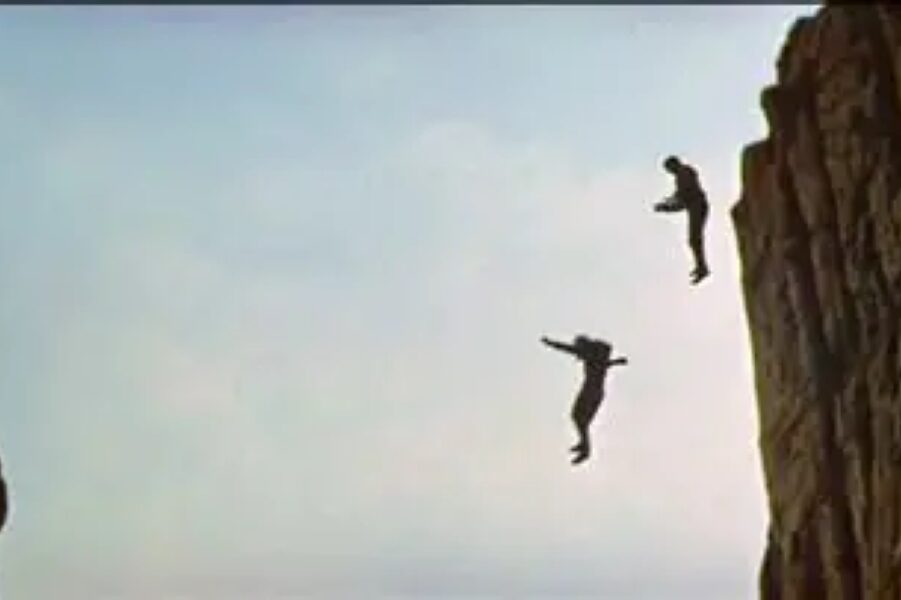
In Butch Cassidy And The Sundance Kid, there is a moment that shifts from tension to sheer physical commitment when Paul Newman and Robert Redford’s characters leap from a towering cliff into a river below. The drop looks frightening because it was. The actors did perform the jump themselves, landing in cold water far beneath the rocky edge. The height was significant enough that hesitation would have made it worse. What makes the scene memorable is the nervous conversation leading up to the leap, which makes the jump feel less like a stunt and more like a desperate decision.
When they finally jump, the fall feels long. The camera does not rush it. You see bodies dropping through open air before crashing into water. There is no digital extension, no safety net visible, just gravity doing its job. That physical commitment gives the moment weight. It feels earned because the risk was real, and the splash below is not simulated. It is the sound of actors trusting the fall.
The Truck Chase In Raiders Of The Lost Ark
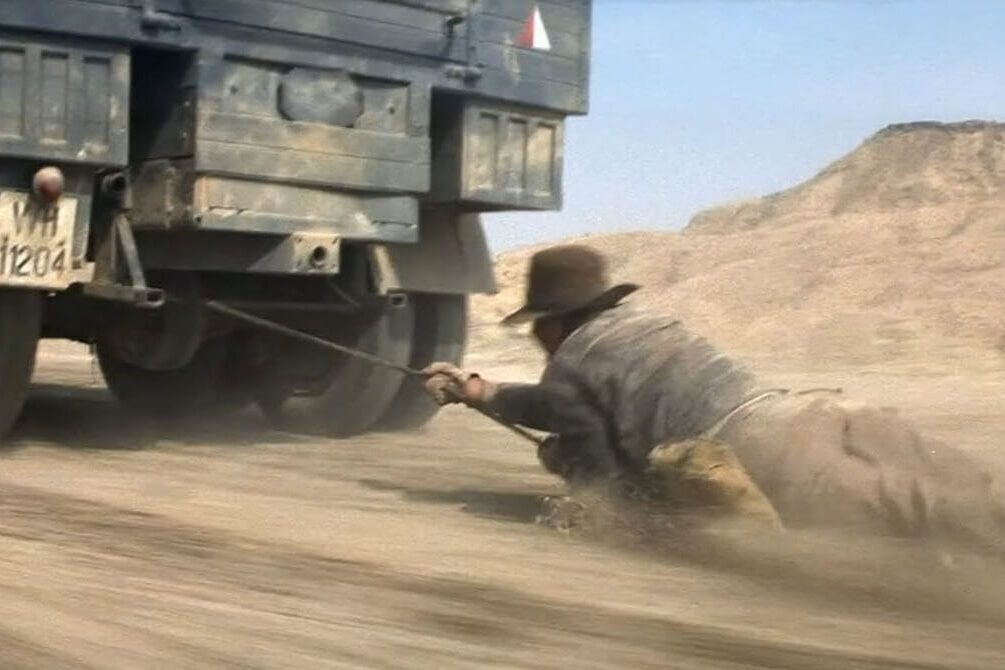
One of the most famous action sequences in Raiders Of The Lost Ark is the truck chase where Harrison Ford’s Indiana Jones is dragged beneath a moving vehicle and climbs back up while the convoy barrels forward. The stunt required him to be pulled along the dirt road under the truck using a carefully rigged harness, yet the speed and terrain were very real. The sequence was shot outdoors, with dust flying and tires grinding over uneven ground.
What makes the moment unforgettable is how rough it looks. Ford’s body hits the dirt, his jacket pulls tight, and the wheels pass alarmingly close. The climb back onto the truck is not graceful. It feels urgent and physical. You can see the strain in his movements. That realism adds grit to the character. Instead of looking invincible, he looks determined and slightly overwhelmed, which makes the victory at the end of the chase feel satisfying rather than effortless.
The Hanging From The Clock Tower In Back To The Future
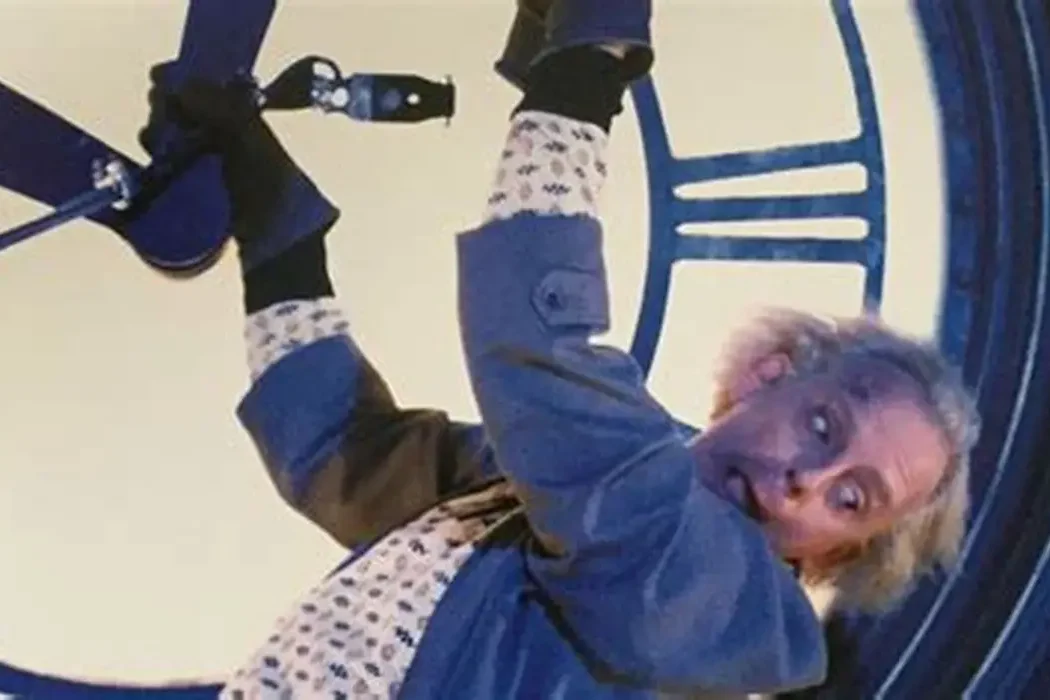
In Back To The Future, the climax features Christopher Lloyd’s Doc Brown hanging from a clock tower while lightning threatens to strike. The scene required the actor to perform portions of the hanging sequence himself, secured by rigging yet still suspended high above the ground. The visual impact depends on the height feeling real, and the filmmakers built the tower to create that convincing drop.
The tension works because the movement feels slightly unpredictable. His coat flaps wildly, his body twists, and the wind affects his balance in ways that look natural rather than staged. Even with safety systems in place, hanging from that height demands composure. The scene connects because viewers sense that real gravity is involved. It transforms what could have been a simple visual effect into a moment of genuine physical suspense.
The Bridge Jump In The Man With The Golden Gun
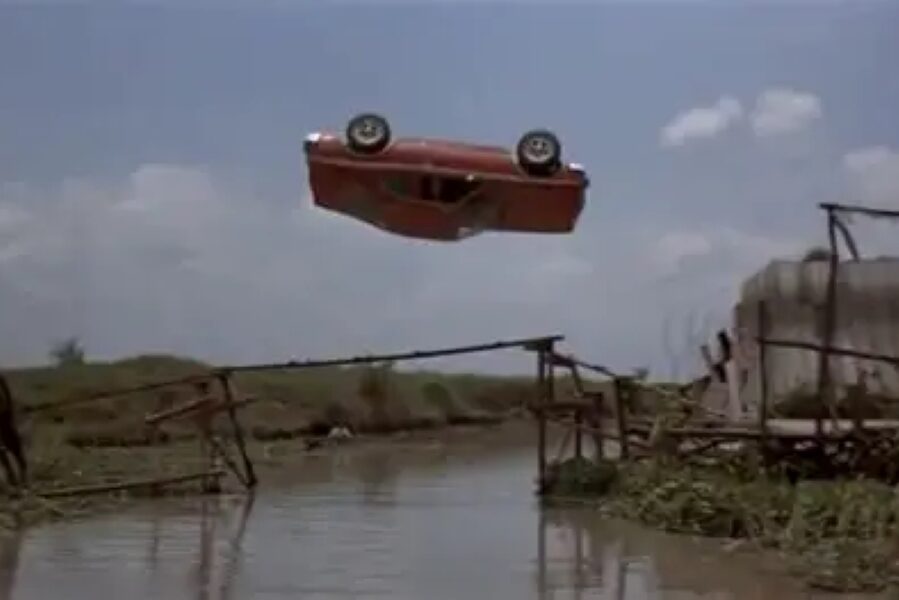
In The Man With The Golden Gun, the corkscrew car jump across a broken bridge remains one of the most technically impressive stunts in the James Bond series. The car truly launched off one side of the bridge, spun in a precise spiral mid air, and landed cleanly on the opposite side. The stunt required mathematical calculation and a specially modified vehicle, but once the car left the ramp, physics took control.
What makes the scene powerful is how clean and immediate it feels. There is no visual smoothing or digital correction. The car rotates perfectly and lands with a solid thud that confirms the success. Watching it today, the moment still impresses because it happened exactly as shown. It is a rare example of engineering, nerve, and timing aligning in one clean movement captured on camera.
The Helicopter Chase In From Russia With Love
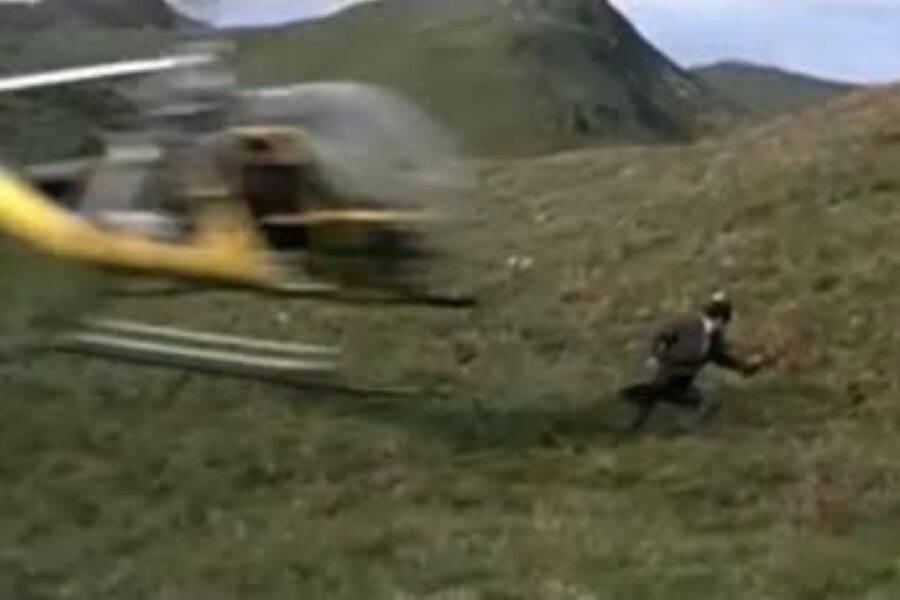
In From Russia With Love, Sean Connery’s James Bond faces a real helicopter descending aggressively toward him in an open field. The aircraft was not added later. It flew dangerously close during filming, creating a genuine sense of threat. Connery had to react physically to the machine’s movement, running and taking cover as the blades churned the air around him.
The scene feels intense because the helicopter behaves like a real machine. It dips, tilts, and sends wind blasting across the grass. Connery’s reactions look instinctive because they are. When the explosion finally disables the aircraft, the relief feels authentic. It is the result of surviving something mechanical and heavy, not defeating a digital illusion. That tangible danger is what keeps the sequence gripping.
The Wall Climb In Mission Impossible
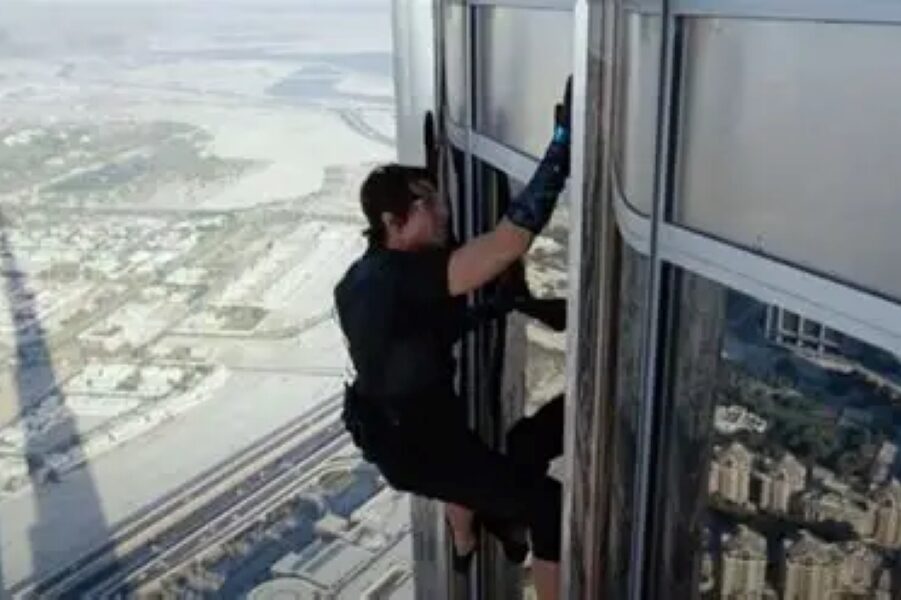
In the original Mission Impossible, Tom Cruise performed the high rise exterior climb himself during the Burj Khalifa sequence. Suspended by cables yet physically attached to the building’s surface, he moved along the glass at staggering height. The cameras captured him against the actual skyline, creating depth that cannot be faked convincingly.
The scene holds attention because his body language reflects the reality of the situation. There is tension in his grip and careful placement in each step. Even with safety harnesses present, the height remains visible and intimidating. Cruise’s decision to perform the climb personally reinforces the character’s intensity. It reminds viewers that sometimes the most powerful special effect is simply an actor choosing to step into real space and let gravity exist honestly around them.


