
1. Ham & Pineapple Pizza From Canada
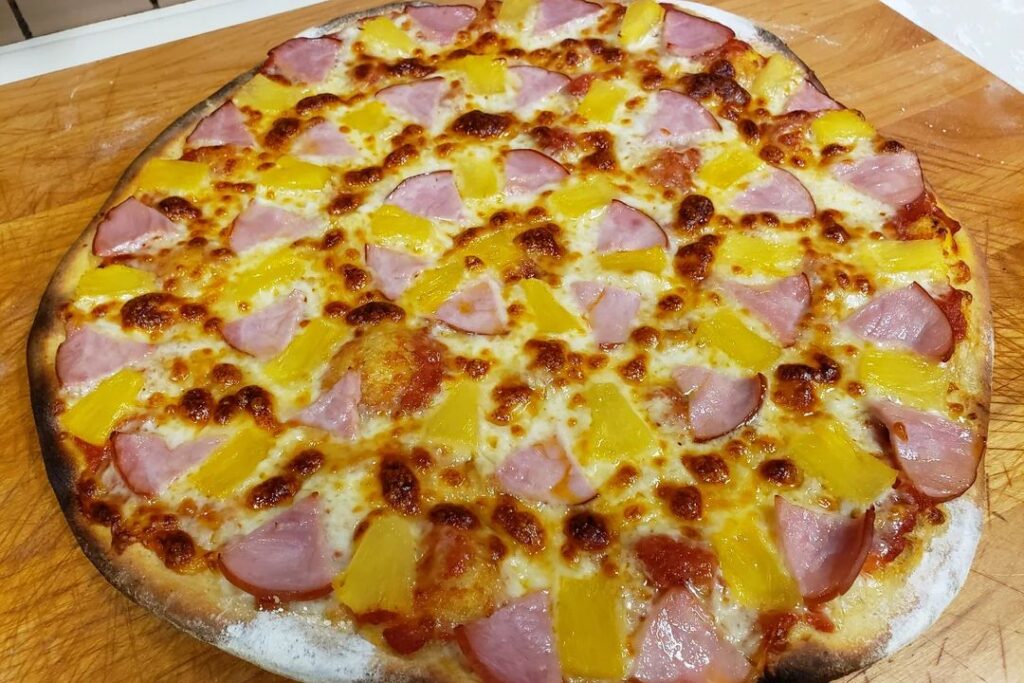
Food is a universal language that evolves as people travel and settle in new places, yet it is quite remarkable how often our favourite “ethnic” dishes actually began in a completely different corner of the globe. Take the infamous Hawaiian pizza, which has sparked more dinner-table debates than almost any other culinary creation since its inception in 1962. While the name suggests a tropical origin in the Pacific Islands, this sweet and savoury combination was actually the brainchild of Sam Panopoulos, a Greek immigrant living in Ontario, Canada. Working at the Satellite Restaurant, Sam decided to experiment with canned pineapple to see if the salty-sweet profile popular in Americanised Chinese food would work on a traditional Italian base. The name wasn’t a tribute to the state but was simply the brand name of the canned fruit he used that afternoon.
The dish quickly became a global phenomenon because it tapped into a mid-century obsession with tiki culture and exotic flavours, even if those flavours were coming from a tin in a small Canadian town. It is fascinating to reflect on how a simple kitchen experiment in a roadside diner managed to cross borders and become a staple of pizzerias from London to Tokyo. While some purists still argue that fruit has no business being near mozzarella, the Hawaiian remains one of the most ordered pizzas in the world today. It serves as a perfect example of how migration and curiosity shape what we eat, proving that cultural heritage in food is often far more fluid than we assume. Sam’s legacy lives on in every bite of ham and pineapple, reminding us that some of the best culinary traditions are born from a bit of playful risk-taking.
2. Croissants Began In Austria
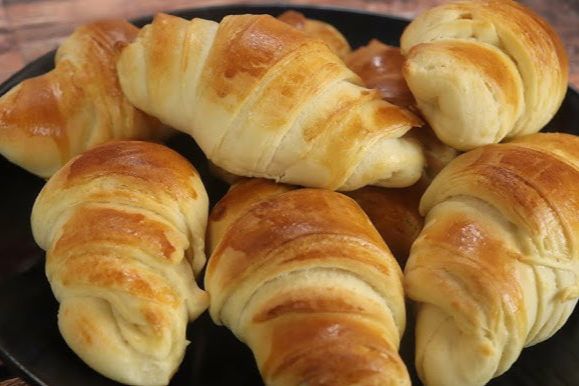
When we think of a slow morning in a Parisian café, the flaky, buttery croissant is almost always the star of the show, but its true ancestry lies far to the east in Vienna. The ancestor of the croissant is actually the kipferl, a denser, crescent-shaped yeast bread that has been a staple of Austrian bakeries since at least the 13th century. Legend suggests the shape was created to celebrate the defeat of the Ottoman Empire at the Siege of Vienna in 1683, supposedly mimicking the crescent moon on the enemy flag, though historians suspect the shape is even older than that. It wasn’t until the 1830s that an Austrian artillery officer named August Zang opened a Viennese bakery in Paris, introducing the locals to his hometown treats and sparking a massive culinary trend.
Once the kipferl arrived in France, the local bakers began to adapt the recipe by using puff pastry, which is a technique involving layering dough with butter to create those iconic, airy flakes we love today. This French transformation took the sturdy Austrian bread and turned it into the delicate masterpiece that defines modern patisserie, eventually leading to the name “croissant” becoming synonymous with French identity. It is a wonderful bit of irony that the most famous symbol of French breakfast culture is actually a relatively recent import that underwent a significant makeover to suit local tastes. Despite its foreign roots, the French perfected the technique so thoroughly that the world now looks to Paris as the true home of the crescent pastry, showing how a borrowed idea can become a national treasure.
3. Tikka Masala’s Glasgow Roots
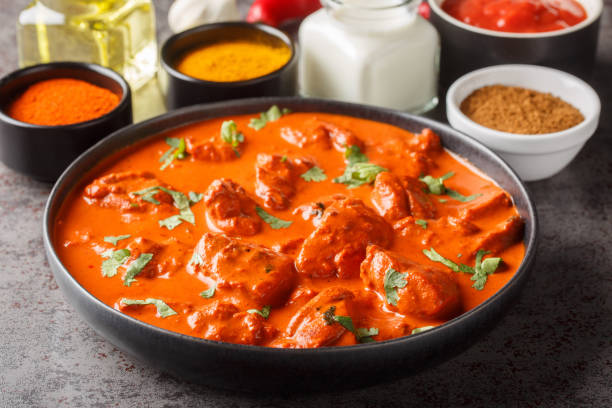
Chicken Tikka Masala is frequently cited as Britain’s true national dish, yet many diners still assume it was brought over directly from the Indian subcontinent centuries ago. In reality, this creamy, tomato-based curry is widely believed to have been invented in Glasgow, Scotland, during the 1970s at a restaurant called the Shish Mahal. As the story goes, a customer complained that his chicken tikka was too dry, so the chef, Ali Ahmed Aslam, improvised a sauce using a tin of tomato soup and a handful of spices. This quick fix was a stroke of genius that catered perfectly to the British palate, which traditionally prefers meat to be served with a generous portion of “gravy” or sauce rather than dry spices.
The dish represents a beautiful synthesis of South Asian culinary techniques and British tastes, acting as a bridge between two very different food cultures. It became so popular that it eventually made its way back to India and Pakistan, where it is now served in many tourist-oriented restaurants, creating a strange loop of culinary exchange. While there are various claims regarding its origin, the Glasgow story remains the most cherished because it highlights the adaptability of immigrant chefs who worked hard to make their traditional recipes accessible to their new neighbours. This dish is more than just a meal; it is a symbol of multiculturalism and the way different communities influence one another to create something entirely new and delicious that eventually becomes a household name across the entire United Kingdom.
4. Fortune Cookies Are Japanese
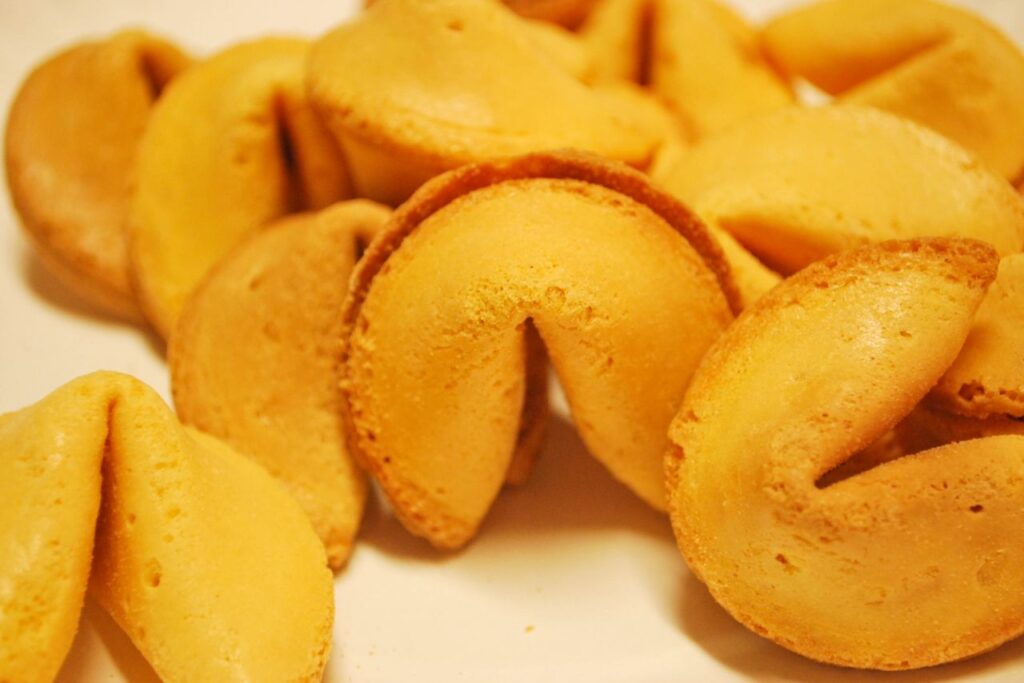
If you finish a meal at a Chinese restaurant in the United Kingdom or the United States, you almost certainly expect a crisp, vanilla-scented fortune cookie to arrive with the bill. However, you would be hard-pressed to find these treats in mainland China, as they are actually a product of Japanese tradition that was adapted in California. Researchers have traced the origin of the cookie to “tsujiura senbei,” a similar cracker found in bakeries near Kyoto, Japan, as far back as the 19th century. These original versions were larger, darker, and flavoured with miso and sesame rather than the sugary vanilla we know today, and they featured a small slip of paper tucked into the fold of the dough.
The transition of the cookie from Japanese bakeries to Chinese restaurants occurred around the time of World War II in San Francisco and Los Angeles. Japanese immigrants originally produced and sold the cookies, but when many Japanese-Americans were tragically sent to internment camps, Chinese entrepreneurs took over the production to meet the high demand from hungry soldiers and tourists. Over time, the association with Chinese cuisine became so strong that the Japanese origins were largely forgotten by the public. It is a poignant reminder of how history and social shifts can completely redefine the identity of a food item. Today, millions of these cookies are produced daily, carrying messages of luck and wisdom that originated in the shrines of Japan but found a home in the heart of the Chinese-American dining experience.
5. Fish And Chips Origins
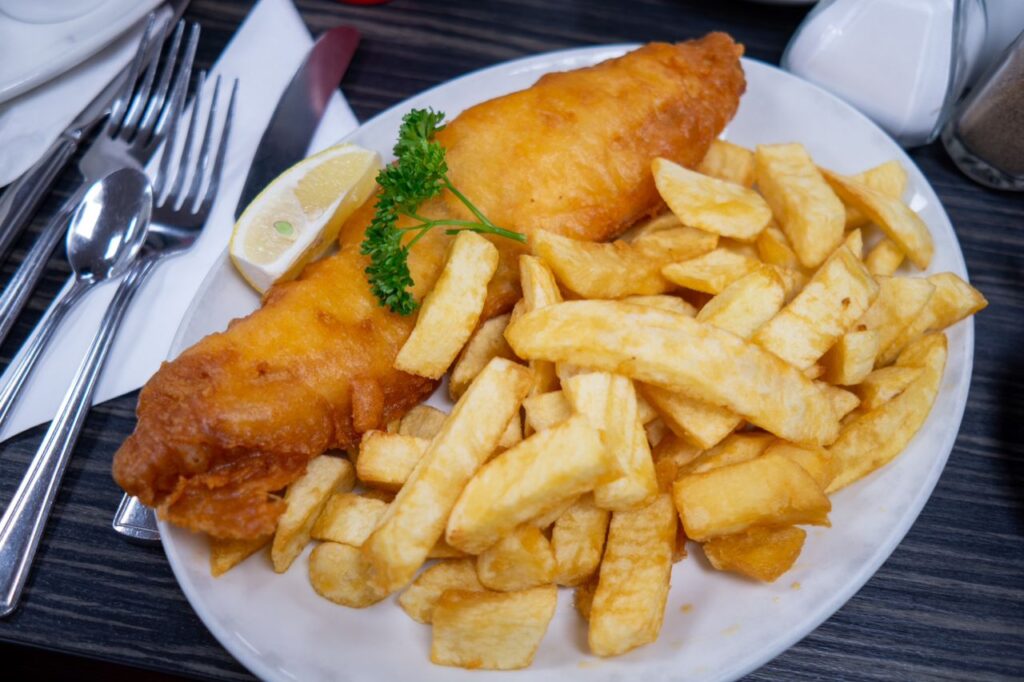
There is nothing quite as quintessentially British as a portion of hot fish and chips wrapped in paper, yet neither of the two main components is actually native to the British Isles. The concept of fried fish was brought to London in the 16th and 17th centuries by Sephardic Jews fleeing persecution in Portugal and Spain. They had a traditional method of coating fish in flour and frying it in oil to preserve it for the Sabbath, as it could be eaten cold without losing its flavour. This “fish fried in the Jewish fashion” became a hit on the streets of London, eventually being sold by vendors from trays hung around their necks before the first formal shops opened.
Meanwhile, the potato was a newcomer from the New World, and the idea of deep-frying thin slices of it likely originated in Belgium or France. It wasn’t until the mid-19th century that someone had the brilliant idea to pair the two together, creating the ultimate working-class comfort food that powered the Industrial Revolution. By the 1860s, fish and chip shops were popping up all over the North of England and London, providing a cheap, nutritious, and filling meal for factory workers. It is incredible to think that the dish we hold so dear as a British icon is actually a marriage of Mediterranean religious tradition and European vegetable innovation. This humble meal proves that the most “traditional” things are often the result of different cultures coming together to solve the simple problem of hunger in a tasty way.
6. Tempura’s Portuguese Connection
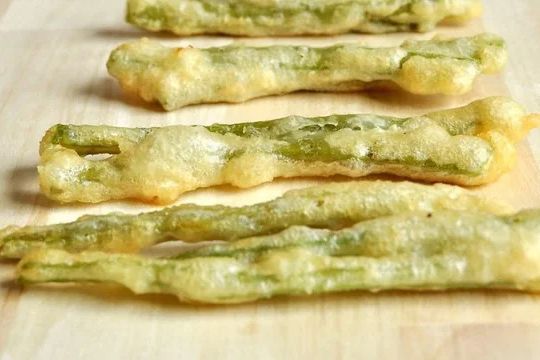
When you sit down for a meal at a high-end Japanese restaurant, the light and airy crunch of tempura vegetables and prawns often feels like the pinnacle of Japanese culinary precision. While the Japanese certainly perfected the technique, they did not actually invent it; the method was introduced to Japan by Portuguese explorers and missionaries in the 16th century. The name “tempura” actually comes from the Latin word “tempora,” which refers to the Ember Days when Catholics were required to abstain from meat and eat fish or vegetables instead. The Portuguese brought their method of “peixinhos da horta,” or “little fish from the garden,” which involved deep-frying green beans in a simple batter to make them more substantial during these periods of fasting.
The Japanese took this foreign frying technique and refined it over the centuries, moving away from a heavy, doughy batter to the cold, thin, and crisp coating that we recognise today. They also shifted from frying in lard to using vegetable oils, which allowed the natural flavours of the fresh ingredients to shine through more clearly. This cultural exchange happened during the “Nanban” trade period, a time when Japan was first being exposed to European gadgets, weapons, and foods. It is a fascinating example of how a religious dietary restriction from Southern Europe was transformed into a sophisticated art form in East Asia. Today, tempura is so deeply integrated into Japanese culture that it is easy to forget its roots lie in the holds of Portuguese sailing ships that landed on the shores of Nagasaki hundreds of years ago.
7. Scotch Eggs From London
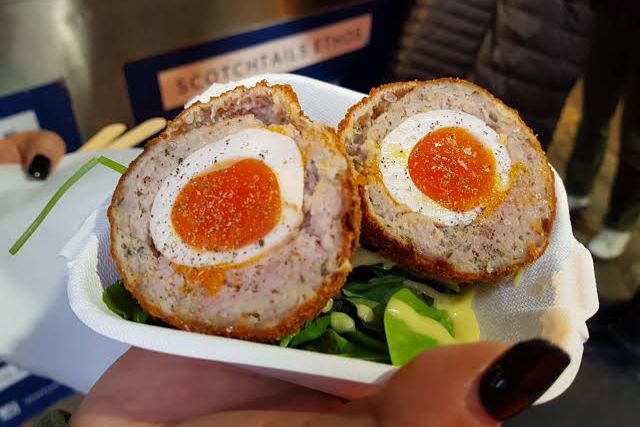
Despite the name, you won’t find the origins of the Scotch egg in the Highlands of Scotland, as this picnic favourite was actually popularised in the heart of London. The famous department store Fortnum & Mason claims to have invented the snack in 1738 as a convenient “traveller’s food” for wealthy clients heading out on long carriage journeys. The idea was to create a portable, self-contained meal that consisted of a hard-boiled egg encased in a layer of sausage meat and coated in breadcrumbs. The name “Scotch” likely didn’t refer to the country but might have been a corruption of the word “scotched,” meaning to process or mince the meat, or perhaps a reference to the “Scott’s” guards who frequented the area.
Another theory suggests that the dish was inspired by “nargisi kofta,” an Indian dish featuring minced meat wrapped around an egg, which British soldiers brought back during the time of the Raj. Regardless of which origin story you believe, the Scotch egg became a staple of British deli counters and gastro-pubs rather than a traditional Scottish heritage dish. It has seen a massive resurgence in recent years, with artisanal versions featuring runny yolks and gourmet meats appearing at food festivals across the country. It is quite funny to think that a snack so many people associate with Scottish picnics is actually a sophisticated London invention designed for 18th-century road trips. This highlights how branding and names can often lead us down the wrong geographical path when it comes to the history of our favourite snacks.
8. Spaghetti And Meatballs Myth
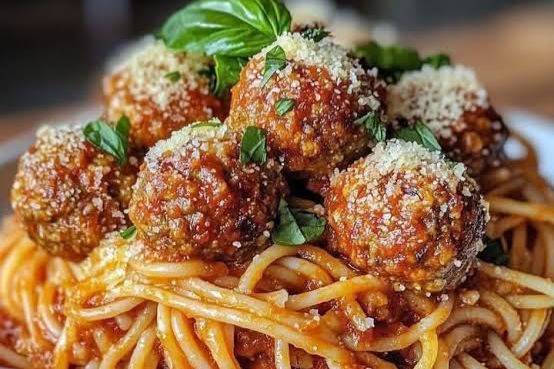
If you travel to Italy hoping to find a giant plate of spaghetti topped with massive meatballs, you might be disappointed, as this iconic “Italian” dish is actually a creation of the United States. In Italy, meatballs are known as “polpette,” and they are typically served as a standalone dish or in a light soup, and they are almost always much smaller than the golf-ball-sized versions found in New York or Chicago. Furthermore, Italians rarely serve pasta and meat on the same plate, as pasta is traditionally a “primo” or first course, followed by the meat as a “secondo.” The combination we know today was born out of necessity and abundance among Italian immigrants living in America between 1880 and 1920.
Upon arriving in America, these immigrants found that meat was significantly cheaper than it had been in their homeland, allowing them to make much larger meatballs as a sign of their new prosperity. They also had access to canned tomatoes and dry spaghetti in bulk, leading them to combine the elements into one hearty, inexpensive meal that could feed a large family. Over time, “Spaghetti and Meatballs” became the definitive dish of Italian-American cuisine, eventually being exported back to the rest of the world as a symbol of Italian culture, even though it wasn’t actually eaten that way in Italy. It is a classic tale of how the immigrant experience transforms traditional ingredients into a new cultural identity, creating a “comfort food” that feels ancient but is actually a relatively modern invention of the New World.
9. German Chocolate Cake Roots
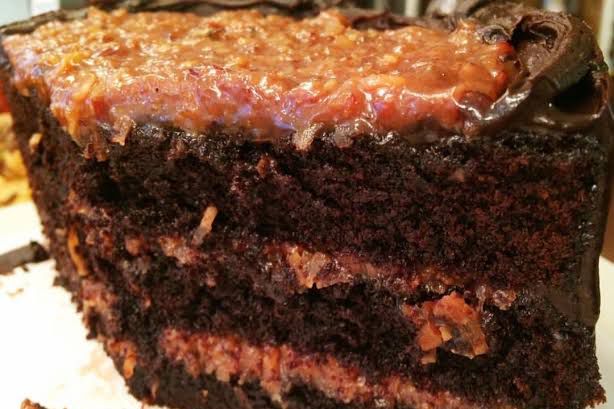
One might expect a cake named “German Chocolate Cake” to have its roots in the Black Forest or a traditional bakery in Berlin, but the name actually refers to an American man named Samuel German. In 1852, Samuel German developed a type of dark baking chocolate for the Baker’s Chocolate Company in the United States, which was sweeter than the standard bitter chocolate used at the time. The company named the product “Baker’s German’s Sweet Chocolate” in his honour, but the possessive “s” was eventually dropped, leading many people to assume the chocolate was imported from Germany. The cake recipe itself didn’t even appear until over a century later in 1957.
A home cook from Dallas, Texas, named Mrs. George Clay, sent the recipe for “German’s Chocolate Cake” to a local newspaper, using Samuel German’s specific baking chocolate as the key ingredient. The recipe became an overnight sensation, and as it was shared across the country, the “s” disappeared, and the myth of its European origin was born. The signature coconut and pecan frosting is a purely American invention, having no real equivalent in traditional German baking. It is a fascinating example of how a simple brand name can lead to a decades-long geographical misunderstanding. This cake is a true American classic, born in Texas and named after an Englishman who lived in America, proving that you should never judge a dessert’s nationality by its title alone.
10. The Truth About Vindaloo
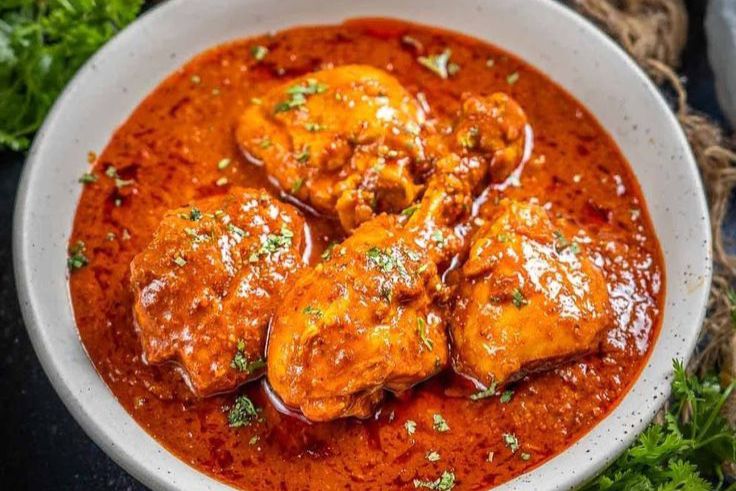
Vindaloo is famous for being one of the spiciest options on a British curry house menu, often treated as a challenge for those with iron stomachs, but its origins are surprisingly European and much milder. The dish is a Goan adaptation of a Portuguese meal called “carne de vinha d’alhos,” which literally translates to “meat in wine and garlic.” When Portuguese explorers arrived in Goa, India, in the 15th century, they brought with them the technique of preserving pork in a mixture of red wine vinegar and heavy amounts of garlic to keep it fresh in the tropical heat. Local Indian cooks then took this basic preservation method and added their own local flair by incorporating chillies, cinnamon, and cumin.
The transition from a tangy vinegar-based pork stew to the fiery, tomato-based “blow-your-head-off” curry found in London happened largely due to the British influence during the colonial era. British diners developed a taste for the sharp acidity of the dish but began to associate “Indian food” with extreme heat, leading chefs to add more and more chilli to satisfy that expectation. Interestingly, the original Goan version is supposed to be complex and tart rather than just painfully hot, and it is traditionally made with pork, whereas most British versions use chicken or lamb. This culinary evolution shows how a dish can travel from Portugal to India and then to England, picking up new ingredients and reputations at every stop. It reminds us that our perception of a culture’s food is often filtered through the tastes and expectations of the people who “discovered” it later.
11. Chimichangas Were An Accident
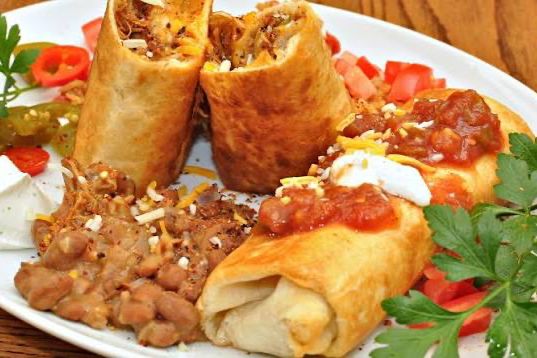
The chimichanga is a staple of Tex-Mex cuisine, but you won’t find it on traditional menus in the heart of Mexico, as it was actually invented in Arizona, USA. There are several competing legends, but the most popular one centres on Monica Flin, the founder of the famous El Charro Café in Tucson. Sometime in the 1920s, she supposedly accidentally dropped a burro (a large burrito) into a deep fat fryer. She started to utter a Spanish swear word, but because her young nieces were in the kitchen, she quickly changed it to “chimichanga,” which is essentially a nonsense word similar to “thingamajig” or “whatchamacallit.” To her surprise, the accidental creation was delicious, and a new food category was born.
Another claim comes from Macayo’s Depot Cantina in Phoenix, where the founder says he began deep-frying burritos in 1946 to keep them fresh for longer, but the Arizona connection remains the constant thread. The dish represents the fun, experimental side of border cooking, where Mexican ingredients meet American frying techniques to create something delightfully indulgent. It is a far cry from the light, fresh corn tortillas and grilled meats found in Southern Mexico, but it has become an essential part of the American Southwest’s culinary identity. This story is a great reminder that some of our most beloved dishes aren’t the result of careful planning or ancient tradition, but rather the result of a lucky mistake and a quick-thinking cook. It shows that food is always evolving, often in the most unexpected and crunchy ways.
12. Cheesecake’s Ancient Greek Past
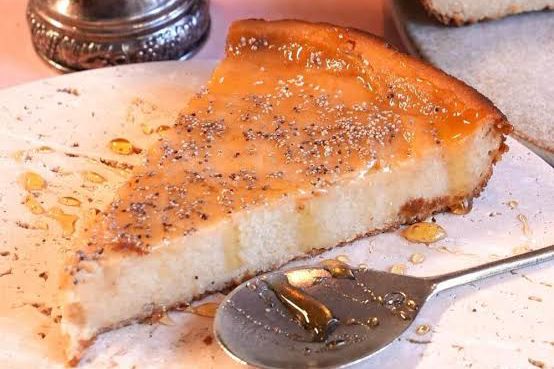
While we often associate the creamy, modern cheesecake with New York diners and the famous Junior’s restaurant, the concept of a cheese-based cake actually dates back over 2,000 years to Ancient Greece. It wasn’t the sweet, silky dessert we know today, but rather a simple mixture of flour, honey, and pounded cheese that was baked and served as a high-energy food. In fact, it was considered such a potent source of energy that it was served to athletes during the very first Olympic Games in 776 B.C. to help them perform. The Romans eventually adopted the recipe after conquering Greece, adding eggs and serving it warm, spreading the tradition across Europe as their empire expanded.
The modern version of cheesecake only began to take shape in the late 19th century due to a happy accident in New York. An American dairyman named William Lawrence was trying to recreate a soft French cheese called Neufchâtel, but he accidentally created a much richer, unripened cheese that we now know as cream cheese. This became the foundation for the “New York Style” cheesecake, which replaced the traditional curd cheeses used in European versions. It is fascinating to reflect on how a simple energy food for ancient athletes evolved through a manufacturing error into one of the world’s most decadent desserts. It shows that our reliance on specific ingredients can lead to entirely new cultural traditions. We often think of food as coming from one specific place or factory, but history shows it is a long, winding journey of adaptation.
13. French Fries Are From Belgium
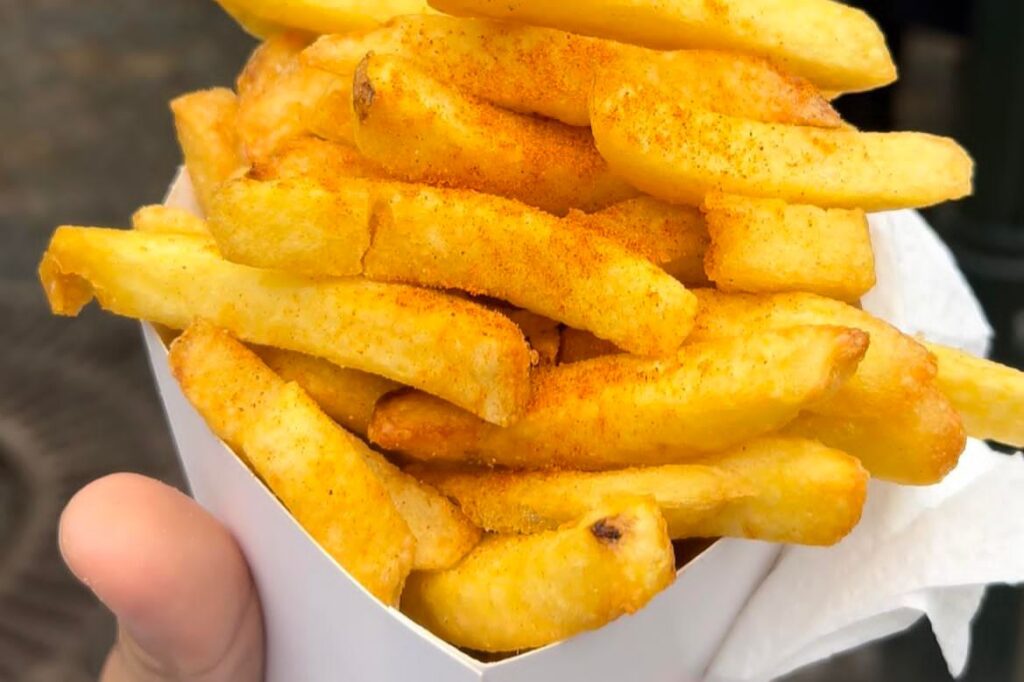
One might naturally assume that “French” fries originated in the land of the Eiffel Tower, but the credit for these golden batons of joy actually belongs to their neighbours in Belgium. Legend has it that villagers in the Meuse Valley were fond of frying small fish they caught in the river, but during the harsh winters when the water froze over, they turned to potatoes instead. They sliced the tubers into small, fish-like shapes and fried them to provide the same comforting crunch during the cold months. The name “French” fries only came about during World War I, when American soldiers stationed in Belgium were introduced to the snack. Since the official language of the Belgian army at the time was French, the soldiers simply dubbed them “French fries” and brought the name back home.
The Belgians take their fries incredibly seriously, often serving them in paper cones with a generous dollop of mayonnaise rather than the ketchup common in other parts of the world. They even have a specific double-frying method that ensures the inside remains fluffy while the outside achieves a perfect, glass-like snap. While France certainly has its own rich history of fried potatoes, the specific thin-cut style we recognise globally as a fast-food staple is a Belgian tradition through and through. It is quite funny to think that a simple misunderstanding by homesick soldiers could rename a national dish for the entire world to follow. This culinary mix-up serves as a reminder that the names we give our food are often more about who we met while eating it than where the recipe was actually born.
14. Nachos From Piedras Negras
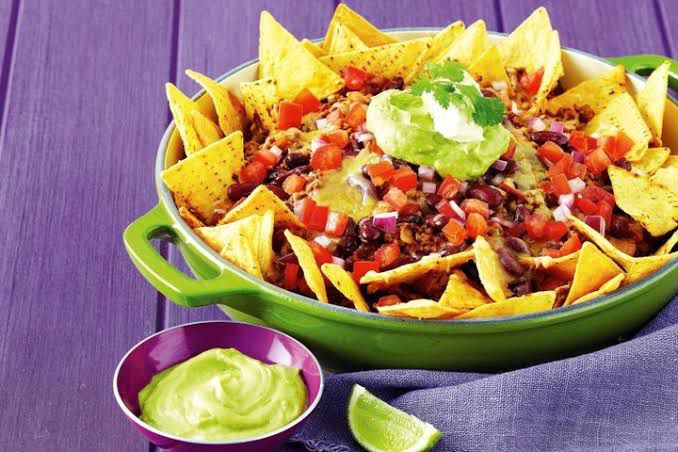
Nachos are the ultimate cinema and pub snack, and while they are undeniably Mexican, they didn’t come from an ancient recipe but rather from a moment of quick thinking in 1943. The dish was created in the border town of Piedras Negras, Mexico, just across from Eagle Pass, Texas, at a restaurant called the Victory Club. A group of American military wives had spent the day shopping and arrived at the restaurant after it had already closed for the evening. The maître d’, Ignacio “Nacho” Anaya, didn’t want to turn them away hungry, so he improvised with the few ingredients left in his kitchen. He sliced up some corn tortillas into triangles, fried them, and topped them with shredded cheddar cheese and pickled jalapeño peppers.
He popped the creation under the broiler for a few minutes until the cheese was bubbling and served them as “Nacho’s Special,” using his own nickname as the title for the dish. The women loved the snack so much that they spread the word, and soon “nachos” were a staple across the border in Texas before conquering the rest of the world. It is a classic example of how hospitality can lead to a global food phenomenon, as Ignacio’s desire to look after his guests resulted in a dish that is now synonymous with casual dining. Unlike many ancient traditional foods, we know exactly who to thank for the nacho, yet his name has become so common that we often forget there was a real man behind the cheese-covered chips. It is a heart-warming story of border-town ingenuity that proves some of the best foods are born from necessity.
15. Fajitas Began In Texas
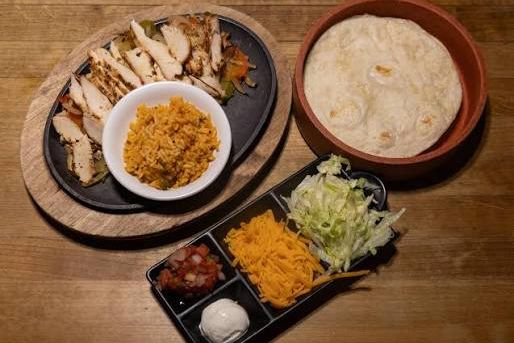
Fajitas are often the loudest dish in any Mexican-style restaurant, arriving on a sizzling cast-iron skillet that turns heads, but this theatrical meal is a pure product of the Texas cattle ranching culture. The term “fajita” is derived from the Spanish word “faja,” which means “belt” or “strip,” referring specifically to the skirt steak, a tough cut of beef that was often given to Mexican vaqueros (cowboys) as part of their pay. Because the meat was so tough, the cowboys learned to marinate it in lime juice and grill it over open campfires to make it palatable. They would then slice it thinly and wrap it in flour tortillas, creating a portable and filling meal for long days on the ranch.
The dish remained a regional secret of the South Texas borderlands for decades until it was popularised by a man named Sonny Falcon, who opened the first commercial fajita stand at a festival in 1969. Shortly after, high-end hotels in Austin and Houston began serving them on sizzling platters to add a sense of drama and excitement to the dining room. This transition from a humble cowboy’s ration to a premium restaurant experience shows the incredible journey of Tex-Mex cuisine as it moved from the campfire to the city. While they are inspired by Mexican flavours and techniques, the fajita as we know it today is a testament to the resourcefulness of those living and working on American soil. It is a dish that celebrates the rugged history of the frontier while satisfying our modern love for a bit of culinary showmanship.
16. English Origins Of Pavlova
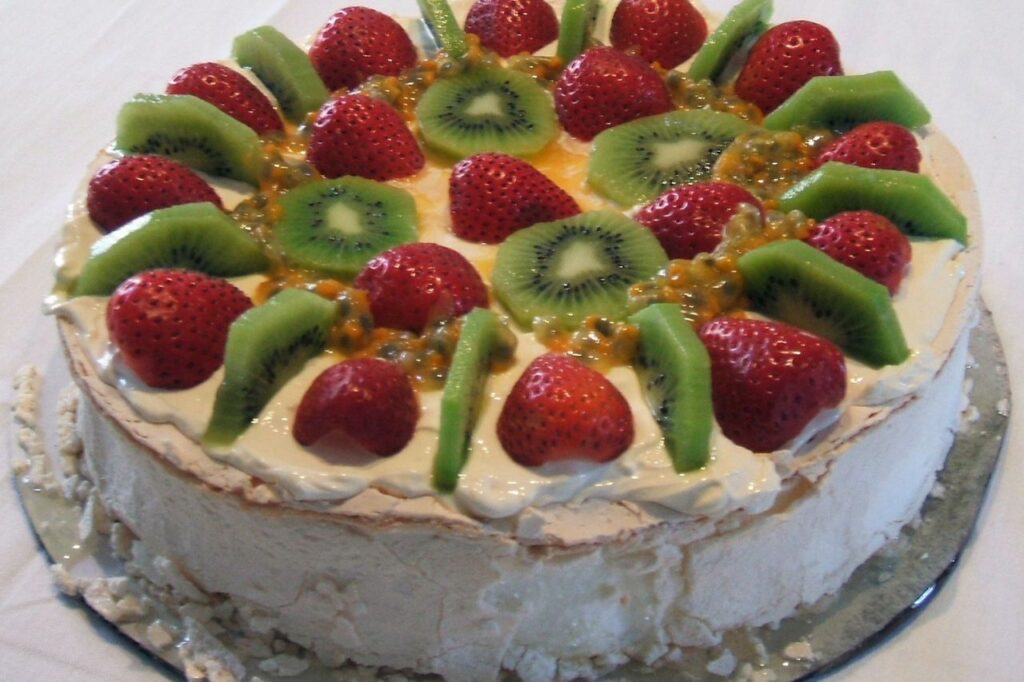
The Pavlova is a dessert that has long been at the centre of a fierce rivalry between Australia and New Zealand, with both nations claiming to have invented it in honour of the Russian ballerina Anna Pavlova. However, recent research by food historians suggests that the true ancestor of this marshmallowy meringue treat actually lies in the United Kingdom and America. Long before the dish appeared in the Southern Hemisphere in the 1920s, similar “meringue cakes” filled with cream and fruit were being made in English kitchens and featured in various American cookbooks. These early recipes were often called “Schlagobers” or simple meringue tortes, tracing back to a Germanic influence that travelled through the British Isles.
The specific recipe that the Aussies and Kiwis fight over was likely an evolution of these older European desserts that were brought over by settlers and adapted to include local fruits like passionfruit or kiwi. While the naming of the dish after the famous dancer definitely happened in the Antipodes, the culinary DNA of the whisked egg whites and sugar is firmly rooted in the older baking traditions of the Northern Hemisphere. It is a bit of a blow to national pride for both Australia and New Zealand, but it highlights how recipes are rarely static and instead travel across oceans, changing names and identities as they go. Regardless of who “invented” it, the dish has become a symbol of summer in the South Pacific, proving that a food’s emotional connection to a place is often more important than its technical point of origin.
17. California Roll’s Canadian Birth
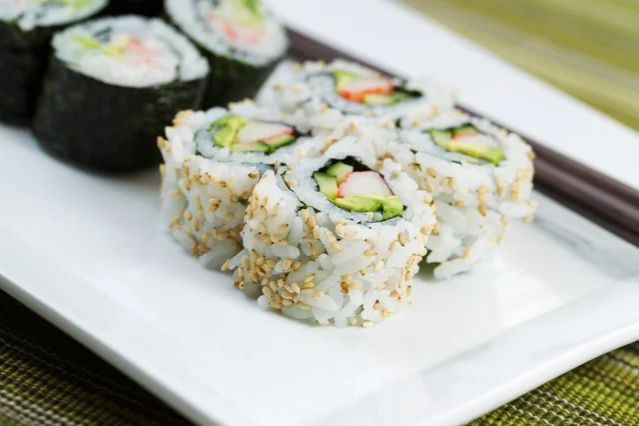
Sushi is perhaps the most iconic export of Japan, but the California Roll, the gateway for millions into the world of raw fish—was actually invented in Vancouver, Canada. In the early 1970s, a Japanese chef named Hidekazu Tojo noticed that many Westerners were hesitant to eat traditional sushi because they were put off by the sight of raw fish and the chewy texture of the seaweed on the outside. To make the dish more approachable, he decided to turn the roll inside out, hiding the nori (seaweed) under a layer of rice, and used cooked imitation crab and creamy avocado to mimic the fatty texture of tuna. He called it the “Inside-Out Roll,” but it eventually became known as the California Roll because it was so popular with visitors from the Golden State.
Tojo’s innovation was a massive success because it respected the spirit of Japanese technique while catering to the specific anxieties of North American diners. It effectively bridged the gap between two very different food cultures and paved the way for the global sushi boom that followed in the 1980s and 90s. Many traditionalists in Japan initially scoffed at the idea of an inside-out roll with avocado, but the dish eventually became so famous that it was embraced even in Tokyo as a legitimate style of fusion sushi. It is a wonderful example of how a chef’s empathy for his customers can lead to a brand-new culinary tradition. This humble roll changed the way the world eats, proving that sometimes you have to break the “rules” of a cuisine to help it truly flourish in a new environment.
18. Swiss Roots Of Fondue
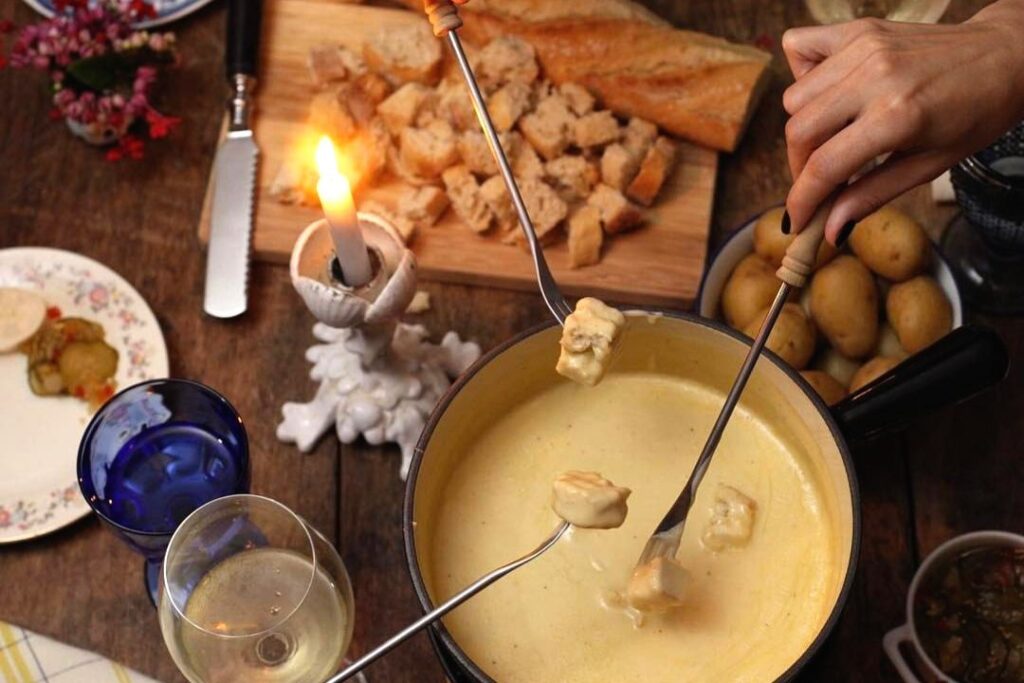
When we think of fondue, we picture 1970s dinner parties or a cozy ski chalet in the Alps, and while it is the national dish of Switzerland, its rise to fame was more about clever marketing than ancient folklore. For centuries, farmers in the Swiss mountains used melted cheese as a way to soften stale bread during the long, isolated winter months, but it wasn’t a widely recognised “national” dish until the 1930s. The Swiss Cheese Union, a powerful cartel, found itself with a massive surplus of cheese and decided to launch a nationwide campaign to encourage people to eat more of it. They promoted fondue as the ultimate symbol of Swiss unity, creating a tradition out of thin air to boost their sales and save the industry.
The campaign was so successful that it transformed a rustic peasant meal into a sophisticated social event that was eventually exported to the rest of the world as a must-try Alpine experience. It is a fascinating look at how a group of businessmen can essentially “create” a cultural heritage through persistent branding and advertising. Today, fondue is deeply tied to the Swiss identity, but its status as a “national treasure” is a relatively modern construct designed to keep the factories running and the dairy farmers in business. It reminds us that our ideas of “tradition” are often shaped by economic needs and the power of a good story. While the cheese is undeniably delicious, its journey from a humble farmhouse pot to a global icon is a testament to the power of a well-executed marketing plan that captured the world’s imagination.
19. Ketchup’s Ancient Asian Fish Sauce
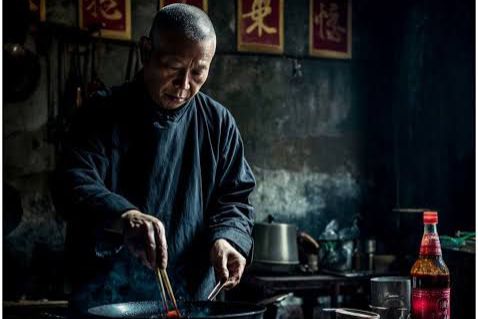
Ketchup is the definitive American condiment, seen on every burger and hot dog across the United States, but its ancestors were actually salty, fermented fish sauces from Southeast Asia. The word “ketchup” is believed to be derived from the Hokkien Chinese word “ke-chiap,” which referred to a sauce made from fermented fish and spices that was common in 17th-century Vietnam and Southern China. British sailors encountered this pungent sauce while trading in the region and brought the idea back to England, where they tried to replicate it using ingredients they had at home, such as mushrooms, walnuts, and even oysters. For a long time, there wasn’t a single tomato in sight in any ketchup recipe.
It wasn’t until 1812 that the first tomato-based ketchup recipe was published by an American scientist named James Mease, who believed tomatoes had medicinal properties. However, these early versions were difficult to preserve and often went bad quickly until Henry J. Heinz came along in 1876. He realised that by increasing the amount of vinegar and sugar, he could create a shelf-stable product that didn’t require the dangerous preservatives used by other companies at the time. This version became the global standard, moving the sauce away from its watery, fishy roots towards the thick, sweet tomato jam we love today. It is incredible to think that the most American of sauces actually began as a dark, fermented fish liquid in Asia. This history shows how global trade can take a local ingredient and transform it through centuries of experimentation into something completely unrecognisable from its starting point.
20. Chop Suey Is American
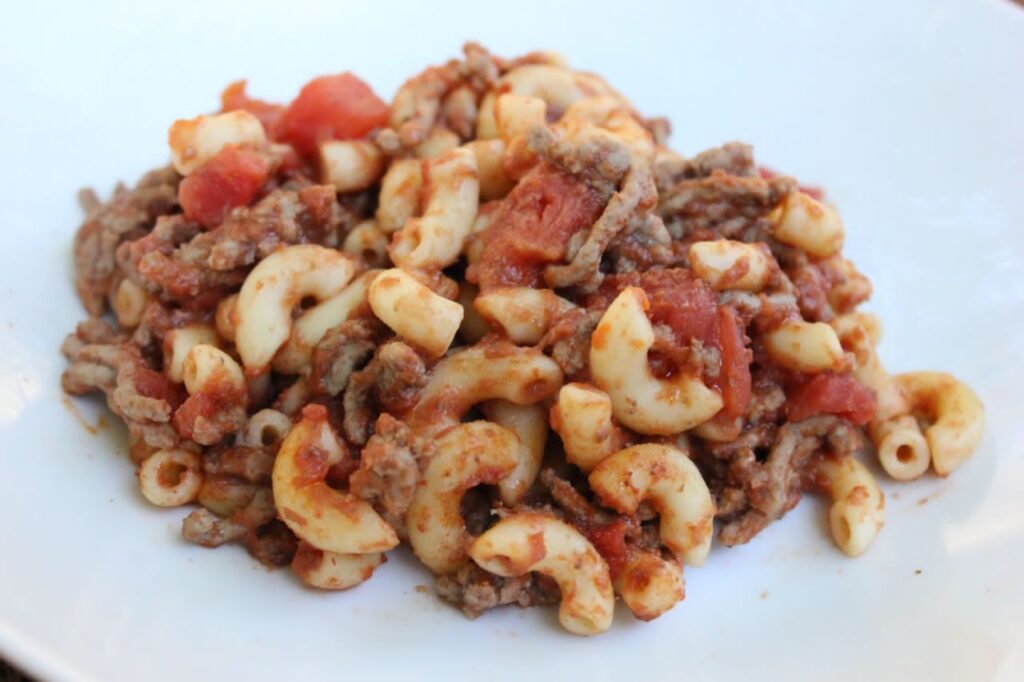
If you go to a traditional restaurant in China and ask for Chop Suey, you will likely be met with a confused look, as this “Chinese” staple was actually created in the United States. There are many legends surrounding its birth, but the most common one suggests it was invented in San Francisco during the mid-19th century by Chinese immigrants working in the gold mines or on the railroads. According to one story, a group of hungry miners arrived at a restaurant late at night, and the chef, having run out of standard dishes, threw together all the kitchen scraps like meat, bean sprouts, and vegetables—in a stir-fry with a heavy sauce. He told the miners it was “Chop Suey,” which roughly translates in Cantonese to “odds and ends” or “broken pieces.”
The dish became a massive hit because it was cheap, filling, and used familiar vegetables that were easily available in American markets. It played a crucial role in the early days of “Chop Suey houses,” which were the first Chinese restaurants to cater specifically to non-Chinese diners, helping to popularise Asian flavours in the West. While it may not be an authentic dish from the mainland, it represents the resilience and creativity of early Chinese immigrants who had to adapt their culinary traditions to survive in a new country. It is a dish born of the immigrant experience, showing how cultures blend to create something that eventually becomes a comfort food for an entire nation. Chop Suey might be “odds and ends,” but it paved the way for the rich and diverse Asian food scene that we enjoy today across the globe.
21. The Global Journey Of Food
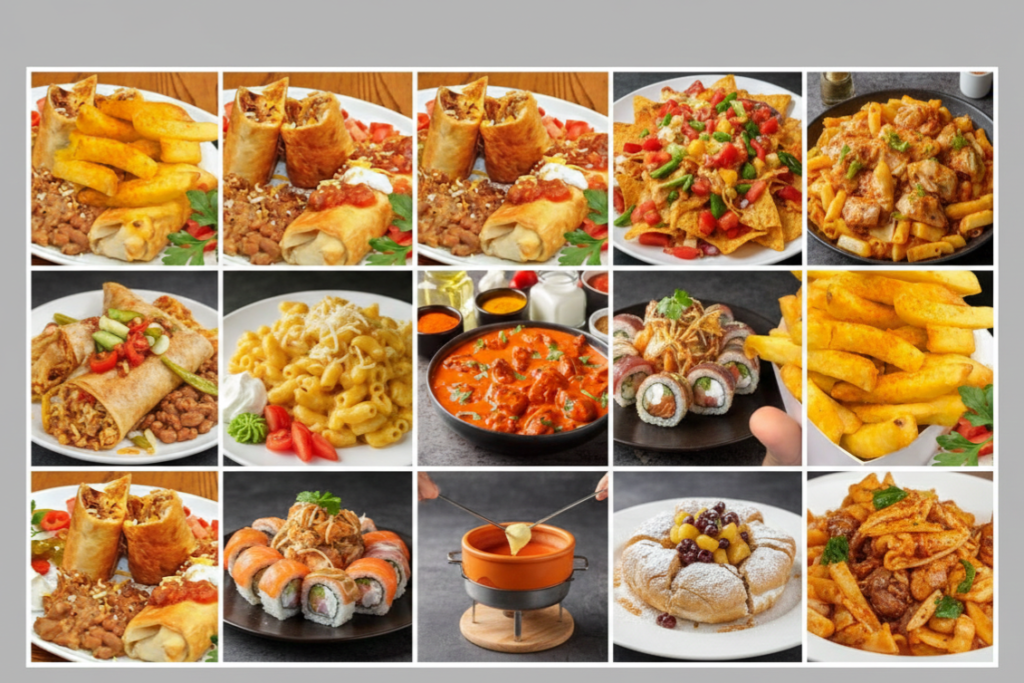
Looking back at these 20 dishes, it is clear that our dinner plates are essentially a map of human migration and accidental discoveries. From the Canadian pizzerias to the Scottish curry houses, food has a remarkable way of ignoring borders and evolving to suit the tastes of whoever happens to be hungry at the time. We often get caught up in the idea of “authenticity,” but these stories prove that some of our most beloved traditions were actually born from a bit of playful experimentation or a lucky mistake. It is fascinating to think that we once relied on one factory or one specific region for our ingredients, but today the whole world is our larder, allowing us to share and reinvent recipes with every generation. This interconnectedness is what makes culinary history so vibrant and surprising, reminding us that we are all much more connected than we think.
Like this story? Add your thoughts in the comments, thank you.


