
When Pets Start Sounding Like Tiny Linguists
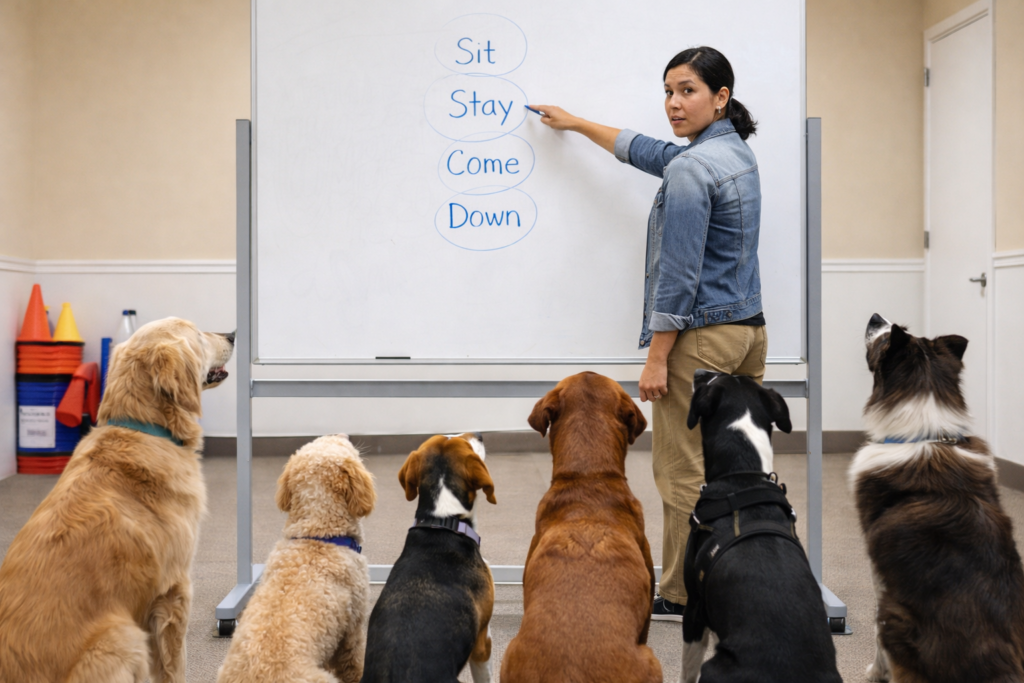
Dogs have always occupied a special place in our homes, but modern science is proving that the bond we share is even deeper than we imagined. For generations, most pet owners assumed that a dog’s response to a command was simply a reaction to a specific tone of voice or a familiar routine. However, rigorous behavioral research conducted over the last two decades has revealed a far more fascinating reality. Some dogs are not merely obedient animals waiting for a treat; they are active, cognitive listeners capable of remembering hundreds of unique object names and connecting complex words to specific meanings.
A landmark study released in early 2026, led by a collaborative team of researchers in Hungary and Austria, highlighted a small group of “gifted word learner” dogs. These extraordinary animals demonstrated the ability to learn the names of new toys simply by overhearing humans discuss them, without any direct training or rewards. This discovery is groundbreaking because it reshapes our understanding of intelligence beyond the human species. These canine abilities aid researchers in further examining the early speech development of human toddlers, speech therapy work, service dog training, and the very evolution of language itself.
The Rise of Gifted Word Learners
In the field of animal psychology, researchers have officially adopted the label “Gifted Word Learners” to describe an elite group of exceptional dogs. This specific terminology gained prominence following a series of long-running experiments conducted by the Family Dog Project at Eötvös Loránd University in Budapest. During these observations, scientists noticed that a very small percentage of the canine population could rapidly acquire the names of various toys during everyday play sessions at home. Unlike traditional obedience training that relies on repetitive drills, these gifted animals learned through natural, social interactions with their human companions.
By 2026, experimental data confirmed that these specific dogs could identify a new object after hearing its name mentioned only a few times in a casual conversation between people. When asked later, the dogs successfully retrieved the correct toy from a separate room. Researchers have frequently compared this learning style to that of an 18-month-old child who acquires vocabulary by listening to the world around them. Social cues, such as the speaker’s tone, physical attention, and gaze, play a vital role in helping the dog understand exactly which item a word refers to, proving that dogs process language in a highly sophisticated and meaningful way.
Chaser: The World’s Most Famous Dog
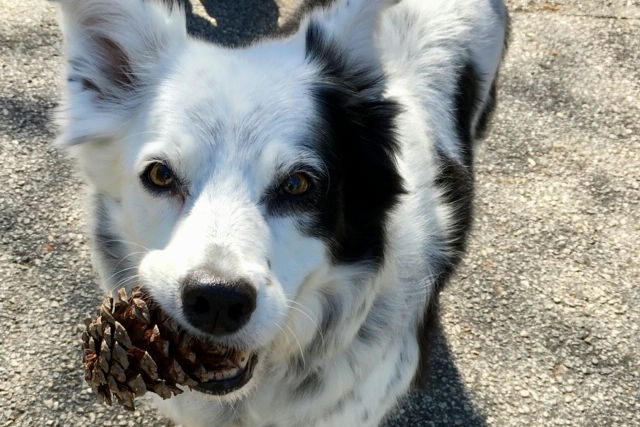
One particular dog fundamentally changed the global conversation regarding animal intelligence. Chaser, a Border Collie trained by psychologist John Pilley in the United States, is widely recognized as the most famous language-learning dog in history. Starting her journey around 2004, Chaser underwent years of patient instruction where Pilley taught her the names of toys through play rather than rigid discipline. He utilized positive reinforcement and social engagement to keep the learning process natural. This method allowed Chaser to view her “work” as a game, which kept her mentally sharp and eager to learn new concepts daily.
By the year 2011, Chaser’s abilities stunned the scientific community when it was revealed she understood 1,022 unique words, including nouns and various verbs. She could navigate a large pile of objects to find a specific item and even categorize them into groups, such as “balls” versus “frisbees.” Her performance proved that she wasn’t just memorizing sounds; she was forming mental representations of objects. Scientists later noted that her cognitive processing mirrored that of a young child building an early vocabulary.
Rico: The Fast-Mapping Pioneer

Before Chaser became a household name, another Border Collie named Rico was quietly making history in the halls of science. In 2004, researchers from the Max Planck Institute for Evolutionary Anthropology in Germany published a study on Rico, who already knew the names of over 200 different objects. To ensure the results were valid, the scientists used strictly controlled environments to prove that Rico wasn’t just reading human body language or “Clever Hans” cues. He successfully retrieved the correct items in the vast majority of trials and proved his long-term memory by recalling those names several weeks later.
The most significant takeaway from Rico’s case was his demonstration of a psychological skill known as “fast mapping.” When he was placed in a room with several familiar toys and one completely new object, Rico could correctly identify the new item upon hearing an unfamiliar word. He used a process of elimination, reasoning that the new word must belong to the new object. This is the exact same logical deduction that human toddlers use when expanding their vocabulary. Rico’s success was a turning point in animal behaviorism.
Hearing and Learning Without Training

Traditional dog training philosophy has long insisted that repetition and rewards are the only ways to teach a pet. However, cutting-edge research from 2026 suggests that certain “gifted” dogs can learn passively without any formal instruction at all. In these recent experiments, scientists observed dogs while their owners spoke to another person about a specific toy, purposely never addressing the dog directly. Despite the lack of a command or a treat, many of these dogs were later able to retrieve the correct object when asked, proving they were paying close attention to the human dialogue.
Researchers believe these dogs are highly tuned to contextual clues in their environment. They monitor where a human is looking, notice subtle pointing gestures, and match the sounds of specific words with the objects being handled. This behavior almost perfectly mirrors how young children begin to pick up speech during their daily lives. The discovery was particularly surprising because the dogs received no physical reward during the actual learning phase. This suggests that for some dogs, a natural sense of curiosity and a high level of social awareness are just as powerful for learning as a piece of kibble or a pat on the head.
Words Mean Objects

Another significant scientific breakthrough in the field of canine cognition came through the use of advanced brain imaging technology. Recently, researchers began using non-invasive sensors and fMRI scans to monitor the neural activity of dogs while they listened to specific object names, such as “ball” or “bone.” The results were remarkable: when the correct item was shown to the dog, their brain activity patterns shifted distinctly compared to when they were shown a mismatched object. This provided the first physical evidence that dogs aren’t just reacting to the sound of a human voice.
This research suggests that many dogs understand that words refer to specific physical things, rather than just being a signal to perform an action. For decades, many experts argued that pets only reacted to daily routines or the emotional tone of their owner’s speech. However, this neurological evidence shows that dogs actually activate mental images of objects when they hear familiar nouns. This discovery places certain dogs much closer to human-like language processing than anyone previously expected. It helps explain why some pets seem to anticipate an activity, like a walk or a car ride, long before a leash or keys are even touched.
Why Border Collies Excel
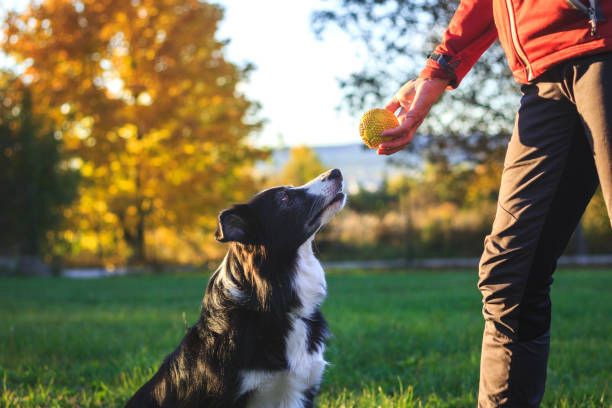
It is no coincidence that a large majority of the world’s most famous language-learning dogs belong to the Border Collie breed. From the legendary Chaser to the pioneer Rico, Border Collies consistently appear at the top of these cognitive studies for a specific historical reason. They were originally bred to herd sheep across vast distances, often working far away from their human handlers. To be successful in their jobs, these dogs had to interpret a complex series of whistles, hand gestures, and spoken instructions with incredible speed and accuracy.
Modern scientists believe that generations of selective breeding for these traits have sharpened the Border Collie’s attention to human communication. Some individuals in this breed have demonstrated the ability to learn vocabularies of several hundred words, with at least one recorded case exceeding a thousand. While other breeds are certainly capable of learning words, Border Collies seem to be especially “tuned in” to human social signals. This unique evolutionary history makes them the ideal subjects for researchers looking to push the boundaries of what we know about animal intelligence and how dogs perceive our spoken language.
Learning Like Children

When researchers compare gifted dogs to human toddlers, they aren’t just being sentimental; they are making a serious scientific comparison. Recent experiments have shown that these exceptional dogs can acquire a new vocabulary through social observation rather than the strict, repetitive conditioning used in traditional training. In several controlled studies conducted throughout 2025 and 2026, gifted dogs recognized the names of new toys after simply overhearing a conversation between two people and were able to retain those names for a significant period afterward.
Scientists believe these unique abilities are rooted in what is known as social cognition. Dogs pay close attention to human eye contact, the direction of a person’s voice, and subtle emotional cues to gather information. This learning process closely resembles early human language development, where the meaning of words emerges gradually through shared social interaction. While this comparison does not mean that dogs are capable of speaking themselves, it does suggest that the cognitive foundations of language learning might be much older in our evolutionary history than we once thought.
Long-Term Memory

Perhaps the most surprising discovery in recent years involves the strength of a dog’s long-term memory. In a follow-up study released in 2024, researchers revisited a group of dogs that had been taught specific toy names years prior. They found that some of these dogs could still correctly identify and retrieve those toys by name, even after two full years of not seeing the objects. This level of performance goes far beyond simple biological conditioning; it indicates a sophisticated system of stored knowledge rather than just a momentary reaction to a sound.
Such long-term retention suggests that dogs are capable of building structured memory systems in their brains. They don’t just remember experiences; they remember the specific labels we connect to objects in the physical world. Scientists believe that the strong emotional bond between an owner and their pet helps reinforce these memories. Because play and interaction repeatedly connect a word to a specific meaning, the information becomes “locked in” for the long haul. These findings also help explain why senior dogs are often able to respond to complex commands they haven’t practiced since they were young puppies.
Fast-Mapping Ability

The concept of “fast mapping” was once thought to be a skill exclusive to human psychology. It describes the ability to learn a new word after only a very brief exposure to it. However, dogs like Rico and Chaser proved that some animals possess this exact same mental shortcut. By using a process of deduction, these dogs can infer the meaning of an unfamiliar word by excluding the objects they already recognize. If a dog is told to find a “Gorgon” and they see five familiar toys and one unfamiliar one, they will correctly choose the new item.
This type of reasoning requires more than just good hearing; it involves a combination of comparison, memory, and logical deduction. Researchers believe this specific ability explains why some household pets seem to understand “human talk” so quickly. Common words like “dinner,” “walk,” or “park” become meaningful because the dog forms consistent associations between a specific sound and a specific outcome. While not every dog is a “genius,” most have a basic version of this ability, allowing them to navigate their human-centric world by piecing together the sounds we make with the actions we take.
Everyday Communication

For the average pet owner, these scientific discoveries are changing the way we interact with our four-legged friends. The evidence suggests that dogs may understand far more of our language than we previously gave them credit for. While it is true that not every dog will have the capacity to learn hundreds of nouns, most are capable of connecting human speech to familiar objects, people, and daily routines. This means that the “baby talk” we use with our pets might actually be serving a functional purpose in their learning process.
Today, many animal behaviorists encourage owners to engage in richer communication with their pets. Using consistent names for toys, specific rooms, and family members helps dogs build a more robust mental map of their environment. Brain studies have confirmed that dogs link these nouns to actual mental representations, proving that they aren’t just reacting to a treat. Talking to your dog may be less about being sentimental and more about a genuine, albeit limited, exchange of information. Our pets are listening closer than we think, and every conversation is an opportunity to strengthen that ancient bond.


