
1. Inland Taipan (Fierce Snake)

Known as the “Fierce Snake,” the Inland Taipan holds the title for the most venomous snake in the world. Native to Australia, just one bite from this snake has enough venom to kill dozens of humans. Luckily, it’s a shy species and rarely comes into contact with people.
2. Eastern Brown Snake

This Australian native is responsible for the majority of snakebite deaths in Australia. The Eastern Brown Snake is highly aggressive, and its venom can cause paralysis, seizures, and even cardiac arrest if not treated quickly.
3. Coastal Taipan
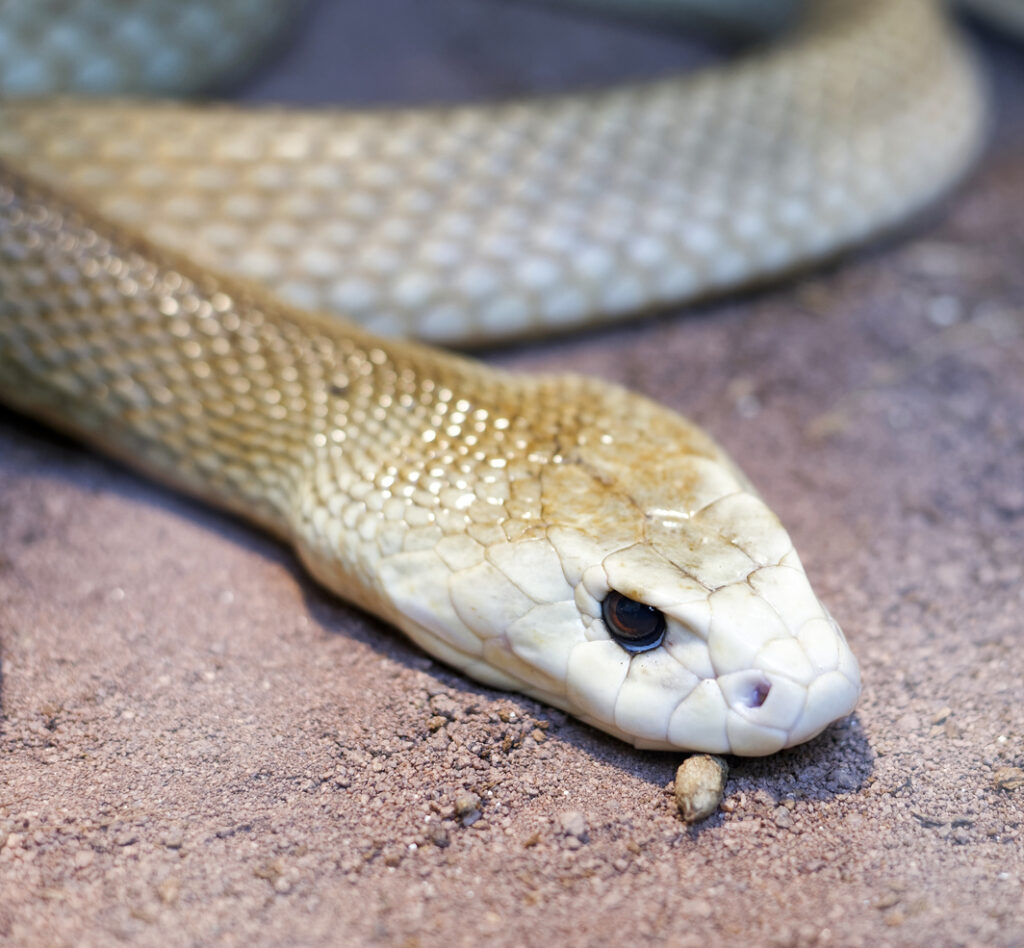
The Coastal Taipan, also found in Australia, is extremely fast and agile. It can strike with incredible precision, and its venom attacks the nervous system and blood, leading to paralysis and internal bleeding. This snake is one you definitely don’t want to encounter.
4. Black Mamba

Famous (and feared) across Africa, the Black Mamba is not only venomous but also incredibly fast, reaching speeds up to 12 mph. Its venom can cause death within hours, and it often strikes multiple times in rapid succession. This snake has a fierce reputation, and rightly so!
5. Blue Krait

Also known as the Malayan Krait, this snake is found in Southeast Asia. Its venom is highly neurotoxic, meaning it affects the nervous system and can cause respiratory failure. Despite its lethality, the Blue Krait is a nighttime predator and generally tries to avoid humans.
6. Belcher’s Sea Snake

Belcher’s Sea Snake, often found in the tropical waters of the Indian and Pacific Oceans, has one of the most toxic venoms of any snake. Fortunately, it’s quite docile and rarely bites, so attacks on humans are extremely rare.
7. Many-Banded Krait

The Many-Banded Krait, also called the “Chinese Krait,” is found throughout Southeast Asia and China. Its venom is incredibly powerful and attacks the nervous system, often leading to paralysis. This snake is more active at night, so it’s best to avoid its habitats after dark.
8. Boomslang

Native to sub-Saharan Africa, the Boomslang has a venom that causes internal bleeding, sometimes hours after a bite. It’s rear-fanged, meaning it has to chew to inject venom. Despite this, it’s a master at camouflage, making it hard to spot in its tree-filled habitat.
9. Saw-Scaled Viper

The Saw-Scaled Viper is small but deadly. Found in parts of Asia, the Middle East, and Africa, it’s known for its “sizzling” warning sound when threatened. Its venom is hemotoxic, which means it causes blood cells to break down, leading to clotting issues and internal bleeding.
10. Russell’s Viper

This snake is one of the most dangerous in Asia, responsible for numerous snakebite fatalities. Russell’s Viper is highly aggressive and injects a venom that can cause intense pain, swelling, and multi-organ failure if untreated.
11. Philippine Cobra

The Philippine Cobra is a spitting cobra known for its incredibly potent venom and its ability to accurately spit it up to 10 feet! Its venom primarily attacks the respiratory system, leading to paralysis. If you see one rearing up, it’s best to back away.
12. Tiger Snake

Found in Australia, the Tiger Snake gets its name from its distinctive banding pattern. Its venom is a powerful mix of neurotoxins, coagulants, and hemolysins, which can cause blood clotting and nerve damage. Tiger Snakes are often found near water, so be cautious around wetlands.
13. Forest Cobra

One of the longest and most venomous cobras, the Forest Cobra is native to Africa. Unlike some cobras, it’s equally at home in trees or on the ground. Its venom is highly neurotoxic and can cause rapid respiratory failure. This cobra is known for its aggressive temperament.
14. King Cobra

The King Cobra, the longest venomous snake in the world, can reach up to 18 feet in length! Its venom isn’t the most toxic, but the snake injects large quantities, making it lethal. Despite its fearsome reputation, the King Cobra is shy and avoids humans if it can.
15. Fer-de-Lance (Bothrops asper)

This Central and South American pit viper is known for its highly toxic venom, which can cause tissue destruction and internal bleeding. The Fer-de-Lance is highly aggressive and camouflages well in the forest, making it particularly dangerous to unsuspecting hikers.


