
1. The Diagnosis That Changed Everything

As news about Bruce Willis’ health continues to touch hearts worldwide, fans are revisiting the moments that made him unforgettable. In 2022, the family of Bruce Willis publicly revealed his aphasia diagnosis, later clarifying in 2023 that it had progressed to frontotemporal dementia. The announcement reshaped how fans viewed his final years on screen and sparked a global conversation about neurological disorders. Medical experts explained that FTD affects language, behavior, and personality, making continued acting impossible. The family’s openness, led by his wife Emma Heming and supported by Demi Moore and their daughters, was widely praised for raising awareness and reducing stigma. Advocacy groups noted a surge in public interest and donations following their statements.
2. Die Hard and the Birth of a New Action Hero

When Die Hard premiered in 1988, few expected it to redefine action cinema. Willis’ John McClane was not invincible or muscle-bound, but tired, sarcastic, and visibly human. Film historians often credit the role with shifting Hollywood’s action-hero template away from superhuman figures toward relatable protagonists. The movie’s success launched a franchise that became a holiday-season staple for decades and influenced countless imitators. Critics later noted that Willis’ background in comedy gave McClane emotional range, humor, and vulnerability. Today, Die Hard is frequently cited in lists of the greatest action films ever made, and McClane remains a benchmark character studied in film schools for how personality can elevate spectacle into something enduring and culturally resonant.
3. Moonlighting Made Him a Household Name

Before blockbuster fame, Willis became a television sensation on Moonlighting in the mid-1980s. Playing the fast-talking David Addison opposite Cybill Shepherd, he demonstrated sharp comedic timing and charisma that stood out in an era dominated by traditional sitcom leads. The show’s playful breaking of the fourth wall and rapid-fire dialogue helped redefine TV comedy-drama hybrids. Industry insiders later said Moonlighting proved Willis could carry a project, paving the way for his unlikely casting as an action lead. The series also earned him an Emmy Award, validating his talent beyond popularity. Even decades later, Moonlighting is remembered as the turning point that transformed a bartender-turned-actor into one of Hollywood’s most bankable and versatile stars.
4. Pulp Fiction Reinvented His Career

By the early 1990s, some critics felt Willis’ career had stalled, but Pulp Fiction changed that narrative completely. Cast as boxer Butch Coolidge, he delivered a grounded, restrained performance that contrasted sharply with his action roles. Director Quentin Tarantino’s non-linear storytelling and stylized dialogue introduced Willis to a new generation of filmgoers and critics. The film’s critical and commercial success restored his credibility as a serious actor and opened doors to more unconventional projects. Scholars often cite Pulp Fiction as proof of Willis’ adaptability and willingness to take creative risks. It remains a defining example of how a single, well-chosen role can revive a career and cement long-term relevance.
5. The Sixth Sense Showed His Emotional Depth
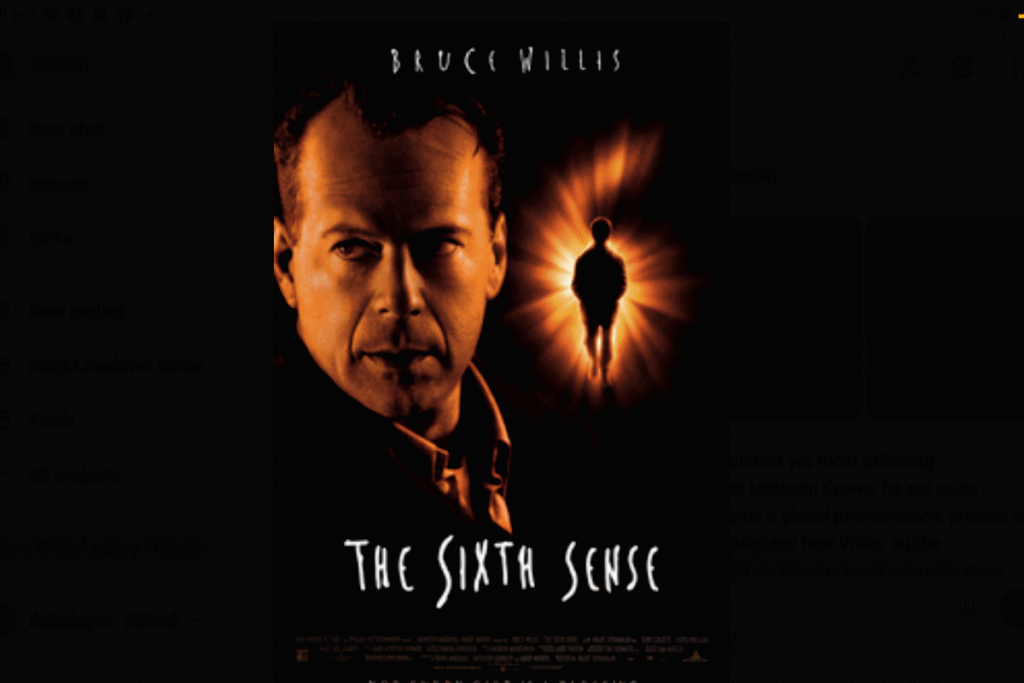
In The Sixth Sense, Willis delivered one of the quietest yet most affecting performances of his career. As child psychologist Malcolm Crowe, he set aside bravado for empathy and restraint. The film became a global phenomenon, praised for its storytelling and emotional weight. Critics highlighted how Willis’ subtle expressions anchored the film’s tension and made its famous twist resonate more deeply. The movie earned multiple Academy Award nominations and solidified his reputation as an actor capable of depth and vulnerability. For many fans, this role demonstrated that Willis was far more than an action star, capable of anchoring emotionally complex narratives that relied on nuance rather than spectacle.
6. A Career Spanning Over Four Decades

Few actors maintain relevance across four decades, but Willis did just that. From television comedy in the 1980s to blockbuster dominance in the 1990s and steady film output in the 2000s, his career mirrored Hollywood’s evolution. Box office analysts note that his films collectively grossed billions worldwide, placing him among the most commercially successful actors of all time. Beyond numbers, his longevity reflected adaptability, as he moved between genres and production scales. Even when critical reception varied, audiences remained loyal. This sustained presence ensured that multiple generations grew up with his work, reinforcing his status as a cultural constant rather than a star of a single era.
7. The Rise of the Reluctant Hero Archetype

Willis popularized the “reluctant hero,” a character type defined by sarcasm, vulnerability, and emotional realism. Unlike traditional action leads, his characters often resisted heroism, reacting rather than charging forward. Film critics argue this approach humanized action cinema, allowing audiences to see themselves in extraordinary situations. This archetype influenced later stars and franchises that emphasized flawed protagonists over idealized ones. Directors frequently cited Willis’ performances as proof that humor and fear could coexist with bravery. The enduring popularity of his action films suggests this model resonated deeply with viewers, reshaping genre expectations in ways still visible in contemporary filmmaking.
8. A Strong and United Family Presence

Public response to Willis’ illness has been shaped largely by his family’s unity. Emma Heming, Demi Moore, and their children consistently present a shared front, emphasizing love, dignity, and privacy. Media observers note how rare such harmony is in Hollywood, particularly in blended families. Their joint statements and public appearances project stability and compassion, reinforcing the image of Willis as a devoted father and partner. Fans frequently comment that this family solidarity mirrors the warmth seen in many of his roles. In a culture often drawn to scandal, their approach stands out as an example of grace under pressure.
9. His Final Films Reconsidered by Fans

In light of his diagnosis, fans and critics have reassessed Willis’ final run of films with renewed empathy. What were once viewed as routine projects are now seen as efforts to keep working despite declining health. Industry professionals revealed that accommodations were made on set to support him, underscoring his commitment. This reevaluation has softened criticism and sparked broader discussions about aging actors and workplace compassion. Viewers increasingly interpret these films as testaments to perseverance rather than artistic decline, adding a poignant layer to his filmography and deepening respect for his dedication to his craft.
10. A Legacy That Continues to Inspire
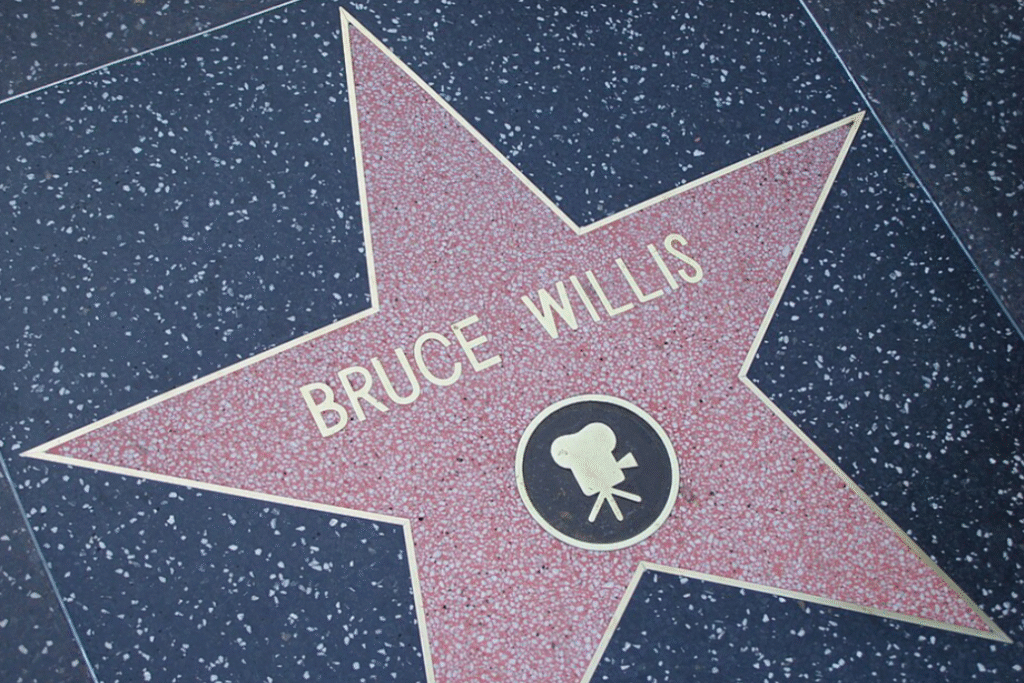
As fans prepare to say goodbye, Willis’ legacy feels firmly intact. Tributes across social media highlight not just famous lines or scenes, but how his characters made audiences feel. Film educators continue to study his performances as examples of balance between entertainment and authenticity. His influence is evident in modern action and drama alike, proving that emotional honesty can coexist with commercial success. While his health journey is heartbreaking, the collective reflection emphasizes gratitude over loss. Willis leaves behind a body of work that will be revisited, rediscovered, and celebrated for generations to come.
What stands out is not just the blockbuster moments but the smaller, human ones, the roles that made people laugh, cry, and feel less alone.


