
Disneyland’s Secret Feline Security
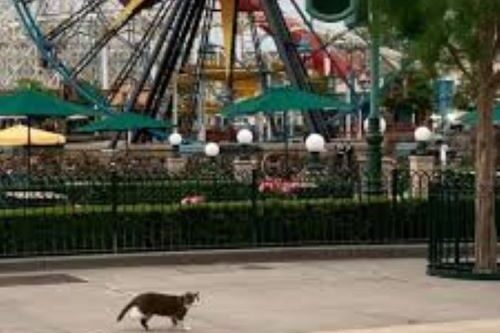
It is quite a comfort to know that even in the most meticulously planned places on Earth, nature still plays a vital role in keeping things running smoothly. While most guests are busy queuing for Space Mountain or hunting down the perfect churro, a stealthy army of roughly two hundred feral cats is hard at work maintaining the magic behind the scenes. These feline residents have lived on the property since the park first opened in 1955 because Walt Disney himself discovered a colony of them living inside Sleeping Beauty Castle during its construction. Rather than removing them permanently, the staff realised that these natural hunters provided a brilliant and environmentally friendly solution to the pesky rodent problem that often plagues large outdoor venues. These cats are not just random strays but are actually official employees of a sort because they are fed, spayed, neutered, and given regular veterinary checkups by the park’s dedicated animal care team.
The arrangement is remarkably sophisticated for a theme park setting because the cats are mostly nocturnal and stay hidden during the day to avoid frightening the thousands of tourists walking the grounds. Disney has even set up discreet feeding stations across the massive resort so that the cats remain healthy and motivated to stick around their designated territories. This clever reliance on natural instincts shows a deep respect for the ecosystem and provides a fascinating glimpse into how human ingenuity can work alongside the animal kingdom. While you might occasionally spot a brave kitty lounging near a hotel or in a quiet corner of California Adventure, they generally prefer to keep to themselves while they patrol the perimeter. It is a lovely thought that as the sun sets over the Magic Kingdom, these silent guardians emerge to ensure the park stays pristine for the next morning’s visitors.
Wombats Poop Perfect Cubes
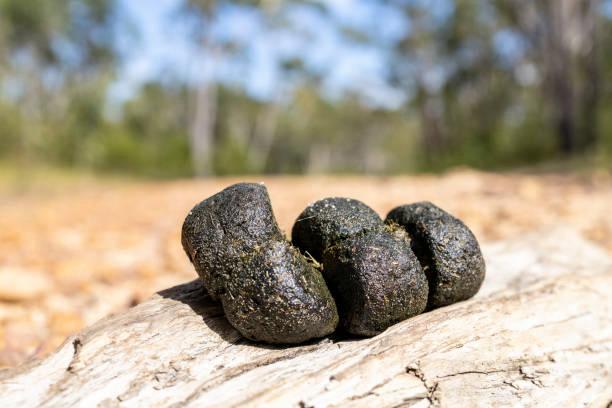
It is a bit of a laugh to think about the plumbing of the animal kingdom but the Australian wombat has a biological quirk that is genuinely hard to believe until you see it. These sturdy little bulldozers are the only creatures in the world that produce square-shaped droppings and they do it for a very practical reason. Wombats use their waste to mark their territory and because they have quite poor eyesight they like to leave these markers on top of rocks or fallen logs where the scent can travel further in the breeze. If their business was round like most animals it would simply roll away into the grass but the flat sides of the cubes keep them exactly where they are put. It is a brilliant bit of natural engineering that helps these solitary animals communicate without ever having to meet face to face.
The way these cubes are formed is actually quite a marvel of physics because it all happens in the final section of the wombat’s long intestine. Scientists discovered that the gut walls have two stiff zones and two flexible zones which squeeze the waste into a distinct square shape as the water is absorbed. This process takes a very long time because wombats have one of the slowest metabolisms in the world and it can take up to two weeks to digest a single meal of dry grass. By the time the waste reaches the end of the line it is so dry and compressed that it holds its shape perfectly even after it has been deposited. It is a strange thing to celebrate but this unique adaptation is a perfect example of how evolution finds the most practical solutions to everyday problems in the wild.
Crows Never Forget Faces
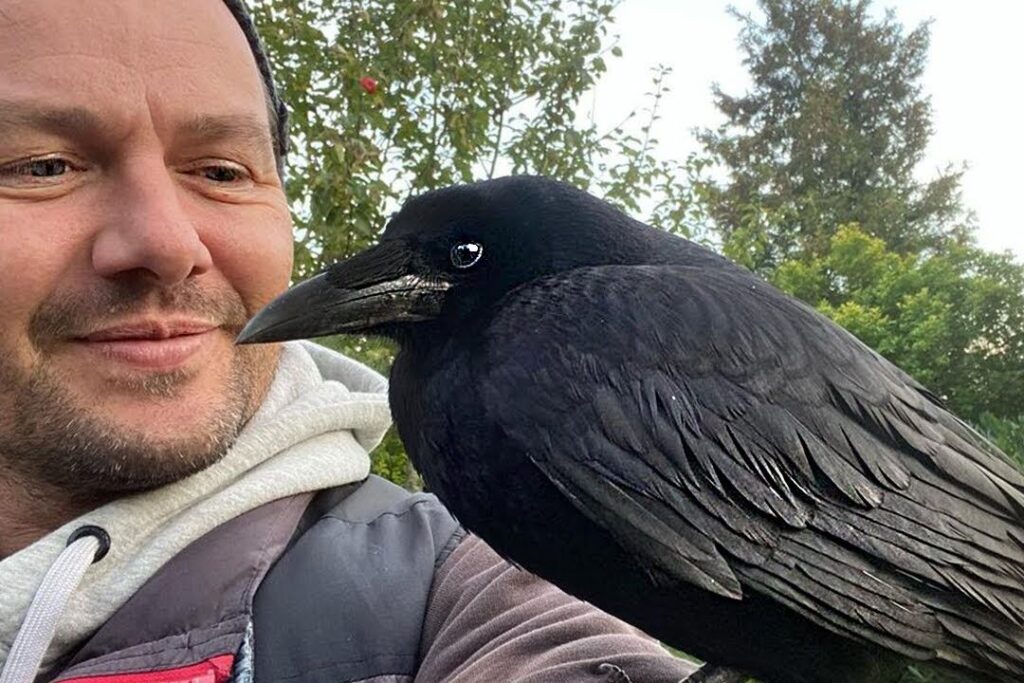
If you have ever felt like a bird was watching you with a bit too much interest then you might want to be on your best behaviour because crows are famous for holding lifelong grudges. These birds are incredibly sharp and have the ability to recognise individual human faces even if that person changes their clothes or wears a hat. Researchers in Seattle famously proved this by wearing specific masks while trapping birds and they found that the crows would scold and dive-bomb anyone wearing those masks for years afterward. What is even more impressive is that the crows told their friends and their children about the “dangerous” humans and soon the entire local flock knew who to avoid. It is a sobering reminder that we are being judged by the wildlife around us every single day.
This social intelligence is not just about being grumpy though because crows are just as quick to remember people who are kind to them. There are countless stories of people who feed their local crows and find themselves being followed home or even receiving “gifts” like shiny buttons and colourful glass in return for their generosity. They have a complex social language and use their deep caws to share news about where the best food is or where a sneaky cat might be hiding. Because they live in such tight-knit family groups they pass this knowledge down through the generations which creates a sort of feathered culture that exists right in our own backyards. It is worth taking a moment to offer a friendly nod to your local crow because they truly are the most observant neighbours you will ever have.
Bees Vote For Homes
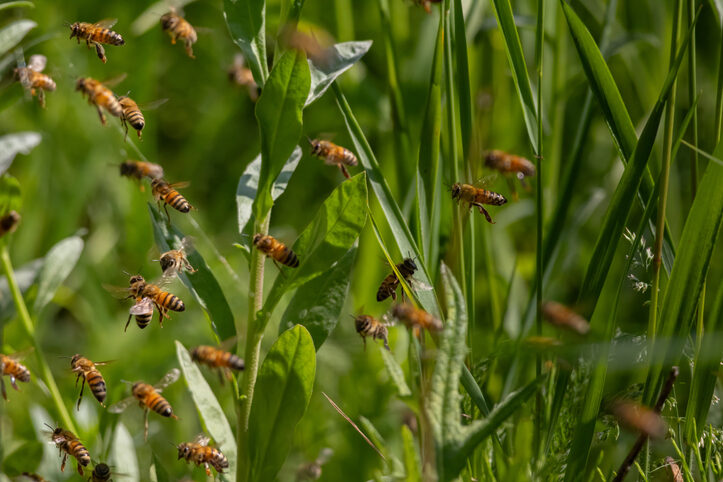
The idea of a fair and honest election feels like a very human concept but honeybees have been practicing their own form of democracy for millions of years. When a beehive gets too crowded and needs to find a new place to live the scout bees fly off in every direction to house-hunt for the perfect hollow tree. When they come back they do not just tell the queen what to do but instead they perform a special “waggle dance” to pitch their favourite location to the rest of the group. The more excited and vigorous the dance is the better the location is and other bees will then fly out to inspect the property for themselves. If they like what they see they come back and join in the dance for that specific spot until a clear winner is chosen.
This process is remarkably peaceful because the bees are only interested in the best outcome for the whole family rather than winning a personal argument. They will debate several different options for hours or even days and they only move the entire swarm once a total consensus has been reached by the majority of the scouts. It is a beautiful system that relies on honesty and teamwork and it ensures that the colony has the best possible chance of surviving the winter in a sturdy and safe new home. We often think of insects as being driven purely by instinct but this collective decision-making shows a level of social sophistication that is quite humbling. It turns out that the hum of a beehive might actually be the sound of a very busy and very polite political debate taking place.
Otters Hold Hands Sleeping
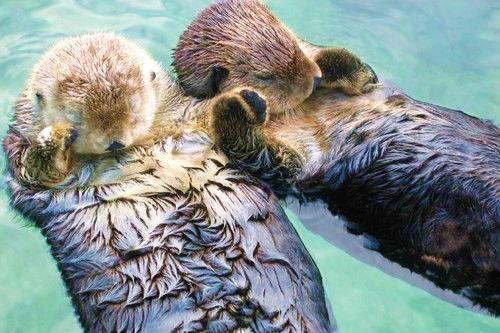
There is nothing quite as heart-melting as the sight of sea otters drifting on the ocean waves but their habit of holding hands is actually a clever survival tactic. Because they live in areas with strong currents and heavy tides they run the risk of drifting miles away from their family while they are catching forty winks. To stay together they will reach out and link paws with their partners or their pups to create a “raft” of otters that stays in one place. They often wrap themselves in long strands of giant kelp as well which acts like a natural anchor to keep the whole group from being swept out to sea. It is a lovely example of how physical connection and community are vital for staying safe in a wild environment.
Aside from their famous hand-holding these little marine mammals are also some of the only animals in the world that use tools on a daily basis. They have a favourite rock that they keep tucked in a little pouch of skin under their armpits and they use it to smash open stubborn clams and mussels while floating on their backs. They are incredibly busy creatures because they have to eat about a quarter of their own body weight every single day just to keep warm in the chilly Pacific waters. Since they do not have a layer of blubber like a seal they rely on their incredibly thick fur to trap air and keep their skin dry. This means they spend hours every day grooming themselves and each other which only strengthens the bonds within their little floating communities.
Elephants Mourn Their Family
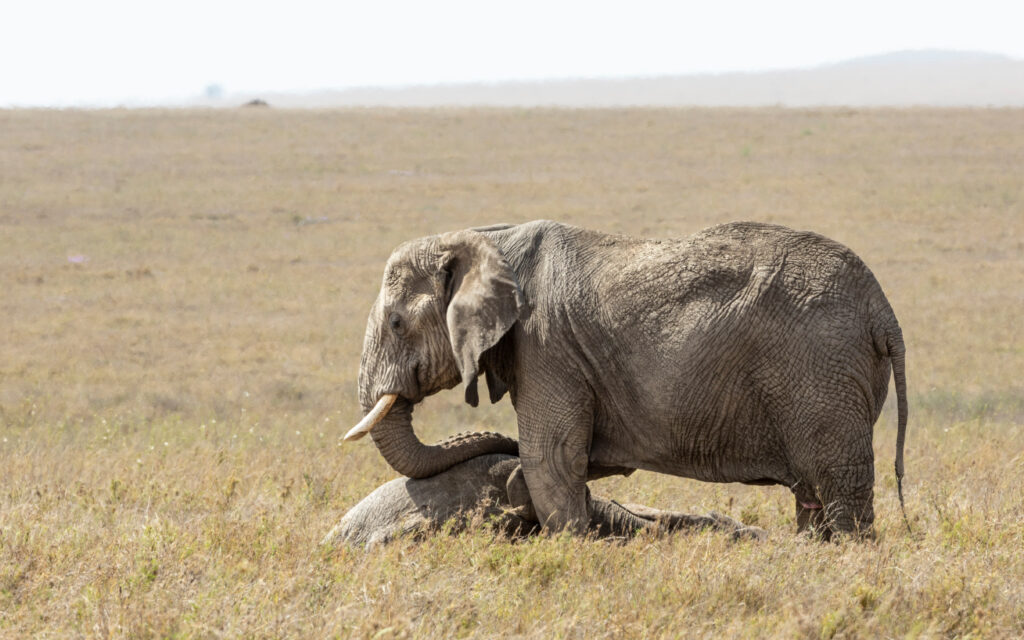
The emotional lives of elephants are deeply moving and they are one of the very few species that truly understand the weight of losing a loved one. When a member of an elephant herd passes away the others do not just move on but instead they often stop and hold a sort of silent vigil over the body. They have been seen using their trunks to gently stroke the tusks and bones of the deceased in what looks like a very human gesture of goodbye. Even years later when a herd passes the spot where a relative died they will fall into a respectful silence and spend time investigating the remains. It is a profound display of memory and love that shows these animals feel grief just as sharply as we do.
This deep sense of empathy extends to the way they raise their young because every female in the herd acts as a mother to the calves in the group. If a baby elephant gets stuck in the mud or feels frightened the entire family will rush over to help and offer comfort with low-frequency rumbles that can be felt through the ground. They are also incredibly intelligent and can recognise themselves in a mirror which is a rare sign of self-awareness that only a few animals possess. Because they live for sixty or seventy years they develop lifelong friendships and maintain a complex social map of their surroundings. Watching a herd of elephants move across the plains is a reminder that we are sharing the world with ancient and wise spirits who value their family above everything else.
Sloths Are Olympic Swimmers
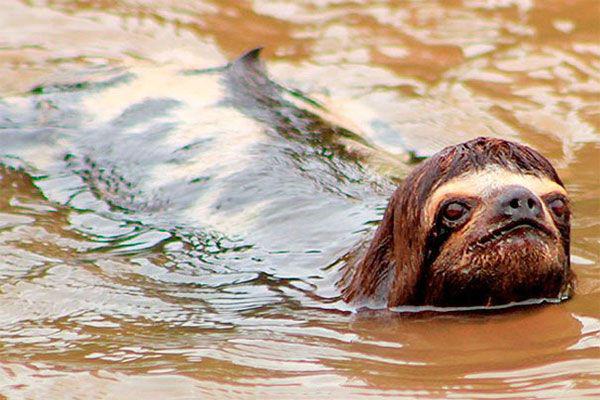
We all know that sloths are the undisputed kings of being slow and lazy on land but you might be shocked to learn that they are actually fantastic swimmers. When a sloth needs to move across the rainforest more quickly or find a new mate they will often drop from a high branch directly into a river and start paddling. Because they have very little muscle and a lot of air in their stomachs they float quite easily and their long arms work like powerful oars to pull them through the water. They can actually move three times faster in the river than they can on the ground and they are surprisingly graceful while they are doing it. It is a secret talent that helps them navigate their tropical home during the long rainy seasons.
What is even more impressive is that sloths can hold their breath underwater for up to forty minutes which is much longer than most land animals or even some dolphins. They do this by slowing their heart rate down to a tiny fraction of its normal speed and focusing all their energy on moving through the current. Even though they spend about ninety percent of their lives hanging upside down and sleeping they are perfectly adapted for these sudden bursts of aquatic travel. Their fur even grows in the opposite direction to other animals so that the water can run off them more easily while they are upside down. It is a wonderful reminder that you should never judge a book by its cover because even the slowest creature in the woods might be a champion in the water.
Squirrels Are Forest Gardeners
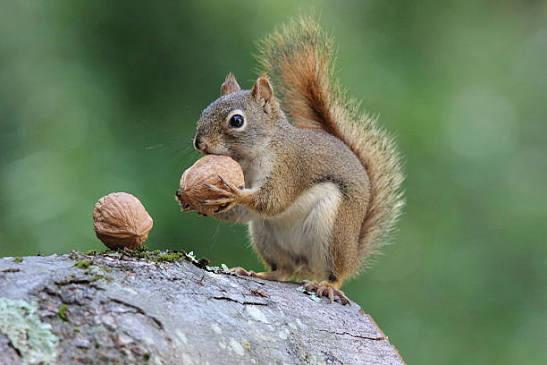
Most of us see squirrels as slightly frantic garden visitors who spend their lives chasing each other up trees but they are actually responsible for planting millions of trees every year. These bushy-tailed rodents have a habit of hiding nuts and seeds in hundreds of different holes to save for a rainy day in a process called “caching.” However they are famously forgetful and they often fail to find about half of the snacks they have buried in the ground. Because these seeds are tucked away in perfect little pockets of soil they eventually sprout and grow into the next generation of oak and hickory trees. In a very real way our forests would not be nearly as lush or healthy without the help of these accidental gardeners.
Squirrels are also much sneakier than they look because they know that other animals are trying to steal their hard-earned loot. If a squirrel thinks it is being watched by a rival or a hungry bird it will often perform a “fake burial” where it digs a hole and pretends to drop a nut inside before covering it up and running away. They keep the real treasure hidden in their mouths and wait until the coast is clear to find a more secret spot for it. This level of tactical thinking shows that they have a lot more going on in their heads than just a craving for acorns. Their ability to navigate the tiny branches of the canopy with such speed and balance is a masterclass in agility and it makes them one of the most successful and important little animals in our local ecosystem.
Cows Have Best Friends
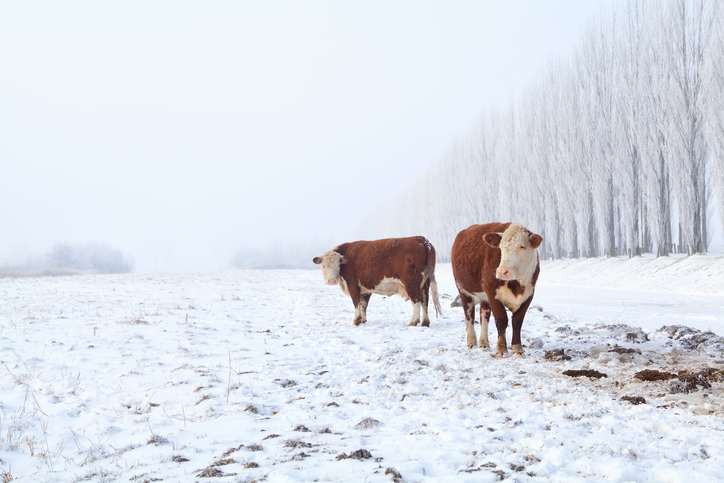
Cows might look like they are just standing around chewing grass all day but they actually have very busy and emotional social lives. Scientific studies have shown that cows form incredibly strong bonds with certain members of their herd and they genuinely have “best friends” that they prefer to spend all their time with. When a cow is placed next to its favourite companion its heart rate drops and it becomes much more relaxed and happy. On the other hand if they are separated from their buddy they can become visibly stressed and will often call out for them for hours. It is a sweet and gentle reminder that these large animals are social beings who value companionship and loyalty.
Cows are also much smarter than people give them credit for and they have been known to solve complex problems like figuring out how to open gate latches or operate water pumps. They even experience a “Eureka moment” of excitement when they figure something out which shows they have a sense of pride in their own achievements. They can remember faces for a long time and they develop a very clear social hierarchy within the herd to make sure everyone gets along without any fuss. Because they are so sensitive to the moods of the animals around them they often act as a calming influence on the rest of the group. Understanding the personality and the friendships of a cow makes the local countryside feel a lot more like a community and it changes the way we look at these gentle giants in the fields.
Octopuses Have Nine Brains
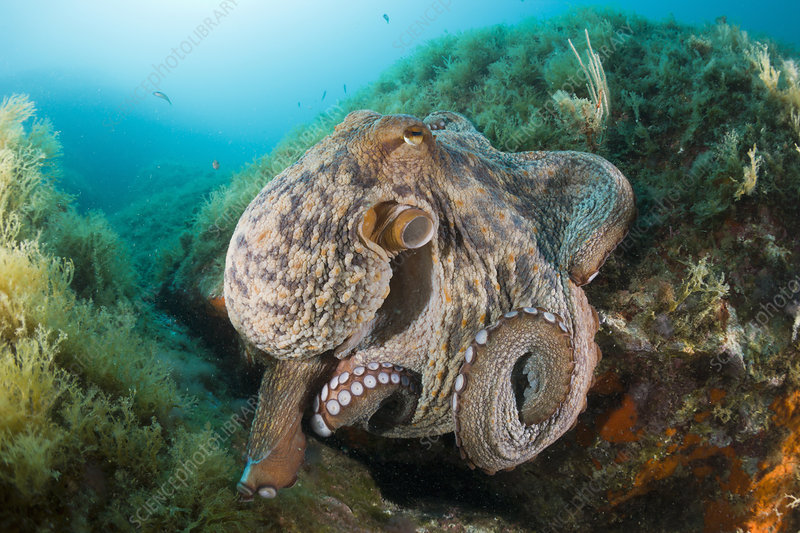
The octopus is probably the closest thing to an alien that we have on our planet and its body is built in a way that is truly mind-boggling. While we have one central brain they actually have a mini-brain in each of their eight arms along with a larger central brain in their head. This means that each arm can essentially think for itself and figure out how to open a shell or explore a crevice without waiting for instructions from the middle. They also have three hearts to pump their blue blood around their bodies which is a necessary bit of plumbing for such an active and complex creature. It is a completely different way of being alive and it makes them some of the most intelligent and mysterious animals in the sea.
Octopuses are also the undisputed masters of disguise and they can change both the colour and the texture of their skin in less than a second to match a rock or a patch of seaweed. They do not just change for camouflage though as they also use their colours to express their moods or to warn off other predators. They are famous for being great escape artists in aquariums because they can squeeze their entire bodies through any hole that is larger than their beak which is the only hard part of their body. They have been known to solve puzzles and even play with toys just for the fun of it which shows a level of curiosity that is rare in the ocean. Every time we learn something new about an octopus it reminds us just how diverse and incredible life on Earth can be.
Puffins Use Tiny Tools
It is often thought that using tools is a sign of high intelligence reserved only for humans and perhaps a few clever monkeys but the puffin has recently joined this exclusive club. These lovely seabirds with their bright orange beaks were spotted on a remote Welsh island picking up small wooden sticks to scratch an itch on their chests. This might seem like a small thing to us but in the animal world it is a huge deal because it shows the bird is thinking ahead and using an object to solve a physical problem. Until this was filmed by scientists most people assumed puffins were just simple fishermen who spent their days bobbing on the waves and diving for sandeels to feed their families.
This discovery has completely changed the way we look at seabirds because it suggests they have a much more complex inner life than we ever imagined. Puffins are already quite remarkable because they spend most of the year living alone on the open ocean and only come back to land to find their lifelong partners and raise a single chick in a burrow. They have to deal with harsh weather and sneaky predators so being smart enough to use a tool might just be the tip of the iceberg when it comes to their survival skills. It is a wonderful thought that these “clowns of the sea” are actually little engineers in disguise and it makes you wonder what else they are doing when we are not watching them.
Dolphins Use Secret Names
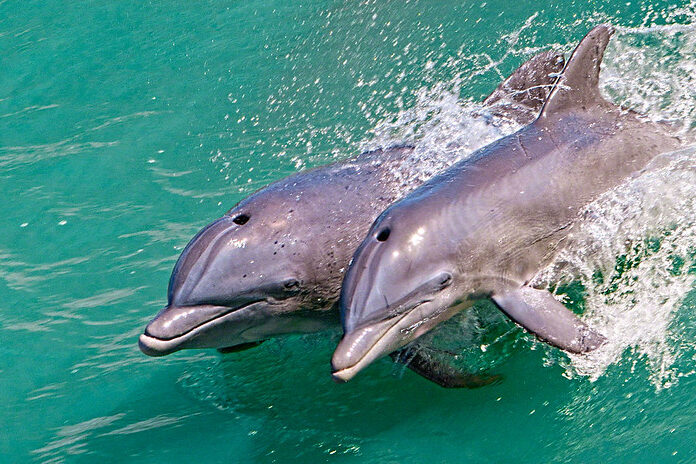
The way dolphins talk to each other is one of the most beautiful mysteries of the deep sea and we now know that they actually use individual names for one another. Every dolphin creates a “signature whistle” when they are young which is a unique sound that belongs only to them and stays the same for their entire lives. When they want to find a friend or call out to their mother they will mimic that specific whistle to get their attention just like we would call someone’s name across a busy street. This level of self-awareness is incredibly rare and it proves that dolphins have a very clear sense of who they are and who their friends are within their large underwater families.
These social bonds are so strong that dolphins will often remember the names of their companions even after being separated for twenty years or more. They use their complex clicks and whistles to coordinate hunting trips and to protect the younger calves from danger which shows a level of teamwork that is hard to find anywhere else in nature. Because they are so vocal and social they spend a lot of time “chatting” and playing together which helps keep the pod united and happy. Knowing that every dolphin in the ocean has its own name makes them feel so much more relatable to us as humans. It is a powerful reminder that the sea is full of distinct personalities and voices that are just as important as our own.
This fascinating glimpse into the natural world shows us that whether it is a theme park or the deep ocean, every living creature plays a vital role in the delicate balance of our planet.
Like this story? Add your thoughts in the comments, thank you.


