
1. A Silent Rejection Heard Around the World
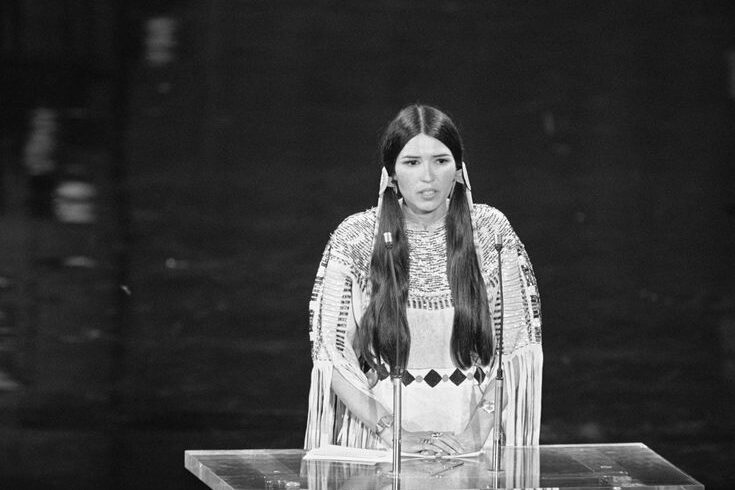
Marlon Brando didn’t even show up to the 1973 Oscars. Instead, he sent Native American activist Sacheen Littlefeather to reject his Best Actor award for The Godfather. She stood briefly, with grace, and explained Brando’s protest against Hollywood’s misrepresentation of Native Americans. In under 60 seconds, the room fell silent. What seemed like an absence became a powerful statement. “He very regretfully cannot accept this very generous award,” she said, sparking both applause and outrage. Years later, it’s still a defining moment of allyship and protest in entertainment.
2. Dylan Challenges the Crowd That Came to Praise Him
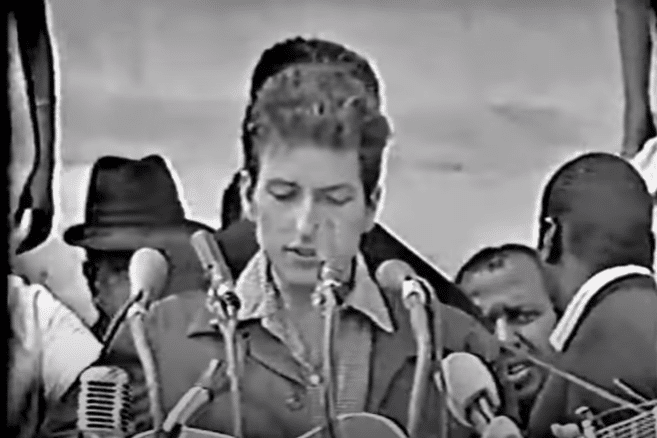
Bob Dylan was never one to play it safe. At the 1963 Tom Paine Award ceremony, he gave a speech that started fine but quickly unraveled into raw, uncomfortable truth. He questioned liberal assumptions, said he felt something for Lee Harvey Oswald, and left the audience stunned. “There’s a little bit of the outlaw in all of us,” he admitted. What was supposed to be an honor turned into a philosophical curveball. Dylan wasn’t being contrarian. He was exposing the murky waters of morality.
3. Chaplin’s Wordless Critique of American Fear
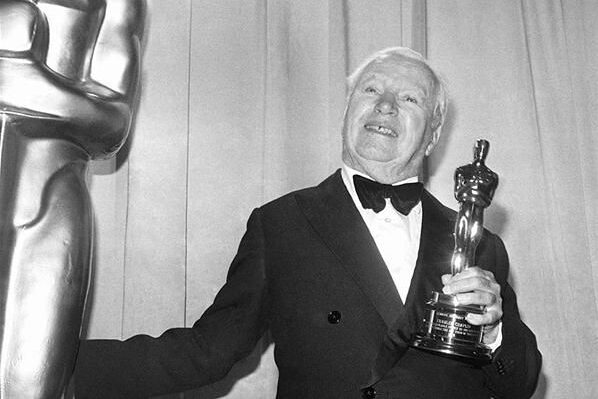
When Charlie Chaplin returned to the Oscars in 1972 after two decades of exile, the standing ovation lasted longer than his speech. He barely said much, and that was the point. After being pushed out of America during the Red Scare, his presence alone spoke volumes. “Words seem so futile, so feeble,” he said softly. His return wasn’t just an artistic celebration. It was a quiet rebuke of political paranoia. Sometimes, grace is the sharpest response.
4. Watson Reframes Feminism as Everyone’s Fight
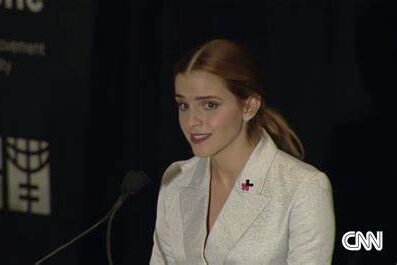
Emma Watson stood at the UN podium in 2014, her voice steady, her message crystal clear. Feminism isn’t anti-men. It’s pro-equality. In her HeForShe campaign address, she invited men into the conversation, challenging deep-rooted gender norms without casting blame. “If not me, who? If not now, when?” she asked. It was simple, but it cut through decades of division. Her speech redefined a word often misunderstood, planting a new seed of solidarity on a global scale.
5. Arquette’s Pay Equity Plea Shakes Hollywood
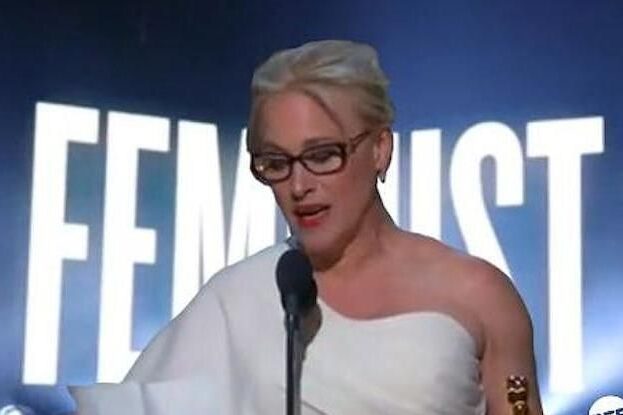
Winning Best Supporting Actress in 2015, Patricia Arquette used her acceptance speech to call for equal pay for women. “It’s time for wage equality once and for all,” she declared, earning a standing ovation especially from Meryl Streep and Jennifer Lopez. But applause quickly turned to controversy. Critics called it narrow, saying she ignored intersectionality. Still, her words opened the floodgates. Suddenly, gender pay gaps weren’t behind-the-scenes whispers. They were center stage.
6. Kanye’s Chaos: Confession Meets Performance
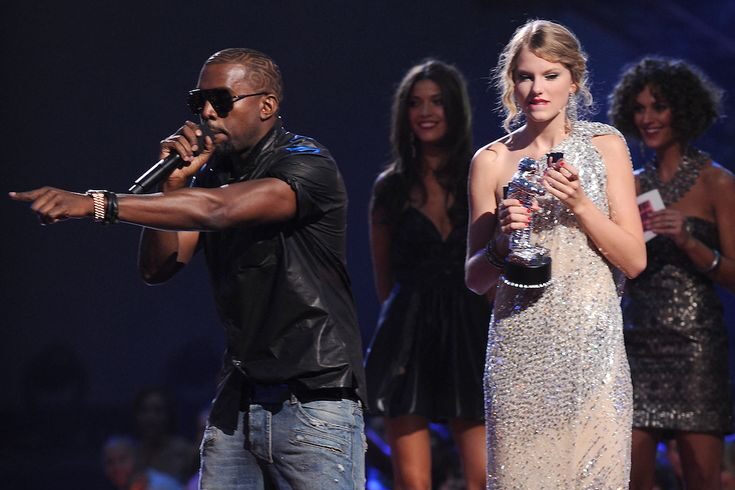
In 2015, Kanye West took the MTV stage to accept the Vanguard Award and delivered a 10-minute speech that defied every format. He meandered through past controversies, future presidential ambitions, and creative struggle. “I still don’t understand award shows,” he said midstream. It wasn’t polished, but it was raw, strange, and oddly poetic. Was it genius? A breakdown? Both? West made the audience sit in his stream of thought and left them wondering about the line between celebrity and human being.
7. Gehrig’s Goodbye That Taught Us Grace
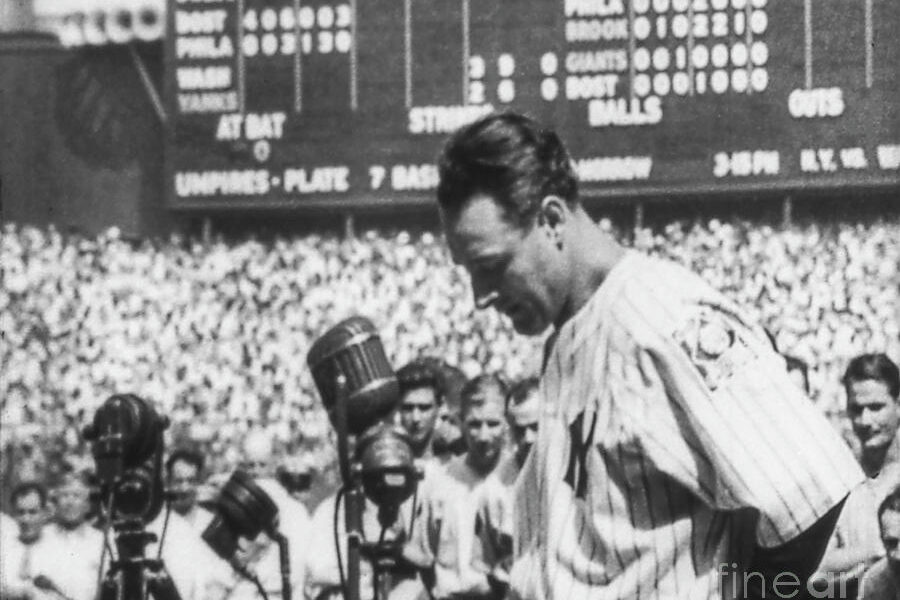
When Lou Gehrig stood at Yankee Stadium in 1939, facing the crowd after his ALS diagnosis, he didn’t talk about loss. He talked about luck. “Today, I consider myself the luckiest man on the face of the earth,” he said. His voice cracked, but his dignity never did. In a time when illness meant silence, Gehrig gave it a face and a soul. It wasn’t just a sports moment. It was a human one.
8. McDaniel Wins, and Navigates a Divided World
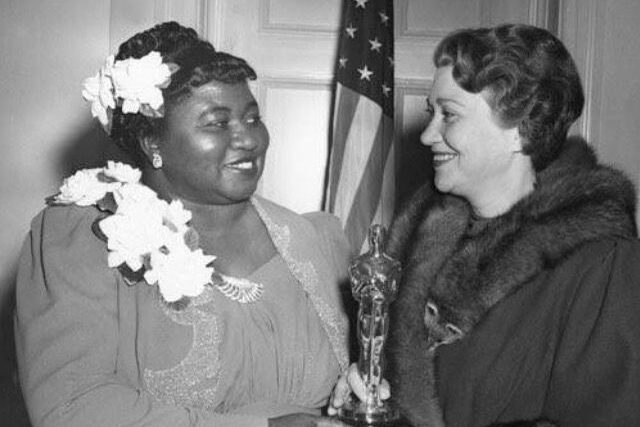
In 1940, Hattie McDaniel became the first Black actor to win an Oscar. Dressed elegantly, she thanked the Academy with humility, but also said, “I sincerely hope I shall always be a credit to my race.” It was a nod to the tightrope she walked. Celebrated in Hollywood, segregated everywhere else. Her win was monumental, but bittersweet. McDaniel spoke from a place of history and hope, carrying the weight of more than just her own dreams.
9. Mister Rogers’ Quiet Call to Remember
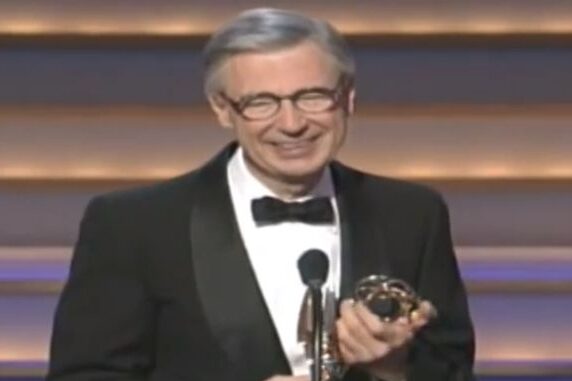
Fred Rogers, accepting a Lifetime Achievement Emmy in 1997, didn’t talk about himself. Instead, he asked the entire room to pause for 10 seconds and think of someone who helped them. “I’ll watch the time,” he said. What followed was total silence and tears. In a sea of flash and glamour, Rogers reminded everyone that kindness doesn’t need volume. It just needs space.
10. Bowie Questions MTV’s Blind Spots
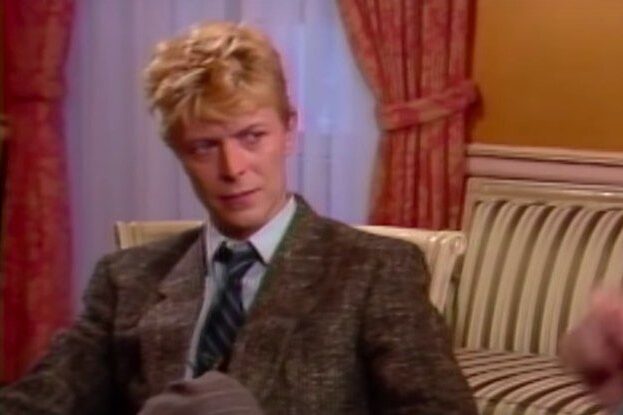
In a 1983 interview, David Bowie sat across from MTV VJ Mark Goodman and asked point-blank why the network wasn’t playing more Black artists. “There seem to be a lot of Black artists making good videos that I’m surprised aren’t used on MTV,” he said. Goodman stumbled through a defense, but Bowie stayed composed. He didn’t shout. He didn’t need to. His questions made the problem obvious. In a decade defined by image, Bowie used his to challenge a system.
11. Garson’s Wartime Speech Wove Patriotism into Hollywood
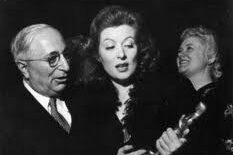
When Greer Garson won the Oscar for Mrs. Miniver in 1943, she didn’t keep it short. Her speech clocked in at over five minutes, veering into encouragement for Allied forces and global unity. “I feel very humble and very reverent,” she said, before launching into a heartfelt appeal that turned a film award into a moment of global awareness. In the middle of war, it was more than a thank-you. It was a call to believe in hope and humanity; however distant they seemed.
This story 11 Speeches That Said Way More Than You Realized was first published on Daily FETCH


