
1. Mountain Lion: Large Round Prints, No Claws
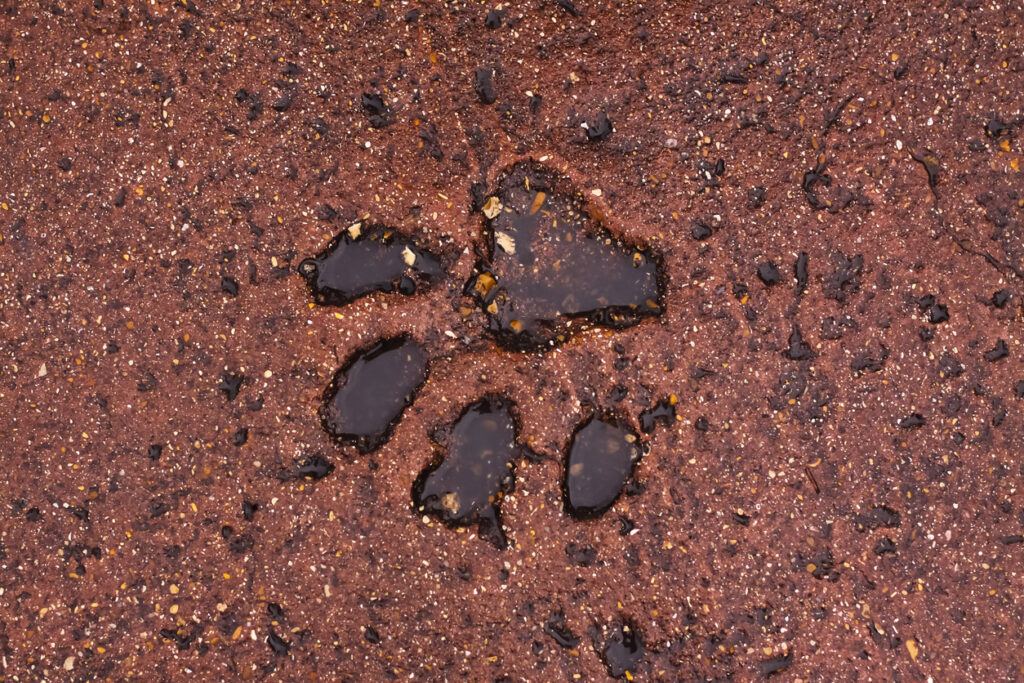
Mountain lion tracks are large, round, and typically about 3 to 4 inches wide. A key feature is the absence of claw marks because mountain lions retract their claws while walking, unlike dogs whose claws usually show. The print shows four toes and a distinct heel pad shaped like a bubble letter “M.” These smooth, clawless tracks indicate a stealthy predator moving silently through its territory. Spotting them means you’re near one of North America’s most elusive big cats, known for their quiet, powerful presence in forests and mountainous areas.
2. Black Bear: Human-Like Footprints
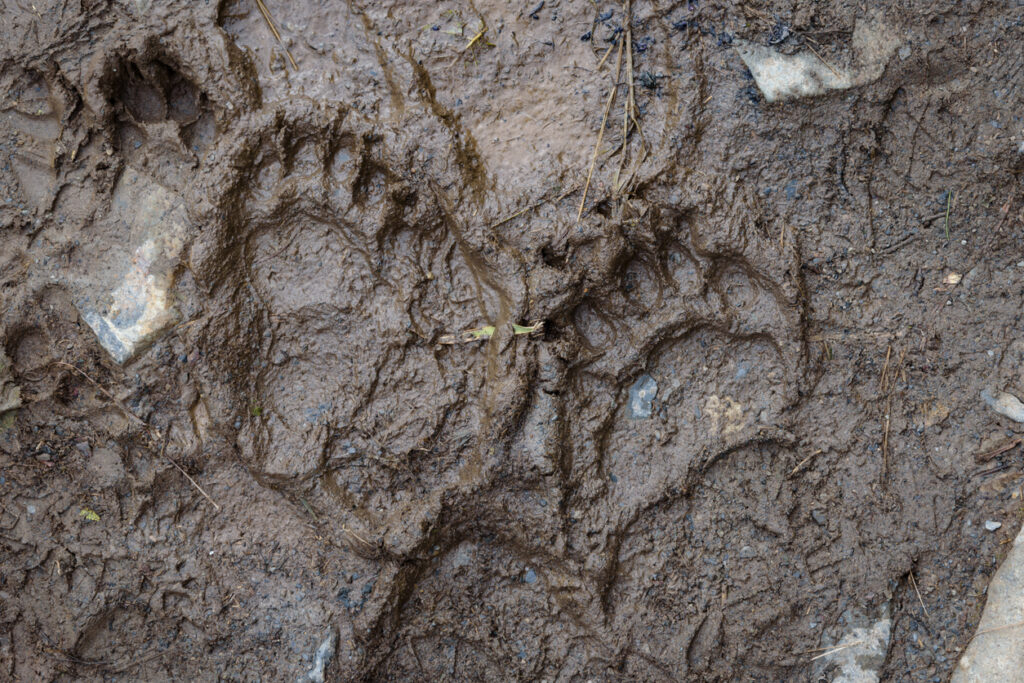
Black bear tracks often look surprisingly like human feet, with five toes and a broad heel pad. The hind foot is longer and more foot-shaped than the front, sometimes reaching up to 8 inches long. These prints are usually found near streams, berry patches, or forest trails. Bears move with a lumbering gait, and their tracks often show this spacing. Recognizing these prints helps identify the presence of a large, gentle mammal that roams widely in search of food, especially in wooded or mountainous habitats.
3. Raccoon: Tiny Hand-Like Prints
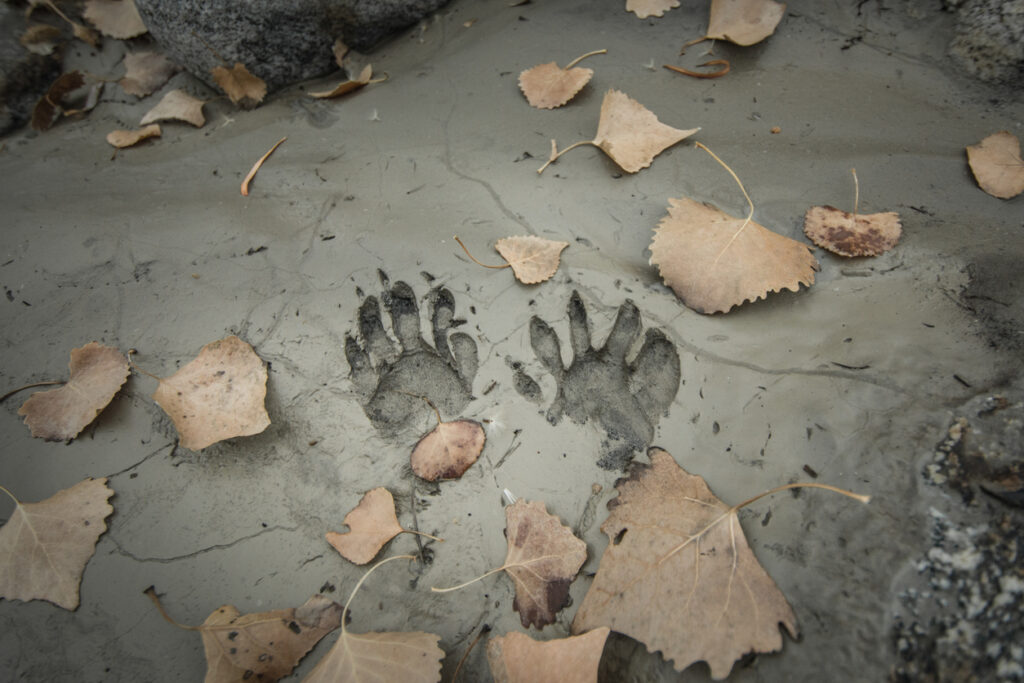
Raccoon tracks resemble tiny human hands, with five slender fingers on their front paws and longer, narrower hind feet also showing five toes. These prints often appear near water sources such as rivers, ponds, or lakes, where raccoons forage for aquatic insects and plants. Their curious nature leads to many tracks, sometimes showing exploration patterns in mud or soft soil. Because raccoons are mostly nocturnal, their tracks tell stories of nighttime adventures and clever foraging close to water, revealing their adaptability and intelligence.
4. White-Tailed Deer: Heart-Shaped Hoofprints
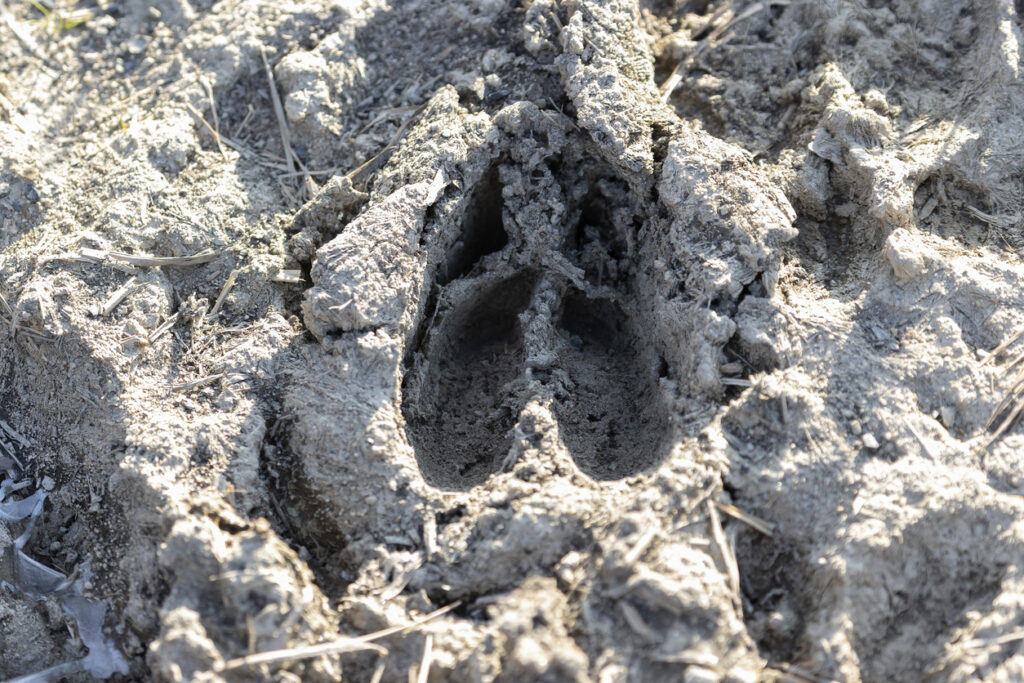
White-tailed deer leave heart-shaped hoof prints about 2 to 3 inches long, with two pointed toes forming the classic heart shape. These prints become especially clear in soft mud or fresh snow. Deer are common in many habitats, including forests, fields, and even suburban areas. Their tracks signal the presence of a graceful herbivore moving quietly through the landscape. The pointed toes help distinguish deer tracks from those of other hoofed animals like elk or moose.
5. Coyote: Oval Prints, Straight Line Stride
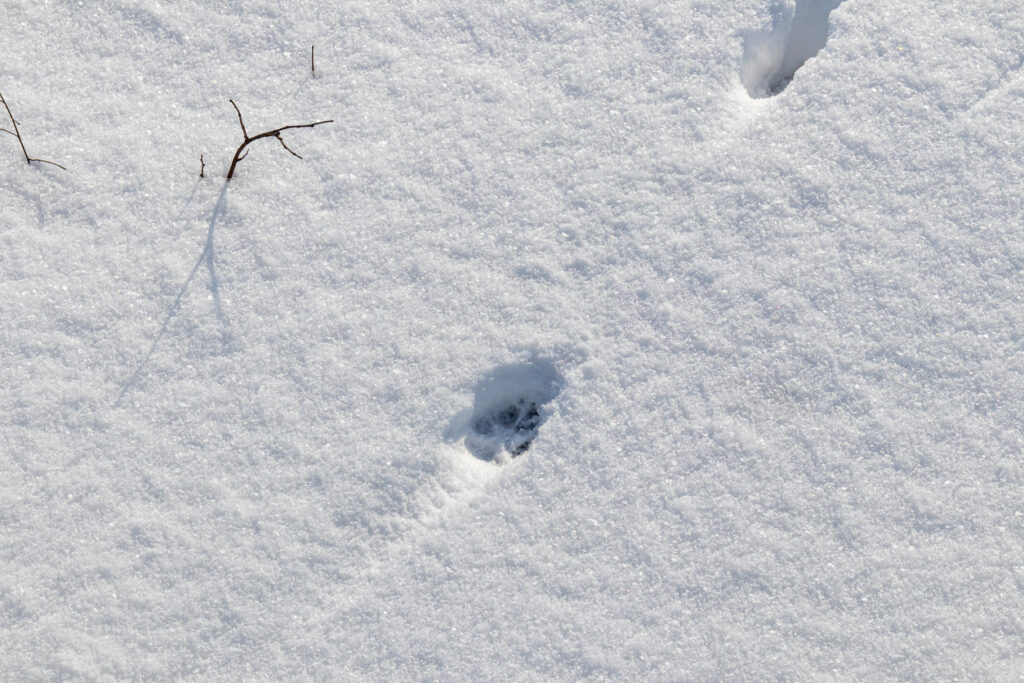
Coyote tracks look similar to domestic dogs but tend to be narrower and more oval-shaped. They show four toes with visible claw marks. Coyotes often walk in a straight line, placing their hind foot directly into the front foot’s print, which conserves energy. This linear stride and the shape of the prints help differentiate coyotes from dogs. Coyotes are adaptable wild canines found in many environments, from forests to deserts, and their tracks hint at a clever predator moving stealthily nearby.
6. Beaver: Webbed Hind Feet
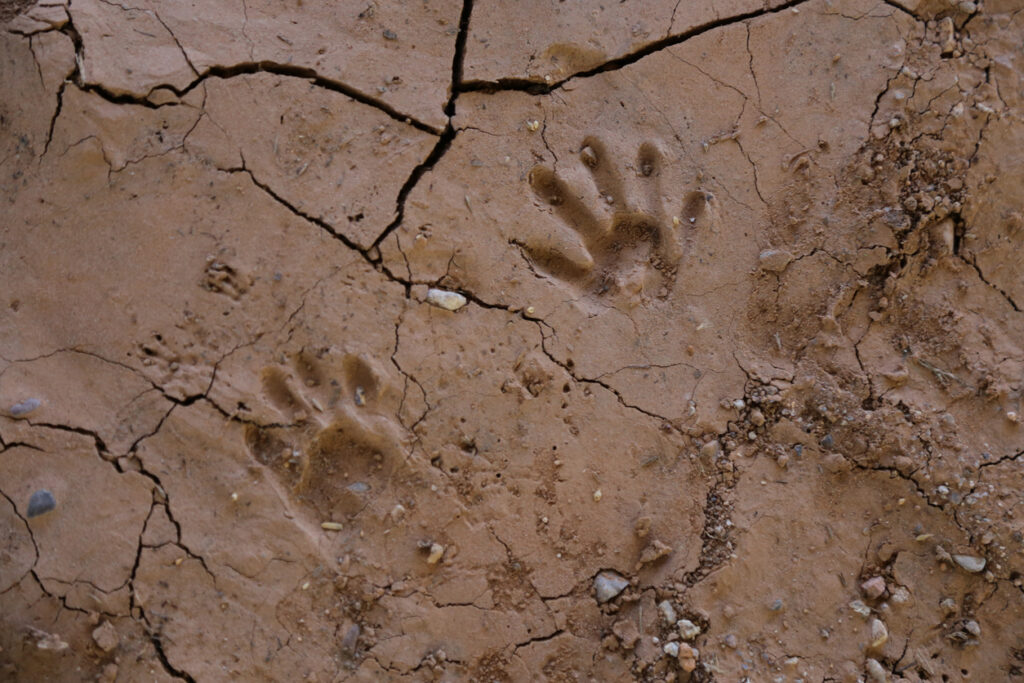
Beaver footprints are distinctive because their hind feet have webbing between the toes, which can show clearly in mud or wet soil. Their front feet are smaller and more hand-like, used for digging and carrying materials. These tracks are often found near beaver lodges or dams, where these industrious rodents build homes and alter waterways. The combination of webbed hind feet and smaller front prints reflects their semi-aquatic lifestyle and busy nature, leaving clear signs of their presence near ponds and streams.
7. Wild Turkey: Large Three-Toed Tracks
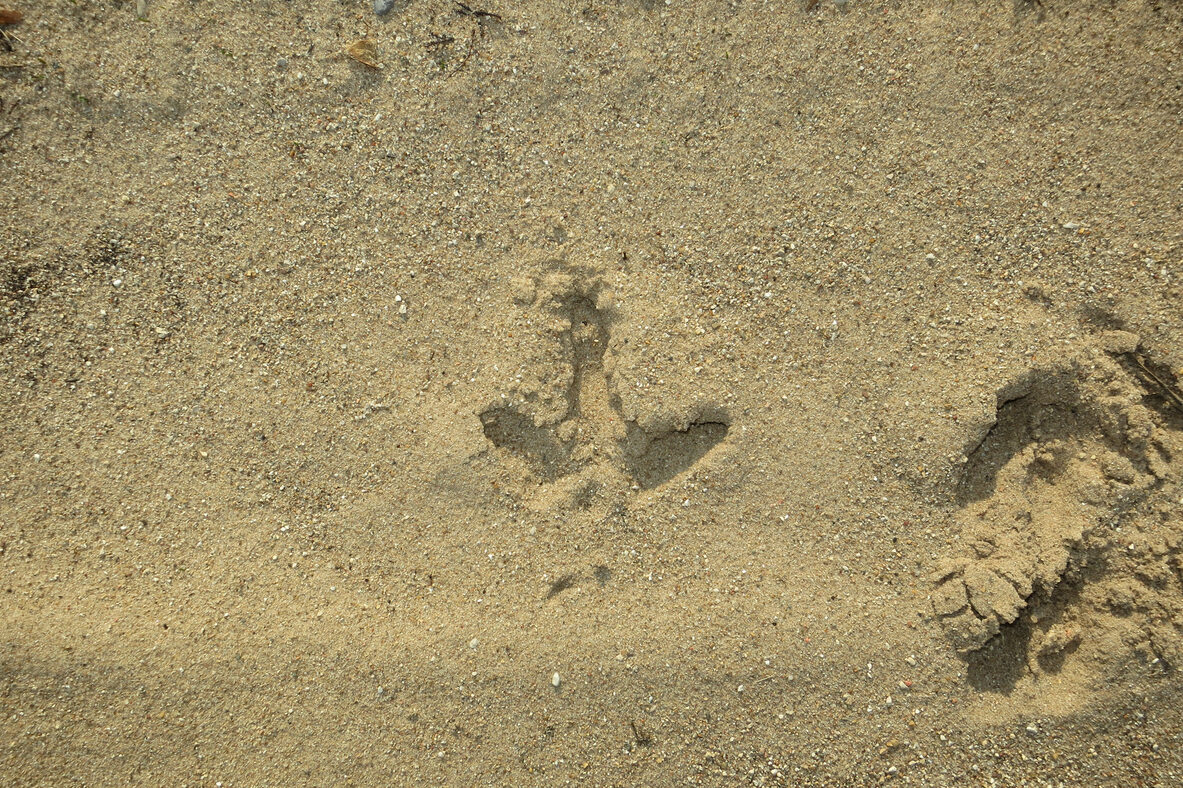
Wild turkey tracks have three long toes pointing forward, with the middle toe especially long, giving the print a distinctive arrow shape. These large tracks appear in forests, fields, or near water sources, where turkeys forage for seeds, insects, and plants. The size and shape of the tracks reflect the bird’s considerable weight and ground-dwelling habits. Spotting these prints means you’re near one of North America’s largest and most impressive ground birds, often heard before they are seen.
8. Opossum: Five Toes, Opposable Thumb
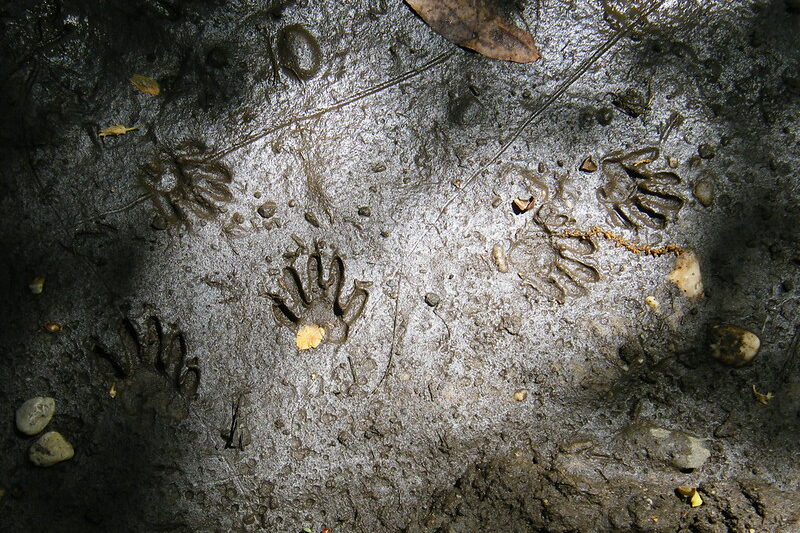
Opossum tracks show five toes on each foot, with the hind foot featuring a backward-pointing thumb-like toe that helps in climbing. Their small prints are often found near wooded areas, gardens, or water edges. The front feet look like tiny hands, while the hind feet are longer and more specialized for grasping. These tracks reveal a nocturnal, slow-moving creature with a unique gait, often wandering close to human habitats. Their prints tell the story of a climber adapted to both ground and tree life.
9. Bobcat: Small, Round, Clawless Prints
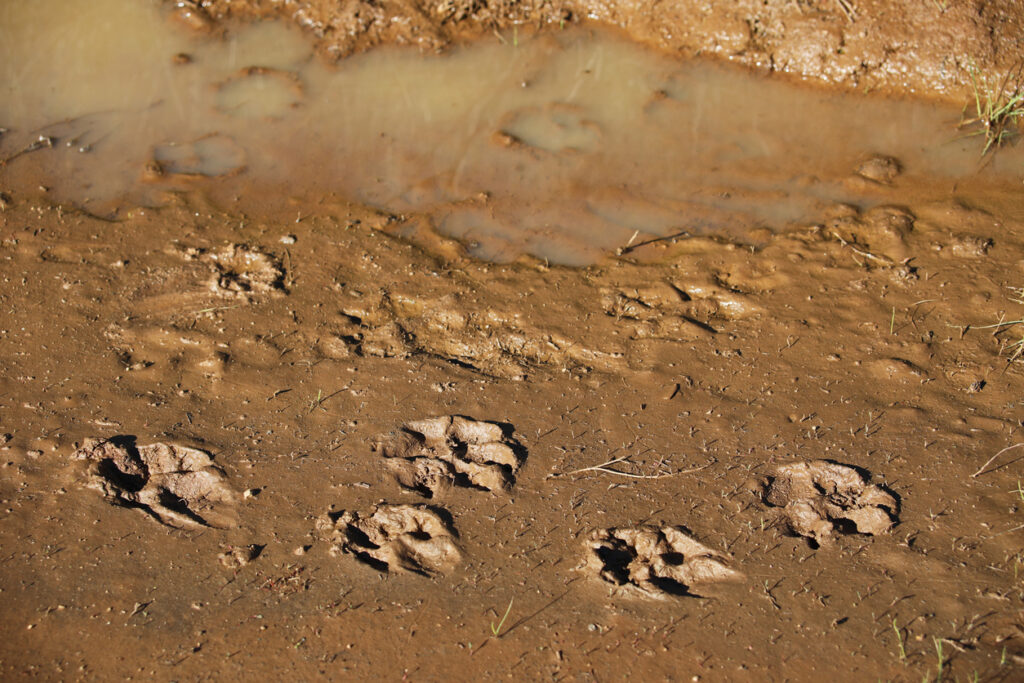
Bobcat tracks resemble smaller versions of mountain lion prints but are about 2 to 2.5 inches wide. Like mountain lions, bobcats retract their claws, so their paw prints don’t show claw marks. The round shape and four toes with a distinct heel pad help identify these elusive wild cats. Bobcats are solitary hunters found in forests, brush, or rocky areas. Spotting their tracks means you’re near a stealthy feline that moves quietly and efficiently through its territory.
10. Moose: Huge, Deep, Splayed Prints
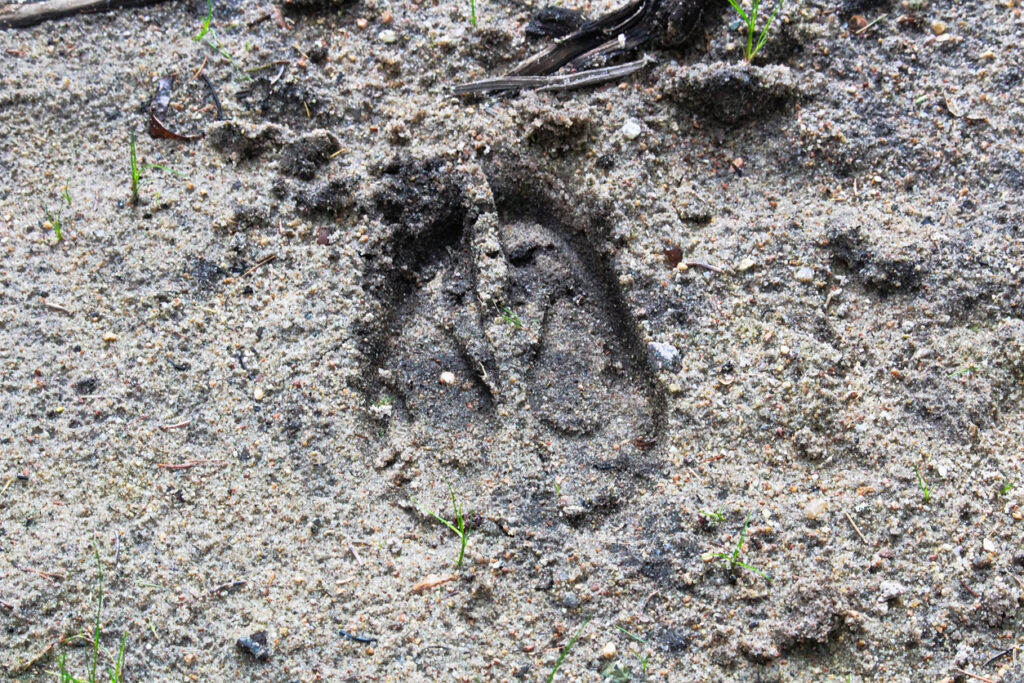
Moose tracks are among the largest hoofprints, measuring 5 to 7 inches long. Their toes splay out wider than deer, creating a broader footprint. Because moose are heavy, their tracks often leave deep impressions in soft ground or snow, sometimes showing dewclaw marks behind the main hoof. These prints indicate the presence of one of North America’s largest mammals, usually found in northern forests and wetlands. Moose tracks tell a story of strength and size, marking the paths of these gentle giants.
11. Alligator: Webbed Feet and Tail Drag
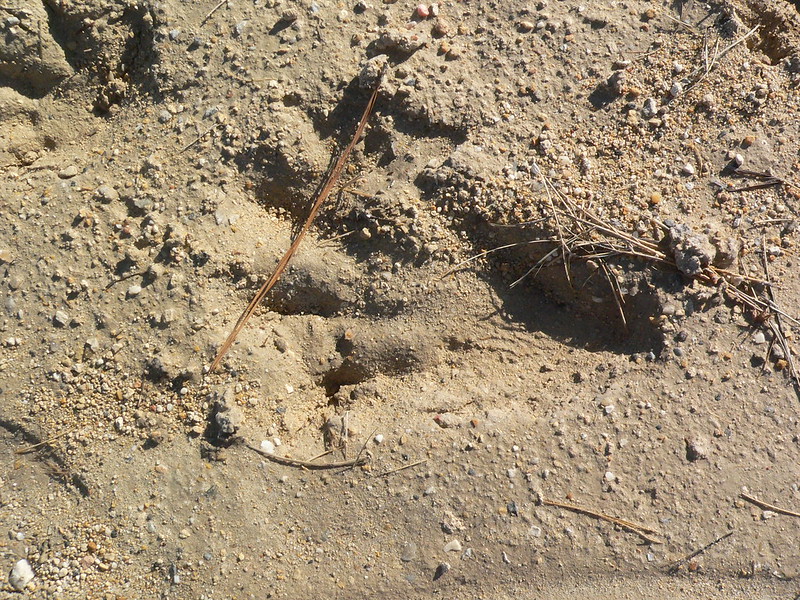
In southern U.S. wetlands, alligator tracks show webbed toes and a long tail drag mark between footprints. These signs appear in muddy banks or shallow water where alligators move slowly but deliberately. The webbed feet and tail drag reveal a powerful reptile adapted to aquatic life. Spotting these tracks means you’re near a wetland predator that has been quietly patrolling its territory, blending seamlessly into its environment.
12. Skunk: Five Toes, Claws, Waddling Gait
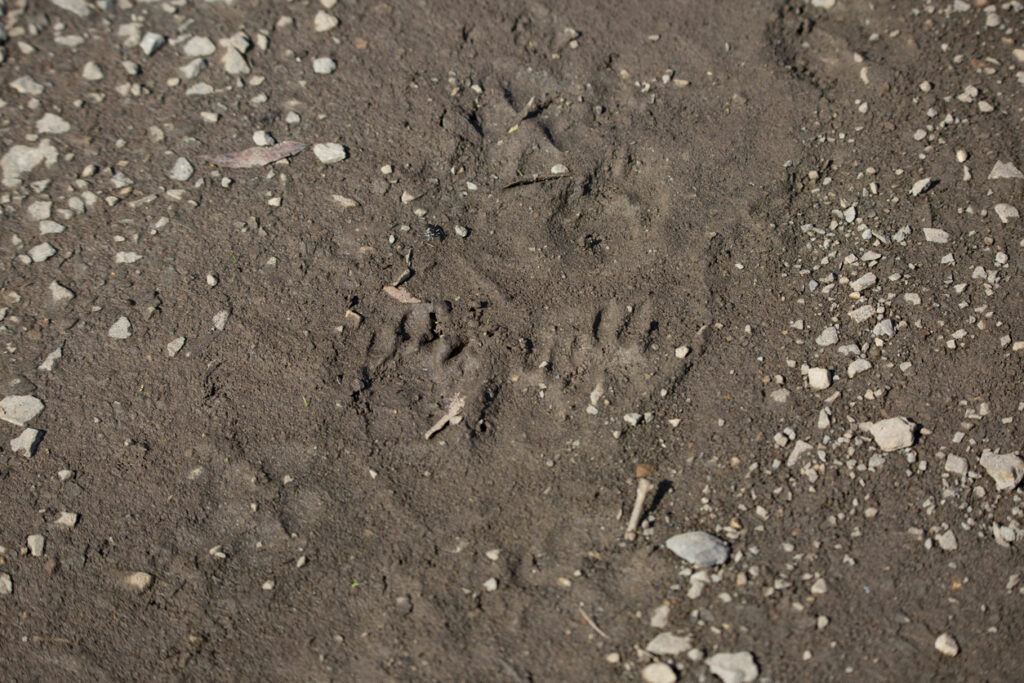
Skunk tracks feature five toes with visible claws and often appear in a waddling gait pattern. These small prints, about 1 to 2 inches, are commonly found near gardens, wooded areas, or suburban backyards. Skunks move slowly and deliberately, and their tracks often show a side-to-side pattern. These prints hint at a cautious nocturnal forager that uses its keen sense of smell to hunt insects and plants, leaving behind unmistakable signs of its careful wanderings.
13. Armadillo: Four Toes and Digging Claws
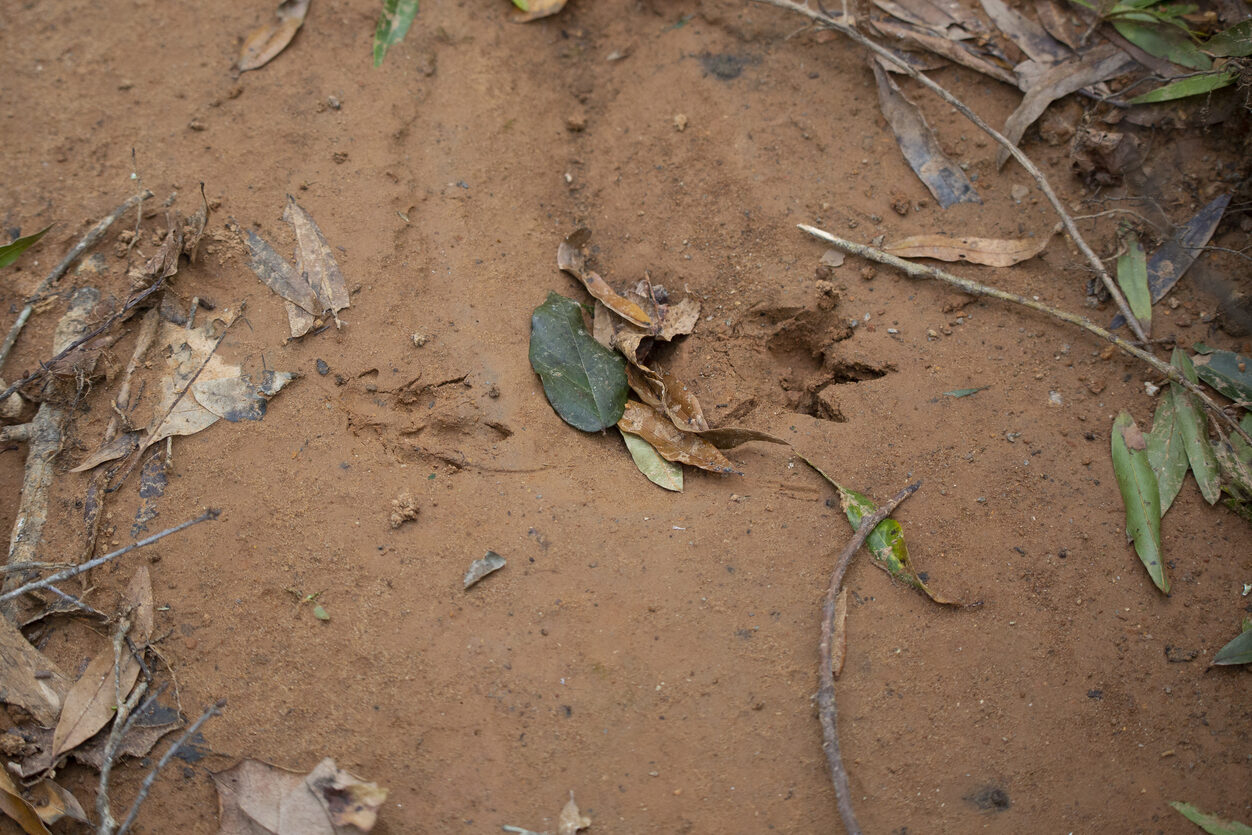
Armadillo tracks show four toes on the front feet with sharp claws used for digging. Their prints often include elongated claw marks, reflecting their habit of scratching and burrowing in loose soil or sand. These tracks are usually found in southern U.S. states where armadillos thrive. The combination of toes and claws tells the story of a small armored mammal busy digging for insects and roots. These tracks provide a glimpse into the life of a creature perfectly adapted to its environment.
This story Can You Identify These 13 US Animals by Their Tracks Alone? was first published on Daily FETCH


