
1. German Shepherd (Germany)
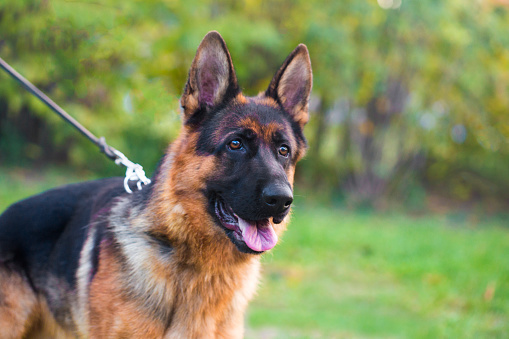
This breed has become the ultimate American working dog, trusted by police, military, and families alike but German Shepherds didn’t start out on U.S. soil. The breed was developed in Germany in the late 19th century by Captain Max von Stephanitz, who aimed to create the ideal herding dog: intelligent, obedient, and hardworking. Their fame exploded after World War I, when American soldiers brought them home, impressed by their loyalty and bravery on the battlefield. Then came Rin Tin Tin, the rescued German Shepherd turned silent film star, who helped launch the breed into pop culture stardom across the United States.
Today, it’s hard to imagine American K-9 units or search-and-rescue teams without them. German Shepherds now rank among the top three most popular dog breeds in the country. They’re equally at home sniffing out narcotics at an airport or guarding a backyard in suburbia. Despite their European origins, few dogs feel more American in purpose or popularity. Source: AKC
2. Labrador Retriever (Canada)

You might assume the Labrador Retriever is as American as baseball and backyard barbecues, but this famously friendly breed actually hails from the icy coast of Newfoundland, Canada. In the 1800s, local fishermen used “St. John’s dogs,” the Lab’s ancestors, to retrieve nets and fish from the frigid Atlantic. British nobles visiting the area were so impressed with their stamina and gentle mouths that they brought them back to England, where the breed was further refined. Ironically, by the time the breed was officially recognized, it had nearly vanished from Canada.
In the U.S., Labs found their true forever home. They’ve held the #1 spot as America’s most popular dog for over three decades, thanks to their affectionate temperament, intelligence, and versatility. They excel as hunting partners, service animals, search-and-rescue dogs, and loyal family pets. Whether bounding into lakes or curling up with toddlers, the Labrador has secured its place as America’s sweetheart with Canadian roots. Source: AKC
3. French Bulldog (France)
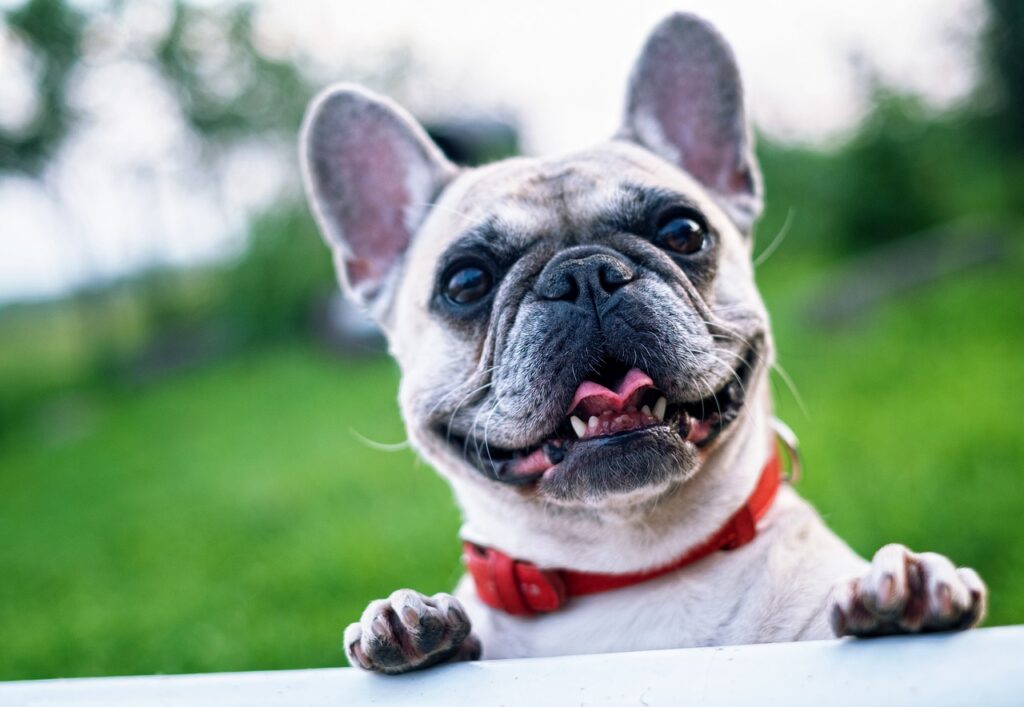
With their signature bat ears and smushed little faces, French Bulldogs are now one of the most sought-after dogs in the U.S. but their origins are anything but American. The breed actually started in England as a miniature version of the Bulldog, popular among lace workers. When these artisans migrated to France during the Industrial Revolution, they brought their dogs with them. There, the breed evolved into the “Bouledogue Français,” gaining its distinctive ears and a reputation as a companion to artists, aristocrats, and even Parisian streetwalkers.
Fast forward to today, and Frenchies are the darlings of American cities, frequently topping breed popularity lists in places like New York, San Francisco, and Los Angeles. Their compact size, quiet nature, and undeniable charm make them ideal companions for apartments. They’ve become staples of celebrity Instagram accounts and boutique pet fashion lines, hard to believe for a dog that once hung out in Montmartre cafés. Source: AKC
4. Australian Shepherd (United States)
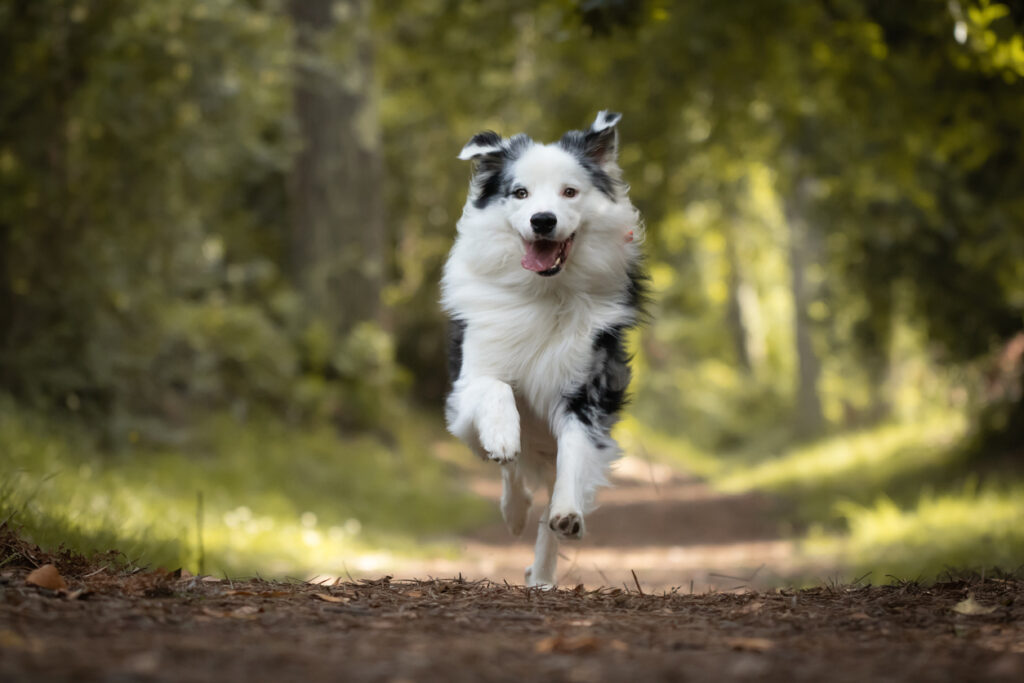
Don’t let the name fool you Australian Shepherds are about as American as rodeos and ranches. While their distant ancestors may have passed through Australia with Basque shepherds in the 1800s, the breed we know today was developed entirely in the United States. Western ranchers in California and Colorado selectively bred these agile, intelligent dogs to herd livestock and handle the demanding conditions of the American West. Their association with Australia came simply because the Basque immigrants who brought similar dogs had sailed from there.
Today, Aussies are a favorite among competitive dog trainers, equestrians, and active families who love their sharp minds and tireless energy. They dominate agility competitions, excel at herding trials, and thrive in homes where there’s always something to do. With their striking eyes, merle coats, and cowboy-worthy work ethic, it’s no wonder they’ve become American icons, despite never calling Australia home. Source: AKC
5. Shih Tzu (China)

It may be hard to picture the Shih Tzu anywhere but on a plush American pillow, but this toy breed has royal roots in ancient China. Bred as companion dogs for Chinese emperors during the Ming and Qing dynasties, Shih Tzus were pampered palace pets known as “lion dogs” for their resemblance to traditional Chinese guardian lions. For centuries, they were kept hidden from the outside world, living luxurious lives inside the Forbidden City and walking on silken rugs instead of stone.
The breed remained virtually unknown outside China until the early 20th century, when a few made their way to Europe and eventually the U.S. Since then, the Shih Tzu has found a second life as a beloved American lapdog. With their low-shedding coats, affectionate nature, and just the right amount of sass, they’ve become staples in suburban homes and dog show rings alike—true royalty rebranded for modern America. Source: AKC
6. Pomeranian (Germany/Poland)
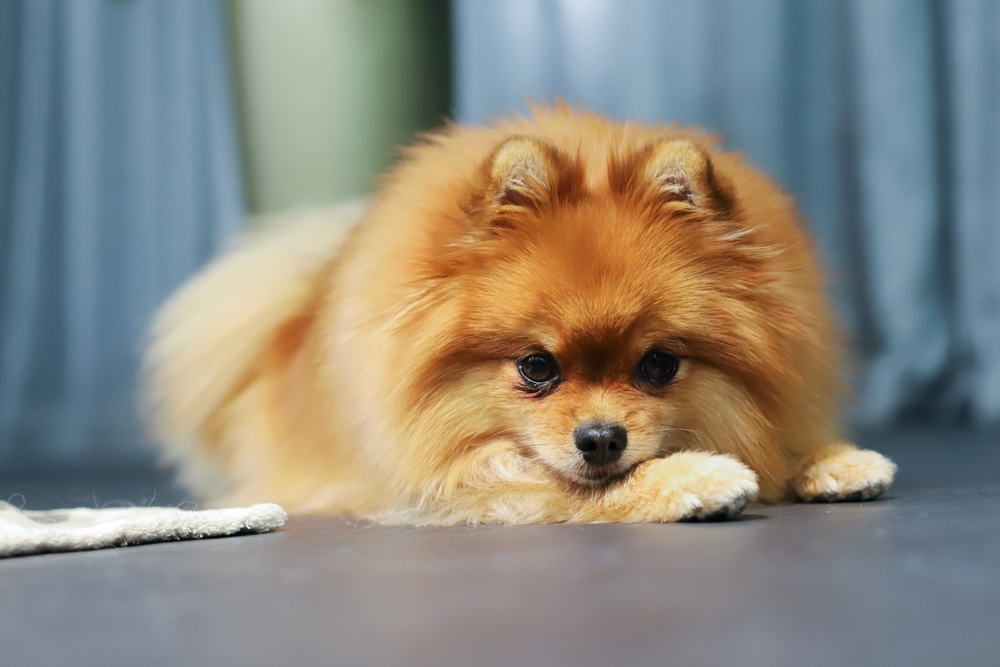
Tiny, fluffy, and full of attitude, the Pomeranian may seem like a modern American fashion accessory, but its history stretches back to the frosty frontiers of northern Europe. Originally bred down from large Spitz-type sled dogs in the Pomerania region (now parts of Germany and Poland), early Pomeranians were tough workers used for herding and guarding. It wasn’t until Queen Victoria of England fell in love with a smaller Pom during a trip to Italy that the breed’s size and popularity truly shrank and soared.
Today, Pomeranians are more likely to be found in a purse than on a pasture, and they’ve taken American pop culture by storm. With celebrity fans like Paris Hilton and countless viral TikTok stars, they’ve become tiny status symbols with oversized personalities. It’s a long way from hauling cargo in the snow to strutting through Los Angeles, but the Pom has managed the transition like a born scene-stealer. Source: AKC
7. Rottweiler (Germany)

They may look like muscle-bound bodyguards, but Rottweilers have a surprisingly ancient and international origin story. Their lineage dates back to Roman drover dogs used to herd livestock across Europe during military conquests. When Roman legions settled in what is now southern Germany, these dogs interbred with local canines and eventually gave rise to the Rottweiler. Named after the town of Rottweil, they earned their keep driving cattle and protecting their owners’ goods, even wearing money pouches around their necks.
In the U.S., Rottweilers have transitioned from cattle dogs to canine protectors and loyal family companions. They’ve served with distinction in police and military work, but their affectionate side shines in homes that give them purpose and proper training. Despite their fearsome reputation, Rottweilers are playful, intelligent, and devoted just ask any American family who’s raised one. From ancient Roman roads to suburban backyards, this breed has truly gone global. Source: AKC
8. Chihuahua (Mexico)
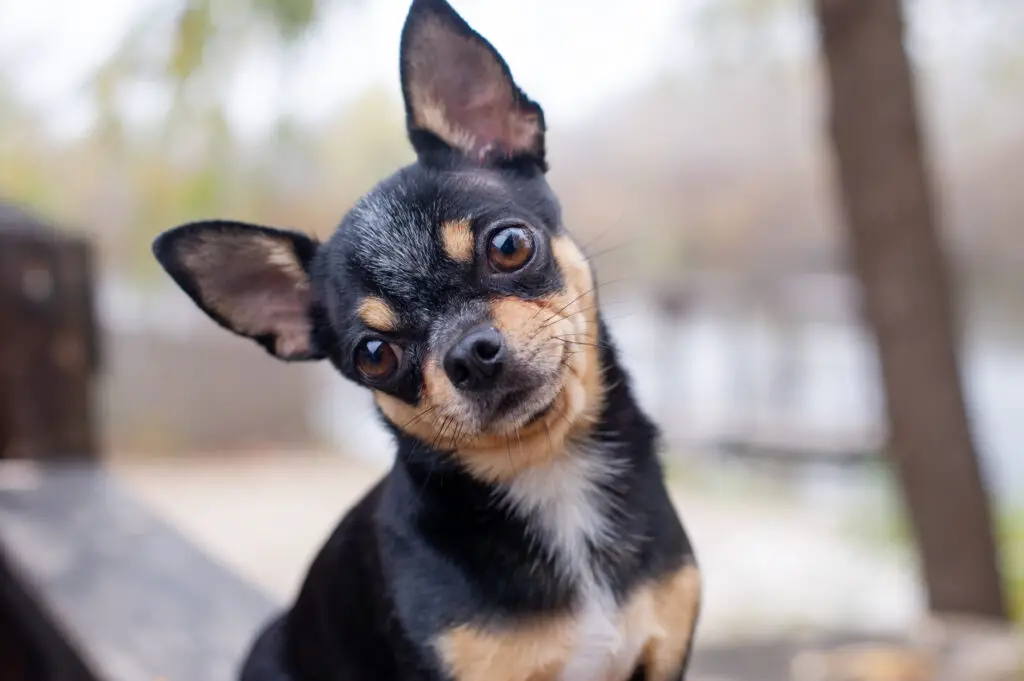
It’s easy to underestimate the Chihuahua with its apple-sized head and teacup body but this tiny dog packs a cultural legacy that stretches back over a thousand years. Believed to be descended from the Techichi, a small companion dog favored by the ancient Toltec civilization, Chihuahuas were later embraced by the Aztecs. These sacred animals were thought to guide souls into the afterlife and were often buried alongside their owners as spiritual protectors. Their modern name comes from the Mexican state of Chihuahua, where the breed was “rediscovered” in the 19th century.
In America, the Chihuahua has become an unlikely superstar. From Taco Bell ads to purse-dog fame among Hollywood’s elite, these pint-sized pups have captured the public imagination with their sass, loyalty, and big-dog bravery. They’re now one of the most popular toy breeds in the U.S., especially in urban environments. Who knew a 6-pound relic of pre-Columbian culture would one day dominate the American pop scene? Source: Britannica
9. Boxer (Germany)
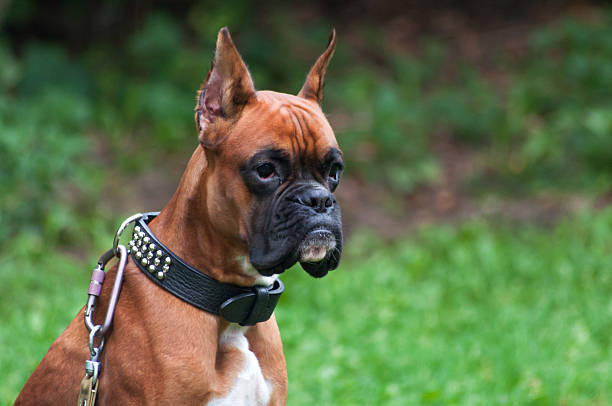
With their square jaws, boundless energy, and almost human-like expressions, Boxers are one of America’s most beloved breeds, but their roots lie in 19th-century Germany. Descended from the now-extinct Bullenbeisser, a powerful hunting dog used to pin down wild boars, Boxers were refined by German breeders for agility, intelligence, and loyalty. Their strength and trainability made them ideal guard dogs and military assistants, and they were even used as messenger dogs during both World Wars.
In the United States, Boxers exploded in popularity after World War II, when soldiers brought them home as loyal companions. Today, they’re cherished for their clownish personalities, athleticism, and fierce devotion to their families. They’re often spotted in dog sports, therapy work, and suburban backyards, always ready for a game or a cuddle. It’s a long leap from the boar hunts of Bavaria to the playgrounds of America, but Boxers made it look easy. Source: American Boxer Club
10. Dachshund (Germany)
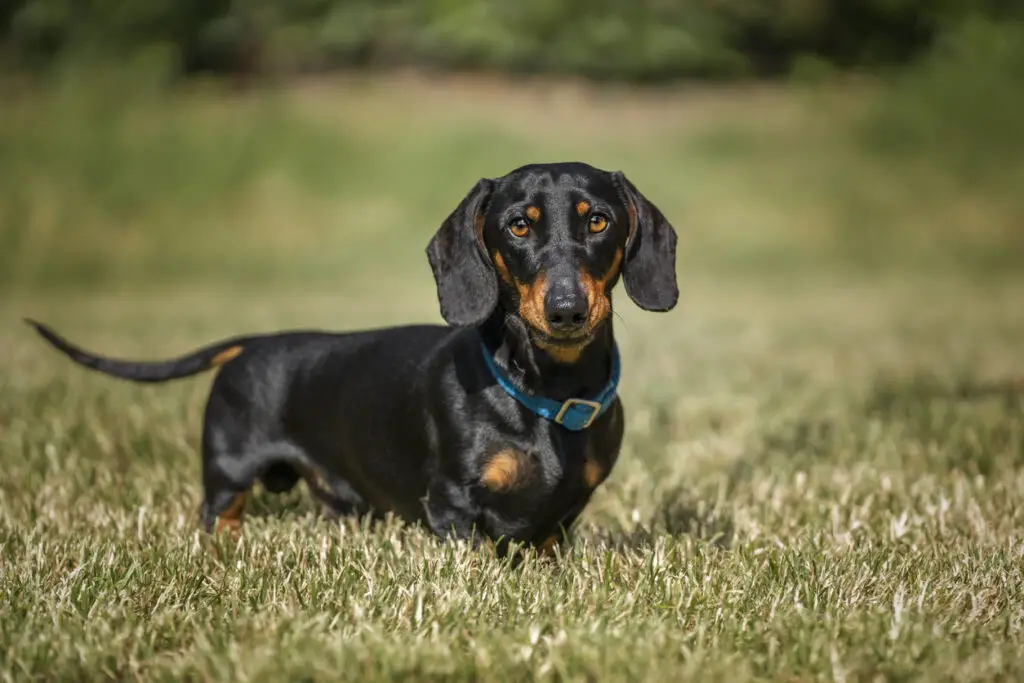
They’re adorable, stubborn, and unmistakably shaped, but the Dachshund wasn’t bred for cuteness. In 15th-century Germany, this long-bodied, short-legged dog was developed to burrow into the earth and flush out badgers (the name “Dachshund” literally means “badger dog”). Their long noses, paddle-like paws, and fearless temperament made them ideal for tracking and fighting underground prey. Over time, hunters bred different sizes of Dachshunds to go after animals like rabbits and foxes, further refining the breed.
In America, these sausage-shaped pups have become icons of charm and mischief. Their expressive eyes and comical strut make them favorites among dog lovers seeking personality in a small package. They’ve even inspired parades. New York’s annual “Dachshund March” draws hundreds of them in costume. Who would’ve guessed that a dog once bred to battle badgers would become a suburban cuddlebug and Instagram darling? Source: AKC
11. Akita (Japan)
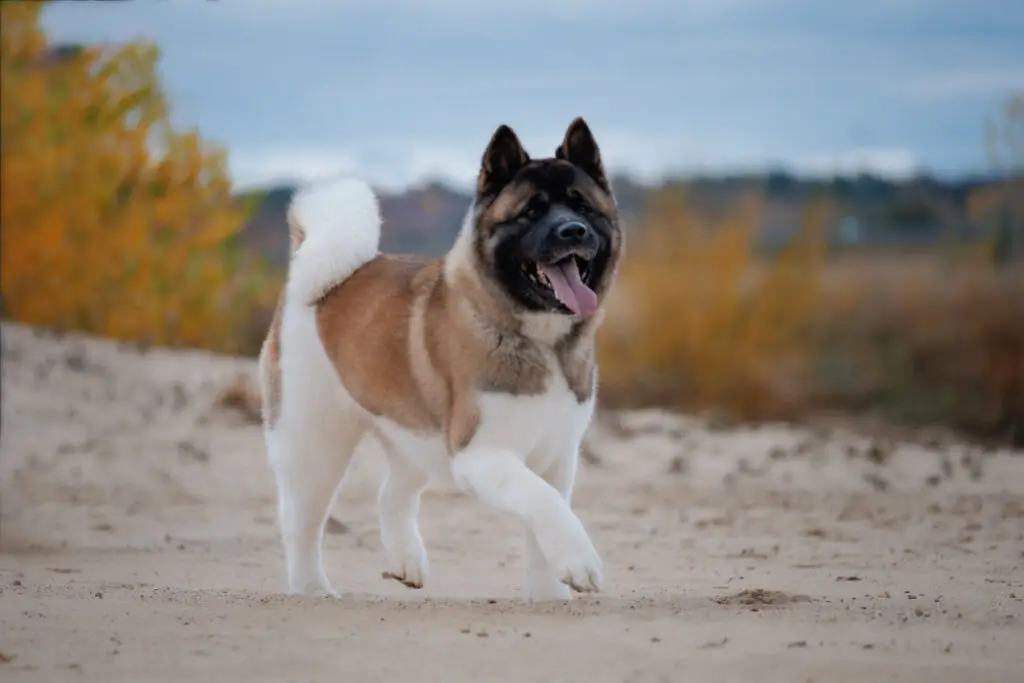
The Akita’s story begins in the snowy mountains of northern Japan, where it was bred for strength, endurance, and courage to hunt formidable prey like bears and wild boars. Revered as a national treasure in Japan, Akitas were once owned exclusively by nobility and samurai. Their dignified stature and fierce loyalty became legendary, especially through the story of Hachikō, the Akita who waited every day at a Tokyo train station for his deceased owner, capturing the hearts of people worldwide.
The breed was introduced to America in 1937 when Helen Keller received an Akita as a gift during her visit to Japan. Since then, the Akita has carved out a niche in the U.S. as a powerful, independent, and fiercely loyal family dog. They’re not for first-time dog owners, but in the right hands, Akitas are calm, clean, and devoted. It’s a long journey from feudal Japan to American suburbia, but their noble bearing never changed. Source: AKC
12. Great Dane (Germany)
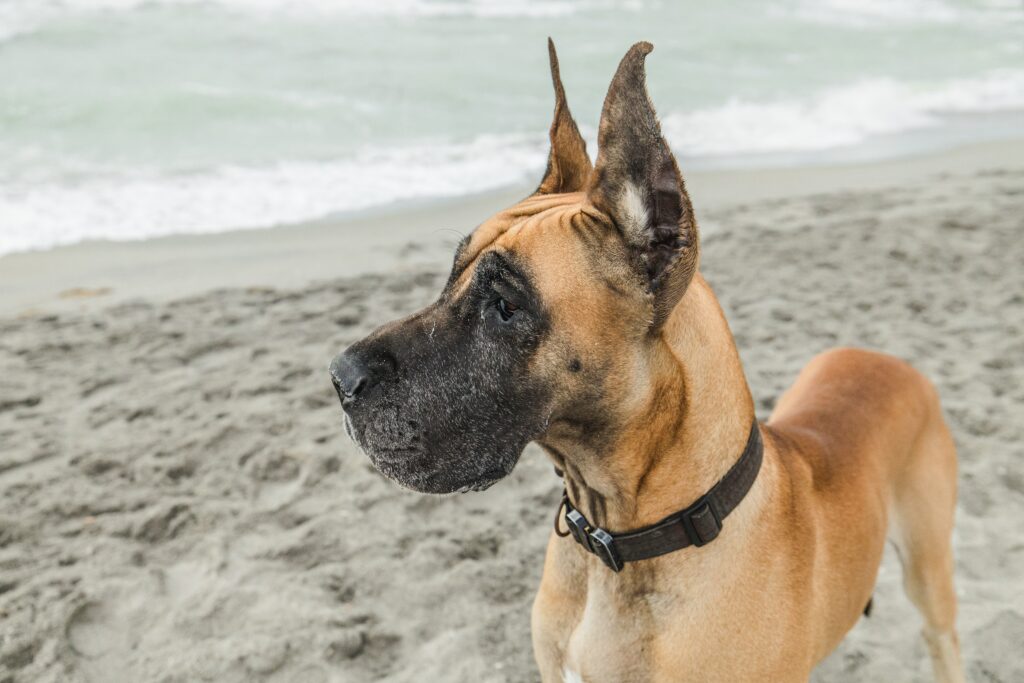
With their towering height and regal presence, Great Danes are often called the “Apollo of Dogs,” but their name is a misdirection. Despite the “Dane” in their title, these gentle giants were developed in Germany over 400 years ago. Originally bred to hunt wild boars, early Great Danes (then called “Boar Hounds”) needed strength, courage, and agility to take down powerful prey. German nobles eventually refined the breed into a more elegant, companion-oriented version, favoring form alongside function.
Today, Great Danes are beloved in the U.S. not for their ferocity but for their sweet, affectionate nature. They’re known to lean against their humans for hugs, despite being the size of a small pony. Frequently found in family homes and gentle giant memes, they’ve become unlikely couch potatoes with hearts to match their size. From German hunting fields to American living rooms, their transformation is as massive as the dogs themselves. Source: AKC
13. French Poodle (France)
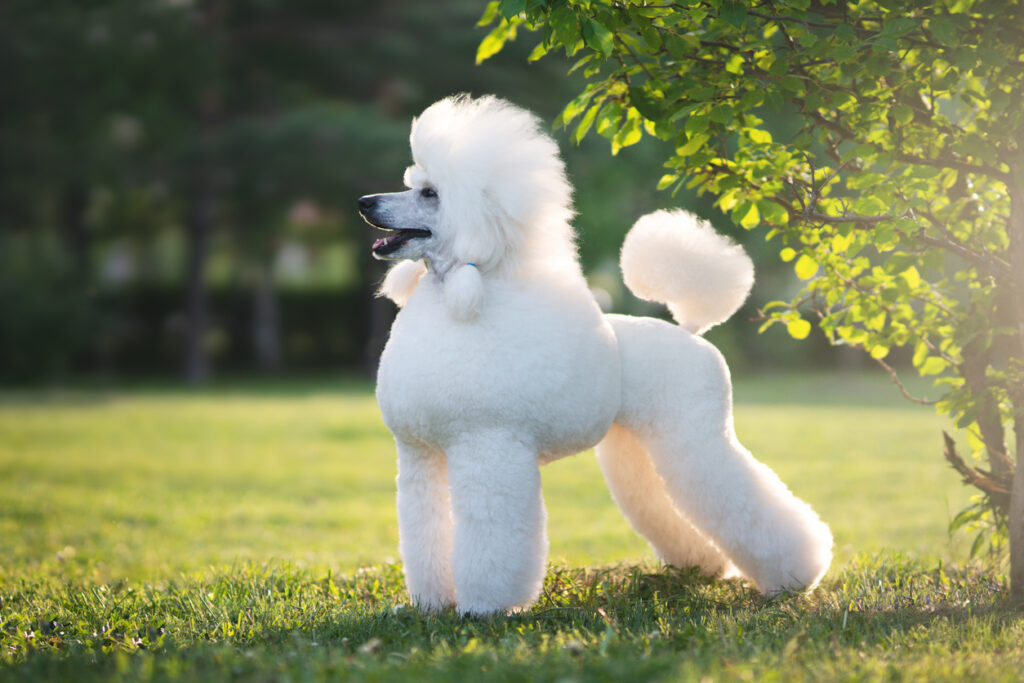
Despite the fancy haircuts and frou-frou reputation, the Poodle is far more than a fashion statement—and it’s not even technically French. Though most associated with Parisian elegance, the Poodle originated in Germany as a water retriever, known as the “Pudelhund.” The breed was later refined in France, where it gained popularity as a performing dog, circus entertainer, and companion to royalty. Its name may be German, but the breed’s cultural makeover happened in France.
In the United States, Poodles, especially the smaller Toy and Miniature varieties, became status symbols of the 1950s suburban boom. Today, they’re beloved not only for their intelligence (often ranked as the second-smartest breed) but also for their hypoallergenic coats and versatility. Whether in a show ring or curled up on the couch, Poodles have become a staple of American dog culture, with enough flair to earn top billing. Source: Pet Mojo
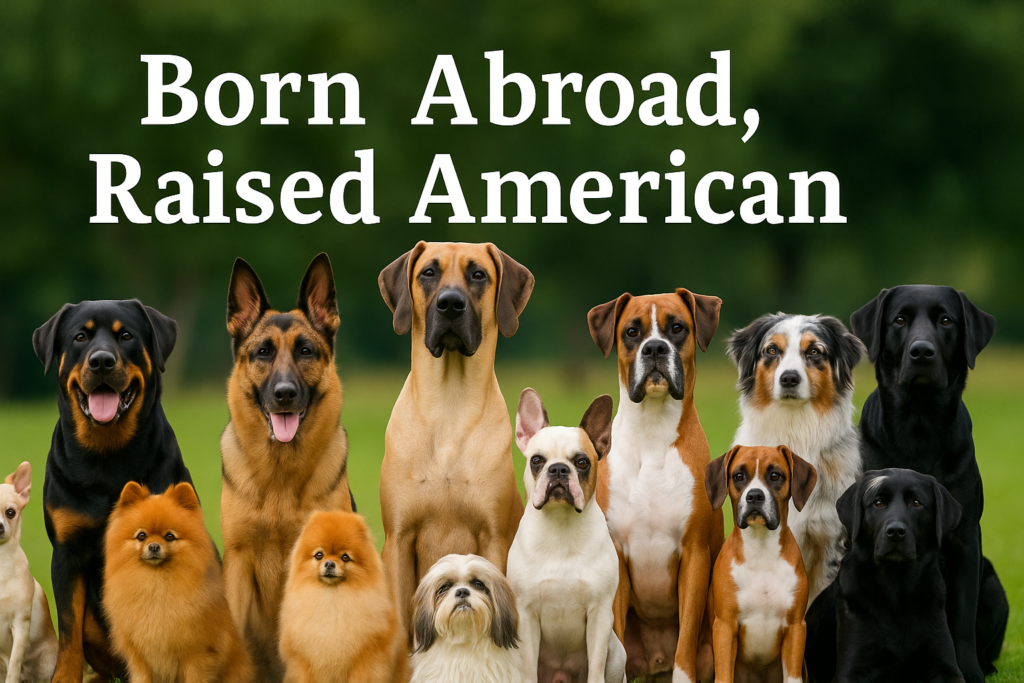
From ancient emperors’ palaces to rugged European hunting grounds, these 12 dog breeds began their journeys far from U.S. soil. Yet through war, migration, Hollywood, and a little reinvention, they’ve become deeply woven into the American way of life. Whether protecting our homes, guiding our service members, or curling up beside us on the couch, these global canines have shed borders and become more than pets; they’re cultural icons.
It’s a reminder that the dogs we love most often carry histories as complex as our own. America didn’t just adopt them; they were embraced, reimagined, and elevated into everyday companions. So the next time your French Bulldog snores in your lap or your German Shepherd watches the front yard like a soldier, remember: their passports might say otherwise, but their hearts now beat red, white, and blue.
This story, 12 Dog Breeds You’d Never Guess Came From Other Countries—but Are Now All-American Favorites was first published on dailyfetch.net.


