
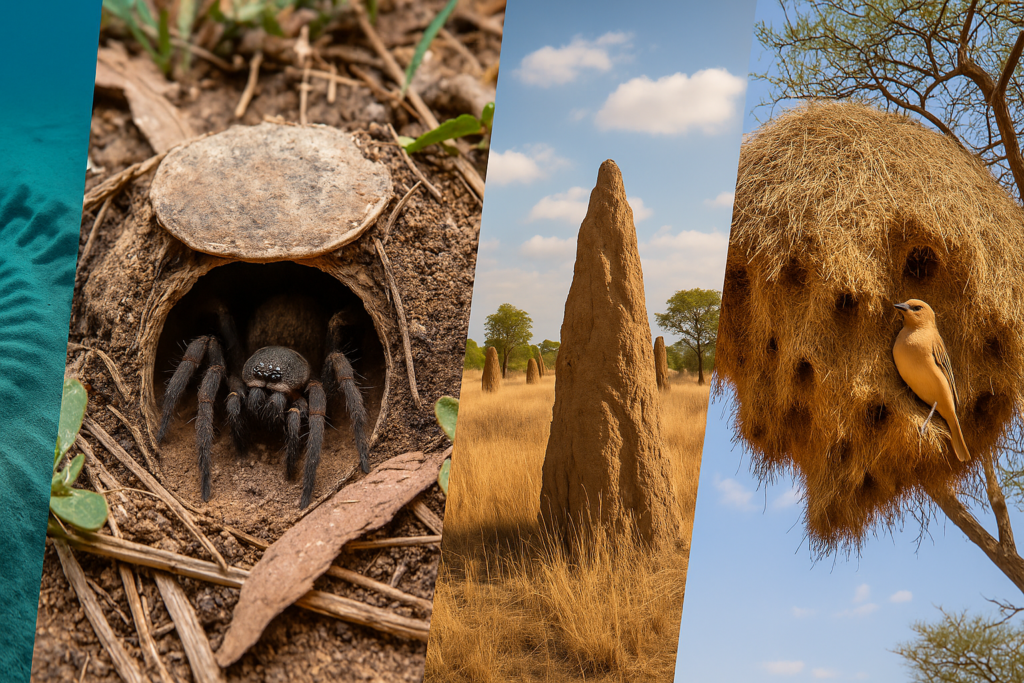
From underwater cities to sky-high towers, these creatures could teach us a thing or two about design.
Regarding construction, humans like to think we’ve mastered the game. But animals are building fortresses, tunnels, and high-rise hives out in the wild that would make even the most seasoned architect pause in admiration. These aren’t just nests and dens—they’re engineering feats designed for survival, seduction, and sometimes, pure artistic flair.
From fish that build underwater crop circles to birds who carve out bachelor pads with flair, the animal kingdom is full of builders who work with mud, silk, spit, and even bubbles. Some designs are purely functional, others are jaw-droppingly beautiful, and a few are so complex that scientists are still trying to figure out how they pulled it off. Ready to meet nature’s top designers? These 12 species take “dream home” to a whole new level.
Bowerbird
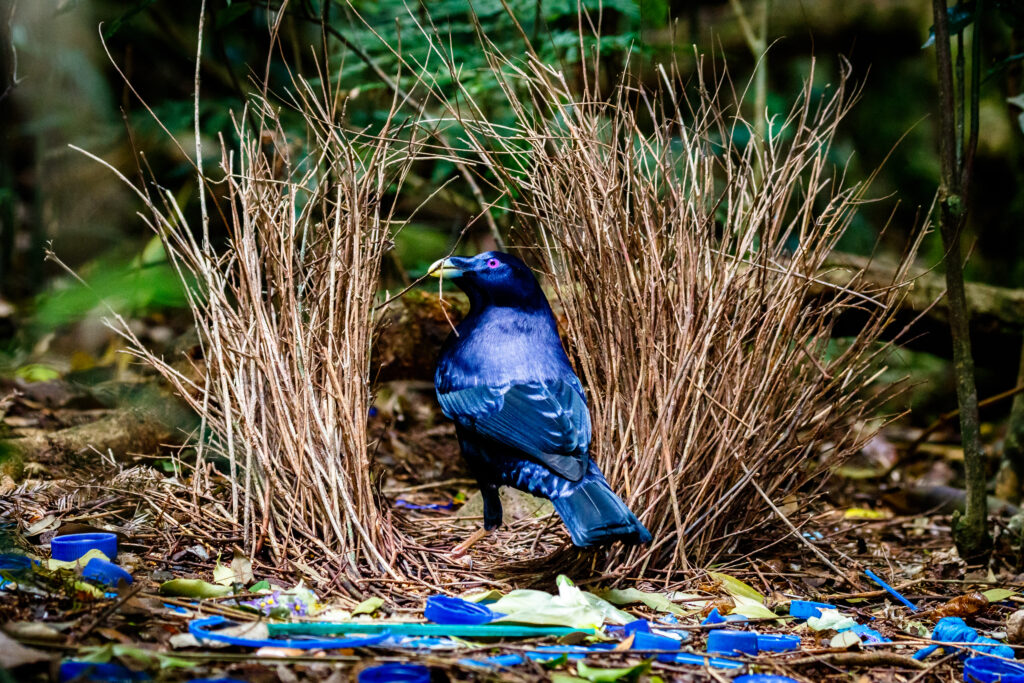
If Frank Lloyd Wright had feathers, he might’ve been a bowerbird. Native to Australia and New Guinea, male bowerbirds are famous for constructing elaborate “bowers”, avenues, or maypole-style structures made of twigs, painstakingly decorated with colorful objects like berries, shells, flowers, and even bits of plastic or glass. But these aren’t nests; they’re bachelor pads built purely to impress. Each male obsessively arranges his collection to show off his sense of symmetry, color coordination, and taste qualities female bowerbirds find irresistible.
Some species even create forced perspective by placing larger objects farther back to make the bower look more dramatic, a trick that’s blown the minds of behavioral scientists. The satin bowerbird, in particular, has a thing for anything blue, so much so that rival males will steal prized items like bottle caps and clothespins to outdo each other. The more dazzling the design, the higher the chances of attracting a mate. It’s not just courtship, it’s architecture, art direction, and interior design rolled into one. Source: Australian Museum
Termite
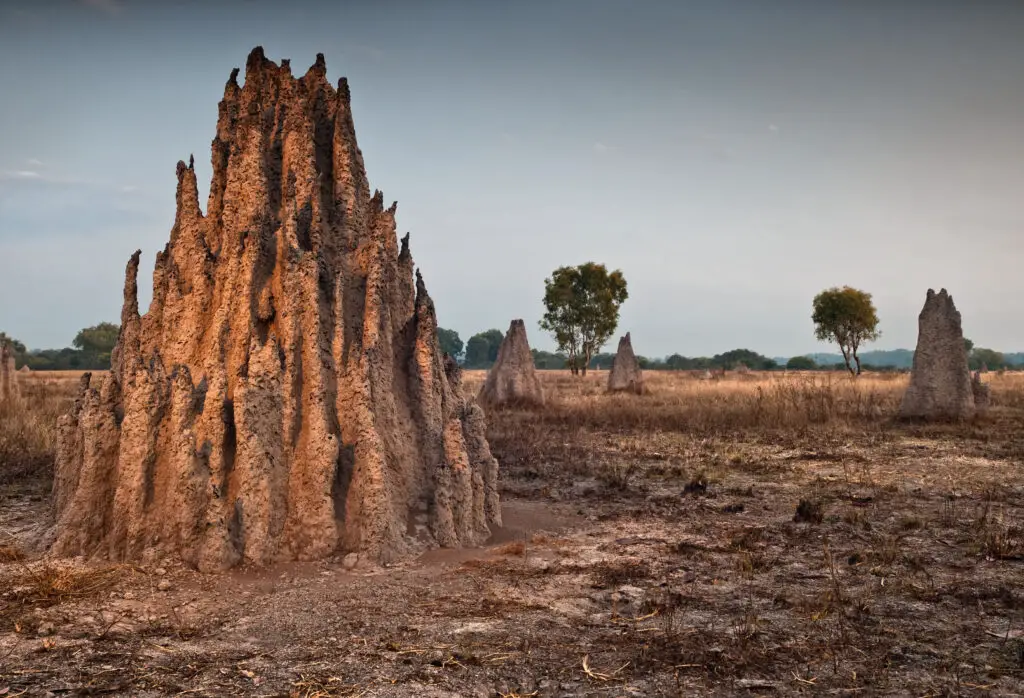
They may be tiny, but termites are some of the most impressive builders on Earth. Like the African macrotermites, certain species construct towering mounds that can rise over 30 feet tall, higher than a two-story house. Made from a mixture of soil, chewed wood, and termite saliva, these skyscrapers are designed with astonishing precision, with built-in ventilation systems that regulate temperature and humidity. The outer walls harden into a cement-like crust, while internal passageways circulate air using convection, which is essential for maintaining the perfect climate for underground fungus farms.
Inside, it’s not chaos, it’s an intricately zoned metropolis. There are nurseries, fungus gardens, and royal chambers hidden in the depths, where the queen lives in permanent luxury and constant egg production. Scientists have even studied termite mounds to inspire green building design in human architecture, including the famously self-cooling Eastgate Centre in Zimbabwe. The fact that these social insects, blind and barely a half-inch long, can engineer such resilient and sustainable mega-structures without blueprints is one of nature’s greatest architectural flexes. Source: BBC Earth
Vogelkop Gardener Bird
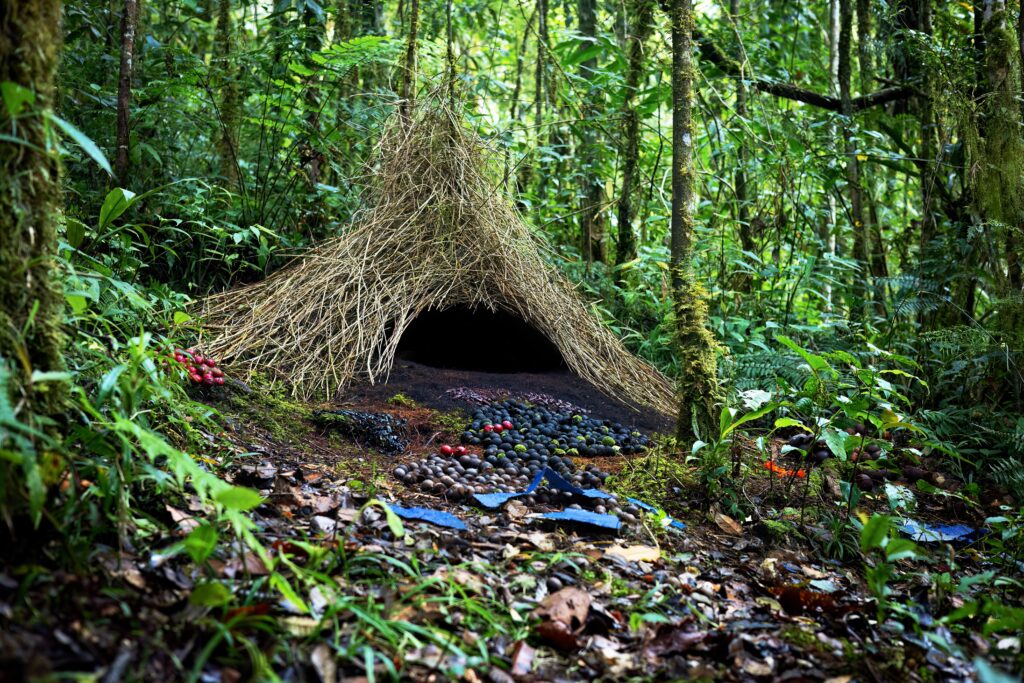
Hidden deep in the cloud forests of New Guinea’s Vogelkop Peninsula, this bird builds what might be the most stylish man cave in the animal kingdom. The male Vogelkop Gardener bird, a relative of the bowerbird, constructs architectural masterpieces known as “gardens” or “display courts.” These aren’t just piles of sticks; they’re dome-shaped huts made from hundreds of twigs, surrounded by curated arrangements of flower petals, berries, beetle shells, and moss. Each object is chosen, placed, and even replaced daily depending on how the colors fade or clash. It’s obsessive, meticulous, and frankly, a little fabulous.
But this isn’t just for show, well, actually, it is. The entire purpose of this structure is to attract females, who stop by to critique the setup before deciding if the builder is mate-worthy. Studies have found that the more symmetrical and orderly the garden, the better the male’s chances. One even removed an out-of-place red berry while researchers watched. The huts can stand nearly three feet tall and last for months, maintained daily like a storefront window in a competitive retail district. Its design is as seductive, and the Vogelkop Gardener bird is the Martha Stewart of the rainforest. Source: San Diego Zoo Wildlife Alliance
Beavers
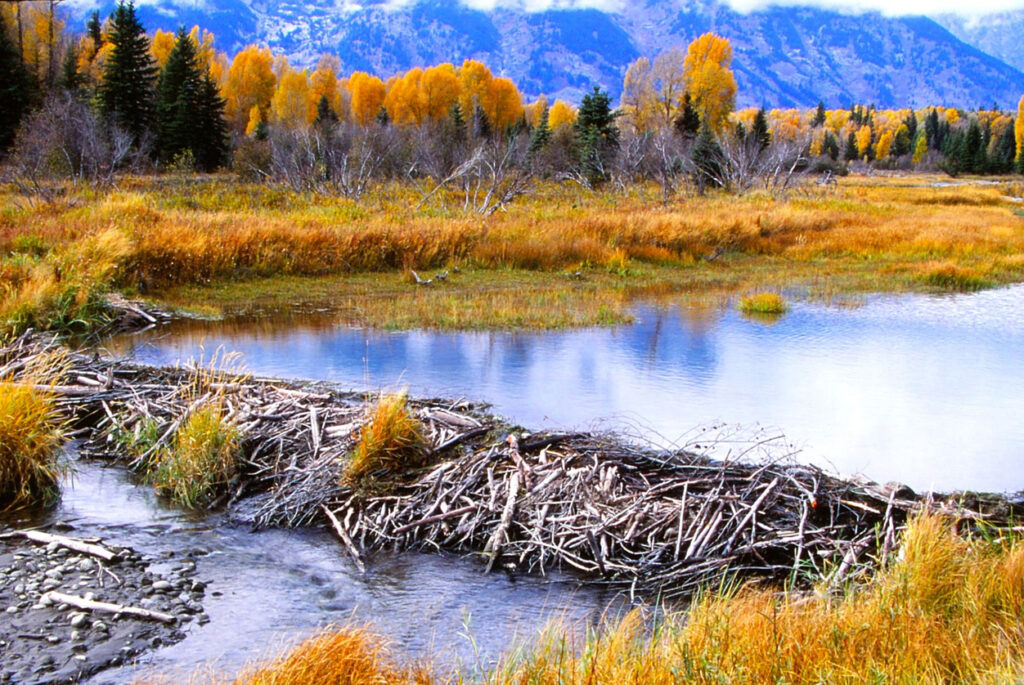
If there were an Animal Kingdom Hall of Fame for engineering, beavers would be charter members. These industrious rodents are famous for building dams across rivers and streams using logs, branches, rocks, and mud. Their goal? To create deep, calm ponds, they can construct their real homes, lodges made from interwoven wood and sealed with mud. These lodges have underwater entrances and insulated interiors that stay warm in winter and cool in summer, complete with ventilation shafts and separate “rooms” for sleeping and eating.
Beaver dams can stretch hundreds of feet long; one in Canada’s Wood Buffalo National Park measures over half a mile and can be seen from space. Their construction doesn’t just benefit beavers; it reshapes entire ecosystems. By slowing water flow and creating wetlands, beavers improve biodiversity, recharge groundwater, and help prevent drought and erosion. Their work is so effective that conservationists are now reintroducing them in areas hit by climate stress to help restore natural water systems. In other words, beavers aren’t just builders, they’re full-blown ecological engineers. Source: Adirondack Almanack
Caddisfly Larvae
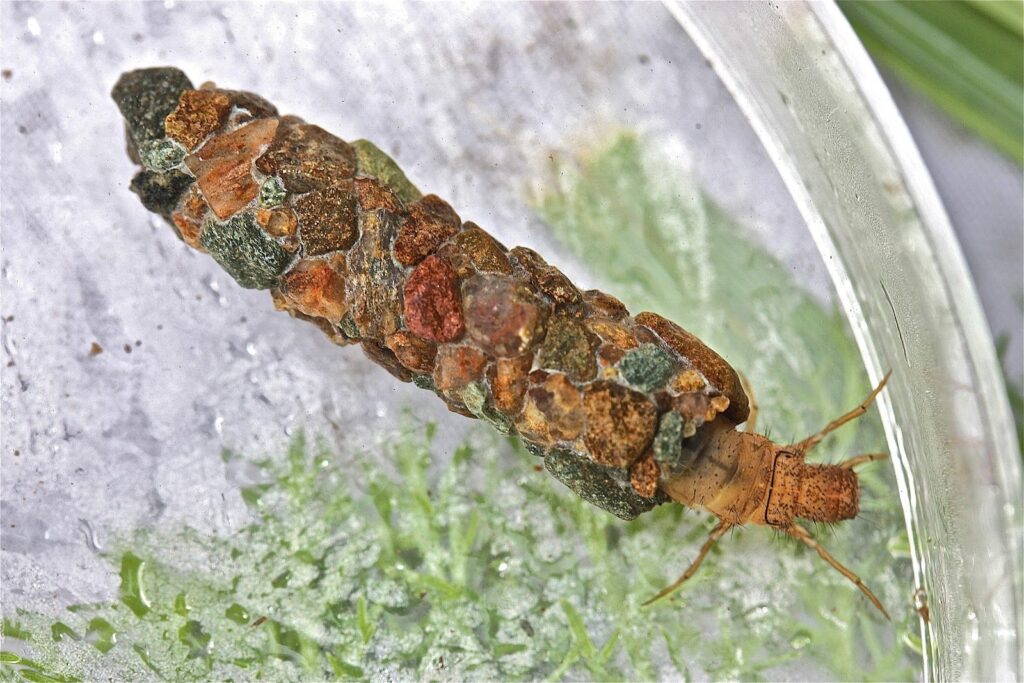
While they may not look like much, caddisfly larvae are underwater artists who wear their work like armor. Found in freshwater streams and ponds, these tiny aquatic insects build elaborate protective cases around their soft bodies using whatever materials are nearby: sand grains, twigs, shell fragments, even tiny beads or bits of gold leaf if given the chance. Held together with silk produced from glands near their mouths, each case is custom-built to blend in with the environment and shield them from predators like fish and frogs.
What’s truly wild is that these cases vary not just by species but geography, available materials, and individual “style.” Scientists have been so fascinated by their craftsmanship that they’ve supplied caddisfly larvae with precious metals to create miniature jewelry-like sculptures, turning streambeds into tiny art studios. Beyond their aesthetic value, these cases help researchers monitor water quality because caddisflies are sensitive to pollution; their presence and building behavior can signal a healthy ecosystem. It’s survival, science, and haute couture rolled into one tiny, silk-spinning architect. Source: National Institute of Health
Compass Termite
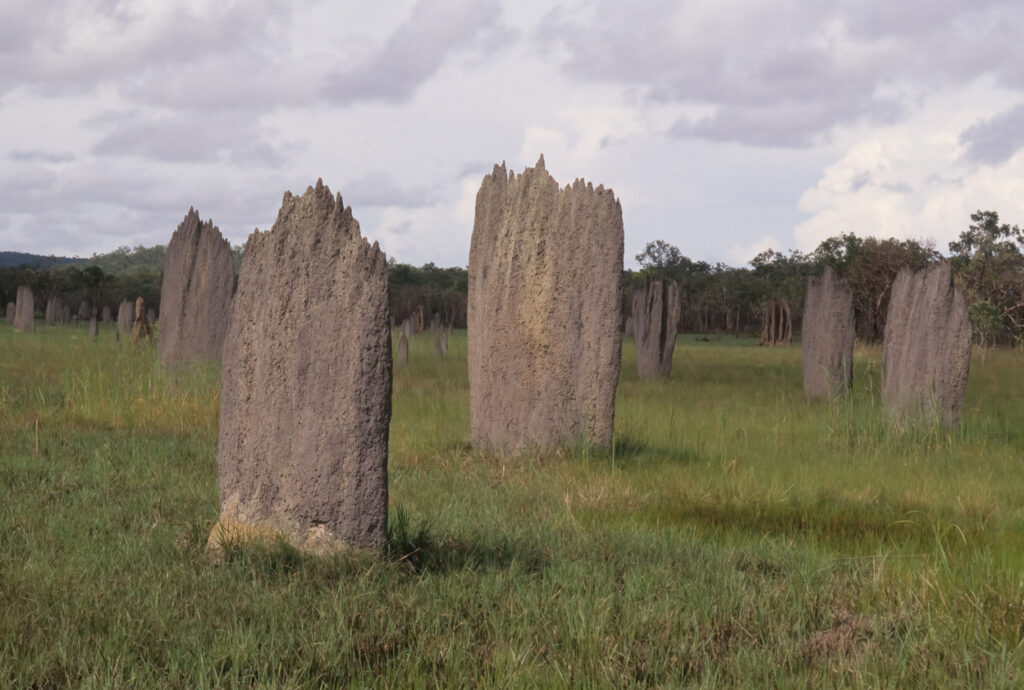
In the sweltering Australian outback, compass termites have figured out how to beat the heat with structures that function like natural air conditioners and solar panels rolled into one. Their signature “magnetic mounds” are tall, blade-like formations resembling giant tombstones, each carefully aligned north to south. This orientation minimizes surface exposure during the hottest part of the day, helping regulate internal temperatures for the termite colony inside. The mounds are made from mud and saliva and can tower over 10 feet tall, impressive, considering the builders are barely half an inch long.
But it’s not just the vertical design that’s genius. Inside, a complex system of tunnels and vents ensures steady airflow, humidity control, and protection from flooding. The termites’ entire lifestyle revolves around these fortress-like habitats, which they share with millions of colony mates and their prized fungus farms. Compass termite mounds are such marvels of passive solar engineering that architects have studied them to inspire more sustainable building designs in hot climates. In short, these little bugs mastered thermal regulation long before humans ever coined the term. Source: Weebly
Pufferfish
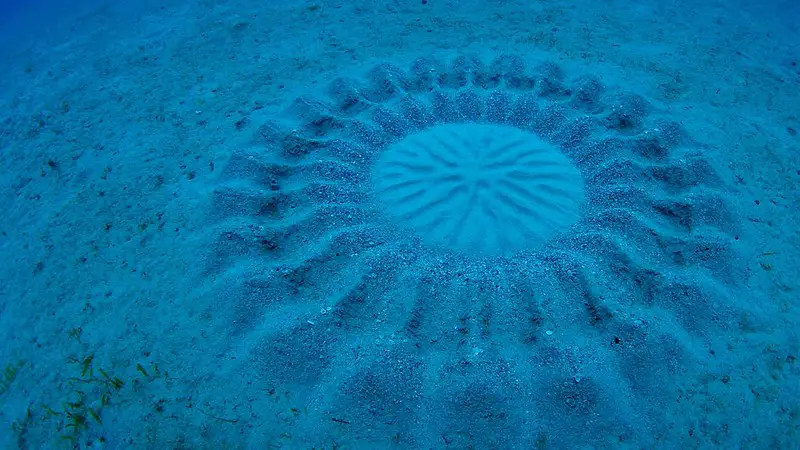
At first glance, you’d never expect the humble male pufferfish to be behind one of the ocean’s most intricate structures. But off the coast of Japan, these small fish create massive, geometric sand circles, up to 7 feet in diameter, on the seafloor to impress potential mates. Using only their fins, the male spends days fanning ridges and valleys in perfect symmetry, forming an underwater crop circle. The design isn’t just beautiful, it’s functional, too. The ridges help direct fine sand particles to the center, creating a soft nest for eggs and a safe place for females to lay them.
If that’s not impressive enough, the pufferfish also decorates the central zone with bits of shell and coral for extra flair. And if the pattern gets disrupted by currents or nosy divers, the fish will meticulously rebuild it. Scientists didn’t even know these circles existed until they were discovered in 2011, and their creator remained a mystery for years. Now dubbed “mystery circles,” they’re considered some of the most remarkable examples of non-human pattern-making in nature. Who knew such small fish had such big artistic ambition? Source: Smithsonian Magazine
Sociable Weaver
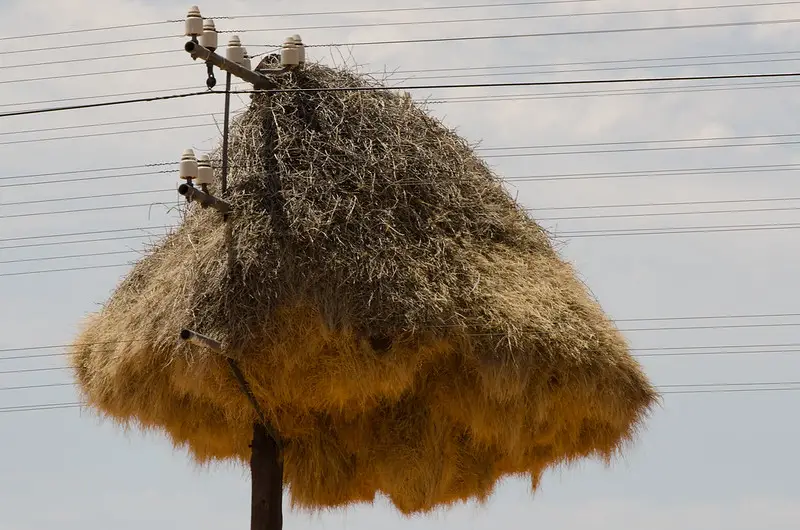
In the blistering Kalahari and Namib deserts of southern Africa, sociable weavers build bird condos that are so massive they can bend tree branches or collapse telephone poles. These communal nests, crafted primarily from dry grasses, look like haystacks in the sky, but inside, they’re marvels of avian engineering. One nest can house over 100 individual birds and contain up to 300 separate nesting chambers, each lined with softer grasses for insulation. The structure maintains a stable internal temperature despite scorching days and frigid nights, offering the perfect microclimate for raising chicks and avoiding predators.
But these birds don’t just build for comfort; they make for the whole community. Sociable weavers live in cooperative colonies, maintaining and expanding the nest year-round like feathery HOA members. Each chamber has its entrance, often protected by sharp stick tunnels to keep snakes and other invaders out. Some mega-nests have been continuously occupied for decades, with new generations adding on like natural architects expanding a desert high-rise. It’s social housing on a whole new level, built with beaks, teamwork, and survival smarts. Source: San Diego Zoo Wildlife Alliance
Trapdoor Spider

Part predator, part engineer, the trapdoor spider is nature’s ambush architect. Found in warm climates worldwide, this secretive arachnid digs a vertical burrow in the ground and lines it with silk to keep it stable. Then, it crafts a perfectly camouflaged lid out of soil, plant matter, and silk, hinged with its spider silk like a spring-loaded door. The spider hides inside with its legs pressed against the trapdoor, waiting for vibrations from an unsuspecting insect walking nearby. In a flash, it bursts out, grabs the prey, and slams the door shut again.
What makes these structures so impressive is the precision involved. The door is virtually invisible from above, and the hinge is strong enough to withstand being pried open by predators. Some species even create false doors or side tunnels to confuse attackers. Unlike web-building spiders, trapdoor spiders don’t need expansive silk structures to hunt; they rely on stealth, strength, and their pop-up hunting blinds. It’s a marvel of low-tech innovation with deadly efficiency, proving that in nature, sometimes less is more, as long as it comes with a booby trap. Source: Australian Museum
Paper Wasp
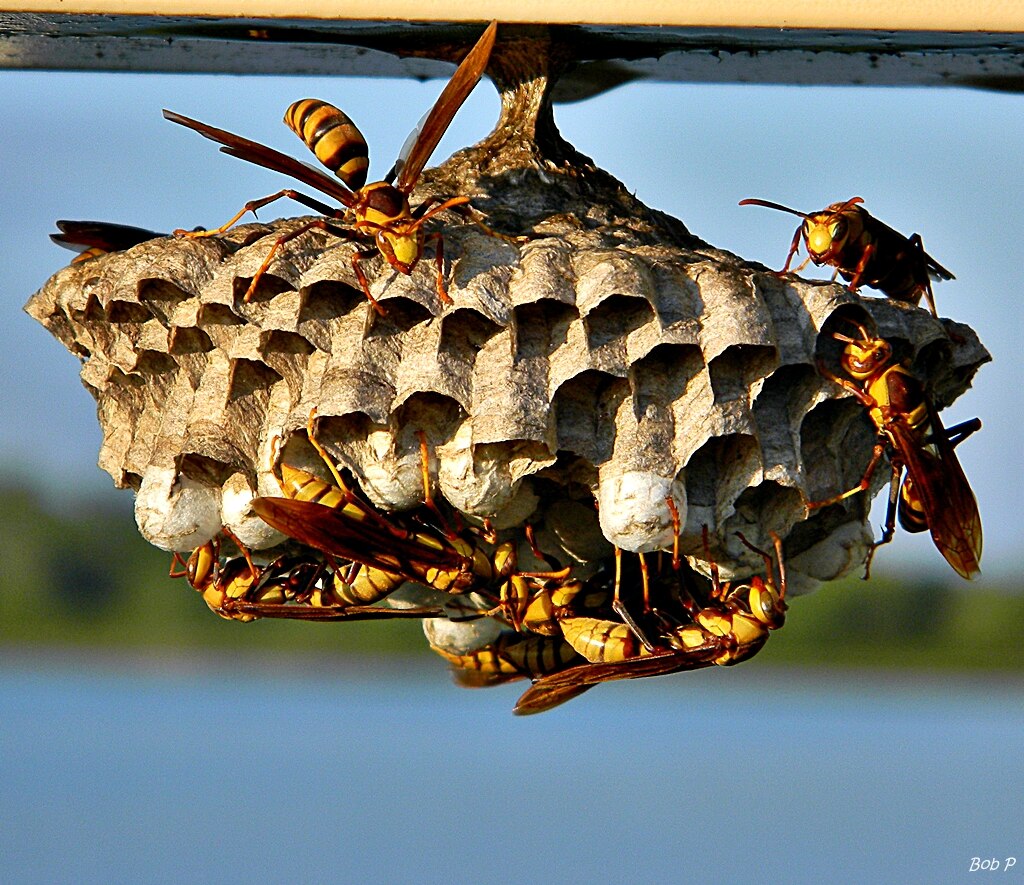
If you’ve ever stumbled upon a papery, umbrella-shaped nest hanging from the eaves of your house, you’ve witnessed the handiwork of a paper wasp. These insects are master builders, crafting their nests from chewed wood fibers mixed with saliva to form a lightweight but sturdy pulp, essentially nature’s version of papier-mâché. The result is a multi-celled structure with open-faced hexagonal chambers where each egg is laid, nurtured, and eventually hatches into a new worker or queen. The geometry isn’t random; each hexagon maximizes space and efficiency, echoing the architectural brilliance seen in honeybee hives.
However, unlike bees, paper wasps build above ground and in more exposed areas, so their nests must balance strength and stealth. The nests expand over time, with workers constantly adding new cells and repairing damaged walls. Some species even build massive communal nests with multiple queens, housing thousands of wasps in tiered combs. Despite their fearsome reputation, paper wasps are incredibly beneficial to ecosystems, preying on garden pests and contributing to pollination. And while their construction may look delicate, these papery homes can weather storms, predators, and the occasional nosy human. Source: Australian Musuem
Orangutan
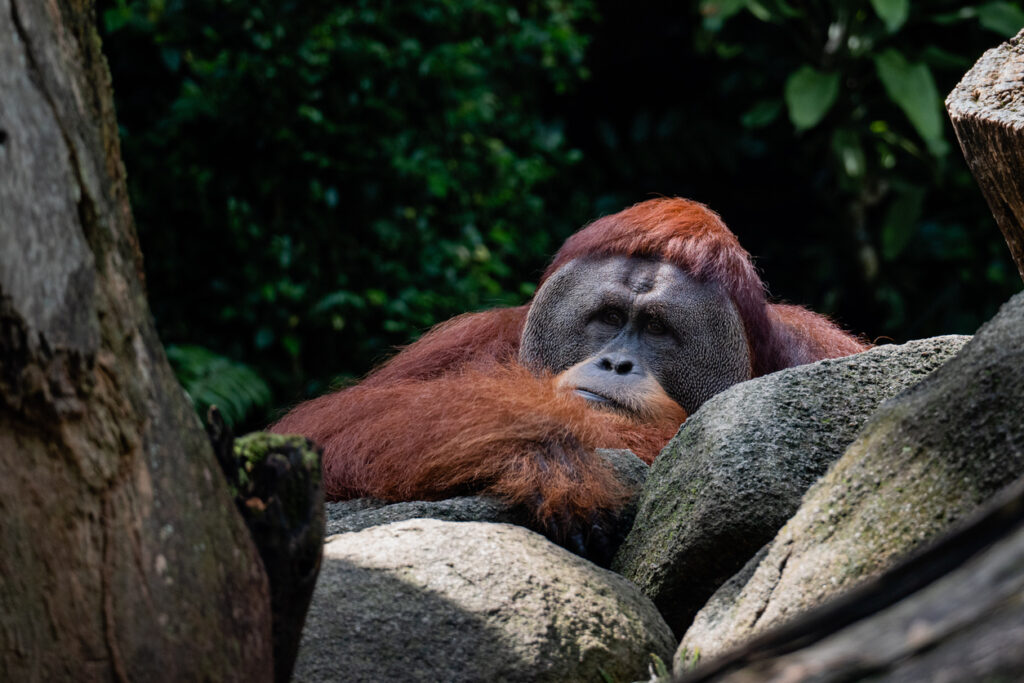
While better known for their intelligence and soulful eyes, orangutans are surprisingly skilled builders, especially when sleeping well. Every evening, wild orangutans in Borneo and Sumatra climb high into the trees and build elaborate nests out of branches and leaves. These aren’t just piles of foliage; each nest is a carefully engineered platform with a strong foundation, cushioned top layer, and often a roof of large leaves for rain protection. Some even include pillows, blankets, and bolsters, all made from plant material and constructed in under 10 minutes.
Researchers have been stunned by the structural know-how involved. Orangutans select specific branches for strength, bend them without breaking, and interweave materials to show precise mechanical planning. Nesting isn’t optional; they build a new one nearly every night, rarely reusing the same site. This daily construction habit is so consistent that scientists use nest counts to estimate population sizes. And it’s not just functional, it’s a sign of orangutan cultural behavior and possibly even innovation, with some juveniles learning by observation and others adding personal flourishes. Source: Science News
Naked Mole Rat
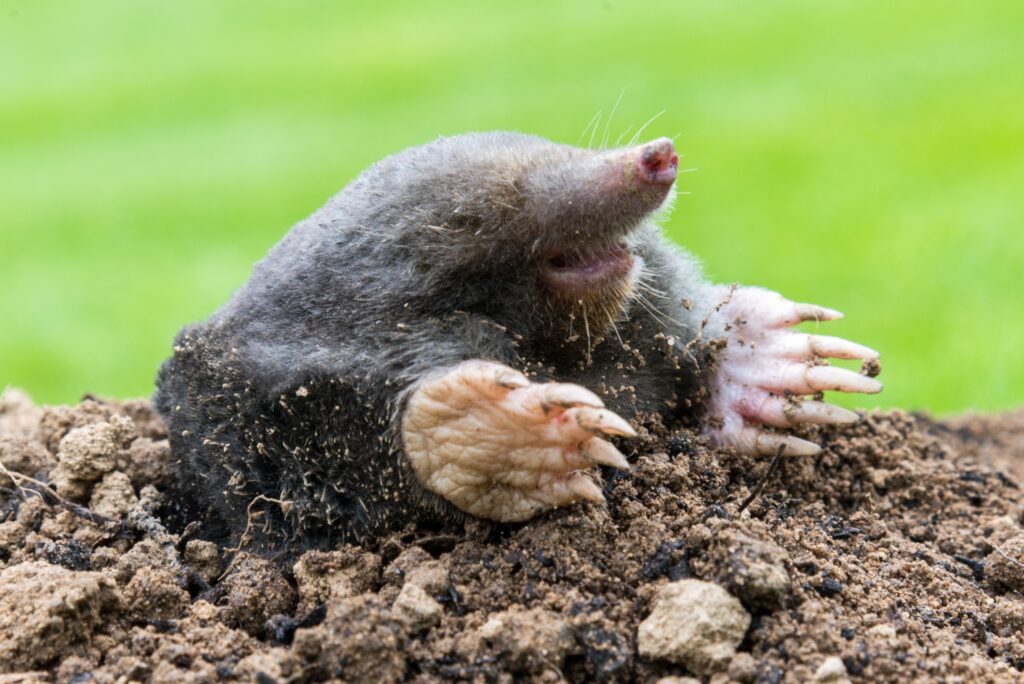
It may look like a squinting hot dog with teeth, but the naked mole rat is one of the most sophisticated subterranean architects in the animal kingdom. Native to East Africa, these nearly blind, hairless rodents live in sprawling tunnel systems extending over 2.5 miles underground. Their colonies include designated rooms for sleeping, nursing, food storage, and even a bathroom chamber, yes, they have communal toilets. Using their powerful front teeth (which operate like external digging tools), mole rats excavate through dense soil to create efficient, multi-purpose living spaces with backup tunnels for emergencies.
What makes their construction even more astonishing is the social structure that fuels it. Like ants and termites, naked mole rats live in eusocial colonies with a single breeding queen and specialized worker castes, a rare trait among mammals. This means some individuals are full-time construction workers, constantly expanding and maintaining the network. Researchers have created 3D models of their tunnels showing complex branching patterns and ventilation strategies that help regulate carbon dioxide levels. These mammals may not be pretty, but their homes are a masterclass in communal living and biological design. Source: Smithsonian
Leafcutter Ants
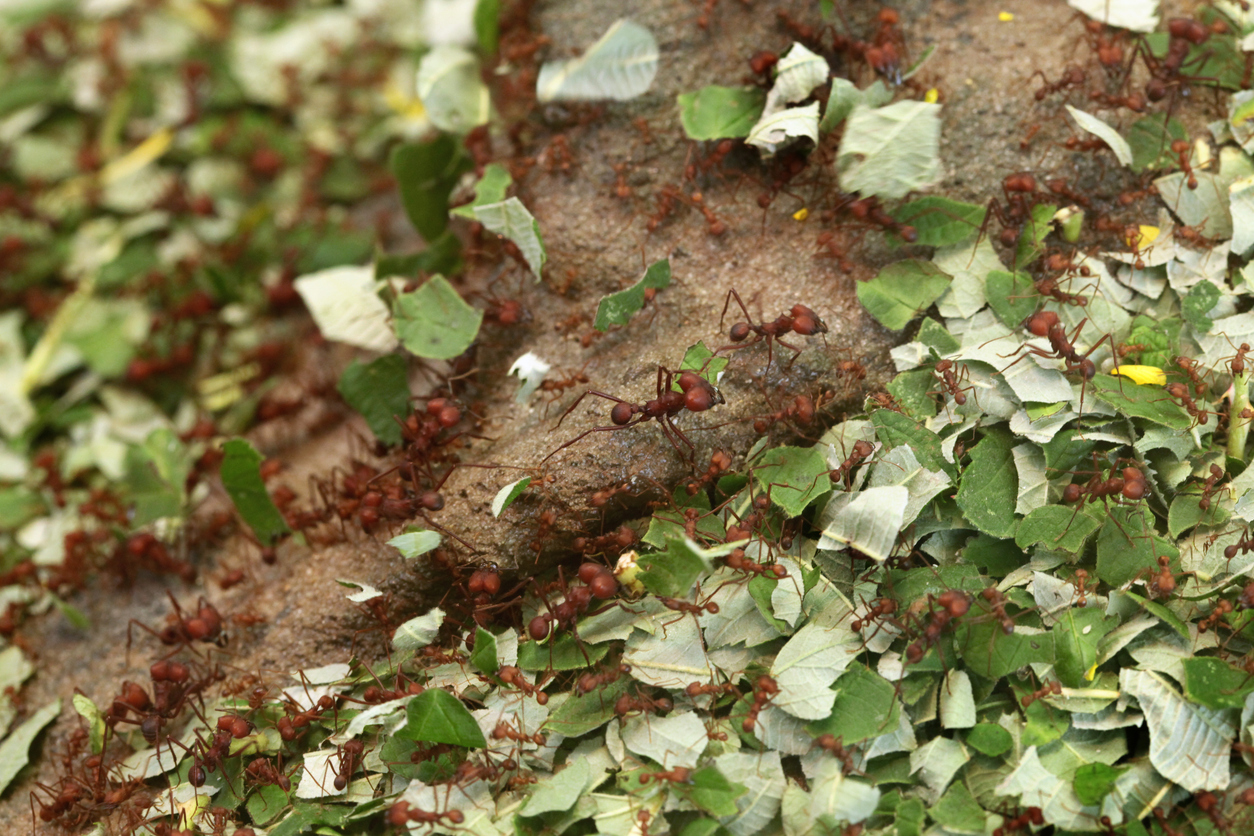
Leafcutter ants are tiny but mighty builders, crafting some of the most elaborate nests in the animal kingdom. Hidden beneath tropical forests in Central and South America, their underground colonies can span more than 5,000 square feet and plunge 20 feet deep, housing up to 10 million ants. These nests are intricately zoned with specialized chambers: nurseries for developing larvae, waste pits to keep the colony clean, and most impressively, vast fungus gardens. The ants feed leaf fragments to a cultivated fungus, which feeds the colony. They’re running subterranean farms with round-the-clock maintenance crews.
The architectural precision is astonishing. Leafcutter ants create ventilation shafts to circulate fresh air and regulate humidity, and they actively repair structural weaknesses in the tunnels. Each ant has a role, from soldier to gardener to excavator, and the entire colony functions like a self-sustaining organism. Researchers have mapped these nests with 3D scans, revealing structures rivaling city infrastructure in scale and complexity. Unlike most nests, these are dynamic, constantly growing, adapting, and evolving to support a thriving society beneath the soil. Source: Ask Nature
From skyscraping termite mounds to underwater love circles drawn in sand, these animal architects remind us that engineering isn’t just for humans with blueprints and bulldozers. Whether they’re building to survive, attract a mate, or get a better night’s sleep, these creatures prove that nature has been perfecting design long before we ever picked up a hammer.
Got a favorite builder we missed? Or a wild animal structure you’ve seen up close? Tell us your story, or share the article with a fellow nature lover who thinks their dog’s hole-digging is impressive. Because when it comes to architecture, Mother Nature always has the best portfolio.
This article, Nature’s Architects: 12 Animals That Build Incredible Structures was first published on dailyfetch.net.


