
The Garden Hose Faucet

In neighborhoods across mid-century America, the garden hose was the ultimate source of instant refreshment on blistering summer afternoons. Kids playing outside rarely paused to trek indoors for a glass of water. Instead, they’d simply twist the outdoor faucet and lean in, gulping down water that, by today’s standards, likely wouldn’t meet basic safety codes. It was a communal rite of passage; once one child took a drink, the rest of the pack usually followed suit.
Back then, the idea of lead or chemicals lurking inside the rubber lining was hardly a thought in anyone’s mind. Fast forward to 2026, and most parents favor BPA-free reusable bottles and strictly filtered tap water. This shift isn’t just about being overprotective; it’s a result of our modern awareness regarding water quality and manufacturing materials. While we now know better than to drink from the hose, those sun-warmed gulps remain a powerful symbol of a childhood that had fewer barriers between the backyard and the natural world.
Riding In Truck Beds
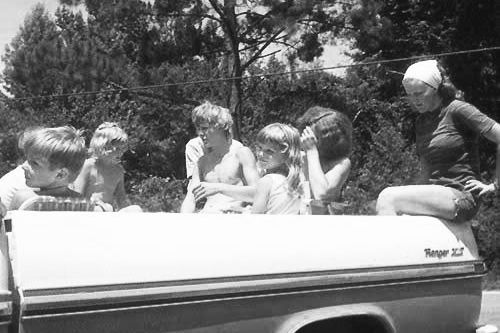
A classic image from the 1970s and 80s involves a group of kids piled into the open bed of a pickup truck, hair whipping in the wind as they bounced over every dip in the road. In those decades, this was a totally normal way to get around, blending practicality with a sense of mini-adventure. Families frequently used truck beds to transport children for quick errands to the hardware store or spontaneous trips to the local swimming hole without a second thought.
Modern safety regulations and parental expectations have completely transformed that memory into something that seems almost shocking today. In the current era, any vehicle journey requires clicks of seatbelts, side-impact airbags, and strictly enforced seating charts. What once felt like a breezy, unrestricted ride now feels incredibly risky, yet the emotional imprint of that “open-air” freedom still lingers for many. These stories remind us how much our daily lives have evolved as we prioritize physical safety over the rugged, unrestrained habits of the past.
Unscheduled Outdoor Play
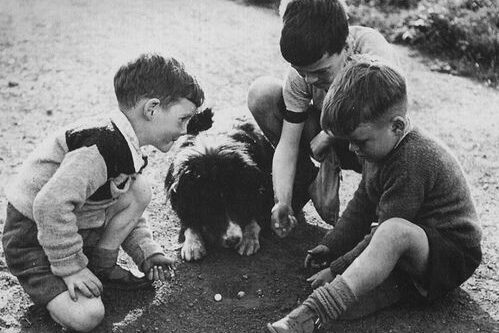
For many kids growing up before the dawn of the internet, playtime was defined by true independence. After finishing school or a Saturday breakfast, children were often told to “go play” and stay out until the streetlights flickered on at dusk. There were no GPS trackers, no constant text check-ins, and usually zero adult supervision beyond the general watchful eye of the neighborhood. Parents trusted that if something went wrong, a nearby neighbor would step in to help.
This rhythm of life helped kids develop serious resourcefulness and social skills. Without a parent hovering to settle every dispute, children learned how to negotiate rules for kickball and build elaborate forts out of scrap wood. Today, while kids still play, their time is often managed within organized sports or supervised playdates. The idea of disappearing into the woods for eight hours straight feels like a fairy tale now, but those memories represent a specific type of grit and freedom that defined an entire generation.
Candy Cigarettes And Smoke
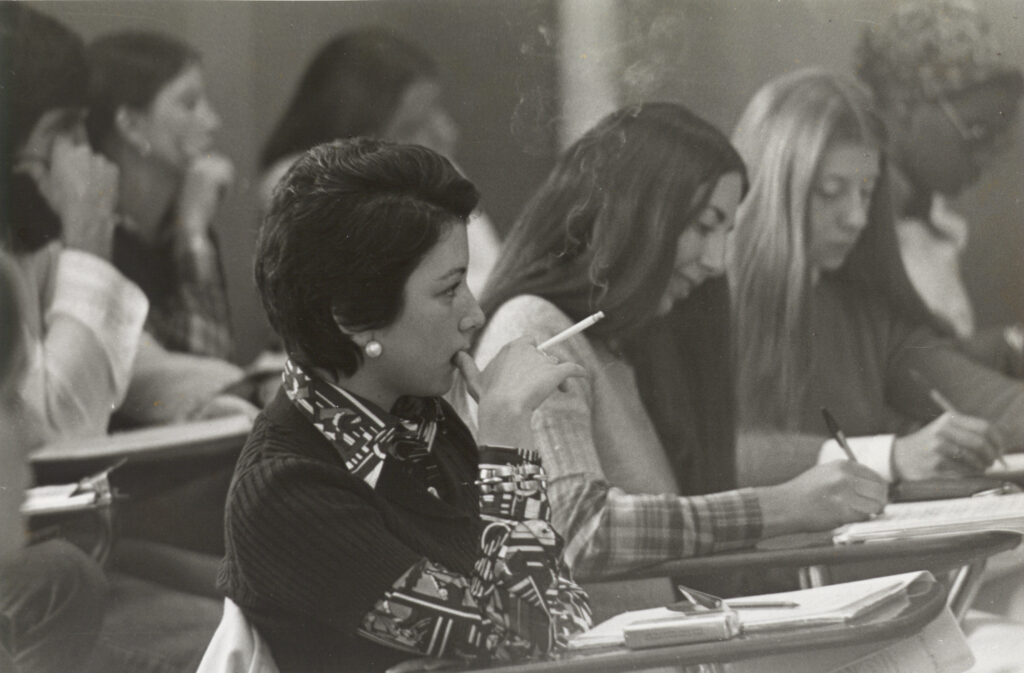
Throughout the mid-20th century, it was common to see children mimicking adult habits with toys like candy cigarettes. These were sugary white sticks, often tipped with red dye to look like a glowing cherry, sold in boxes that looked remarkably like real tobacco brands. Some versions even contained a bit of cornstarch “smoke” that you could blow out for extra realism. This mimicry was seen as harmless fun in an era where smoking was everywhere, from offices to airplanes.
By the time the late 1990s rolled around, public perception began to shift dramatically. Most retailers stopped carrying these items as health experts voiced concerns about normalizing smoking habits for youngsters. Parents today are far more likely to steer their kids toward snacks that don’t model risky behaviors. What used to be a standard treat found at every corner store has now become a curious relic, highlighting how much our cultural views on health and influence have changed over the decades.
Calling Through Gatekeepers

Before smartphones became a permanent fixture in our pockets, connecting with a friend required a serious exercise in social courage: calling the household landline. You had to dial a number and speak to a parent or an older sibling first. This “gatekeeper” phase meant you had to be polite and state your business before your friend was even allowed to come to the phone. It was a formal little ritual that every kid had to master.
In that era, a phone call was a deliberate event rather than a constant stream of digital pings. Since many phones were attached to a wall in the kitchen or hallway, privacy was almost non-existent, and conversations were often brief. Today’s world of private DMs and encrypted chats makes the old landline feel like a dinosaur. However, those old-school calls taught us how to talk to adults and navigate social boundaries, a skill set that felt much more personal than simply tapping on a glass screen.
Biking Without Helmets
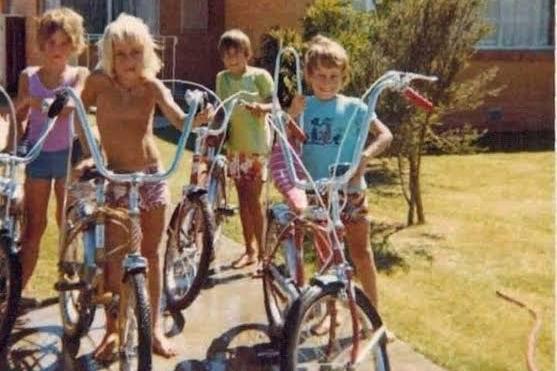
It was a regular sight decades ago to see children racing down neighborhood hills on their bicycles without a single piece of protective gear. Helmets, knee pads, and elbow guards were almost unheard of for the average kid just riding to a friend’s house. If you fell and scraped your knee, you just dusted yourself off and kept going. Learning to balance and steer was often a trial-by-fire experience that came with plenty of “road rash” and bruised shins.
By the mid-1990s, safety campaigns and new legislation began to make helmets the standard for riders of all ages. Today, seeing a child on a bike without a helmet would likely cause a neighbor to double-take or a parent to intervene. This change reflects our broader societal shift toward preventing avoidable injuries. While the image of a kid pedaling freely with the wind in their hair feels like a nostalgic dream, it also serves as a reminder of how much more we value physical protection today.
Memorizing Every Number

Long before our phones acted as digital brains, children had to store dozens of phone numbers right in their own heads. You knew your house number, your best friend’s number, and your grandparents’ digits by heart because there was no “contacts” list to fall back on. If you were at a payphone or a friend’s house, that mental library was your only lifeline to the outside world. It was a mental muscle that everyone exercised daily.
This habit encouraged a high level of mental recall and focus. You didn’t just tap a name; you visualized the keypad and the sequence of digits. Today, most of us would be hard-pressed to remember more than two or three numbers without looking at a screen. While technology has certainly made our lives more convenient, it has also changed how we store information. For many, the ability to rattle off a childhood phone number from 1985 is a lingering sign of a time when we relied more on memory and less on chips.
Walking To School Solo

In previous generations, it was perfectly normal for kids as young as five or six to walk several blocks to school entirely on their own or with a group of siblings. That morning trek was a standard part of the daily routine, fostering a sense of independence and a deep familiarity with the local neighborhood. Parents didn’t worry about “stranger danger” in the same way, and the walk was seen as a healthy way to wake up before class.
Fast forward to the present day, and the school drop-off line is often a chaotic parade of SUVs. Concerns about traffic, safety, and modern schedules mean that most children are closely supervised until they step through the schoolhouse doors. While “walking school buses” exist in some areas, the solo trek is largely a thing of the past. This shift highlights how our collective sense of community and risk has evolved, turning what was once a simple walk into a highly managed event.
Playing With Dangerous Toys

The toy box of the 1960s and 70s would probably look like a collection of hazards to a modern parent. One of the most famous examples was “Jarts,” or metal lawn darts. These were heavy, sharp-pointed projectiles meant to be tossed across the yard, which unfortunately led to many emergency room visits. Other popular items included “clackers”, hard plastic balls on a string that could shatter or bruise fingers, and chemistry sets that contained actual glass and chemicals.
Over time, injury data and strict consumer protection laws led to the ban or redesign of these high-risk playthings. Manufacturers moved toward foam, rounded edges, and non-toxic materials to ensure that playtime didn’t end in a hospital trip. Looking back, those old toys seem incredibly reckless, but they also reflect a time when “learning the hard way” was just part of the experience. Today’s toy aisles are much safer, ensuring that the thrill of play doesn’t come with a side of stitches.
Buying For The Adults
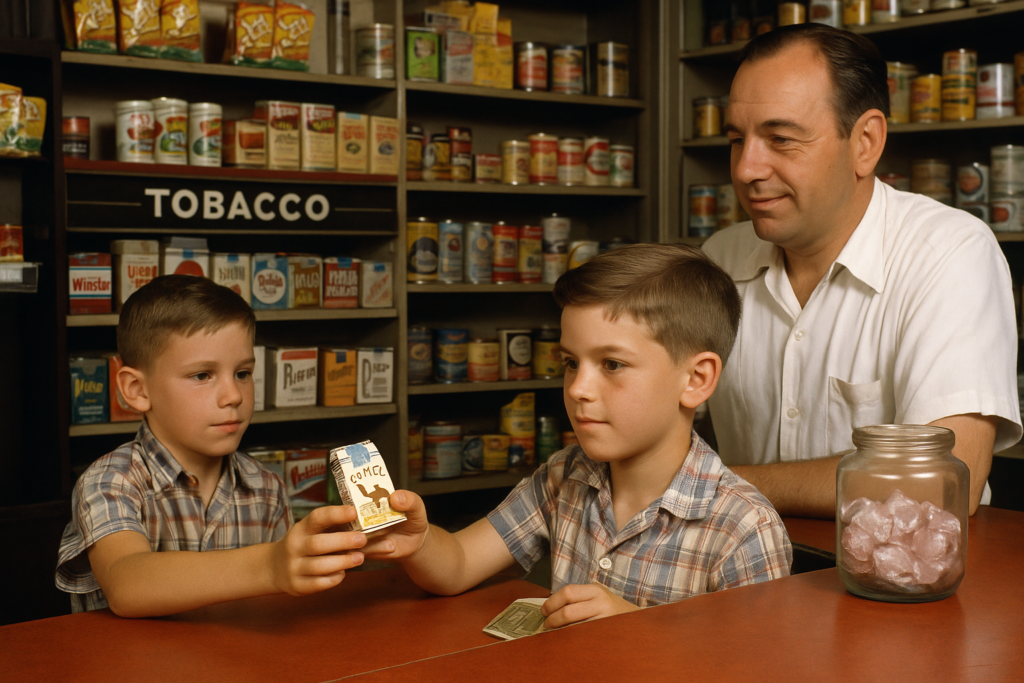
In an era before strict ID checks and automated registers, it wasn’t unusual for a parent to send a child to the corner store to pick up a pack of cigarettes or a six-pack of beer. Kids would often carry a handwritten note from their mom or dad, and the local shopkeeper, who knew the family well, would hand over the items without a second thought. It was considered just another helpful chore, much like picking up a gallon of milk or a loaf of bread.
Today, this scenario would be unthinkable and likely lead to legal trouble for the store owner. With our modern understanding of substance health risks and much tighter age-restriction laws, children are kept far away from purchasing adult products. This change marks a massive shift in how we view the “innocence” of childhood versus the responsibilities of adulthood. While those errands gave kids a sense of importance back then, they now serve as a stark reminder of how much our social boundaries have tightened for the better.
The Neighborhood Milk Run
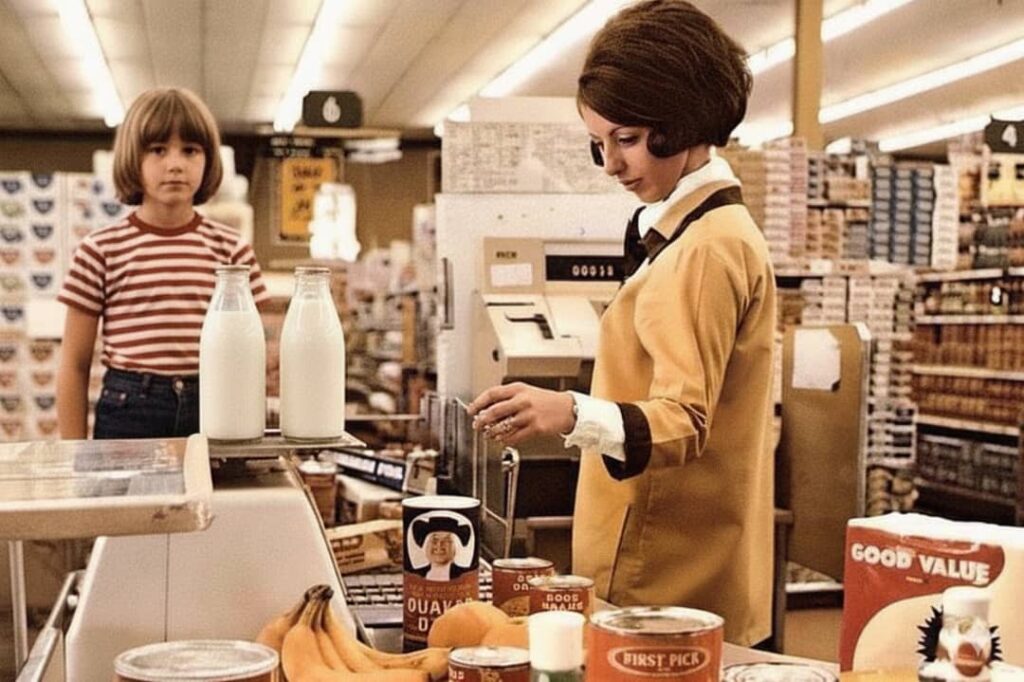
In a world before giant supermarkets and 24-hour convenience stores, the “milk run” was a staple of the American childhood. Parents would often send their kids down to the local corner grocer with a few crumpled dollars to grab a glass bottle of milk or a loaf of white bread for dinner. These mini-errands weren’t just about chores; they were a child’s first taste of real-world responsibility. You’d walk into a shop where the clerk knew your name, your parents’ names, and probably which candy you were eyeing while they counted back your change.
By the mid-1990s, the rise of “big box” stores and changing views on neighborhood safety started to phase out this casual independence. Today, the idea of a seven-year-old navigating traffic and handling cash solo feels like a high-stakes mission for many parents. We’ve traded those quick solo trips for structured car rides and digital grocery deliveries. While it’s certainly safer and more efficient, there’s a distinct nostalgia for that specific era when a kid with a grocery list was just a normal part of the local scenery.
The Mystery of the Party Line
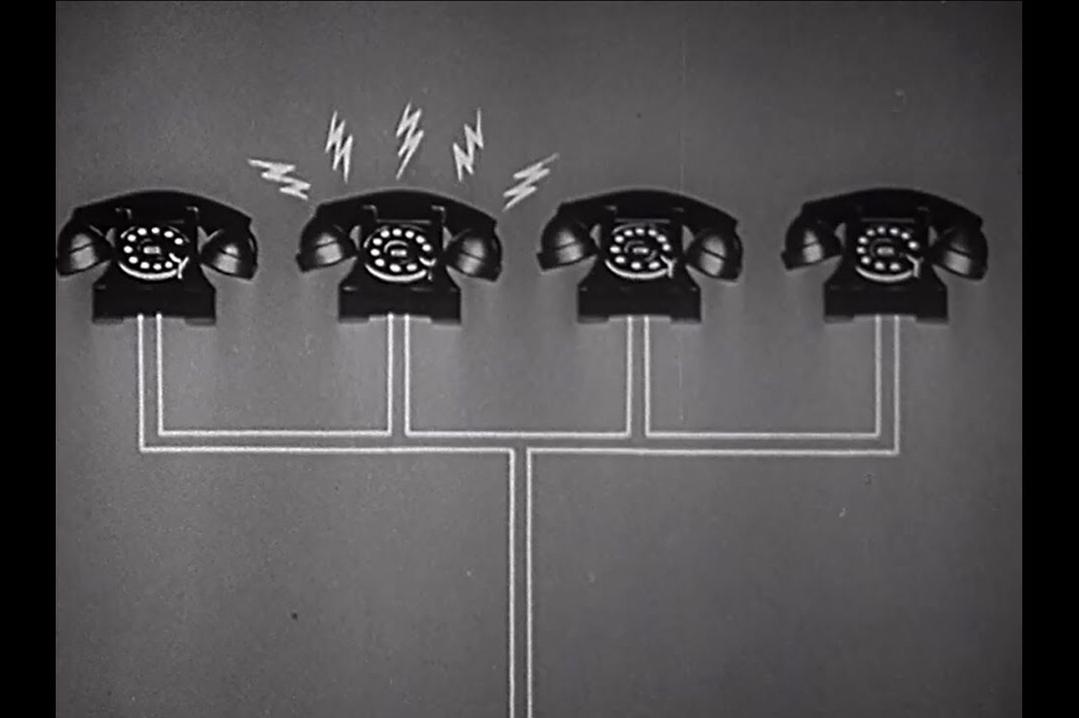
Before every teenager had a smartphone tucked in their pocket, many rural and suburban families shared a single telephone circuit known as a “party line.” If you picked up the receiver to make a call, you might hear your neighbor down the street chatting about their garden or a local bake sale. There was no “private” digital bubble; you had to wait your turn or, if you were a curious kid, listen in quietly to the local gossip until someone told you to hang up. It was a shared community resource that required a surprising amount of patience and etiquette.
As telecommunications evolved in the late 1980s and early 1990s, private lines became the standard, and the party line faded into technical history. Today’s kids, used to instant, encrypted messaging, would find the idea of sharing a phone line with the neighbors absolutely mind-blowing. This shift reflects our move toward total digital privacy and personal space. We’ve gained a lot of convenience, but we lost that quirky, forced connection to the people living right next door who shared our dial tone.
Playground Trials of Metal
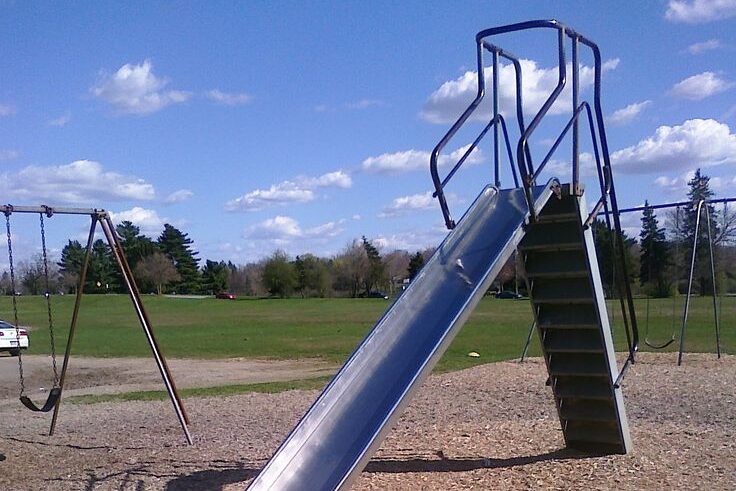
The playgrounds of the 1970s and 80s were basically outdoor obstacle courses made of sun-baked metal and hard asphalt. The “Giant Slide” was often a towering sheet of polished steel that could reach scorching temperatures in the July heat, and the merry-go-round was a spinning heavy-metal disc that tested your grip strength and your stomach. There were no rubber mats or wood chips to catch you; if you tumbled off the monkey bars, you usually met a patch of dirt or a very unforgiving concrete slab.
Starting in the late 1990s, safety experts and insurance companies pushed for a total redesign of public play spaces. Modern playgrounds now feature “cool-touch” plastics, soft recycled rubber flooring, and height-restricted climbing gear to minimize the risk of broken bones. While we definitely don’t miss the literal burns from a hot slide, those old-school playgrounds were where a generation learned to assess their own physical limits. Today’s parks are undeniably safer, but they lack that slightly wild, “enter-at-your-own-risk” energy that defined our childhood afternoons.
Playing in the Hose Spray

When the summer humidity hit its peak, the neighborhood kids didn’t head to an air-conditioned indoor water park; they headed for the nearest garden hose. Turning on the “mist” setting or running through a rhythmic oscillating sprinkler was the ultimate way to beat the heat. It was messy, muddy, and completely spontaneous. You didn’t need a ticket or a lifeguard; you just needed a swimsuit and a willing parent to turn the outdoor faucet. The grass would turn into a slippery slide, and the afternoon would disappear in a blur of cold water and grass stains.
By the 2010s, many communities began implementing stricter water conservation rules, and high-tech “splash pads” started popping up in every local park. While these modern water features are great, they lack the DIY charm of a backyard sprinkler. Our modern approach to water play is much more regulated and eco-conscious, reflecting our growing awareness of resources. Still, the simple joy of a cold spray on a hot driveway remains a core memory for anyone who grew up before “smart” sprinklers were a thing.
The Saturday Morning Cartoon Ritual
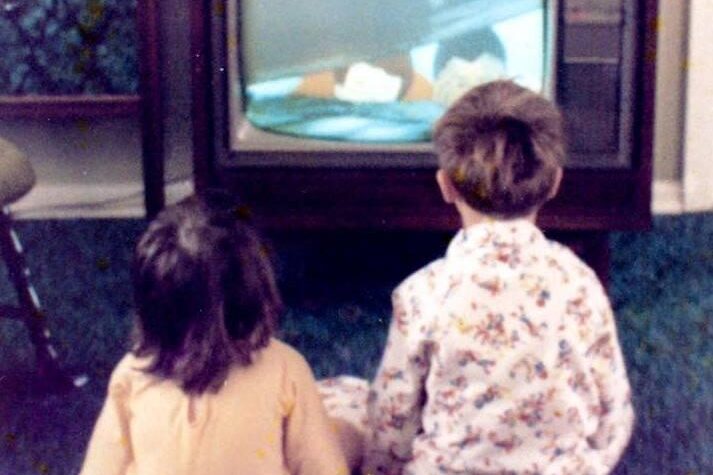
In the decades before streaming services like Netflix or YouTube, Saturday morning was a sacred window of time for American kids. From roughly 7:00 AM until noon, the major networks aired back-to-back animated shows that you couldn’t see any other time of the week. You’d wake up early, grab a bowl of sugary cereal, and plant yourself in front of the TV to catch the latest adventures of your favorite characters. If you missed an episode, you had to wait months for a rerun; there was no “on-demand” button to save the day.
This shared cultural experience meant that on Monday morning, every kid at school had seen the exact same show. Today, with 24/7 cartoon channels and infinite streaming libraries, the “event” status of Saturday mornings has vanished. Kids can watch whatever they want, whenever they want, which is incredibly convenient but also much more solitary. That old ritual was about more than just cartoons; it was a weekly rhythm that gave millions of children something to look forward to all week long.


