
1. Blockbuster: Friday Nights at the Video Store
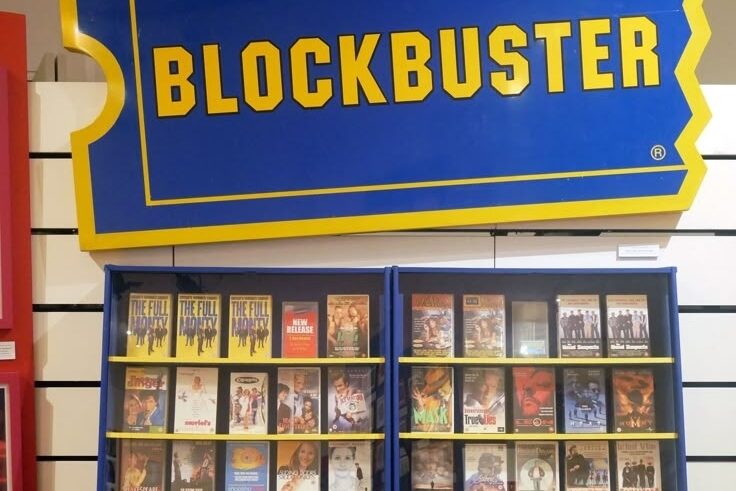
There was a time in America when Friday night didn’t really start until you pulled into the Blockbuster parking lot with hopes of finding a good movie and maybe some popcorn. Blockbuster was the heart of weekend entertainment for families and friends across the country. Everywhere you turned, there were bright blue and yellow stores packed with rows of VHS tapes and DVDs. You remember the ritual browsing the shelves, debating what to watch, and maybe returning the tape a little late (and paying that dreaded late fee). Blockbuster felt like something that would never go away, a place you could count on no matter how much changed around you.
But as high‑speed internet and streaming services started to take over how we chose movies, Blockbuster clung to its stores and rental model. Netflix was rising with its mail‑order discs and eventually its streaming service, and many Americans began watching movies at home without ever leaving the couch. Blockbuster filed for bankruptcy in 2010, and most stores closed soon after. It’s still comforting to picture those aisles and old movie boxes, and Blockbuster’s rise and fall reminds us how quickly tech and habits can shift. Share this with someone who remembers their neighborhood Blockbuster night.
2. Kodak: The Camera Giant That Missed the Digital Turn
For decades, Kodak was the name Americans trusted for capturing life’s moments. From birthday parties to road trips and graduations, Kodachrome film and cheerful yellow packaging were part of everyday life. Many of us grew up loading film into a Kodak camera, shaking off the anticipation of getting pictures developed. They practically invented photography for households everywhere. Even well into the ’90s, Kodak felt unshakeable a trusted friend in every family’s memories.
Yet when digital cameras started emerging, Kodak hesitated. It had actually developed early digital technology, but feared it would hurt its hugely profitable film business. That decision slowed its move into the very thing that disrupted its own success. As digital photography and smartphones became mainstream, Kodak’s sales plunged and it filed for bankruptcy in 2012. Today, the name lives on in smaller niches, but it’s not the cultural centerpiece it once was. Kodak’s story is a gentle but real reminder that innovation doesn’t wait. If this brought back memories, share it with someone who once carried a Kodak camera around everywhere.
3. Nokia: Once in Every Pocket
Back in the early 2000s, a Nokia phone was almost a guarantee in American pockets and backpacks. If you didn’t have one, someone you knew did, with that signature durability and those cheerful ringtones. Nokia was everywhere simple, reliable, and seemingly built to last forever. For a long stretch, it was the company everyone assumed would rule mobile phones for years to come. You could hand your phone to a friend to drop off a bridge or use it on a hike and expect nothing but toughness in return.
But as smartphones exploded with new features and app ecosystems, Nokia’s focus stayed rooted in hardware while others raced ahead with software, touchscreen design, and mobile internet. The market shifted so fast that Nokia’s once‑strong position slipped through its fingers. By the early 2010s, its share of the U.S. phone market had virtually disappeared, and the brand retreated from consumer mobile dominance. Even today, some people remember Nokia fondly for its reliability, but most think of it as a brand from a different era. If this took you back to trying to master Snake on a tiny screen, share this with a friend who remembers too.
4. BlackBerry: From Business Favorite to Background Noise
In the heyday of early smartphones, BlackBerry was the gold standard especially for business users. Back when emails ruled corporate life and keyboards mattered, BlackBerry delivered a device that seemed to perfectly balance productivity and portability. In offices around the U.S., professionals relied on crisp keyboards and that familiar notification sound for their daily communication. It was more than a phone; it was a lifeline for work and connection.
But then iPhones and Android devices brought touchscreens, app ecosystems, and lifestyles built around mobile experiences beyond email. BlackBerry’s focus stayed rooted in security and physical keyboards, and it struggled to pivot fast enough to the new expectations of smartphone users. Sales dwindled, and the hardware side of the business eventually faded, with the company shifting toward software services instead. The world kept scrolling, tapping, and app hopping while BlackBerry quietly exited the stage. If you remember trading BlackBerry pins or typing out long emails on a tiny keyboard, share this with someone who lived that era too.
5. Yahoo: The Early Web’s Welcome Page
In the early days of the internet, Yahoo was where millions of Americans began their online journey. It wasn’t just a search tool; it was a portal offering news updates, email, weather, and all kinds of information in one place. If you were online in the ’90s and early 2000s, you likely knew Yahoo’s bright logo and felt comfortable exploring the web from its homepage. It felt like the friendly front door to a new world of digital possibility.
But the internet evolved. Google refined search, and platforms like Facebook and YouTube reimagined how we connect and consume content. Yahoo tried to keep up with acquisitions and redesigns, but it never quite recaptured its early leadership. Over time, it faded from prominence, eventually being sold and restructured under different ownership. The name still appears on some services today, but it’s not the gateway it once was. Yahoo’s story is a gentle reminder that even beloved brands must evolve with the world they helped create. If this stirred old internet memories, share it with someone who remembers logging on through Yahoo.
6. Toys “R” Us: A Childhood Destination
For many Americans, Toys “R” Us was more than just a store; it was an experience. Wandering through aisles of toys, discovering new games, and picking out birthday surprises were rituals for generations of kids and parents. The store’s mascot, Geoffrey the Giraffe, welcomed children with a promise of fun and discovery, and holiday seasons felt bigger with its bright displays and endless shelves. Toys “R” Us didn’t just sell toys; it was part of how childhood felt.
But changes in shopping habits began reshaping how families bought toys. Big‑box chains offered competitive pricing, and online shopping made deliveries easy without leaving home. Compounded by financial challenges and heavy debt, Toys “R” Us filed for bankruptcy and closed most of its U.S. stores in 2018. The brand has tried to return in various forms, but the bustling stores filled with Lego towers and action figures are mostly memories now. Toys “R” Us’s story reminds us that nostalgia is powerful, but markets and habits move on. If you remember sprinting toward the toy aisle as a kid, share this with someone who would smile at that memory too.
7. Sears: From Catalog King to Quiet Aisles
Sears was once a household name in America, a place where families shopped for everything from tools to clothes. Its catalog was legendary a box of endless possibilities delivered to your doorstep, letting people browse and order products long before online shopping existed. Walking into a Sears store felt like stepping into a hub of possibility, with appliances, shoes, and even furniture under one roof. For decades, it was a part of everyday life in towns and cities across the U.S., blending convenience and reliability.
But the rise of e‑commerce and big‑box retailers like Walmart changed the shopping landscape. Sears struggled to modernize, facing declining foot traffic and mounting debt. Its stores closed gradually, and its once‑iconic catalog is a relic of the past. Though the brand still exists in a small, transformed form, the cultural presence that defined it for generations has faded. Sears’ story is a reminder that even the most trusted brands need to adapt to survive. If you grew up thumbing through its catalog or wandering its aisles, share this with someone who remembers the thrill of Sears shopping.
8. RadioShack: The Gadget Store Down the Street
RadioShack used to be the neighborhood tech stop where Americans found everything from batteries to radios and electronics kits. It was the go‑to store for do‑it-yourself projects, tinkering, and early gadgets that helped spark curiosity and learning. Many people have fond memories of browsing its aisles, discovering components for a school project, or picking up the latest gadgets for fun. It felt accessible, familiar, and almost indispensable for a generation of tech enthusiasts.
Yet as electronics became widely available in big‑box stores and online retailers, RadioShack struggled to maintain its appeal. Its smaller footprint and inconsistent strategy left it behind, and a series of bankruptcies ultimately closed most of its stores. While the brand exists today in a smaller online form, the local stores that were once a staple in towns across the U.S. are gone. RadioShack’s decline shows how even useful, community‑centered businesses can fade if they can’t adapt to new ways people shop. If this brought back memories of finding a rare gadget or DIY kit, share it with a friend who grew up exploring RadioShack shelves.
9. AOL: The Sound of the Early Internet
Remember that dial-up tone, the excitement of “You’ve got mail,” and logging on to explore the early web? AOL was more than a company; it was the gateway to the internet for millions of Americans. Email, chat rooms, and early web portals made it a central part of digital life. For kids, teens, and adults alike, spending hours online with AOL was a ritual that shaped the very first generation to explore the digital world from home.
But the internet didn’t stop evolving. Broadband, Google, and social media platforms changed the way Americans connected online. AOL’s dial-up and portal-focused model became obsolete, and despite acquisitions and rebranding, it faded from mainstream culture. Its influence is largely a nostalgic memory today, remembered for pioneering online communication rather than leading it. AOL reminds us that being first doesn’t guarantee staying power, especially when technology and user habits move so quickly. If this dial-up nostalgia makes you smile, share it with someone who remembers logging on for the very first time.
10. Circuit City: Electronics Before E‑Commerce
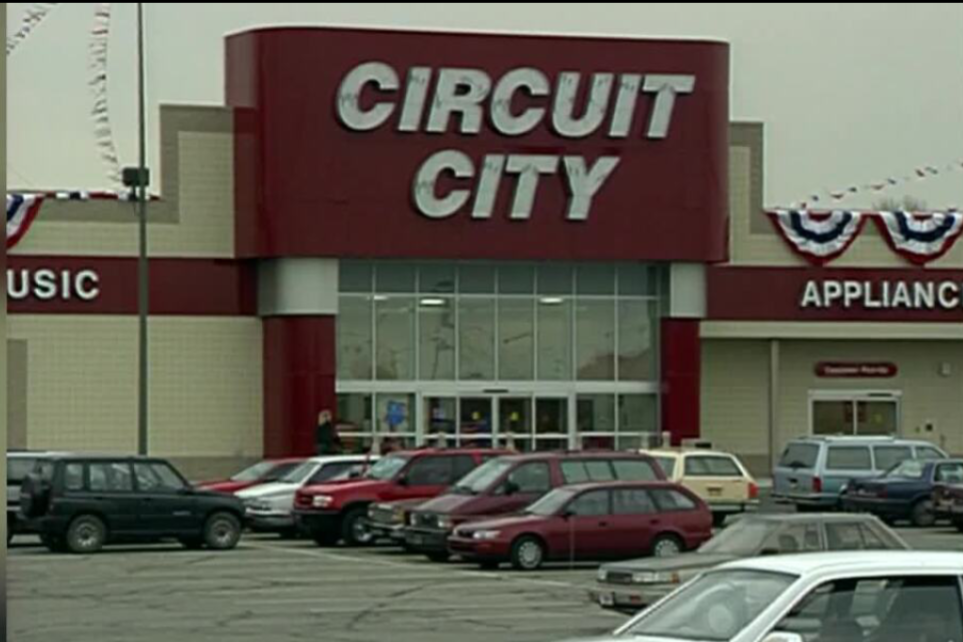
In the 1990s and early 2000s, Circuit City was where Americans went for TVs, stereos, and home electronics. It offered the excitement of the latest gadgets, knowledgeable staff, and sprawling stores filled with electronics that promised a glimpse of the future. Families might have spent hours exploring the shelves before making a purchase, dreaming of the big-screen TV or stereo system that would change movie nights or weekend music sessions forever.
However, competition from Best Buy and online retailers reshaped the way people bought electronics. Circuit City struggled to compete with both price and convenience, and a lack of adaptation ultimately forced it to close most stores after filing for bankruptcy in 2008. Its decline is a clear example of how technology and consumer habits can leave once-dominant retailers behind. For Americans who remember standing in a Circuit City aisle, debating which DVD player to buy, it’s a bittersweet memory of a brand that felt like a neighborhood destination. Share this with someone who shopped there as a kid or teen, they’ll understand.
11. Borders: Where Books Once Mattered
Borders was one of the largest bookstore chains in the U.S., and for many Americans, it was a place of discovery. Wandering through rows of novels, flipping through bestsellers, and catching author events were all part of the experience. For book lovers, Borders offered not just books but a sense of community, a place to browse, linger, and explore worlds within pages. Its presence in malls and city centers made it a familiar stop on a Saturday afternoon. But the rise of online retailers like Amazon, combined with e-readers and changing reading habits, reshaped the industry. Borders struggled to compete and ultimately liquidated its stores in 2011. Today, its aisles and cozy corners exist mostly in memory, replaced by online browsing and indie bookstores. Borders reminds us that even cherished cultural institutions can vanish if they don’t evolve with their audience. If thinking of Borders brings back memories of summer afternoons lost in books, share this with someone who loved the thrill of wandering its aisles.
12. Pan Am: The Airline of Dreams
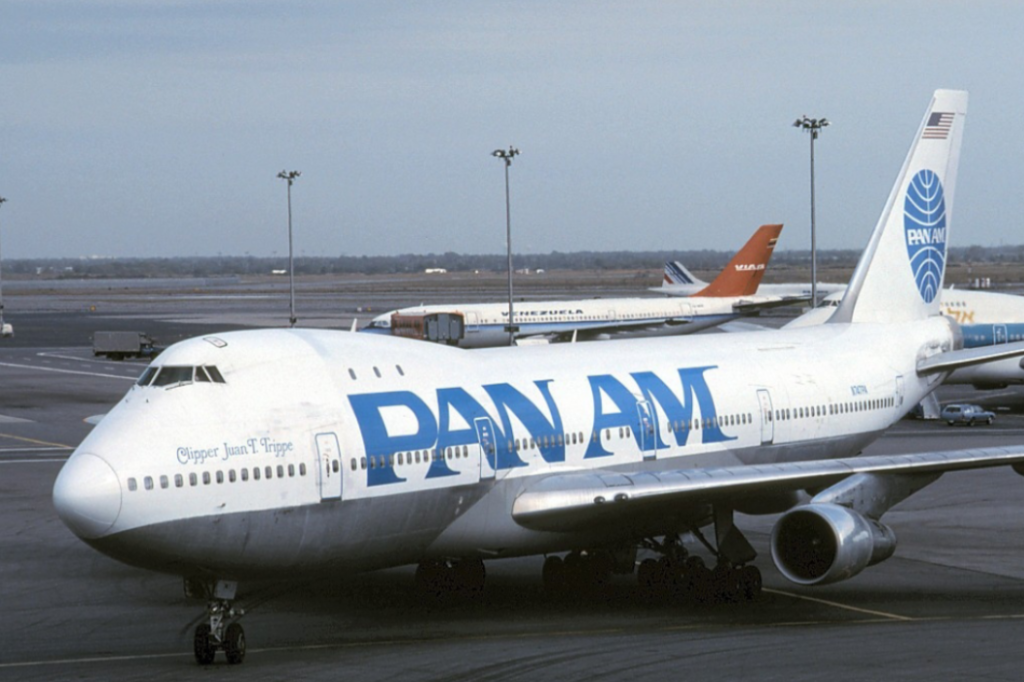
For many Americans, Pan Am represented glamour, adventure, and international travel in its golden years. From the iconic blue globe logo to flights connecting major cities across continents, Pan Am was more than an airline it symbolized the excitement of exploration. People remembered its flight attendants in crisp uniforms and the idea that air travel could feel both luxurious and accessible. It defined the mid-20th-century American travel experience.
But rising fuel costs, deregulation, and intense competition changed the aviation industry. Pan Am faced mounting challenges it couldn’t overcome and ceased operations in 1991. Its name survives in nostalgia and pop culture, but the airplanes no longer take off under that banner. Pan Am’s story is a reminder of how even the most iconic brands can vanish when economic realities collide with shifting markets. If thinking of Pan Am makes you long for a classic travel era, share this with someone who remembers looking at a globe dreaming of far-off destinations.
13. MySpace: Social Media’s Early Stage
Before Facebook or Instagram, MySpace was where Americans expressed themselves online. It wasn’t just about connecting with friends, it was about crafting a profile, customizing backgrounds, sharing music, and discovering new artists. Teens and young adults spent hours tweaking layouts, adding photos, and curating their “Top 8” friends. For a moment, it felt like the center of the social universe, a place where personalities came to life online.
But as Facebook and other platforms offered cleaner interfaces and broader connectivity, MySpace couldn’t keep up. Its popularity dwindled, and although it still exists today as a niche music and entertainment site, the cultural impact it once had is gone. MySpace’s rise and fall are a reminder that the digital world changes quickly and that even a once-dominant platform can fade if it doesn’t evolve. If this takes you back to late nights personalizing your profile or sharing songs with friends, share it with someone who remembers the “MySpace era” and all the quirky, fun ways we first explored social media.
14. Polaroid: Instant Memories That Faded

Polaroid made instant photography magical for American families. Snap a photo, and minutes later, you hold a tangible memory in your hands. Birthday parties, holidays, and vacations were captured instantly, and the novelty made every photo feel special. The iconic cameras and square prints became a part of everyday life, creating a shared sense of excitement around capturing moments.
Yet the rise of digital cameras and smartphones gradually replaced Polaroid’s appeal. People no longer needed physical prints instantly; convenience and technology shifted habits. The company filed for bankruptcy in 2001, and while its brand has made small comebacks in niche products, it never regained its central place in American homes. Polaroid’s story reminds us that innovation can both create and erode markets, and even beloved products can fade when technology moves on. If seeing a Polaroid camera brings back warm memories, share this with someone who grew up with instant photos in hand.
15. Kmart: The Blue Light That Went Out
There was a time when Kmart felt like the heart of budget shopping in America. Families wandered its wide aisles picking up everything from school clothes to kitchen items, and if you were lucky, you caught a “blue light special,” those sudden deals announced over the speaker that made people rush to a certain aisle. It wasn’t fancy, but it was dependable, and for many households, it was part of the weekly routine. Kmart had a way of feeling accessible, like a store that understood everyday needs without trying too hard.
But as retail competition intensified, especially with Walmart and Target refining their pricing and store experience, Kmart began to lose its footing. Stores became outdated, and shoppers slowly drifted toward cleaner, more modern alternatives or simply moved online. Over time, locations closed quietly, and what was once a familiar presence in nearly every town became increasingly hard to find. Kmart didn’t disappear overnight, but it faded in a way that felt almost unnoticeable until it was mostly gone. If you remember hearing that blue light announcement echo through the store, share this with someone who would instantly recognize the moment.
16. JCPenney: The Department Store That Lost Its Way
JCPenney was once a cornerstone of American malls, a place where families shopped for holidays, back-to-school outfits, and everyday essentials. Walking through its doors meant racks of neatly folded clothes, friendly sales associates, and dependable prices that made it easy to shop without overthinking. For many, it was the middle ground not too expensive, not too basic, just right for everyday life. It carried a quiet reliability that made it a regular stop for generations.
But as shopping habits shifted and fast fashion, online retailers, and changing consumer expectations took hold, JCPenney struggled to redefine itself. Attempts to rebrand and modernize didn’t quite land, and foot traffic in malls declined overall. The company filed for bankruptcy in 2020, closing many stores and shrinking its footprint significantly. While it still exists today, it no longer holds the same influence it once did in American retail culture. JCPenney’s story feels less like a sudden fall and more like a slow drift away from relevance. If you remember picking out outfits there for a special occasion, share this with someone who grew up doing the same.


