
The Eternal Pursuit Of Sporting Perfection
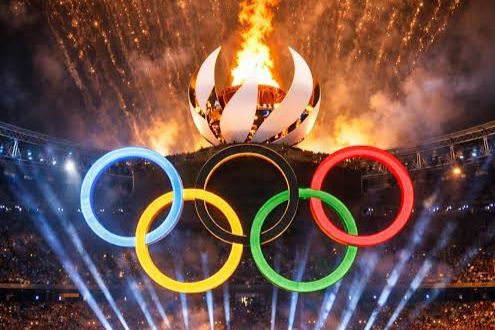
The Olympic Games have always served as the ultimate theatre for human potential, where the boundaries of what we deem possible are stretched and redefined every four years. There is something deeply moving about witnessing an athlete dedicate their entire existence to a single moment of glory, yet within this storied history, certain achievements stand so far above the rest that they seem to belong to a different realm entirely. These records are more than just numbers on a scoreboard; they are historical markers that capture a perfect alignment of talent, timing, and often a touch of the extraordinary that may never be replicated in our lifetime.
Exploring these “unbreakable” records matters because it reminds us of the rare occasions when humanity truly touched the ceiling of physical capability. As sports science evolves and training methods become more sophisticated, one might assume every record is destined to fall, but many of these feats were set in eras or under conditions that simply cannot be manufactured again. These entries represent the gold standard of sporting excellence and offer a reflective look at the legends who made the impossible look routine.
Bob Beamon’s Gravity Defying Leap
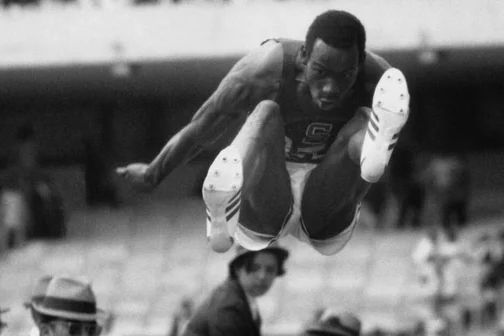
When Bob Beamon took to the long jump runway at the 1968 Mexico City Olympics, he did far more than just win a gold medal because he effectively jumped into a different dimension that left the world gasping. On October 18, 1968, Beamon soared to an incredible distance of 8.90 metres, which was an improvement on the previous world record by a staggering 55 centimetres and nearly beyond belief. The officials were so stunned that their optical measuring equipment literally ran out of track, forcing them to use an old-fashioned steel tape to confirm the feat while Beamon collapsed to his knees in a state of emotional shock known as a cataplectic seizure. It was a moment where human biology and physics seemed to align in a way that defied every known metric of the time.
What makes this record particularly resilient is the unique combination of Beamon’s peak physical form and the high altitude of Mexico City, which offered reduced air resistance and slightly lower gravity for the competitors. While Mike Powell eventually surpassed the world record in 1991, Beamon’s 8.90 metres remains the Olympic record over half a century later and shows no signs of falling. In an era where improvements are usually measured in tiny millimetres, a gap of over half a metre is practically unheard of and modern jumpers still struggle to even approach the 8.50-metre mark consistently. This suggests that this high-altitude miracle might remain on the books for another fifty years since the conditions and the man were such a rare pairing.
Michael Phelps’ Golden Medal Haul
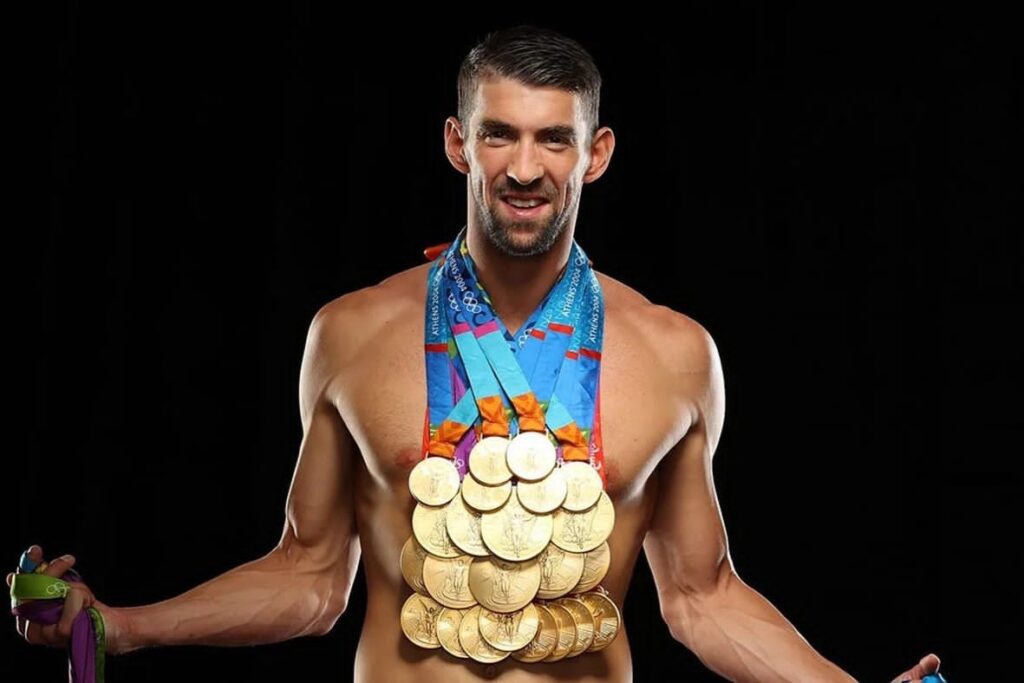
Michael Phelps is less a swimmer and more a force of nature who has amassed a total of 28 Olympic medals throughout a career that redefined the very limits of aquatic sport for everyone. His journey began as a fifteen-year-old in Sydney 2000, but it was his performance at the 2008 Beijing Games that truly cemented his status as a sporting immortal when he won eight gold medals in a single Olympiad. This feat broke Mark Spitz’s long-standing record of seven and required Phelps to navigate a grueling schedule of heats, semi-finals, and finals across multiple strokes and distances without a single slip-up or loss of focus. He was a machine built for the water and his dedication to the pool was unmatched by any peer.
The sheer volume of Phelps’ success, including 23 gold medals in total, creates a statistical mountain that seems impossible for any future athlete to climb regardless of their talent. To even come close, a competitor would need to dominate multiple disciplines at the highest level for at least four consecutive Olympic cycles while maintaining perfect health and motivation throughout those years. Given the increasing specialisation in modern swimming where athletes often focus on a single stroke or distance to gain a competitive edge, the likelihood of another “Baltimore Bullet” appearing to sweep the board in such dominant fashion is incredibly slim. He represents a peak of human endurance and versatility that may never be seen again in our lifetime or the next.
Nadia Comaneci’s Perfect Score
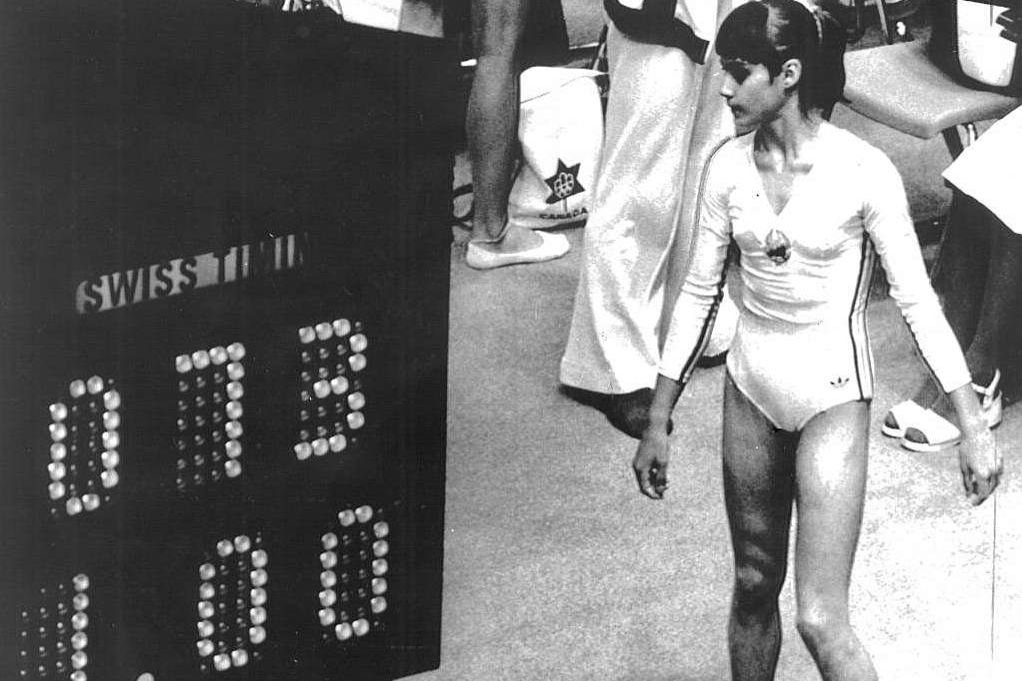
Before the 1976 Montreal Games, the idea of a “perfect ten” in gymnastics was considered mathematically and practically impossible and the scoreboards weren’t even designed to display four digits for the athletes. However, a fourteen-year-old Romanian girl named Nadia Comaneci changed everything when she performed a flawless routine on the uneven bars that stunned the judges and the global audience alike. When the judges awarded her the maximum score, the scoreboard famously flashed “1.00” because it simply couldn’t show a 10.00, leaving the audience in a brief state of confusion before the magnitude of the moment truly dawned on them. It was a technical limitation that highlighted her superhuman ability to achieve what was deemed unachievable by the sport.
Nadia went on to record seven perfect scores during those Games, but changes to the scoring system in 2006 mean that her record is now technically impossible to match for anyone. The modern “Open-Ended” scoring system splits marks into difficulty and execution, meaning a total score of ten is a thing of the past as the ceiling for points has been removed entirely. While this allows for more technical growth in the sport, it also enshrines Comaneci’s Montreal performance as a unique relic of history that cannot be repeated. She represents a moment of absolute perfection that the current rules of the game no longer allow to exist in the same iconic format, making her 1976 achievement an eternal benchmark.
Usain Bolt’s Sprinting Double Triple
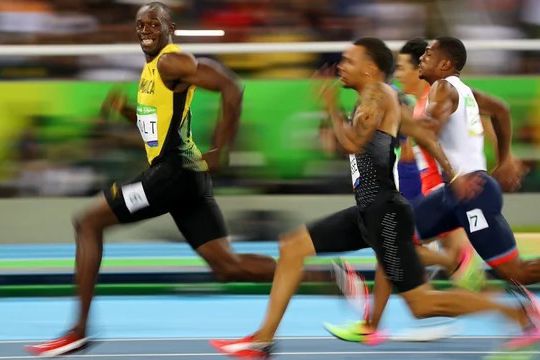
Usain Bolt brought a level of charisma and untouchable speed to the track that transformed the 100-metre and 200-metre sprints into must-watch global events that captivated billions of people. Between 2008 and 2016, the Jamaican legend achieved what is known as the “triple-triple,” winning gold in both individual sprints and the 4x100m relay across three consecutive Olympic Games. Although one relay medal was later rescinded due to a teammate’s disqualification, his individual dominance remains untarnished and his Olympic record of 9.63 seconds in the 100-metre sprint stands as a daunting barrier for the next generation of speedsters. He was more than a runner because he was a global phenomenon who made the impossible look effortless every time he stepped onto the track.
The reason Bolt’s legacy feels so secure is not just his top speed but his uncanny ability to perform his best on the biggest stage under immense pressure from the world. He didn’t just win but he often began celebrating before he even crossed the finish line and yet he still set times that most sprinters can’t reach even with a perfect start. As we look at the current crop of elite runners, many are incredibly talented and fast but none have yet shown the same combination of freakish stride length and explosive power. This unique physiology allowed Bolt to make the fastest men on earth look like they were running in slow motion, ensuring his place in the history books for decades.
Kim Yun Mi’s Youthful Triumph
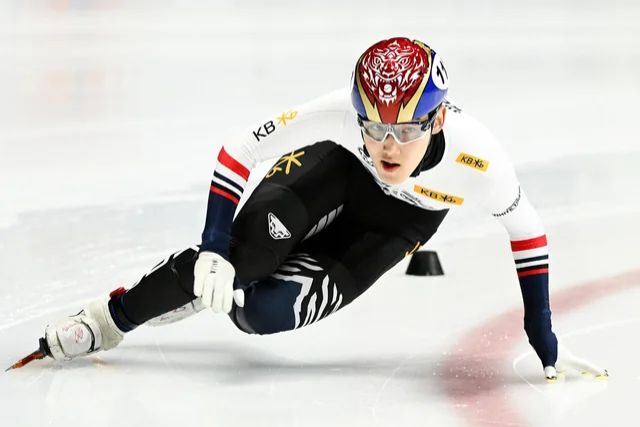
In the world of short-track speed skating, the margins for error are razor-thin and yet Kim Yun-mi managed to navigate the chaos to become the youngest Winter Olympic gold medalist in history. At the 1994 Lillehammer Games, the South Korean prodigy was just 13 years and 85 days old when she helped her team secure victory in the 3,000-metre relay event. Her inclusion in the team was a testament to her incredible talent and bravery on the ice but her record is likely to stand forever due to subsequent changes in the eligibility rules. She proved that age is no barrier to excellence when one possesses the technical skill and the mental fortitude to compete against the very best in the world.
Following concerns about the physical and mental welfare of child athletes, the International Skating Union raised the minimum age for competitors and effectively closed the door on anyone of Kim’s age repeating her feat. While the Olympics celebrate the mantra of “faster, higher, stronger,” they have also moved toward a more protective stance regarding the age of participants in demanding sports like skating and gymnastics. This means that while we may see many more teenage champions in the future, Kim’s status as a thirteen-year-old gold medalist is a historical anomaly. Her record is now protected by the very laws designed to protect future athletes, making her 1994 achievement a permanent fixture that cannot be challenged.
Ian Millar’s Decade Of Games
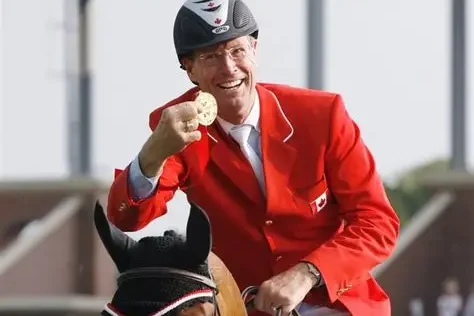
Longevity is a rare commodity in professional sports but the Canadian equestrian rider Ian Millar took the concept to a whole new level by competing in ten different Olympic Games. Known affectionately as “Captain Canada,” Millar’s Olympic journey began at the 1972 Munich Games and concluded four decades later at London 2012 in a show of incredible endurance. His career was a masterclass in consistency and dedication and he finally earned a well-deserved silver medal in the team jumping event at the 2008 Beijing Games when he was already 61 years of age. It was a triumph of the human spirit that showed the world how passion can sustain an athlete far beyond the typical retirement age of most.
Breaking this record would require an athlete to remain at the absolute peak of their sport for forty years and that is a physical and financial burden that few can sustain. While equestrian sports do allow for longer careers than sprinting or swimming, the sheer willpower required to qualify for ten consecutive national teams is extraordinary and quite rare. Most athletes retire after three or four Games due to burnout or injury but Millar’s love for the sport and his partnership with his horses allowed him to bridge generations. He competed against the children of his former rivals and his ten-appearance streak is a monument to persistence that is unlikely to be surpassed by any modern competitor.
Flo Jo’s Untouchable Sprint Records
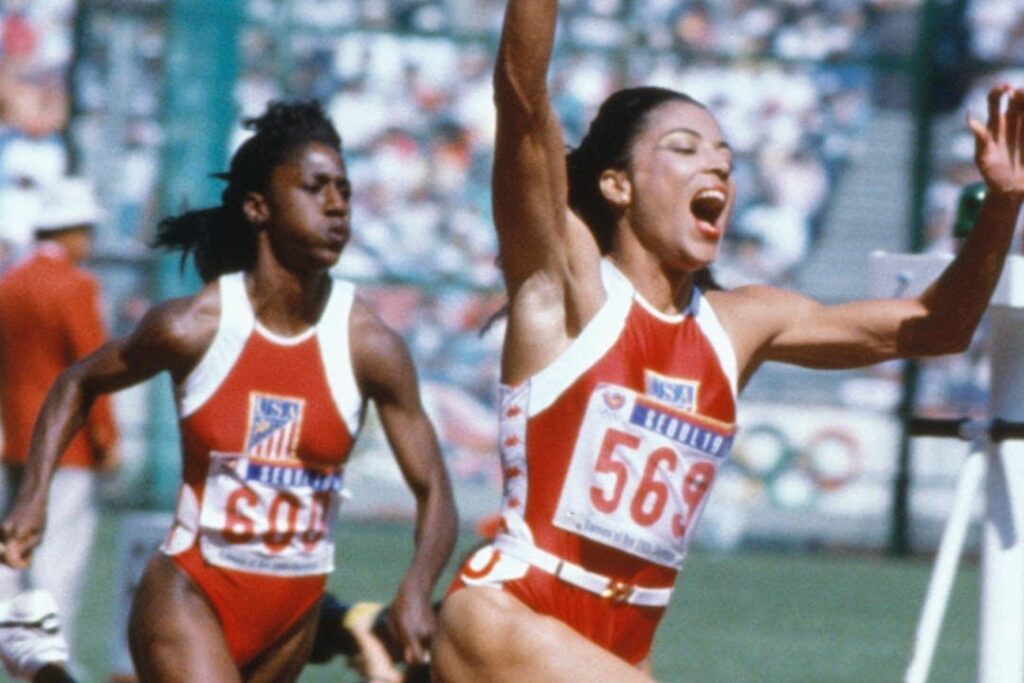
The 1988 Seoul Olympics belonged to Florence Griffith-Joyner, whose records in the 100-metre and 200-metre sprints remain the fastest times ever recorded by a woman on the track. “Flo-Jo” was a vision of speed and style, clocking a breathtaking 10.49 seconds in the 100m and 21.34 seconds in the 200m, which are marks that have not been seriously challenged in nearly forty years. Her unique racing suits and incredible physique became iconic and yet it was the raw numbers she produced that left the sporting world in a state of perpetual awe. She seemed to glide over the surface of the track with a power that was far ahead of anything seen in the women’s game at the time.
There has been much debate over the decades regarding wind assistance during her 100-metre run and yet the record remains the official benchmark and feels increasingly out of reach for modern sprinters. Even the most dominant contemporary champions like Shelly-Ann Fraser-Pryce or Elaine Thompson-Herah have struggled to consistently break into the 10.5-second bracket and this illustrates just how far ahead of her time Griffith-Joyner truly was. Her records have survived multiple generations of technological advancements in footwear and track surfaces and this suggests that her speed was a once-in-a-century phenomenon. It is highly likely that her name will remain at the top of the leaderboards for many more Olympic cycles to come.
Aladar Gerevich’s Fencing Gold Streak
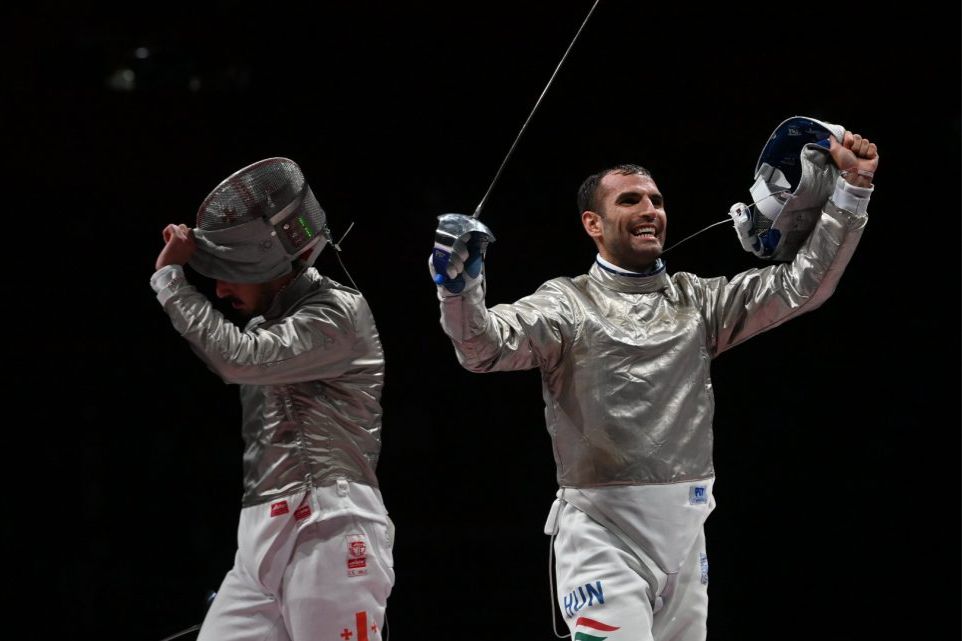
Fencing is a sport of precision, reflexes, and tactical brilliance and no one mastered it quite like the Hungarian legend Aladár Gerevich during his long career. He holds the incredible record of winning a gold medal in the same event at six consecutive Olympic Games, specifically the team sabre for Hungary. His golden run started in Los Angeles 1932 and continued all the way through to Rome 1960, which is a span of twenty-eight years that would have likely been even more impressive had two Olympics not been cancelled. He was a master of the blade who combined physical agility with a strategic mind that seemed to anticipate every move his opponents could possibly make.
What makes Gerevich’s story even more remarkable is that he had to fight for his place on the team well into his fifties against much younger men. When Hungarian selectors suggested he was too old for the 1960 team, he reportedly challenged every single one of the younger fencers to individual matches and defeated them all to prove his worth. This level of sustained excellence across three decades is almost unheard of in any competitive discipline and the physical demands of modern fencing make it highly improbable today. Another athlete maintaining a gold-medal standard for six straight Olympiads is a tall order that will likely keep Gerevich’s record safe for the foreseeable future.
Marjorie Gestring’s Diving Board Legacy
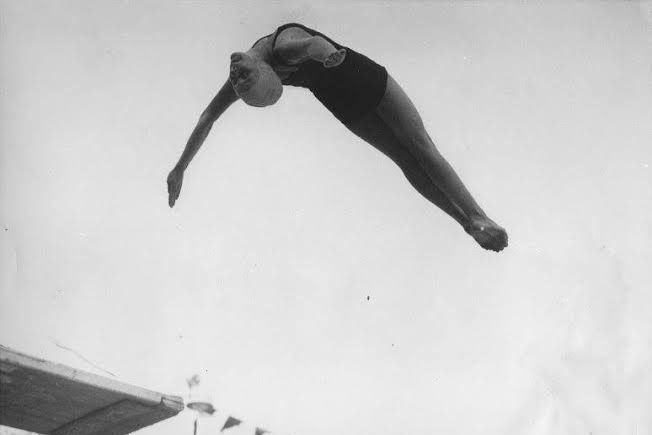
Marjorie Gestring carved her name into the history books during the 1936 Berlin Olympics when she became the youngest individual gold medalist in the history of the Games. At just 13 years and 268 days old, the American diver produced a series of clinical dives from the 3-metre springboard to claim the top spot on the podium. Her victory was a sensation at the time because she beat out much older and more experienced competitors with her poise and technical execution. Like many athletes of her generation, her career was significantly altered by the global conflict of the 1940s which robbed her of her peak competitive years and further Olympic opportunities.
While younger athletes have won medals in team events, Gestring’s record for an individual gold remains a towering achievement that is protected by modern age restrictions in the sport. Current Olympic rules generally require athletes to be at least 14 or 16 years old depending on the federation and this makes it nearly impossible for a thirteen-year-old to even enter the pool today. This ensures that Gestring’s precocious talent remains a unique chapter in Olympic lore and represents an era where raw ability could occasionally trump the need for years of physical maturity. Her record is a testament to youthful brilliance that the modern sporting world has effectively regulated out of existence.
The Shooting Accuracy Of Afanasijs Kuzmins

Latvian shooter Afanasijs Kuzmins is a name that represents the ultimate in Olympic endurance because he competed in nine Olympic Games between 1976 and 2012. While he represented two different nations, the Soviet Union and later Latvia, his specialty in the 25m rapid fire pistol remained world-class for decades. He won gold in Seoul 1988 and silver in Barcelona 1992 but it was his sheer presence across nine different iterations of the Games that truly set him apart. He possessed a level of calm and steady focus that allowed him to compete against men who were not even born when he first stepped onto the Olympic shooting range.
The precision required in shooting is immense and maintaining the steady hand and sharp eyesight needed for Olympic competition for thirty-six years is a feat of biology. While shooting does lend itself to longer careers than high-impact athletics, the mental fatigue of qualifying and competing at the highest level usually takes its toll much sooner for most. Kuzmins’ ability to stay competitive from the Cold War era all the way into the digital age of the 21st century is a testament to his focus. He maintained a level of discipline that few humans can sustain and this leaves his nine-Games streak as a formidable target that few modern marksmen will ever reach.
Larisa Latynina’s Gymnastic Dynasty
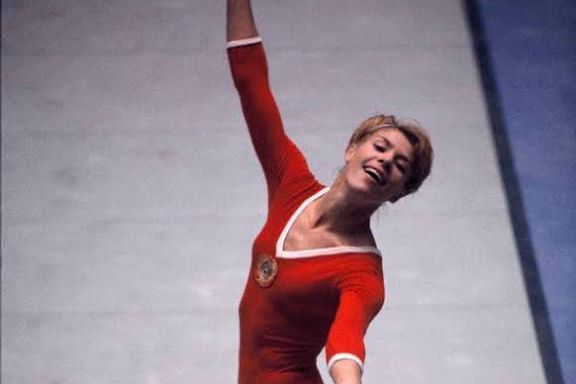
Before the era of Michael Phelps, the record for the most Olympic medals was held by a remarkable Soviet gymnast named Larisa Latynina, whose tally of eighteen remains the benchmark for female athletes. Between the 1956 Melbourne Games and the 1964 Tokyo Games, Latynina amassed nine gold, five silver, and four bronze medals, demonstrating a level of consistency that is almost impossible to fathom in the high-impact world of artistic gymnastics. She was the face of the sport during a golden age for the Soviet Union, winning individual all-around titles in consecutive Olympics while simultaneously leading her team to victory with a grace that masked her ferocious competitive drive. Her presence on the floor was both elegant and dominant, setting a standard that changed the sport forever.
What makes Latynina’s record particularly durable is the physical toll modern gymnastics takes on the human body, as today’s athletes often have much shorter peak windows than those of the 1950s and 60s. While modern stars like Simone Biles have approached her golden tally, the sheer number of eighteen medals requires an athlete to stay at the very top of their game across at least three full Olympic cycles without significant injury. In a sport where careers are now frequently measured in months rather than decades, Latynina’s collection of hardware stands as a testament to an era of longevity and dominance that may never be seen again on the gymnasium floor. The modern difficulty requirements and rigorous training schedules make maintaining such a high medal count across three decades a feat of nearly impossible physical endurance.
Oscar Swahn’s Golden Senior Years
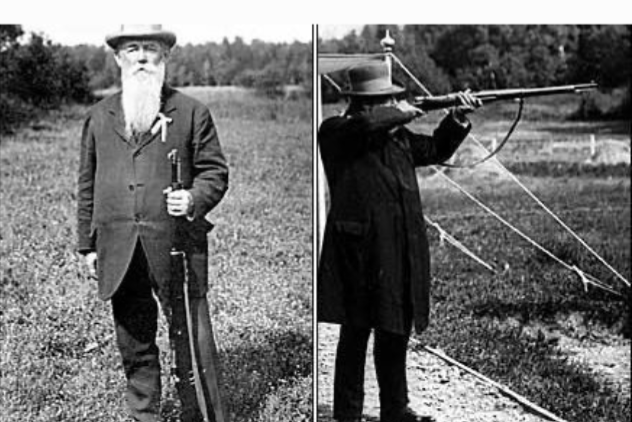
The Olympics are often seen as a young person’s game but Oscar Swahn turned that notion on its head by becoming the oldest gold medalist in the history of the Games. At the 1912 Stockholm Olympics, the Swedish marksman was 64 years and 257 days old when he helped his nation secure victory in the team running target single-shot event. His success was not a fluke or a one-off performance as he had already won two gold medals four years earlier in London and he remarkably returned to the Olympic stage after the First World War to win a silver medal in Antwerp at the ripe old age of 72. He proved to the world that focus and steady nerves are qualities that do not necessarily fade with the passing of time.
Swahn’s record as the oldest medalist is likely to stand forever because the physical and mental pressures of modern Olympic competition have become so intense that few athletes can maintain a world-class standard into their seventies. While shooting remains a sport where experience and steady nerves can compensate for aging, the qualification processes are now far more rigorous and demanding than they were in the early 20th century. Swahn was actually planning to compete in the 1924 Paris Games at age 76 but was stopped by illness, leaving behind a legacy of senior success that serves as an inspiration. The structural changes in global sport and the intense athleticism required today ensure that his senior status on the podium remains a historic and unreachable landmark for any modern-day competitor.
Birgit Fischer’s Two Decade Reign
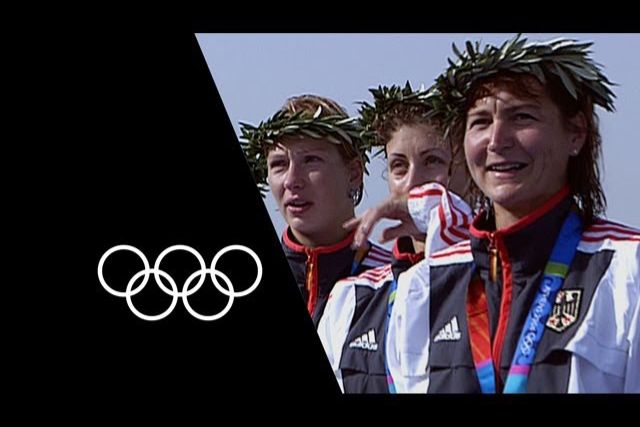
Birgit Fischer is a name synonymous with absolute dominance in the world of canoeing because she won eight gold medals across six different Olympic Games. Her story is one of incredible perseverance as she won her first gold for East Germany as an eighteen-year-old in Moscow 1980 and her last for a unified Germany in Athens 2004 when she was forty-two. Between those two points, she survived political boycotts and retired and returned to the sport twice while raising a family and remaining the fastest woman on the water. She was a master of both the K1 and team events, showing a level of adaptability and raw power that spanned multiple generations of athletes and technological changes in the sport.
The longevity required to win gold medals twenty-four years apart is something that defies sporting logic and requires a level of motivation that few humans possess in their lifetime. Fischer’s tally of twelve medals in total is the highest in the history of canoeing and kayaking and the sheer physical demand of paddling at an elite level makes it unlikely that anyone will ever match her span of success. As sports science pushes athletes to peak earlier and train harder, the idea of someone maintaining that winning edge across six different Olympiads feels like a feat from a bygone era. Her ability to keep her boat at the front of the pack through three decades of competition is a unique psychological and physical marvel that modern sport simply won’t permit again.
Steve Redgrave’s Five Golden Rings
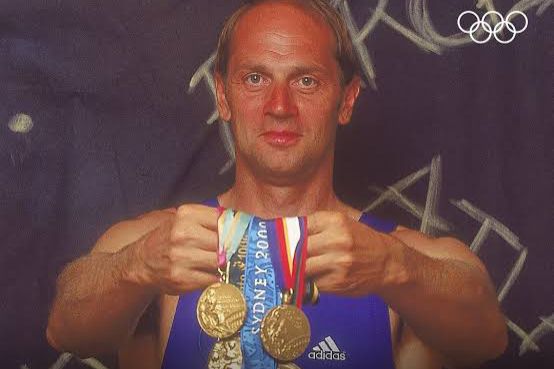
Sir Steve Redgrave achieved a feat of endurance that left the sporting world in awe when he won gold medals in five consecutive Olympic Games. Starting in Los Angeles 1984 and culminating in a dramatic finish at Sydney 2000, the British rower proved himself to be the ultimate master of the water regardless of his teammates or the boat category. His fifth gold in the coxless fours was particularly poignant as he had famously invited anyone who saw him near a boat again to shoot him after the previous Games and yet his internal drive for perfection brought him back. He was a man who pushed through barriers of pain and exhaustion that would have broken most other athletes long before they reached the starting line.
To understand why this record is so safe, one must consider the extreme physical punishment that rowing inflicts on the body especially over a sixteen-year period at the highest level. Redgrave had to overcome significant health battles including a diagnosis of Type 1 diabetes and colitis and yet he never allowed his standards to slip below the golden threshold. Most elite rowers find that two or three Olympics are enough to exhaust their physical and mental reserves but Redgrave’s ability to find the will to win across five different decades is a unique marvel. The level of sacrifice required to stay in peak rowing condition for twenty years is something that modern lifestyle and professional pressures make almost entirely impossible for the today’s generation.
Carl Lewis’s Long Jump Streak
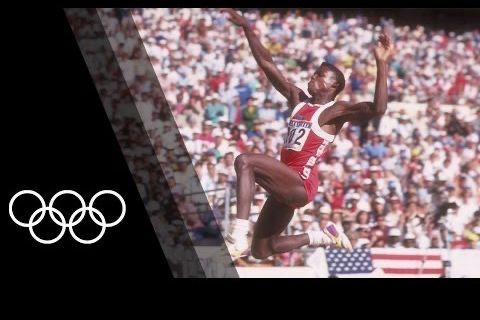
Carl Lewis is often cited as the greatest track and field athlete of all time and his record of winning four consecutive Olympic gold medals in the long jump is perhaps his most impressive achievement. From his breakout performance in Los Angeles 1984 to his final and emotional victory in Atlanta 1996, Lewis owned the sandpit with a combination of sprinting speed and perfect technical execution. His ability to produce a winning leap when it mattered most allowed him to join an elite club of athletes who have won the same individual event at four straight Games. This feat requires both immense natural talent and an ironclad competitive spirit that can withstand the rise of younger and hungrier rivals over a dozen years.
The difficulty of Lewis’s record lies in the fact that the long jump is notoriously fickle because a single centimetre or a slightly overstepped board can end a championship dream in an instant. Maintaining the explosive power required for world-class jumping over twelve years is a task that has defeated almost every other athlete who has tried to emulate him. Lewis was not just competing against his contemporaries but also against the natural decline of his own speed as he entered his thirties and yet he found a way to adapt and win one last time in 1996. This consistency is unprecedented in field events and as specialisation increases, the likelihood of a sprinter also dominating the long jump for four consecutive Olympics remains incredibly low for future stars.
Dara Torres’s Age Defying Speed

In the pool where teenagers often dominate the landscape, Dara Torres made history by becoming the oldest swimmer to win an Olympic medal when she claimed three silvers at the age of forty-one. Her journey began in 1984 and after several retirements and comebacks, she arrived at the Beijing 2008 Games in the best shape of her life and missed out on an individual gold in the 50-metre freestyle by a mere hundredth of a second. Her career spanned five different Olympic Games over twenty-four years and made her a symbol of longevity and proof that age is often just a number when backed by elite training. She challenged every stereotype about the limits of the maturing female body in high-intensity aquatic sprinting.
What makes Torres’s record so remarkable is the evolution of swimming into a sport of hyper-specialised youth where the physical demands of high-intensity training often lead to early burnout. To be competitive at forty-one against girls half her age required Torres to undergo a revolutionary training regime focused on recovery and flexibility and that is something that many younger athletes often overlook. While we may see more veterans competing in the future, the likelihood of a swimmer maintaining the raw explosive speed needed for a 50-metre sprint at that age is incredibly low. Her ability to keep pace with the fastest women in the world after two decades of competition ensures that Torres’s “Mom on the podium” story remains a unique and protected Olympic fairytale.
Teofilo Stevenson’s Heavyweight Boxing Reign
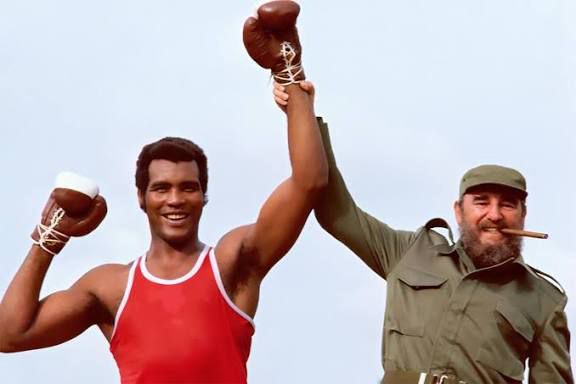
Teofilo Stevenson was a titan of the boxing ring who famously turned down millions of dollars to fight Muhammad Ali because he chose instead to remain an amateur and win three consecutive Olympic gold medals for Cuba. Between 1972 and 1980, Stevenson was the undisputed king of the heavyweight division using a devastating right hand and exceptional footwork to dismantle opponents with clinical ease. He was the first boxer to win three golds in the same weight class and many experts believe he would have added a fourth in 1984 had Cuba not boycotted the Los Angeles Games. He was a man of principle who valued his national identity and the Olympic spirit far more than the allure of professional riches.
Stevenson’s record is protected not just by his skill but by the changing landscape of professional boxing where the most talented heavyweights now turn professional almost immediately to secure lucrative contracts. The financial lure of the pro ranks means that very few elite boxers stay in the amateur system long enough to compete in three different Olympic Games let alone win gold in all of them. Stevenson’s loyalty to his country and his refusal to trade his people for dollars created a unique situation where a world-class heavyweight stayed amateur for his entire career. This scenario is practically unthinkable in today’s sporting economy and ensure that his triple-gold heavyweight record remains a monument to a different era of sporting values and dedication.
Gert Fredriksson’s Swedish Paddle Power
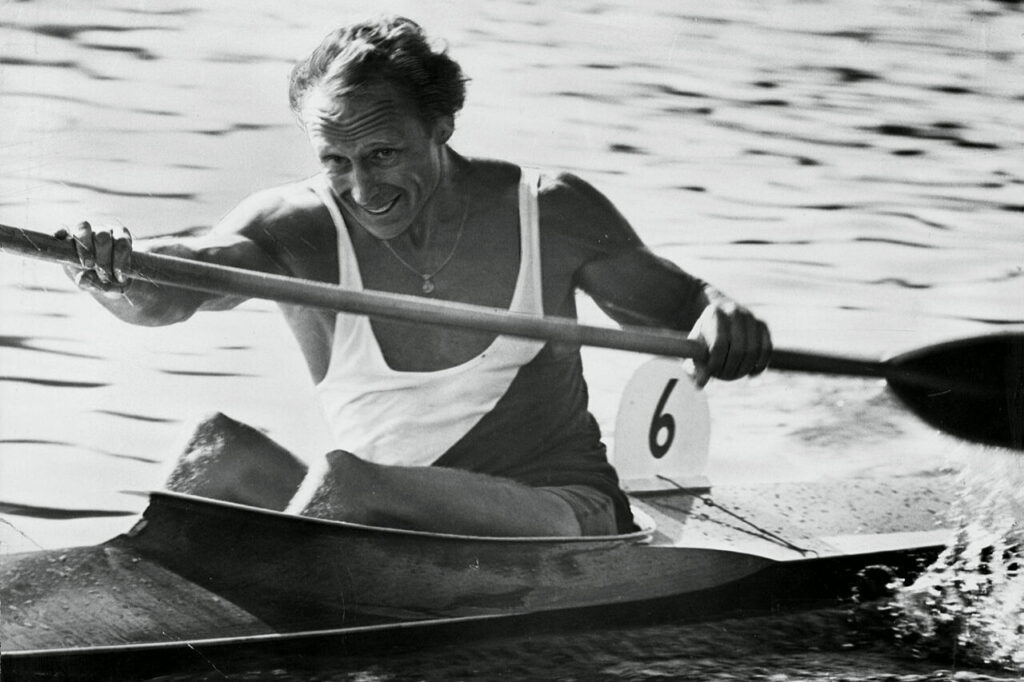
Gert Fredriksson remains the most decorated male canoeist in Olympic history because he secured six gold medals and eight in total between 1948 and 1960. The Swedish legend was a master of both the 1,000-metre and 10,000-metre distances and showed a range of endurance and sprinting power that allowed him to dominate the sport for over a decade. His golden run in the K1 1,000m across three Games established him as the benchmark for all future paddlers and his ability to win gold at the age of forty-one in the K2 event at Rome 1960 showed his tactical brilliance. He was a pioneer who combined raw physical grit with a deep understanding of water currents and boat mechanics.
Breaking Fredriksson’s record would require a modern paddler to maintain a world-leading pace across four Olympic cycles and that is a feat made increasingly difficult by the sheer depth of talent in the international field today. In the mid-20th century, the competition was less global but Fredriksson still had to battle against the best in the world with equipment that was far heavier and less aerodynamic than carbon-fibre. His legacy is one of pure physical grit and an innate understanding of the water and these are qualities that made him a national hero in Sweden. As the sport continues to evolve with more specialized events, his record for total golds in canoeing remains a towering target that few modern athletes can realistically hope to reach.
Jackie Joyner-Kersee’s Heptathlon Ceiling
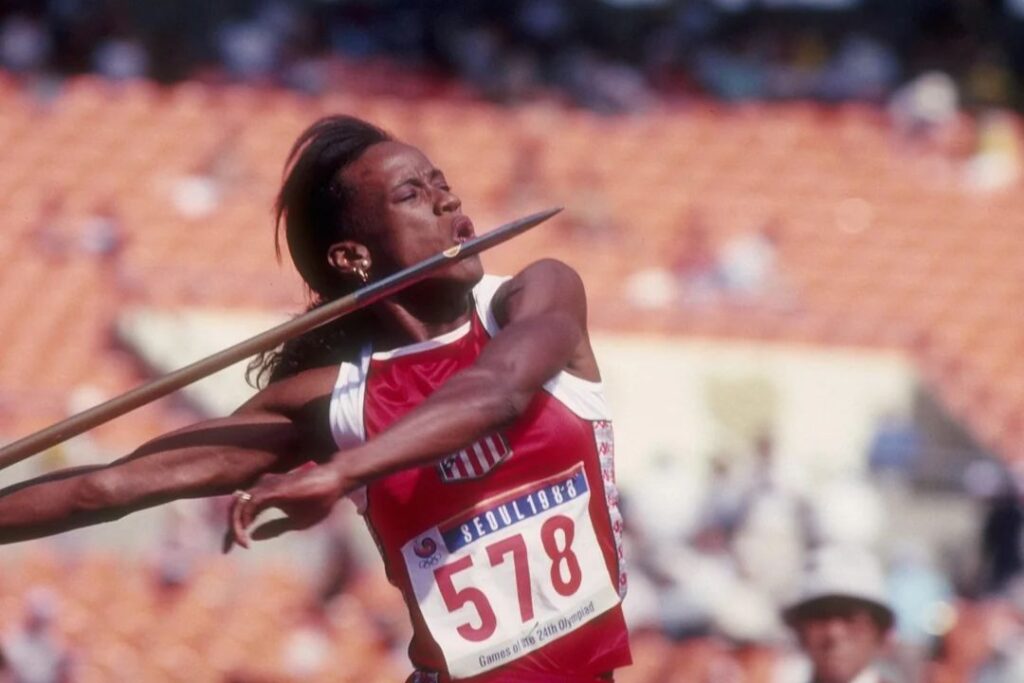
When Jackie Joyner-Kersee set the world record for the heptathlon at the 1988 Seoul Olympics, she didn’t just win gold but she established a score that has looked increasingly invincible with every passing year. Her total of 7,291 points remains the Olympic and world record and was a mark achieved through a combination of world-class sprinting and jumping and throwing over two grueling days. To this day, no other woman has even come within 200 points of her total and this illustrates just how far ahead of the curve she was in terms of all-around athletic ability. She was a once-in-a-generation talent who could have likely won individual medals in several of the events that make up the heptathlon.
The heptathlon is arguably the most difficult event in which to set a long-standing record because it requires an athlete to be elite in seven different disciplines simultaneously without a single failure. Most modern heptathletes have a “weak” event that prevents them from reaching the stratosphere of 7,000 points and yet Joyner-Kersee was essentially a world-class specialist in the long jump and hurdles who also happened to be great at everything else. As the focus in track and field shifts more toward individual event specialisation, the chances of finding another athlete with such a balanced and explosive skill set are fading. Her 1988 performance stands as the ultimate summit of female athleticism and remains a daunting challenge for any multi-event athlete today.
Al Oerter’s Discus Dominance
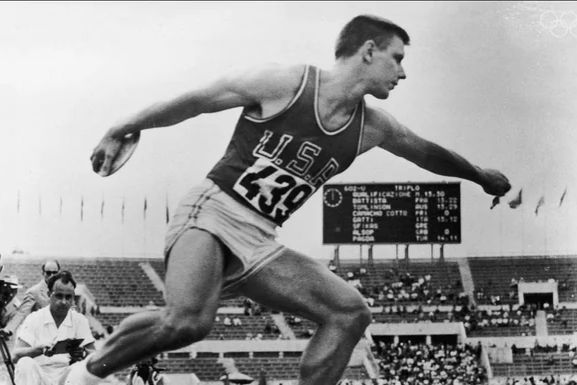
Al Oerter achieved a level of consistency in the discus throw that borders on the mythical because he won four consecutive Olympic gold medals between 1956 and 1968. What makes Oerter’s story so compelling is that he was rarely the favourite going into the Games and yet he had an uncanny ability to produce a personal best on his final throw. He famously competed at the 1964 Tokyo Games with a taped-up rib cage and internal bleeding and yet he still managed to out-throw the world record holder to claim his third consecutive title. He was a man who thrived on the pressure of the Olympic stage and possessed a mental toughness that seemed to grow as the stakes became higher.
Oerter’s record of four straight golds in the same individual event was the first of its kind and it remains a benchmark for mental toughness in the face of physical adversity. The discus is a highly technical event where the wind and the atmosphere of the stadium play huge roles and yet Oerter managed to navigate these variables across four different continents and twelve years. His refusal to be beaten on the Olympic stage regardless of his world ranking or physical condition created a legacy of “clutch” performance that modern throwers still speak of with reverence. In a sport where technical mastery is as important as strength, Oerter’s ability to peak at exactly the right moment for sixteen years is a record that stands alone.
Reiner Klimke’s Dressage Mastery
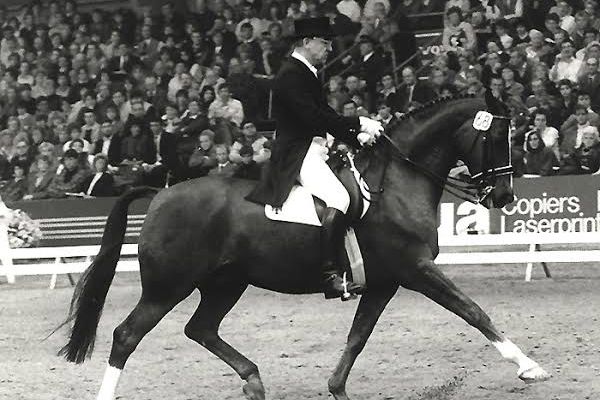
Dr Reiner Klimke remains a towering figure in the world of equestrian sports, having secured six gold medals and two bronze medals in dressage across six Olympic appearances. His most prolific era spanned from Tokyo 1964 to Seoul 1988, where his deep understanding of equine psychology and precise technical skill allowed him to dominate the arena with his famous horse, Ahlerich. Klimke was not merely a rider but a scholar of the sport, and his ability to maintain a world-leading standard for over two decades is a feat that modern dressage riders find increasingly difficult to replicate in such a competitive field.
The reason Klimke’s record feels so untouchable lies in the evolving nature of equestrian competition, where the partnership between horse and rider is now subject to more travel and intense scheduling than in the mid-20th century. While modern riders have access to better veterinary care, the sheer consistency required to win six golds across twenty-four years requires a level of focus and a succession of world-class horses that rarely aligns so perfectly. Klimke’s legacy is one of elegance and discipline, and as the sport becomes more specialised, his status as the gold standard for dressage longevity remains firmly intact for future generations to admire.
Pyrros Dimas’s Weightlifting Hat-Trick
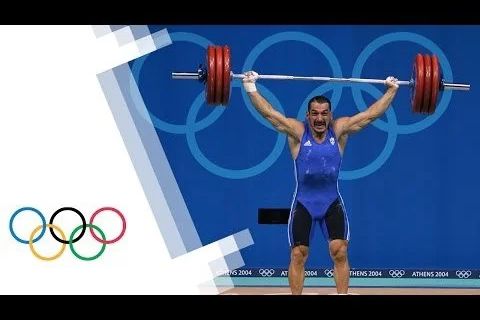
Pyrros Dimas is a name that resonates with power and national pride, particularly in Greece where he is celebrated as one of the greatest weightlifters to ever live. Dimas achieved the incredible feat of winning three consecutive Olympic gold medals in the 82.5kg and 85kg categories between Barcelona 1992 and Sydney 2000, before adding a bronze in Athens 2004. His signature move of holding the barbell aloft and waiting for the judges’ signal with a triumphant smile became an iconic image of the Games, and his ability to perform under the crushing weight of expectation was as impressive as his physical strength.
Breaking a record of three consecutive golds in weightlifting is a monumental task because the sport inflicts a massive amount of wear and tear on the joints and spine. Most lifters have a very narrow peak window before injuries begin to take their toll, yet Dimas managed to stay at the summit of the world rankings for twelve years while competing in a weight class known for its incredible depth of talent. His four-medal haul across four different Games is a rarity in a sport where athletes often burn out after one or two cycles, making his heavy-lifting legacy a true outlier in Olympic history.
The Marathon Consistency Of Abebe Bikila
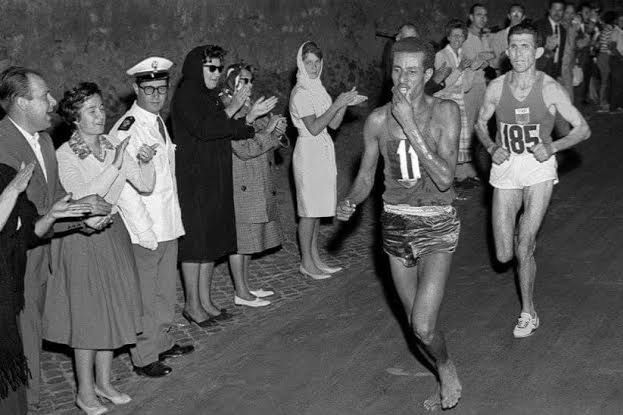
Abebe Bikila became an instant legend when he won the 1960 Rome Olympic marathon while running completely barefoot, but it was his follow-up performance in Tokyo 1964 that truly defied the odds. Bikila became the first person to ever win back-to-back Olympic marathons, and he did so in Tokyo just forty days after undergoing surgery for appendicitis. His ability to recover from a major operation and still set a world record time of 2:12:11 showed a level of physical resilience and mental fortitude that is practically unheard of in the world of long-distance running today.
Winning two consecutive Olympic marathons is a feat so difficult that only a handful of people have ever even come close, as the marathon is an unpredictable event where weather and course conditions can ruin the best-laid plans. Modern marathon runners often focus on lucrative city races rather than the grueling heat of an Olympic summer, but Bikila’s dedication to the Olympic ideal and his pure, natural talent made him a pioneer for African long-distance dominance. His records may be surpassed in terms of time, but the circumstances under which he won his two golds make his achievement a unique and likely unbreakable chapter of history.
Paul Elvstrom’s Sailing Supremacy
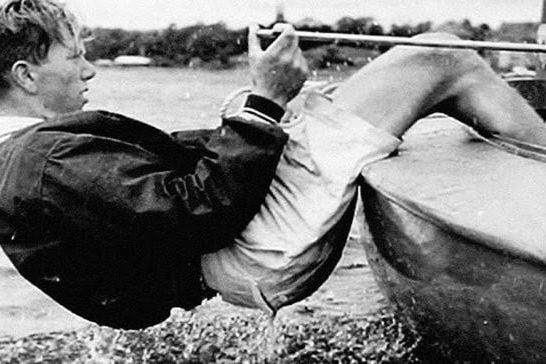
Sailing is a sport where experience often trumps youth, and Paul Elvstrøm utilised every bit of his tactical brilliance to win four consecutive individual gold medals for Denmark. From 1948 to 1960, Elvstrøm was the master of the Firefly and Finn classes, demonstrating a level of boat handling and wind-reading ability that left his competitors in his wake. He eventually competed in a total of eight Olympic Games, with his final appearance coming in 1988 at the age of sixty, often competing alongside his daughter in the Tornado class, which remains one of the most heartwarming stories in sailing.
The reason Elvstrøm’s four-gold streak is so impressive is the sheer physical demand of the Finn class, which requires immense hiking power and core strength to keep the boat level in heavy winds. Maintaining that level of fitness over sixteen years while simultaneously staying ahead of the technical advancements in sail design is a task that few sailors have managed to repeat. While others have since matched his tally of four golds, Elvstrøm was the first to show that sailing could be a lifetime pursuit of excellence, and his influence on the sport’s rules and equipment ensures his name will always be at the top.
The Longevity Of Hubert Raudaschl

While many athletes are happy to reach one or two Olympic Games, the Austrian sailor Hubert Raudaschl set a record for persistence by competing in nine different Olympiads. His journey began in Tokyo 1964 and continued without interruption all the way through to Atlanta 1996, spanning thirty-two years of world-class competition. Raudaschl won two silver medals during his long career, but his true legacy is his presence as a constant fixture of the Olympic sailing regatta, representing the enduring spirit of the Games across four different decades and multiple generations of athletes.
To match Raudaschl’s nine-Games streak, a modern athlete would need to remain injury-free and competitive enough to qualify for their national team for over thirty years, a feat that is becoming harder as national trials become more competitive. The physical demands of modern high-performance sailing are much higher than they were in the 1960s, and the financial cost of campaigning for nine straight Olympics is a barrier that few can overcome. Raudaschl’s career is a monument to the love of the sport, and his record serves as a reminder that the Olympic journey is often about the sustained pursuit of excellence rather than just a single moment on the podium.
While we celebrate these incredible records, we must also acknowledge that such singular dominance often highlights the fragility of relying on one “factory” of talent or a specific set of circumstances that may never align again.
Like this story? Add your thoughts in the comments, thank you.


