
The Search Giant That Came Too Early

Before the world became accustomed to “Googling” every idle thought, there was a wilder and more fragmented digital landscape where pioneers were still figuring out how to map the burgeoning World Wide Web. This era was defined by bold experimentation and the birth of platforms like AltaVista, which arrived with such incredible speed and technical prowess that it felt like magic to early internet users. These founders were not just building websites because they were actually architecting the very first gateways to human knowledge in a digital format. Understanding their journey matters because it reminds us that being the first or the best at one moment does not guarantee a seat at the table forever as technology evolves at a relentless pace.
The story of these early search engine architects is one of brilliant innovation followed by a series of corporate acquisitions and missed opportunities that ultimately cleared the path for Google’s dominance. By looking back at what happened to the minds behind AltaVista and its contemporaries, we gain a fascinating insight into the volatile nature of the tech industry during the late nineties. It is a reflective tale of how massive success can be fleeting and how the visionaries who started it all often moved on to entirely different ventures while their original creations were absorbed into larger, more diversified entities. Their legacies still live on in the foundations of the modern web even if their names are no longer household words for the average smartphone user today.
AltaVista

The story of AltaVista began within the halls of Digital Equipment Corporation where researchers Louis Monier and Michael Burrows worked alongside Paul Flaherty to create something truly revolutionary. They launched the service in December 1995 and it quickly became the first search engine to index a significant portion of the web while providing nearly instantaneous results for users. Louis Monier was the primary architect behind the crawler which was a piece of software that could navigate and catalogue the internet with unprecedented efficiency for that time period. His work ensured that AltaVista was not just another directory but a powerful tool that could handle millions of queries every single day without breaking a sweat under the pressure of its own popularity.
After the golden years of AltaVista, Louis Monier moved on to other high-profile roles in the technology sector including a stint at Google and later working on various projects at eBay. He remained a respected figure in the world of computer science and eventually became involved in the development of artificial intelligence and machine learning technologies. Michael Burrows also found success after the AltaVista era by joining Google in the early 2000s where he contributed to the infrastructure that powers the modern web today. Paul Flaherty unfortunately passed away in 2006 but his contribution to the original idea of a fast and comprehensive search engine remains a cornerstone of internet history because he helped prove that a searchable web was actually possible.
Lycos
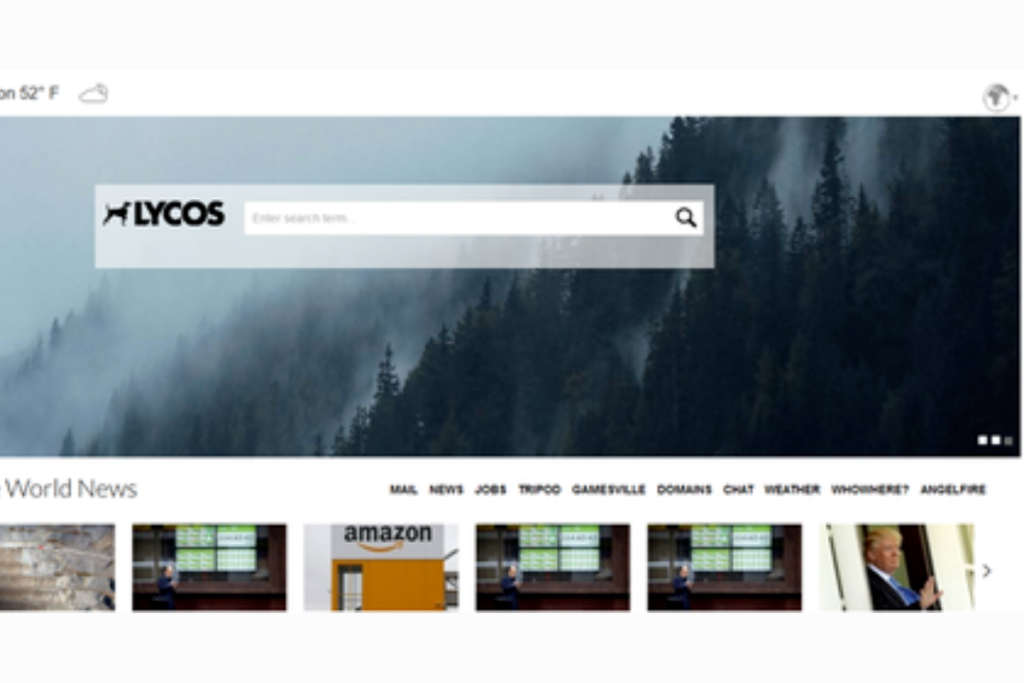
Michael Loren Mauldin was the visionary behind Lycos which started as a research project at Carnegie Mellon University in 1994 before it exploded into a commercial sensation. Mauldin developed the search technology to be incredibly efficient at a time when the web was growing faster than most systems could keep up with. Lycos became one of the most visited websites in the world and was famous for its “Go Get It!” catchphrase and the iconic black Labrador retriever mascot named Lycos. The company went public in 1996 and reached a massive valuation during the dot-com boom because it successfully combined search with a variety of web portal services that kept users engaged for long periods of time on their platform.
When the internet landscape shifted and Google began its ascent, Mauldin transitioned away from the daily operations of the search giant he helped create to focus on other intellectual pursuits. He remained an active participant in the tech community and notably turned his attention toward the field of robotics and conversational artificial intelligence which showed he was always thinking ahead of the curve. Mauldin eventually retired from the corporate grind but his work on Lycos is still remembered as a vital bridge between early academic search tools and the massive commercial engines that followed. He often reflects on the early days of the web as a time of pure discovery when the rules were still being written by a small group of dedicated engineers.
Excite
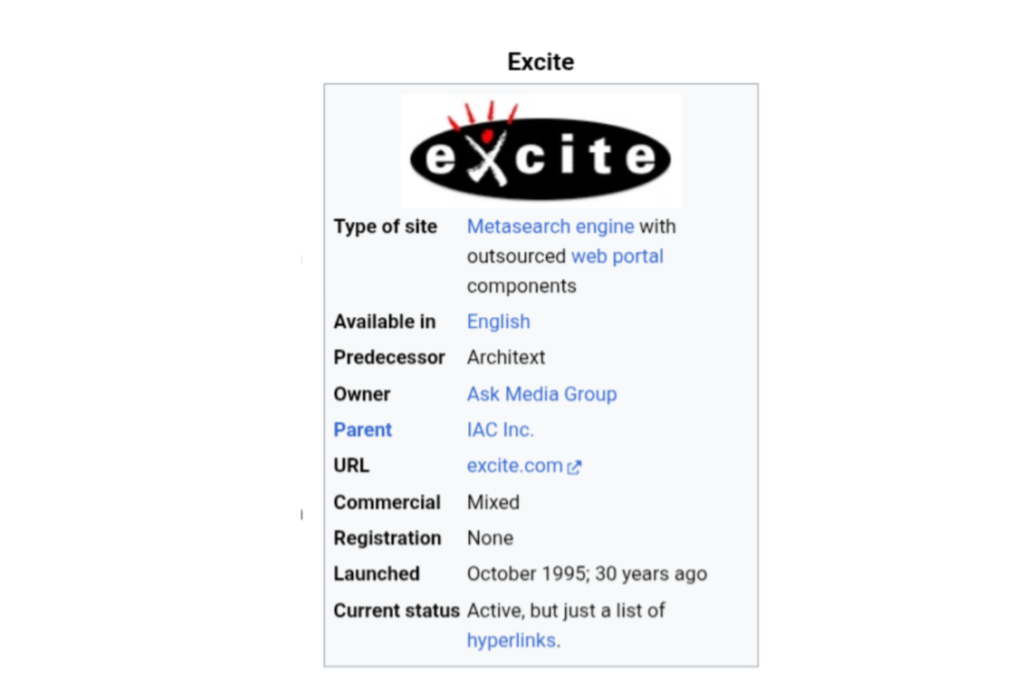
Excite was born from the collective ambition of six Stanford University students including Graham Spencer and Joe Kraus who wanted to find a better way to navigate the overwhelming amount of information on the web. They started the project in 1993 under the name Architext and eventually launched Excite as a full-fledged search engine and web portal in 1995. The team was famously young and energetic and they managed to secure significant venture capital which allowed them to acquire other early internet properties like Magellan and WebCrawler. At its peak Excite was a titan of the industry and was once valued at billions of pounds because it offered a personalised experience that felt like a digital home for many of its millions of users.
One of the most famous stories in tech history involves the Excite team turning down the opportunity to buy Google for a relatively small sum because they felt the technology was too good at sending people away from their site. Graham Spencer and his co-founders eventually saw Excite fall from grace during the dot-com crash and the company was sold to and then merged with various other entities like @Home Network. Following the collapse Graham Spencer went on to become a successful venture capitalist at Google Ventures where he helped fund the next generation of tech startups. Joe Kraus also remained a prominent figure in Silicon Valley by co-founding JotSpot which was later acquired by Google and he eventually took on a leadership role at the investment firm GV.
Yahoo

Jerry Yang and David Filo were PhD students at Stanford when they created “Jerry and David’s Guide to the World Wide Web” in 1994 which was a curated directory of websites. This project evolved into Yahoo! and it became the face of the internet for many people during the late nineties because it provided a human-organised way to find information. Unlike the algorithmic search engines like AltaVista, Yahoo! relied heavily on a team of human editors to categorise the web which made it feel more personal and reliable for newcomers. The founders became billionaires almost overnight as Yahoo! expanded into email and news and various other services that made it the ultimate web portal of its day.
As Google’s automated search results began to outperform Yahoo!’s manual directory, the company struggled to redefine its identity in a world that demanded speed and scale over human curation. Jerry Yang served as the CEO of Yahoo! during some of its most turbulent years and he faced significant criticism for his handling of a potential takeover bid from Microsoft in 2008. He eventually stepped down from the company in 2012 to pursue other ventures and investments through his firm AME Cloud Ventures where he supports new technology founders. David Filo remained with the company in various roles for much longer and he continued to be a technical advisor while focusing on his philanthropic efforts through the Yellow Chair Foundation.
Ask Jeeves
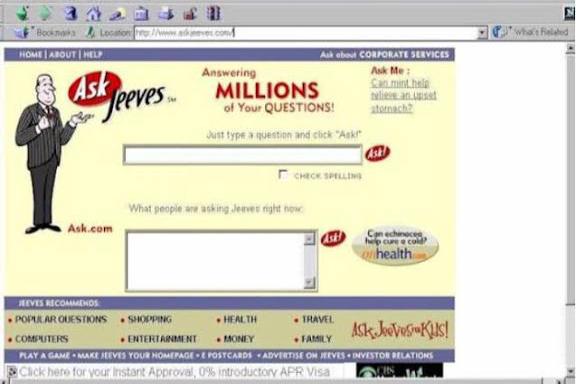
Garrett Gruener and David Warthen launched Ask Jeeves in 1996 with the unique idea of allowing users to search the web using natural language questions rather than just keywords. They introduced the character of Jeeves who was a sophisticated butler who promised to find the answer to any query you might have while adding a touch of class to the internet. This approach was incredibly popular with people who were not yet tech-savvy and it helped the site stand out in a crowded market of cold and technical search engines. The company went public in 1999 and experienced a massive surge in its stock price as the butler became a household name across the globe.
The rise of Google’s more accurate algorithms eventually made the natural language gimmick of Ask Jeeves feel less efficient and the company underwent a series of rebrands and ownership changes. Garrett Gruener moved on to have a very successful career in venture capital and he co-founded Alta Partners which focuses on life sciences and healthcare investments. David Warthen also continued to work in the technology sector and he held various executive positions at companies like FanSnap and various other startups where he applied his engineering expertise. Although the butler character was eventually retired and the site was renamed simply to Ask.com, the founders’ vision of a more conversational internet can be seen in the modern voice assistants we use today.
WebCrawler
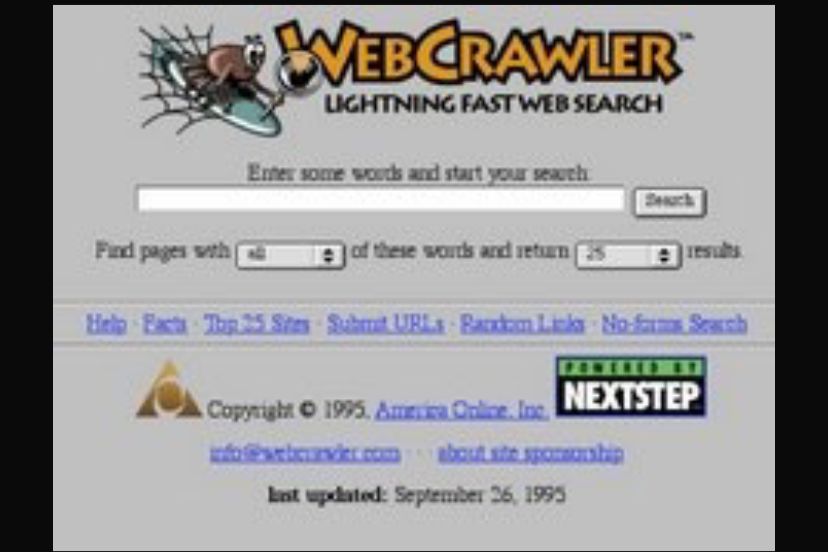
Brian Pinkerton created WebCrawler while he was a student at the University of Washington in 1994 and it was the first search engine to provide full-text indexing of the web. This was a massive leap forward because it allowed users to search for any word on any webpage rather than just relying on titles and meta tags provided by webmasters. The site was so popular that it often crashed under the weight of its own traffic and it was quickly acquired by America Online in 1995. This acquisition made WebCrawler a central part of the AOL experience for millions of people who were just getting their first taste of the online world through those famous CD-ROMs.
Brian Pinkerton did not stay with AOL for long and he eventually moved on to work at several other major tech companies including Amazon and Apple where he contributed to search and infrastructure projects. He later joined the Chan Zuckerberg Initiative as a chief technology officer where he uses his skills to help solve some of the world’s most pressing social and scientific challenges. His contribution to the early web was fundamental because he proved that full-text searching was not only possible but essential for navigating a large-scale network. While WebCrawler still exists today as a meta-search engine, Pinkerton’s legacy is found in the way every modern search engine operates by scanning every single word on a page.
Infoseek
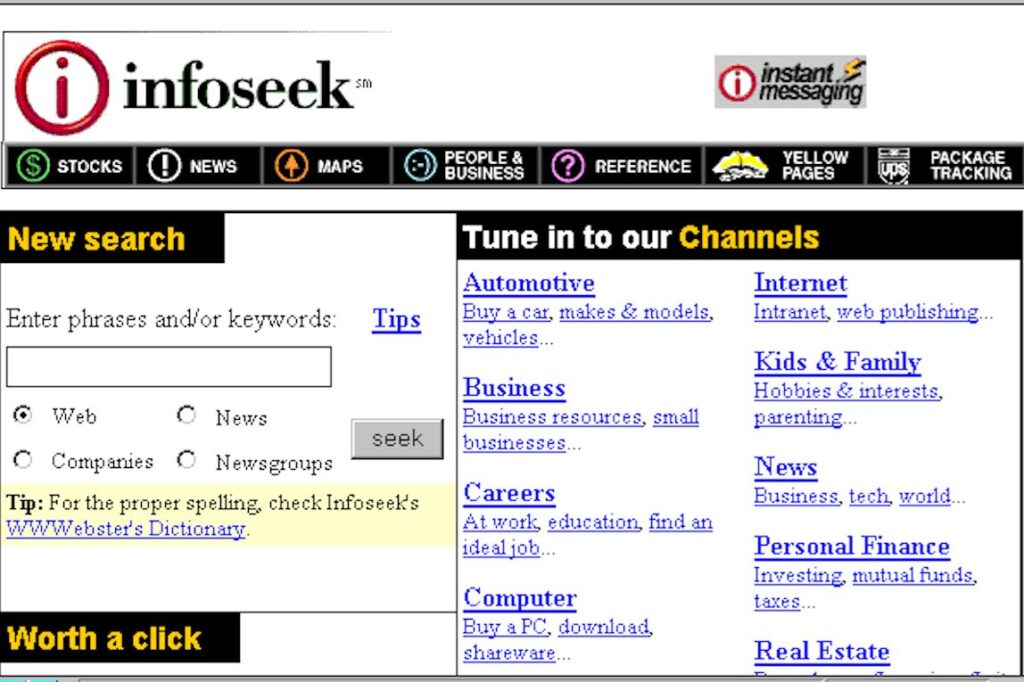
Steve Kirsch founded Infoseek in 1994 and it was one of the first search engines to offer a commercial service that was both fast and relatively accurate for the time. Infoseek was notable for being the default search engine for the Netscape Navigator browser which gave it a massive built-in audience of early internet users. Kirsch was a serial entrepreneur who had already founded several successful companies and he brought a professional and business-oriented approach to the world of search engines. The company was eventually acquired by Disney in the late nineties as part of their Go.com portal strategy which was an attempt to compete with the likes of Yahoo! and AOL.
After the Disney acquisition and the eventual decline of Infoseek, Steve Kirsch turned his attention to a wide variety of other interests including philanthropy and political activism and scientific research. He became a vocal advocate for various causes and he used his considerable wealth to fund research into areas like medical treatments and environmental protection. Kirsch has remained an active and often controversial figure in the public eye but his role in the early search engine wars is undeniable because he helped set the standard for commercial search. His journey from a tech pioneer to a multi-faceted public figure reflects the diverse paths that many of the original internet founders took after their initial success.
Inktomi

Eric Brewer and Paul Gauthier started Inktomi in 1996 based on research they had conducted at the University of California Berkeley regarding parallel computing. Inktomi was unique because it didn’t always have its own destination website for users but instead provided the search technology that powered other major sites like Yahoo! and MSN. This “behind the scenes” approach allowed the company to scale incredibly quickly and it became a darling of Wall Street during the dot-com bubble with a valuation that reached astronomical levels. The founders were seen as technical geniuses who had solved the problem of how to handle the massive amounts of data being generated by the rapidly expanding web.
When the dot-com bubble burst Inktomi’s stock price plummeted and the company was eventually bought by Yahoo! for a fraction of its former value as the industry consolidated. Eric Brewer returned to academia and became a professor at Berkeley where he continued to influence the world of computer science through his work on the CAP theorem for distributed systems. He also joined Google as a vice president of infrastructure where he helped design the massive global systems that keep the internet running today for billions of people. Paul Gauthier also continued to work in the tech industry and he was involved in several other startups and technical projects that built upon the foundations he laid during the Inktomi years.
HotBot
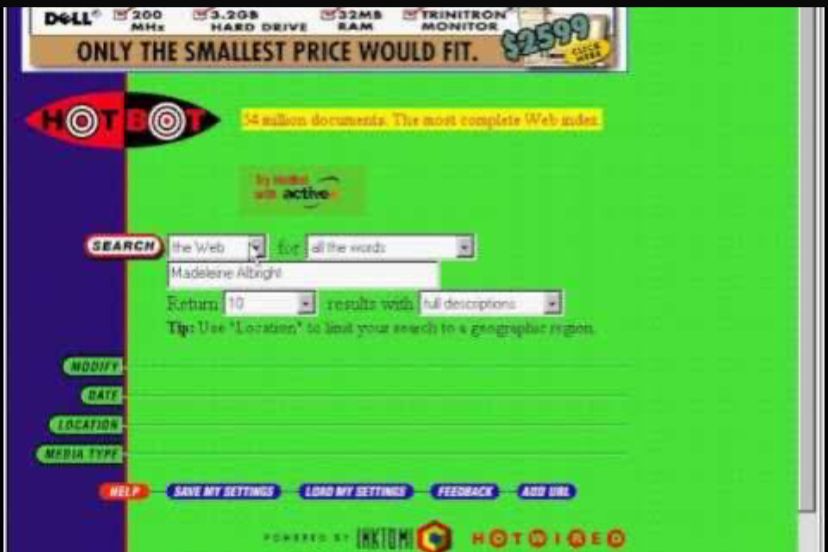
HotBot was launched in 1996 by the team behind Wired Magazine and it used the powerful search technology developed by Inktomi to provide a very fast and comprehensive experience. The site was famous for its bright neon colours and its edgy aesthetic which appealed to the tech-literate “digerati” of the mid-nineties who found other portals too corporate. It was one of the first search engines to offer advanced search features like the ability to search within specific timeframes or file types which made it a favourite for power users. HotBot was a symbol of the cool and experimental side of the early web before the industry became dominated by a few massive and more stylistically conservative players.
The founders of Wired and the team behind HotBot eventually saw the site sold off during a series of corporate shuffles that involved companies like Lycos and Terra Networks. Many of the individuals involved in the creative side of HotBot continued to be influential in the world of digital media and technology journalism where they helped shape the way we talk about the internet. The site itself underwent many changes and eventually lost its unique identity as it was folded into larger and less distinctive search platforms. Today HotBot is remembered more for its bold visual style and its association with the early days of internet culture than for its technical longevity in the face of Google’s rise.
Northern Light

Northern Light was founded by David Seuss in 1996 with a focus on providing a more organised and academic approach to web searching for serious researchers. The site was known for its “Custom Search Folders” which automatically categorised search results into different topics so that users could quickly narrow down their findings. It also offered a unique “Special Collection” of articles from reputable journals and books that were not available on the free web which made it a precursor to tools like Google Scholar. Northern Light was highly respected for its technical capabilities and its commitment to providing high-quality information rather than just a massive list of unverified links.
As the market for general search engines became more competitive and less profitable for smaller players Northern Light pivoted away from the public web to focus on enterprise search and business intelligence. David Seuss remained the CEO of the company and he successfully navigated the transition into a business-to-business model that provides research portals for large corporations and government agencies. This shift allowed the company to survive long after many of its early contemporaries had disappeared or been absorbed into larger entities. Seuss’s journey shows that there was a path for early search pioneers to find a sustainable niche by focusing on specialised services rather than trying to beat the giants at their own game.
Our current reliance on a single gateway to the world’s information is a testament to the efficiency of modern technology but it also underscores the importance of the diverse and competitive landscape that these founders originally built.
Like this story? Add your thoughts in the comments, thank you.


