
1. Kingda Ka
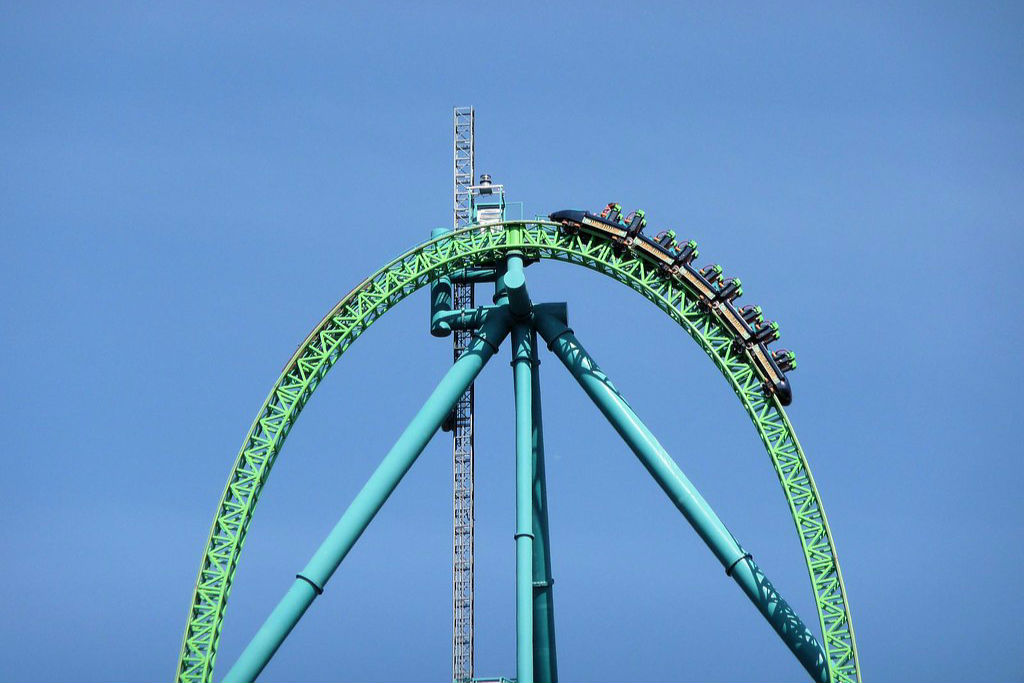
When Kingda Ka made its grand debut at Six Flags Great Adventure on May 21, 2005, it didn’t just break records; it shattered them. Standing at a breathtaking height of 456 feet, it remains the tallest roller coaster on the planet over two decades later. This massive green structure was designed by the Swiss firm Intamin and uses a specialized hydraulic launch system. This technology allows the coaster to blast riders from a standstill to 128 miles per hour in a mere 3.5 seconds. The sheer power of the launch is enough to send the train spiraling up a 90-degree vertical tower, providing a view of the Philadelphia and New York City skylines on clear days before the inevitable plunge.
For those brave enough to board, the experience is less about a long journey and more about a high-intensity burst of adrenaline. While the actual ride time is less than 50 seconds from launch to brake, the physical impact is massive. The coaster’s height has made it a global icon in engineering, often used as the benchmark for the “strata coaster” category, rides exceeding 400 feet. Interestingly, the ride’s height is so extreme that it can actually create its own micro-climate at the top, and it is frequently closed during high winds or light rain to ensure safety. It stands as a monument to an era when theme parks competed fiercely to see who could build the most intimidating machine possible.
2. Top Thrill Dragster
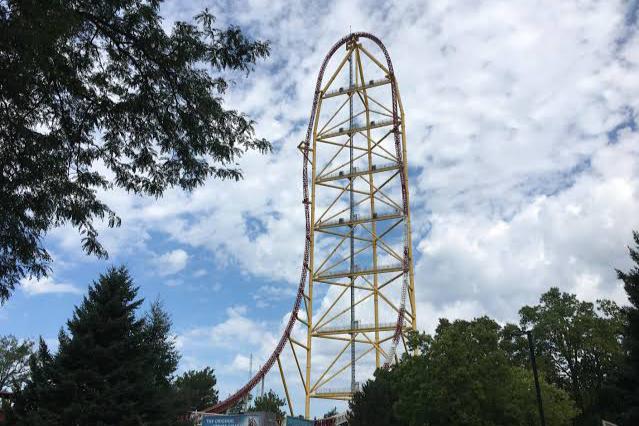
Top Thrill Dragster changed the amusement park industry forever when it opened at Cedar Point on May 4, 2003. It was the world’s first “strata coaster,” a term coined specifically for rides that topped the 400-foot mark. Towering 420 feet above the shores of Lake Erie in Sandusky, Ohio, the ride was themed after Top Fuel drag racing. It used a hydraulic cable to propel trains to 120 miles per hour in just 4 seconds. The sight of a multi-ton train being “shot” up a vertical incline became the park’s most famous image, drawing millions of tourists eager to test their courage against the 400-foot drop.
The ride was known for its simplicity and its “rollbacks,” a rare phenomenon where the train doesn’t quite have enough speed to clear the top and slowly coasts backward down the tower. For many fans, a rollback was considered a “lucky” event because it meant getting to ride twice. However, the complex hydraulic system and the height made it difficult to maintain, leading to frequent downtime over the years. Following a mechanical incident in 2021, the ride was eventually closed for a massive reimagining. It remains a legendary piece of history, representing the first time humans dared to build a traditional roller coaster track higher than a 40 stories.
3. Superman Escape from Krypton
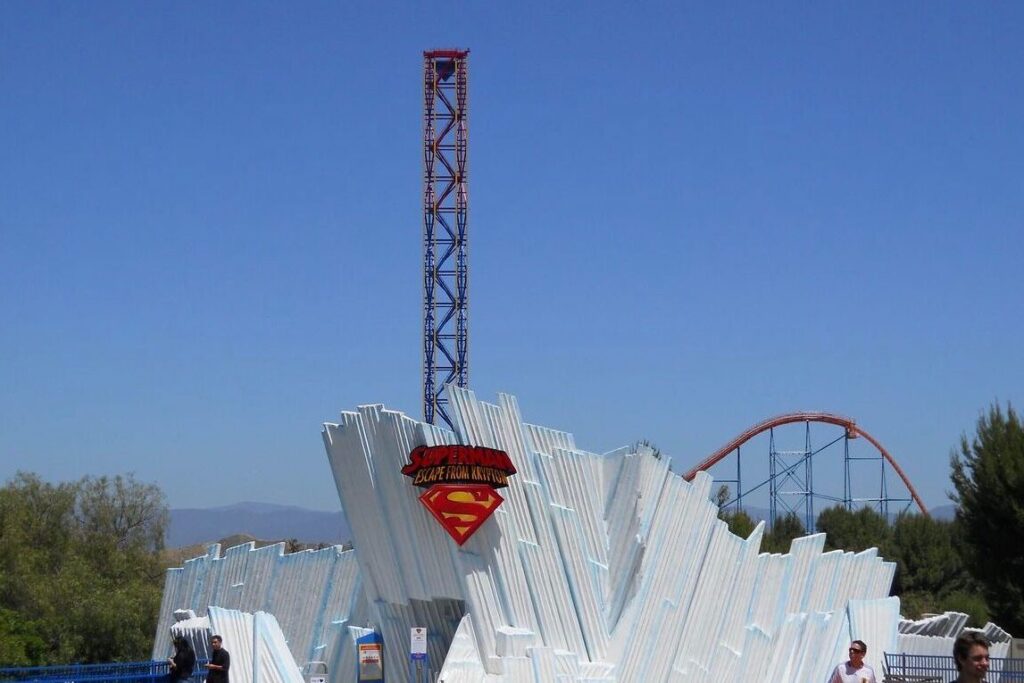
Superman: Escape from Krypton is a landmark attraction at Six Flags Magic Mountain in Valencia, California. When it originally opened in 1997 as Superman: The Escape, it was the first coaster in the world to reach the 100-mile-per-hour milestone. The ride stands 415 feet tall and is unique because it isn’t a continuous loop; instead, it is a “shuttle” coaster that travels out and back on the same path. In 2011, the ride was refurbished to face the cars backward, meaning riders are launched at 100 mph while staring directly at the ground as it disappears beneath them, adding a massive psychological thrill to the physical speed.
The engineering behind this ride was revolutionary for the late 90s, utilizing Linear Induction Motors (LIMs) to create a magnetic field that pushes the train forward. Because it is built on a natural mountain, the 415-foot tower looks even more imposing against the California sky. Riders experience roughly 6.5 seconds of weightlessness as they reach the peak of the tower, hanging vertically before gravity pulls them back down. It was a bold departure from the wooden coasters of old, proving that a ride didn’t need a long track to be effective. It only needed raw, magnetic power and a height that could be seen from miles away on the Interstate 5 freeway.
4. Tower of Terror II
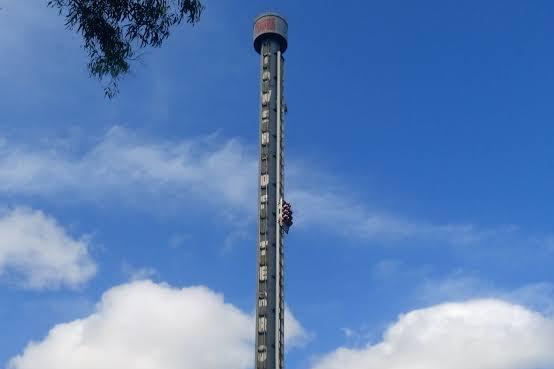
For many years, the Gold Coast of Australia was home to one of the most terrifying structures in the Southern Hemisphere. The Tower of Terror II at Dreamworld stood 377 feet tall and was a twin of the Superman ride in California. After a significant upgrade in 2010, the ride began launching passengers backward, shooting them out of a 600-foot tunnel at speeds of 100 miles per hour. Within seconds, the car would tilt 90 degrees upward, soaring toward the clouds before a heart-stopping freefall back to the station. At its peak, it was the fastest and tallest ride in the region, putting Australia firmly on the map for thrill-seekers.
Sadly, this iconic piece of engineering was retired in November 2019 to make way for newer developments at the park. During its 22-year run, it served as a symbol of Australian pride, proving that local parks could compete with the massive budgets of North American attractions. The “tower” part of the ride still stands today, as it also supports a drop ride called The Giant Drop, but the coaster tracks remain a nostalgic memory for many. It was famous for the “deathly silence” at the very top of the tower, where for a split second, the world felt still before the roar of the wind took over during the 4.5-second vertical drop.
5. Red Force
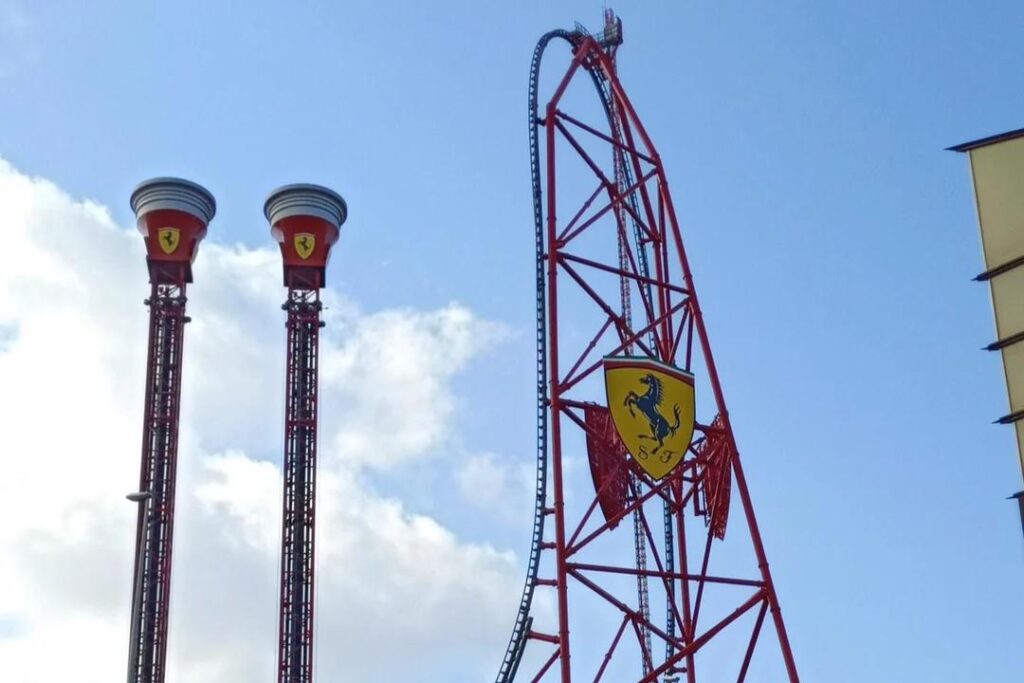
Located at Ferrari Land within the PortAventura World resort in Spain, Red Force is the undisputed king of European coasters. Opened on April 7, 2017, this sleek red machine stands 367 feet tall and is designed to mimic the feeling of a Formula One race car. It uses an Italian-engineered LSM (Linear Synchronous Motor) launch system to reach 112 miles per hour in just 5 seconds. Unlike the earlier hydraulic coasters, this magnetic system is more reliable and provides a smoother, more consistent build-up of speed. The ride is the centerpiece of the Ferrari-themed park, and its three massive “Prancing Horse” shields can be seen from the nearby Mediterranean Sea.
Red Force represents a more modern, refined version of the “top hat” coaster design. While earlier models like Kingda Ka focused on sheer, overwhelming force, Red Force offers a more aerodynamic and polished experience. The track is famously smooth, and the climb up the 367-foot tower provides a quick but stunning view of the Spanish coastline. It is a favorite for tourists across Europe because it offers world-class stats without the long travel time to the United States. It perfectly captures the Ferrari brand’s essence: high speed, elegant engineering, and a vibrant red aesthetic that looks fast een when the train is sitting perfectly still in the station.
6. Fury 325
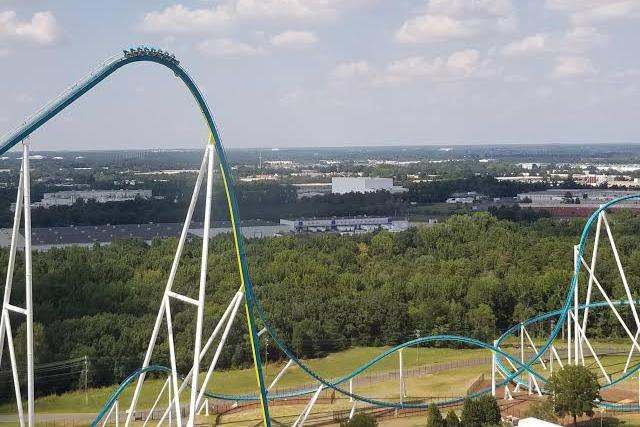
Fury 325 is often cited by enthusiasts as the best roller coaster in the world. Located at Carowinds, which sits on the border of North and South Carolina, this “giga coaster” (a coaster over 300 feet) opened on March 25, 2015. Unlike the launch coasters that preceded it, Fury 325 uses a traditional chain lift hill to carry riders to its 325-foot peak. This slow climb builds an incredible amount of tension before the train plunges down an 81-degree drop. Because it relies on gravity rather than a magnetic launch, the ride is much longer, stretching across 6,602 feet of track and reaching speeds of 95 miles per hour.
The ride’s theme is based on a “hornet” (inspired by Charlotte’s history), and the track’s bright green and blue colors weave over and under the park’s entrance bridge. What makes Fury 325 special is its “sustained” speed; it doesn’t just go fast at the beginning; it maintains its momentum through massive high-speed turns and “beehive” maneuvers. It was built by the renowned Swiss company Bolliger & Mabillard (B&M) for approximately $30 million. It proves that height is most effective when it is used to fuel a long, winding journey. Even though it is nearly a decade old, it consistently wins awards for its smooth ride quality and the pure sense of flight it provides.
7. Steel Dragon 2000
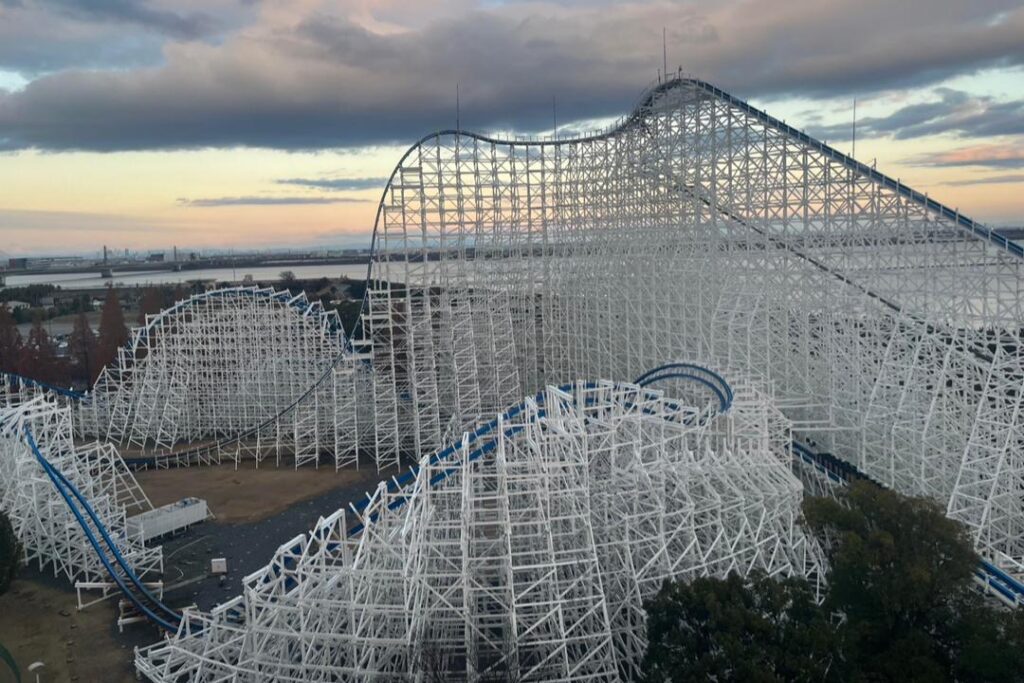
In the year 2000, the Year of the Dragon, Nagashima Spa Land in Mie Prefecture, Japan, opened a coaster that would define a decade. Steel Dragon 2000 stands 318 feet tall and was built with an incredible amount of steel, much more than a typical coaster, to protect it against Japan’s frequent earthquakes. This gave the ride a bulky, industrial look that is unique in the world. At a cost of over $50 million, it was one of the most expensive coasters ever built at the time. While it is incredibly tall, its most famous record is its length; at 8,133 feet, it is still the longest roller coaster track in existence today.
Riding Steel Dragon 2000 is an endurance test as much as a thrill. The lift hill climb takes over a minute, giving riders a beautiful view of the nearby ocean before the 307-foot drop. Because the ride is so long, the experience lasts about four minutes, which is double or triple the length of many other coasters on this list. It uses a series of “camelback” hills at the end of the course to provide multiple moments of airtime, where riders feel like they are floating out of their seats. It remains a symbol of Japan’s engineering prowess and a must-visit destination for anyone looking to experience the absolute limit of coaster track length and durability.
8. Millennium Force
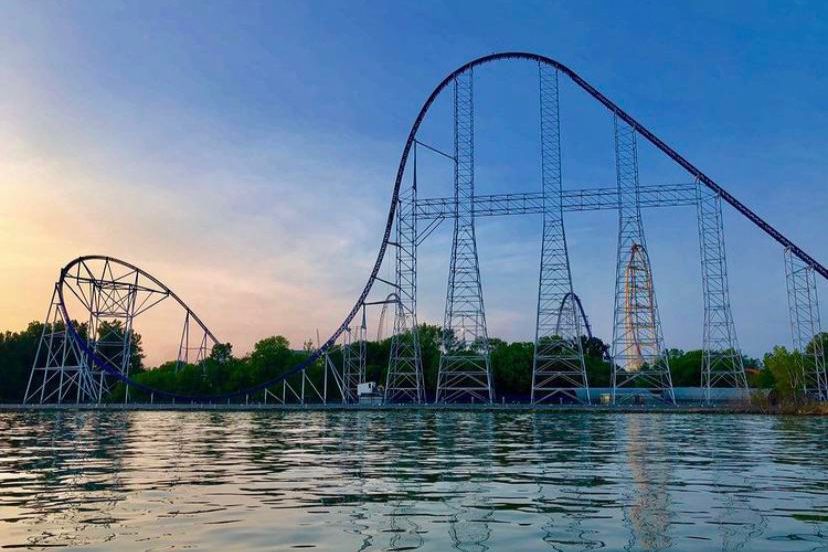
On May 13, 2000, Cedar Point changed the world with the opening of Millennium Force. It was the first coaster to ever pass the 300-foot height barrier, standing at exactly 310 feet. It introduced the “Giga Coaster” category to the public and used a revolutionary cable lift system instead of a traditional chain. This meant the train zipped up the hill at 15 miles per hour, significantly faster than the slow crawls of the past. The ride reaches a top speed of 93 miles per hour and features a 300-foot drop at a steep 80-degree angle, plummeting riders toward the lagoons of the park.
Millennium Force is beloved because it is “pure speed.” It doesn’t have any loops or inversions; instead, it uses its massive height to roar through overbanked turns and tunnels along the island. For many years, it was voted the #1 steel coaster in the world by the Golden Ticket Awards. Even as taller and faster rides were built, “Millie” (as fans call it) remained a favorite because of its location right on the water and its incredibly smooth transitions. It represents the “Golden Age” of roller coaster design, where the goal was to create a ride that felt like a graceful, high-speed jet flight rather than a bumpy, jarring experience.
9. Leviathan: Canada’s Tallest Guardian
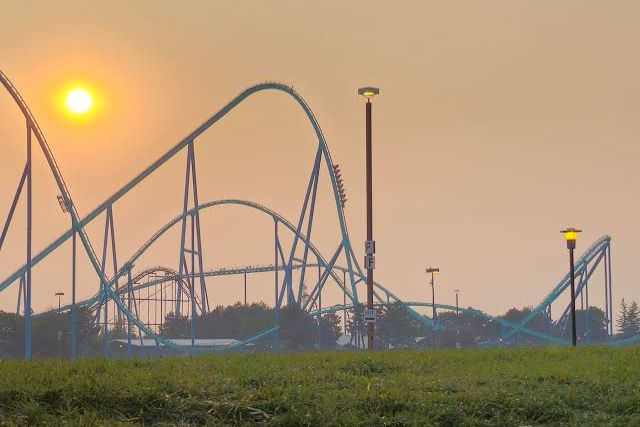
Leviathan made a massive splash when it arrived at Canada’s Wonderland in Vaughan, Ontario, on May 19, 2012. At 306 feet tall, it took the title of the tallest and fastest coaster in Canada, a record it still holds today. Built by Bolliger & Mabillard, the ride features a striking teal track that dominates the park’s skyline. The first drop is a massive 306 feet at an 80-degree angle, sending the train screaming into a series of high-speed curves at 92 miles per hour. It was the first Giga Coaster ever built by B&M, and it focused on providing a comfortable yet exhilarating experience for a wide range of guests.
The ride is named after a mythical sea monster, and the layout is designed to feel like a creature darting through the water. While it shares some similarities with other tall coasters, Leviathan is known for its “hammerhead” turn, a massive, high-altitude maneuver that turns the train around while riders are tilted sideways. The ride is exceptionally smooth, which allows guests to focus on the speed and the wind rather than being tossed around. For Canada’s Wonderland, Leviathan was a turning point that elevated the park to international status, proving that they could house a world-class “top ten” coaster that rivaled the best in the United States and Europe.
10. Intimidator 305: The Extreme Challenge
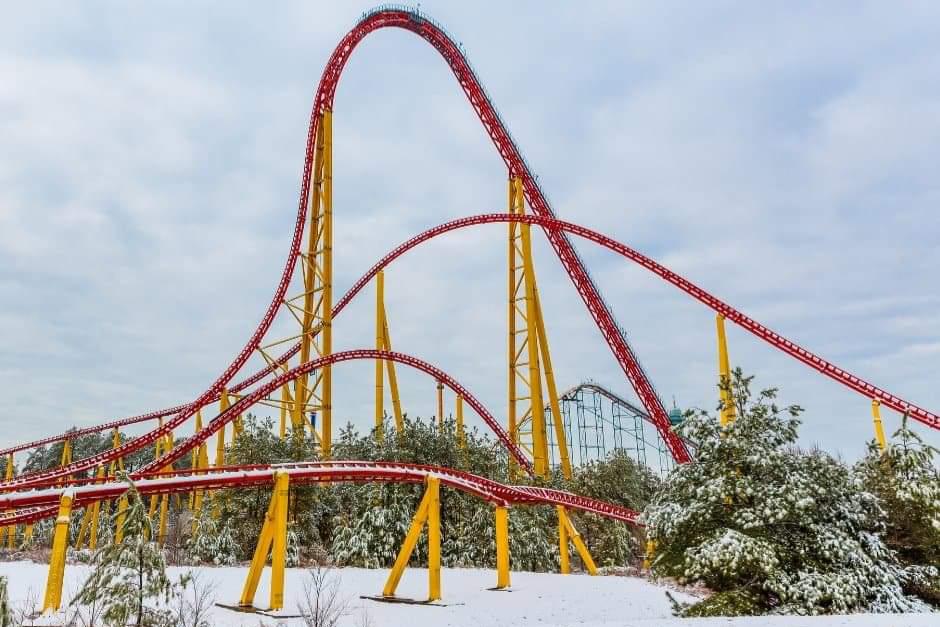
Intimidator 305 opened at Kings Dominion in Doswell, Virginia, on April 2, 2010. Standing 305 feet tall, this ride was inspired by the legendary NASCAR driver Dale Earnhardt, known as “The Intimidator.” Unlike other giga coasters that focus on floating airtime, I-305 (as it’s known) was designed for raw, aggressive speed and high G-forces. The ride drops 300 feet and immediately enters a high-speed turn that is so intense it famously caused some riders to “gray out” (a temporary loss of color vision) due to the pressure. This led the park to modify the first turn shortly after opening to make it slightly more manageable.
This coaster is widely considered the most “intense” on this list. It doesn’t care about being graceful; it wants to show you what 90 miles per hour feels like when you are hugging the ground. The layout is low to the earth, featuring quick “S-turn” transitions that snap the train from side to side like a race car on a track. With a 305-foot lift hill that uses a fast cable system, the anticipation is over quickly, and the intensity never lets up until you hit the final brakes. It is a “bucket list” ride for coaster enthusiasts who want to test their physical limits and experience a machine that truly lives up to its intimidating name.
11. Orion
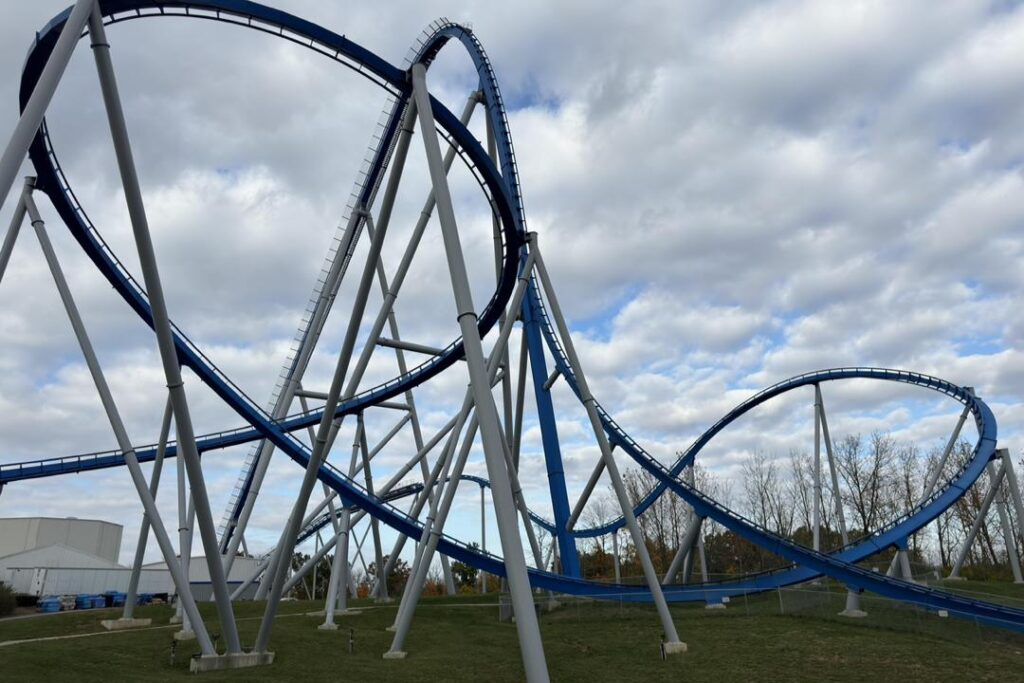
Orion officially opened to the public at Kings Island in Mason, Ohio, on July 2, 2020. This massive blue structure is classified as a “giga coaster” because it features a staggering 300-foot drop, even though its physical lift hill stands at 287 feet. The park invested roughly $30 million into the project to celebrate its 50th anniversary. Using a fast-moving chain lift, the ride carries passengers to the peak before plunging them down an 85-degree angle. During this first drop, the train reaches a top speed of 91 miles per hour, making it the fastest and tallest attraction in the park’s history.
The ride is themed after a secret research facility, and the layout focuses on high-speed “outerbank” turns and large hills that create a feeling of weightlessness. Unlike older, rougher coasters, Orion was built by the Swiss firm Bolliger & Mabillard, known for creating the smoothest experiences in the industry. Because of its location on a natural ravine, the ride feels even taller than the numbers suggest. It was designed to be a “crowd-pleaser” that provides big thrills without the jarring movements found on more aggressive rides. It remains a centerpiece of the park’s Area 72 section, where it serves as a modern landmark of engineering that looks particularly beautiful when lit up with blue LED lights at night.
12. I305 Prototype Tower
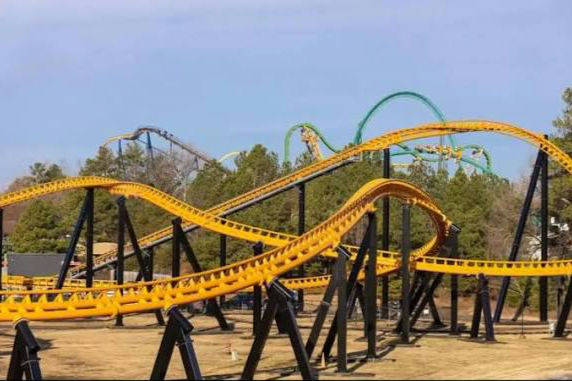
While it isn’t a ride you can buy a ticket for, the Intimidator 305 Prototype Tower is a fascinating piece of history located at the Intamin manufacturing facilities and tested at Kings Dominion around 2009. Before the famous “I305” coaster opened in Virginia in 2010, engineers had to build a massive 305-foot test structure to refine the cable lift system. This lift technology was a major jump forward because it used a motorized winch to pull the train up the hill at high speeds, rather than a slow, clanking chain. This prototype was essential for testing how steel reacts to extreme tension and height before passengers ever stepped on board.
For those who follow the “behind the scenes” world of theme parks, this tower represents the invisible side of safety. In the early 2010s, designers realized that building coasters over 300 feet tall required a different level of wind-resistance and structural support than anything built in the 1990s. The lessons learned from this prototype helped engineers fix early issues with “graying out” on high-speed turns, where the G-forces were almost too strong for the human body. It serves as a reminder that these giant machines are more than just toys; they are complex engineering projects that require years of “silent” testing in remote fields before they ever become the star attraction at a major amusement park.
13. Thunder Dolphin
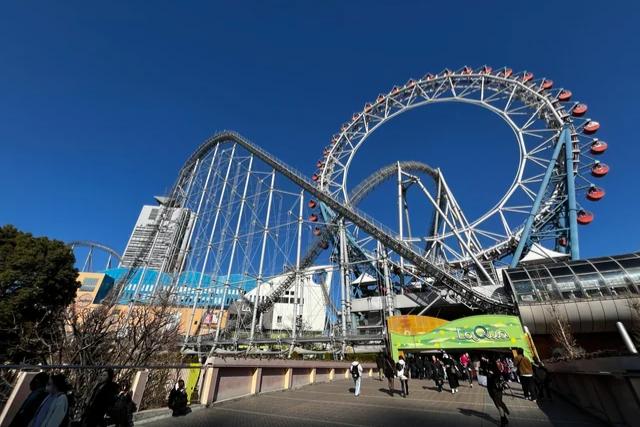
Thunder Dolphin is one of the most unique coasters in the world because of where it sits. Opened on May 1, 2003, in the heart of Tokyo, Japan, at Tokyo Dome City, this ride stands 262 feet tall. What makes it famous isn’t just the height, but the fact that it weaves through the city’s dense urban landscape. The track actually passes through a giant hole in the LaQua building and circles through the middle of the world’s first center-less Ferris wheel. It was designed by the Swiss company Intamin and reaches speeds of 81 miles per hour as it roars past shopping malls and city streets.
Riding Thunder Dolphin feels like something out of a futuristic movie. As you climb the 260-foot lift hill, you aren’t looking at trees or a parking lot; you are looking down at the rooftops of one of the busiest cities on Earth. The ride was closed for a long period between 2010 and 2013 for safety inspections after a small part fell from the track, but it has since returned as a favorite for tourists. It offers a “sideways” view of the Tokyo skyline that you simply can’t get anywhere else. It’s a perfect example of how theme parks can adapt to tiny spaces, turning a crowded city block into a high-flying playground that blends steel engineering with modern architecture.
14. Hyperion
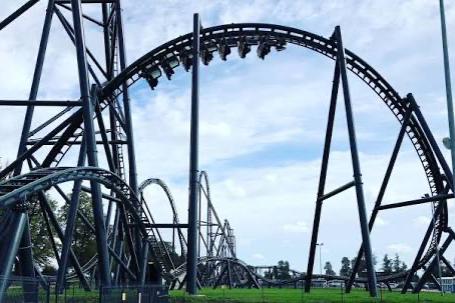
Hyperion arrived at Energylandia in Zator, Poland, on July 14, 2018, and immediately became a legend in the European coaster community. Standing 253 feet tall with a massive 269-foot drop into a dark tunnel, it was the tallest and fastest “mega coaster” in Europe at the time of its launch. The ride was the result of a public vote where fans chose the design from Intamin over a competitor. It features a top speed of 88 miles per hour and a layout packed with “airtime hills,” which are designed to lift riders out of their seats for several seconds at a time.
This coaster changed the reputation of Poland as a destination for thrill-seekers. Before Hyperion, most of the world’s giant rides were located in the United States or Japan. The ride’s theme is based on a research mission to Saturn’s moon, and the futuristic station looks like a high-tech spaceship hangar. One of the most terrifying parts of the ride is the first drop, which is angled at 84 degrees, making it feel like you are falling straight down into the earth. It uses a special floorless train design that makes riders feel more exposed to the elements, heightening the sense of speed. It has helped Energylandia grow into one of the most visited parks in Europe in a very short amount of time.
15. Shambhala
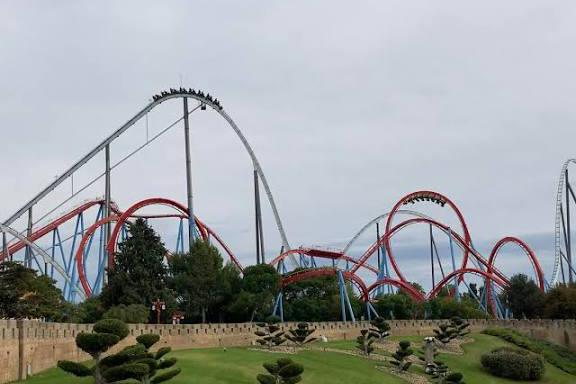
Shambhala: Expedición al Himalaya opened on May 12, 2012, at PortAventura Park in Salou, Spain. At 249 feet tall, it was once the record-holder for the tallest coaster in Europe. It is themed after a mythical lost kingdom in the Himalayas, and the ride is famous for its beautiful turquoise track and white supports. Built by Bolliger & Mabillard for 25 million Euros, the ride focuses on “extreme airtime.” It features seven “camelback” hills, the smallest of which is equivalent to a seven-story building. The train reaches speeds of 83 miles per hour as it dives through a splash zone that sprays water into the air.
For visitors, Shambhala is often described as a “graceful” experience rather than a scary one. Even though it is incredibly high, the seats use a specialized lap-bar restraint that leaves your upper body completely free, giving you a sense of total freedom as you float over the hills. The ride’s location offers views of the Mediterranean Sea and the surrounding mountains, but most riders are too focused on the sensation of weightlessness to notice the scenery. It won the award for “Best European Coaster” several times and remains a favorite because it stays smooth even after a decade of operation. It’s a ride that focuses on the joy of falling rather than just the shock of speed.
16. Diamondback
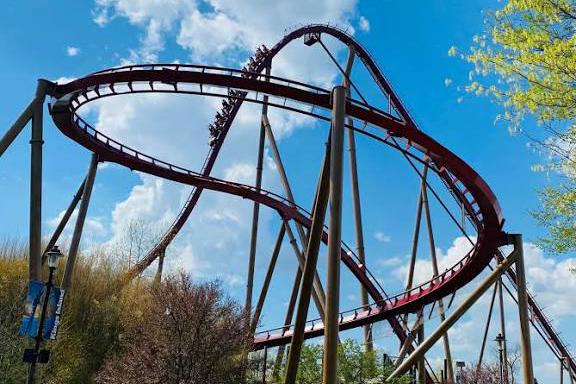
Diamondback made its debut at Kings Island on April 18, 2009, as the first “hyper coaster” in the park’s history. Standing 230 feet tall, the ride was a massive $22 million investment that forever changed the park’s skyline. It features a 215-foot first drop at a 74-degree angle and reaches a top speed of 80 miles per hour. One of the most recognizable features is the “splashdown” finish, where the back of the train has special scoops that spray two huge plumes of water into a lake as the ride ends. This doesn’t actually get the riders wet, but it creates a spectacular visual for people watching from the ground.
The ride is named after the Diamondback rattlesnake, and the trains are even painted to look like a snake’s scales. The layout covers more than 5,000 feet of track and includes several massive hills designed to provide “ejector airtime,” where you feel a strong push upward against the restraints. Diamondback was significant because it proved that Kings Island could compete with the world’s biggest parks for high-altitude thrills. Over 15 years later, it is still one of the most popular rides in Ohio. Its popularity is largely due to the “open” seating arrangement, where the cars are staggered so that every passenger has a completely unobstructed view of the long drops and the splashing water at the end.
17. Goliath (La Ronde)
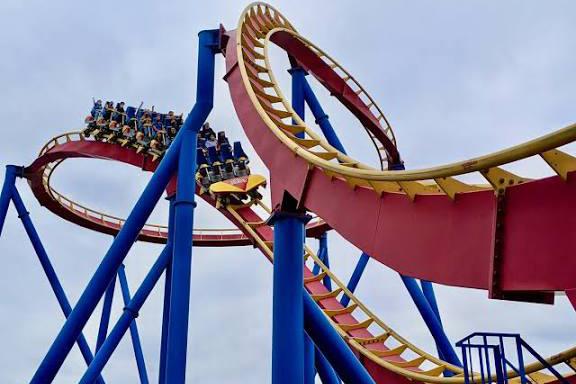
Goliath is the king of the skyline at La Ronde in Montreal, Quebec. When it opened on May 13, 2006, it was the tallest and fastest coaster in Canada, a title it held until Leviathan was built in 2012. Standing 175 feet tall with a top speed of 68 miles per hour, it might seem small compared to the 300-foot giants, but its layout is incredibly efficient. Because the park is located on an island (Sainte-Hélène Island), the coaster provides a stunning view of the Montreal city skyline and the St. Lawrence River. It was designed by the famous B&M company and cost roughly $19 million to construct.
What makes Goliath stand out to local fans is how it uses its height to create a “non-stop” feeling of motion. Once you crest the first hill, the ride never seems to slow down as it weaves through a series of turnaround loops and small hills. In 2013, the park briefly experimented with Virtual Reality headsets on the ride, though most fans prefer the real-life view of the city. It has a reputation for being one of the smoothest rides in North America, making it a “starter” coaster for many young thrill-seekers in Canada who are looking to move up from smaller wooden rides to the big steel structures. It remains the most popular attraction at the park by a wide margin.
18. Superman El Último Escape
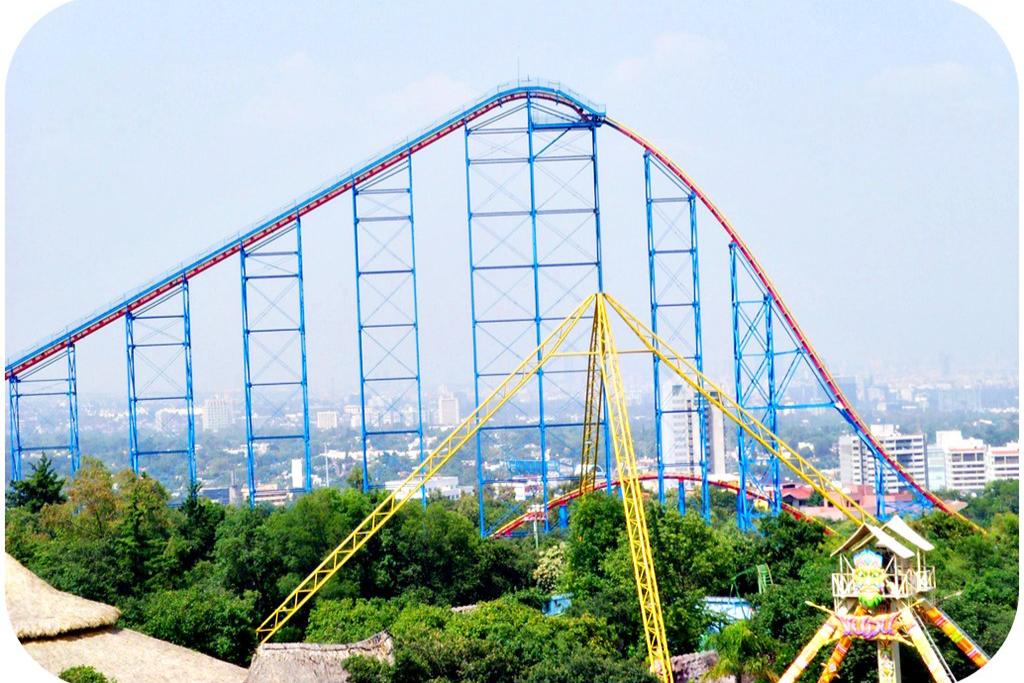
Superman el Último Escape (Superman: The Ultimate Escape) opened on November 19, 2004, at Six Flags México in Mexico City. Standing 221 feet tall, it was a massive milestone for the region, becoming the tallest and fastest coaster in Latin America. The ride was actually built several years earlier but sat unfinished for a long time due to local government disputes. When it finally opened, it was an instant hit. The track is over 5,000 feet long and features a massive 200-foot drop that sends riders into a series of hills and high-speed “helix” turns at 75 miles per hour.
The ride was built by D.H. Morgan Manufacturing, the same company that created several other famous giant coasters in the late 90s. Because Mexico City is at a very high altitude (over 7,000 feet above sea level), the air is thinner, which can actually affect how the ride runs. The height of the coaster makes it visible from almost anywhere in the park, serving as a landmark for the “Hollywood” section. It has a very classic “out-and-back” layout, meaning it goes far out into the woods before turning around and coming back to the station. For many people in Mexico, this was the first “world-class” steel coaster they ever experienced, and it still holds a special place in the hearts of local fans.
19. Magnum XL 200
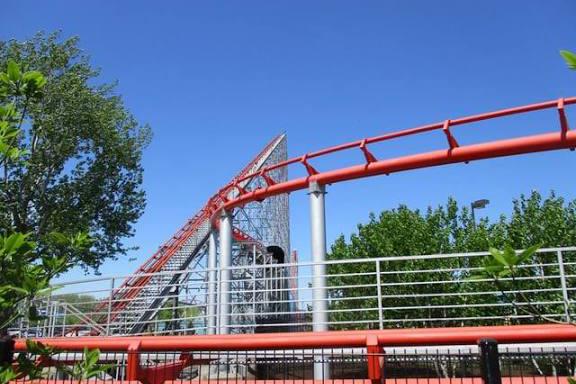
Magnum XL-200 is arguably the most important roller coaster ever built. When it opened at Cedar Point on May 6, 1989, it was the first “hyper coaster” in the world, meaning it was the first to break the 200-foot height barrier. At 205 feet tall, it was so intimidating at the time that people worried it might be too much for the human body to handle. It reached speeds of 72 miles per hour and featured a layout that took riders all the way to the edge of Lake Erie and back. It was built by Arrow Dynamics for a cost of $8 million, a bargain by today’s standards.
Magnum started the “Coaster Wars,” a period where parks competed every year to build the next tallest ride. Even though it is now over 35 years old, it is still a favorite for many because of its “old school” feel. Unlike modern coasters that are designed by computers to be perfectly smooth, Magnum has a jerky, mechanical charm that makes the 200-foot drop feel even faster than it is. It is famous for the “pretzel turn” at the halfway point and the series of small hills at the end that provide sharp “bunny hop” airtime. It was designated a National Roller Coaster Landmark in 2004, cementing its status as the ride that changed the industry forever.
20. Desperado
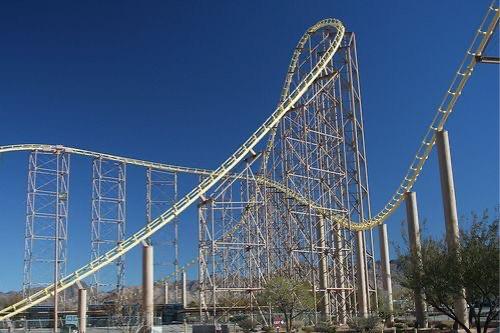
Desperado is a legendary “desert coaster” located at Buffalo Bill’s Resort & Casino in Primm, Nevada, right on the border of California. Opened on May 14, 1994, it stands 209 feet tall and was one of the tallest coasters in the world at the time. The ride starts inside the casino, then climbs a massive lift hill that offers a view of the empty Mojave Desert for miles in every direction. It plunges 225 feet (into an underground tunnel) and reaches speeds of 80 miles per hour. Because it is located in a remote area, it often feels much taller and faster than it actually is.
The coaster was designed by Arrow Dynamics and cost $15 million to build. For many years, it was a popular stop for people driving between Los Angeles and Las Vegas. However, because of its location in the harsh desert heat and the age of the machinery, the ride has been closed on and off for several years. When it is running, it is known for being a very rough and “wild” ride, as the steel expands in the Nevada sun. It represents a unique moment in the 90s when developers thought they could turn tiny border towns into major thrill destinations. Even with its shaky history, it remains a cult favorite for coaster enthusiasts who enjoy “classic” steel giants.
21. Titan
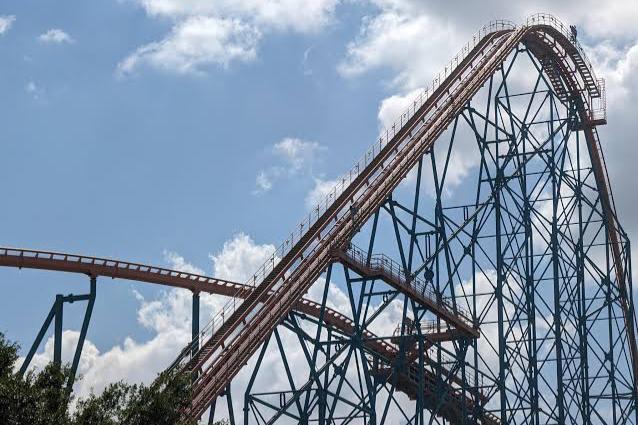
Titan made its massive debut at Six Flags Over Texas on April 27, 2001. Standing at 245 feet tall, it was designed by a Swiss firm called Giovanola to be one of the most powerful rides in the southern United States. While many coasters focus on jumping over hills, Titan is famous for its “helix” turns, massive, tilted circles that create intense downward pressure on the riders. The train reaches a top speed of 85 miles per hour after a huge 255-foot drop that actually goes below ground level into a dark tunnel. It was built using over 2,000 tons of steel and cost approximately $25 million to complete.
The experience of riding Titan is often described as “heavy.” Because the ride maintains such high speeds for a long time, riders feel strong G-forces that can make their legs feel heavy or their vision slightly blurry for a second. It is a very long ride, stretching over 5,000 feet, and it remains a dominant part of the Arlington skyline. For many years, it has been a “must-do” for visitors because it offers a much more intense physical challenge than the park’s older wooden rides. It represents the early 2000s trend of building “megacoasters” that prioritized sustained speed and physical force over complicated loops.
22. Goliath (Georgia)
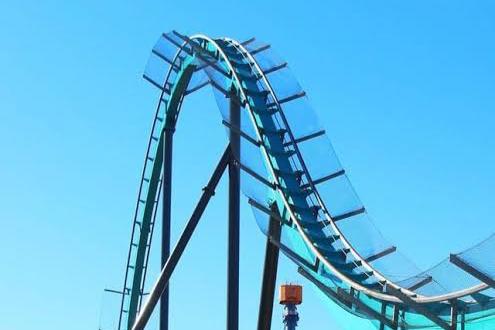
Goliath at Six Flags Over Georgia opened on April 1, 2006, and quickly became a fan favorite in the Atlanta area. Rising to 200 feet, this “hyper coaster” was built by Bolliger & Mabillard for around $20 million. Unlike some rides that are tucked away in the back of a park, Goliath’s track actually leaves the park boundaries, soaring over the entrance and near the parking lot before returning. This gives the ride a very “open” and expansive feeling. It reaches a top speed of 70 miles per hour and is specifically designed to provide “airtime,” that floating sensation you get when your body leaves the seat.
What makes this version of Goliath special is its smooth, rhythmic layout. It features several massive hills and a unique “540-degree” spiral that provides a mix of floating and turning sensations. Since its opening, it has consistently been ranked as one of the best steel coasters in the world by industry magazines. It is popular because it offers a “big kid” thrill that is still smooth enough for families to enjoy together. The ride’s bright orange and teal colors make it impossible to miss from the highway, serving as a giant advertisement for the park’s commitment to high-flying, world-class entertainment.
23. Silver Star
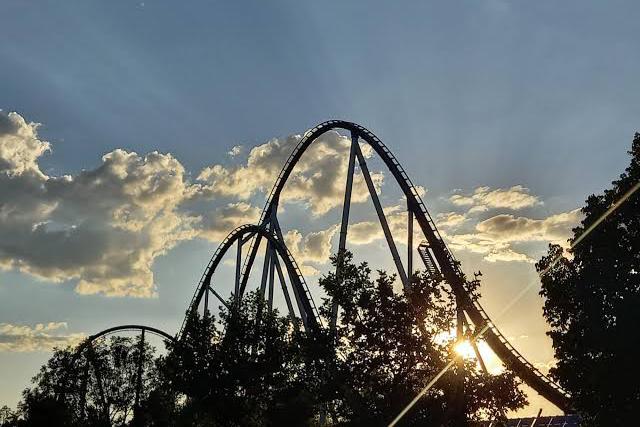
Silver Star opened at Europa-Park in Rust, Germany, on March 23, 2002. For a long time, it held the title of the tallest coaster in Europe, standing 240 feet tall. Interestingly, the ride was sponsored by Mercedes-Benz, and you can see the influence of the luxury car brand in the sleek silver trains and the racing-themed museum located in the ride’s entrance. The coaster reaches speeds of 79 miles per hour and features a 220-foot drop. It was built by the Swiss experts at B&M and is known for being incredibly quiet and smooth as it glides over the park’s entrance.
The ride is located in the “French” section of the park, but it stands so tall that it can be seen from the nearby Black Forest. Silver Star is built mostly over the park’s parking lot, which gives riders a unique view of the surrounding German countryside during the slow climb up the lift hill. It is designed to be a “high-capacity” ride, meaning it can move thousands of people through the line every hour. For European thrill-seekers, Silver Star was a game-changer that proved European parks could build giant, American-style “hyper coasters” while maintaining a high level of elegance and comfort that matches the Mercedes-Benz brand.
24. Intimidator
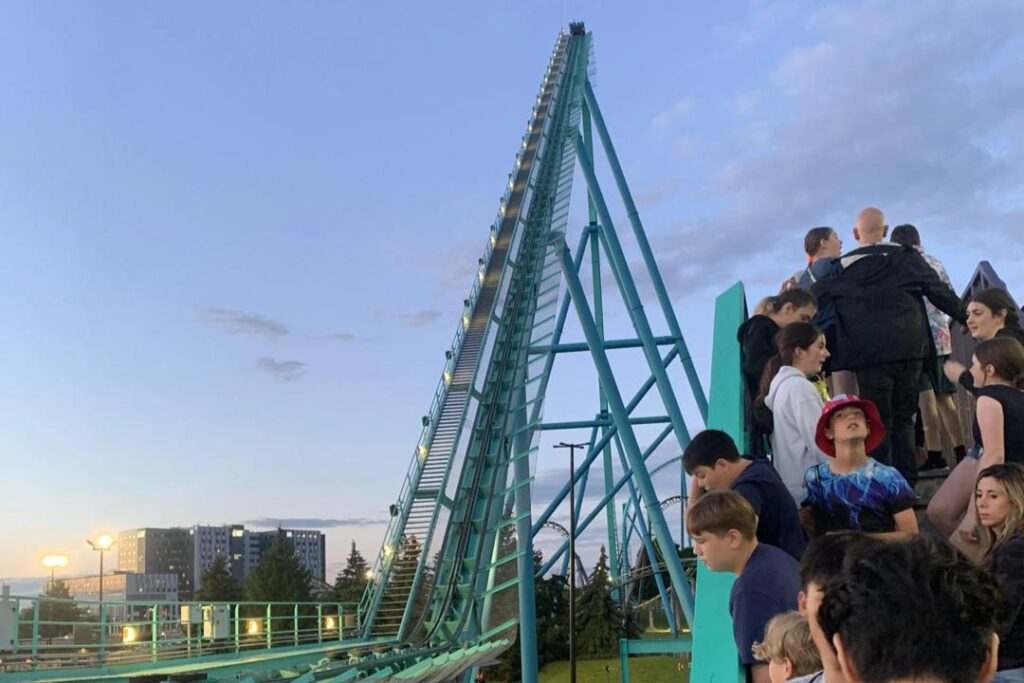
Not to be confused with its taller cousin in Virginia, the Intimidator at Carowinds in Charlotte, North Carolina, opened on March 27, 2010. Standing 232 feet tall, it was also inspired by the racing career of Dale Earnhardt. The ride features a long, 211-foot drop and seven different hills designed to make you feel like you are flying. It cost $23 million to build and reaches a top speed of 75 miles per hour. The trains are unique because the seats are arranged in a “stadium” style, so everyone has a great view of the track ahead.
The ride is known for being very “graceful.” While it is tall and fast, it doesn’t have the “gray out” forces that the Virginia version is known for. Instead, it offers a series of smooth, sweeping turns and hills that feel like a fast car driving on a mountain road. In 2024, the park announced a slight name change to “Thunder Striker” due to licensing updates, but for over a decade, it served as the park’s main “speed” attraction. It remains a favorite for visitors who want to experience a 20-story drop without feeling like they’ve been through a washing machine, proving that height can be used for pure fun.
25. Behemoth
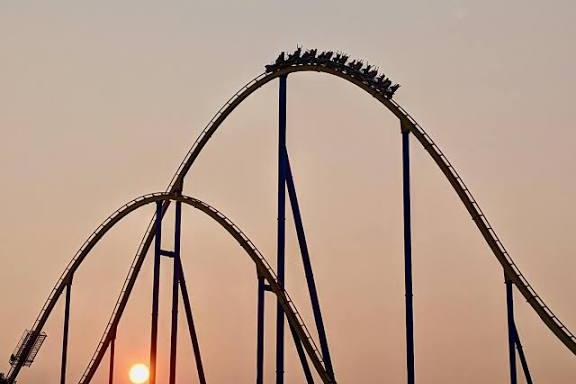
Behemoth arrived at Canada’s Wonderland on May 4, 2008, and it was a massive deal for the park. Standing 230 feet tall, it was the biggest investment in the park’s history at the time, costing about $26 million. It introduced a new type of “staggered” seating where the four seats in each row are arranged in a “V” shape. This gives every rider a “front-row” feel with a clear view of the 77-degree drop. The ride reaches speeds of 77 miles per hour and takes passengers on a three-minute journey over several massive hills and around two high-speed 180-degree turns.
The ride’s name fits its size, as it completely changed the look of the park’s “Action Zone” area. Behemoth is all about “floater airtime,” where you spend a large portion of the ride gently hovering just above your seat. It was so successful that it convinced the park owners to build an even taller coaster, Leviathan, just four years later. Even with a bigger neighbor next door, Behemoth remains one of the most-ridden coasters in Canada. It is praised for its reliability and its ability to deliver a consistent, high-speed thrill that feels just as exciting on the hundredth ride as it did on the very first.
26. Phantom’s Revenge
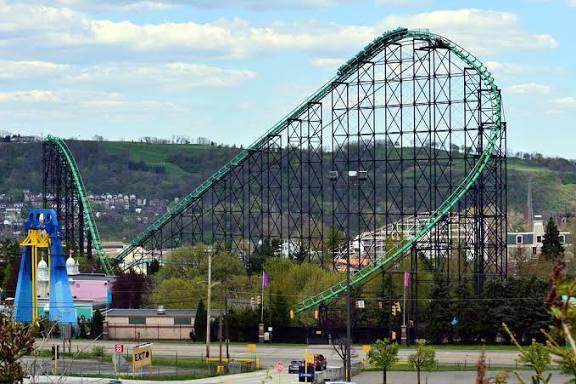
Phantom’s Revenge at Kennywood in Pennsylvania has one of the most interesting histories in the world. It originally opened in 1991 as “Steel Phantom,” but it was so rough that the park decided to hire a new company, Morgan Manufacturing, to rebuild it in 2001. While the coaster’s lift hill is only 160 feet tall, the second drop is a staggering 228 feet because it plunges down a natural cliff and under the track of another coaster. This makes it one of the tallest “drops” in the world compared to its actual height. It reaches speeds of 85 miles per hour.
Because the ride uses the natural hills and valleys of the park, it feels like it is interacting with the landscape. It is world-famous for the moment it dives through the support structure of the “Thunderbolt” wooden coaster, which creates a “near-miss” sensation that terrifies even experienced riders. Since its reimagining in 2001, it has consistently stayed in the top ten lists of coaster enthusiasts. It’s a perfect example of how a park can take an old, uncomfortable ride and turn it into a world-class masterpiece by using the environment. It remains the fastest ride in Pennsylvania and a symbol of the park’s ability to blend tradition with extreme modern thrills.
27. Hyper Coaster (Gyeongju World)
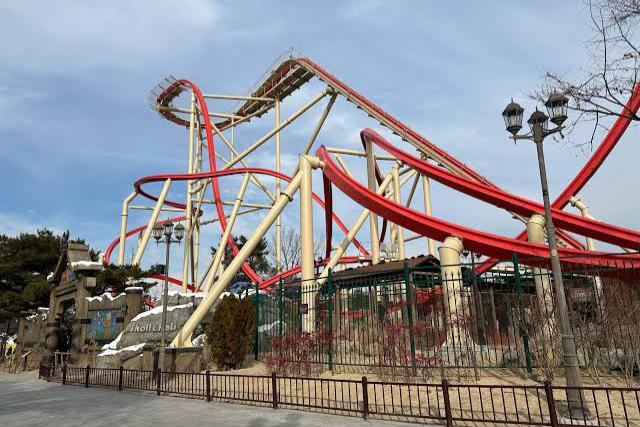
Hyper Coaster, also known as “Draken” in some contexts or simply the “B&M Dive Coaster,” stands as a landmark at Gyeongju World in South Korea. Opening in 2018, it features a 207-foot vertical drop, making it one of the tallest and most intimidating structures in the country. While the park had other rides, this $20 million investment was designed to attract international tourists. It features a “holding brake” at the top of the 236-foot peak, where the train hangs over the edge for several seconds, forcing riders to stare straight down at the ground before they are released into a 90-degree plunge.
The ride reaches speeds of nearly 73 miles per hour and includes two massive inversions and a “splashdown” effect where the train sprays water behind it. For South Korean fans, this ride represented a new level of theme park technology that hadn’t been seen in the region before. It is themed after Norse mythology, and the entire area around the ride is designed to look like an ancient Viking village. The height of the ride is so significant that it has become a symbol for the city of Gyeongju itself. It proves that the “coaster boom” is a global phenomenon, bringing high-altitude thrills to every corner of the world.
28. Steel Force
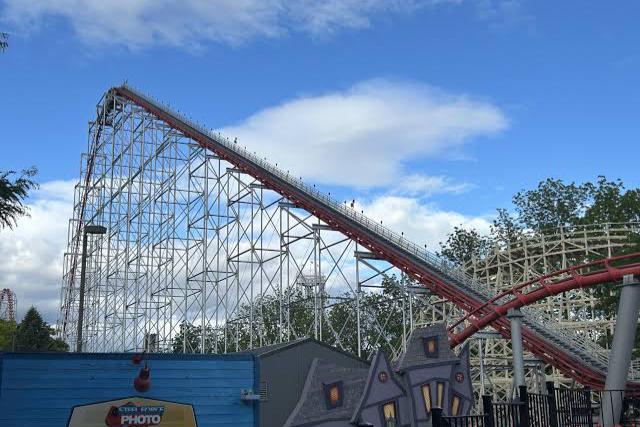
Steel Force opened at Dorney Park in Allentown, Pennsylvania, on May 30, 1997. At 200 feet tall, it was the first “megacoaster” on the East Coast and a huge milestone for the park. Built by Morgan Manufacturing, it features a 205-foot drop (thanks to a small tunnel) and reaches a top speed of 75 miles per hour. It was built with over 5,000 feet of track, making it a very long experience that lasts nearly three minutes. The ride is famous for its simple “out-and-back” design, which takes riders far away from the park and back again through a series of hills.
Despite being nearly 30 years old, Steel Force is still very popular because it is comfortable and offers a great “sense of scale.” It doesn’t have the modern, complex twists of newer rides, but the sheer size of the 200-foot structure is still impressive. It is often the first “big” coaster that kids in Pennsylvania try when they are ready to move on from smaller rides. The ride is also known for its “double-up” and “double-down” hills, which provide quick pops of airtime. It stands as a classic piece of 1990s engineering, representing the moment when medium-sized parks finally started reaching for the 200-foot clouds to compete with the giants.
29. Apollo’s Chariot
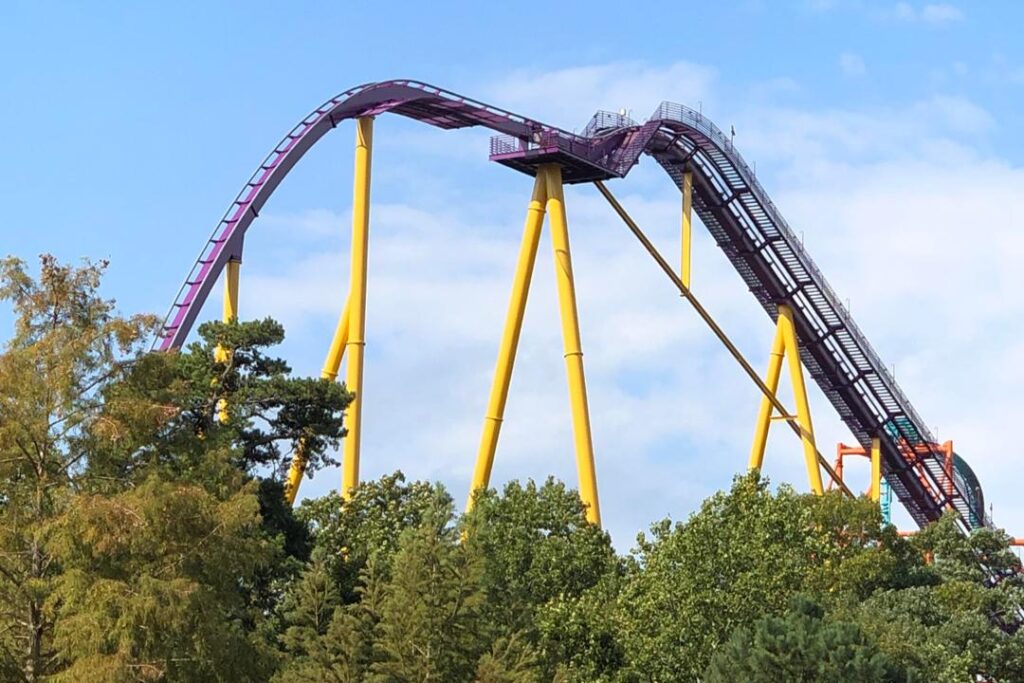
Apollo’s Chariot made a grand entrance at Busch Gardens Williamsburg in Virginia on March 27, 1999. Standing 170 feet tall with a 210-foot drop into a deep ravine, it was the first “hyper coaster” built by the Swiss company B&M. It cost approximately $20 million and reaches a top speed of 73 miles per hour. The ride is themed after the Roman sun god, Apollo, and the gold and purple track is designed to look like a chariot flying through the sky. It features eight different “airtime” hills that are famous for their smooth and comfortable “floating” sensation.
The ride became famous even before it opened because of a strange incident where a bird flew into a celebrity guest during the first test run, but it quickly overcame that odd start to become a world-ranked favorite. It is often called one of the most “beautiful” coasters because it travels over trees and water, tucked away in the back of the park. It proved that a ride didn’t need to be 300 feet tall to be world-class; it just needed a great layout and a lot of heart-pounding drops. Even today, it is frequently cited by fans as the smoothest and most enjoyable ride in the entire Busch Gardens collection.
30. Nitro
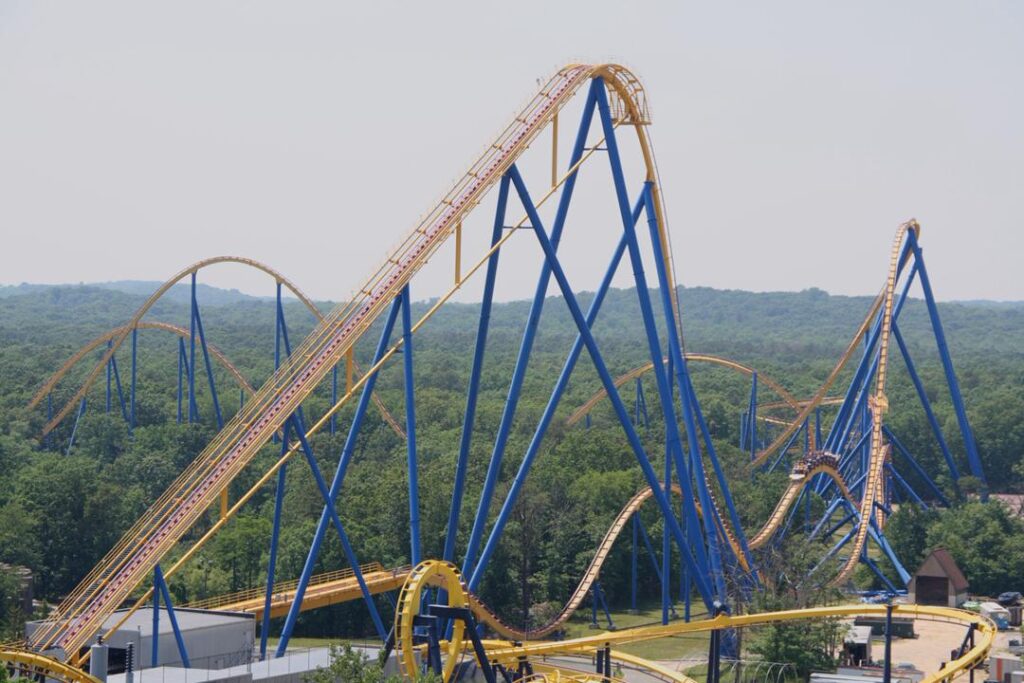
Nitro exploded onto the scene at Six Flags Great Adventure on April 7, 2001. Standing 230 feet tall, it was the perfect “big brother” to the park’s other coasters. It reaches speeds of 80 miles per hour and is famous for its massive, 215-foot first drop. What makes Nitro unique is its location; it is built in a wooded area at the back of the park, so once the ride starts, you are completely surrounded by trees and nature. This makes the 230-foot height feel even more isolated and thrilling as you soar above the forest canopy.
The ride is built for “pure airtime.” It features several “camelback” hills and a massive 540-degree helix that pushes you into your seat before launching you back into the air. Nitro is often the ride that people choose to ride over and over again because it is so smooth and reliable. It was built by B&M for roughly $20 million and has remained a staple of the “top ten” lists for over two decades. As the final entry on our list, Nitro shows that height is most effective when combined with speed, a beautiful setting, and a layout that keeps you smiling from the first drop to the final brake run.
Like this story? Add your thoughts in the comments, thank yo


