
1. He Was A Natural Screen Presence
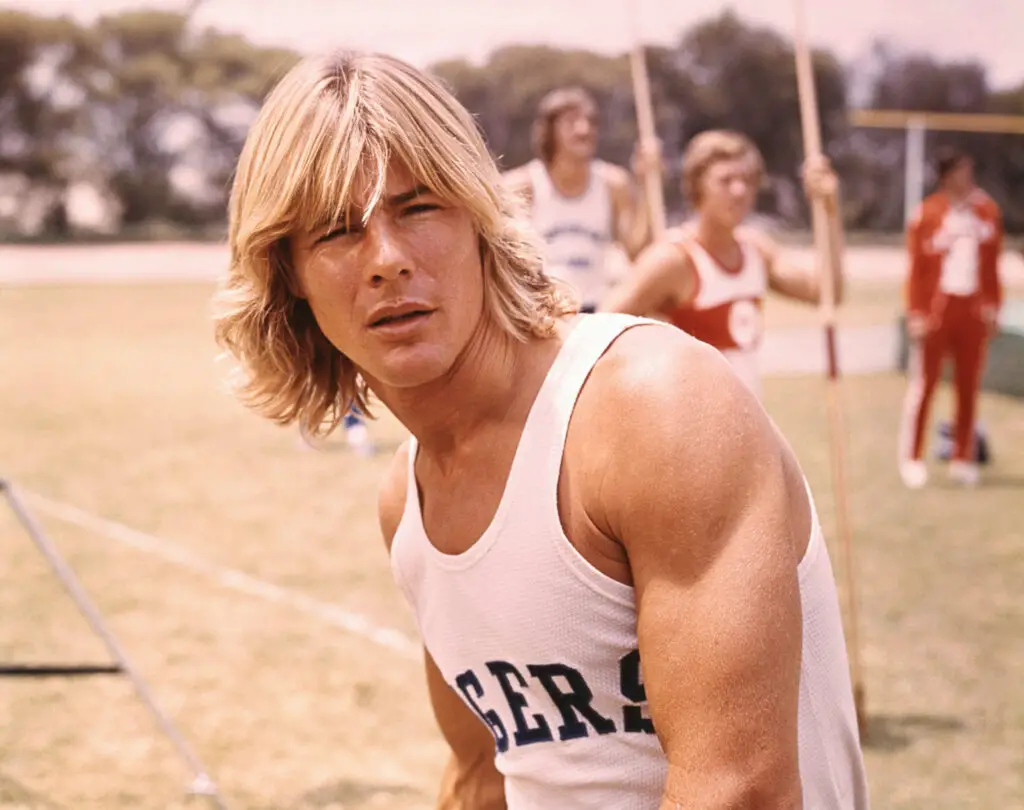
Jan-Michael Vincent was born on July 15, 1944, and he didn’t start out looking for Hollywood fame. He was actually discovered by a talent scout while he was finishing up his time with the California Army National Guard in the late 1960s. Unlike many actors of that era who tried to be loud or overly dramatic, Jan-Michael had a very calm and natural way of acting. He didn’t need to shout to get your attention; he could say more with a single look than most people could with a page of dialogue. This “cool” and quiet energy helped him land early roles in shows like The Banana Splits Adventure Hour and eventually led to his big break in the 1972 hit film The Mechanic, where he played an apprentice to the legendary Charles Bronson.
Audiences loved him because he felt like a real person rather than a polished movie star. He had a gift for playing characters who were struggling with something deep inside, making him perfect for the gritty, realistic films that were popular in the 1970s. This natural talent made him a favorite among directors who wanted a leading man with emotional depth. However, that same sensitivity that made him a great actor also made him vulnerable. As he grew older, fans started to notice that the quiet intensity he used for his characters was beginning to reflect a real-life weariness. He was a man who felt everything deeply, which was both his greatest strength on camera and his biggest challenge when the cameras stopped rolling.
2. Had A Breakthrough in Seventies Cinema
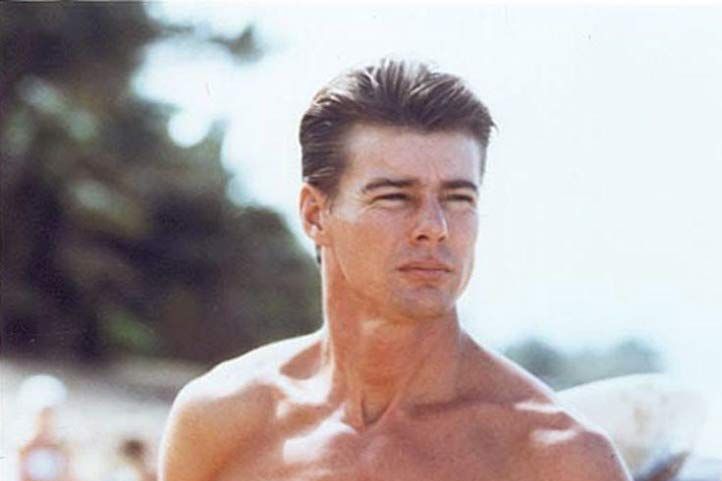
The 1970s was truly the golden decade for Jan-Michael Vincent. He became a household name by starring in a variety of films that showed off his range as an athlete and a dramatic actor. One of his most cherished projects was the 1978 film Big Wednesday, directed by John Milius. In this movie, he played a talented but troubled surfer, a role that hit close to home and eventually turned the film into a cult classic. That same year, he showed his lighter side by starring alongside Burt Reynolds in Hooper, a movie about Hollywood stuntmen. By the end of the 1970s, it seemed like there was nothing he couldn’t do, whether it was high-stakes action or thoughtful, character-driven dramas.
During this time, Jan-Michael was seen as the “Golden Boy” of Hollywood. He had the rugged good looks and the physical stamina to handle demanding roles, yet he also possessed a vulnerability that made him relatable to the average viewer. This period was the peak of his professional discipline and focus. He was successfully navigating the transition from a young heartthrob to a serious leading man. For many film historians, his work in the late ’70s represents a perfect moment in time where his immense talent and the right opportunities aligned. It is a period fans look back on with a bit of sadness, knowing that the stability he found in these years would soon be tested by his personal struggles.
3. His Television Recognition Arrived
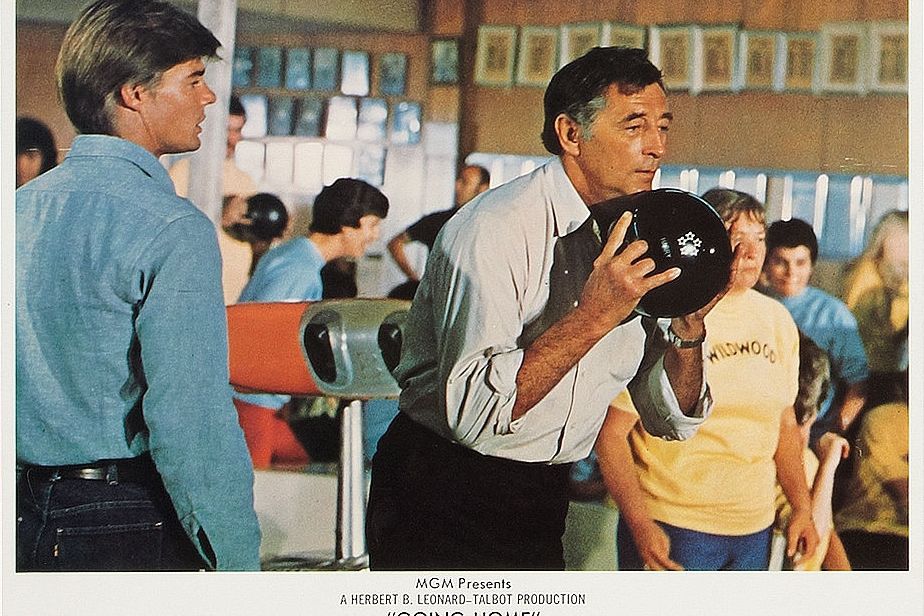
While many people remember him for his movies, Jan-Michael Vincent also made a massive impact on the small screen during the early part of his career. In 1971, he received critical acclaim for his role in the TV movie Going Home, which earned him his first Golden Globe nomination for Best Supporting Actor. He proved that he could carry a heavy dramatic story just as well as any veteran actor. His talent for television reached a new height in 1983 when he starred in the epic miniseries The Winds of War. This massive production was a huge hit, and his performance earned him another Golden Globe nomination, proving to the industry that he was a world-class talent.
Television allowed Jan-Michael to reach millions of people right in their living rooms, making him a very familiar and beloved face across America. These long-form stories gave him the space to develop complex characters over several hours of screen time, rather than just two. Many critics believed that the structured environment of television was actually better for him than the unpredictable world of film. It provided him with a steady routine and a chance to show off his subtle acting style in more intimate settings. At this point in the early 1980s, it looked like he was on the verge of becoming one of the most respected actors of his generation, with a career that could last for decades.
4. The Airwolf Role Changed Everything
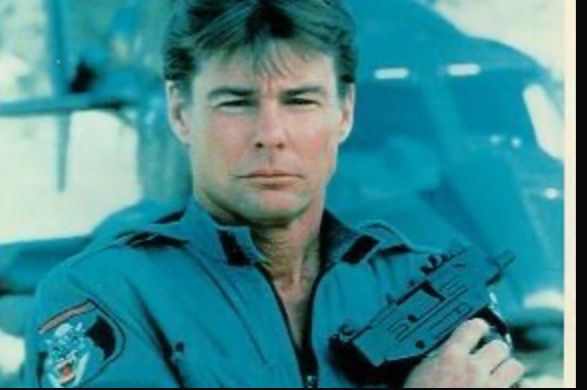
In 1984, Jan-Michael Vincent’s life changed forever when he was cast as the lead in the high-tech action series Airwolf. He played Stringfellow Hawke, a reclusive, cello-playing pilot who flew a top-secret supersonic helicopter. The show was an instant smash hit, blending intense Cold War spy themes with incredible aerial stunts. Jan-Michael’s portrayal of the brooding and mysterious Hawke was the heart of the series. His chemistry with co-star Ernest Borgnine, who played his father figure and mentor, gave the show a sense of warmth and family that viewers really connected with. It wasn’t just a show about a helicopter; it was a show about a man looking for his lost brother.
Becoming the star of Airwolf made Jan-Michael an international celebrity. He was suddenly everywhere, on magazine covers, lunchboxes, and posters all over the world. The role of Stringfellow Hawke felt like it was written specifically for him because it utilized his natural ability to play “the loner” with a hidden heart of gold. For a few years, he was one of the biggest stars on the planet. However, the massive success of the show also brought a level of fame and scrutiny that was hard to handle. While fans saw a hero on screen every week, the actor behind the character was beginning to deal with the overwhelming pressure that comes with being the face of a multi-million dollar franchise.
5. He Became A Television’s Highest Earner
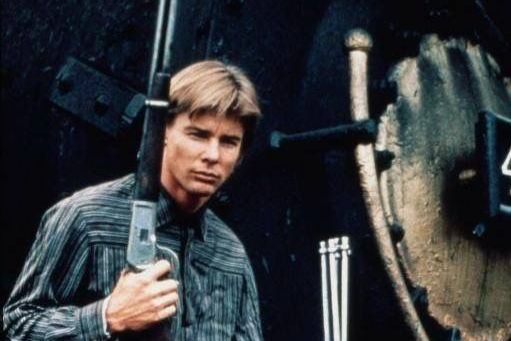
By the time Airwolf reached its second and third seasons in the mid-1980s, Jan-Michael Vincent had become one of the highest-paid actors in the history of television. He was reportedly earning as much as $250,000 per episode, which was an astronomical sum for that time. When you adjust that for today’s money, it’s easy to see just how much the network valued him. He had gone from being a respected character actor to a top-tier superstar with a salary to match. This financial success was a testament to his drawing power and the massive ratings that the show consistently brought in for the network.
However, having that much money and fame at such a young age can be a double-edged sword. While the paychecks were huge, the work schedule was punishing, often requiring fourteen hours of filming a day. The pressure to stay on top and maintain the show’s success began to take a toll on his mental and physical health. Behind the scenes, the high salary couldn’t fix the growing problems in his personal life. In many ways, this period was the “eye of the storm.” On the outside, he appeared to have everything a person could want, but the reality was much more complicated. This era of his life serves as a reminder that great wealth doesn’t always lead to great happiness.
6. Then, Addiction Takes Hold

As Airwolf continued its run through 1986, it became increasingly difficult to ignore Jan-Michael Vincent’s private battles. He had been struggling with alcoholism and substance abuse for years, but the demands of a hit TV show made these issues impossible to hide. People working on the set began to report that he was often late, had trouble remembering his lines, or appeared visibly exhausted. This was a heartbreaking turn for a man who had once been known for his sharp focus and natural grace. His reliability started to slip, and the tension between his professional responsibilities and his personal demons became a major concern for the producers.
The tragedy of addiction is that it often steals a person’s talent slowly. Fans who watched the show regularly could see a change in his appearance and his energy levels as the seasons progressed. The sparkle in his eyes was being replaced by a look of deep fatigue. Because he was the star of the show, many people tried to help him or cover for him, but addiction is a powerful foe. Eventually, the problems became too big to manage, and his reputation for being “difficult” started to spread through Hollywood. This wasn’t just about a career slowing down; it was about a talented human being losing his way under the weight of a very real and painful illness.
7. Alongside Growing Legal Problems

As the 1980s turned into the 1990s, Jan-Michael Vincent’s struggles began to show up in public records. He found himself in trouble with the law on several occasions, often involving domestic disputes or incidents related to his drinking. These were not the actions of a “bad” person, but rather the symptoms of someone who was spiraling out of control and needed help. Every time a new story hit the tabloids about an arrest or a bar fight, it became harder for major studios to trust him with big projects. In Hollywood, your “insurability” is just as important as your talent, and Jan-Michael was becoming a high risk.
These legal issues had a snowball effect on his life. While he still had many loyal fans who wanted to see him succeed, the industry started to move on. It is a sad reality of the entertainment business that once you are labeled as “unreliable,” the phone stops ringing. He spent a significant amount of time in and out of rehab facilities and courtrooms during this period. Despite these hardships, those who knew him personally often spoke of his kind heart and his desire to get better. Unfortunately, the cycle of legal trouble and substance abuse created a barrier between him and the high-quality roles he was once known for, making a true comeback very difficult.
8. A Career Slipping Away
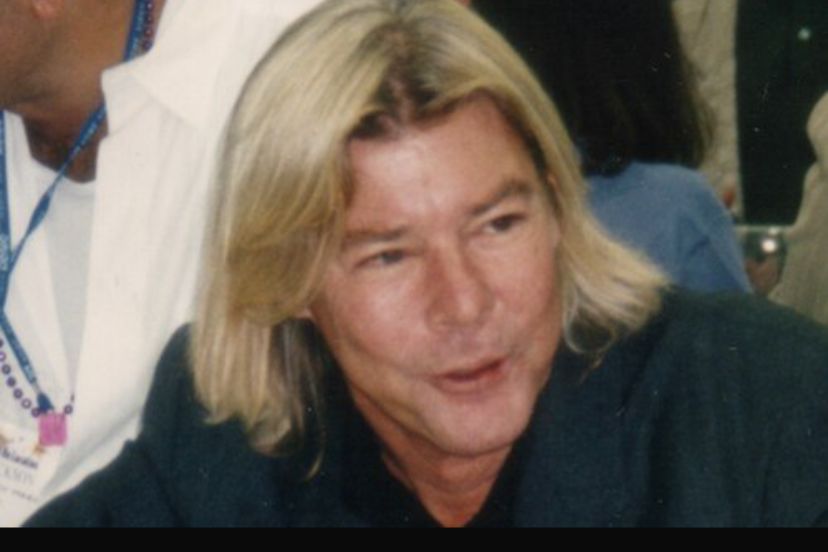
By the late 1980s and early 1990s, the big-budget offers for Jan-Michael Vincent had mostly dried up. He went from starring in major studio films and hit TV shows to working on low-budget, direct-to-video movies. While he was still working, the quality of the scripts was a far cry from things like The Winds of War or Big Wednesday. He often took these roles just to keep busy and pay the bills, but it was clear to everyone that he was no longer the star he used to be. It was a painful decline to watch for those who remembered his incredible potential during his younger years.
This stage of his career was marked by a sense of loss. He was still a very capable actor when he was focused, but the opportunities to show that were becoming rare. The industry insiders who once praised his “minimalist” acting style now saw it as a lack of effort. It’s important to remember that Jan-Michael didn’t lose his talent; he lost the stability needed to use it. This period of his life shows how fragile a Hollywood career can be. Without a strong support system and the ability to stay healthy, even the most gifted performers can find themselves on the outside looking in, watching the world move forward without them.
9. A Devastating Car Crash
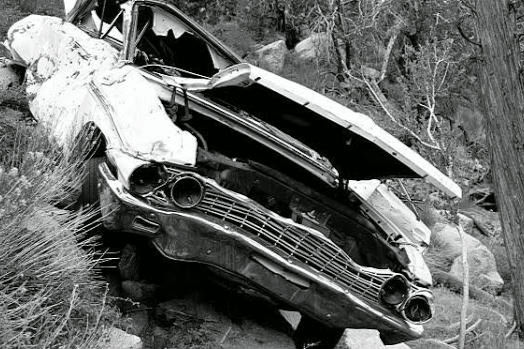
In August of 1996, a tragic event occurred that would permanently change Jan-Michael Vincent’s life and career. He was involved in a major car accident in California that left him with three broken vertebrae in his neck. Perhaps even more devastating for an actor, the accident caused permanent damage to his vocal cords because of the emergency medical procedures required to save his life. When he finally recovered enough to speak, his voice was thin, raspy, and barely recognizable. For a man whose career was built on his voice and his physical presence, this was a crushing blow that was hard to recover from.
The accident made it almost impossible for him to land traditional acting roles. He struggled to project his voice on set, and the physical pain from his neck injuries made long days of filming unbearable. While he did manage to appear in a few small projects after the crash, such as the 1998 film Buffalo ’66, he was clearly a changed man. This moment is often cited by biographers as the unofficial end of his time as a leading man. It wasn’t just a physical setback; it was an emotional one as well. The crash served as a physical manifestation of the chaos that had been surrounding his life for years, leaving him with permanent scars that he could never quite hide.
10. Health Decline After Retirement
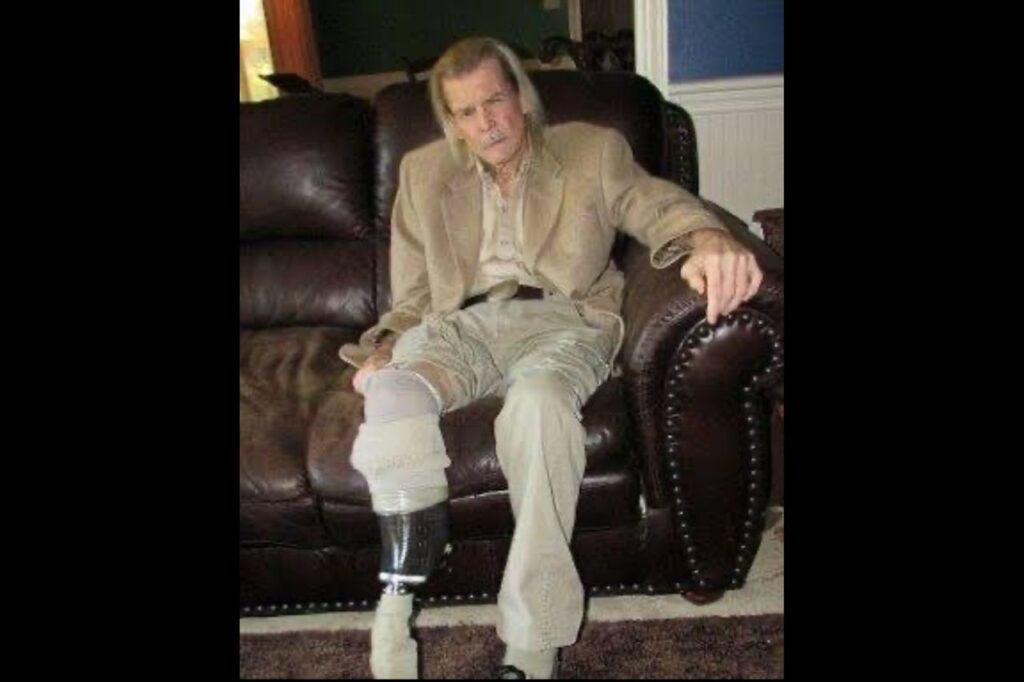
Jan-Michael Vincent officially stepped away from the acting world in 2003. His final years were spent away from the glitz and glamour of Los Angeles, living a much quieter life. Unfortunately, his health issues did not end with his retirement. Years of heavy smoking and health neglect led to a condition called peripheral artery disease. This became so severe that in 2012, doctors had to amputate the lower part of his right leg to save his life. It was a shocking and sad update for fans who remembered him as the athletic, surfing heartthrob of the 1970s, now facing such a difficult physical battle.
During his final decade, Jan-Michael lived mostly in Mississippi and later North Carolina. He stayed out of the spotlight, only occasionally giving interviews where he spoke candidly about his past mistakes and his struggles with sobriety. He lived a humble life, often dealing with significant medical bills and the challenges of his disability. Despite the hardships, he seemed to find a bit of peace in his later years, away from the intense pressure of the Hollywood machine. His story reminds us that actors are human beings first, and that the “Golden Boy” image we see on screen is often very different from the person navigating the difficult realities of aging and poor health.
11. Hollywood’s Unforgiving System

In the world of big-budget filmmaking, being reliable is often just as important as being talented. By the late 1980s, Jan-Michael Vincent learned this lesson the hard way. While he was still a gifted actor, the major studios began to see him as a financial risk. Making a movie or a TV show costs millions of dollars, and producers need to know their star will show up on time and ready to work every single day. Because of his personal struggles, insurance companies became hesitant to cover projects he was involved in, which meant he was essentially “blacklisted” from the biggest roles in town, regardless of how many fans he had.
This shift in his career highlights how quickly the entertainment industry can turn its back on someone. Hollywood loves a success story, but it has very little patience for people who struggle with health or personal issues that slow down production. For Jan-Michael, the transition from being the most sought-after actor to someone who couldn’t get a callback was incredibly fast. It wasn’t that he lost his ability to act; it was that the system no longer had a place for someone who wasn’t perfectly consistent. This part of his journey serves as a sobering look at the business side of fame, where profit and schedules often outweigh human compassion and second chances.
12. Reframing His Legacy
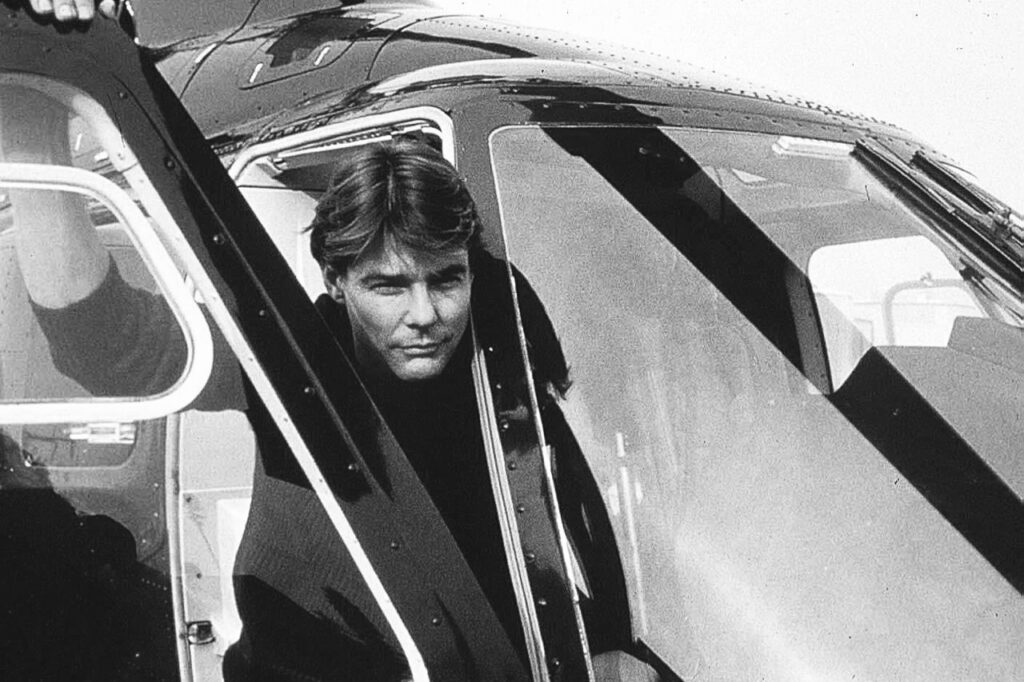
Since his passing in 2019, the way people talk about Jan-Michael Vincent has started to change. Instead of just seeing him as a “cautionary tale” about the dangers of Hollywood, many people are looking at him with more empathy. We now understand more about the nature of addiction and mental health than we did in the 1980s. People are beginning to realize that he wasn’t just “difficult”, he was someone who was suffering from a disease and doing his best to cope with it under the harsh glare of fame. This new perspective allows us to appreciate his work without judging his personal life so harshly.
This shift in his legacy is important because it honors the man as a whole. We can acknowledge that he made mistakes while also recognizing that he was a victim of his own circumstances and a very demanding industry. Today, he is often cited in discussions about how Hollywood can better support its stars when they are in trouble. By reframing his story, we move away from gossip and toward understanding. He is seen less as a tabloid figure and more as a real person who left behind a body of work that continues to move and inspire people, even years after he left us.


