
1. When the Story First Slowed Down

Most people remember where they were when Susan Smith appeared on television in 1994, pleading for her missing children, and that shared memory quietly opens this story. After confessing days later to drowning her sons, she became one of the most infamous figures of the decade. What happened next unfolded slowly, away from cameras. Sentenced to life in prison, Smith entered a rigid world of routines, restrictions, and isolation. The early years were marked by adjustment, loss of privacy, and the heavy weight of public hatred. As attention faded, prison life replaced headlines, and her days became routine inside prison
2. Learning to Exist Behind Bars

Once the court process ended, Susan Smith was transferred into long term incarceration, where her identity shifted from headline subject to inmate number. Life behind bars meant structure replaced chaos, and time stretched differently than it once had. Days revolved around counts, meals, and limited movement. Letters from the outside became rare reminders of a world she could no longer access. While the public largely moved on, Smith remained inside a system that does not forget easily. Every year passed marked another reminder that her life would continue within concrete walls, governed by rules, memories, and the reality of irreversible choices
3. Early Behavior and Adjustments

During her early years in prison, Susan Smith struggled to fully adapt to the expectations placed on her. Reports over time revealed disciplinary issues that drew attention from prison officials. These incidents suggested that incarceration was not a smooth or quiet transition. Adjusting to authority, boundaries, and constant supervision proved difficult at times. Each infraction became part of her institutional record, shaping how officials viewed her progress. While some inmates fade into anonymity, Smith’s past ensured her actions remained closely watched, reinforcing the idea that accountability inside prison extends beyond the original sentence and follows behavior daily
4. The Weight of Infamy Inside

Being widely known did not disappear once Susan Smith entered prison. Her notoriety followed her, shaping interactions and perceptions among inmates and staff. For some, her case carried judgment that never softened. For others, it was simply a story from another life. Either way, infamy created distance. Trust was not easily earned, and privacy was rare. Living with a name recognized far beyond prison walls meant she could never fully blend in. Her identity remained tied to a moment in history, reminding her daily that certain actions echo longer than most sentences
5. Turning Toward Faith

Over time, Susan Smith began speaking about faith as a source of personal reflection and survival. In letters and statements, she described prayer and religious belief as anchors during long periods of isolation. Faith became part of how she framed remorse and self understanding. For her, it offered structure beyond prison routines and a way to confront guilt privately. While reactions outside varied, inside prison this spiritual turn marked a shift toward inward focus. It did not erase the past, but it shaped how she spoke about responsibility, regret, and the passage of time within confinement
6. Years Passing Quietly

As the years continued, Susan Smith’s life settled into a predictable pattern. News coverage faded, anniversaries passed quietly, and the public focus shifted elsewhere. Inside prison, time was measured in routines and small milestones rather than seasons or events. Each year added distance from the crime, yet also deepened its permanence. Life became less about change and more about endurance. The absence of public attention did not lessen consequences, but it allowed her days to unfold without constant scrutiny, marked instead by repetition, reflection, and the slow accumulation of years served
7. Preparing for Parole Eligibility

Approaching parole eligibility brought renewed attention to Susan Smith’s case. After decades inside, the possibility of review required preparation, documentation, and reflection. She participated in required programs and evaluations that examined behavior, remorse, and rehabilitation. This period forced a return to public visibility she had not experienced in years. The idea of parole introduced uncertainty into an otherwise fixed routine. Hope and anxiety existed side by side. While eligibility did not guarantee release, it represented a moment where the past and present collided, reopening questions many believed were long settled
8. Facing the Parole Board

When Susan Smith finally faced the parole board in November 2024, it marked a rare moment of direct accountability beyond prison walls. She spoke about remorse, personal growth, and the time she had served. The setting was formal, restrained, and emotionally heavy. Every word carried weight, shaped by decades of reflection and public memory. For observers, it was difficult to separate the person speaking from the crime remembered. The hearing was not only about her future, but about society’s standards for responsibility, forgiveness, and whether time served can ever balance irreversible loss
9. A Firm Denial

The parole board ultimately denied Susan Smith’s request, deciding she would remain incarcerated. The decision reflected the severity of her actions and the lasting impact of the crime. For Smith, it meant returning to the familiar structure of prison life, knowing freedom was not imminent. The denial reinforced that parole eligibility is not parole itself. While disappointment followed, the ruling provided clarity. Her sentence remained unchanged, and the path forward returned to waiting. The outcome reminded many that some crimes carry consequences that persist regardless of time passed or personal transformation
10. The Father’s Voice

David Smith, the children’s father, has remained a steady voice opposing Susan Smith’s release. Over the years, he has spoken openly about grief, forgiveness, and accountability. While he has expressed personal forgiveness through faith, he continues to believe incarceration is necessary. His perspective carries emotional weight, rooted in loss rather than theory. During parole proceedings, his words served as a reminder of the victims at the center of the case. His continued involvement shows how consequences extend beyond the individual and remain deeply personal for those left behind
11. Public Reaction Revisited

Each development in Susan Smith’s case has reignited public discussion. Opinions remain deeply divided, even decades later. Some believe long term incarceration allows room for change, while others feel release should never be considered. Online discussions reflect these opposing views, shaped by memory, emotion, and personal values. The case continues to challenge how people think about justice and rehabilitation. Public reaction reveals that time does not necessarily soften opinions, especially when children are involved. The enduring debate shows how certain cases remain unresolved in collective conscience
12. Living Between Hearings

With parole denied, Susan Smith returned to waiting. Under state rules, she remains eligible to reapply after a set period. Life between hearings is quiet, defined by routine rather than anticipation. Hope exists, but it is measured. Each day resembles the last, shaped by structure and limited choice. The possibility of future review lingers in the background, but daily life continues unchanged. This waiting period reflects the reality of long sentences, where time stretches forward without certainty, and the future remains dependent on decisions beyond personal control.
13. Prison Transfers Over Time

Over the decades, Susan Smith has experienced transfers within the South Carolina prison system, a common occurrence for inmates serving long sentences. These moves are typically administrative, tied to security levels, institutional needs, or population changes rather than disciplinary action alone. Each transfer requires adjustment to new environments, staff, and inmate populations. While such changes rarely draw public attention, they shape daily life behind bars in meaningful ways. New routines, housing units, and social dynamics reset whatever stability had been built. For long-term inmates, transfers underscore how little control they hold over their surroundings. Though rarely discussed publicly, these transitions quietly influence mental health, relationships, and the rhythm of incarceration across decades.
14. Limited Contact Outside

As years passed, Susan Smith’s contact with the outside world became increasingly limited. Like many inmates serving life sentences, she relied primarily on letters, monitored phone calls, and occasional visits. Over time, personal connections often fade due to distance, emotional strain, or the natural passage of life beyond prison walls. Friends move on, relatives age, and priorities shift. This gradual narrowing of outside contact is a common feature of long-term incarceration. While prison provides structure, it also creates isolation that deepens over decades. The shrinking connection to life beyond the walls reinforces the permanence of confinement and highlights how sentences extend beyond physical restrictions into emotional and social separation.
15. Daily Work Assignments

Prison life includes work assignments that help maintain institutional operations, and Susan Smith has participated in such duties over the years. These jobs vary by facility and can include cleaning, food service, laundry, or clerical tasks. While modest, these roles provide structure, routine, and limited opportunities for responsibility. Compensation is minimal, but work assignments often influence evaluations and daily privileges. For long-term inmates, these tasks become part of identity inside the institution. Work breaks the monotony of confinement while reinforcing discipline and order. Though far removed from life outside, daily labor reflects how prison systems rely on inmate participation to function smoothly over time.
16. Mental Health Monitoring

Long-term incarceration requires ongoing mental health evaluation, particularly in high-profile cases. Susan Smith has been subject to routine psychological monitoring, as are many inmates serving life sentences. These assessments aim to track emotional stability, behavioral patterns, and adjustment to confinement. Mental health care in prison is often limited, but it plays a role in classification decisions and parole considerations. Decades behind bars can intensify isolation, guilt, and emotional fatigue. Regular evaluations acknowledge that incarceration affects more than physical freedom. While rarely visible to the public, mental health oversight forms a quiet but essential part of managing inmates whose sentences span much of their adult lives.
17. Educational Program Participation

Correctional systems often offer educational and self-improvement programs, and Susan Smith has taken part in required or available coursework over the years. These programs may include basic education, vocational training, or personal development classes. Participation is frequently documented as part of institutional records, particularly for parole reviews. While such programs cannot undo past actions, they are designed to encourage accountability and constructive use of time. For inmates serving life sentences, education provides mental engagement and a sense of progress within a static environment. These efforts reflect how prisons balance punishment with limited opportunities for rehabilitation, even when release is uncertain.
18. Media Interest Resurfaces

Although public attention faded for long periods, media interest in Susan Smith’s case has resurfaced at key moments, especially around parole hearings. News outlets often revisit the case to provide context for newer audiences or to examine how justice systems handle long-term incarceration. These renewed spotlights briefly pull her story back into public conversation. For Smith, this attention contrasts sharply with years of obscurity inside prison. For the public, it reopens difficult questions about punishment, time served, and societal memory. Media revisits demonstrate how certain cases never fully disappear, instead reemerging when legal milestones force reflection.
19. Victims Remain Central

Despite the passage of time, the victims of the case remain central to every discussion surrounding Susan Smith’s incarceration. Public records, parole hearings, and media coverage consistently return focus to the children whose lives were lost. This emphasis reflects a broader principle in criminal justice, where victim impact remains a guiding consideration. Even decades later, their absence defines the narrative more than the inmate’s personal evolution. This enduring focus ensures that accountability does not fade with time. It reinforces why the case continues to resonate emotionally and why decisions regarding incarceration are weighed with lasting gravity.
20. Aging Behind Bars

As the years progress, Susan Smith continues to age within the prison system, facing the realities of growing older while incarcerated. Aging inmates often encounter new challenges, including health concerns, reduced mobility, and changing prison roles. Facilities must adapt to these needs while maintaining security. For the inmate, aging brings reflection and physical limitations that reshape daily life. The contrast between time served and time remaining becomes more pronounced. Aging behind bars illustrates how life sentences extend into every stage of adulthood, reshaping expectations of aging, care, and personal agency within institutional confines.
21. Future Parole Possibilities

Under South Carolina law, Susan Smith remains eligible to reapply for parole after designated waiting periods. Each future application requires updated evaluations, records, and hearings. Eligibility does not guarantee release, but it keeps the process ongoing. This cycle introduces periodic uncertainty into an otherwise fixed sentence. For Smith, future parole reviews represent procedural milestones rather than promises. For the public, they reopen debates about justice and permanence. The possibility of review underscores how the legal system balances finality with ongoing oversight, even in cases involving irreversible harm and long sentences.
22. A Case That Endures

Decades later, Susan Smith’s case continues to endure in public memory, legal discussion, and cultural reference. It remains a touchstone for conversations about crime, punishment, forgiveness, and the limits of rehabilitation. Unlike many cases that fade entirely, this one persists because of its emotional weight and the questions it raises. Time has passed, but resolution remains elusive for many observers. The story endures not because of constant visibility, but because it challenges how society measures justice across generations. Its longevity reflects how certain events resist closure, lingering far beyond the moment they occurred.
23. The Televised Plea

Susan Smith’s initial public appearance defined the early narrative of the case. Standing beside her estranged husband, she tearfully claimed an unknown Black man had carjacked her vehicle with her two sons inside. The emotional plea aired repeatedly across national television, drawing sympathy and urgency from viewers nationwide. Law enforcement mobilized quickly, and volunteers joined search efforts believing they were helping recover kidnapped children. At the time, nothing about Smith’s presentation raised immediate suspicion. Her calm demeanor mixed with visible distress matched what many expected from a grieving mother. The press amplified her story, turning the alleged abduction into a national emergency.
24. A Story Under Scrutiny

As days passed without evidence of a carjacking, investigators began quietly reexamining Susan Smith’s account. Surveillance footage, traffic patterns, and inconsistencies in her timeline raised concerns. Detectives noted that no witnesses had seen the alleged suspect and that Smith’s behavior shifted during questioning. Subtle contradictions emerged in her retelling of events, prompting more intensive interviews. While the public still believed in the abduction story, law enforcement grew increasingly skeptical behind the scenes. The case turned not through a dramatic revelation, but through methodical investigation. This growing doubt marked the moment when the narrative began to fracture, even as public sympathy remained largely intact.
25. The Confession Moment

On November 3, 1994, nine days after her initial report, Smith confessed to fabricating the carjacking story. She admitted to letting her car roll down a boat ramp into John D. Long Lake with her children strapped in their car seats. Confronted with mounting inconsistencies, she admitted that no carjacking had occurred and that she had driven her sons into a lake herself. The revelation instantly reversed public emotion from sympathy to horror. News coverage shifted tone overnight, replaying her earlier interviews with renewed scrutiny. What once appeared as grief now felt deceptive to many viewers.
26. David Smith’s Shock

For David Smith, learning the truth was devastating on a deeply personal level. He had publicly supported his wife’s story, standing beside her during televised pleas and trusting her account of the alleged abduction. The confession meant grappling with both unimaginable loss and betrayal. In interviews, he later described the moment as emotionally overwhelming, forcing him to process grief, anger, and disbelief simultaneously. His role shifted instantly from searching parent to surviving victim. The realization that the narrative he believed was false compounded his trauma, leaving him to rebuild his life under public scrutiny while mourning his children.
27. Processing Public Betrayal

Beyond personal grief, David Smith also faced the weight of public exposure. His appearances during the early days of the investigation were replayed repeatedly after the confession, turning deeply private moments into permanent public records. He became an unwilling symbol of misplaced trust. Over time, Smith withdrew from media attention, focusing instead on healing away from the spotlight. The transition from national figure to private individual was not immediate, but it was intentional. His response reflected a broader reality faced by families in high-profile crimes, where public judgment and personal recovery often collide.
28. Choosing a New Life

In the years following the trial, David Smith gradually rebuilt his life. He remarried in 2003 and went on to have children with his new wife. While he has spoken openly about forgiveness as part of his faith, he has consistently maintained that Susan Smith should remain incarcerated. His new family represents both healing and forward movement, though the loss of his sons remains present. Smith’s life after tragedy illustrates how survivors carry grief alongside renewal. His ability to build a future did not erase the past, but it allowed him to move forward without being defined solely by it.
29. Prosecutors React Publicly
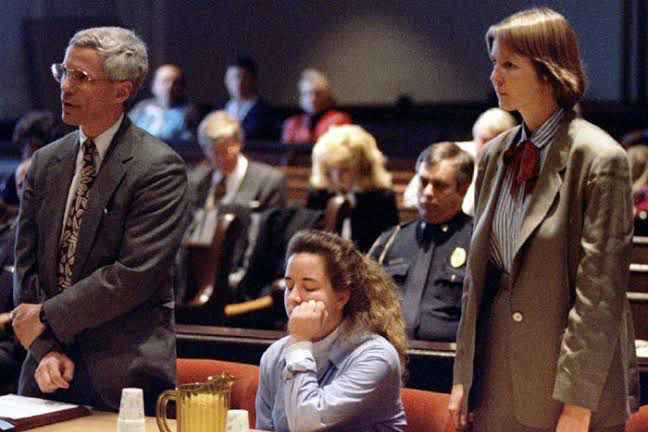
The man directly linked to the motive behind Susan Smith’s 1994 murder of her two sons was Tom Findlay. Before the murders, Smith was involved in a romantic relationship with Tom Findlay, the wealthy son of a local business owner where she worked. Prosecutors argued that Smith viewed her young sons, Michael and Alex, as obstacles to this relationship. Just weeks before the murders, Findlay ended the relationship, writing in a letter that while he could fall for her, her children were not suited for his life, providing the catalyst for the crime.
30. Love Ties Severed
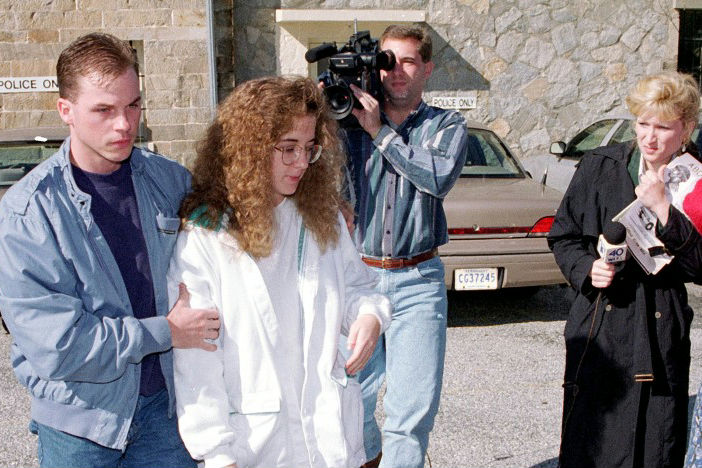
As years passed, Susan Smith’s connections to her original family diminished. According to reports, she has had no relationship with David Smith since her incarceration. Her parents’ involvement also became increasingly private, shielded from media view. These severed ties illustrate how crimes of this magnitude permanently fracture family structures. The absence of reconciliation underscores the long-term consequences of the case beyond sentencing. Relationships once central to her life became distant or nonexistent, reinforcing the isolation that accompanies life imprisonment.
31. Media Reframing Over Time

The Susan Smith case has been revisited repeatedly by media outlets, each time reframed through evolving cultural perspectives. Early coverage focused on shock and deception, while later reporting emphasized victim impact, mental health, and accountability. Retrospectives often analyze how race, media trust, and emotional storytelling influenced public reaction. These revisits serve less as sensational updates and more as cautionary examinations. The case remains a reference point in journalism discussions about credibility, bias, and ethical reporting during emotionally charged investigations.
32. A Lasting Cautionary Tale

Decades later, the Susan Smith case endures not because of new developments, but because of the questions it continues to raise. It challenges assumptions about trust, media influence, and the limits of empathy. For those directly affected, life moved forward in altered but meaningful ways. For the public, the story remains a reminder that truth can be obscured by emotion and that consequences ripple far beyond a single act. Its legacy lies not only in what happened, but in what it continues to teach about accountability, grief, and the lives left behind.


