
1. Fear of the Dark
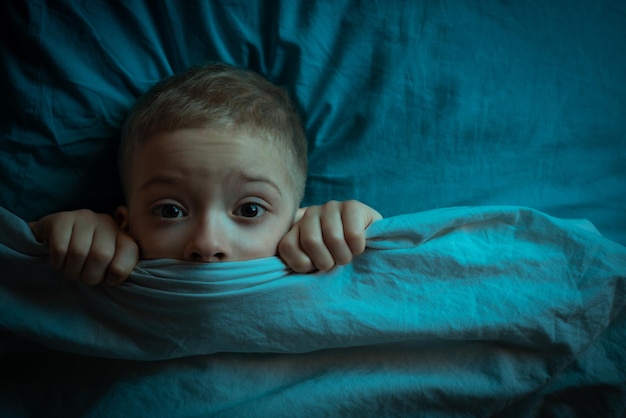
Nearly everyone carries at least one childhood fear that felt strange, intense, or hard to explain. Fear of the dark is one of the most widespread childhood fears, and it has strong biological roots. Young children rely heavily on vision to interpret safety, and darkness removes their primary sense for detecting threats. Developmental psychologists note that between ages two and six, imagination expands faster than logical reasoning, making shadows and silence feel threatening. From an evolutionary perspective, darkness historically increased vulnerability to predators, reinforcing fear responses. Studies also show that children’s brains are more sensitive to unfamiliar sounds at night, amplifying anxiety. Rather than being irrational, fear of the dark reflects a natural survival instinct combined with developing cognitive abilities that are still learning to separate imagined danger from real risk.
2. Fear of Clowns
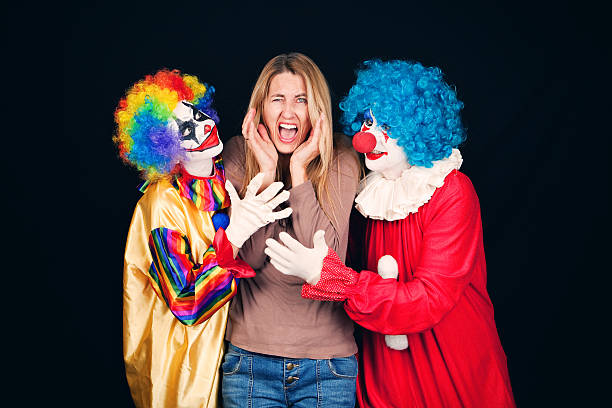
Many children react strongly to clowns despite their playful intent. Psychologists link this fear to exaggerated facial features created by makeup, which disrupt a child’s ability to read emotional cues. Research on facial recognition shows that children depend on subtle expressions to determine safety, and clown makeup hides those signals. The mismatch between cheerful behavior and unfamiliar appearance can trigger unease. Cultural exposure also plays a role, as media portrayals sometimes depict clowns as unsettling. Even before encountering such portrayals, children may instinctively distrust faces that look human but behave unpredictably, a response closely related to what researchers call the “uncanny valley” effect.
3. Fear of Toilets Flushing

The fear of toilets flushing is surprisingly common among young children and often stems from sensory overload. Toilets produce sudden, loud noises combined with strong water movement, which can feel overwhelming to developing nervous systems. Child development experts explain that toddlers are still learning cause and effect, so the powerful suction and sound may seem uncontrollable or threatening. Some children also fear losing part of themselves down the drain, a belief linked to early concrete thinking stages. This fear tends to fade as children gain better understanding of mechanics and become more comfortable predicting outcomes in their environment.
4. Fear of Masks
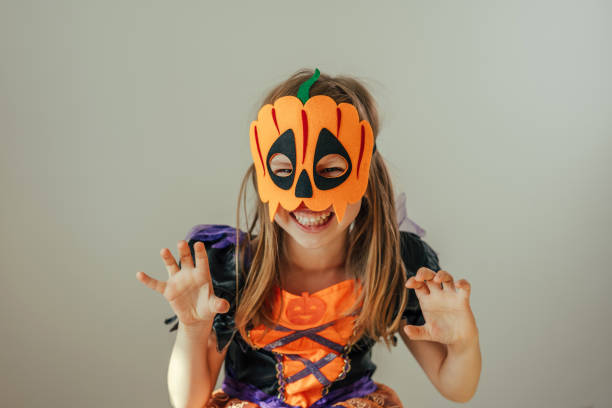
Masks often unsettle children because they obscure identity, which is essential for emotional safety. Research shows that young children rely on facial recognition to establish trust, especially with caregivers. When a familiar face disappears behind a mask, it disrupts that sense of security. Masks can also exaggerate expressions, making emotions appear intense or distorted. Developmental psychologists note that children under seven struggle to understand that the person behind the mask remains unchanged. This fear is not confusion but a logical response to ambiguity, as children are naturally cautious when they cannot clearly identify who someone is or what they intend.
5. Fear of Getting Sucked Into a Pool Drain

Many children develop a fear of pool drains after hearing warnings from adults or seeing safety signs. While rare, documented pool drain accidents have reinforced this fear through media and parental caution. Children tend to magnify risks they do not fully understand, especially involving water, which already requires respect and care. The visual of swirling water combined with strong suction can feel threatening. Psychologists explain that this fear reflects early risk assessment skills, where children err on the side of caution. Over time, swimming lessons and clear explanations usually help reduce anxiety by replacing fear with understanding.
6. Fear of Automatic Toilets

Automatic toilets often frighten children because they flush unpredictably. The sudden noise and motion can occur without warning, violating a child’s expectation of control. Studies on childhood anxiety show that unexpected sensory events increase stress responses more than predictable ones. Public restrooms also amplify sounds, making flushes seem louder and more intense. Children may worry the toilet will flush while they are still using it, reinforcing avoidance. This fear is rooted in a developing sense of autonomy, as children are still learning how their actions influence the world around them and feel uneasy when machines act independently.
7. Fear of Costumed Characters
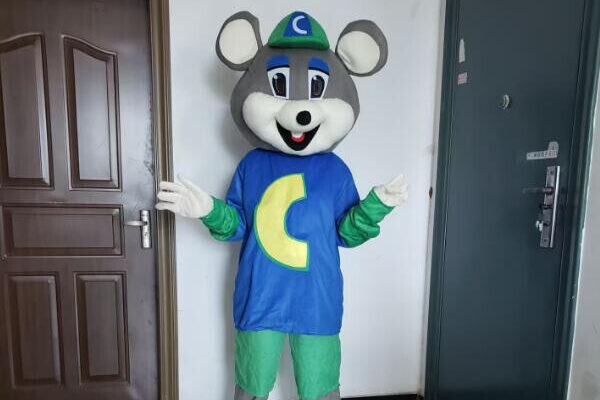
Large costumed characters often overwhelm children due to their size, limited facial movement, and unfamiliar proportions. Developmental research indicates that children are sensitive to scale and motion, and oversized figures can feel threatening even when friendly. The inability to see a real human face beneath the costume also removes key emotional cues. Additionally, characters often move unpredictably or invade personal space during greetings. Children interpret these behaviors differently than adults, sometimes perceiving them as aggressive. The fear reflects a natural protective response to something that looks alive but does not behave like a typical human being.
8. Fear of Shadows
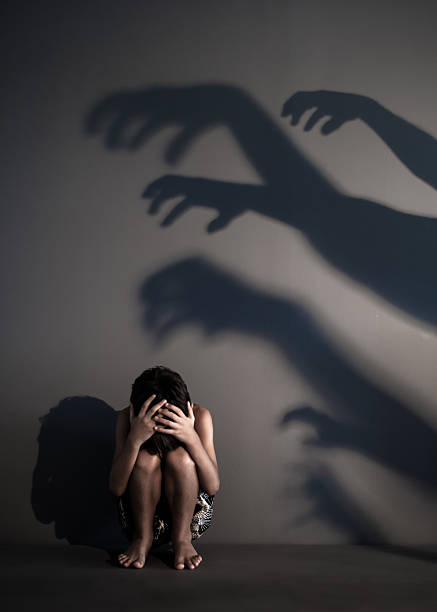
Shadows frequently trigger fear in childhood because they change shape and size without clear cause. Cognitive studies show that young children struggle with abstract explanations, making it hard to understand that shadows are harmless effects of light. At night, shadows often resemble figures or movement, feeding an active imagination. Since children are still developing depth perception and spatial reasoning, shadows can feel real and present. This fear is a normal stage of development, reflecting how the brain tries to interpret incomplete visual information. As reasoning skills mature, most children naturally outgrow this concern.
9. Fear of Balloons Popping

Many children develop a sharp fear of balloons popping because the experience combines loud, unpredictable sound with an abrupt, startling motion. Toddlers and preschoolers have sensitive startle reflexes and are still learning to predict cause and effect, so a sudden pop can register as a genuine threat rather than a harmless surprise. The thin, elastic surface of a balloon also makes the pop feel explosive compared with everyday noises, and if a child has had one traumatic or very surprising pop early on, they may form a lasting association. Parents often unintentionally reinforce this by reacting strongly themselves, which teaches children to treat pops as something to dread. With gentle exposure and calm explanation, most kids outgrow this fear.
10. Fear of Thunder and Lightning
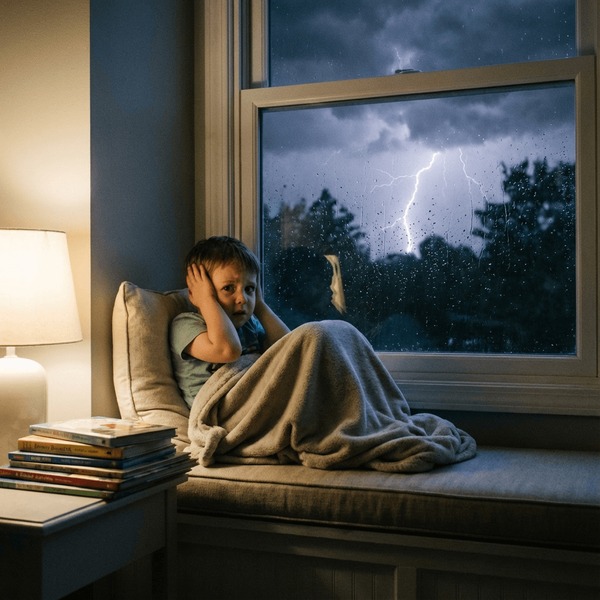
Fear of thunder and lightning is common and rooted in both sensory intensity and survival instincts. Thunder’s deep, rolling rumble and lightning’s sudden flash are powerful sensory events for a child’s developing brain, loud, bright, and unpredictable. Evolutionary explanations suggest that loud atmospheric events signal danger, so even in safe modern homes, children can react as if under threat. Additionally, cultural storytelling and parental reassurances like “the storm is scary” can unintentionally amplify the fear. Young children often lack the abstract reasoning to understand meteorology, so the unknown element heightens anxiety. Comfort, predictable safety routines, and simple explanations about how storms work usually help children feel more secure.
11. Fear of the Vacuum Cleaner
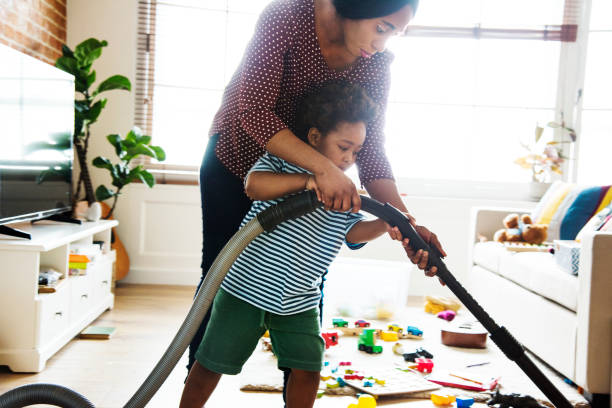
Vacuum cleaners commonly frighten children because they are noisy, mobile machines that move autonomously and make unfamiliar suction sounds. For toddlers, the combination of loud pitch changes, vibration, and the device “eating” dust can be perceived as aggressive or uncontrollable. Developmental studies show that unpredictable mechanical movement elevates stress responses in young children more than stationary noises do. The vacuum’s size relative to a small child also contributes: it can appear large and imposing, especially when operated close to a child’s play area. Over time, supervised exposure, letting the child press the on/off button, or treating the vacuum as a predictable part of routine helps turn anxiety into curiosity.
12. Fear of Dolls and Mannequins

Many children feel uneasy around dolls and mannequins because they sit squarely in the “almost human” category, which can disrupt a child’s ability to read emotion and intention. Developmental psychology points to the “uncanny valley” effect: faces that are close to human but subtly off can trigger distrust. Dolls with glassy eyes or fixed expressions are particularly unnerving for children who rely on facial cues to judge safety. Additionally, dolls sometimes move in stories or media, so children may conflate inanimate objects with the potential for sudden motion. Gentle play, guided handling, and clear distinctions between toys and people typically reduce fear as children learn that these objects are safe and predictable.
13. Fear of Elevators and Escalators
Fear of elevators and escalators often develops from the mechanics and perceived lack of control involved in vertical movement. Elevators close and move while enclosed, which can provoke claustrophobia or worry about being trapped, especially in younger children who have less experience with confined spaces. Escalators, with moving steps and visible gaps, present a different sensory puzzle: the motion is continuous and requires coordination to step on and off, which can feel risky. Safety warnings and adult cautionary tales can further heighten anxiety. Practical exposure, holding a caregiver’s hand, and simple demonstrations of how these devices work usually build confidence and reduce fear over time.
14. Fear of Mirrors and Reflections

Reflections and mirrors can unsettle children because they present another “self” that moves independently from inside the glass, challenging early concepts of identity. Young children are still learning that their reflection is a visual copy rather than a separate being; until they fully grasp self-recognition, a mirror can be confusing or eerie. Low lighting, strange angles, and distorted reflections (from curved surfaces) make the effect more intense. Cultural stories and media sometimes portray mirrors as portals, which can seed imaginative fear. With playful mirror games and gentle explanation about images and light, most children learn to recognize reflections as harmless and even entertaining.
15. Fear of Getting Lost in Public
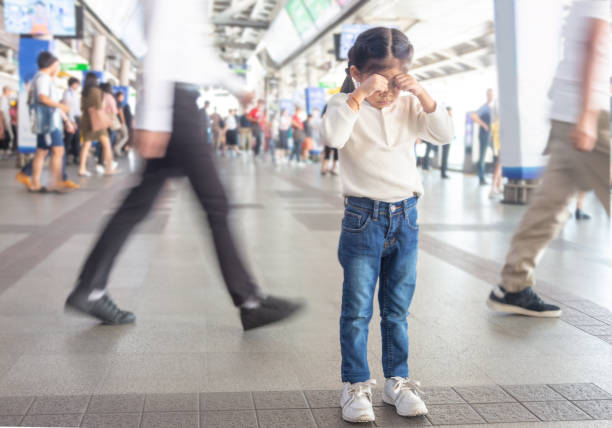
Fear of getting lost is a rational and common childhood concern tied to separation anxiety and limited spatial understanding. Young children depend on caregivers for safety; bustling public spaces with many people, loud sounds, and shifting visual cues can be overwhelming and disorienting. The possibility of being separated taps into a child’s core survival instincts, so even brief stories about lost children or distinct warnings from adults can create lasting worry. Behavioral experts recommend simple, memorable safety plans (holding hands, meeting points, wearing ID) that give children tools to feel empowered rather than helpless. Practicing these routines reduces anxiety by converting fear into an actionable safety skill.
16. Fear of Monsters Under the Bed

The classic fear of monsters under the bed is deeply connected to a child’s expanding imagination and limited ability to distinguish fantasy from reality. Beds are intimate spaces where the boundary between waking and dreaming blurs, so nighttime thoughts can feel especially real. Children’s developing spatial reasoning may make dark spaces under furniture seem plausibly inhabited, and stories or media often personify shadows and noises as creatures. This fear serves an adaptive function, heightening vigilance in low-visibility situations, yet it can be soothed by consistent bedtime routines, a reassuring check under the bed with a flashlight, and storytelling that reframes nighttime sounds as ordinary, harmless things.
17. Fear of Loud Public Hand Dryers

Public hand dryers often scare children because they combine sudden activation with intense, high-pitched noise. Unlike household sounds, hand dryers usually turn on automatically, removing any sense of control or warning. Child development research shows that unexpected auditory stimuli trigger stronger stress responses in young brains than predictable sounds. Bathrooms also echo, amplifying noise and making it feel overwhelming. For children who are sensitive to sensory input, the vibration and airflow can feel physically uncomfortable. This fear is not a sign of weakness but a normal reaction to overstimulation. Many children become more comfortable once they understand the sensor system or are allowed to cover their ears during use.
18. Fear of Fire Alarms and Smoke Detectors

Fire alarms and smoke detectors are designed to be loud and urgent, which can be deeply unsettling for children. The piercing sound often occurs without warning and is intentionally difficult to ignore, triggering a strong startle response. Children are also frequently taught that alarms signal danger, fire, or evacuation, reinforcing the association with fear. School fire drills, while necessary, can intensify anxiety if not explained clearly beforehand. Psychologists note that children may fear the sound itself more than the danger it represents. Calm explanations about safety, along with controlled exposure during testing, often help children feel reassured and prepared rather than alarmed.
19. Fear of Drain Sounds in the Bath

The sound and motion of water draining from a bathtub can frighten children because it visually and audibly suggests loss of control. As water swirls away, children may feel uneasy watching something disappear beneath them, especially during early developmental stages when permanence is still being learned. Some children fear being pulled in, similar to concerns about pool drains. The echoing gurgle can also sound unfamiliar or threatening. Experts explain that water-related fears are common because water environments change rapidly. Gentle explanations, allowing children to stand up during draining, or letting them control the plug can reduce anxiety significantly.
20. Fear of the Basement or Attic

Basements and attics often trigger fear because they are isolated, dimly lit, and filled with unfamiliar shapes. These spaces typically contain stored items that cast strange shadows and create unfamiliar smells or sounds. Children interpret these sensory cues differently from adults, often filling in gaps with imagination. Developmental psychologists note that children are cautious in spaces where visibility is limited and escape routes feel unclear. Stories, media, and even casual adult comments about basements being “creepy” can reinforce fear. Once children are guided through these spaces in good lighting and shown what is actually there, the fear often diminishes.
21. Fear of Being Watched
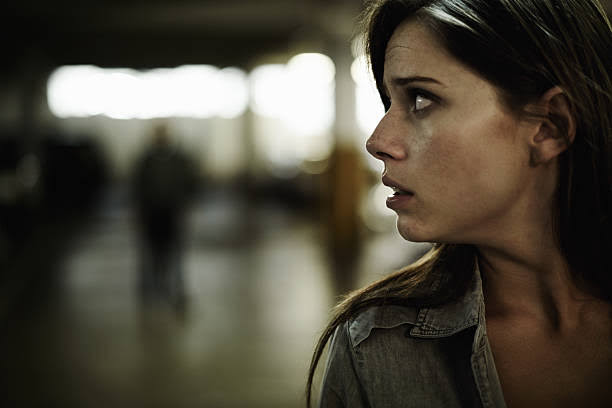
The fear of being watched commonly emerges during middle childhood, when social awareness begins to develop. Children become more conscious of others’ perspectives but lack the reasoning skills to fullyassess when observation is real or imagined. Low light, windows, mirrors, or even quiet rooms can intensify the feeling. Research suggests this fear is tied to heightened vigilance, a natural protective response when the brain is learning to assess social and environmental threats. Media exposure, including suspenseful cartoons or stories, can also contribute. Reassurance, consistent routines, and explaining privacy boundaries help children regain a sense of safety.
22. Fear of Animated Characters Coming to Life
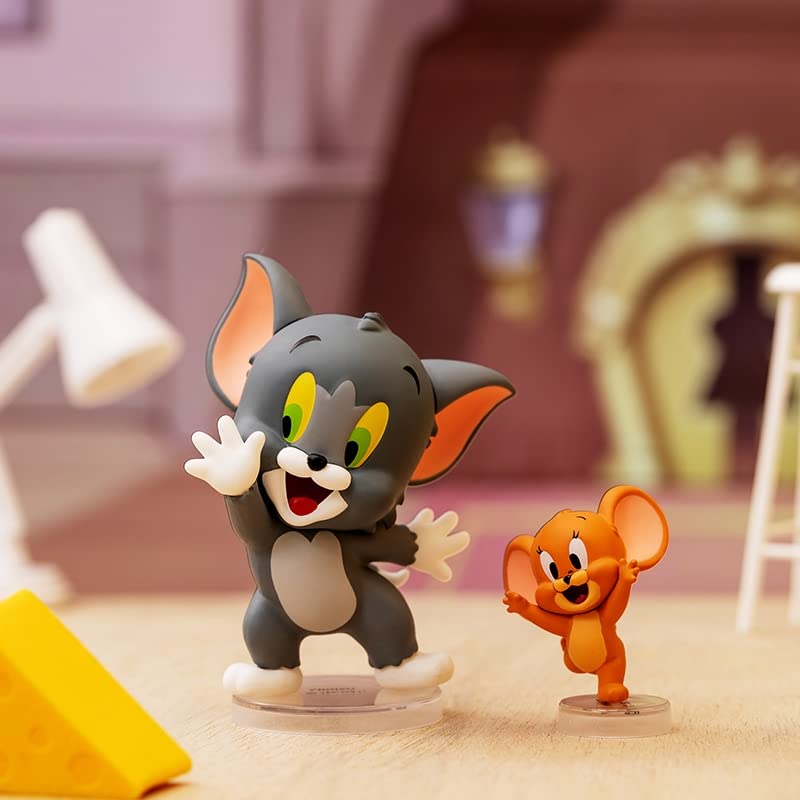
Many children fear that animated characters, toys, or drawings might come to life when adults are not around. This fear stems from magical thinking, a normal developmental stage where fantasy and reality blend. Children know characters move and speak on screens, so it is not illogical for them to wonder if the same could happen off-screen. The fear often intensifies at night, when imagination is most active. Psychologists emphasize that this belief reflects creativity, not confusion. As children mature and gain a clearer understanding of media and mechanics, this fear typically fades without intervention.
23. Fear of Doctors’ Offices

Fear of doctors’ offices is common and usually tied to past discomfort, unfamiliar tools, and loss of control. Even routine checkups involve bright lights, strange smells, and close physical examination, all of which can feel intrusive to a child. Vaccinations or medical procedures, though brief, often leave strong impressions. Research shows that children remember emotional intensity more than duration, so short moments of pain can loom large. Clear explanations, allowing children to ask questions, and offering small choices during visits help reduce fear. Over time, positive medical experiences can gradually replace anxiety with trust.
24. Fear of Sudden Door Knocks

Sudden door knocks often frighten children because they are abrupt, loud, and signal an unexpected intrusion into a familiar space. For young minds, the home represents safety and predictability, so an unannounced knock can feel like a disruption of that security. Children may also associate knocks with serious news or unfamiliar visitors, especially if adults react with urgency. Research on startle reflexes shows that unexpected sounds trigger heightened stress responses in children. At night, when visibility is low, this fear can intensify. Explaining who typically visits and modeling calm responses to door knocks helps children feel reassured.
25. Fear of Being Alone in the House
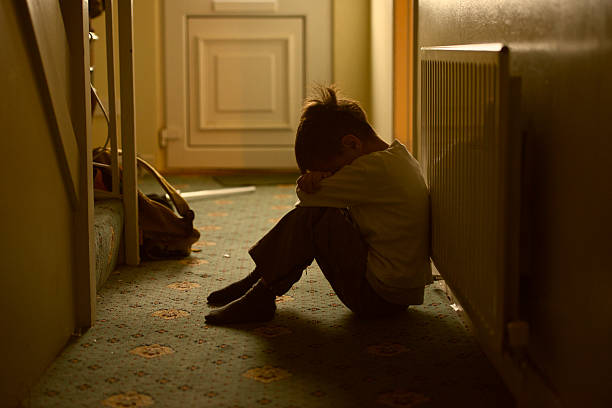
Fear of being alone at home reflects a child’s developing sense of independence combined with strong attachment needs. Children rely on adults for emotional regulation and safety cues, so being alone removes that anchor. Without familiar sounds or reassurance, imagination can quickly fill the silence with perceived threats. Psychologists note that this fear peaks when children are learning responsibility but are not yet confident in their ability to manage emergencies. Gradual exposure, such as brief supervised alone time and clear rules for safety, helps children build confidence. Over time, familiarity transforms fear into a sense of independence.
These fears reflect how children interpret a world that is still new, loud, and unpredictable. Understanding the logic behind them helps adults respond with empathy, patience, and reassurance, turning fear into an opportunity for growth.
Like this story? Add your thoughts in the comments, thank you.


