
What Lies Beyond the Familiar Glow
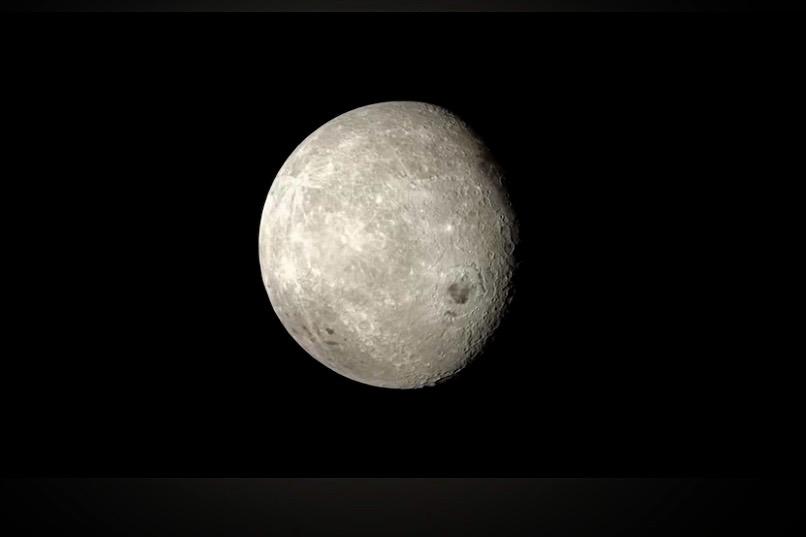
For a long time, the “dark side” of the Moon has felt like a giant cosmic mystery. We’ve grown up hearing stories about its hidden secrets, but scientists actually prefer to call it the “far side” because it simply faces away from Earth. Even though it is closer to us than ever, this part of the Moon remained mostly a mystery for decades because we could not see it from our backyards. It felt like a quiet, frozen place where nothing ever happened, but recent technology is finally helping us pull back the curtain on this lunar enigma to see what is really going on.
Everything changed thanks to a few incredible modern space missions that provided a closer look. Data from China’s Chang’e-6 mission, which returned the first-ever samples from the far side on June 25, 2024, along with observations from NASA’s Lunar Reconnaissance Orbiter, have provided groundbreaking findings. These discoveries are overturning long-held theories about the Moon’s evolution and internal structure. Instead of a boring, dead rock, we are finding out the far side is actually quite complex and full of surprises. These missions also prove that our lunar landscape is far more dynamic than we ever imagined.
Acquired Samples Reveal More
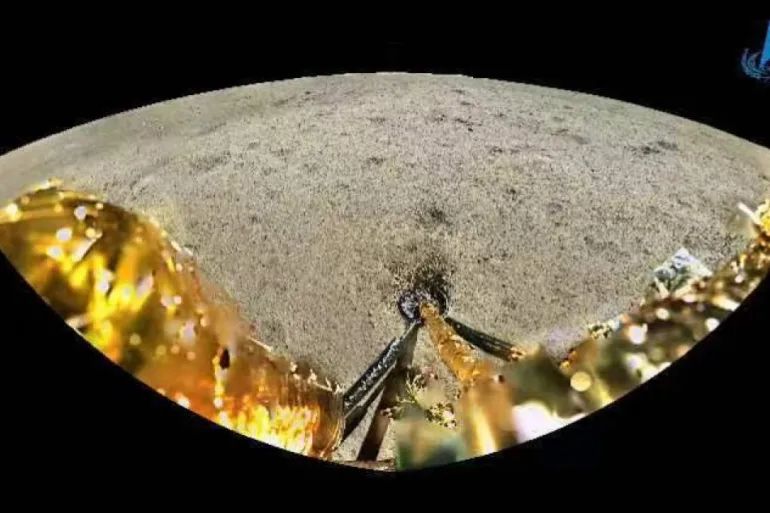
One of the things scientists recently discovered is that the Moon’s far side is actually much cooler deep down than the side we see from Earth. When researchers looked at rock samples brought back by recent missions, they noticed the mantle there is missing the heat-producing “ingredients” found on the near side. Specifically, it lacks the same levels of radioactive elements like uranium, thorium, and potassium. Because these elements were not there to keep things warm, the far side cooled down much faster over billions of years compared to the side we see at night.
This difference in temperature is exactly why the two sides of the Moon look like completely different worlds. The side facing Earth is covered in those smooth, dark plains we call “maria,” while the far side is rugged, high, and covered in deep craters. Experts now think a massive impact billions of years ago might have knocked the Moon’s internal heat out of balance, moving those warm materials to the near side. It is a major clue that helps explain the Moon’s entire geological life story and why it looks so lopsided and uneven today.
The Hidden Giant Mass
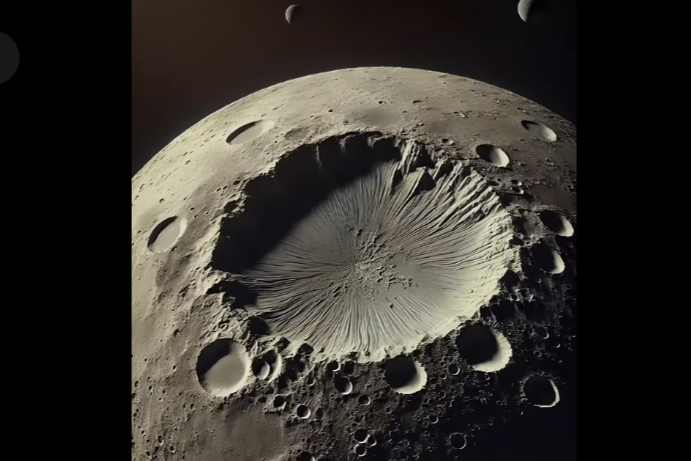
Hidden deep beneath the surface of the Moon’s far side is a massive structure that has scientists feeling like they are exploring a giant maze. Data from NASA’s GRAIL mission, which concluded in December 2012, revealed a giant, dense “blob” buried under the South Pole-Aitken basin. This area is one of the largest impact craters in our entire solar system, The blob is estimated to be approximately five times more massive than the Big Island of Hawaii, or 2.18 quintillion kilograms (2.18 x 10^18 kg), which is roughly 0.003% of the total mass of the Moon.
Researchers have a couple of theories about what this mystery mass could actually be. One popular idea is that the anomaly is the remnant metallic remains of the asteroid that collided with the Moon roughly 4 billion years ago, forming the crater, which is the largest known crater in the solar system. Another possibility is that the mass is a concentration of dense oxide compounds that accumulated during the final stages of the solidification of the Moon’s ancient magma ocean. Either way, this hidden giant provides a rare look into the violent events that shaped the Moon’s interior.
Long-Lived Volcanoes
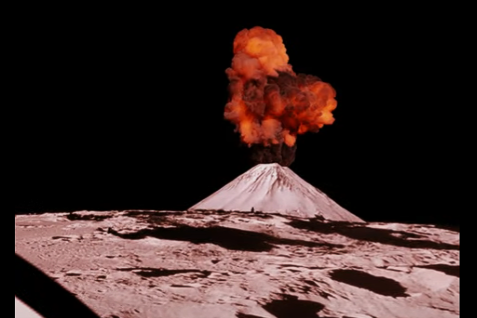
For the longest time, the scientific community assumed that volcanic activity on the far side of the Moon fizzled out long before it did on the side we see. However, that old theory was recently proven wrong by new evidence. Recent samples analyzed from lunar missions show that volcanoes were actually erupting on the far side as recently as 2.8 billion years ago. Some of the volcanic rocks found even date back as far as 4.2 billion years, which means the Moon was active for a much longer stretch of time than we thought.
This discovery is a total game-changer because it changes how we think about the Moon’s internal energy and heat. It suggests the far side held onto enough heat to fuel eruptions for a surprisingly long time, even if it did not have the same chemical makeup as the near side. Basically, the far side was not the “geologically dead” place we once believed it to be. This adds a whole new layer to the Moon’s history, showing us that our lunar neighbor stayed active and “alive” much longer than any of our old school textbooks suggested.
A Newfound Dry World
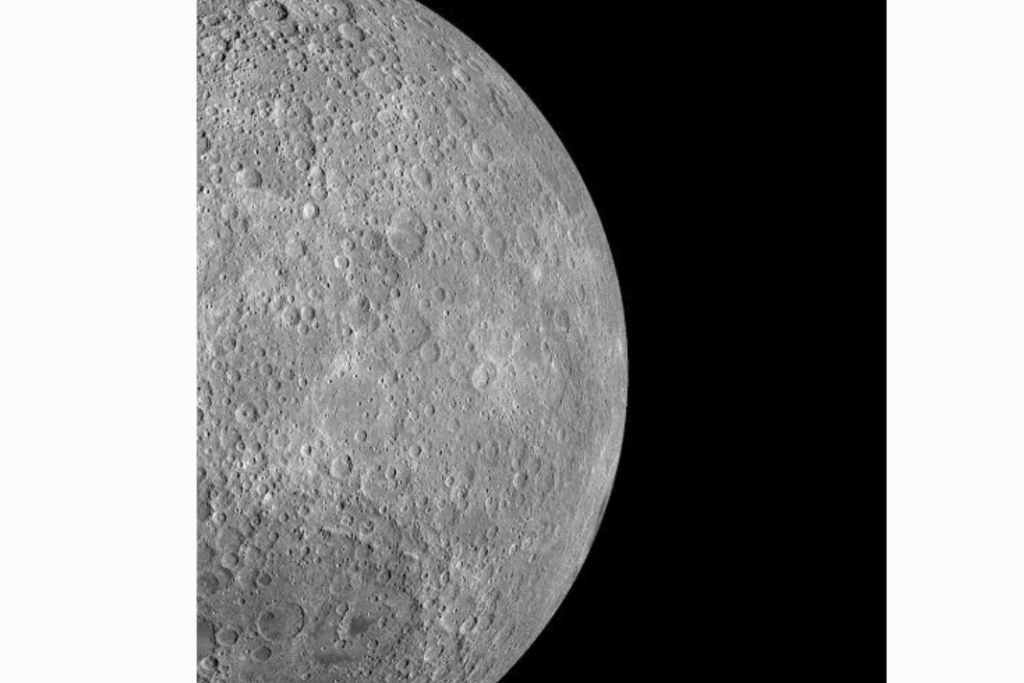
One of the more unexpected finds from recent lunar exploration is just how bone-dry the far side of the Moon really is. When scientists compared the dirt and rocks from the far side to the samples collected during the Apollo missions on the near side, they found a huge difference. The materials on the far side are missing water and other “volatile” elements that easily turn into gas. This tells us that the far side has a very different chemical past hidden beneath its dusty, rocky surface that we are just seeing.
So, why is it so dry compared to the other side? Scientists believe that billions of years ago, massive high-energy impacts might have hit the far side so hard that they literally blasted away the lighter elements, including water. These violent collisions likely reshaped the entire makeup of that half of the Moon. This contrast between the two sides really drives home the point that the Moon is not just one uniform ball of rock. Instead, it is a world of two halves, each shaped by its own unique and dramatic history.
Still Geologically Active
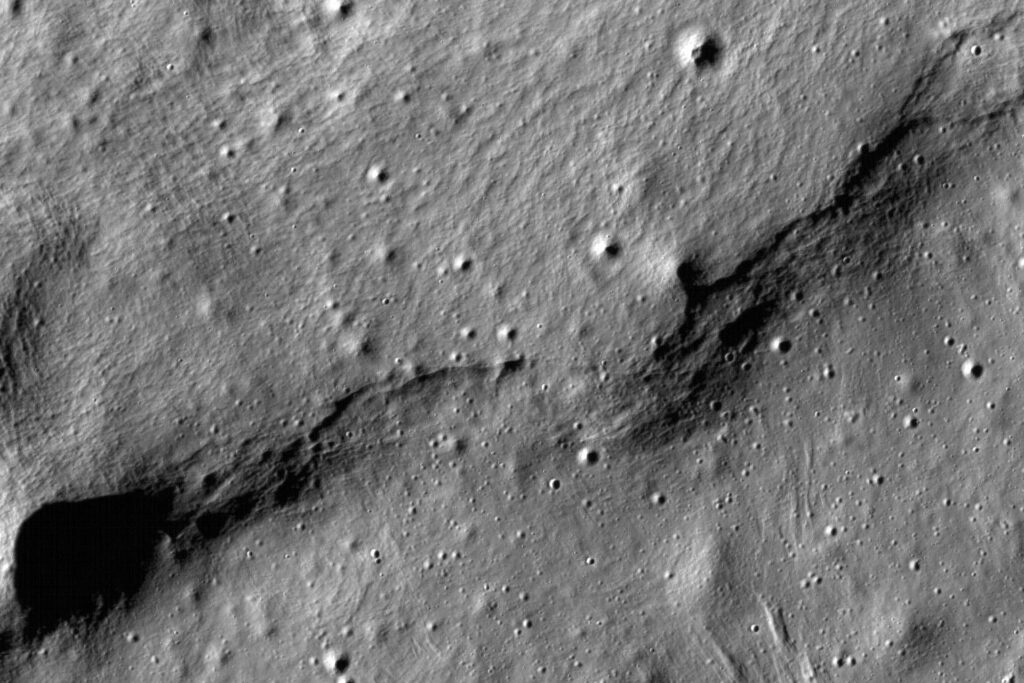
If you look at the far side of the Moon, it might seem like a peaceful, unchanging place, but it is actually still moving and shifting. High-resolution photos taken from orbit show fresh faults and ridges cutting right through old craters. In the world of geology, “fresh” means these features might be less than 160 million years old. That might sound like a long time to us, but for a moon that is billions of years old, it is like it happened just yesterday morning.
These ridges, which scientists call “lobate scarps,” are basically wrinkles on the surface. They form because the Moon is slowly shrinking as its interior cools down, causing the crust to crack and fold over itself. This means the Moon is still evolving and changing even today. It is a pretty cool thought that there are likely “moonquakes” happening right now as the Moon adjusts its size in space. It is not just a dead rock floating out there; it is a world that is still active and responding to the universe.
A Turquoise Glow
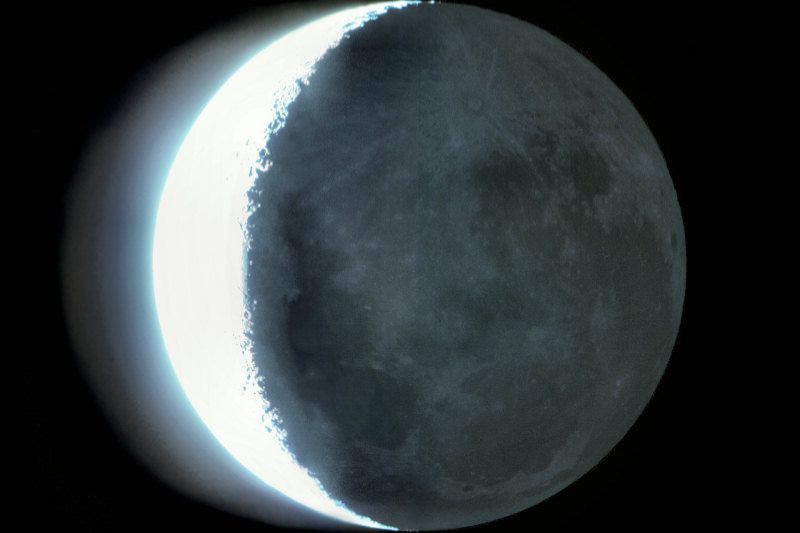
When we look up at night, the Moon usually looks like a mix of white and gray colors. However, if you were looking at the far side under the right conditions, you might see something totally different. Sometimes, the far side is hit by “earthshine,” which is basically sunlight that bounces off Earth’s atmosphere and hits the Moon. When this happens, parts of the far side can actually give off a very faint, beautiful turquoise glow. It sounds like something out of a movie, but it is a real phenomenon.
This is not just a lighting trick, though. The glow actually happens because of the specific minerals and chemistry found on the far side’s surface, which reflect blue light differently than the side we usually see. Scientists are actually using these subtle color variations to map out where different minerals are located on the surface. It is a great example of how a tiny clue, like a faint blue tint, can help us understand the complex history of a place that is hundreds of thousands of miles away from our homes.
Rare Magnetic Minerals
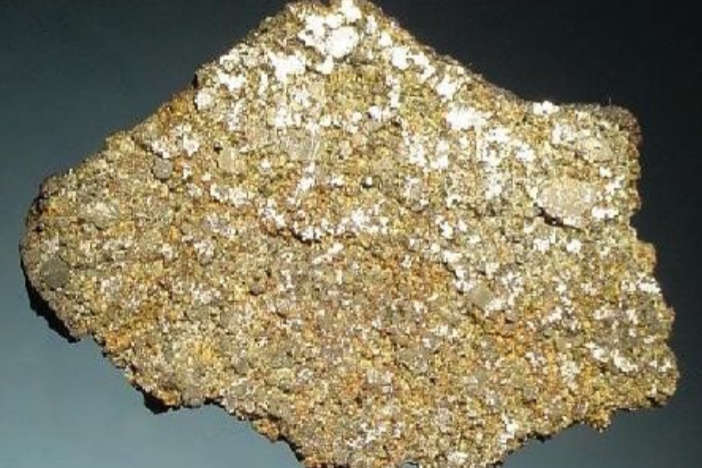
One of the coolest recent finds in lunar science is a rare mineral called “tetrataenite” found in far-side samples. This special mix of iron and nickel only forms when things cool down extremely slowly over a very long period of time. Because it is so rare, finding it on the Moon is like finding a gold mine of information for researchers. It gives scientists a direct look into how the Moon’s temperature changed over billions of years, helping us piece together its ancient past and thermal history.
For years, scientists were confused about why some spots on the far side had strong magnetic pulls, especially since the Moon does not have a global magnetic field anymore. Now, it looks like these rare minerals are the answer to that puzzle. They act like tiny natural magnets, preserving traces of the Moon’s ancient magnetic history from billions of years ago. It is like finding a frozen compass that tells us how the Moon used to generate its own magnetic energy, giving us a window into a time when it was much more like Earth.


