
1. The Tail-Up Greeting

Long before they became our indoor companions, the ancestors of our feline friends learned to live alongside us in the wild, using a subtle, sophisticated language to communicate their needs and intentions. The sight of a cat approaching a human with its tail held straight up, sometimes with a slight curve or a quiver at the tip, is a universal signal of a friendly and confident greeting. This posture, still used by our indoor pets today, originated as an appeasement signal in their social structure. By exposing their vulnerable underside and not showing a defensive stance, the cat communicates that it is not a threat and is open to interaction. For early humans in agricultural settlements, this clear, non-aggressive signal was crucial. It allowed the feline to approach the human’s food stores, attracted by rodents, without triggering a hostile response, essentially giving permission for a peaceful coexistence that was mutually beneficial for pest control and an easy meal.
2. Scent Marking Through Head Bunting
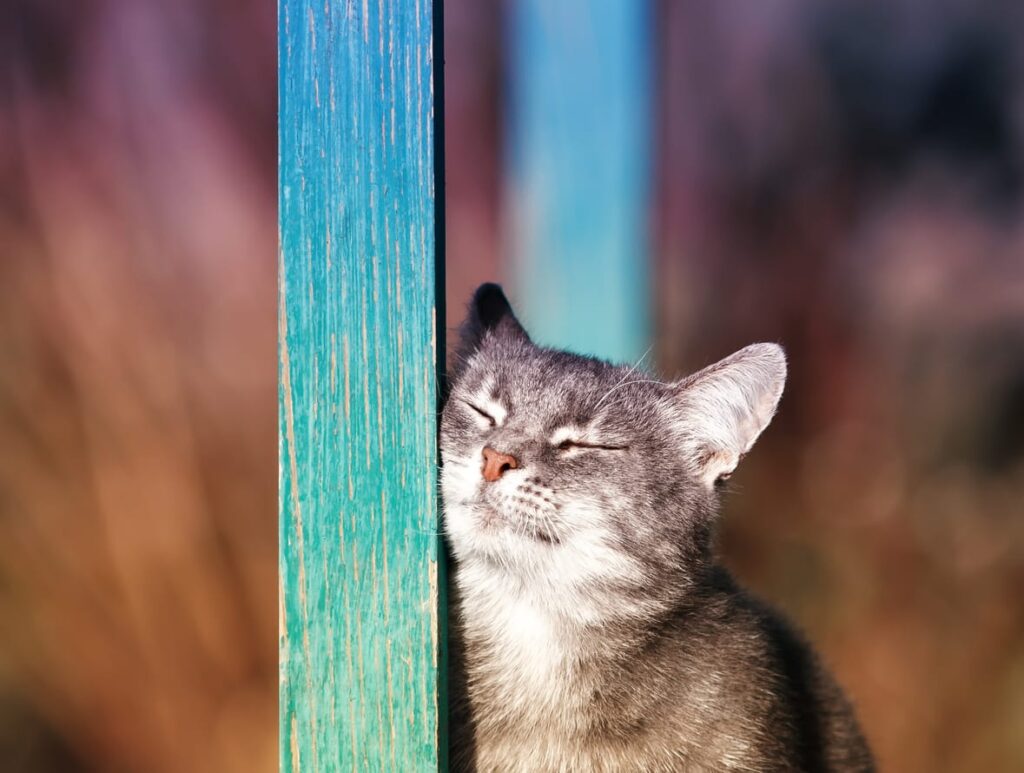
Before our cats began marking our furniture, they used a behavior called “bunting” or head-rubbing to establish a secure, shared territory in their original wild-adjacent habitat. Cats possess scent glands on their cheeks, forehead, and chin that release pheromones, chemical signals that humans cannot detect but are essential for feline communication. When a cat rubs its head against a human, a piece of equipment, or a structure, it is depositing these scent markers to say, “This is safe, and you are part of my group.” For the earliest humans interacting with Felis silvestris lybica (the African wildcat ancestor), this tactile communication would have been a strong, clear sign of non-aggression and social bonding, integrating the cat into the human’s protected space.
3. Eye Contact and the Slow Blink
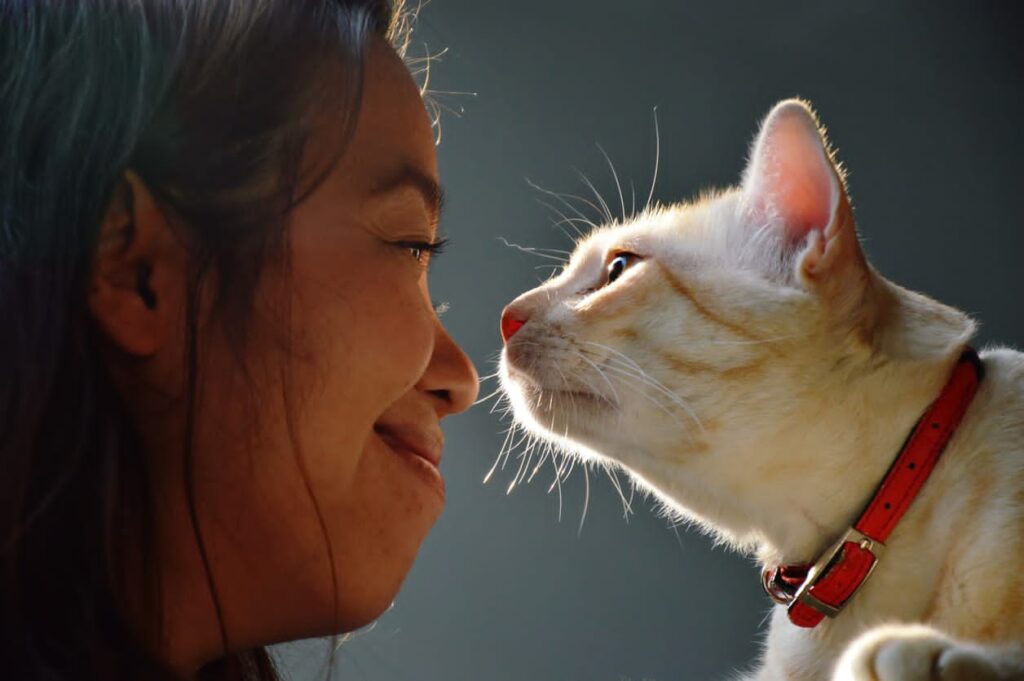
In the wild, prolonged, direct eye contact between cats or other animals is a sign of aggression or challenge. The domesticated cat, however, learned to use a modified form of visual communication with humans: the slow blink. This deliberate, drawn-out closing of the eyes signals ultimate trust and comfort, indicating that the cat perceives no threat from the human and is completely relaxed. This subtle cue was a key part of the cat’s non-verbal language in early settlements, allowing them to communicate a state of contentment and security without needing a loud vocalization. It established a quiet, profound level of mutual regard and became the foundation for the deep emotional bond we share today.
4. Directing Attention with a Silent Stare
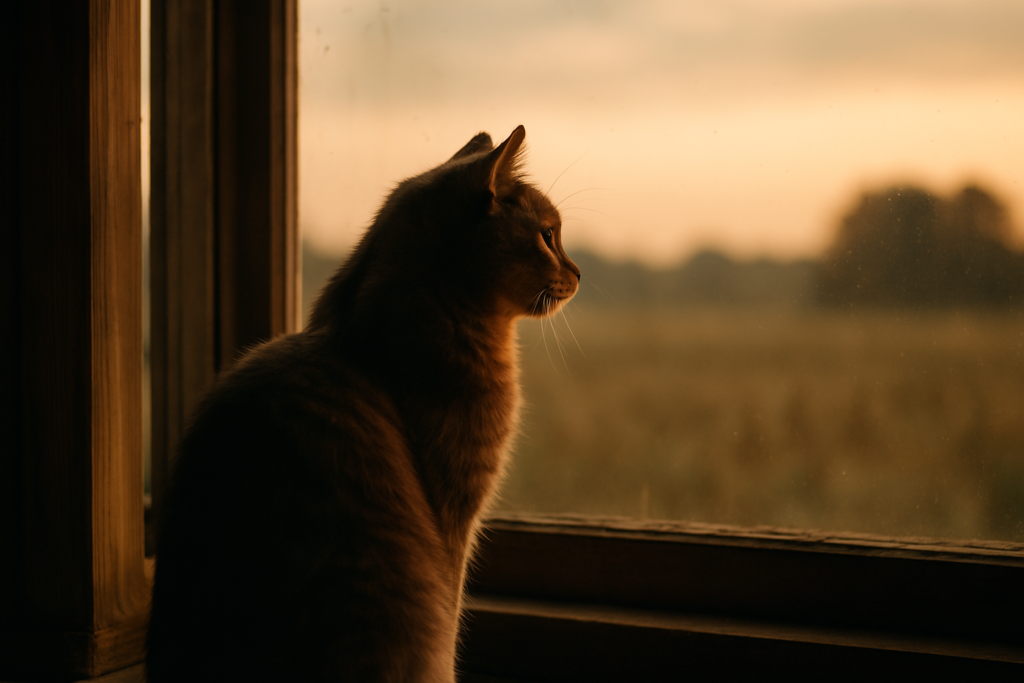
While modern house cats use meows to solicit attention, their ancestors relied on non-vocal methods, with the silent, intense stare being a highly effective tool. In a quiet, outdoor, or semi-feral environment, a focused, unwavering gaze, often directed between the human and a desired object, such as a storage area or a freshly caught rodent, was a powerful way to communicate a need or to guide the human’s attention. Early humans, who were highly attuned to subtle environmental cues for survival, would have quickly learned to interpret this focused look as a demand for food, a request for assistance, or a warning about prey, creating a direct, non-verbal feedback loop.
5. Presenting Prey as a Communal Offering
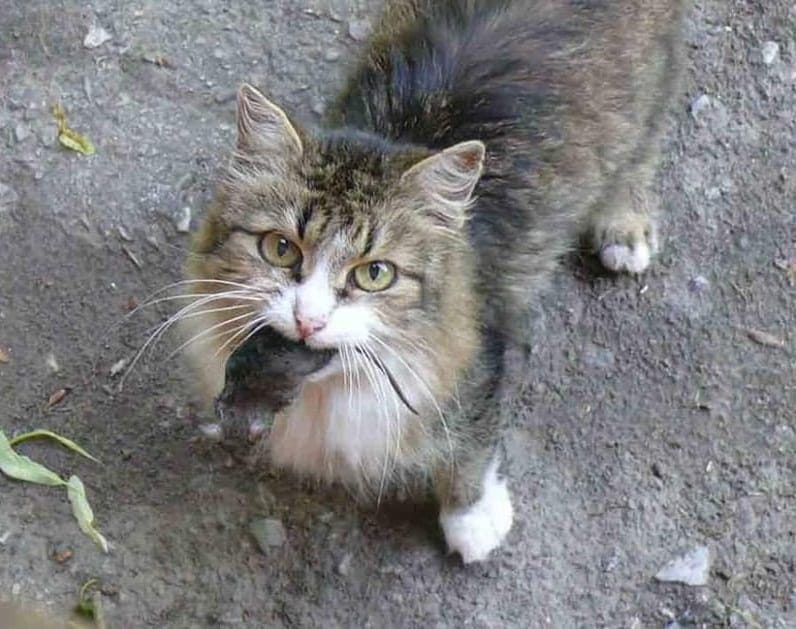
The ancient practice of bringing a freshly killed mouse or small bird to the human’s doorstep or near their feet was not just a strange gift; it was a form of social-commensal communication. For the early, outdoor-living cats, who viewed the humans as part of a protective, sometimes resource-providing social group, this behavior was likely an extension of a mother cat’s instruction to her kittens, a lesson in hunting or a provision of food. By presenting the prey, the cat signaled its value to the community as a skilled hunter, reinforcing its role as a necessary guardian of the grain stores and a non-competitive cohabitant, which solidified its position in the early human settlement.
6. The Low, Quick Chirp or Trill
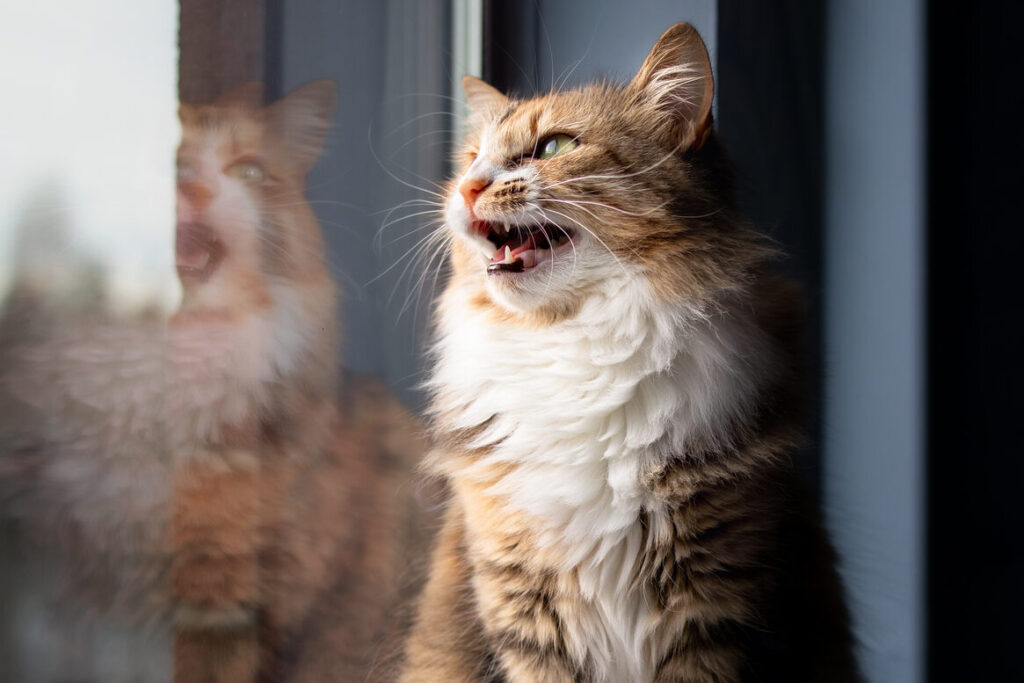
Unlike the loud, demanding meow that is mostly reserved for human interaction today, the earliest domestic cats primarily used chirps and trills, short, rolling vocalizations, as communication tools among themselves. When directed toward humans in an outdoor context, this sound served as an invitation or a friendly acknowledgment, often preceding a shared activity like moving towards a feeding area or resting spot. This subtle, high-pitched vocalization, which sounds almost like a question, was important because it was quiet enough not to attract the attention of larger predators, yet distinct enough to capture the human’s immediate, close-range attention, facilitating a coordinated movement or action within the settlement.
7. Kneading or “Making Biscuits”
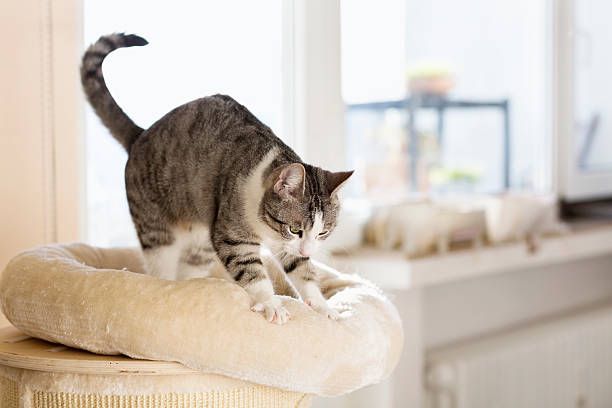
The rhythmic pushing and pulling of paws, known as kneading, is a behavior that goes back to kittenhood, where it stimulates milk flow from the mother. When an adult cat performs this action near or on a human, it is a powerful non-verbal communication of deep contentment, safety, and comfort. In the outdoor context, a cat kneading on a patch of soft ground or a human’s clothing was a clear sign that the cat felt secure enough to engage in a regressive, vulnerable behavior. By displaying this trust, the cat communicated that the immediate area, and the human providing it, was a safe, warm haven, reinforcing the appeal of the human settlement as a reliable place to relax and raise young.
9. The Defensive Hiss and Arch
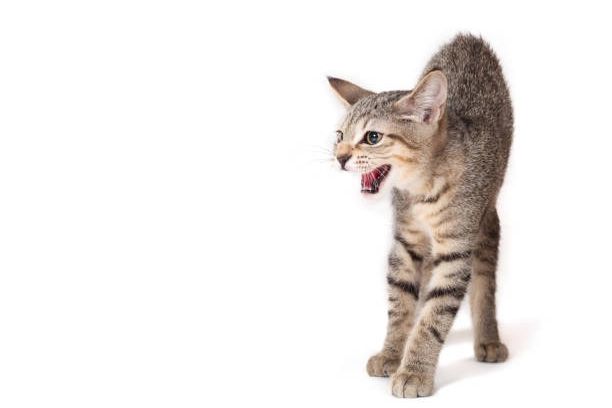
While much of cat-human communication is positive, the earliest and most vital signal was the warning. The combination of an arched back, raised fur (piloerection), and a piercing hiss is a universally recognized display of fear, aggression, and the intent to defend. This clear, unambiguous signal was essential for communicating boundaries to both other animals and to early humans who might inadvertently threaten a cat or its territory. The hiss, which mimics the sound of a snake, is a powerful auditory warning, ensuring that the human immediately recognized the cat’s stress and backed away, preventing conflict and maintaining the established, necessary distance required for peaceful coexistence.
10. Directing Movement with a Lead Walk
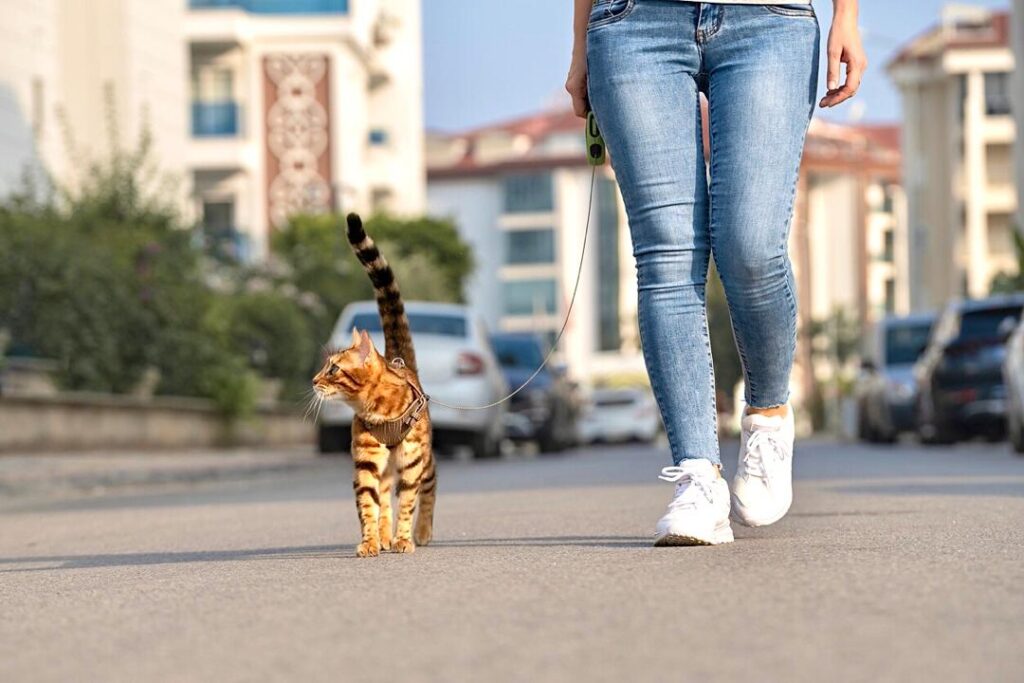
Before being fed strictly indoors, the cat living adjacent to human settlements often relied on non-vocal methods to request that a human follow them, typically to a source of food or a newly discovered danger. This “lead walk” involved the cat moving a short distance, then pausing to look back at the human to confirm they were being followed, and then continuing. This behavior communicated a clear intention to guide the human’s movement. Early humans, recognizing the cat’s skill in navigating and hunting, would have learned that this action often led to a valuable observation, whether it was a rodent nest or a preferred resting spot, fostering a cooperative dynamic.
11. Tail Twitching and Quivering
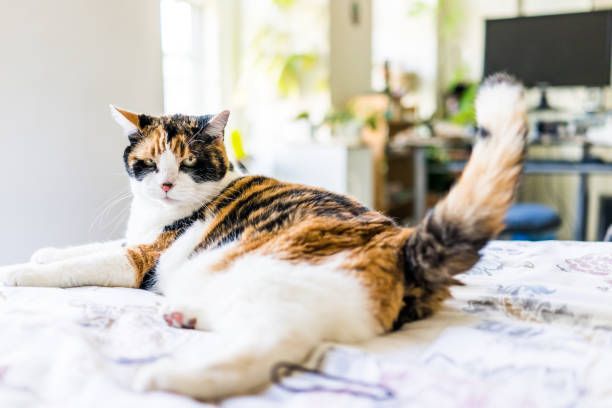
The tail is an intricate barometer of a cat’s emotional state, and subtle movements were crucial for communication in their natural outdoor environment. A rapid, minor twitch or quiver at the tip of an otherwise relaxed tail often communicates a state of focused, excited anticipation, typically during hunting or observation of prey. When directed toward a human, particularly when the human was preparing food or engaging in a relevant activity, this signal expressed eager readiness without the need for a noisy meow. It conveyed to the human that the cat was alert, engaged, and ready to participate in the activity, whether it was securing a newly opened grain store or simply sharing a quiet moment.
12. The “Pre-Pounce” Stalking Posture
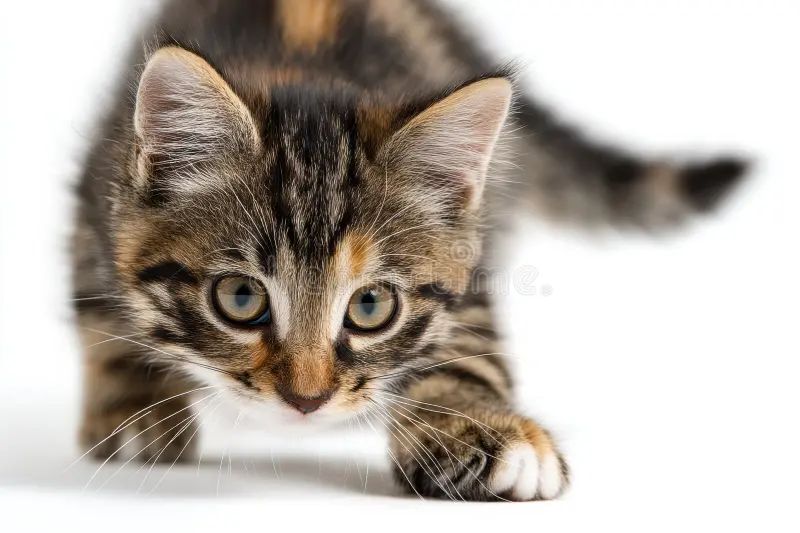
The cat’s body language is arguably its most honest form of communication. When a cat drops low to the ground, pins its ears slightly back, and coils its rear legs, it is communicating a singular, intense focus on hunting. While this posture is primarily directed at prey, when a cat displayed this behavior near a human, it demonstrated its essential utility to the settlement. It communicated competence, diligence, and success as a pest controller, reinforcing the human’s decision to allow the cat to remain nearby. The sight of a cat in this silent, efficient stance was a non-verbal assurance of a rat-free environment.
13. Vocalization Through Chattering
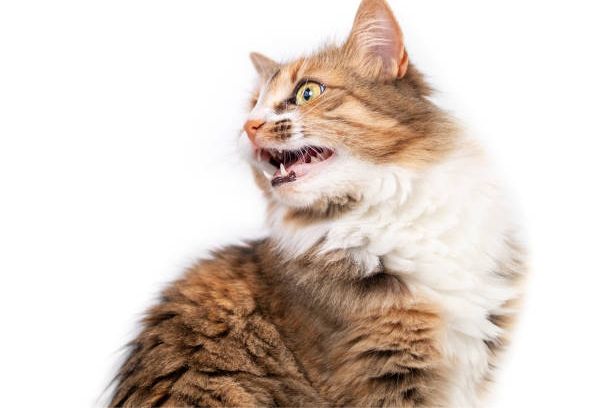
The unique chattering or clicking sound a cat makes, often with a rapid jaw movement, is a displacement behavior triggered by frustration when observing unattainable prey, such as a bird in a tree. While not a direct address to the human, this behavior provided important contextual communication. For early humans, the sound was an auditory signal that the cat had sighted potential prey nearby, acting as an alert that drew the human’s attention to the presence of birds or small rodents in the immediate area, reinforcing the cat’s role as a watchful sentinel of the local wildlife.
14. Covering Waste in the Open
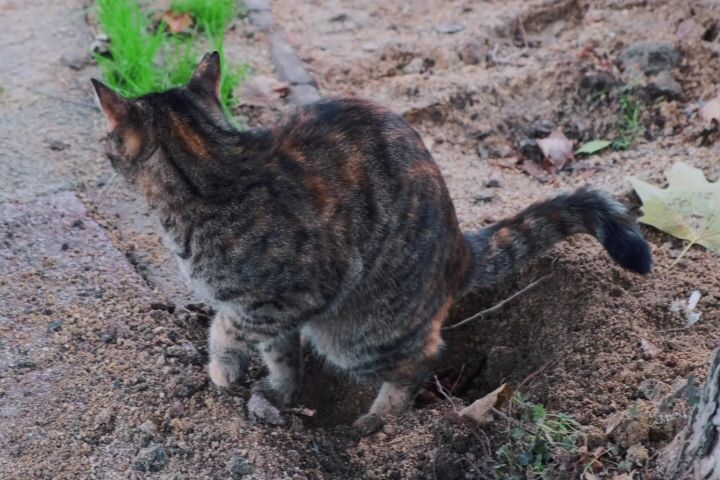
While this is an instinctual behavior for hygiene and concealing scent from predators or rival cats, the diligent covering of waste in the vicinity of a human settlement served a communal communication purpose. It signaled the cat’s submission and non-challenge. In the wild, dominant cats often leave their feces uncovered to mark territory. By burying its waste near human dwellings, the semi-domesticated cat was communicating a desire for peaceful integration and an acknowledgment that the human area was a protected, shared space where overt, dominant scent-marking was unnecessary, thereby reducing friction and competition.
15. The Half-Closed “Squint” Relax
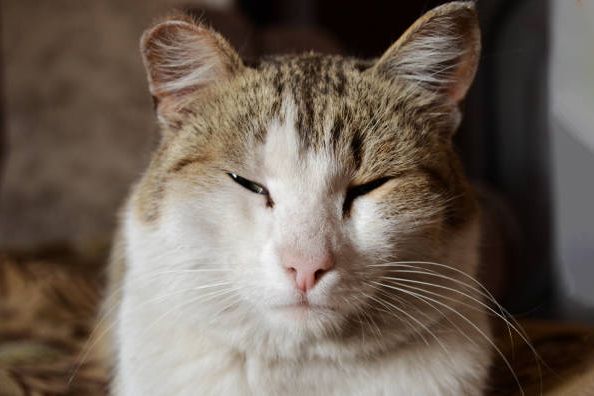
A cat resting with its eyes partially closed and its posture completely relaxed communicates a powerful message of security and environmental acceptance. The lack of vigilance, with ears relaxed and muscles loose, signaled to the human that the cat was completely comfortable and trusted its surroundings. For early humans, this was a valuable non-verbal confirmation that the immediate area was safe from threats, if the cat, with its heightened senses, was completely at ease, the human could be too. This quiet, visual cue deepened the perception of the cat as a peaceful resident rather than a transient, wild animal.
16. Flattening Ears as a Warning
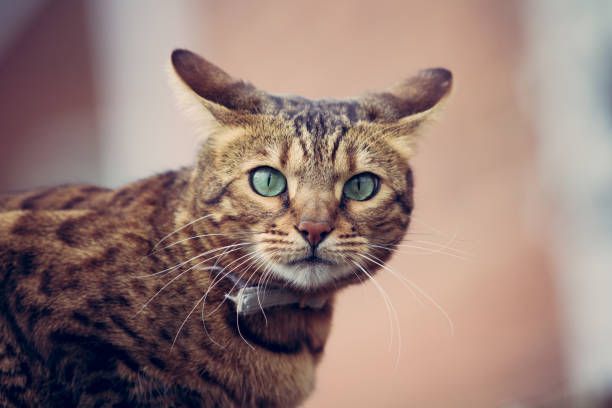
Ear position is a highly effective, immediate indicator of a cat’s emotional state, used extensively for communication in the outdoor world. When a cat rotates its ears back and flattens them tightly against its head, it communicates intense fear, anxiety, or aggression, often preceding a strike or retreat. This signal was a vital warning for early humans, advising them to back off immediately to avoid injury or to recognize that the cat was distressed by an external factor. The flattened ear posture is essentially the cat trying to make itself small and protected, communicating that it is ready to defend itself against a perceived threat.
17. The Direct Shoulder Rub
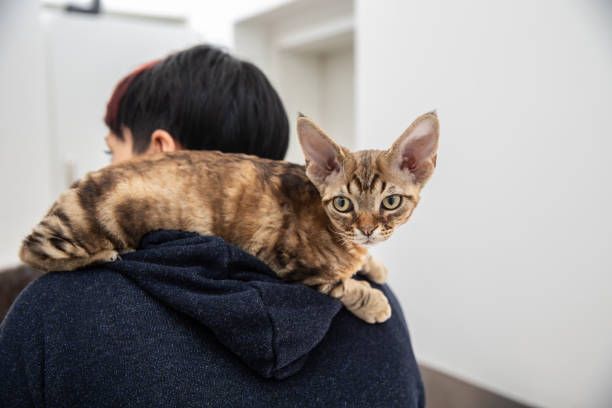
While head-bunting marks with facial pheromones, rubbing the shoulder area against a human uses pheromone glands situated further down the body. This more robust, lateral rub communicates a stronger sense of territorial inclusion and personal claim. In the context of early domestication, this full, sustained contact was a critical way for the cat to reinforce its connection to a specific, trusted human. It was a physical and chemical declaration that “We belong together,” strengthening the pair-bond essential for the cat to access the human’s protection and resources without vocal demands.
18. Exposing the Belly (Partial or Full)
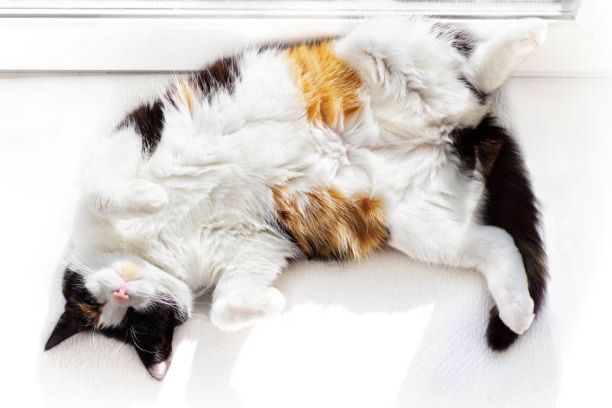
Rolling onto the back and exposing the highly vulnerable abdomen is the ultimate signal of trust and submission in a cat’s communication repertoire. In the outdoor setting, a cat displaying its belly to a human communicated complete non-aggression and a deep sense of security, indicating that it trusted the human not to attack. It is important to note that this is a complex signal and often does not imply a request for belly rubs, but rather a profound statement of comfort that allows the human to approach without fear of challenge or defensiveness.
19. The Quivering Meow for Affection
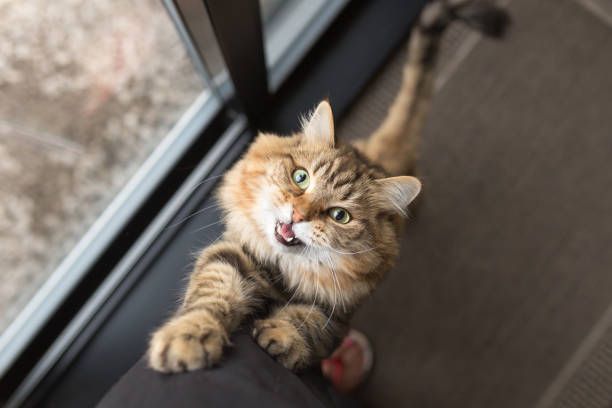
While the modern demanding meow is thought to be an adaptation, the earliest vocalization used toward humans was likely a subtle, high-pitched, and short meow, almost a quivering, quiet greeting. This gentle sound, distinct from the defensive hiss or growl, was likely adapted from the way kittens vocalize to their mothers. When directed at a human in early settlements, it communicated a request for close-proximity comfort or a low-key acknowledgment of the human’s presence, serving as a gentle, non-threatening bid for interaction without disrupting the quiet of the outdoor environment.
20. Scratching on Designated Surfaces
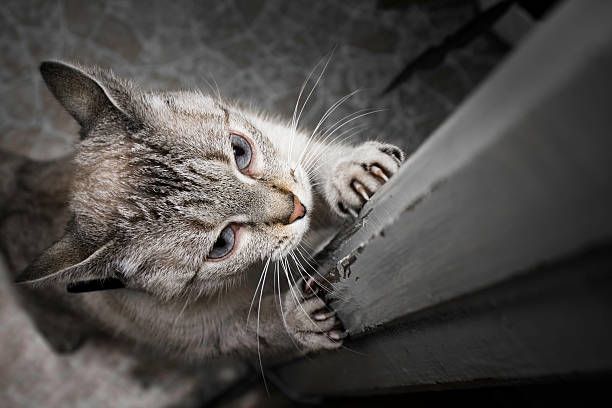
Scratching is an essential feline behavior that conditions claws and deposits scent from glands in the paws. In the context of early human settlements, scratching on specific, prominent outdoor surfaces, such as a favored tree or a wooden post near the dwelling, was a form of visual and olfactory communication. It clearly marked the area as part of the cat’s patrol route and domain. This signaled to both other cats and humans that a skilled predator was maintaining the territory, indirectly communicating protection and ownership over the pest-ridden boundaries of the human’s living space.
21. Seeking High Perches for Observation
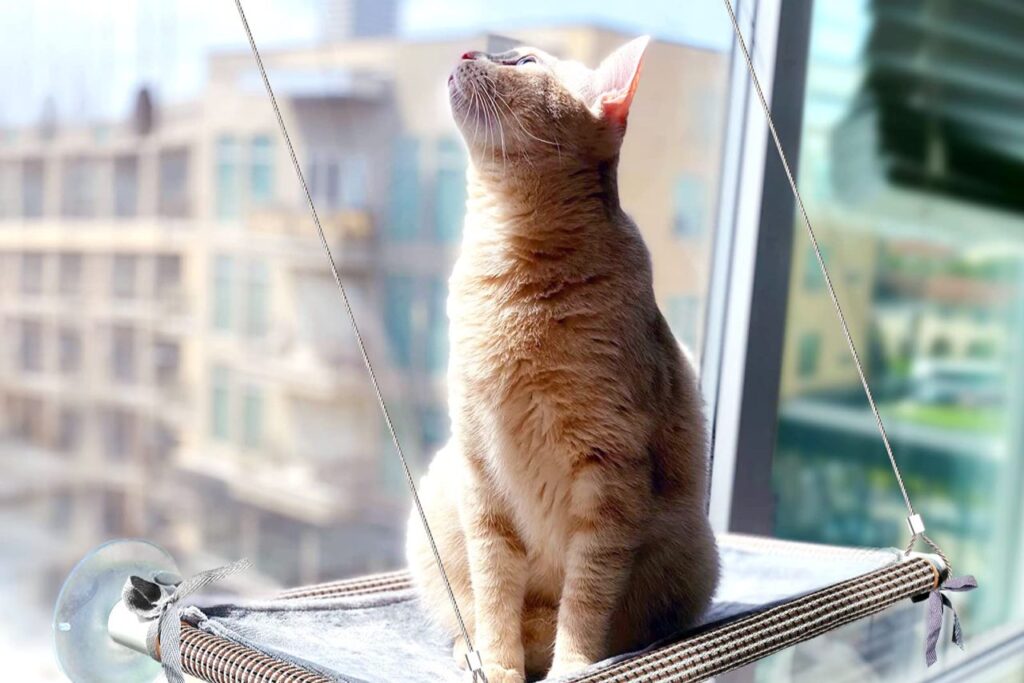
The instinct to observe the world from a high vantage point is vital for a cat’s safety and hunting strategy. When a semi-domesticated cat consistently sought out high perches, such as the roof of a storage shed or a stone wall, it was communicating two things: its sense of security and its role as a sentinel. From this position, the cat could survey the environment, providing a visual cue to humans that a watchful guardian was on duty, ready to spot incoming threats or potential prey, reinforcing its valuable presence within the community structure.
22. The Quick Back-Off and Re-Approach
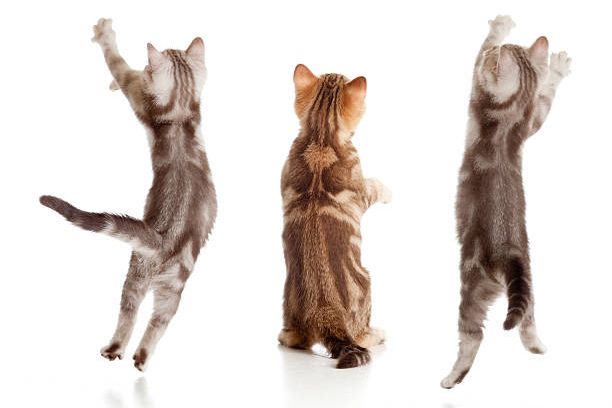
In the initial stages of domestication, trust was fragile. A cat that would quickly back away from a sudden human movement or noise, only to pause, reassess the situation, and slowly re-approach, was communicating caution mixed with strong motivation for contact. This behavior signaled to the human that while the cat was instinctively fearful, its desire for the resources or companionship offered by the human outweighed the risk, encouraging the human to maintain a calm, non-threatening demeanor to foster the budding relationship.
23. Walking With an Erect, Bristled Tail
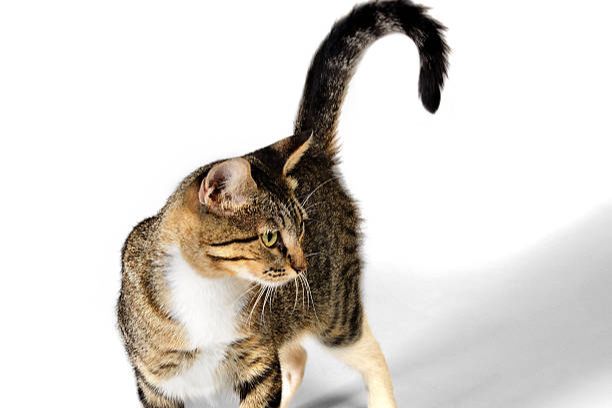
While a relaxed, high tail is friendly, an erect tail with the fur slightly bristled or “bottlebrushed” communicates high excitement, often mixed with aggression or strong alarm. This visual cue warned early humans that the cat was agitated and potentially ready to attack or flee. The piloerection makes the cat look larger, serving as a clear, non-vocal deterrent to any perceived threat and acting as a crucial sign to humans that something in the immediate environment had provoked a strong, defensive reaction in the cat.
24. The Gentle Paw Tap or Hook
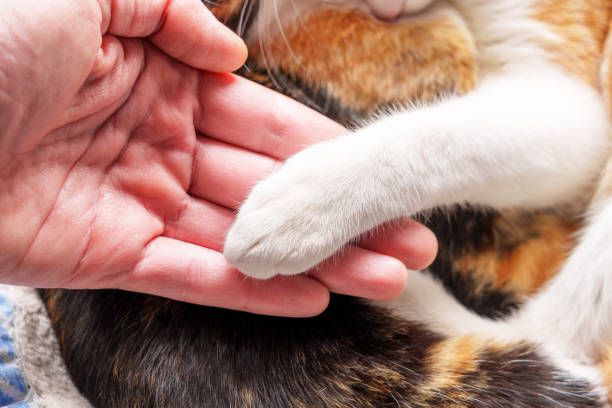
A gentle, unclawed paw tap or hook on a human’s hand or arm is a subtle but distinct communication for attention or gentle solicitation. In the outdoor context, where a loud meow might attract unwanted attention, this quiet, physical contact was an effective way to redirect the human’s focus to the cat’s immediate need, perhaps to be fed, acknowledged, or to have a path cleared. This soft touch signaled a gentle request, relying on the close proximity and developing bond with the human to be effective without requiring aggressive or loud signals.
25. The Rolling Rub on the Ground
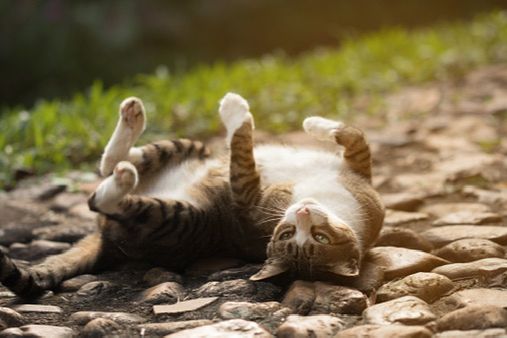
A cat rolling on the ground, sometimes rubbing its back intensely into the surface, is a behavior often associated with estrus in female cats, but for both sexes, it can be a strong display of relaxed confidence and scent spreading. When performed near a human, this rolling communicates that the cat is completely unconcerned about predators and feels comfortable enough to leave its scent widely across the ground, further marking the area as safe and shared. It is a visually obvious, non-verbal expression of happiness and well-being within the human’s vicinity.
26. The Mouth Open “Smell Test” (Flehmen)

The Flehmen response is a unique behavior where the cat curls back its upper lip and slightly opens its mouth to draw air into a specialized organ (the vomeronasal organ) to better analyze complex scents, particularly pheromones. While it often relates to other cats, when a cat performs this near a human or a new object introduced by a human, it communicates intense interest and a thorough assessment of the new olfactory information. This behavior signaled to early humans that the cat was actively gathering information about the environment, confirming its role as a vigilant, sensory-attuned member of the community.
27. Slow, Deliberate Movement
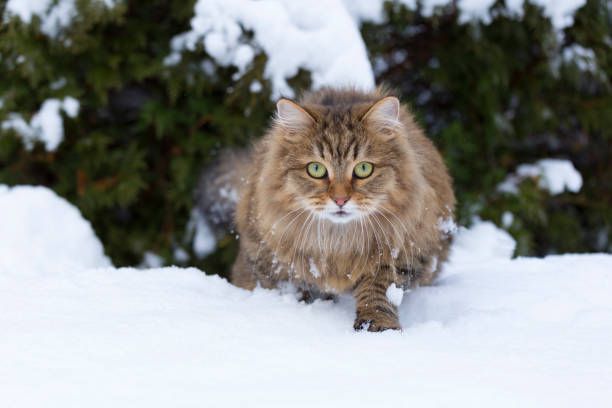
The speed of a cat’s movement often communicates its intentions. Slow, deliberate, and cautious movement, especially when approaching a human or a shared resource, communicates deference and a non-threatening presence. This careful pacing showed the human that the cat was being respectful of the space and the relationship, reducing the chance of a sudden startle or perceived aggression. This controlled movement was crucial in the early days of coexistence, ensuring the cat did not appear opportunistic or aggressive while approaching for food.
28. Ears Swiveling and Scanning
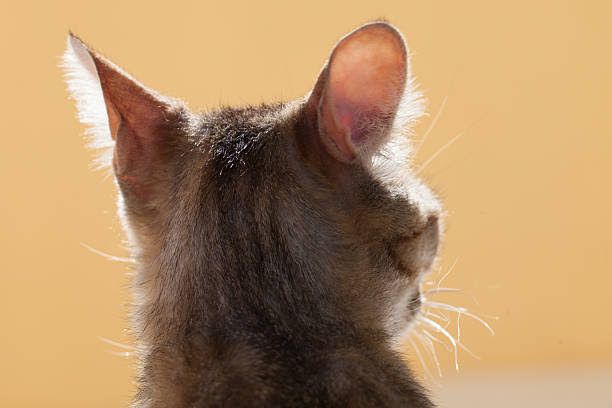
A cat sitting with its ears constantly swiveling back and forth, like tiny radar dishes, communicates that it is highly vigilant and actively monitoring the sonic environment for any potential threats or opportunities. This visual cue showed early humans that the cat was functioning as an alert system, using its superior hearing to detect subtle sounds. It was a clear, non-verbal message: “I am listening intently,” reinforcing the cat’s value as an organic, living alarm system for the human settlement.
29. Licking the Human or Themselves
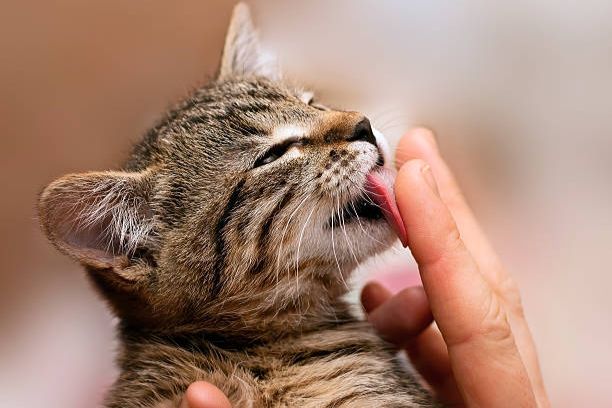
Grooming, either self-grooming or allogrooming (licking another social partner), is a sign of relaxation and social bonding. When a cat groomed itself calmly in the presence of a human, it communicated a high degree of comfort and security. When a cat gently licked a human, it was extending an intimate, social bonding behavior reserved for trusted companions. This action communicated a desire for affiliation and confirmed the human’s status as a safe, accepted member of the cat’s protective social circle.
30. The “Asking” Sit or Lay
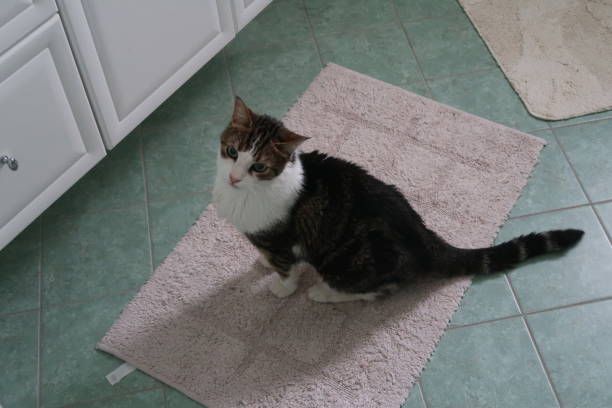
A cat sitting or lying calmly in a human’s path, or near an area the human frequents, often communicated a quiet request for acknowledgment or resource access without making a sound. By placing itself non-aggressively but strategically, the cat effectively used its body as a temporary obstacle or marker. This behavior relied on the human’s developed understanding that the cat’s presence in that location meant it needed something, food, attention, or access, and leveraged the established relationship for a quiet, non-confrontational resolution.
The indoor life may have amplified the “meow,” but the true story of cat-human partnership is written in these millennia-old, non-verbal cues.
Like this story? Add your thoughts in the comments, thank you.
This story 30 Ways Cats Communicated With Humans Before Indoor Living Changed Their Behavior was just published on Daily FETCH


