
1. Six Flags New Orleans
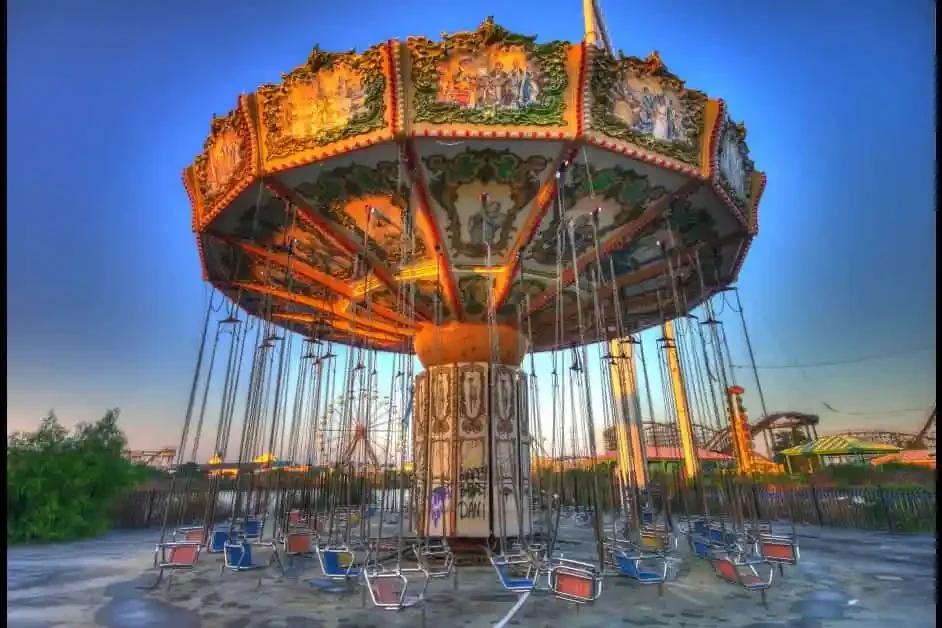
Six Flags New Orleans originally opened its gates in 2000 under the name Jazzland. Located on the eastern edge of the city, it was designed to be a vibrant celebration of Louisiana’s unique musical heritage and colorful culture. However, everything changed on August 29, 2005, when Hurricane Katrina tore through the region. The park was submerged under nearly seven feet of corrosive brackish water for weeks, which decimated the electrical systems and rusted the infrastructure of beloved rides beyond simple repair.
Since that catastrophic event, the park has sat in a state of eerie frozen animation. While there were initial talks of salvaging the site, years of legal disputes between the city, insurance companies, and various operators led to a permanent stalemate. Today, the skeletal remains of roller coasters like the “Mega Zeph” still loom over the horizon, their tracks overtaken by weeds and the relentless Louisiana sun. For locals, the site is a poignant monument to the lives disrupted by the storm, serving as a quiet, heavy reminder of a joyful era that was washed away in a single weekend.
2. Spreepark Berlin
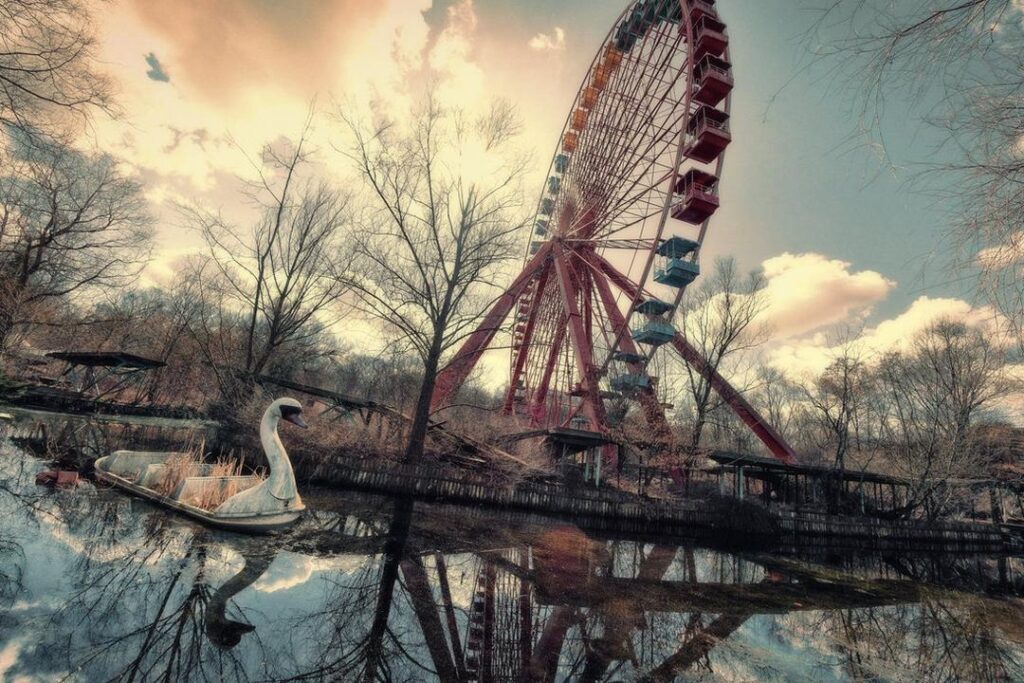
Spreepark first welcomed guests in 1969 as Kulturpark Plänterwald, serving as the only permanent amusement park in the former East Germany. For decades, it was a centerpiece of social life behind the Iron Curtain. Following the reunification of Germany in 1990, the park struggled to adapt to a capitalist market. Under new management, debts began to skyrocket, and attendance dwindled until the gates finally locked for good in 2001. The park’s downfall was punctuated by a bizarre scandal in 2004 when its owner was caught attempting to smuggle cocaine inside the machinery of a “flying carpet” ride.
The park has since become a legendary destination for urban explorers and photographers. Its most iconic feature, a massive 148-foot Ferris wheel, still stands tall, though it now creaks in the wind and is slowly being swallowed by ivy and forest growth. While the city of Berlin has recently begun reclaiming the space for public art and guided tours, the atmosphere remains deeply nostalgic. It stands as a powerful visual metaphor for the collapse of the GDR, showing how nature eventually reclaims even the most ambitious human projects once the crowds move on.
3. Nara Dreamland
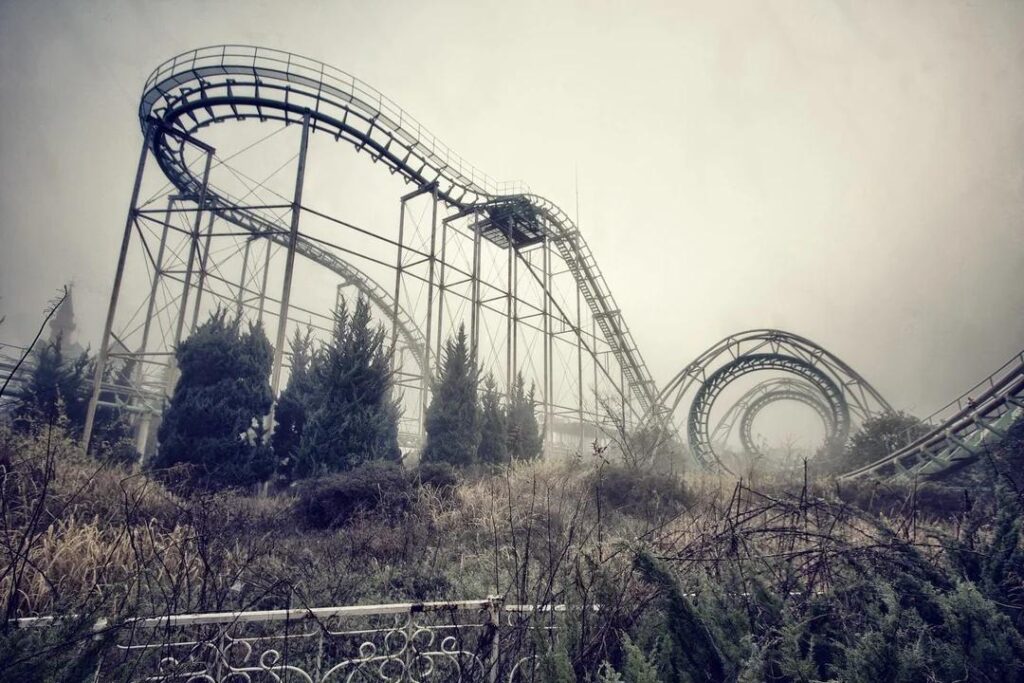
Nara Dreamland opened in 1961 as Japan’s direct answer to California’s Disneyland. The similarities were undeniable, featuring its own version of a Sleeping Beauty Castle and a classic Main Street. For years, it was a symbol of Japan’s booming post-war economy and a favorite destination for families. However, the 1983 opening of Tokyo Disneyland created fierce competition that Nara Dreamland simply couldn’t beat. As attendance plummeted over the following decades, the park became a shadow of its former self before officially closing its gates on August 31, 2006.
For a decade after its closure, the park became a world-famous “ghost” site. Unlike many abandoned places that are quickly looted, Nara Dreamland remained remarkably intact for years; ticket booths were still stocked with brochures, and colorful coffee cups sat on cafe counters as if waiting for a morning rush that never came. Although the park was eventually demolished in 2017 to make way for new developments, photographs of its decaying fairytale architecture continue to circulate online. It remains a symbol of “bubble era” optimism, capturing the quiet sadness of a place built for laughter left to rot in silence.
4. Dadipark Belgium
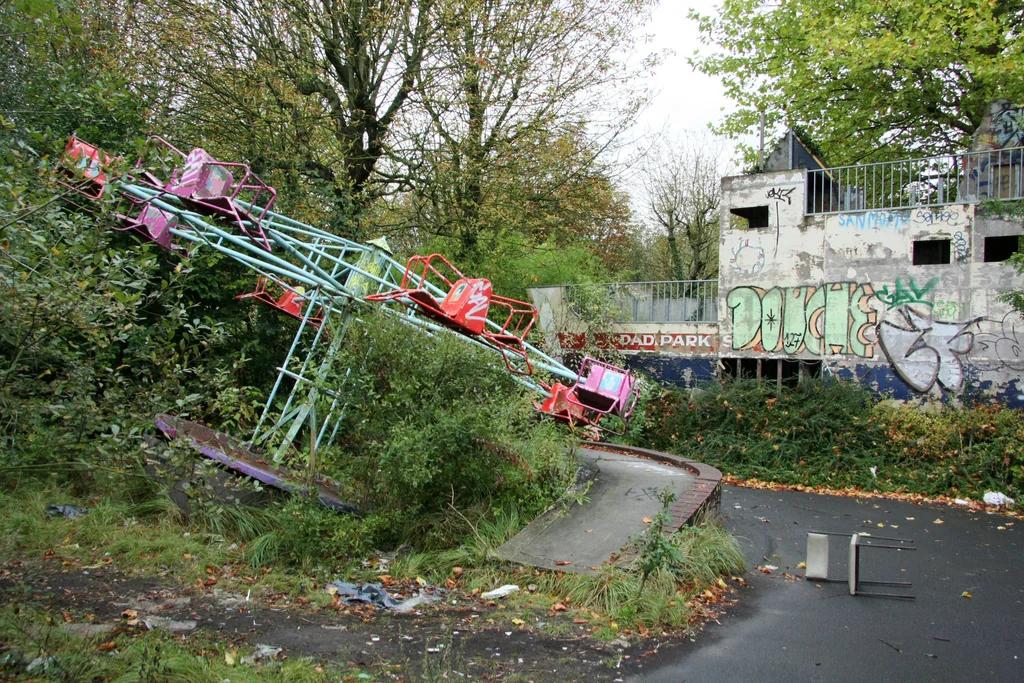
Located in the small town of Dadizele, Dadipark opened in 1950 and spent half a century as one of Belgium’s most affordable and popular family spots. It wasn’t known for high-tech thrills, but rather for its simple, accessible playground atmosphere. Trouble began in 2000 when a young boy lost his arm on the “Nautic Jet” water ride, an accident that severely damaged the park’s reputation. Facing mounting pressure to meet modern safety regulations and a lack of investment capital, the owners announced the park would close for “renovation” in 2002, but it never reopened.
In the years following its closure, the park became a surreal landscape where rust and wildflowers took over the slides and bridges. It was never fully boarded up, so locals often wandered through the grounds, witnessing the slow decay of their own childhood memories. For many Belgians, Dadipark represents a lost era of simpler, riskier fun that eventually fell victim to stricter modern standards. While the site was largely cleared in 2012 to make room for a green residential zone, the memory of its creaky swings and overgrown paths remains a staple of local folklore.
5. Pripyat Amusement Park
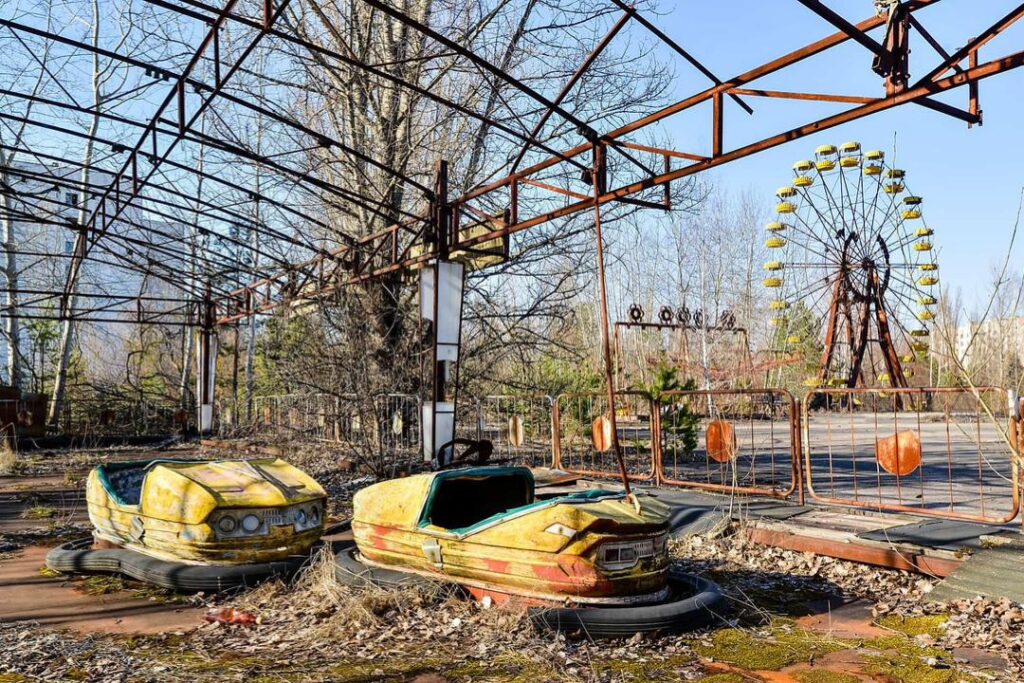
The amusement park in Pripyat, Ukraine, is perhaps the most tragic entry on this list because it never truly had its day in the sun. Its grand opening was scheduled for May 1, 1986, to coincide with the traditional May Day celebrations. However, the Chernobyl nuclear disaster occurred just a few miles away on April 26, only five days before the ribbon-cutting ceremony. While some reports suggest the rides were briefly turned on to distract panicked residents during the initial evacuation, the park was effectively abandoned before it ever officially hosted a crowd.
Today, the yellow Ferris wheel of Pripyat is one of the most recognizable symbols of the Chernobyl Exclusion Zone. It stands as a haunting skeletal structure in a city where time has been frozen since the mid-1980s. Because the area remains radioactive, the park hasn’t been looted or demolished; it simply sits there, surrendering to the elements. For visitors on authorized tours, the sight of the motionless bumper cars and the rusted wheel serves as a visceral reminder of how quickly a thriving community can be erased, leaving behind only the hollow shells of intended joy.
6. Lake Shawnee Park
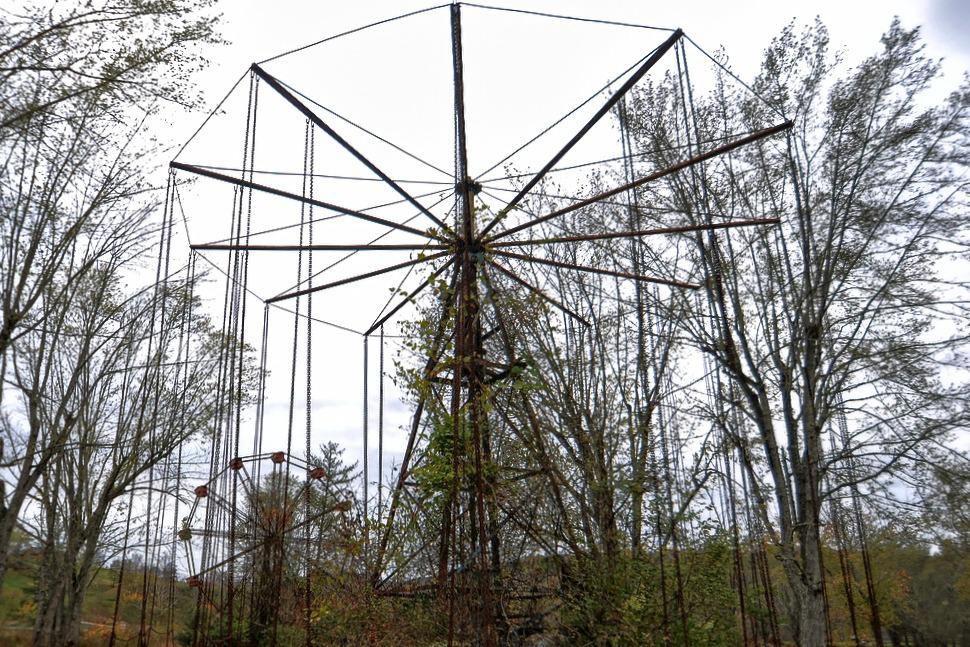
Lake Shawnee Amusement Park in West Virginia has a history that feels more like a dark legend than a business record. It opened in the late 1920s on the site of a bloody 18th-century conflict between settlers and Native Americans. During its years of operation, the park was plagued by misfortune, including the deaths of several children on the rides. These tragedies, combined with various financial struggles, led to the park being shuttered in 1966. For decades, the site sat abandoned, with the rusted frames of a Ferris wheel and a swing ride slowly being reclaimed by the surrounding forest.
In recent years, the park has gained a reputation as one of the most haunted places in America, attracting paranormal investigators and history buffs alike. While the “cursed” reputation is a major draw, the real story is one of overlapping layers of American tragedy. Standing in the overgrown fields today, you can still see the skeletal remains of the rides standing over what were once ancient burial grounds. It is a place where the echoes of 20th-century family fun meet the much older, unresolved ghosts of the frontier, creating an atmosphere that is uniquely heavy and somber.
7. Camelot Theme Park
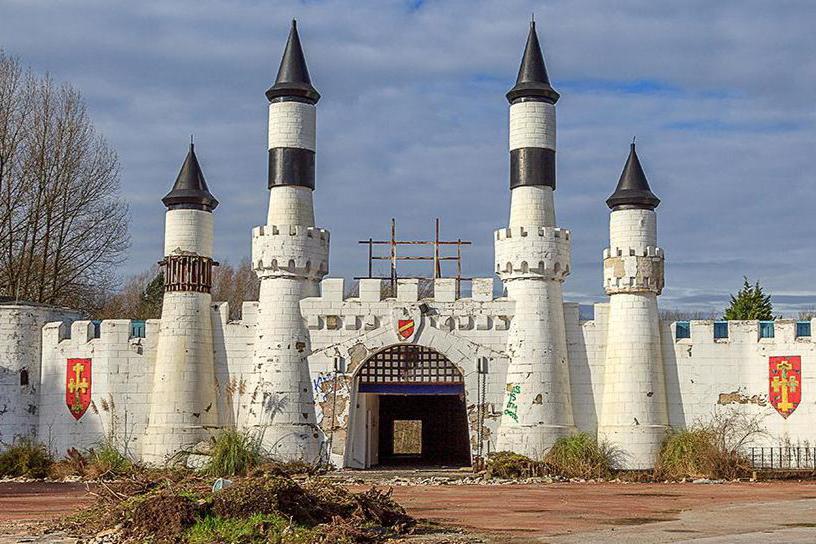
Camelot Theme Park in Lancashire, England, first opened its “castle” gates in 1983. Based on the legends of King Arthur and the Knights of the Round Table, it featured jousting tournaments, medieval-themed rides, and staff dressed in period costumes. It was a staple for school trips and family outings in Northern England for nearly thirty years. However, by the early 2010s, the park struggled to compete with massive international attractions and suffered from several years of poor British weather. The park finally surrendered and closed for good in 2012.
Since its closure, the park has become a favorite spot for photographers looking to capture “ruin porn.” The once-bright castle towers are now gray and peeling, and the “Knightmare” roller coaster sits as a twisted heap of rusted iron against the sky. Various redevelopment plans for housing have been proposed over the years, but the site remains largely untouched and decaying. For those who grew up in the region, Camelot represents the decline of the traditional British regional theme park and a place that was once full of magic and pageantry, now reduced to a silent, muddy field of broken dreams.
8. Joyland China
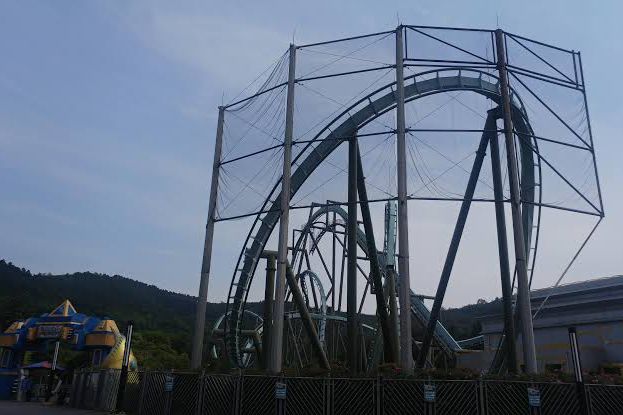
Joyland (not to be confused with the larger World Joyland) was an ambitious project located near Beijing that opened in the mid-1990s. It was part of a massive wave of construction in China designed to cater to a growing middle class with a newfound appetite for Western-style leisure. Unfortunately, Joyland was built far too quickly and with very little long-term planning. Poor management and a lack of unique attractions meant the park never reached its projected visitor numbers, and it was forced to shut down after only a few years of operation.
The remains of the park provide a striking visual of “instant ruins.” Because the construction used cheaper materials to finish the project quickly, the decay has been rapid and dramatic. Massive, crumbling statues of mythological creatures and cracked concrete pathways give the site a post-apocalyptic feel. It serves as a cautionary tale about the dangers of rapid expansion without a sustainable audience. For modern observers, Joyland is a fascinating look at a specific moment in Chinese economic history when the desire to build big often outpaced the actual demand for the end product.
9. Holy Land USA
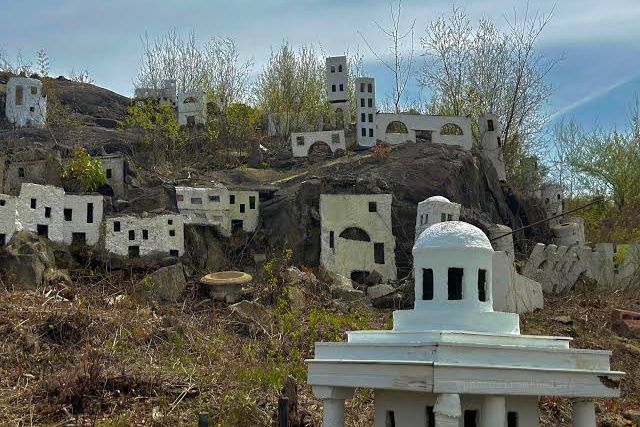
Holy Land USA was a unique theme park in Waterbury, Connecticut, that opened in 1955. Unlike traditional parks filled with roller coasters, this 18-acre site was dedicated to religious education, featuring a miniature replica of Bethlehem and various biblical dioramas. At its peak in the 1960s and 70s, it drew tens of thousands of pilgrims and tourists every year. The park’s founder, John Greco, dedicated his life to the site, but after his death in 1986, the park fell into a state of neglect and was eventually closed to the general public.
Even in its abandoned state, Holy Land USA remains a visible landmark thanks to a massive illuminated cross that sits atop the hill, visible from Interstate 84. While many of the miniature buildings have crumbled and the statues have been weathered by decades of New England winters, the site still feels more peaceful than scary to many who visit. It represents a specific era of American folk art and religious devotion. Though there have been recent community efforts to clean up the grounds and repair the cross, the park remains a quiet, hilltop reminder of how cultural and religious tourism has shifted over time.
10. Chippewa Lake Park
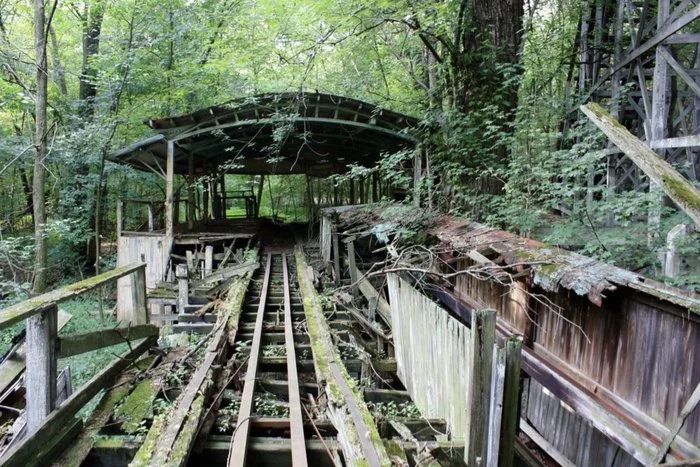
Chippewa Lake Park in Ohio was a true survivor, operating for exactly 100 years from 1878 to 1978. It was a classic “trolley park” that grew from a simple picnic ground into a full-scale amusement destination with a wooden roller coaster and a ballroom that hosted big band legends. As modern “super-parks” like Cedar Point began to dominate the region, the charmingly old-fashioned Chippewa Lake simply couldn’t keep up with the demand for faster, bigger thrills. It closed its gates following a final summer season, and then… nothing happened for decades.
The park became famous among enthusiasts because it was left to rot naturally for over 30 years. Trees literally grew through the tracks of the “Big Dipper” roller coaster, and the ferris wheel became encased in thick cages of wild vines. It was one of the most beautiful examples of nature reclaiming human technology. Although much of the site was finally cleared in 2009 for a planned development that never quite materialized, the legacy of Chippewa Lake Park lives on in the memories of generations of Ohioans who saw it as a place where time, and the forest, eventually stood still.
11. Wonderland Eurasia
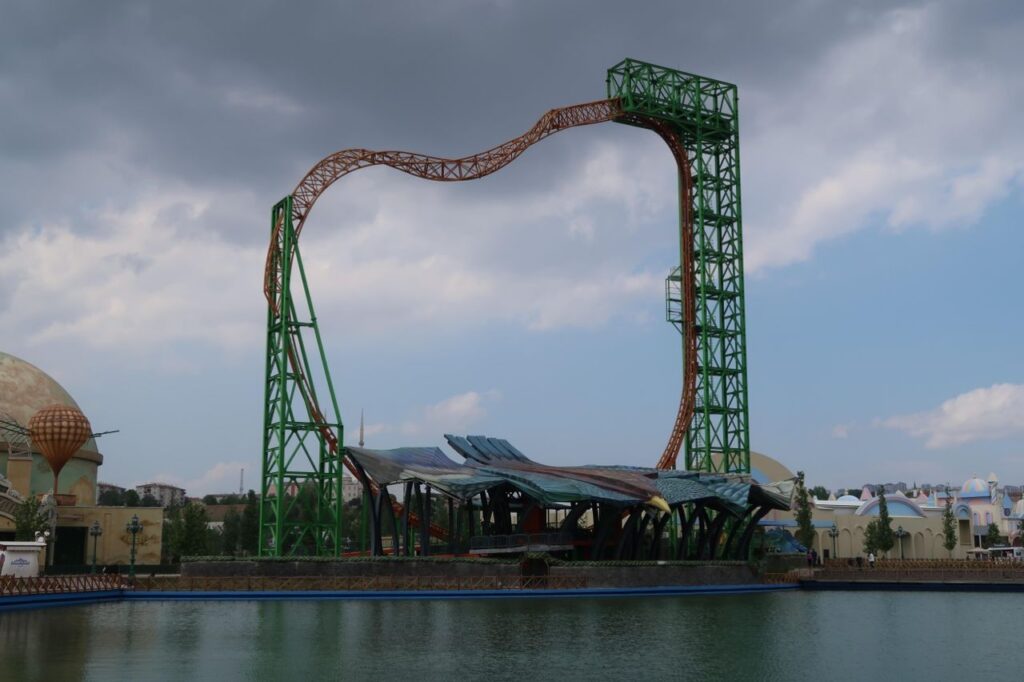
Wonderland Eurasia, also known as Ankapark, opened in Ankara, Turkey, in March 2019 after years of anticipation. This massive project was built with over $800 million in public funds and featured 26 major roller coasters and thousands of smaller attractions. It was marketed as the largest theme park in Europe and a global tourist magnet. However, the dream quickly turned into a financial nightmare. Within just months of opening, the park struggled with broken rides, power outages, and a massive lack of interest from the public. By February 2020, less than a year after its grand debut, the operators ran out of money and the gates were locked.
Walking through the park today is a surreal experience that highlights the cost of unchecked ambition. Dozens of massive, fading dinosaur statues stand guard over rusted tracks and empty plazas. Because the park was built so recently, many of the structures still look modern, making the abandonment feel even more abrupt. It has become a controversial symbol of political waste and poor urban planning. While legal battles over the site’s future continue in Turkish courts, the park sits as a silent, multi-million dollar “ghost city.” It serves as a stark reminder that building a world-class destination requires more than just a large budget; it requires long-term sustainability.
12. Tivoli World Spain
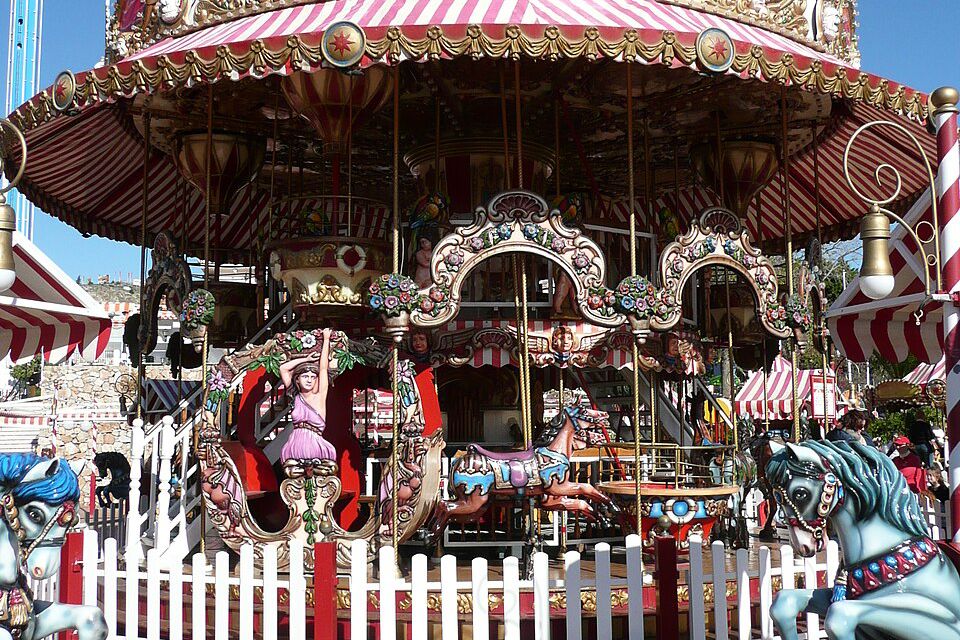
Tivoli World opened in 1972 in the sun-drenched town of Benalmádena on Spain’s Costa del Sol. For nearly fifty years, it was the premier entertainment hub for both local families and international tourists visiting the Mediterranean coast. Unlike modern corporate parks, Tivoli had a distinct classic charm, featuring beautiful gardens, flamenco performances, and a wide variety of traditional fairground rides. It survived decades of changing trends, but the 2000s brought a wave of financial instability. Legal disputes over land ownership and mounting debts eventually forced the park to close its doors permanently in 2020 during the global pandemic.
Even though the park is officially closed, it hasn’t been demolished. The colorful “Tivoli” sign still stands tall against the Spanish sky, and many of the rides remain perfectly intact behind the perimeter fences. Interestingly, a group of former employees has spent years maintaining the grounds on their own time, hoping that a new investor will eventually step in to save the park. For the people of Andalusia, Tivoli World is more than just a business; it is a repository of childhood memories and summer nights. Its current state of limbo reflects the difficult struggle to preserve local heritage in a world increasingly dominated by massive, modern leisure brands.
13. Gulliver’s Kingdom Japan
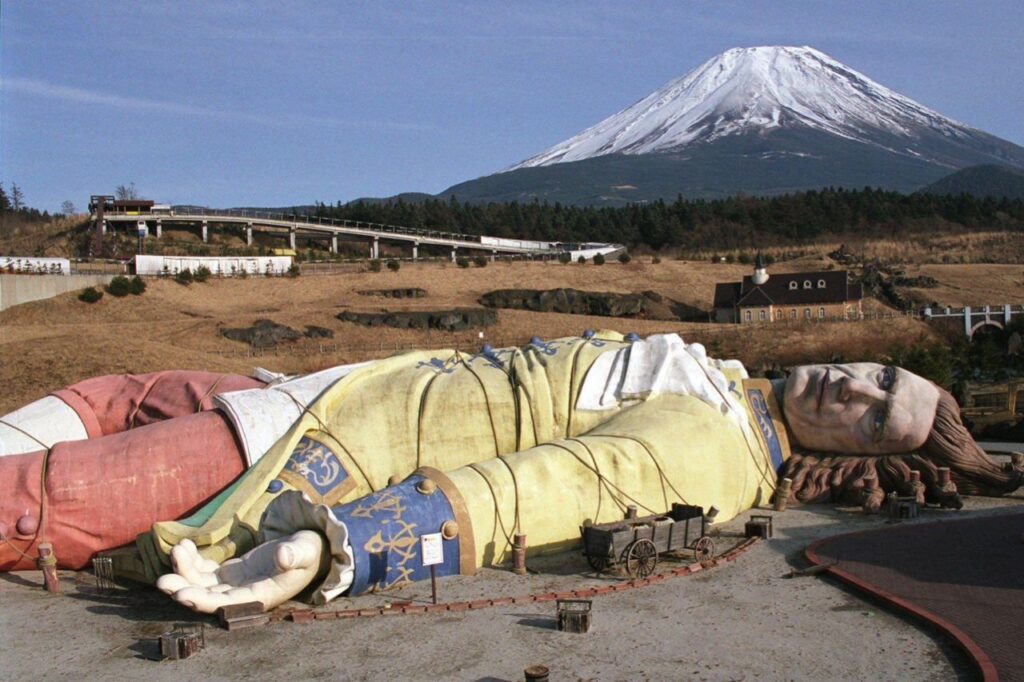
Gulliver’s Kingdom was a highly unusual theme park that opened in 1997 near the base of Mount Fuji. Based on the 18th-century novel Gulliver’s Travels, its centerpiece was a massive, 147-foot-long statue of Lemuel Gulliver tied to the ground by the Lilliputians. Despite its artistic ambition and stunning mountain backdrop, the park was a total failure. It closed just four years later in 2001. Many believe the park failed because of its location; it was built right next to the forest known as “The Sea of Trees” and near the former headquarters of a notorious cult, which made families uncomfortable.
For years after it closed, the giant Gulliver statue lay rotting in the shadow of Mount Fuji, creating one of the most bizarre sights in the world of urban exploration. The park felt deeply out of place, like a strange dream that had accidentally manifested in the real world. Explorers often remarked on how the silence of the mountain made the empty, oversized props feel even more unsettling. The entire site was finally demolished in 2007 to make room for a hotel, but the legend of the “giant in the mountains” continues to fascinate people who remember the park’s short, strange life.
14. Okpo Land South Korea
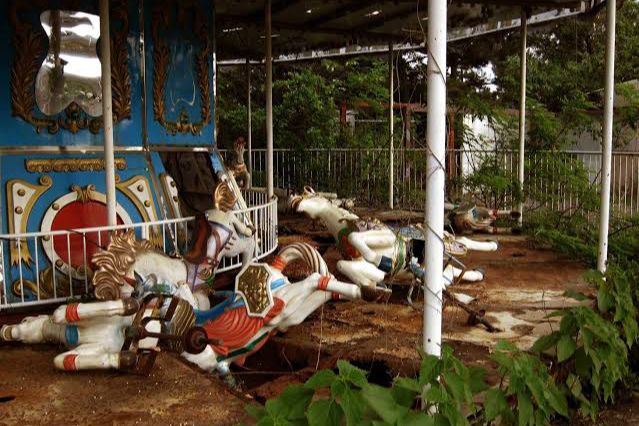
Okpo Land, located on South Korea’s Geoje Island, was once a popular destination during the 1990s. It featured a variety of standard carnival attractions, but its most famous ride was a roller coaster that overlooked the scenic coastline. The park’s history took a dark turn following a series of safety incidents. In the late 90s, a fatal accident occurred on the roller coaster, followed by another tragic death in 1999 involving a young girl. Rather than addressing the safety failures or offering a public apology, the owner reportedly disappeared overnight, leaving the park to sit exactly as it was.
Because the park was abandoned so suddenly, it became a legendary site for ghost hunters and curious travelers. For over a decade, the “death car” of the roller coaster remained suspended at the very spot where the final accident happened, dangling over the edge of the track. This frozen image of tragedy gave Okpo Land a reputation as one of the most unsettling places in Asia. The park was eventually demolished in 2011 to make way for a hotel complex, but its legacy remains a somber cautionary tale. It serves as a reminder that in the world of entertainment, public safety and accountability are the foundations of survival.
15. Dogpatch USA
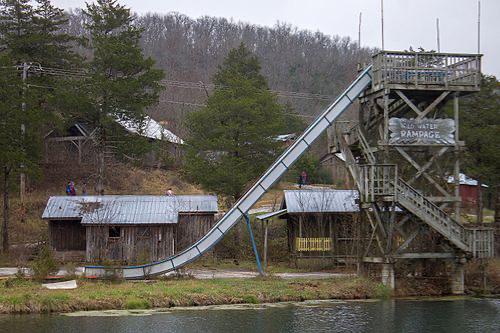
Dogpatch USA opened in 1968 in the Ozark Mountains of Arkansas. The park was based on the popular Li’l Abner comic strip by Al Capp, which depicted a fictional town of “hillbillies.” For the first decade, the park was a massive success, featuring a trout farm, craft shops, and themed rides that fit the rustic mountain setting. However, as the comic strip faded from the public consciousness in the late 1970s, the park’s theme began to feel dated. Financial mismanagement and a series of legal battles over the land led to the park’s final closure in 1993.
After the gates shut, the Ozark forest began to reclaim the “town” of Dogpatch. The log cabins and wooden stages weathered over time, creating a landscape that looked like a genuine ghost town from a bygone era. For decades, the site was a popular destination for explorers who enjoyed the mix of kitschy Americana and natural decay. In 2020, the land was purchased by the founder of Bass Pro Shops, who plans to transform the area into a massive nature park called Marble Falls Village. While the old cartoon characters are gone, the site is finally being put to a new use that honors the natural beauty of Arkansas.
16. Luna Park Sydney Ghost Train Site
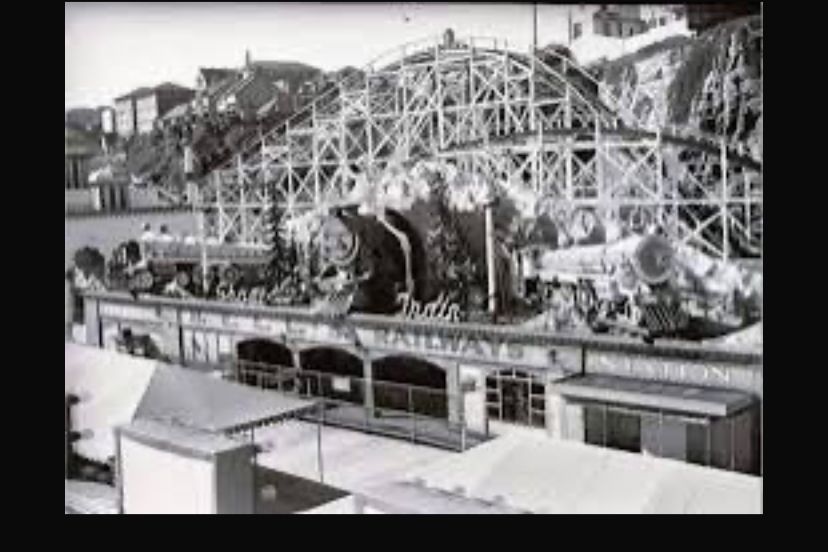
Luna Park Sydney is a famous, operational amusement park that has been a landmark of the city’s harbor since 1935. However, inside its colorful walls lies a patch of ground that carries a very different energy. On the night of June 9, 1979, a horrific fire broke out inside the park’s Ghost Train attraction. The blaze spread rapidly through the wooden structure, claiming the lives of six children and one adult. Following the tragedy, the ride was completely demolished, and the park was closed for several years as the community mourned and safety regulations were completely overhauled across Australia.
Today, the site of the Ghost Train remains largely undeveloped as a sign of respect for those who lost their lives. While the rest of the park is filled with the sounds of laughter and modern rides, this specific area serves as a quiet memorial. For many Australians, the “abandonment” of this section of the park is not a sign of failure, but a necessary act of remembrance. It is a rare example of how an amusement park can balance its role as a place of joy with the somber duty of honoring its past. The site stands as a permanent reminder of the importance of safety in public spaces.
17. Oradour Style Western Village France
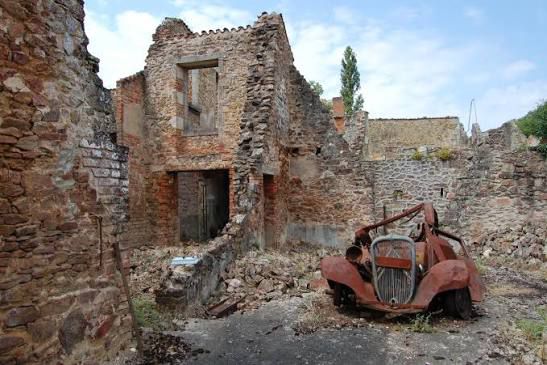
In the 1980s, France experienced a surge in popularity for “theme villages,” and Western Village was one of the most unique results of that trend. Located in a rural area, the park was a meticulous recreation of an 1880s American frontier town, complete with a sheriff’s office, a saloon, and wooden boardwalks. It was designed to give European visitors a taste of the “Wild West” without having to cross the Atlantic. As the novelty of Western themes began to wear off in the 1990s, the park struggled to maintain its high operating costs and eventually closed its doors.
Unlike many parks that are trashed by vandals, this French Western town has remained remarkably well-preserved due to its remote location. Walking through the empty streets today feels like stepping onto a deserted film set. The wooden buildings have bleached under the sun, and the swinging saloon doors still creak in the wind. There is a strange, cinematic calm to the site that many visitors find more peaceful than scary. It highlights a time when highly specific, immersive environments were the “next big thing” in European leisure, before they were eventually replaced by more high-tech and digitally-driven forms of entertainment.
18. Fantasyland Sitges
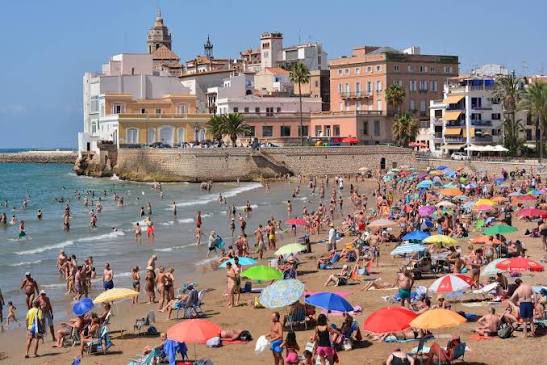
Fantasyland Sitges was a small but ambitious amusement park located near the coastal city of Barcelona, Spain. Opening in the late 1980s, it was designed to capture the tourist crowd that flocked to the nearby Mediterranean beaches. It featured a handful of family-friendly rides and a colorful, fairytale-inspired design. However, the park faced an uphill battle from the start. It lacked the massive budget of international competitors, and internal management issues meant that maintenance was often neglected. By the mid-1990s, the park had gone bankrupt and was left to the mercy of the elements.
Today, the remnants of Fantasyland are a favorite for local photographers. The bright pinks and blues of the original structures have faded into muted pastels, and the Mediterranean scrub brush has started to grow through the old foundations. It is a relatively small site, which gives it a more intimate and personal feel than the massive “megaparks” that usually make abandonment lists. It serves as a reminder that for every successful Disney-style resort, there were dozens of smaller, local parks that tried their best to bring a little bit of magic to their communities before being overtaken by the harsh realities of the business world.
19. Parque Diversiones Guatemala
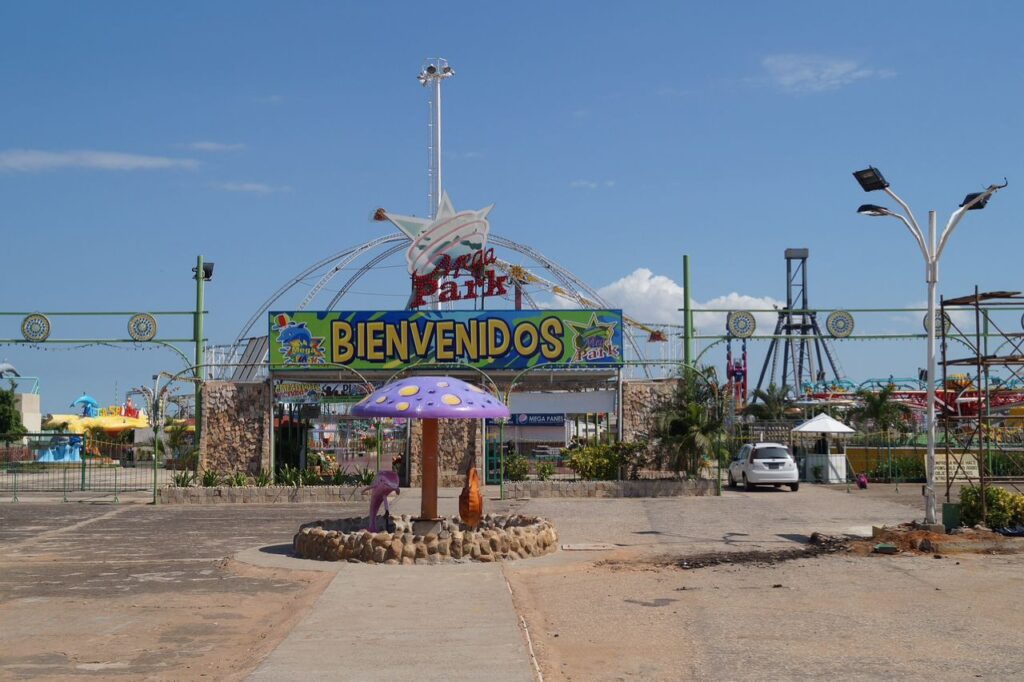
Parque Diversiones was a central hub for entertainment in Guatemala City during the late 20th century. In a region that often lacked large-scale amusement infrastructure, this park was a rare and vital space for local families to gather. However, the park’s history was plagued by the country’s broader economic and political instability. Frequent changes in management and a lack of consistent funding led to several periods of closure and reopening. Eventually, the costs of maintaining the aging machinery became too high, and the park fell into a permanent state of disrepair as the city grew around it.
The abandoned rides of Parque Diversiones can still be seen today, sitting in stark contrast to the busy urban life that surrounds them. The rusted Ferris wheel and static roller coaster tracks are visible from nearby roads, acting as a strange landmark for daily commuters. For many residents, the park is a bittersweet symbol of their childhoods and a reflection of the challenges their country has faced. Its abandonment isn’t just about a failed business; it’s about the difficulty of maintaining spaces for joy in an environment where basic stability can never be taken for granted. It remains a quiet, metallic ghost in the heart of the city.
20. Takakanonuma Greenland
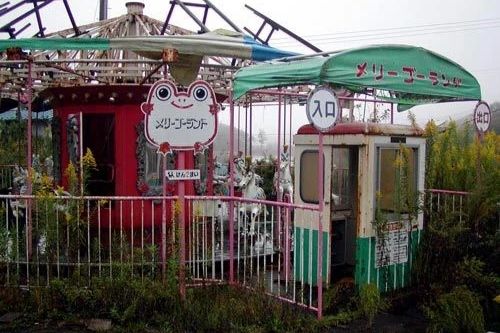
Takakanonuma Greenland opened in 1973 in the Fukushima Prefecture of Japan, tucked away in a mountainous region. The park was intended to be a premier weekend getaway for families, but it faced immediate financial trouble due to its remote location and poor transportation links. It shut down just two years later in 1975. After a period of silence, the park was renovated and reopened in 1986, enjoying a second life for over a decade. However, it could not survive the decline of Japan’s “bubble economy,” and it closed for good in 1999, leaving its rides to the mercy of the thick forest.
Before its eventual demolition in 2006, the park became a legendary site for urban explorers. A thick, frequent fog often rolled over the hills, shrouding the rusted Ferris wheel and the “Jet Coaster” in a ghostly white mist. This natural phenomenon gave the park a mysterious reputation that far outlasted its operational years. Unlike other parks that feel like scenes of a disaster, Takakanonuma Greenland felt like it was simply being reclaimed by the earth. It serves as a fascinating example of how even the most colorful human creations can be quietly absorbed back into the landscape, leaving only stories and a few grainy photographs behind.
21. Keansburg Amusement Park Old Rides
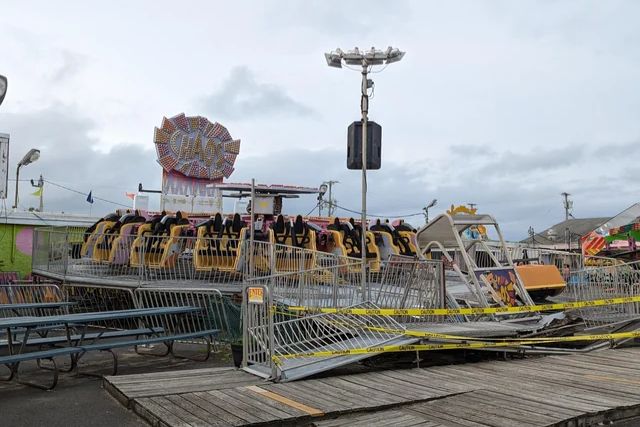
Keansburg Amusement Park in New Jersey is a rare survivor, having been a staple of the Jersey Shore since 1904. While the park itself is still very much alive and welcoming guests today, it contains several “dead zones” where historical rides have been left to rot in place. Over its 120-year history, the park has been hit by numerous Atlantic storms, most notably Hurricane Sandy in 2012. Rather than clearing everything away, the owners often built new attractions around the old ones, creating a strange, layered graveyard of seaside entertainment history that spans several generations.
Walking through these older sections feels like a lesson in the evolution of fun. You can see the skeletal remains of wooden bumper car floors and rusted machinery from the early 20th century sitting just feet away from modern, neon-lit thrills. These abandoned pockets are not hidden; they are part of the park’s rugged character. They remind visitors that the seaside is a harsh environment for steel and wood, and that keeping a park open for over a century requires constant sacrifice and change. It is a place where the past and present live side-by-side, showing that abandonment doesn’t always mean a total end, but sometimes just a change of pace.
22. Lincoln Park Massachusetts
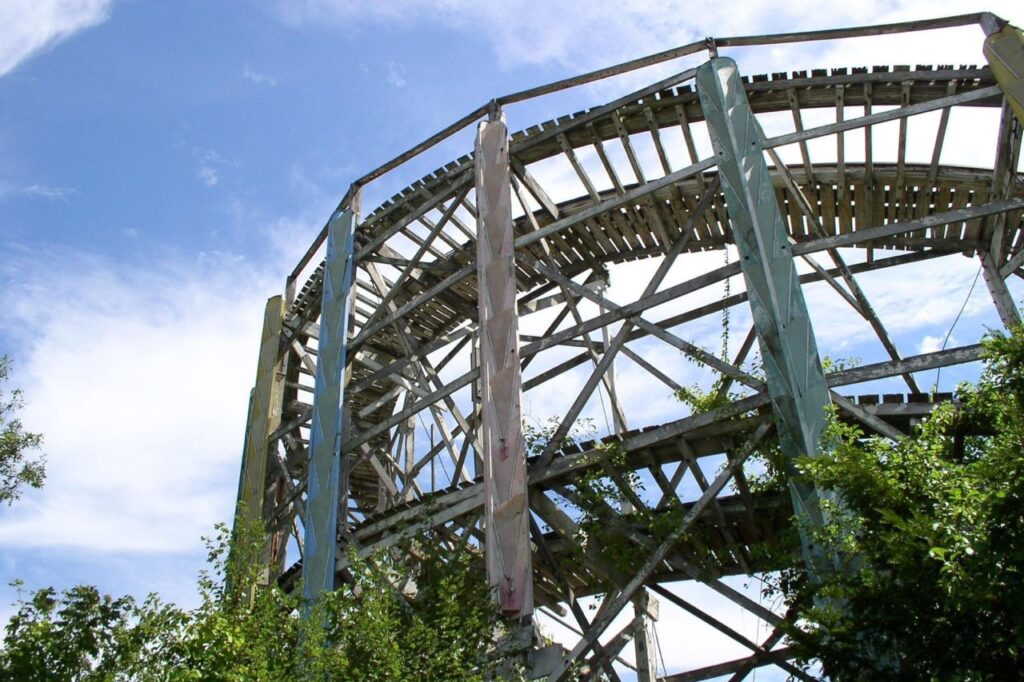
Lincoln Park opened in 1894 in Dartmouth, Massachusetts, originally as a “trolley park” designed to encourage people to use the local transit system on weekends. For nearly 100 years, it was a beloved regional landmark, famous for its wooden roller coaster, the “Comet,” and its grand ballroom. However, the 1980s were unkind to the park. A tragic accident on the Comet in 1987, combined with rising insurance costs and the popularity of larger corporate theme parks, forced Lincoln Park to close its gates for the final time on December 3, 1987.
For over two decades after it closed, the park sat in a state of slow, public decay. Local residents who had spent their childhood summers there would often return to peer through the fences at the collapsing coaster and the empty midway. The site became a poignant symbol of the “vanishing New England” era, where local family businesses were replaced by national chains. Although the site was eventually cleared in 2012 to make way for a residential housing development, the memory of the park remains a powerful part of local identity. It stands as a reminder of a time when community amusement was found just a short trolley ride away from home.
23. Mysterious Island Theme Park
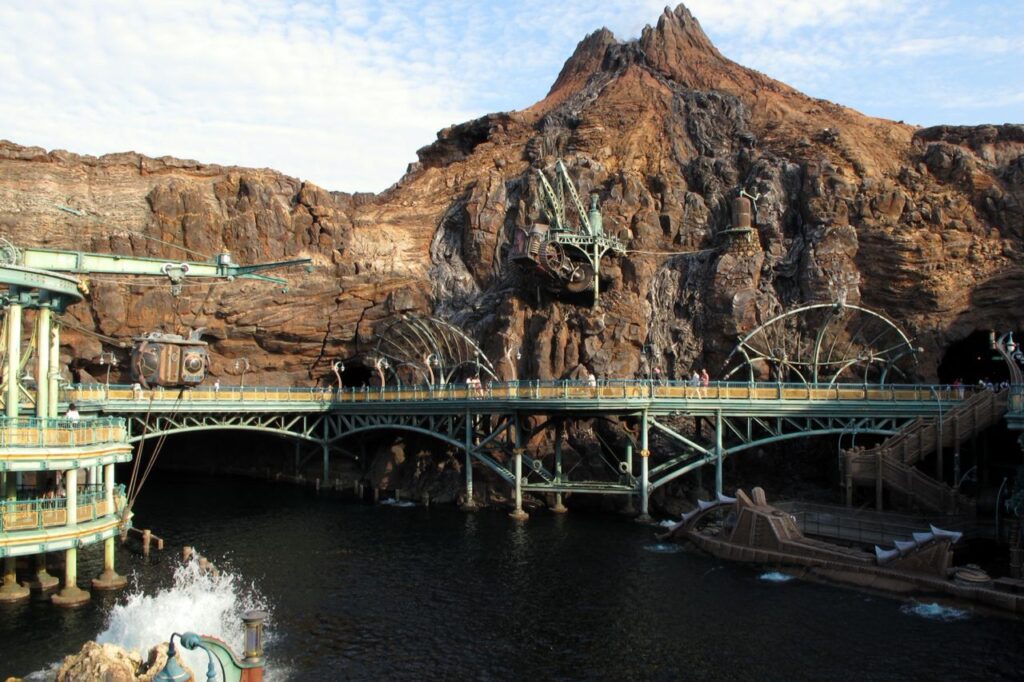
Mysterious Island Theme Park opened in 1996 in Zhuhai, China, as part of a massive push to turn the region into a global tourism hub. The park was heavily inspired by the adventure novels of Jules Verne, featuring grand Victorian-era architecture and steampunk-style machinery. At its peak, it was a high-concept destination that aimed to blend education with excitement. However, the park suffered from a common issue in the Chinese theme park boom of the 1990s: it was located too far from major population centers and lacked the infrastructure to keep visitors coming back. By the early 2000s, it had ceased operations.
Today, the site is a stunning visual example of “cinematic decay.” The elaborate fantasy buildings and giant sculptures haven’t been torn down; they’ve simply been left to weather in the humid coastal air. This gives the park the appearance of a movie set that was abandoned mid-production. For photographers and urban explorers, it is a goldmine of dramatic imagery, representing a period of extreme creative ambition that didn’t quite have the business foundation to survive. Mysterious Island serves as a quiet monument to a specific dream of adventure, standing as a beautiful but empty shell on the edge of a rapidly modernizing city.
24. Chippewa Park Canada
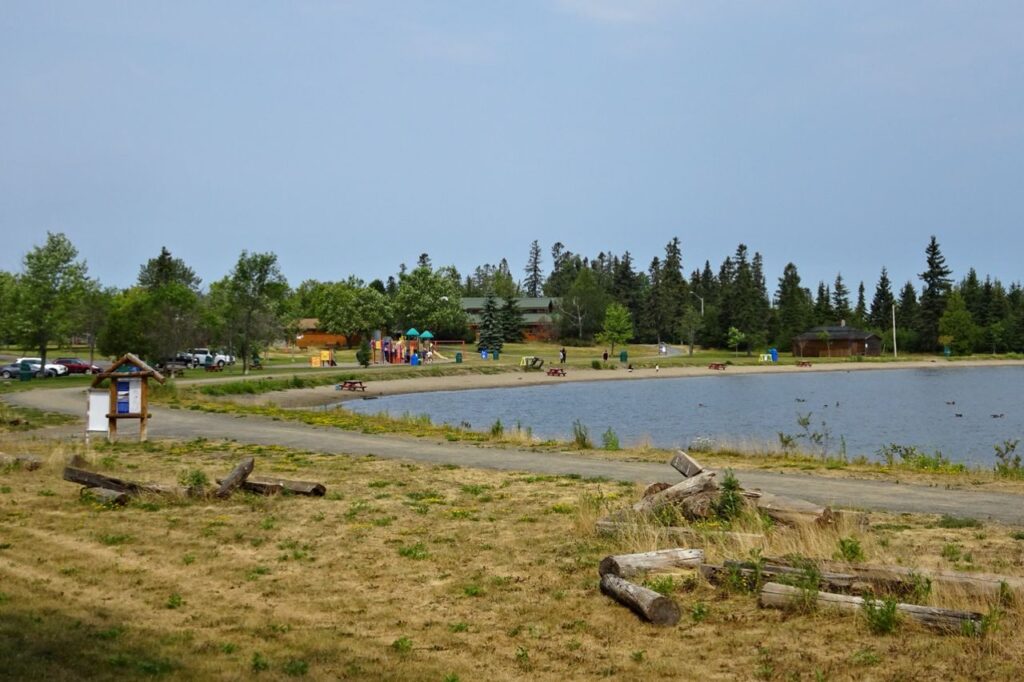
Chippewa Park, located in Thunder Bay, Ontario, has been a cornerstone of Canadian summer life since it first opened in 1893. For over a century, it provided a simple, scenic escape on the shores of Lake Superior, featuring a historic 1915 Parker Carousel and a variety of family rides. However, the modern era brought difficult challenges. Stricter safety regulations and the high cost of maintaining vintage machinery began to drain the park’s resources. While the park is still technically a public space, many of its classic amusement rides were shut down around 2019, leaving the site in a state of partial abandonment.
The park doesn’t feel like a ruin; it feels like a place that is gently sleeping. Because the grounds are still used for public events and camping, the area is well-maintained, but the silent, motionless rides create a sense of deep nostalgia. For the people of Thunder Bay, Chippewa Park represents a multi-generational connection to the past, a place where grandparents once walked their grandchildren. Its current status reflects a respectful, quiet ending rather than a sudden disaster. It reminds us that even the most cherished traditions eventually have to change, and that there is a certain dignity in a park that fades away slowly and peacefully.
25. Glen Echo Park Maryland
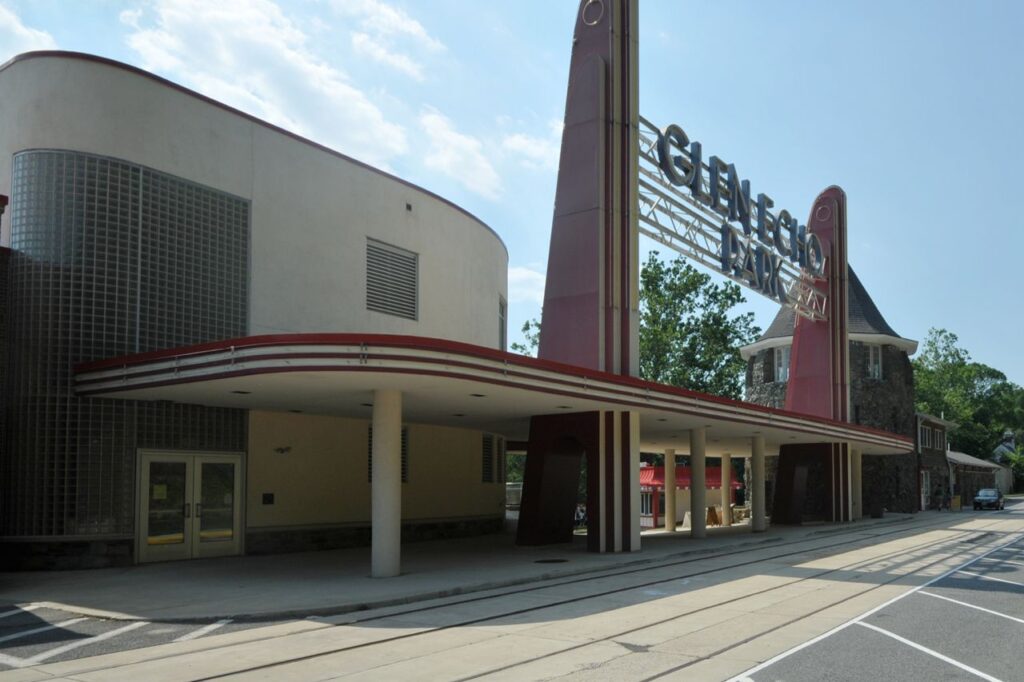
Glen Echo Park, located just outside Washington, D.C., opened in 1891 as a National Chautauqua Assembly center intended for education and culture. It eventually evolved into a traditional amusement park, complete with a massive swimming pool and a famous Dentzel carousel. The park played a significant role in American social history during the 1960 civil rights protests, which led to the desegregation of the park the following year. Despite its popularity, the park struggled to stay profitable in the face of modern competition and officially closed its amusement operations in 1968, leaving its historic structures in limbo.
Fortunately, Glen Echo avoided the bulldozer. The National Park Service took over the site in 1971, transforming it into a vibrant arts and cultural center. Today, visitors can still see the original neon “Glen Echo” sign and walk through the Art Deco-style buildings that once housed park attractions. While the roller coasters are long gone, the 1921 carousel has been beautifully restored and still operates today. It is a rare “success story” of an abandoned park, where the physical space was saved and repurposed. It shows that the end of an amusement park doesn’t have to mean the end of a community’s connection to a special piece of land.
26. Frontier Village California

Frontier Village opened in San Jose, California, in 1961, right at the height of the “Western” craze in American pop culture. The park was a 30-acre tribute to the Old West, featuring stagecoach rides, a narrow-gauge railroad, and daily “shootouts” between actors in the town square. It was a beloved alternative to the much larger Disneyland for Northern California families. However, as the 1970s came to a close, public interest in cowboys and frontiersmen began to wane. Combined with rising property values in the Silicon Valley area, the park was forced to close on September 28, 1980.
After the park closed, its rides and props were auctioned off, and the land was quickly redeveloped into a residential park and housing. For the few years it sat empty, it was a place of deep nostalgia for locals who saw their childhood play-land being dismantled. Today, the site is known as Edenvale Garden Park, and while the saloon and the sheriff’s office are gone, a few small markers and the original trees remain. Frontier Village is a classic example of how urban growth and changing tastes can erase a local institution. It lives on primarily through a dedicated fan base that continues to hold reunions and share photos of a lost California era.
27. Planeta Mágico Brazil
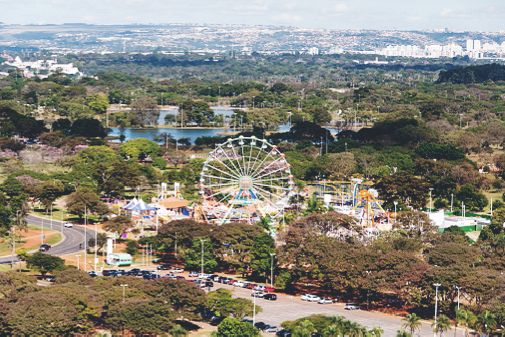
Planeta Mágico (Magic Planet) opened in the 1990s in Porto Alegre, Brazil, with the goal of becoming a major regional attraction. At the time, Brazil was experiencing a boom in themed entertainment centers designed for the growing middle class. The park featured a variety of bright, colorful rides and a focus on cosmic and fantasy themes. However, the project was plagued by Brazil’s fluctuating economy and a lack of consistent visitor numbers. By the early 2000s, the park had fallen into financial ruin and was forced to close, leaving its vibrant structures to fade under the South American sun.
The remains of Planeta Mágico have become a local curiosity over the years. The faded, extraterrestrial-themed signage and the rusted shells of small rides are still visible from the surrounding neighborhood, creating a strange contrast with the urban development nearby. For locals, the park is a reminder of a period of economic ambition that was cut short by reality. It doesn’t have the grand scale of a place like Six Flags, but it carries a sense of “interrupted joy” that is common to many abandoned local parks. It stands as a silent witness to how quickly leisure trends can shift when the economy becomes unstable, leaving behind colorful ruins.
28. Parque Salitre Old Zone
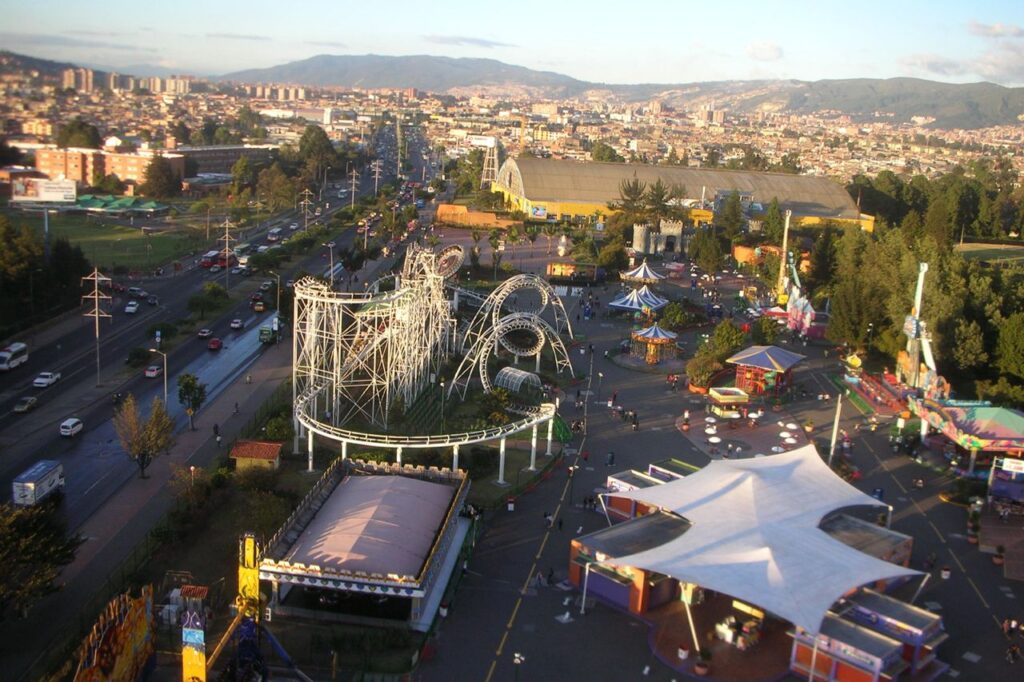
Parque Salitre, now known as Salitre Mágico, is a major amusement park in Bogotá, Colombia, that has been operating since 1973. However, the park has a “secret” history in its older sections. As the park modernized and expanded in the late 1990s and early 2000s, many of the original rides from the 70s were simply fenced off rather than being removed. These older zones contain outdated attractions that don’t meet modern thrill standards but remain standing as a frozen record of the park’s early years. This creates a strange “park within a park” where the old and new exist together.
For visitors, these abandoned pockets offer a rare look at the history of Latin American amusement design. You can spot the faded paint and simpler mechanical designs of the past while hearing the screams of riders on the modern “Screamer” coaster nearby. This uneven evolution is typical of parks that have to balance limited budgets with the need to stay relevant. Rather than feeling like a tragic failure, these forgotten sections feel like a family’s attic, full of old memories that have been set aside but not quite thrown away. They document the shifting priorities of safety, technology, and entertainment over the last fifty years in Bogotá.
29. Beverley Hills Supper Club Grounds
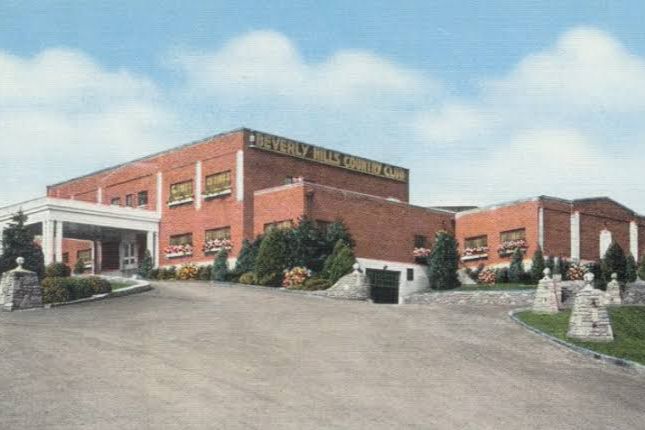
While not a traditional theme park, the Beverley Hills Supper Club in Southgate, Kentucky, was a massive “showplace” that featured carnival-style attractions, gardens, and high-end entertainment. It was one of the most famous venues in the Midwest until May 28, 1977, when a devastating fire broke out during a crowded holiday weekend. The tragedy claimed 165 lives and led to the permanent closure of the site. Following the fire, the buildings were demolished, but the sprawling grounds were never truly redeveloped, leaving the hillsides to be reclaimed by nature.
Today, the site is a place of profound silence and reflection. Visitors can still find the old stone stairways and parts of the foundation hidden among the trees and tall grass. It is a site of “abandonment” driven by deep communal respect and mourning rather than simple neglect. For many in the Kentucky and Ohio area, the grounds are treated as a hallowed space. It serves as a powerful reminder that some places are left empty not because they were forgotten, but because what happened there was too significant to ever replace. It is a site where the absence of activity tells a far more powerful story than any ride ever could.
30. Boblo Island Amusement Park
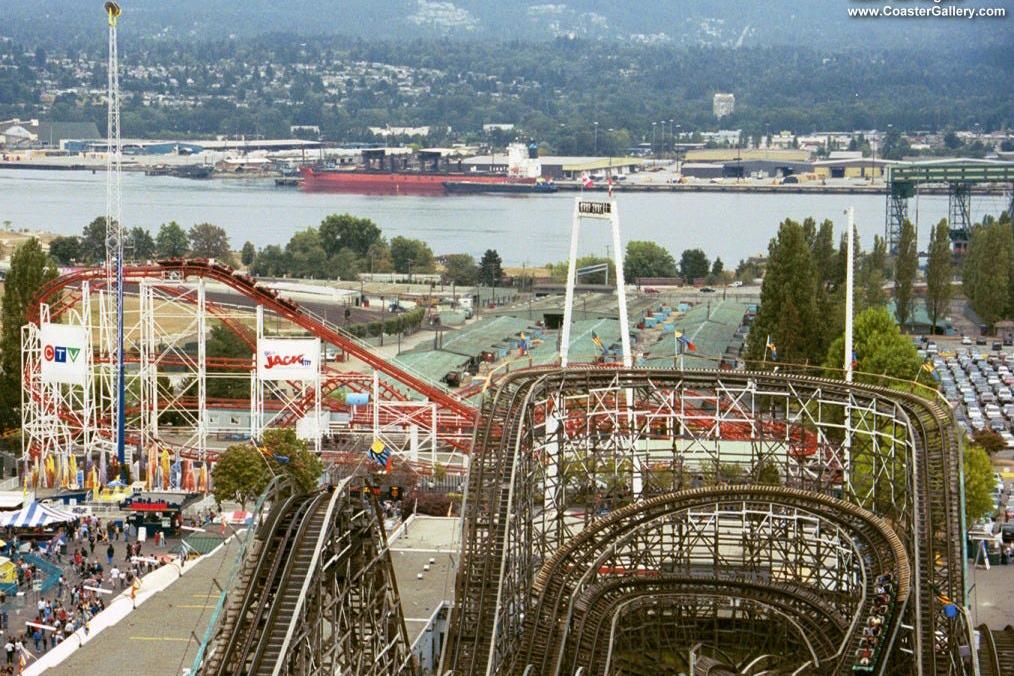
Located on Bois Blanc Island in Ontario, Canada, Boblo Island Amusement Park was a legendary destination that served the Detroit and Windsor areas for 95 years. From 1898 until 1993, the only way to reach the park was by taking a famous ferry ride across the Detroit River. This journey became a cherished ritual for generations of families, who enjoyed the jazz bands and dance floors on the boats before even arriving at the park. At its peak, Boblo Island featured a world-class wooden coaster called the “Sky Streak” and a massive dance hall famously financed by Henry Ford.
Following its closure in September 1993 due to declining attendance and high transportation costs, the island fell into a state of quiet decay. While some areas were eventually cleared for luxury housing, several historic structures were left behind to rot. The massive stone dance hall and the skeletal remains of the Space Needle still stand today, surrounded by overgrown trees. For many people in the Midwest, Boblo Island represents the golden age of “steamboat” tourism and local summer escapes. Its abandonment marks the end of a unique era where the journey to the park was just as magical as the rides themselves.


