
1. Ellen Ripley in Aliens

The magic of a great film often rests entirely on the shoulders of a single, unforgettable performance because a well-written character can turn a simple plot into a piece of cultural history. Sigourney Weaver’s portrayal of Ellen Ripley in the 1986 sequel Aliens remains one of the most significant milestones for women in the science fiction genre. While she started as a survivor in the first film, the second entry transformed her into a fierce protector who balanced her maternal instincts with a cold, tactical brilliance. She wasn’t just a “female version” of a male action star, but a fully realized person dealing with immense trauma and the weight of leadership in a desperate situation. The scene where she steps into the power loader to face the Alien Queen is a masterclass in building tension and delivering a payoff that feels earned by the character’s journey.
Ripley’s impact on cinema cannot be overstated because she challenged the traditional “damsel in distress” tropes that had dominated Hollywood for decades before her arrival. Audiences respected her because she was the most competent person in the room, yet she never lost her humanity or her sense of fear during the terrifying encounters. Her character arc showed that strength comes in many forms, and her legacy continues to influence every female-led action film produced today. By focusing on her intelligence and her resilience rather than just her physical prowess, the filmmakers created a character that feels as modern and relevant now as she did forty years ago.
2. The Joker in Dark Knight
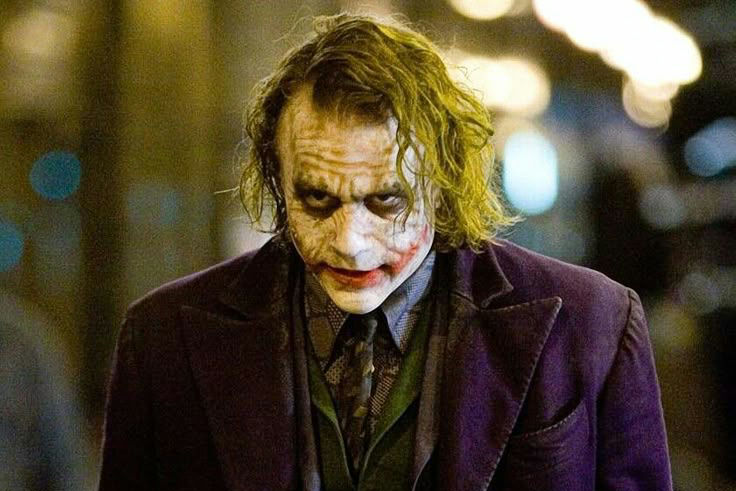
When Heath Ledger took on the role of the Joker in the 2008 film The Dark Knight, he provided a performance that was so chilling and transformative it changed the way we view comic book villains forever. He moved away from the campy interpretations of the past and instead presented a chaotic anarchist who had no clear origin story or logical motivation beyond watching the world burn. This lack of a traditional “why” made him infinitely more terrifying because he couldn’t be reasoned with or bought, making him the perfect foil for Batman’s rigid moral code. Ledger’s commitment to the role was absolute, and his posthumous Academy Award was a fitting tribute to a performance that felt dangerously real.
The brilliance of this character lies in his ability to manipulate everyone around him using nothing but words and psychological pressure, which kept the audience on the edge of their seats. Every time he appeared on screen, the energy of the film shifted into something unpredictable and menacing, proving that a great villain is just as important as the hero. Even years later, his dialogue and his distinct, unsettling mannerisms are studied by actors and fans alike as a pinnacle of the craft. He didn’t just play a character; he created a force of nature that forced the other characters, and the viewers, to question their own sense of order and justice.
3. Atticus Finch in To Kill

Gregory Peck’s performance as Atticus Finch in the 1962 adaptation of To Kill a Mockingbird remains the definitive cinematic symbol of moral integrity and quiet courage. As a lawyer in the American South during the Depression, he faced immense social pressure and physical threats to defend a black man falsely accused of a crime. What makes Atticus so special is that he doesn’t fight with his fists, but with his intellect and his unwavering belief in the fundamental decency of the human spirit. He remains a hero to millions because he taught his children, and the audience, that true bravery is standing up for what is right even when you know you are licked before you begin.
The character serves as a timeless reminder of the power of empathy and the importance of seeing the world from another person’s perspective. Peck brought a gentle dignity to the role that prevented Atticus from feeling like a preachy caricature, making him instead feel like a father figure we could all aspire to emulate. In a world that often rewards the loudest and most aggressive voices, the calm and steady presence of Atticus Finch continues to resonate as a beacon of hope. His closing argument in the courtroom is still one of the most powerful moments in movie history, proving that a well-spoken truth can be more impactful than any explosion or action sequence.
4. Hannibal Lecter in Lambs
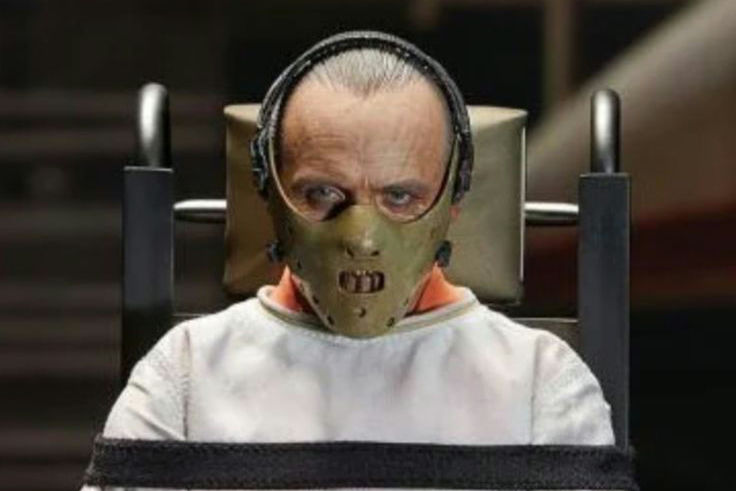
Anthony Hopkins managed to create one of the most enduring monsters in movie history with only about sixteen minutes of screen time in the 1991 thriller The Silence of the Lambs. Dr. Hannibal Lecter is a terrifying contradiction: a highly sophisticated, cultured psychiatrist who also happens to be a cannibalistic serial killer. The way he uses his intelligence to play psychological games with Clarice Starling creates a tension that is almost unbearable, yet he is so charismatic that the audience finds themselves strangely drawn to him. He doesn’t need to scream or jump out of the shadows to be frightening because his stillness and his unblinking gaze do all the work for him.
This character redefined the “serial killer” trope by adding a layer of intellectual superiority that made him feel like a predator from a higher plane of existence. Hopkins’s performance was so precise that every tilt of his head or change in his vocal tone felt calculated to unsettle both his scene partners and the viewers at home. The relationship between Lecter and Starling is the heart of the film, and it works because of the mutual respect and the dark curiosity they share. Lecter remains a fascinator for audiences because he represents the ultimate “shadow” version of human brilliance, showing us what happens when a great mind is completely untethered from morality.
5. Ferris Bueller in Day Off
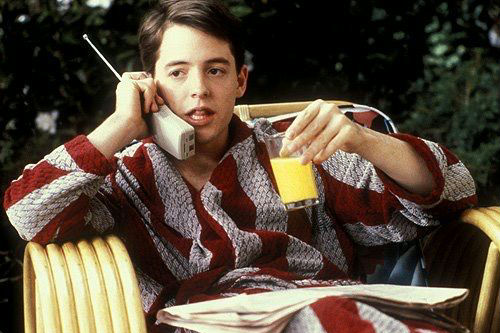
Matthew Broderick became the face of youthful rebellion and effortless cool in 1986 when he played the titular character in Ferris Bueller’s Day Off. Ferris is the ultimate high school hero because he isn’t a social outcast or a typical “bad boy,” but rather a charismatic individual who seems to get along with everyone. His mission to skip school and enjoy a day in Chicago with his friends felt like a universal fantasy for every student who ever felt trapped by a rigid schedule. By breaking the “fourth wall” and speaking directly to the audience, he invited us to be his accomplices, making the film feel like a personal adventure shared between the character and the viewer.
What makes Ferris so enduring is his philosophy that “life moves pretty fast,” urging us all to stop and look around once in a while so we don’t miss it. While he spends the day tricking adults and stealing Ferraris, his underlying motive is actually a selfless desire to help his best friend Cameron find some confidence and joy. This blend of mischief and heart is what keeps the character from being annoying and instead makes him someone we genuinely root for. He represents the part of all of us that wants to break free from the “factory” of daily routine and reclaim a sense of spontaneity and fun in a world that takes itself far too seriously.
6. Travis Bickle in Taxi Driver

Robert De Niro’s portrayal of Travis Bickle in the 1976 masterpiece Taxi Driver is one of the most uncomfortable and profound character studies ever put to film. As a lonely, insomnia-ridden veteran driving through the decaying streets of New York, Travis becomes a symbol of urban isolation and the dangerous path toward radicalization. His slow descent into madness is captured with a haunting intensity that makes the audience feel complicit in his distorted view of the world. He isn’t a traditional protagonist, but a deeply flawed and disturbed individual who believes he is the “hero” of a story that is actually a tragedy.
The famous “You talkin’ to me?” scene was actually improvised by De Niro, and it perfectly captured the character’s desperate need for confrontation and validation in a city that ignores him. This character is essential to cinematic history because he forced audiences to look at the dark underbelly of the American dream and the mental health crises that often go unnoticed. Even today, Travis Bickle serves as a chilling warning about the consequences of societal neglect and the fragility of the human mind when left in total solitude. It is a performance that remains as visceral and relevant today as it was during the gritty era of seventies filmmaking.
7. Mary Poppins’ Magic
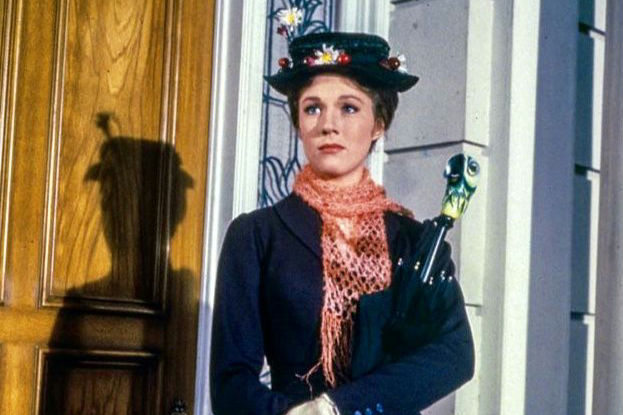
Julie Andrews won an Oscar for her debut film performance in 1964, and it is easy to see why her portrayal of Mary Poppins became an instant cultural icon. She managed to play a character who was “practically perfect in every way” without ever becoming boring or one-dimensional, largely thanks to her sharp wit and her firm but loving demeanor. Mary Poppins isn’t just a nanny with magical powers; she is a catalyst for change who arrives to fix a broken family dynamic by teaching them the importance of imagination and play. Her ability to command a room with a single look or a song made her a powerful figure of authority that children and adults alike admired.
The character’s enduring appeal lies in the way she balances her mysterious, almost otherworldly nature with a very grounded sense of discipline and manners. She doesn’t just give the children what they want; she gives them what they need, which is a sense of wonder and a connection to their father. Andrews’s incredible singing voice and her poised physical performance created a character that felt truly timeless, as if she had stepped straight out of a classic storybook and into our lives. Mary Poppins remains a beloved figure because she reminds us that even the most mundane tasks can be turned into a game if we only change our perspective and look for the “spoonful of sugar.”
8. Jack Sparrow in Pirates of the Caribbean
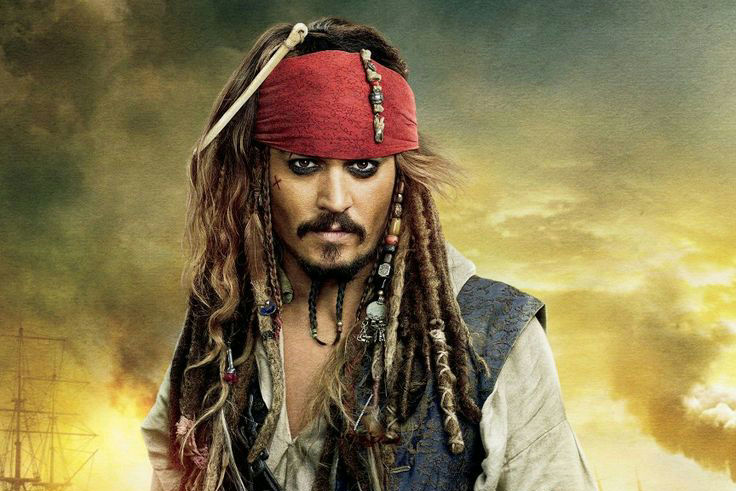
When Johnny Depp first appeared as Captain Jack Sparrow in 2003’s Pirates of the Caribbean, he took a standard blockbuster script and turned it into a unique piece of character-driven art. Ignoring the traditional “swashbuckling hero” archetype, Depp chose to play the pirate as a rum-soaked rock star with a moral compass that was constantly spinning. His eccentric movements, slurred speech, and unpredictable wit made him the breakout star of the franchise and earned him an unlikely Academy Award nomination for a Disney film. He proved that an audience will follow a character anywhere as long as they are consistently surprising and entertaining to watch.
The character of Jack Sparrow is essentially a trickster figure who survives more by his wits and his luck than by his skill with a sword, which makes him incredibly relatable. He is always the underdog, even when he is technically the “bad guy,” and his ability to talk his way out of any situation became the hallmark of the series. By injecting so much personality and weirdness into a big-budget action movie, Depp showed that there was still room for genuine creativity in the “factory” of summer blockbusters. Jack Sparrow didn’t just revitalize the pirate genre; he became a global phenomenon that proved characters with flaws and quirks are always more interesting than those who are perfectly heroic.
9. Marlon Brando in the Godfather

Marlon Brando’s performance as Don Vito Corleone in the 1972 epic The Godfather is widely considered one of the greatest acting achievements in the history of the medium. He portrayed the head of a powerful crime family not as a thuggish gangster, but as a dignified, soft-spoken patriarch who valued loyalty and family above all else. By using a raspy voice and weighted movements, Brando made the aging Don feel like a man who carried the weight of an entire world on his shoulders. This interpretation added a layer of Shakespearean tragedy to the film, making the audience sympathize with a man who committed terrible acts in the name of protecting his own.
The character is so impactful because he represents the complex duality of the “American Dream,” where success often comes at a steep moral cost. Vito Corleone isn’t just a criminal; he is a statesman of the underworld who operates on a strict, albeit violent, code of honor that feels increasingly rare in the modern world. His influence can be seen in almost every crime drama produced since, but few have managed to capture the same blend of menace and warmth that Brando achieved. He remains the gold standard for character development because he showed us that even the most powerful men are ultimately defined by their quietest moments and their most private sacrifices.
10. Jules Winnfield in Pulp Fiction

Samuel L. Jackson delivered a career-defining performance as Jules Winnfield in the 1994 cult classic Pulp Fiction, creating a character that was as philosophical as he was deadly. Jules is a hitman who spends his time discussing the ethics of foot massages and the European names for cheeseburgers, which makes his sudden bursts of violence even more shocking. However, his character arc is defined by a moment of perceived divine intervention that leads him to give up his life of crime to “walk the earth” like a monk. This transition from a cold-blooded killer to a man seeking spiritual redemption provided the film with an unexpected moral core that resonated deeply with viewers.
The character’s recitation of a fictionalized Bible verse, Ezekiel 25:17, became one of the most famous monologues in cinema history because of the sheer power and rhythm Jackson brought to the delivery. It served as a terrifying warning at the start of the film and a moment of profound reflection by the end, showing how much the character had grown. Jules matters because he represents the possibility of change and the idea that no one is beyond the reach of a “moment of clarity.” In a film filled with cynical and violent people, his decision to choose a different path provided a glimmer of hope and made him the most memorable part of a truly revolutionary movie.
11. Tom Hanks in Forrest Gump
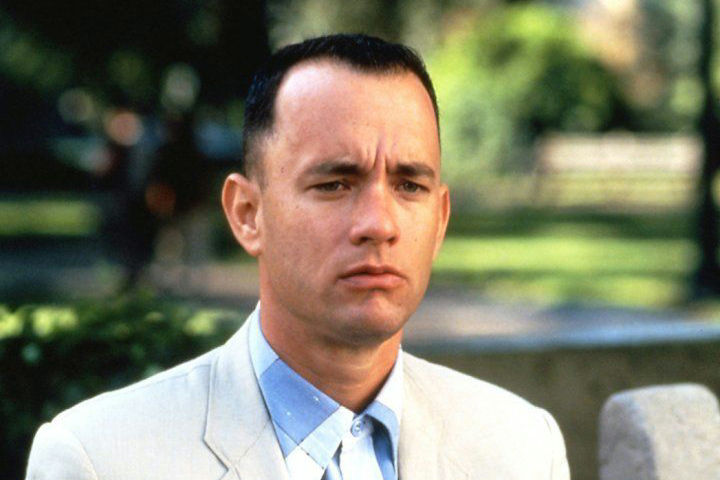
Tom Hanks captured the heart of the world in 1994 when he stepped into the shoes of Forrest Gump, a man with a low IQ but a boundless capacity for kindness. The character became a cultural phenomenon because he acted as a mirror for decades of American history, showing that a pure heart can navigate even the most turbulent times with grace. Forrest’s perspective on life was famously summed up by his mother’s analogies about boxes of chocolates, and this simple, earnest philosophy resonated with millions of people who were looking for a bit of hope in a cynical world. Hanks managed to make the character feel deeply grounded and real, avoiding the potential for caricature by focusing on Forrest’s unwavering loyalty and his literal interpretation of the world around him.
What makes Forrest Gump so enduring is the way he influenced everyone he met without ever truly realizing the impact he was making. He wasn’t a hero who set out to change the world, yet through his accidental presence at major historical events, he reminded us that history is made by ordinary people doing their best. The character provided a much-needed sense of comfort, proving that intelligence and status are far less important than the way we treat the people we love. Even today, the image of Forrest sitting on his bench waiting for the bus serves as a powerful reminder to slow down and appreciate the journey because life is indeed unpredictable and full of surprises that we should cherish.
12. Norman Bates in Psycho
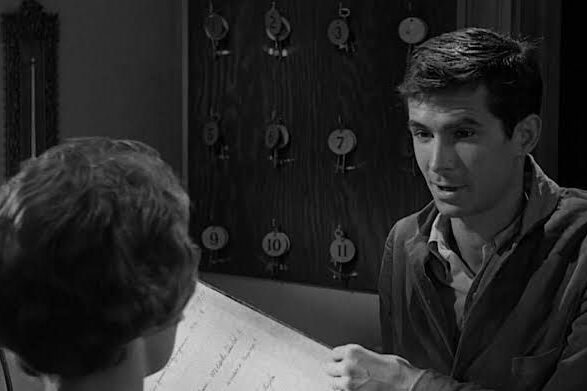
In 1960, Alfred Hitchcock introduced the world to Norman Bates in Psycho, and cinema was never quite the same after that chilling encounter at the Bates Motel. Anthony Perkins delivered a performance that was revolutionary because he made the “monster” seem like a shy, vulnerable young man who wouldn’t hurt a fly. This subversion of the typical villain archetype was what made the final revelation so devastating for the audience, as they realized they had been sympathizing with a killer all along. Norman was a character defined by his stifling domestic environment and his fractured psyche, creating a new kind of psychological horror that focused on the darkness lurking behind a polite smile and a nervous stutter.
The impact of Norman Bates lies in the way he brought horror into the mundane setting of a roadside motel, suggesting that danger could be found anywhere, even in the most ordinary-looking people. Perkins’s twitchy, bird-like mannerisms and his soft-spoken delivery made the character feel genuinely tragic, trapped by the “factory” of his own mind and the ghost of his domineering mother. This role established the blueprint for the “polite serial killer” that has been replicated in countless films and television shows ever since. By forcing the audience to look closely at the complexity of mental illness and trauma, Psycho moved the horror genre away from supernatural monsters and toward the much more frightening reality of human instability.
13. Jodie Foster in The Silence of the Lambs
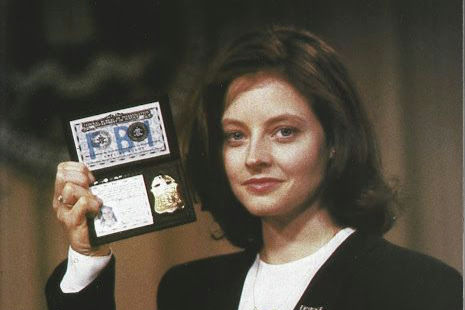
While Hannibal Lecter often gets the most attention, Jodie Foster’s portrayal of Clarice Starling in The Silence of the Lambs is the true heartbeat of the 1991 masterpiece. As a young FBI trainee entering a male-dominated world, Clarice had to rely on her intellect and her resilience to navigate both the bureaucracy of the bureau and the mind of a genius killer. She was a character who carried the weight of her rural, working-class background like a badge of honor, using her past trauma to fuel her drive for justice. Foster brought a sense of quiet, steely determination to the role that made Clarice feel like one of the most capable and relatable protagonists in the history of the thriller genre.
Clarice mattered because she represented a new kind of female hero who didn’t need to adopt masculine traits to be successful or respected. Her strength came from her vulnerability and her ability to empathize with the victims, which allowed her to see patterns that the more experienced men around her completely missed. The psychological chess match she played with Lecter was so compelling because she refused to be intimidated by him, even when he poked at her deepest insecurities. Her character proved that courage isn’t the absence of fear, but the ability to face your “lambs” and keep moving forward. She remains an icon for anyone who has ever had to work twice as hard to prove themselves in a world that underestimated their potential.
14. The Dude in The Big Lebowski
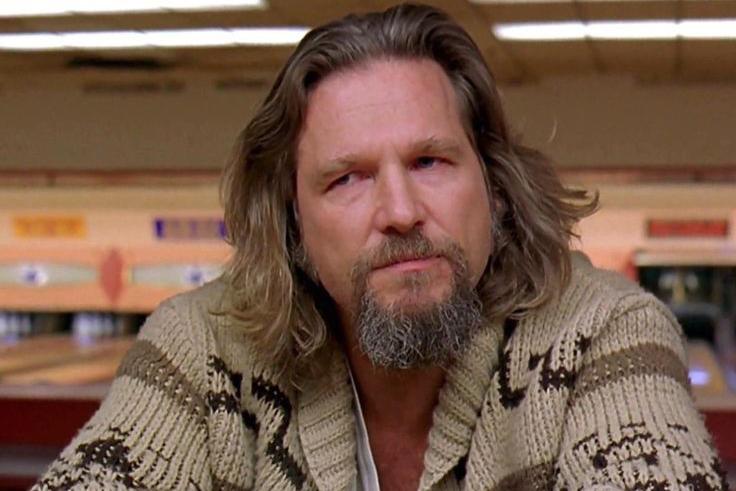
Jeff Bridges created an unlikely icon in 1998 when he donned a bathrobe and a pair of jelly sandals to play Jeffrey “The Dude” Lebowski. In a film noir parody that was as confusing as it was hilarious, The Dude became the patron saint of the laid-back lifestyle, proving that you can be the hero of your own story without ever really trying. He was a character who valued his rug, his bowling team, and his White Russians above all else, providing a perfect contrast to the high-stakes, aggressive world of the other characters. Bridges brought a natural, lived-in warmth to the role that turned a potential loser into a figure of profound, if slightly stoned, wisdom.
The character of The Dude has inspired an entire following because he represents a total rejection of the high-pressure “factory” of modern success and ambition. He simply “abides,” taking the world as it comes and refusing to let the chaos of life ruin his mellow mood. This radical passivity was something that audiences found incredibly refreshing, making The Big Lebowski a cult classic that continues to grow in popularity every year. Whether he was being threatened by nihilists or hallucinating a bowling-themed dream sequence, The Dude remained remarkably consistent in his easy-going nature. He serves as a reminder that sometimes the best way to deal with life’s problems is to simply fix yourself a drink and head to the bowling alley with your friends.
15. Hermoine Granger in Harry Potter
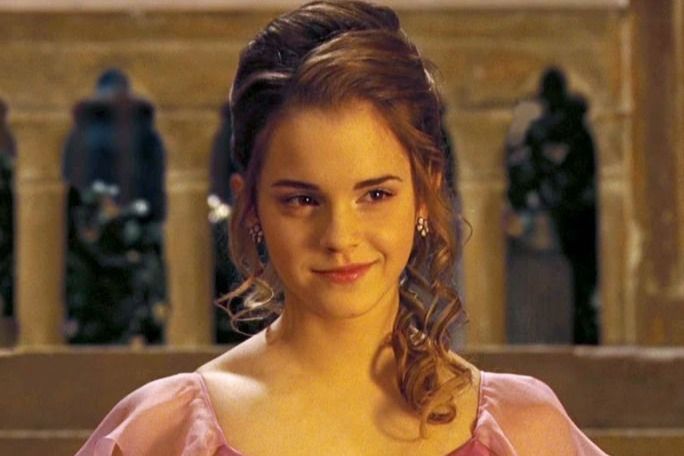
Emma Watson grew up on screen as Hermione Granger, but it was the character’s unwavering commitment to knowledge and logic that made her the real hero of the Harry Potter series. In a world of magic and destiny, Hermione proved that being “the brightest witch of her age” was a result of hard work and a genuine love for learning rather than just natural talent. She was the one who consistently solved the puzzles and provided the necessary information to save Harry and Ron, making her the essential anchor for the entire franchise. Hermione was a character who proudly wore her intelligence as a shield, showing young girls everywhere that being “bookish” was a powerful and admirable trait.
What makes Hermione so significant is that she never felt the need to downplay her smarts to fit in, even when her peers teased her for being a “know-it-all.” As the series progressed, she also became a fierce advocate for the marginalized, showing a level of social conscience that added real depth to her character. She balanced her bossy tendencies with a deep loyalty to her friends, proving that you can be both the smartest person in the room and the most supportive companion. Her legacy is one of empowerment through education, and she remains a defining figure for a generation that grew up believing that a trip to the library could solve almost any problem.
16. James Bond in Casino Royale
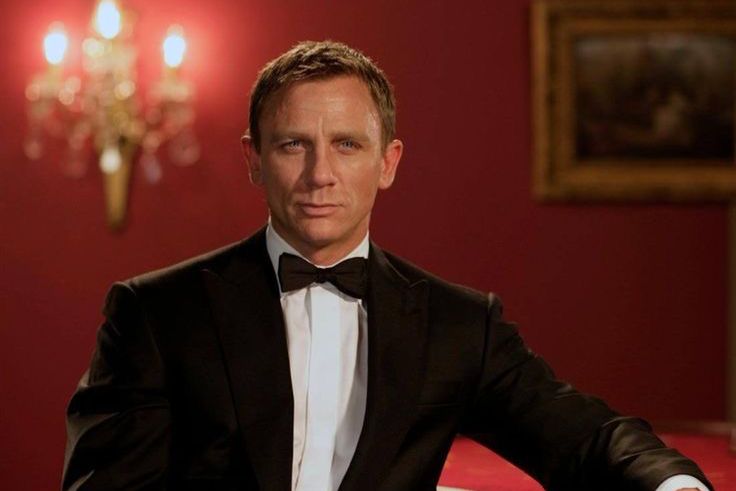
When Daniel Craig took over the role of James Bond in 2006’s Casino Royale, he stripped away the gadgets and the puns to give us a 007 who was raw, bruised, and emotionally compromised. This version of Bond was a “blunt instrument” who had to learn how to be a spy on the job, making the character feel more human and vulnerable than he had in decades. Craig brought a physical intensity to the role that made every fight feel desperate and every injury feel real, moving the franchise away from its “factory” formula and toward a more serialized, character-driven narrative. This Bond was a man haunted by his choices and the people he lost, giving the series a level of gravity it had never quite achieved before.
This reinvention of the character was essential for making the spy genre feel relevant in a post-9/11 world where the lines between good and evil were increasingly blurred. By showing Bond’s heartbreak and his struggle with his own mortality, the filmmakers created a character that audiences could actually care about on a personal level. Craig’s tenure as Bond proved that even a fifty-year-old icon could be successfully updated for a new era by focusing on the man behind the tuxedo. He left a legacy of a more grounded, gritty secret agent who was defined by his resilience and his scars rather than just his cool car and his preference for how his martinis were prepared.
17. Gollum in The Lord of the Rings
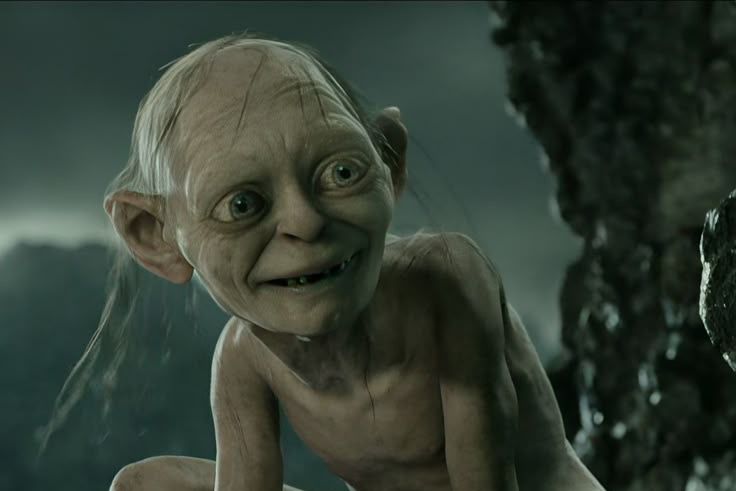
Andy Serkis changed the way we think about acting and technology when he brought Gollum to life in The Lord of the Rings trilogy starting in 2001. Using motion-capture technology, Serkis delivered a performance that was so emotionally resonant that it transcended the digital effects, making Gollum one of the most tragic and complex characters in cinema history. He was a creature physically and mentally twisted by his obsession with the One Ring, trapped in a constant internal battle between his former self, Sméagol, and the monster he had become. This duality made him a fascinating character to watch, as the audience oscillated between feeling intense pity for him and absolute terror at his treachery.
Gollum’s impact on film was twofold, as he proved that digital characters could have the same depth and soul as any live-action performance. He wasn’t just a special effect; he was a fully realized person with a tragic backstory and a desperate, relatable need for the one thing that was destroying him. His constant refrain of “my precious” became a global catchphrase for addiction and greed, illustrating the destructive power of obsession in a way that felt deeply human. By giving a face and a voice to the corrupting influence of power, Serkis and the filmmakers created a character that remains a benchmark for what is possible when technology is used to enhance, rather than replace, a brilliant performance.
18. Miranda Priestly in The Devil Wears Prada
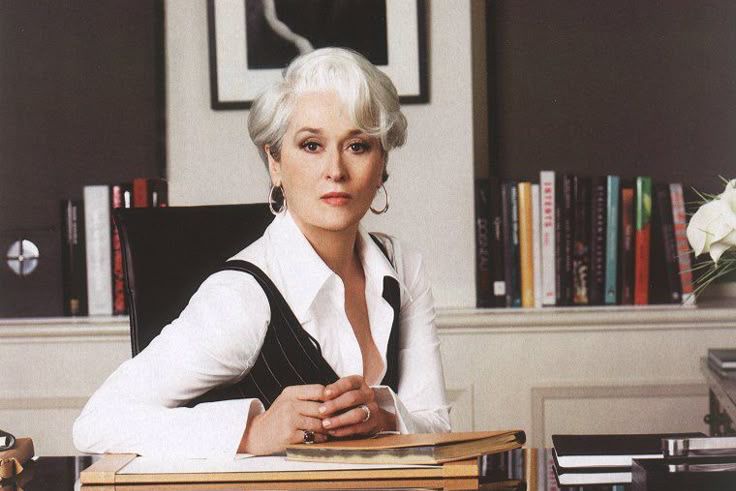
Meryl Streep turned what could have been a simple villain into a legendary figure of industry and excellence in the 2006 film The Devil Wears Prada. As the formidable fashion editor Miranda Priestly, Streep delivered a masterclass in controlled power, using a soft, quiet voice to strike fear into the hearts of everyone around her. She wasn’t just a “mean boss”; she was a woman who had sacrificed everything to reach the top of a brutal, high-stakes industry and who demanded nothing less than perfection from those who worked for her. This character provided a fascinating look at the double standards faced by powerful women, as her male counterparts would likely have been praised for the same level of uncompromising dedication.
The brilliance of Miranda Priestly lies in the way she articulated the importance of the fashion industry as a massive “factory” of culture and economics, famously explaining how a single shade of blue trickles down to the average consumer. Streep gave the character moments of subtle vulnerability that made her feel human, even as she was being incredibly difficult, showing the high cost of maintaining such an impeccable public image. She remains an iconic character because she represents the ultimate standard of professional excellence and the complicated reality of being a trailblazer in a competitive world. Her signature “that’s all” became a symbol of her absolute authority and her refusal to settle for anything less than the very best.
19. Wolverine in Logan
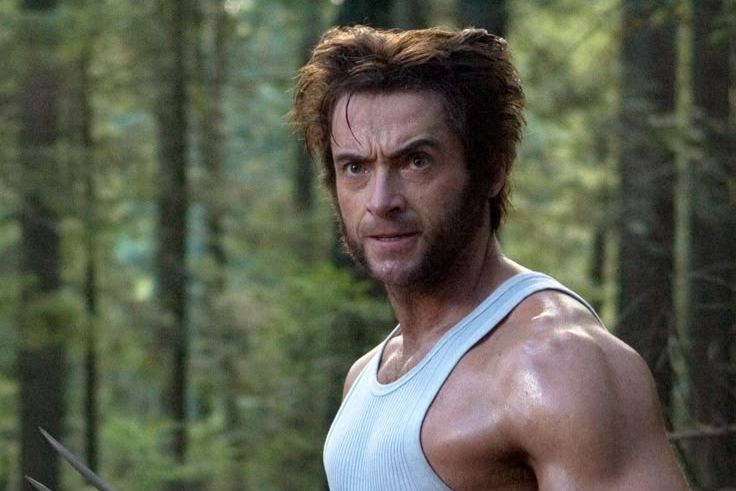
Hugh Jackman played Wolverine for seventeen years, but it was his final outing in the 2017 film Logan that truly cemented the character as a cinematic masterpiece. After nearly two decades of being an invincible action hero, we saw a version of Logan who was old, ailing, and world-weary, forced to care for an aging Professor X in a world where mutants were nearly extinct. This character was defined by his immense capacity for pain and his struggle to find a reason to keep fighting when everyone he loved was gone. Jackman brought a raw, soulful intensity to the role that turned a comic book movie into a moving western-style tragedy about legacy and redemption.
Wolverine’s journey mattered because it showed that even the toughest heroes have a breaking point and that true strength is found in the willingness to protect the next generation. By stripping away the spectacle of the typical superhero “factory,” the film allowed the character to face his own mortality and find a sense of peace through sacrifice. Logan’s relationship with the young Laura provided the emotional core of the story, showing that even a man built for war could find a moment of fatherly grace at the end of his life. He remains a beloved figure because he was a character who felt real pain, both physical and emotional, making his final journey one of the most powerful arcs in modern cinema.
20. Katniss Everdeen in The Hunger Games
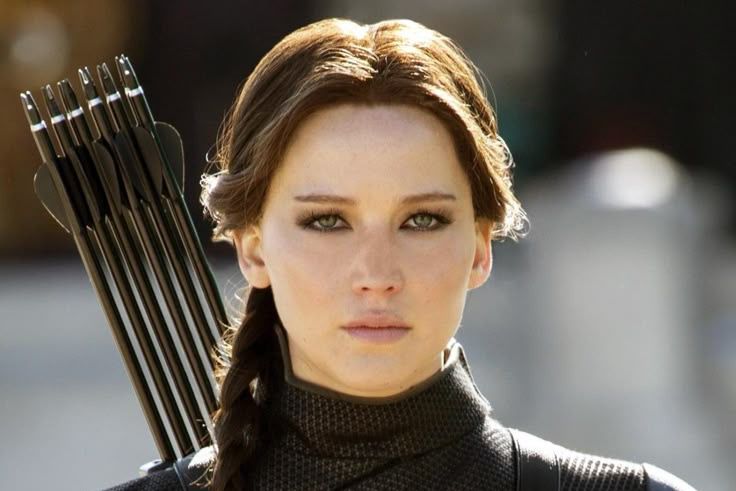
Jennifer Lawrence became a global superstar when she took on the role of Katniss Everdeen in The Hunger Games in 2012, a character who redefined the “reluctant hero” for a new generation. Katniss wasn’t interested in starting a revolution or being a symbol; she was a survivor who volunteered for a death match simply to save her sister. This grounded motivation made her incredibly relatable, as her actions were always driven by a fierce, quiet love for her family rather than a desire for glory. Lawrence brought a sense of stoic, internal strength to the role that made Katniss feel like a real girl caught in an impossible and horrific situation.
The character’s impact on pop culture was massive, as she proved that a female-led action franchise could be a global powerhouse by focusing on character depth and social commentary. Katniss was a character who struggled with the trauma of her experiences and the weight of being a puppet for both the Capitol and the rebels, highlighting the psychological toll of war. She didn’t want the spotlight, yet she became the “Mockingjay” because her authentic defiance inspired those around her to fight for a better world. Her legacy is one of resilience and the power of a single individual to stand up against an unfair system, reminding us that even the quietest voices can start a fire that changes everything.
21. Charlie Chaplin in The Tramp
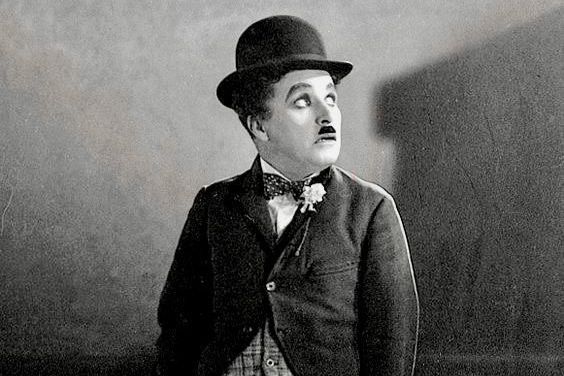
Charlie Chaplin’s creation of “The Tramp” remains perhaps the most significant achievement in the history of cinema because it proved that a character could communicate profound emotion without ever speaking a single word. With his baggy trousers, tight coat, oversized shoes, and bamboo cane, the character became a universal symbol for the underdog who maintains his dignity despite the hardships of poverty and misfortune. Whether he was eating an old leather boot like a gourmet feast in The Gold Rush or accidentally becoming a leader of a protest in Modern Times, the Tramp represented the indomitable spirit of the common man. Chaplin’s genius lay in his ability to blend slapstick comedy with heartbreaking pathos, making audiences laugh one moment and cry the next through his expressive eyes and balletic movements.
The character’s impact on the world was truly global because he transcended language barriers and cultural differences, becoming a beloved figure from the silent era to the present day. The Tramp served as a sharp critique of the industrial “factory” of modern life, showing how easily the individual can be crushed by the machinery of society if they lose their sense of humor and humanity. By refusing to adapt to a world of sound for as long as possible, Chaplin ensured that his character remained a pure expression of visual storytelling that anyone, anywhere, could understand. He remains the foundational pillar of movie characters, proving that even in our most desperate hours, a bit of cleverness and a jaunty walk can help us face the world with a smile. It is this enduring sense of hope that makes the Tramp not just a movie character, but a permanent part of the human experience.
In the end, the lasting power of cinema often comes down to these singular, brilliant characters who manage to break through the screen and live in our memories long after the credits have rolled.
Like this story? Add your thoughts in the comments, thank you.


