
Data Entry Clerks

For decades, data entry was the “golden ticket” for those seeking a dependable office career without needing a specialized degree. These professionals acted as the human bridge between paper archives and digital databases, manually typing in everything from medical records to shipping manifests. In the 1990s and early 2000s, sprawling office floors were filled with clerks who ensured that organizational data remained organized and accessible. It was a role defined by rhythm, speed, and a steady paycheck, making it a staple of the global administrative workforce for over thirty years.
However, the dawn of the 2020s brought a wave of automation that turned this once-stable path into a precarious one. Technologies like Optical Character Recognition (OCR) and sophisticated machine learning algorithms can now “read” and sort thousands of documents in the time it takes a human to finish a single page. By 2023, many major logistics and banking firms had fully integrated these automated systems, reducing the need for manual input by nearly 70%. Today, the role has shifted from “doing” to “checking,” leaving fewer entry-level spots for those looking to start their careers in a traditional office environment.
Accounting Clerks

The role of the accounting clerk has long been a pillar of the financial world, providing a sense of security for those who enjoy working with numbers. These professionals were traditionally responsible for the “heavy lifting” of finance, such as balancing ledgers, reconciling bank statements, and tracking day-to-day business expenses. Throughout the late 20th century, having a skilled clerk on hand was the only way a business could ensure its books stayed accurate and tax-compliant. It was a career path that promised longevity, as every business, regardless of size, required manual record-keeping to survive.
This landscape began to shift dramatically around 2015 with the rapid evolution of cloud-based accounting software like QuickBooks and Xero. These platforms introduced automated bank feeds and AI-driven categorization, which meant that transactions could be recorded in real-time without a human lifting a finger. By 2022, the integration of artificial intelligence allowed these systems to flag financial errors and generate complex reports instantly. While high-level financial advisors are still in high demand, the routine “clerk” duties are disappearing. This evolution has left many traditional bookkeepers facing a market that values software management skills over manual data reconciliation.
Paralegal Review Roles

Paralegals have historically been the backbone of the legal profession, serving as the essential support system for high-powered attorneys. For years, a significant portion of their job involved “document review”, a painstaking process of reading through thousands of pages of evidence to find a single relevant fact. This work was seen as an ironclad career choice because the legal field is notoriously slow to change and heavily reliant on human detail. In the early 2010s, a large law firm might employ dozens of paralegals just to manage the discovery phase of a single major corporate lawsuit.
The tide began to turn around 2018 as “LegalTech” started to gain mainstream momentum. New AI-powered platforms can now scan massive datasets for specific keywords, sentiments, or legal patterns with a level of speed that no human team could ever match. By 2024, many top-tier firms had adopted predictive coding, a technology that allows computers to prioritize which documents actually need a human eye. While paralegals are still vital for courtroom prep and client interaction, the “document review” niche is shrinking fast. This means the role is no longer a guaranteed entry point for those hoping to build a long-term career solely on administrative legal tasks.
Administrative Assistants

Since the mid-20th century, the administrative assistant has been the heartbeat of the corporate office, handling everything from complex travel itineraries to the boss’s daily schedule. It was a role built on trust and organizational mastery, often leading to long-term job security and deep institutional knowledge. In the early 2000s, “Admin Assistant” was one of the most common job titles in the United States, representing a diverse workforce that kept the gears of industry turning. Parents often encouraged their children toward these roles because they were seen as recession-proof and universally needed.
However, the 2020s have seen a massive surge in digital coordination tools that perform these tasks for a fraction of the cost. Automated scheduling links, AI-driven email sorting, and virtual project management boards have replaced the need for a dedicated person to manage basic office flow. By 2025, many mid-sized companies have transitioned to “virtual assistants” or automated hubs to handle routine logistics. While executive-level assistants who provide high-level strategy and personal gatekeeping remain safe, the standard entry-level assistant role is becoming a rarity. The shift emphasizes that today’s office workers must master complex software rather than just organizing a physical filing cabinet.
Telemarketing Agents

Telemarketing was once a powerhouse industry, providing millions of people with a steady way to earn a living through the art of persuasion. From its peak in the 1980s through the early 2000s, call centers were massive employment hubs in both suburban and urban areas. The job required a human voice to build rapport, handle objections, and close sales over the phone. Despite the rise of “Do Not Call” registries in 2003, the industry remained a reliable fallback for job seekers because companies believed that only a human could truly connect with a potential customer on the other end of the line.
The reality today is starkly different, as “voice AI” has reached a level of sophistication that was once the stuff of science fiction. Modern automated systems can now hold fluid conversations, mimicking human tone and emotion while processing thousands of calls simultaneously. By 2023, many global corporations shifted their initial outreach programs to these AI “bots,” which don’t require breaks, benefits, or a salary. While human agents are still brought in for high-value sales or complex troubleshooting, the volume of traditional telemarketing jobs has plummeted. What was once a reliable entry-level job is now being squeezed out by algorithms that never get tired of hearing “no.”
Retail Cashiers

For over a century, the retail cashier has been the face of the neighborhood store, providing a human connection at the end of every shopping trip. This role was a cornerstone of the economy, offering millions of workers a way to enter the labor market and gain customer service experience. Throughout the 1990s, the “ding” of a cash register was a sound of stability, and being a cashier was a respectable, steady job that existed in every town. It was widely believed that people would always prefer a friendly face over a machine when it came time to pay for their groceries.
That belief was challenged in the late 2010s as self-checkout kiosks became standard in almost every major supermarket and big-box retailer. By 2021, the shift accelerated further with the introduction of “just walk out” technology, which uses cameras and sensors to bill customers automatically without any checkout process at all. While some retailers still staff a few lanes for those who prefer personal service, the total number of cashier positions is in a steep decline. In many modern stores, one employee now monitors ten machines instead of ten employees working ten registers. This shift indicates that the role, once a symbol of community commerce, is rapidly becoming a relic of the past.
Customer Service Reps

Customer service representatives have traditionally been the front line of problem-solving for everything from faulty electronics to confusing utility bills. For decades, the ability to calm an angry customer and find a solution was a prized human skill that kept these roles stable and in high demand. In the early 2000s, “outsourcing” was the biggest threat to this sector, but the jobs themselves remained plentiful. Most people felt that as long as customers had problems, companies would need a human staff to listen to them and provide a personalized touch to the resolution process.
The landscape changed forever with the arrival of advanced Large Language Models (LLMs) in the early 2020s. Unlike the frustrating “chatbots” of the past, today’s AI assistants can understand context, empathy, and complex instructions, resolving up to 80% of routine inquiries without any human intervention. By 2024, many tech and retail giants reported that AI was handling the majority of their support tickets, leading to significant downsizing in human call centers. While experts are still needed for unique or high-stakes issues, the “stable” entry-level customer service job is disappearing. Workers in this field now face a future where they must be technical troubleshooters rather than just friendly voices.
Bank Tellers
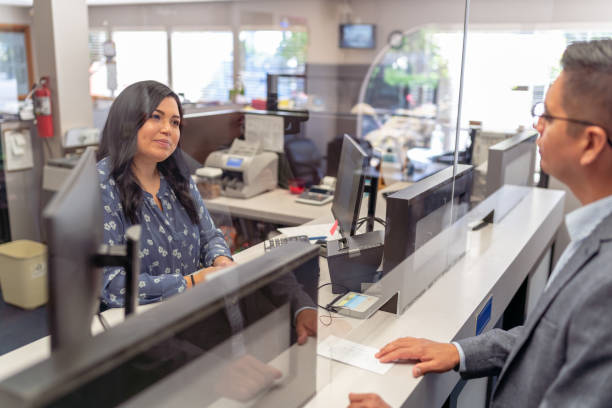
The bank teller was once the ultimate symbol of a “respectable” local job, representing financial trust and community stability. For most of the 20th century, a trip to the bank was a weekly ritual that required a face-to-face interaction with a teller to deposit a check or withdraw cash. These roles were highly coveted because they offered a professional environment, good benefits, and a clear path toward becoming a loan officer or branch manager. Even as ATMs became popular in the 1980s, the human teller remained an essential part of the banking experience for millions of loyal customers.
The rapid digital transformation of the 2010s, however, began to hollow out this profession. With the rise of mobile check deposits and smartphone banking apps, the need to visit a physical branch dropped by nearly 50% between 2010 and 2022. By 2024, many major banks announced massive branch closures, shifting their focus toward “digital-first” service models. The tellers who remain are often rebranded as “relationship managers,” focusing on complex sales rather than basic transactions. For those who once viewed a teller window as a lifetime career, the reality is that the neighborhood bank branch is becoming a digital kiosk that rarely requires a human presence.
Fast Food Workers
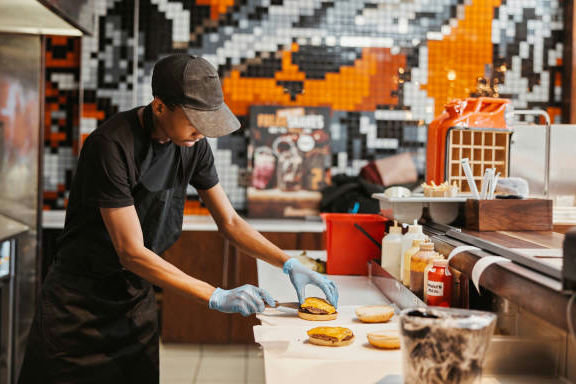
Fast food employment has long been the entry point for the global workforce, offering a reliable starting line for teenagers and adults alike. Since the rise of the modern franchise in the 1950s, these roles were built on human speed and teamwork, with workers manning grills, fryers, and drive-thru windows. Because the industry thrives on low costs and high volume, the job was always seen as secure; as long as people were hungry and in a hurry, there would be work for someone to flip the burgers. It was the quintessential “first job” for generations of workers worldwide.
However, the 2020s introduced a new era of “kitchen robotics” that is changing the math of fast food. In 2022, several major chains began testing fully automated drive-thrus powered by AI voice recognition, while others debuted robotic arms that can perfectly fry chicken or flip burgers without human error. By 2025, the “smart kitchen” has become a reality in many high-traffic locations, significantly reducing the number of employees needed per shift. While human managers are still required to keep the machines running, the traditional “crew member” role is under threat. What was once a labor-intensive industry is quickly becoming a tech-intensive one, leaving fewer spots for human workers.
Travel Booking Agents

There was a time when planning a vacation was an impossible task without the help of a professional travel agent. These experts held the keys to airline computer systems and possessed the specialized knowledge to find the best hotels and hidden deals. Throughout the 1980s and 90s, travel agencies were staples of every shopping mall, providing a sense of excitement and security for travelers. It was a career that required a mix of geographical knowledge, salesmanship, and technical skill, offering a stable and often glamorous path for those who loved to explore the world.
The internet began to chip away at this profession in the late 1990s, but the real “final blow” came with the rise of AI-driven travel platforms in the 2020s. Today, an app can curate a 10-day European itinerary, compare 500 flight paths, and book every detail in under sixty seconds. By 2023, the use of traditional travel agents for simple flights and hotel stays had plummeted, as consumers took control of their own bookings via smartphones. While a small group of high-end agents still caters to luxury “concierge” clients, the average neighborhood travel agent has mostly vanished. The profession has transformed from a general service into a tiny, specialized niche with very little room for new entries.
Low-Skill Content Writers

For the better part of the 2010s, the “gig economy” provided a massive boom for entry-level content writers. These individuals were the engines behind the millions of blog posts, product descriptions, and listicles that populated the internet every day. It was a role that felt incredibly stable because of the sheer volume of content needed for Search Engine Optimization (SEO). As long as businesses needed to rank on Google, they needed humans to churn out readable articles. For many students and freelancers, this provided a flexible and reliable way to earn a living from anywhere in the world.
However, the launch of advanced generative AI models in late 2022 fundamentally shifted the value of basic writing. Suddenly, a machine could produce a 500-word product description in three seconds for a fraction of a penny. By 2024, many “content mills” that once employed thousands of writers began closing their doors or replacing their staff with AI editors. While there is still a high demand for “thought leadership” and deep investigative journalism, the market for routine, low-skill writing has effectively collapsed. Today’s writers must offer unique perspectives or expert knowledge, as the era of being paid simply to summarize existing information is rapidly coming to a close.
Proofreading Jobs

Proofreading has long been the final safety net for the publishing, marketing, and legal worlds. These meticulous professionals were responsible for catching the tiny errors that human writers and editors inevitably missed. For decades, a career in proofreading offered a quiet, stable life for those with an eagle eye for detail and a mastery of grammar. It was a respected profession because a single typo in a million-dollar ad campaign or a legal contract could be disastrous. Because of the high stakes, companies were always willing to pay for a human set of eyes to verify every comma.
The stability of this role began to crumble as AI-driven editing tools evolved from simple spell-checkers into sophisticated “context engines” around 2020. By 2024, software could not only find typos but also ensure a document adhered to specific style guides like AP or Chicago style with 99% accuracy. Many corporate communications teams have now phased out dedicated proofreaders in favor of these automated systems, which work instantly and never get tired. While human editors are still needed to check for logic and “flow,” the traditional role of the “typo hunter” is fading. For those entering the field, the job is no longer about finding mistakes but about managing the software that finds them.
Routine News Reporters

Journalism has always been a field driven by the “scoop,” but a huge portion of daily news is actually quite repetitive. For years, entry-level reporters earned their stripes by covering local sports scores, daily weather updates, and basic corporate earnings reports. These “routine” beats were the training grounds for the next generation of great journalists, providing a steady flow of work and a clear career path. In the early 2010s, newsrooms were still bustling with people whose entire day was spent turning raw data, like stock prices or football stats, into short, readable news blurbs for the evening edition.
The landscape changed in the late 2010s when major news outlets began using “automated journalism” software to handle these data-heavy stories. By 2023, AI was writing thousands of financial and sports updates per month, often publishing them before a human reporter could even finish reading the raw data. This shift has significantly thinned the ranks of local newsrooms, making the traditional “starting” reporting job much harder to find. While we still desperately need human journalists to investigate corruption and tell emotional human stories, the “data-to-text” jobs are gone. This transition has made the journalism career path feel much more like a steep mountain than a steady ladder for newcomers.
Graphic Designers

Graphic design was once considered a “future-proof” career because it blended technical software skills with human artistic flair. Since the 1990s, becoming proficient in tools like Photoshop or Illustrator was a guaranteed way to find steady work in advertising, web design, or publishing. Companies always needed someone to design logos, social media graphics, and layout templates. For thirty years, the barrier to entry was the high cost of the software and the time required to learn it, which kept the profession stable and the salaries competitive for those who put in the effort.
The environment shifted dramatically with the 2022 explosion of AI image generators and “drag-and-drop” design platforms. These tools allow someone with zero training to generate professional-looking layouts or unique illustrations in a matter of seconds. By 2025, many small businesses that used to hire freelance designers for basic tasks began doing it themselves using AI subscriptions. While top-tier creative directors and brand strategists remain essential for major campaigns, the “production designer” role, the person who does the daily, repetitive design work, is under heavy pressure. The profession is becoming a “winner-take-all” market where only the most highly skilled and creative individuals can maintain a stable, long-term career.
Translators And Interpreters

In our interconnected global economy, the role of the translator has always been seen as vital and intellectually secure. For decades, being a translator meant having a deep, culturally rich understanding of at least two languages, a skill that seemed impossible for a machine to replicate. Whether working at the United Nations or translating technical manuals for a global car manufacturer, these professionals enjoyed a stable career built on the complexity of human communication. In the early 2010s, most people still laughed at the “broken” results of online translation tools, believing their jobs were safe for a lifetime.
However, the “deep learning” revolution of the early 2020s changed everything by allowing AI to understand context, idioms, and even tone. By 2024, real-time translation apps became so accurate that they began replacing human interpreters for routine business meetings and basic document translation. While we still rely heavily on humans for literary translation, legal contracts, and high-level diplomacy, the market for “general” translation has shrunk considerably. This means the profession is no longer a broad, stable path for language students, but a narrow, specialized field. The modern translator is now more of a “cultural consultant” who fixes the small mistakes a machine might make in a 50-page document.
Long-Haul Drivers

For generations, long-haul trucking has been the backbone of the global supply chain and a symbol of middle-class stability. It was a job that offered independence and a solid paycheck for those willing to spend weeks on the open road. In the 1990s and early 2000s, being a “trucker” was a reliable career choice that didn’t require a college degree but offered a level of security that few other blue-collar jobs could match. It was widely believed that the sheer complexity of navigating a 40-ton vehicle through traffic and weather would always require a human behind the wheel.
The narrative began to shift around 2016 as companies like Tesla, Waymo, and several startups began testing autonomous “semi-trucks.” By 2023, several “middle-mile” routes, long, straight stretches of highway between distribution centers, were being handled by self-driving trucks with humans only acting as safety monitors. While full “door-to-door” automation is still years away, the role of the driver is clearly evolving from a “navigator” to a “technician.” As logistics companies face pressure to lower costs and increase safety, the demand for traditional long-haul drivers is expected to soften. For a job once considered the “king of the road,” the future looks increasingly like a seat in a remote monitoring station.
Warehouse Pickers
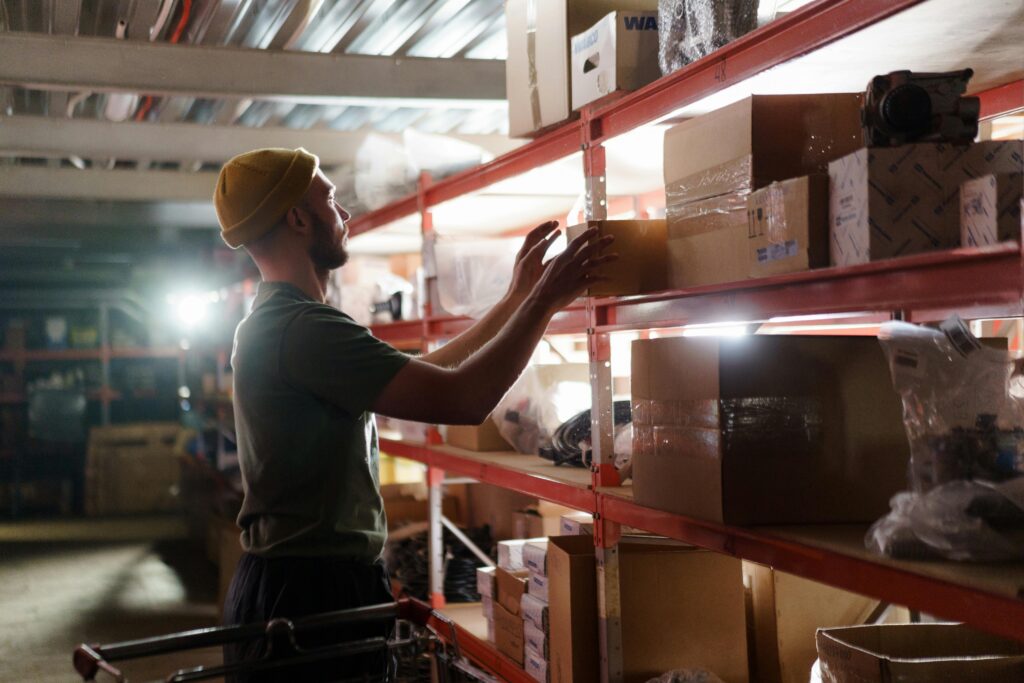
Warehouse picking has historically been a reliable source of employment for millions of workers, especially with the explosion of online shopping over the last twenty years. The job was simple: find the item on a shelf, scan it, and bring it to the packing station. During the 2010s, companies like Amazon hired hundreds of thousands of people to keep up with the “Prime” demand. Because the human hand is so much more flexible than a robotic claw, it was assumed that “picking” would be one of the last warehouse tasks to be fully automated.
That assumption was proven wrong as “computer vision” and robotic dexterity advanced rapidly in the early 2020s. By 2024, many major fulfillment centers had replaced traditional aisles with “kiva-style” robots that bring the entire shelf to a stationary picking arm. These new robots can now handle delicate items like glass or soft clothing, which were previously “human-only” tasks. While warehouses still need people to troubleshoot the machines and manage the floor, the number of “boots on the ground” has started to dwindle. What was once a booming job market for manual labor is becoming a highly automated environment where one human manages a fleet of fifty robots.
Radiology Screening Roles

Radiology has long been considered one of the safest and most prestigious paths in the medical field. For decades, the “gold standard” for diagnosis was a highly trained doctor spending hours looking at X-rays, CT scans, and MRIs to find hidden tumors or fractures. Because the stakes are literally life and death, nobody ever imagined that a computer could take over such a sensitive role. In the early 2010s, a student entering radiology could expect a high salary and total job security for their entire career, as the demand for medical imaging was constantly growing.
However, “computer vision” AI has proven to be incredibly good at spotting patterns that the human eye might miss. By 2022, many hospitals began using AI “pre-screening” tools that scan thousands of images and flag only the suspicious ones for a doctor’s review. In some tests, the AI was actually more accurate at detecting early-stage cancers than human experts. While we will always want a human doctor to make the final diagnosis and talk to the patient, the “screening” part of the job is becoming automated. This shift means that fewer radiologists may be needed in the future to handle the same number of patients, changing the “stable” outlook of the profession.
Dispensing Pharmacists

For nearly a century, the local pharmacist has been a trusted figure in healthcare, responsible for the careful measurement and distribution of life-saving medications. The role was seen as incredibly secure because it required a high level of education and a strict adherence to safety regulations. In the 1990s, a pharmacist’s day was spent manually counting pills and checking for drug interactions, a process that relied entirely on human focus and memory. It was a career that combined medical expertise with a stable retail environment, making it a favorite recommendation for students who excelled in chemistry.
The 2020s have seen the rise of “central fill” pharmacies and robotic dispensing systems that can package thousands of prescriptions per hour with zero errors. By 2024, many hospital and retail pharmacies had integrated “pill-picking” robots that handle the mechanical part of the job, leaving the human pharmacist to focus on patient counseling. While the clinical knowledge of a pharmacist remains essential, the “dispensing” side, the part that involves the physical movement of drugs, is being phased out. This means the job market is shifting toward “clinical pharmacy,” and the traditional role of the “neighborhood druggist” who spends their day filling bottles is slowly becoming a thing of the past.
Insurance Underwriters

Insurance underwriting has traditionally been a career of “calculated stability.” For over a hundred years, underwriters were the gatekeepers of the insurance world, using their experience and judgment to decide who gets covered and at what price. It was a role that felt safe because it required a “gut feeling” about risk that computers seemingly couldn’t replicate. In the early 2000s, an underwriter at a major firm could expect a long, steady career path, gradually moving from simple auto policies to complex corporate risk assessments as they gained more “human” experience in the field.
The arrival of “Big Data” and predictive analytics in the late 2010s fundamentally changed how risk is calculated. By 2023, AI systems could analyze thousands of data points, from a person’s credit score to their driving habits, to calculate risk more accurately than any human ever could. Today, many routine insurance applications for life, home, and auto are approved or denied by an algorithm in seconds, without ever reaching a human’s desk. While human underwriters are still needed for unique, multi-million-dollar risks, the “everyday” underwriting jobs are vanishing. This shift has turned a once-dependable office career into a high-tech field where data science skills are more important than traditional professional judgment.


