
11. Space Mountain Ghost Train
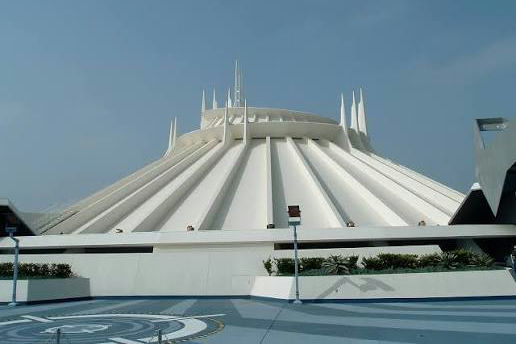
The Space Mountain Ghost Train was a unique, spooky-themed overlay that appeared at Disneyland Paris during the mid-1990s. This seasonal transformation added eerie music and special lighting to the classic indoor roller coaster, aiming to give guests a fresh and frightening experience. However, the fun was cut short in 1995 due to a tragic mechanical accident. During an after-hours maintenance session, a moving train struck a service platform that had not been cleared away, resulting in a fatal injury to a worker. While this was not a guest-facing incident during normal hours, it immediately halted the “Ghost Train” project while Disney conducted a massive internal safety review.
The park decided that the risks associated with the temporary equipment and modified lighting were too high to justify the theme. As a result, the Ghost Train concept was permanently shelved, and the ride returned to its standard intergalactic theme. For many fans, this short-lived version of the ride became a piece of theme park trivia, as it vanished almost as quickly as it had arrived. The incident served as a wake-up call for the industry, proving that even temporary overlays or seasonal changes must be held to the exact same rigorous safety standards as permanent installations. It reinforced the idea that maintenance safety is just as vital as rider safety.
2. The Cannonball Loop
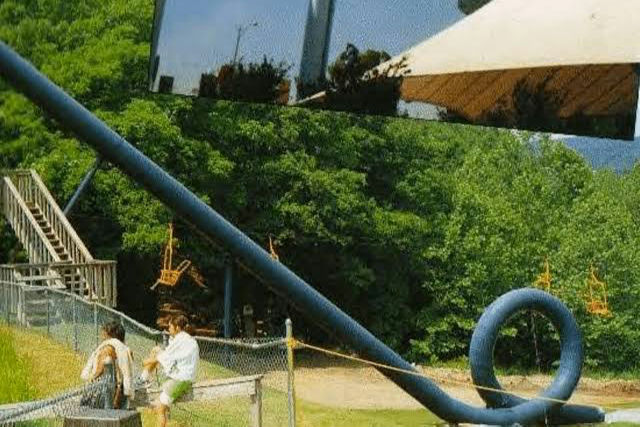
The Cannonball Loop at Action Park in Vernon, New Jersey, is perhaps the most legendary failure in water park history. This fully enclosed vertical loop waterslide opened briefly in the summer of 1985, though some accounts suggest testing began in the late 1970s. It was built with a complete 360-degree loop that required riders to reach a specific speed just to make it through without falling. Because the design was rushed and lacked proper physics testing, early riders reported hitting their heads or getting stuck at the top of the loop. Rumors even circulated that park employees were offered $100 bills to serve as human test subjects because the crash dummies were coming out decapitated.
State inspectors eventually stepped in and shut the ride down after only a few weeks of sporadic operation, citing massive safety concerns and a lack of proper engineering. The slide sat as a menacing blue landmark for years but never officially reopened to the general public. For those who grew up in the tri-state area, the Cannonball Loop became the ultimate symbol of a “wild west” era of amusement parks where personal safety was often left to chance. Today, the loop is a popular subject for documentaries and internet retrospectives, serving as a stark reminder of why modern water parks must follow such incredibly strict mathematical models before building a single pipe.
3. Son of Beast
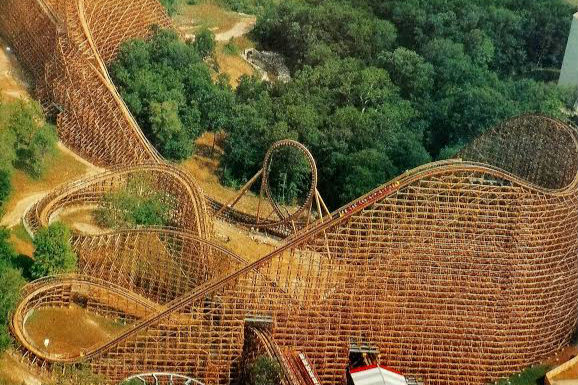
When Son of Beast debuted at Kings Island in Mason, Ohio, on April 28, 2000, it was hailed as a masterpiece of modern engineering. Standing as the tallest and fastest wooden roller coaster on the planet, it was the first of its kind to feature a massive vertical loop made of steel. However, the ride was plagued by structural issues from the very beginning. The massive weight of the wooden structure caused it to shift and vibrate far more than intended, leading to a rough experience for guests. In July 2006, a structural failure caused a “bump” in the track that sent 27 riders to the hospital with various injuries, leading to an immediate closure.
The park attempted to save the attraction by removing the heavy loop and using lighter trains, but the public had lost its confidence in the “Beast’s” offspring. After another reported injury in 2009, Kings Island decided that the cost of maintenance and the risk of further accidents were simply too high. On July 27, 2012, the park announced the ride would be dismantled, and it was eventually demolished later that year. For coaster enthusiasts, Son of Beast represents a fascinatng case of over-ambition. It proved that while you can build bigger and faster, you cannot ignore the physical limitations of building materials like wood when pushed to such extreme limits.
4. Verrückt
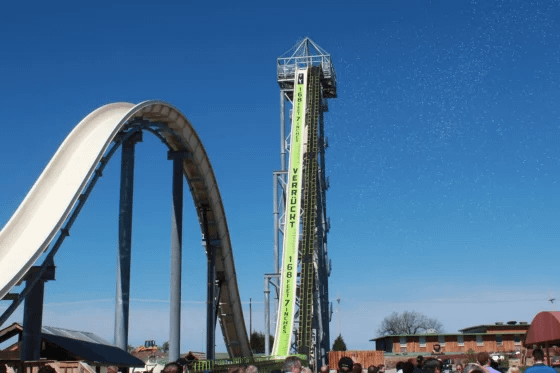
Verrückt, which means “insane” in German, certainly lived up to its name when it opened at Schlitterbahn Waterpark in Kansas City in July 2014. At over 168 feet tall, it was officially recognized by the Guinness World Records as the world’s tallest waterslide, standing even higher than Niagara Falls. The ride used a unique raft system that blasted riders up a second hill after the initial massive drop. However, the development was troubled, with early tests showing rafts flying off the tracks. Despite these warning signs, the ride opened to massive crowds and global media attention, quickly becoming the park’s star attraction for thrill-seekers.
The excitement turned to horror on August 7, 2016, when a 10-year-old boy was killed during the descent after his raft went airborne and hit the ride’s netting. This tragic event led to the immediate and permanent closure of the slide and sparked a massive criminal investigation into the park’s management and designers. The ride was eventually dismantled in late 2018, leaving a void in the Kansas City skyline. This tragedy became a massive turning point in the conversation about how extreme rides are regulated in the United States. It served as a heartbreaking reminder that when thrill-seeking crosses into unacceptable risk, the consequences are permanent and devastating for families.
5. The Haunted Castle
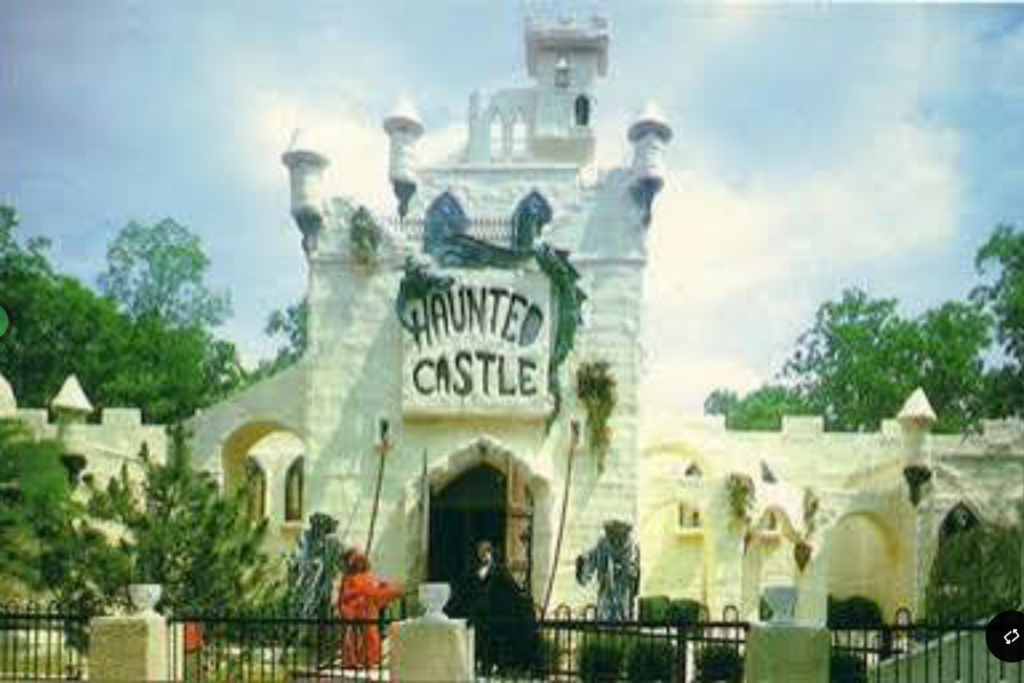
The Haunted Castle at Six Flags Great Adventure in Jackson, New Jersey, was a simple, low-tech walk-through attraction that focused on atmosphere. Opened in 1978, it consisted of several interconnected trailers that created a dark, maze-like environment filled with fabric walls and spooky sound effects. Unlike the high-tech rides of today, it relied on classic “jump scares” provided by actors. On May 11, 1984, the attraction became the site of one of the deadliest tragedies in theme park history when a fire broke out inside the structure. Because the building was filled with flammable materials and lacked a sprinkler system, the flames spread with terrifying speed.
The maze-like layout made it nearly impossible for guests to find their way out in the dark, smoky conditions. Sadly, eight teenagers lost their lives in the fire, a disaster that shocked the entire world and led to immediate changes in fire safety laws for temporary and permanent structures. The Haunted Castle was never rebuilt, and the park was forever changed by the loss. This event is still studied by safety experts today because it highlighted how even “gentle” attractions require rigorous emergency planning. It forced the industry to adopt much stricter standards for fire alarms, sprinklers, and clearly marked exit routes, ensuring that a tragedy of this scale would never happen again.
6. Thunder River Rapids Ride
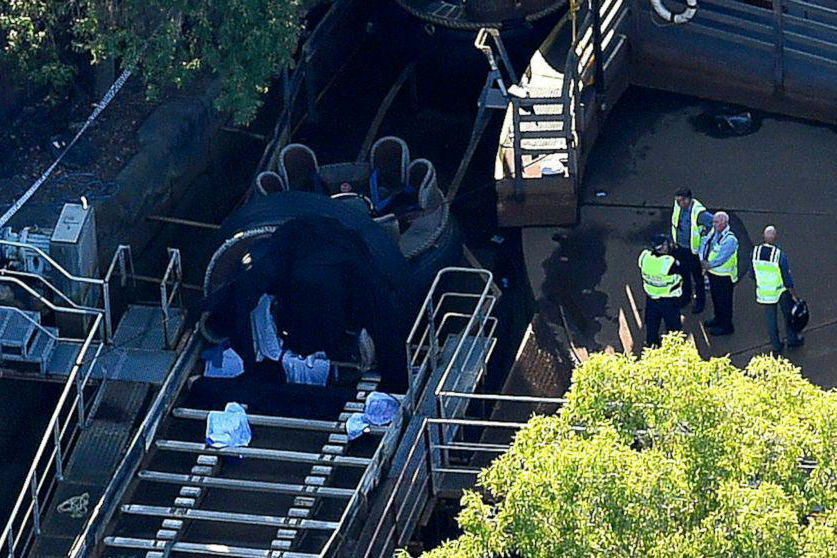
The Thunder River Rapids Ride at Six Flags Over Texas was a pioneer in the world of water excursions when it first opened in 1983. It was designed to simulate a whitewater rafting trip, using large circular rafts that floated down a man-made concrete river. For nearly two decades, it was considered a safe, family-friendly way to cool off during the hot Texas summers. However, the ride’s reputation changed forever in March 1999. During a routine trip, one of the rafts deflated and overturned in the water, trapping several passengers underneath. Tragically, a young girl drowned in the accident, while others suffered serious injuries.
Investigations into the incident revealed that the water flow management and the design of the rafts themselves contributed to the catastrophe. Although the park attempted to make safety upgrades, the ride was eventually closed for good as the industry moved toward newer, safer boat designs. For many frequent visitors, the closure felt like the end of an era, as the once-cheerful splashing of the river was replaced by a somber silence. This accident reshaped how parks across the globe approach water ride safety, specifically regarding raft buoyancy and the presence of underwater sensors. It served as a reminder that even “family” rides can harbor hidden dangers if the technology is not constantly updated to modern standards.
7. Mindbender (Galaxyland)
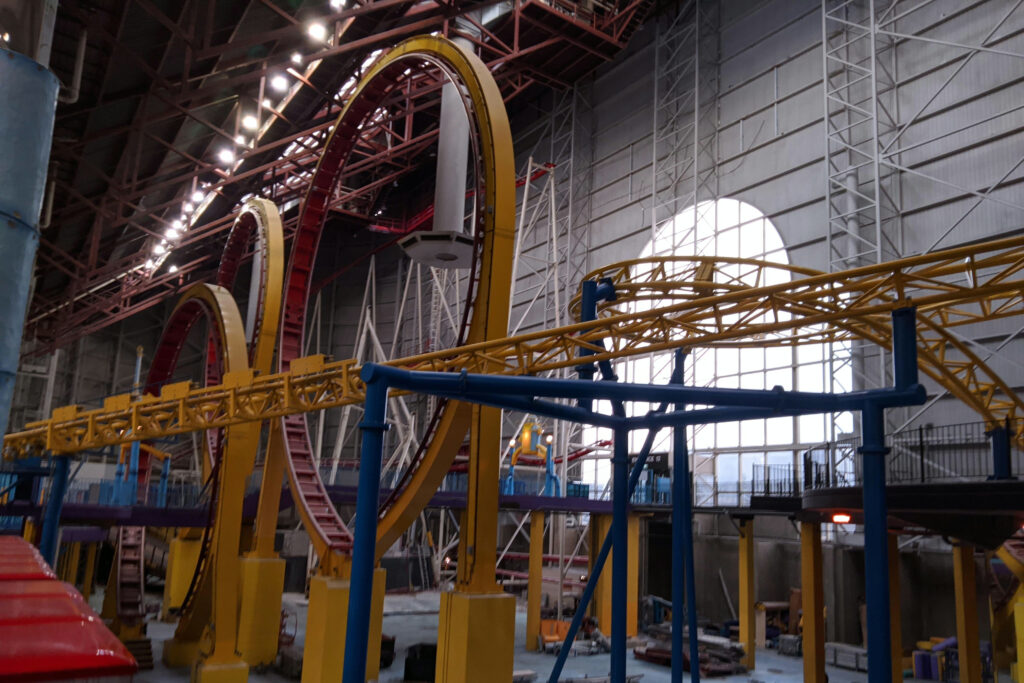
Mindbender was the crown jewel of Galaxyland, located inside the West Edmonton Mall in Alberta, Canada. When it opened in 1986, it was the world’s largest indoor triple-loop roller coaster, and it quickly became a massive draw for tourists. However, just months after its grand opening, a horrific derailment occurred in June 1986. A mechanical failure caused the final car of the train to fly off the track and strike a concrete pillar, resulting in the deaths of three people. The ride was closed for over a year as investigators looked into the design of the wheel assemblies and the overall track layout.
The ride eventually underwent massive safety renovations and reopened with much stricter maintenance protocols. Despite running successfully for many more years, it never truly escaped the shadow of that early tragedy. In early 2023, mall management announced that Mindbender would be permanently shut down and removed to make way for new developments. While many local residents felt a sense of nostalgia for the massive steel structure, others were relieved to see it go. Its long and complicated history shows how a single major event can permanently alter the public’s perception of a ride, even if it operates safely for decades afterward.
8. The Big Dipper
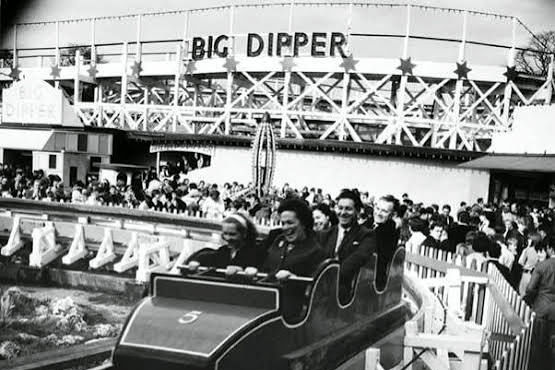
The Big Dipper was a classic wooden roller coaster located at Battersea Park in London, and it served as a major landmark for the city starting in 1924. It was one of the earliest large-scale coasters in the United Kingdom and provided thrills for generations of Londoners. However, on May 30, 1972, the ride became the site of the worst coaster accident in British history. A wooden lift chain snapped, and the safety brake failed, causing a train to roll backward and crash into another car. Five children were killed in the accident, and many more were left with life-altering injuries.
The park closed the ride immediately, and it was dismantled the following year in 1973. The disaster at Battersea Park led to a total overhaul of amusement park regulations in the UK, as the public demanded better inspections and safer machinery. For those who lived through that era, the Big Dipper is remembered as a symbol of a time when safety was far too relaxed. The site of the former park is now a peaceful green space, but the legacy of the accident continues to influence how modern British fairs and parks operate. It was a dark chapter that ultimately led to the high safety standards that British riders enjoy today.
9. The Texas Giant
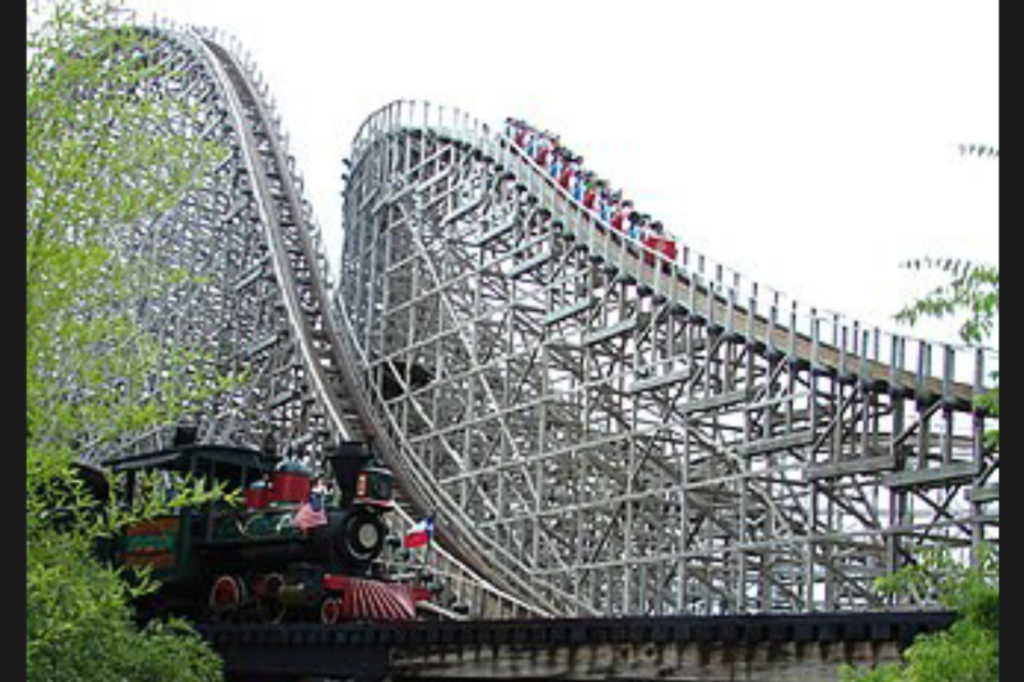
The Texas Giant at Six Flags Over Texas was a record-breaker when it opened in 1990, earning the title of the tallest wooden coaster in the world at the time. It was famous for its extreme drops and intense “airtime,” becoming a fan favorite for over twenty years. However, in July 2013, a tragic accident occurred when a woman was ejected from her seat during one of the ride’s steep drops. The investigation that followed focused heavily on the design of the lap bar restraints and whether they were adequate for riders of all body types. The ride was immediately shut down as the park re-evaluated its safety systems.
While the original wooden structure was eventually converted into a steel-hybrid coaster known as the “New Texas Giant,” the incident changed the way the park operated forever. Newer safety bars and seat belts were added, and stricter height and weight requirements were put in place for guests. This event highlighted the critical importance of inclusive safety design, reminding engineers that a restraint system must work perfectly for every single person, regardless of their size. It remains a sobering example of how even a world-class attraction must be constantly scrutinized to ensure that guest safety is never compromised for the sake of a thrill.
10. The Alpine Slide
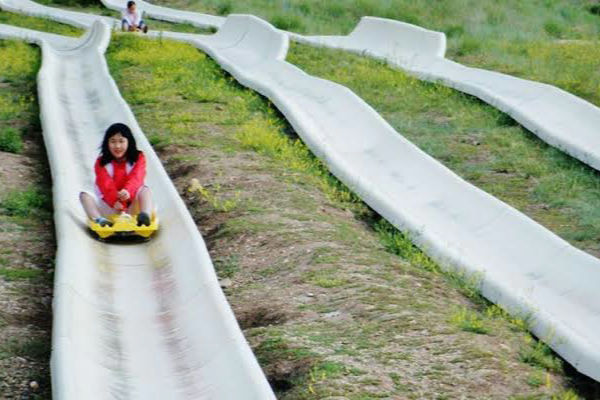
The Alpine Slide at Action Park was another legendary attraction that defined the chaotic reputation of the New Jersey park during the 1980s and 90s. Riders would take a ski lift to the top of a mountain and then descend on a small plastic sled down a long concrete track. The speed was controlled by a hand brake, but the brakes were notoriously unreliable, and the tracks were often uneven. This led to countless injuries, ranging from simple “track burns” to serious fractures and head injuries. It was widely considered one of the most dangerous rides in the park’s history.
As safety standards tightened in the late 1990s, the Alpine Slide was eventually shut down and replaced with more modern attractions. However, it still lives on in popular culture through books and documentaries as a symbol of an era when personal responsibility was the only thing keeping guests safe. For many former visitors, memories of the slide are a mix of adrenaline-fueled fun and genuine fear. Its closure marked a significant shift in the industry away from rides that relied entirely on the rider’s skill to avoid injury. Today’s parks favor automated systems that remove the “human error” factor, ensuring a much higher level of safety for everyone.
11. Thunder River Rapids (Dreamworld)
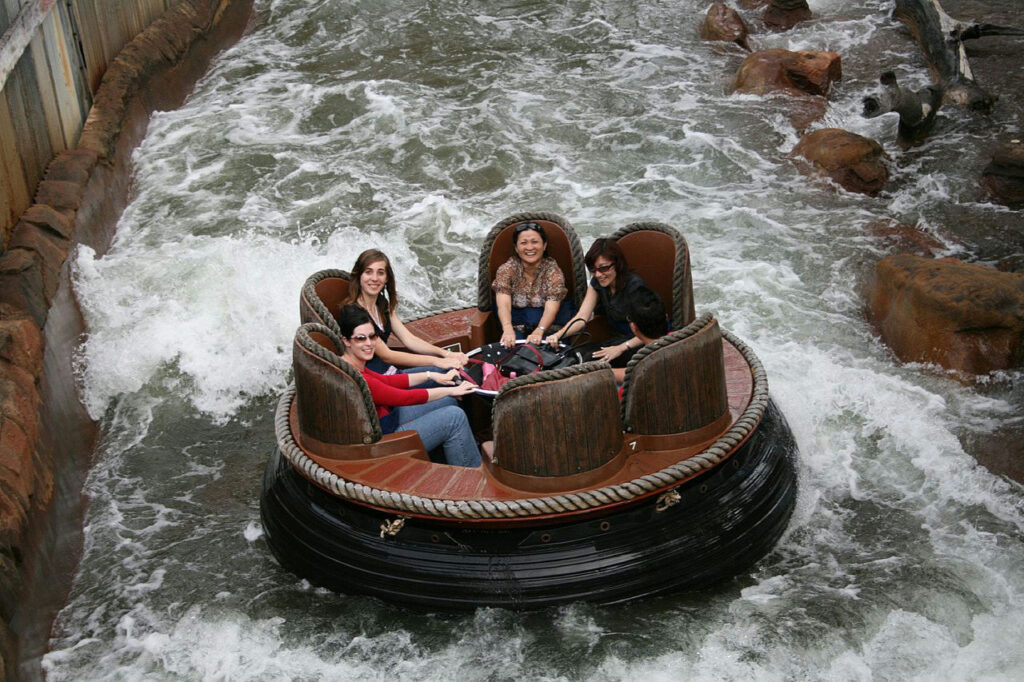
The Thunder River Rapids Ride at Dreamworld in Australia was one of the park’s oldest and most popular attractions, operating successfully for over 30 years. It was a staple for families visiting the Gold Coast, offering a mild but fun whitewater experience. On October 25, 2016, the ride suffered a catastrophic mechanical failure when two rafts collided near the end of the track. One of the rafts flipped over, leading to the deaths of four adults. The accident sent shockwaves through the entire country and resulted in a massive coronial inquest into the park’s maintenance and safety culture.
The ride was permanently closed and demolished shortly after the incident, and Dreamworld faced massive legal and financial repercussions. This tragedy led to sweeping new safety reforms across all Australian theme parks, including more frequent mandatory inspections and stricter training for ride operators. For the public, the event transformed the way family-friendly water rides were viewed, proving that age and a long history of operation do not guarantee safety. Today, the area where the ride once stood serves as a memorial, and the lessons learned from the failure have helped make Australian parks some of the most strictly regulated in the world.
12. The Derby Racer
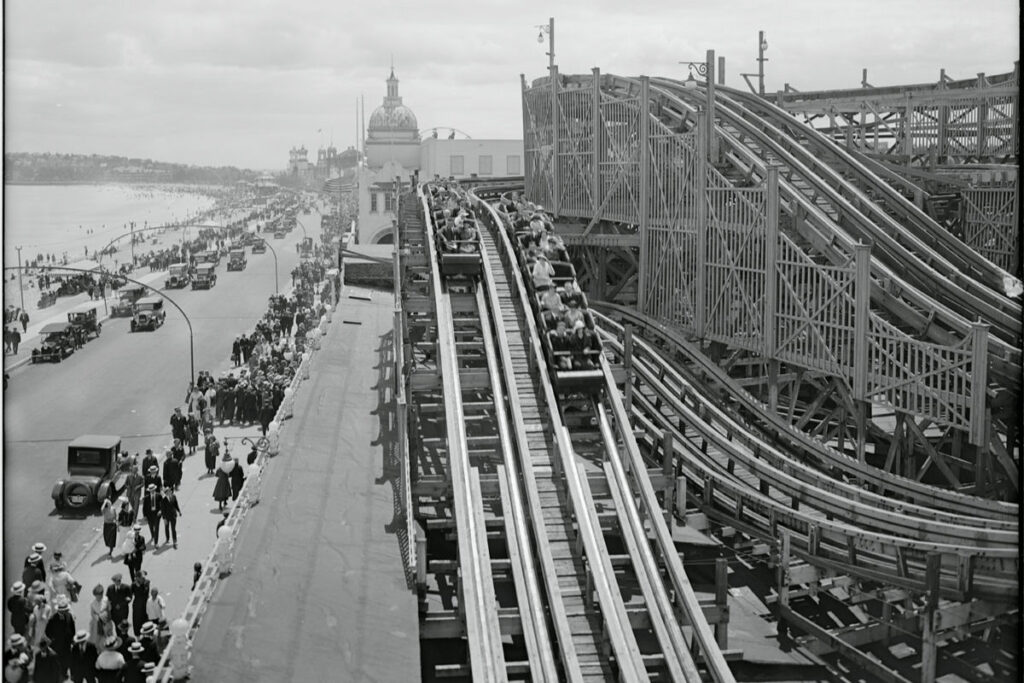
The Derby Racer was a high-speed racing coaster located at Revere Beach in Massachusetts, and it was a staple of the local boardwalk from 1911 until the late 1930s. Unlike modern coasters with secure harnesses and computerized brakes, the Derby Racer featured two parallel tracks where trains “raced” each other at breakneck speeds. The cars were designed with very few restraints, often leaving riders to rely on their own balance and grip to stay inside. Over its three-decade lifespan, the ride became notorious for multiple fatal accidents, often involving passengers who were thrown from their seats during sharp turns or sudden drops.
As the years went by, the public’s tolerance for such high-risk attractions began to fade. By the late 1930s, new state regulations and a growing focus on passenger protection made the Derby Racer’s “wild west” design completely obsolete. The ride was eventually dismantled in 1936, marking the end of an era where thrills were prioritized over basic physics. Looking back at vintage photographs of the Derby Racer today, it is almost hard to believe it was ever allowed to operate. Its story is a fascinating look at the early days of amusement engineering, highlighting a time when a simple lap bar was considered a luxury rather than a mandatory safety requirement.
13. Batman Tower
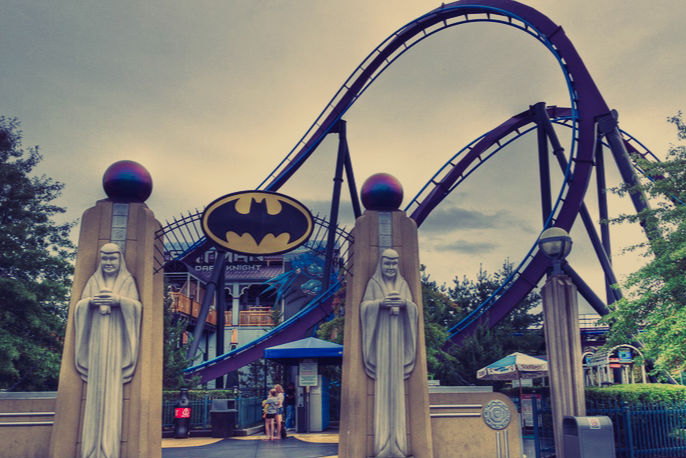
Batman Tower at Six Flags Great Adventure was an intense free-fall attraction that arrived in the early 1990s to capitalize on the popularity of the caped crusader. Guests were hoisted high into the air before being dropped vertically, experiencing a few seconds of pure weightlessness before the brakes kicked in. It was a major draw for adrenaline junkies who loved the sensation of a controlled fall. However, the ride’s reputation was shattered in 1999 following a mechanical failure that led to a tragic accident. The incident prompted an immediate shutdown by authorities, who launched a deep investigation into the park’s maintenance routines and equipment oversight.
The ride never carried another passenger again, and the massive tower structure was eventually hauled away from the park. For regular guests, the sudden disappearance of the ride was a somber reminder that complex mechanical systems require perfect upkeep every single day. The closure forced the park to implement much more frequent and detailed inspection schedules for all its high-altitude attractions. While the Batman branding eventually moved on to newer and safer coasters, the original tower remains a memory of a time when the industry learned a painful lesson about the hidden risks of gravity-based rides. It stands as a testament to the fact that even superheroes cannot save a ride from poor mechanical maintenance.
14. The Sky Ride
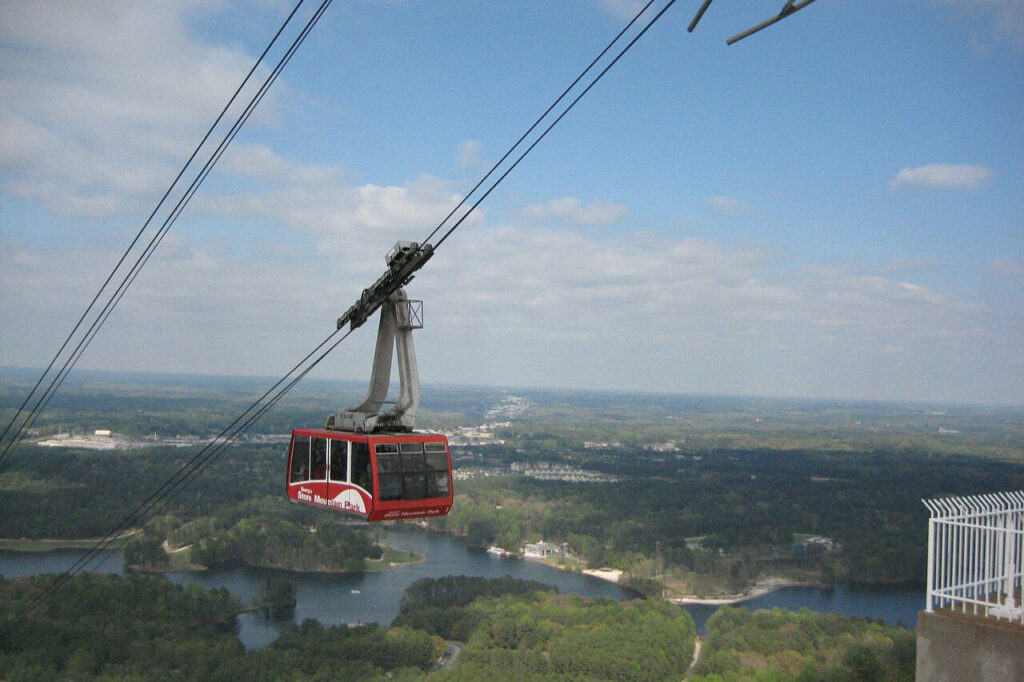
Sky Ride attractions were once a common sight at theme parks across the globe, providing a gentle way for families to travel from one side of the park to the other in suspended gondolas. These rides offered beautiful bird’s-eye views and a much-needed break for tired feet. However, during the 1960s and 1970s, several high-profile accidents occurred at different parks, usually involving mechanical failures or difficulties during emergency evacuations. Because the gondolas were suspended high above the ground, any stall in the system meant that guests were trapped in mid-air for hours, sometimes in extreme weather or dangerous heights.
As modern safety expectations evolved, many parks realized that the costs of retrofitting these aging systems with modern evacuation tech were simply too high. One by one, these scenic aerial lifts were retired and replaced by ground-based transport or simply removed to open up more space for bigger coasters. For many older visitors, the disappearance of the Sky Ride represents the loss of a slower, more nostalgic way to experience a theme park. While they were not the most thrilling rides, their legacy is a reminder that even slow-moving attractions must have robust fail-safes. Their retirement marked a permanent shift toward rides that are easier to monitor and evacuate in an emergency.
15. River Country Slides
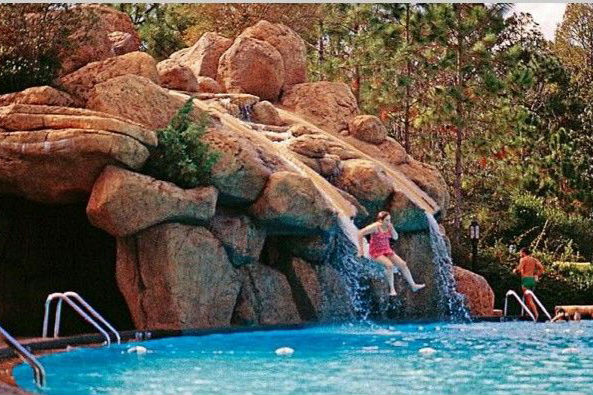
Disney’s River Country was the first water park at Walt Disney World, opening in 1976 with a rustic “old swimming hole” theme. The slides were unique because they dumped guests directly into a lagoon that was fed by the natural waters of Bay Lake. While this gave the park an authentic Florida feel, it eventually led to a major health crisis. In 1980, a young guest died from a rare brain-eating amoeba after swimming in the park’s untreated, lake-fed water system. While Disney added better filtration after the incident, the park struggled to keep up with the rising sanitation standards required for modern water parks.
River Country continued to operate for another two decades, but it was eventually closed permanently in November 2001. Rather than being demolished, the site was famously left to be reclaimed by nature, and eerie photos of the abandoned slides have circulated online for years. The park’s history serves as a major lesson for the industry regarding the use of natural water sources for public attractions. It highlighted the fact that environmental design choices can have long-lasting and hidden consequences for guest health. Today, Disney’s newer water parks use heavily treated, closed-loop systems, ensuring that the water is as safe as it is fun, leaving the “swimming hole” concept in the past.
16. The Cyclone Jet
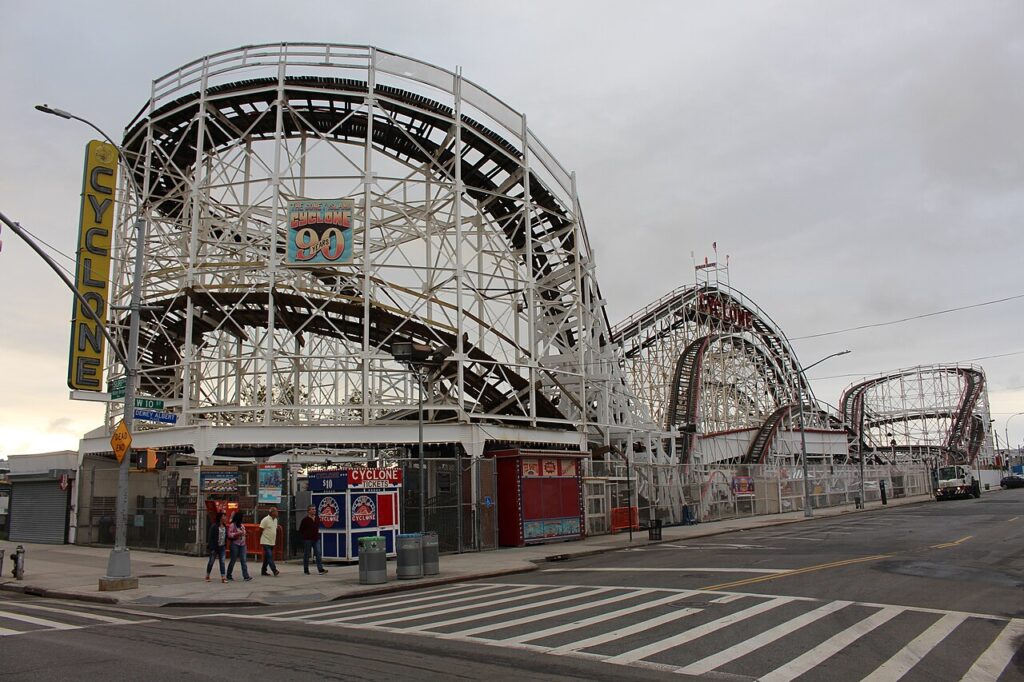
The Cyclone Jet was a high-speed spinning attraction that was a popular fixture at many traveling fairs and amusement parks across Europe during the 1980s. The ride was known for its intense centrifugal forces, which pinned riders against the walls as it spun at high velocities. However, its design was often criticized for having minimal restraints, and several versions of the ride were linked to serious accidents where passengers were injured due to the extreme physical stress. In many cases, local authorities found that the rides were being operated at speeds far exceeding the manufacturer’s original safety recommendations.
By the early 1990s, the Cyclone Jet began to vanish from fairgrounds as European countries pushed for more uniform safety laws across the continent. The ride became a symbol of a time when traveling fairs operated with much less oversight than permanent theme parks. Its removal from the circuit reflected a broader trend toward prioritizing rider comfort and safety over raw, unrefined speed. For fairground historians, the Cyclone Jet is a reminder of how quickly the industry changed once international safety standards were adopted. It paved the way for modern spinning rides that use much more sophisticated restraint systems to protect guests while still delivering a dizzying thrill.
17. Rolling Thunder
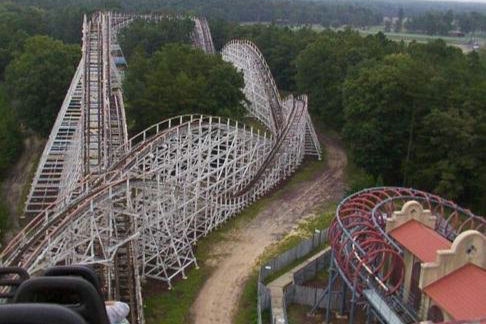
Rolling Thunder at Six Flags Great Adventure was a classic wooden racing coaster that first thrilled guests on May 11, 1979. For many years, it was the park’s signature wooden attraction, known for its “double” track that allowed two trains to race each other to the finish line. However, the ride’s history was marred by a tragic event in 1984 when a young man stood up during the ride and was fatally struck. While the investigation determined that the accident was caused by the rider’s behavior rather than a mechanical failure, it sparked a national debate about whether wooden coaster restraints were secure enough to prevent such actions.
Rolling Thunder managed to stay in operation for several more decades, becoming a beloved vintage favorite for many fans. However, as newer, smoother steel coasters were built nearby, the aging wooden giant became increasingly expensive to maintain. The park finally made the decision to shut it down for good on September 8, 2013, to make room for newer attractions. For the local community, the removal of Rolling Thunder was a bittersweet moment that signaled the end of the “golden age” of wooden coasters at the park. Its long lifespan shows how a ride can survive a tragedy and remain a favorite, but eventually, the march of time and technology catches up to everything.
18. Disaster Transport
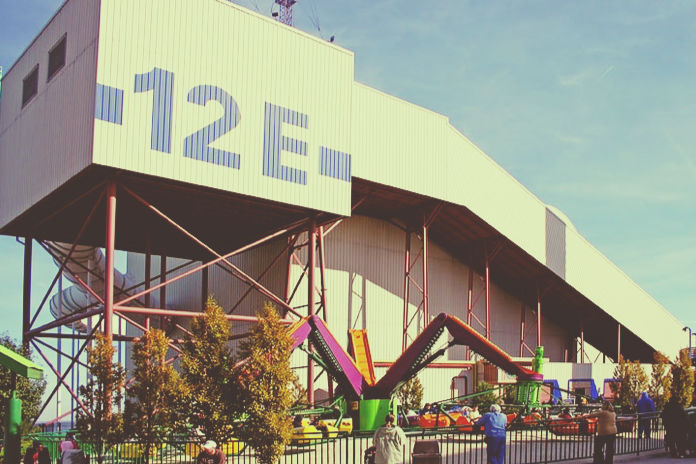
Disaster Transport was a unique, space-themed indoor bobsled coaster at Cedar Point in Sandusky, Ohio. Originally opened in 1985 as an outdoor ride called “Avalanche Run,” the park decided to enclose it in a massive building in 1990 to create a high-tech, futuristic experience. For years, it was a fan favorite because it offered a dark, air-conditioned escape from the summer heat, complete with neon lights and a “cargo delivery” storyline. However, as the 21st century arrived, the ride’s aging technology and the high cost of maintaining the massive indoor structure began to take a toll on its popularity.
By the early 2010s, the special effects were often broken, and the “futuristic” theme felt quite dated to modern guests. On July 29, 2012, Cedar Point officially closed the ride to make way for a massive new wing coaster called GateKeeper. Fans lined up for one last journey through the dark, marking the end of a very quirky chapter in the park’s history. While it didn’t close due to a major accident, its removal highlighted how even beloved “comfort” rides eventually get retired to make room for bigger, more efficient technology. Today, it is remembered as a nostalgic piece of 90s theme park culture that prioritized atmosphere and storytelling over raw speed.
19. Pirate’s World Slides
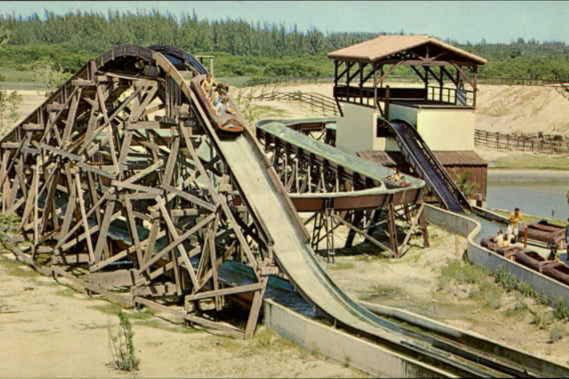
Pirate’s World was a chain of water parks that popped up in several U.S. states during the mid-1980s, offering high-speed slides with a nautical theme. While they were popular for a short time, the park’s designs were often criticized for being “too fast” and poorly cushioned. This led to a staggering number of lawsuits involving back injuries, broken bones, and collisions at the bottom of the slides. Unlike modern parks that use sophisticated water brakes and landing pools, Pirate’s World often relied on simple run-out lanes that were not always long enough to stop heavier riders safely.
The mounting insurance costs and a series of high-profile injuries eventually forced most of these parks to close their doors by the late 1990s. For those who visited during their peak, the memories are often a mix of fun and chaotic danger. These parks represent a transitional period in water park history where the excitement of a new industry outpaced the development of safety technology. The failure of Pirate’s World helped lead to the creation of the safety standards we see today, where every slide must be modeled using computer simulations to ensure that every guest, regardless of their weight or speed, arrives safely at the bottom.
20. Top Spin (Original Models)
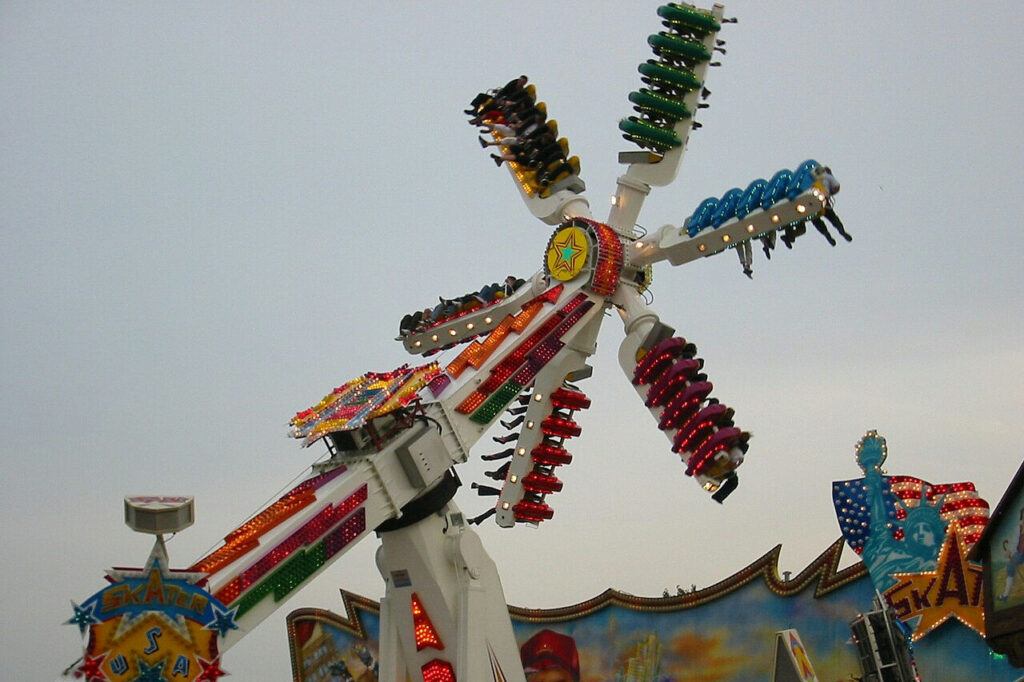
The Top Spin was a revolutionary “thrill ride” introduced in the late 1980s, featuring a large passenger gondola suspended between two massive arms that flipped it upside down. While the ride concept was a huge hit, the earliest versions were manually operated by park staff. This human element led to several serious accidents worldwide, as operators would sometimes push the ride’s limits too far or fail to notice that restraints weren’t properly locked. These early incidents forced the manufacturer to completely redesign the control systems, moving away from manual operation and toward fully automated safety cycles.
Many of the original 1980s installations were eventually scrapped or heavily modified because they were deemed too difficult to maintain to modern standards. While the “Top Spin” name lives on in newer versions, the original machines that paved the way have almost entirely disappeared from major parks. This evolution is a perfect example of how the amusement industry uses real-world data to make things safer. It shows that even a successful ride design must be willing to change its core technology to protect the public. Today, those early manual machines are viewed as relics of a time when the person at the controls had a bit too much power over the guests’ safety.


