
Polishing Wood Furniture
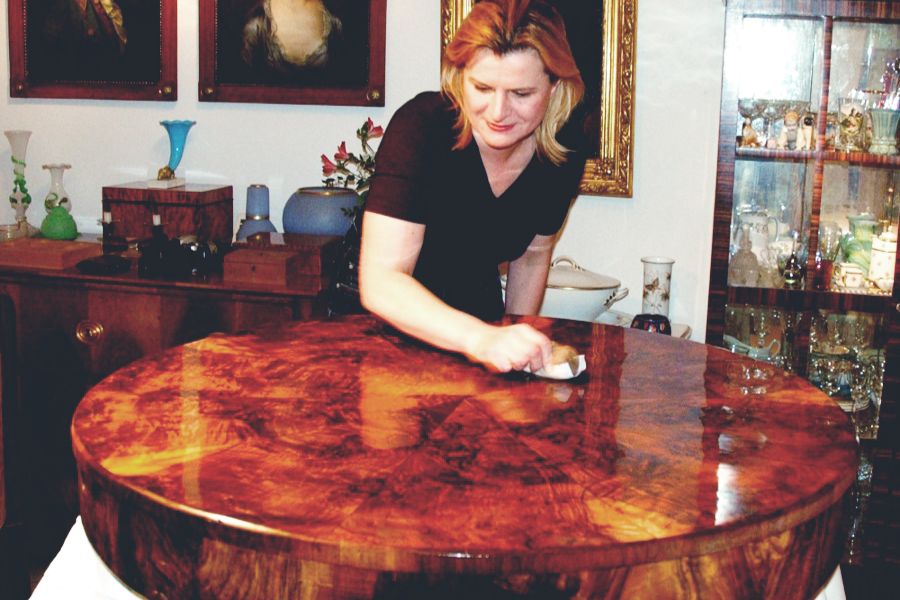
Back in the 18th and 19th centuries, furniture was a major investment intended to last for generations, but it didn’t come with the durable polyurethane finishes we use today. Most tables and chairs were finished with wax or oil, which meant they were incredibly sensitive to changes in humidity and temperature. To keep the wood from drying out, cracking, or losing its luster, it had to be polished by hand on a regular basis. This involved rubbing a mixture of beeswax, turpentine, or lemon oil into the grain using a soft cloth, followed by vigorous buffing to create a shine. This was a slow, meticulous process that could take an entire afternoon for a single room of furniture.
The decline of this chore began in the mid-20th century with the invention of modern chemical lacquers and varnishes that sealed the wood permanently. By the 1960s, aerosol spray polishes like “Pledge” made the process much faster, though even those are used less frequently today. Most modern furniture is made with materials like laminate or pre-treated veneers that only require a quick wipe with a damp cloth to stay clean. The long hours spent “feeding” the wood and buffing out scratches are now largely reserved for antique collectors or professional restorers, as the average home no longer requires such high-maintenance decor.
Canning and Preserving
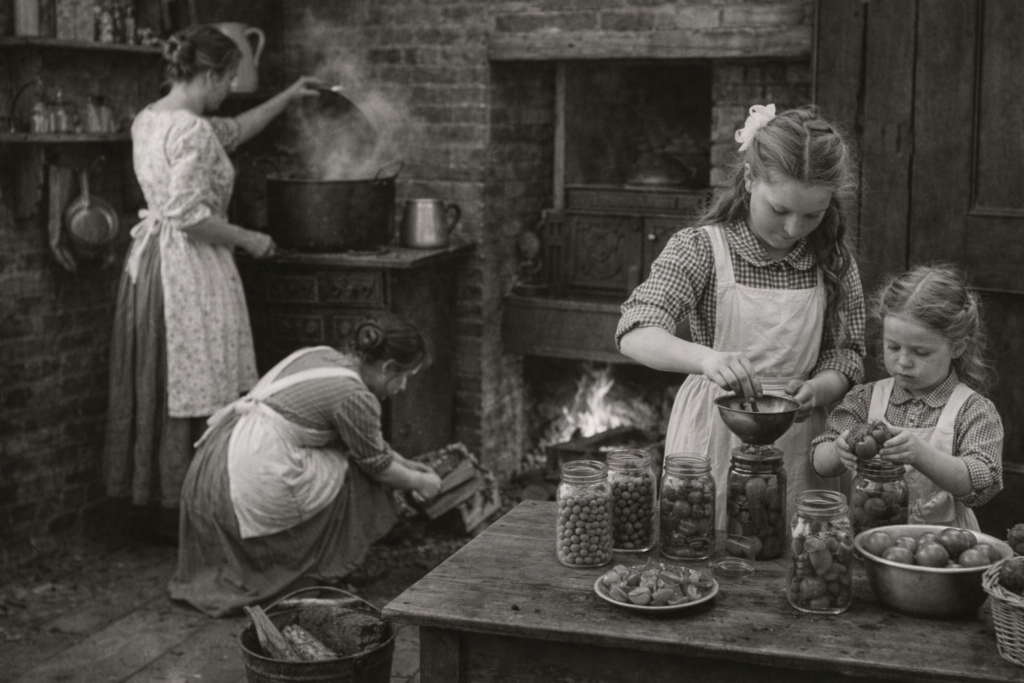
In the decades before frozen dinners and global supply chains, the harvest season in America was a time of intense, high-stakes labor. During the late 19th and early 20th centuries, a family’s survival through the winter depended on their ability to “put up” enough food to last until spring. Kitchens would turn into humid, steam-filled workshops for days at a time as piles of peaches, green beans, and tomatoes were processed. Every jar had to be sterilized in boiling water, packed tightly, and sealed with wax or rubber-rimmed metal lids. It was a delicate science; one small mistake in the sealing process could lead to deadly botulism, making this a chore that required 100% focus and precision.
The popularity of home canning hit its peak during the “Victory Gardens” era of World War II in the 1940s, when the government encouraged citizens to grow and preserve their own food to support the war effort. However, as the 1950s brought affordable chest freezers and better-stocked supermarkets into suburban homes, the urgency of canning began to dwindle. While the 2020s have seen a small “homesteading” revival, most people now view canning as a way to make artisanal pickles or jams rather than a mandatory strategy for avoiding hunger during the snowy months. The days of processing 200 jars of corn just to get through January are, for most, a thing of the past.
Churning Butter
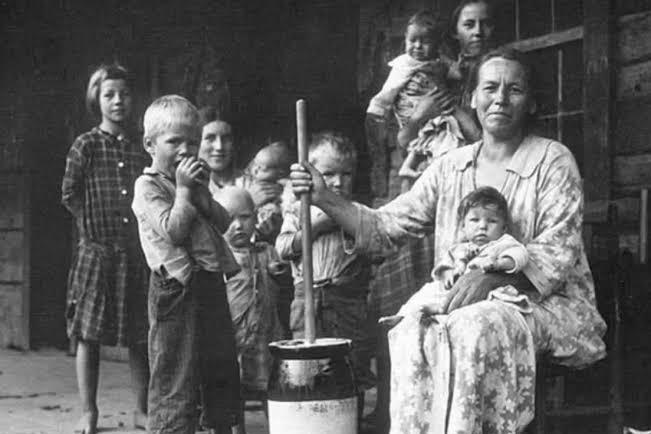
Before the 1920s, when home refrigeration became a standard feature in American kitchens, butter wasn’t something you could just grab from a refrigerated aisle at the local grocery store. For families living in rural areas or on farms during the 1800s, butter was a labor-intensive DIY project that happened several times a week. The process began by collecting cream from the top of fresh milk and pouring it into a large wooden or stoneware churn. A family member, often a child or a woman, would then spend anywhere from 30 to 60 minutes rhythmically moving a wooden pole, called a dasher, up and down. This constant agitation was necessary to break the membranes of the fat globules so they could clump together into solid butter.
Once the butter finally “broke” and separated from the liquid buttermilk, the work was far from over. The fresh butter had to be thoroughly washed in cold water to remove any remaining milk, which would otherwise cause it to go rancid within a day or two. It was then salted for preservation and pressed into decorative wooden molds. This routine started to fade away in the 1930s as commercial creameries became more efficient and door-to-door milk delivery became common. Today, what was once a tiring, sweaty chore is mostly seen as a fun historical demonstration at county fairs or a “fancy” weekend hobby for food enthusiasts.
Baking Bread Daily
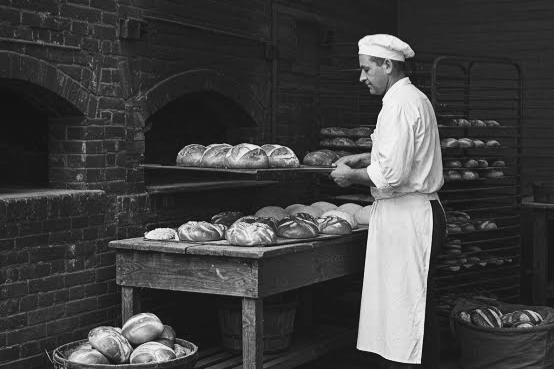
If you lived in an American household in the 1800s, the smell of fresh bread wasn’t a luxury, it was the smell of a very early morning. Because bread was the primary source of calories for most families, it had to be prepared almost every single day to ensure it stayed soft and edible. Housewives or domestic workers often rolled out of bed before 5:00 AM to mix flour, yeast, and water by hand. The physical act of kneading the heavy dough for 10 to 15 minutes provided a serious workout long before modern gym culture existed. After the first rise, the dough had to be punched down, shaped, and allowed to rise again before finally hitting the wood-fired oven.
The transition away from this daily grind began in the early 1900s as commercial bakeries started popping up in growing cities. A major turning point occurred in 1928, when the first automatic bread-slicing machine was invented by Otto Rohwedder. By the 1930s, “Wonder Bread” and other pre-sliced loaves became a symbol of modern convenience, and the phrase “the best thing since sliced bread” entered the American vocabulary. While the COVID-19 lockdowns of 2020 sparked a temporary sourdough craze, for the last 80 years, baking bread has transitioned from a grueling daily necessity to a relaxing Sunday activity that people do for the “aesthetic” rather than for survival.
Trimming Lamp Wicks
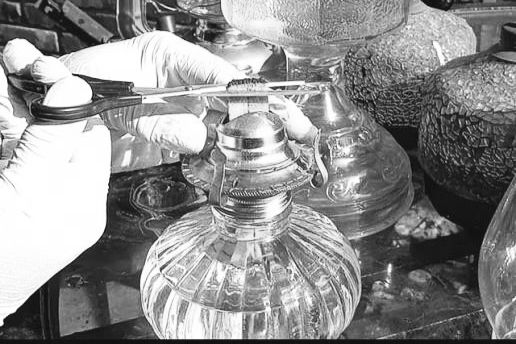
It is hard to imagine today, but before Thomas Edison’s light bulb became a common household feature in the 1920s, lighting a room was a messy and dangerous business. Most American homes relied on kerosene lamps, which required a surprising amount of daily maintenance to work correctly. Every morning, someone had to take the glass “chimney” off the lamp and scrub away the black soot that had gathered overnight. Then, they had to carefully trim the fabric wick with scissors. If the wick wasn’t cut into a perfect straight line or a slight curve, the flame would flicker, produce thick black smoke, or potentially cause the glass to shatter from uneven heat.
This was a chore usually assigned to older children or housekeepers, and it was essential for fire safety. A poorly trimmed wick could easily spark a house fire, which was a constant fear in an era of wooden homes and horse-drawn fire engines. As the Rural Electrification Act of 1936 brought power to the furthest corners of America, the need for oil lamps vanished almost overnight. Today, we simply flip a plastic switch and expect instant, clean light. The only time modern Americans even think about wicks is when they are trimming a scented candle to make their living room smell like vanilla, a far cry from the oily, soot-covered reality of the 19th century.
Cleaning the Hearth
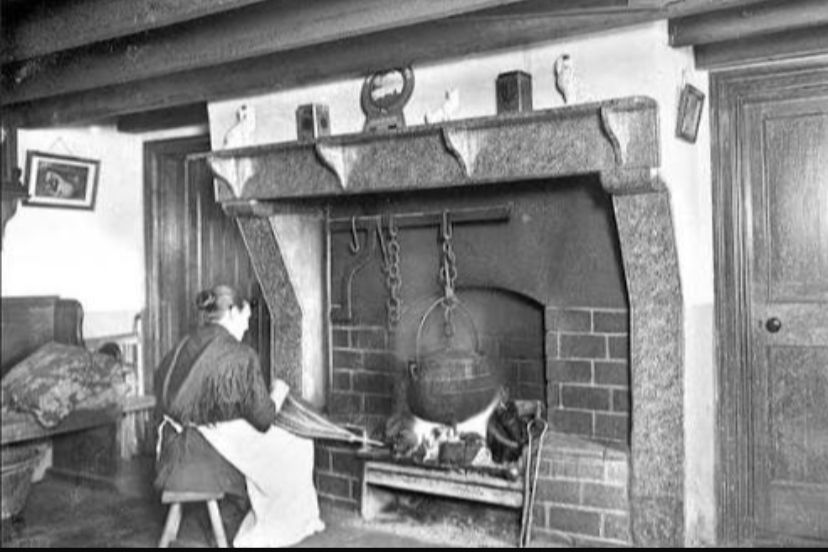
For much of early American history, the hearth was the literal heart of the home, serving as the only source of heat and the only place to cook. However, being the center of the house meant it was also the center of the mess. Every single morning, the previous night’s ashes had to be shoveled out and carried to an ash pit or used for making lye soap. If the ashes weren’t cleared, the fire wouldn’t get enough oxygen to burn efficiently the next day. Furthermore, the soot and creosote that built up on the bricks had to be scrubbed away regularly to prevent “chimney fires,” which were a leading cause of home destruction in the 1700s and 1800s.
The labor involved was dirty, back-breaking, and left the person doing it covered in grey dust. This daily struggle began to disappear in the late 19th century as cast-iron wood stoves replaced open fireplaces, followed quickly by coal furnaces and eventually gas heating in the early 20th century. By the 1940s, most new suburban homes were built with central heating, turning the fireplace from a survival tool into a decorative feature. Today, cleaning a hearth is something most people only do once a year after a cozy Christmas fire, rather than a mandatory 6:00 AM ritual required to keep the family from freezing.
Hauling Water
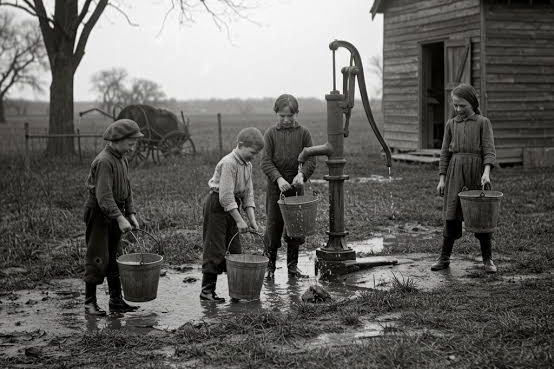
Before the 1930s, especially in rural America, “running water” meant you were running outside with a bucket to get some. Indoor plumbing was a luxury reserved for the wealthy in big cities until the mid-20th century. For the average family, every gallon of water used for drinking, cooking, bathing, or cleaning had to be manually pumped from a well or carried from a nearby stream. Considering a standard gallon of water weighs about 8.3 pounds, and a typical family needed dozens of gallons a day, this was perhaps the most physically exhausting chore of all. It was common for a person to walk several miles a week just carrying heavy buckets back and forth.
The arrival of the New Deal era and the expansion of public works in the 1930s and 40s finally brought pipes and faucets into the average American home. This change was a massive turning point for public health, as it allowed for easier cleaning and better hygiene, which significantly dropped the rates of diseases like cholera. Today, the average person uses about 80 to 100 gallons of water a day without giving it a second thought. We have moved from a world where water was a precious resource earned through physical labor to one where it is instantly available at the turn of a handle, making the old “water yoke” a relic of the distant past.
Sweeping Constantly
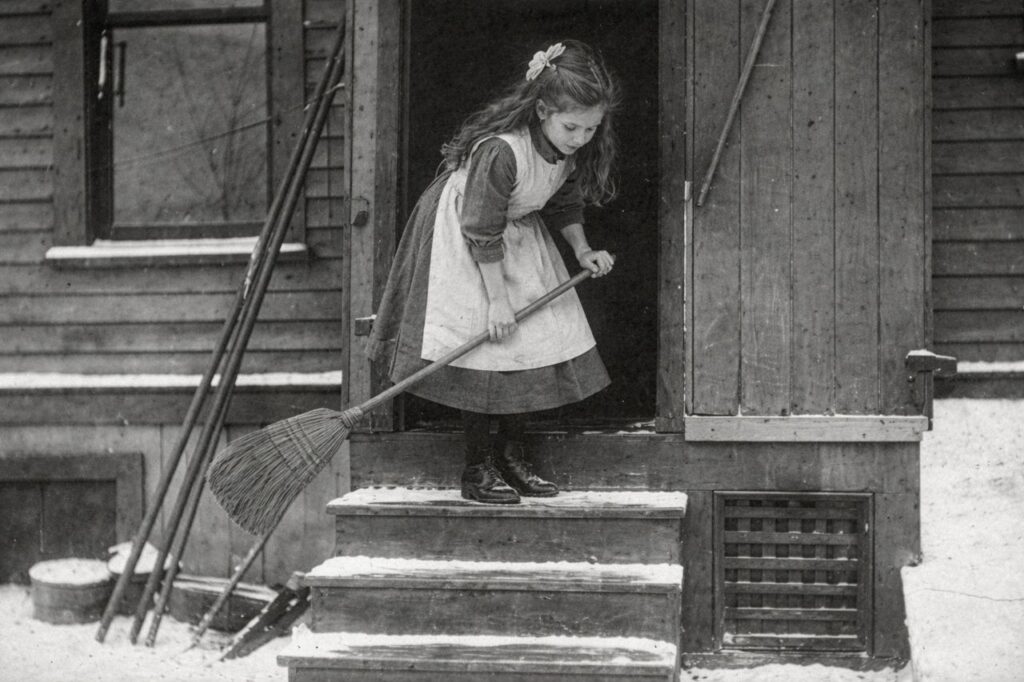
Keeping a house clean in the 1800s was a losing battle against nature. Because homes weren’t sealed with modern insulation, weather stripping, or double-pane windows, dust and dirt blew inside constantly. In rural areas, mud was tracked in by boots, and in the city, coal soot from nearby factories covered every surface in a fine black grit. Without vacuum cleaners, the only way to manage the mess was to sweep, usually several times a day. This wasn’t just a quick “tidy up”; it was a deep, aggressive sweeping of every floor to prevent the dirt from becoming embedded in the wood or the few rugs the family owned.
The chore changed forever with the invention of the first portable vacuum cleaner by James Spangler in 1907, which was later sold to William Hoover. As these machines became affordable for the middle class in the 1920s and 30s, the time spent on floor maintenance dropped by nearly 80%. Modern flooring like laminate and polished hardwood, combined with high-tech robot vacuums that roam our houses while we sleep, has made the concept of “constant sweeping” feel like a strange fairy tale. We now live in a world where the air is filtered and the floors are sealed, allowing us to go days or even weeks without touching a broom.
Beating the Rugs
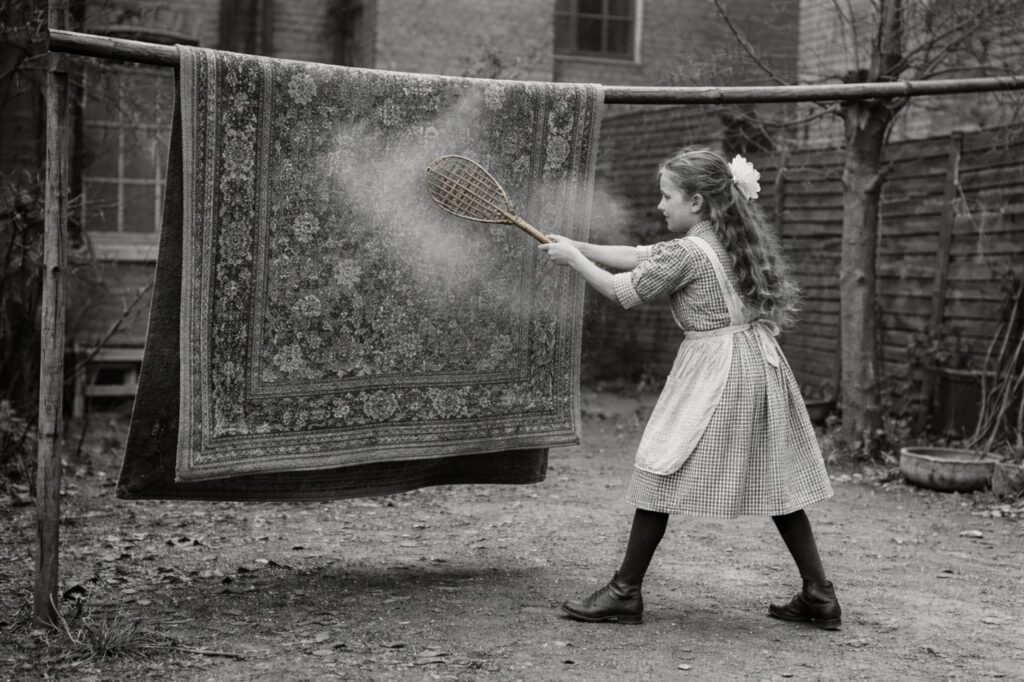
Before the vacuum cleaner became a household staple in the 1920s, rugs were essentially giant dust traps that held months of dirt, pet hair, and skin cells. Because you couldn’t “suck” the dirt out, you had to physically knock it out. Once or twice a year, usually during the “Spring Cleaning” ritual, all the heavy area rugs would be dragged outside and draped over a sturdy clothesline or a specialized wooden railing. A person would then take a “rug beater”, a long-handled tool made of woven wire or wicker, and whack the rug repeatedly with all their strength. Clouds of dust would erupt from the fabric, often making the worker sneeze and cough for hours.
This was an incredibly tiring task that required a lot of upper body strength and endurance. It was also weather-dependent; you needed a dry, windy day to ensure the dust blew away from the house. As the 1930s and 40s progressed, the “Hoovering” of rugs became the new standard, and the rhythmic thwack-thwack-thwack of the rug beater disappeared from American neighborhoods. Today, rug beaters are mostly found in antique shops or used as wall decor. Most people now prefer to send their expensive rugs to professional cleaners or simply use a high-powered vacuum, leaving the dusty, physical labor of rug-beating to the history books.
Hand Washing Laundry
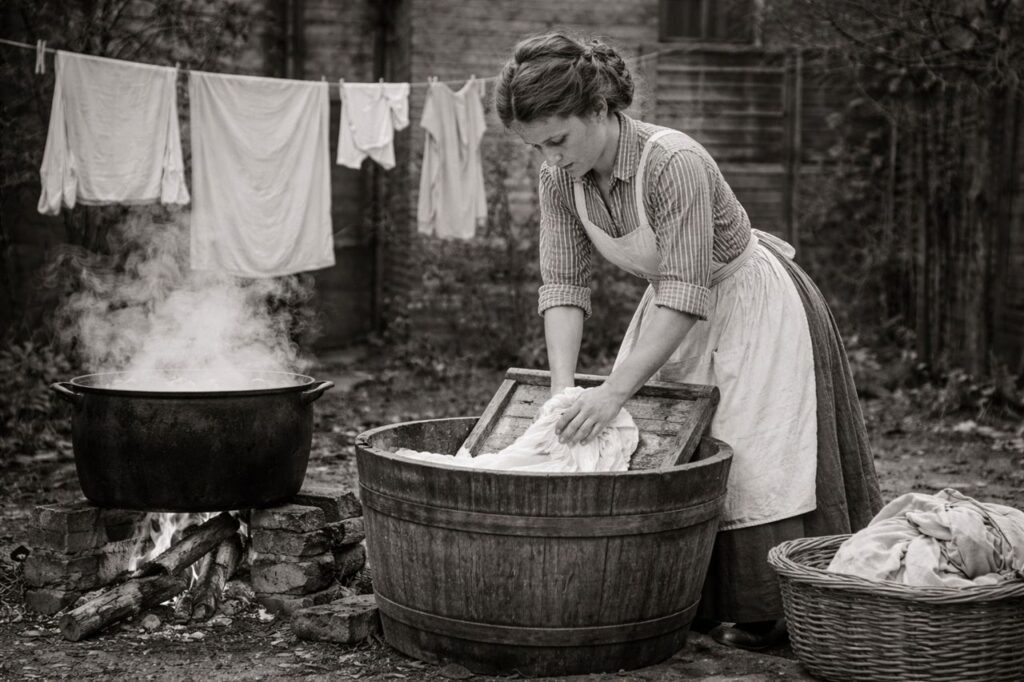
In the early 1900s, “Laundry Day” wasn’t just a chore; it was a grueling, multi-day event that most women dreaded. The process involved hauling gallons of water, heating it over a fire, and then scrubbing every individual item of clothing against a metal or wooden washboard. This was literal “blood, sweat, and tears” work that left fingers raw and backs aching. After scrubbing, the clothes had to be put through a hand-cranked ringer to squeeze out the water, which was a dangerous task that could easily trap and bruise a person’s hand. If you had a large family, you might spend ten hours straight just to get the clothes clean.
The 1930s brought a massive relief with the widespread introduction of the electric washing machine. Brands like Maytag and Whirlpool began producing machines that did the agitation for you, though early models still required a lot of manual help. It wasn’t until the post-WWII boom of the 1950s that fully automatic washers and dryers became the norm in suburban households. Today, doing laundry involves about five minutes of active work, sorting clothes and pressing a button, while a machine does the rest. We have transitioned from “Blue Monday,” where the entire day was lost to the tub, to a world where we can do three loads of laundry while watching a movie on the couch.
Blacking The Stove
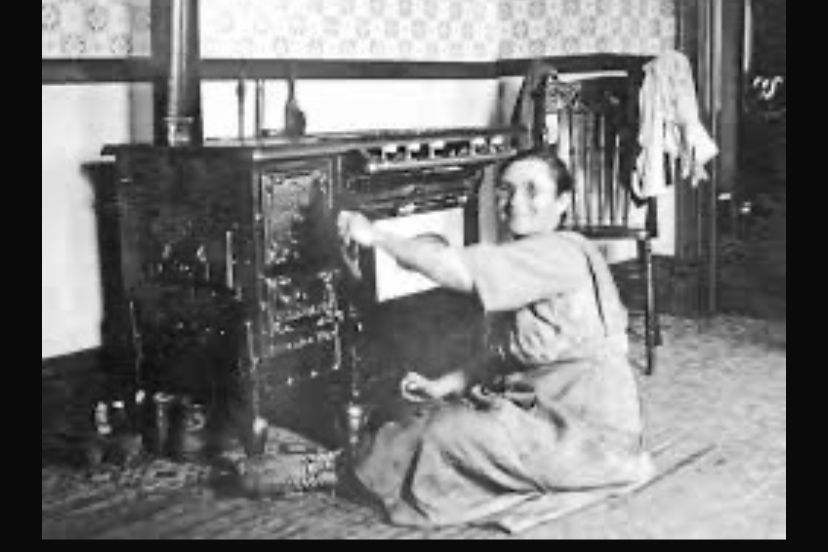
In the 19th and early 20th centuries, the cast-iron stove was the literal heart of the American kitchen, but it was a beast to maintain. Because these stoves were made of raw iron, they were incredibly prone to rusting from the steam of cooking pots or splashes of water. To prevent this, homemakers had to perform a messy chore called “blacking.” This involved applying a thick paste made of graphite and wax to the entire exterior of the stove. The person doing the work had to scrub the paste into every nook and cranny of the heavy iron, then buff it with a stiff brush until it shone with a deep, silvery-black luster.
This was a hot, dirty job that usually happened once a week and left the cleaner’s hands and clothes covered in dark soot. It wasn’t just about looks; a well-blacked stove held heat better and lasted decades longer than an untreated one. As the 1920s and 1930s rolled around, manufacturers began coating stoves in porcelain enamel, which could be cleaned with a simple damp cloth. By the time electric and gas ranges became the standard in the 1940s, the tradition of “stove blacking” had almost vanished. Today, we take for granted that our ovens stay shiny with almost zero effort.
Cleaning Chamber Pots
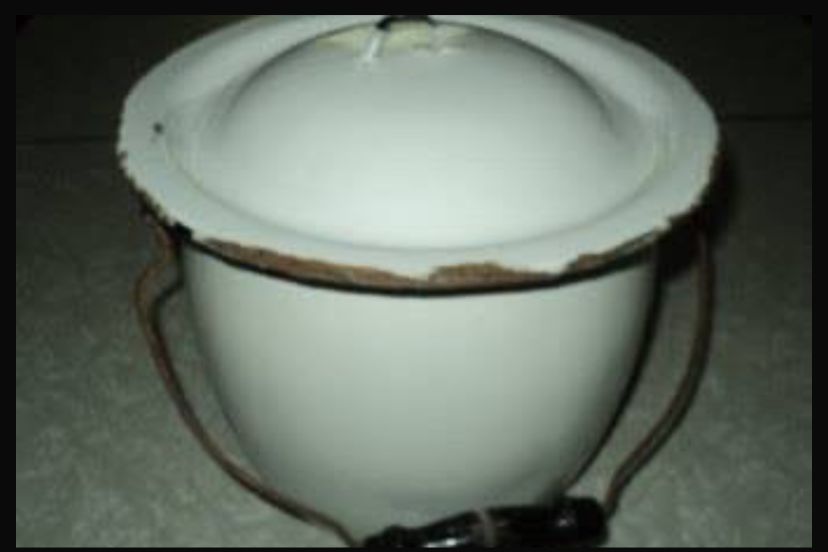
Before the miracle of indoor plumbing reached the average American home in the early 1900s, nighttime trips to an outdoor latrine were inconvenient and often freezing. The solution was the chamber pot, a ceramic or metal bowl kept under the bed for emergencies. While convenient at 2:00 AM, it created one of the most dreaded morning chores: emptying and “scouring” the pots. Every morning, the containers had to be carried to an outdoor waste pit or a “slop bucket,” emptied, and then scrubbed thoroughly with lye or vinegar to kill bacteria and manage the lingering odor.
This task was often assigned to the youngest family members or domestic servants, and it remained a reality for many rural families well into the 1930s and 1940s. The expansion of public works and rural electrification in the mid-20th century finally pushed modern toilets into the furthest reaches of the country. Today, the idea of handling waste in a bedroom is unthinkable to most Americans. The chamber pot has transitioned from a daily survival necessity to a quirky antique often used as a decorative planter, serving as a silent reminder of how much we owe to the invention of the flush toilet.
Chopping Firewood
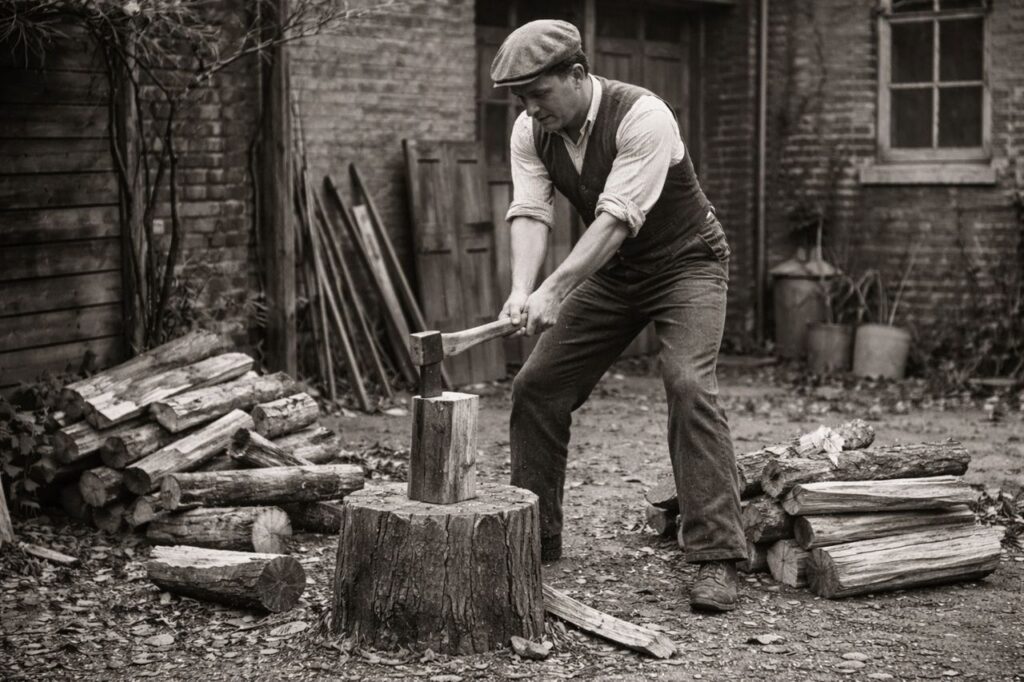
For centuries, keeping an American home warm during a harsh winter was a test of physical endurance. Before oil and gas furnaces became common in the 1940s, a typical household might burn through several cords of wood in a single season. This meant that “chopping wood” wasn’t a one-time event; it was a daily grind. Every morning and evening, someone had to head out to the woodpile with an axe to split logs into smaller “kindling” and “fuel wood” that would fit into the kitchen stove. It was an exhausting workout that required steady aim and significant muscle power.
The work didn’t stop at chopping; the wood then had to be hauled inside and stacked neatly in wood boxes, which created a constant trail of bark and sawdust that needed sweeping. During the 1920s, coal became a popular alternative, but it was just as dirty and heavy. It wasn’t until the post-war housing boom of the 1950s that central heating became a standard feature in new builds. Today, while some people still enjoy the “vibes” of a crackling fire, they usually buy pre-split bundles from a grocery store. The days of a teenager spending hours in the snow just to keep the house warm are over.
Darning Clothes
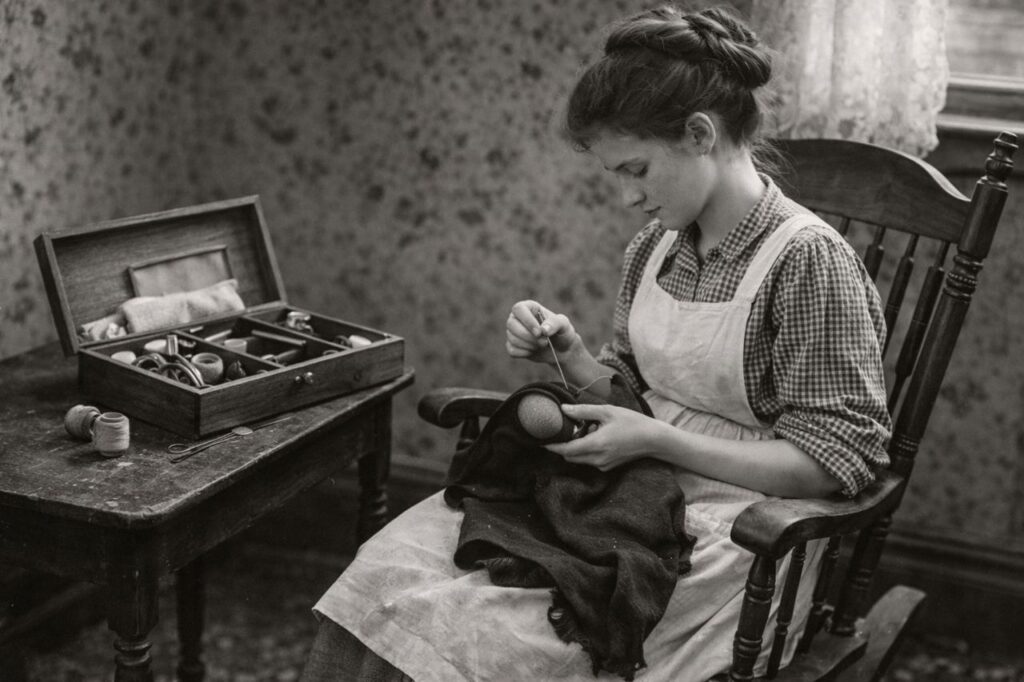
In the early 20th century, the “fast fashion” we see today didn’t exist. Clothes were expensive and made to last, so if a sock got a hole in the heel, you didn’t throw it away, you “darned” it. Darning was a specific type of sewing where you wove a patch of thread directly into the fabric to bridge a gap. Most families had a “darning egg,” a smooth wooden tool placed inside the garment to provide a firm surface for the needlework. It was a meticulous, slow-moving chore that many women did in the evenings by the light of a single lamp.
This habit of “make do and mend” was a point of pride for generations, especially during the Great Depression of the 1930s. However, by the 1960s, the rise of synthetic fabrics like nylon and the falling cost of mass-produced clothing made it cheaper to buy a new pair of socks than to spend thirty minutes fixing an old one. Today, darning has almost completely disappeared from the American household. While there is a small “slow fashion” movement in the 2020s focusing on visible mending, for the vast majority of people, a hole in a garment is now a reason to go shopping.
Boiling Bed Linens
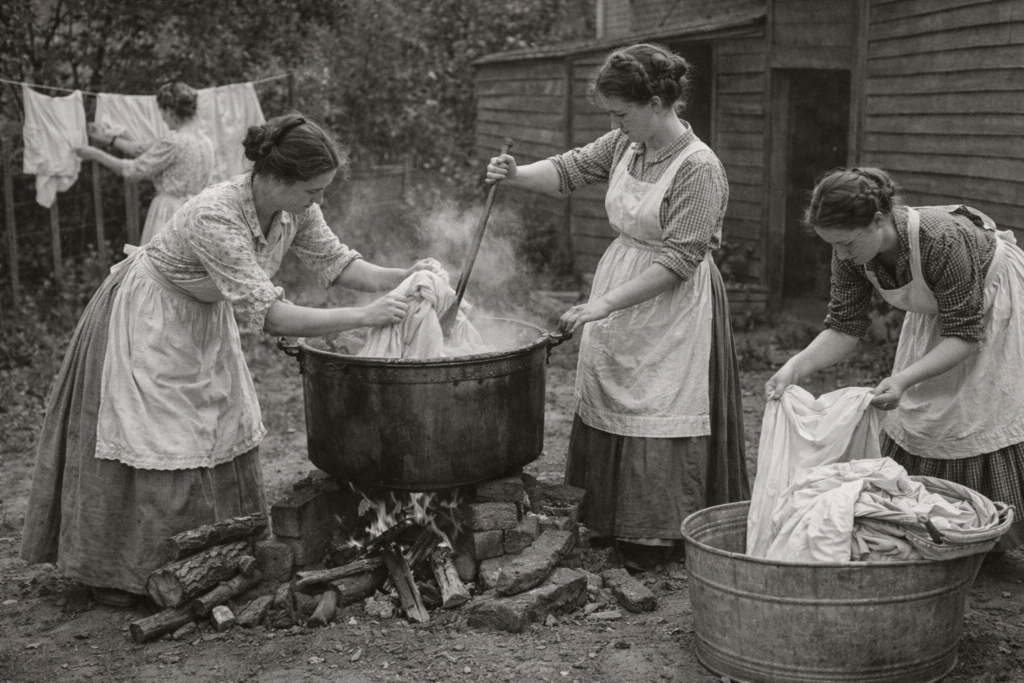
Before the invention of high-tech laundry detergents and “sanitize” cycles on washing machines, getting white bedsheets truly clean was a massive undertaking. In the 19th and early 20th centuries, “Wash Day” usually involved dragging a massive copper boiler onto the stove or over an outdoor fire. Sheets and pillowcases were tossed into the bubbling water and stirred with a heavy wooden “laundry stick” for hours. The boiling water was the only way to kill bedbugs, lice, and the heavy bacteria that accumulated in an era before daily showering was common.
The physical danger of this chore was real; handling gallons of scalding water and heavy, sodden fabrics led to many burns and strained muscles. After boiling, the linens had to be rinsed multiple times in cold water, “blued” to look whiter, and wrung out by hand. The arrival of the automatic washing machine in the late 1940s changed everything, as the machine could maintain high temperatures without human intervention. Today, we simply toss our sheets in a drum and walk away. The sight of a giant copper pot steaming over a fire is now something you only see in historical museums.
Polishing Silverware
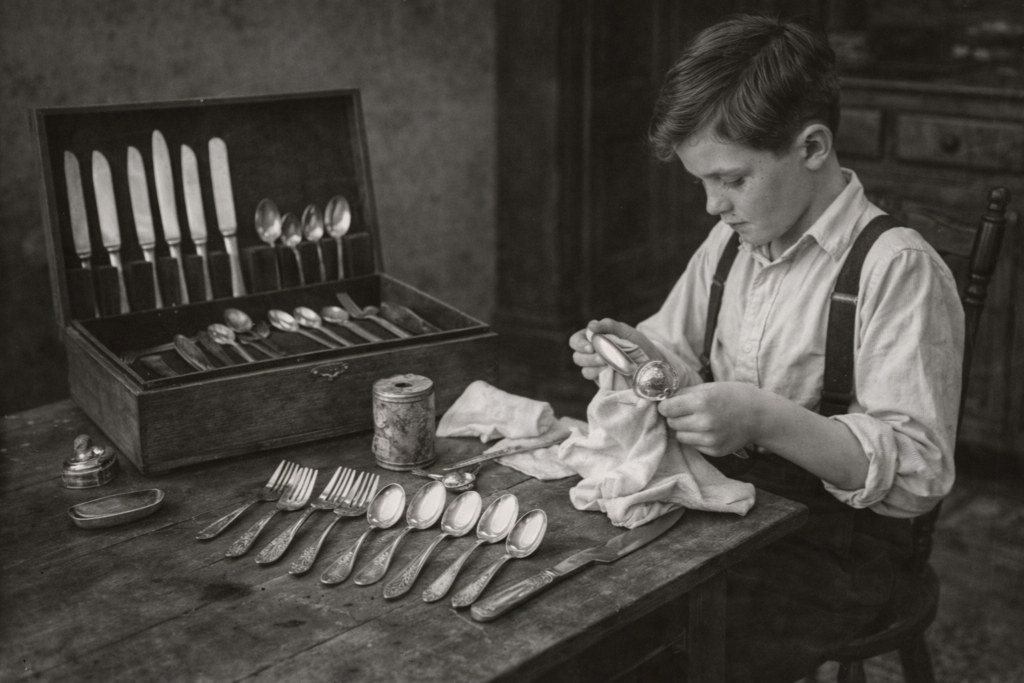
In the mid-20th century, a set of “fine silver” was a mandatory wedding gift for almost every American couple. However, owning silver came with a hidden tax: hours of tedious labor. Because silver reacts with sulfur in the air, it naturally develops a dark, crusty tarnish that looks like black soot. To keep the forks and spoons presentable for Sunday dinner or holiday guests, they had to be polished. This involved applying a gritty, smelly chemical paste to every individual piece of cutlery, rubbing it in, and then buffing it off with a soft cloth until the metal gleamed.
This chore was a staple of domestic life for decades, often performed by children or housewives on a Saturday morning. However, as the 1970s and 1980s brought a shift toward more casual dining and the rise of high-quality stainless steel, “the good silver” began to sit in its velvet-lined box, unused. Modern families rarely have the time or interest in maintaining high-maintenance metals. Today, most couples prefer dishwasher-safe sets that never tarnish. Polishing silver has moved from a routine chore to a once-a-decade task, often performed only when an old family heirloom is brought out for a very special occasion.
Starching Collars

If you look at photos of American men from the early 1900s, you’ll notice their shirt collars look incredibly stiff and perfectly upright. This wasn’t because of the fabric; it was because of starch. Back then, collars were often detachable from the shirt to save on laundry. On “Ironing Tuesday,” these collars were dipped into a thick, liquid starch made from corn or potatoes. While they were still damp, they had to be ironed with a very hot, heavy iron to “cook” the starch into the fibers, turning the fabric into something that felt almost as hard as cardboard.
This was a high-skill chore. If the iron was too hot, the starch would scorch and turn yellow; if it was too cool, the collar would be limp and “unprofessional.” The labor began to fade in the 1930s as “soft-collar” shirts (the kind we wear today) became more socially acceptable. By the time the “wash and wear” fabrics of the 1950s hit the market, the need for heavy home starching was gone. Today, if a person wants a crisp collar, they use a quick spray of aerosol starch. The days of boiling cornstarch on a stove just to look sharp are long gone.
Turning The Mattress
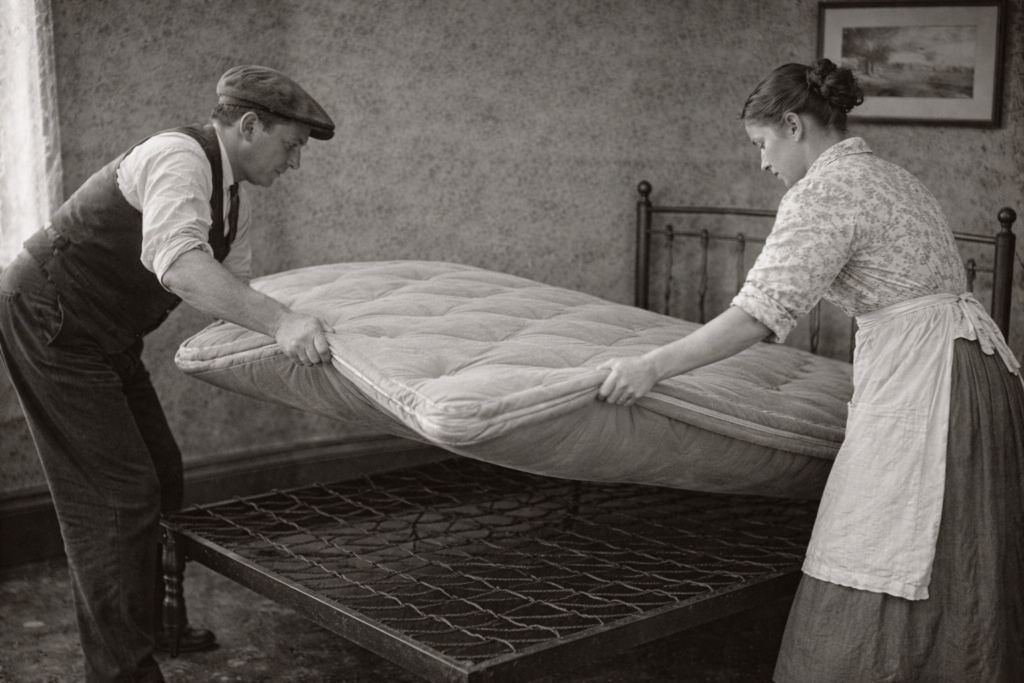
In the days before modern “no-flip” memory foam and pocket-spring technology, mattresses were very temperamental. Most American beds in the 19th and early 20th centuries were filled with materials like horsehair, cotton batting, or even dried corn husks. These materials had a frustrating tendency to shift, lump up, or compress under a person’s weight, creating a permanent “divot” in the middle of the bed. To prevent this, the mattress had to be flipped over and rotated 180 degrees at least once a month, a chore that usually required two people because of the awkward weight.
This was a heavy-duty task that involved stripping the entire bed and wrestling with a floppy, heavy mattress in a cramped bedroom. It was considered a basic part of “good housekeeping” until well into the late 20th century. However, starting in the early 2000s, mattress companies began designing “one-sided” mattresses with a heavy base and a specific comfort top, which made flipping them impossible and unnecessary. Today, we live in an era of “bed-in-a-box” convenience where you set it and forget it. The monthly ritual of mattress-wrestling has largely been replaced by high-tech materials that hold their shape for years.
Tending Family Gardens
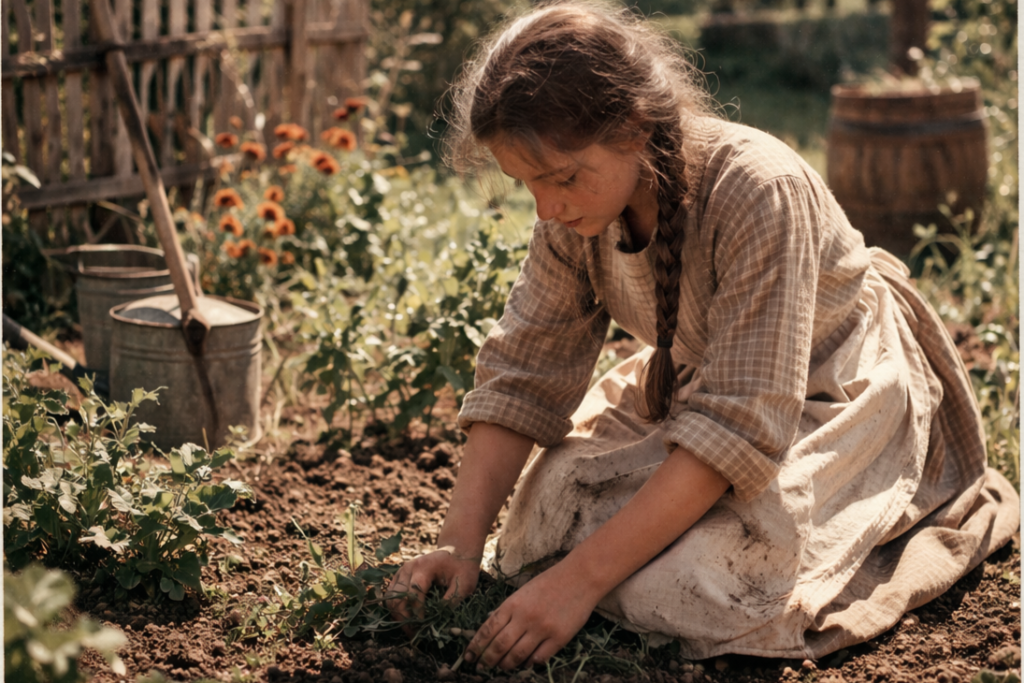
While many people today enjoy gardening as a relaxing hobby, for Americans living in the early 1900s, the backyard garden was a vital food source. Before the 1950s, fresh produce wasn’t always available at a local corner store, and it was certainly expensive. Families relied on “kitchen gardens” to provide the bulk of their vegetables. This meant that every day after work or school, someone had to be out in the dirt, pulling weeds by hand, battling potato bugs, and hauling water to thirsty plants. This wasn’t a relaxing weekend activity; it was a race against the seasons.
The peak of this chore came during the 1940s with the “Victory Garden” movement, where millions of Americans grew nearly 40% of the nation’s vegetables in their own yards to help the war effort. But as the 1950s and 1960s brought the rise of the modern supermarket and industrial farming, the home garden became less about survival and more about leisure. Today, most Americans buy their tomatoes in a plastic clamshell, and the “daily garden check” has been replaced by a trip to the grocery store. For the modern suburbanite, gardening is a choice, but for our ancestors, it was a necessity.
Plucking Chickens
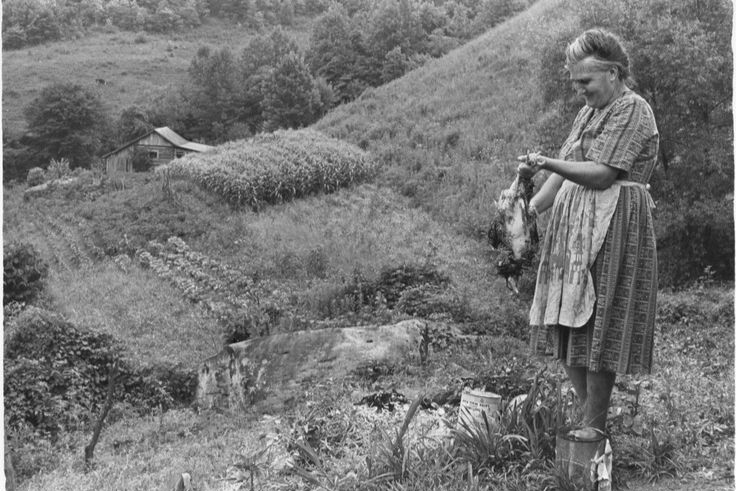
In the early 20th century, if you wanted a chicken dinner, you didn’t buy a pre-washed, plastic-wrapped breast from the store. You started with a whole bird. For many Americans living in rural or semi-rural areas, this meant the gruesome chore of “plucking.” After the bird was killed, it had to be dipped in a pot of scalding water to loosen the feathers. Then, someone, often the children or the mother, had to pull out every single feather by hand. It was a smelly, messy, and time-consuming process that left the kitchen smelling like wet feathers and steam.
The “pinfeathers” (small, stubborn nubs) had to be singed off over an open flame, and the bird then had to be cleaned and butchered. This task remained common until the 1940s and 1950s, when the poultry industry became highly centralized and refrigerated transport made “ready-to-cook” chickens available to the masses. Today, very few Americans have ever seen a chicken with its feathers still on, let alone had to pull them out themselves. This chore represents one of the biggest shifts in our history: moving from being producers of our own food to being consumers, trading hours of messy labor for convenience.


