
1. The Internet’s Hidden Geopolitical Hotspots
Undersea cables might be hidden deep beneath the ocean waves, but they are right at the center of global power struggles. Since these lines carry almost all of our financial data, military orders, and secret diplomatic chats, world leaders now view them as vital national treasures. It is not just about the internet anymore; it is about security. Major powers like the United States and China are constantly watching where these lines are placed, who owns the companies building them, and how easily a rival could cut them off during a disagreement. For instance, in 2023, reports surfaced about increased naval activity near vital hubs, proving that these deep-sea wires are now a major part of modern defense strategies.
Because of these tensions, cable routes are rarely chosen based on the shortest distance alone. Engineers often have to take the long way around to avoid “unfriendly” waters, even if it costs millions of dollars more to build. We saw this clearly in 2020 when the proposed Pacific Light Cable Network, backed by Google and Meta, had to be redesigned to bypass certain areas due to security worries from the U.S. government. This shows that the internet we use every day is shaped by political friendships and old-fashioned trust. Instead of a simple web of wires, we have a map of global alliances where every inch of fiber optic glass reflects the power balance of the world above.
2. Yes, Countries Really Spy on Cables

Since our digital lives travel through physical tubes on the ocean floor, the threat of someone “listening in” is a very real problem. History tells us this isn’t just a movie plot; back in the 1970s, during the Cold War, the U.S. Navy successfully tapped into a Soviet underwater communication line in a mission known as Operation Ivy Bells. Even today, as technology gets better, the fear remains that powerful nations could use advanced submarines or specialized robots to clamp onto cables and copy data without anyone knowing. This makes the seabed a high-tech playground for spies who are looking for an edge in a world where information is the most valuable currency.
To fight back against these shadow games, modern companies use heavy encryption to scramble data so that even if it is stolen, it cannot be read. However, governments are not taking any chances. Many countries are now spending billions to build their own private, highly secure landing stations to keep their data away from prying eyes. This ongoing battle adds a deep layer of mystery to a system that most people think is just a neutral part of the background. It serves as a constant reminder that as long as information flows through physical paths, whoever controls those paths holds a massive amount of influence over the global stage.
3. Nature Can Still Take the Internet Down
We often think of the internet as something floating in the “cloud,” but it is actually at the mercy of Mother Nature. The deep ocean is a violent place where massive underwater landslides, powerful earthquakes, and shifting currents can snap a cable like a piece of string. These events happen more often than you might think. For example, in February 2023, a series of underwater incidents off the coast of West Africa caused major internet outages for several countries, proving that even our best technology is vulnerable to the earth’s movements. When the ground shifts miles below the surface, the digital world up here feels the impact immediately.
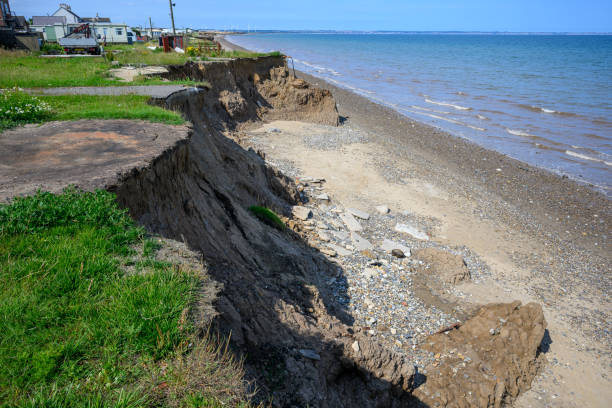
The situation is getting more complicated as our planet changes. Rising sea levels and more intense storms are beginning to threaten the landing stations where these cables come ashore. Coastal erosion can expose buried wires, making them more likely to break during a bad weather event. This reminds us that our digital lives are not separate from the physical planet. We rely on a stable environment to keep our videos streaming and our banks running. As we move further into the 21st century, protecting these cables from the changing climate will be just as important as the engineering used to build them in the first place.
4. Some Countries Hang by a Single Thread
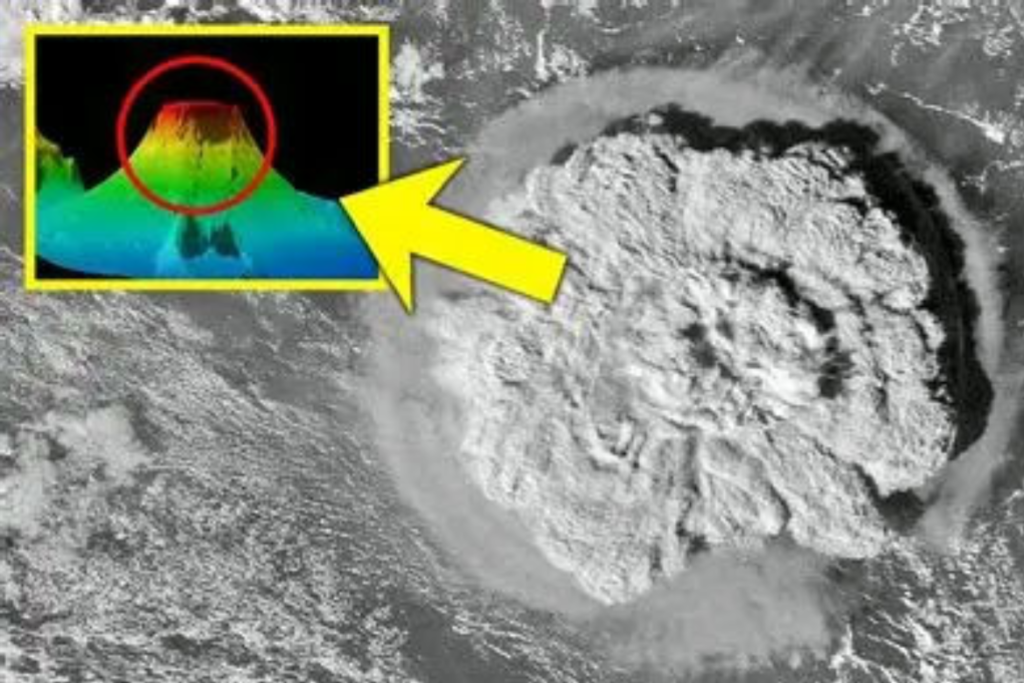
The internet is supposed to connect everyone, but the reality is that many parts of the world are still standing on shaky ground. While big cities like New York or London have dozens of cables for backup, many island nations and developing countries rely on just one or two main lines. If an anchor accidentally drags across a cable or a storm breaks a connection, entire nations can be plunged into digital darkness. We saw a devastating example of this in January 2022, when a massive volcanic eruption near Tonga severed its only international cable, leaving the island almost completely cut off from the rest of the world for weeks.
These gaps in the network show a deep divide in global equality. When a single cable failure can stop a country’s hospitals from working or prevent people from accessing their money, it creates a huge economic disadvantage. While wealthy nations enjoy fast speeds and constant uptime, others have to pay more for a service that is much less reliable. Closing this gap is not just about faster downloads; it is about making sure that every person, no matter where they live, has a stable and safe connection to the global community. Without more investment in these vulnerable areas, the “digital divide” will only continue to grow wider over time.
5. The Ocean Floor Is Under Constant Construction
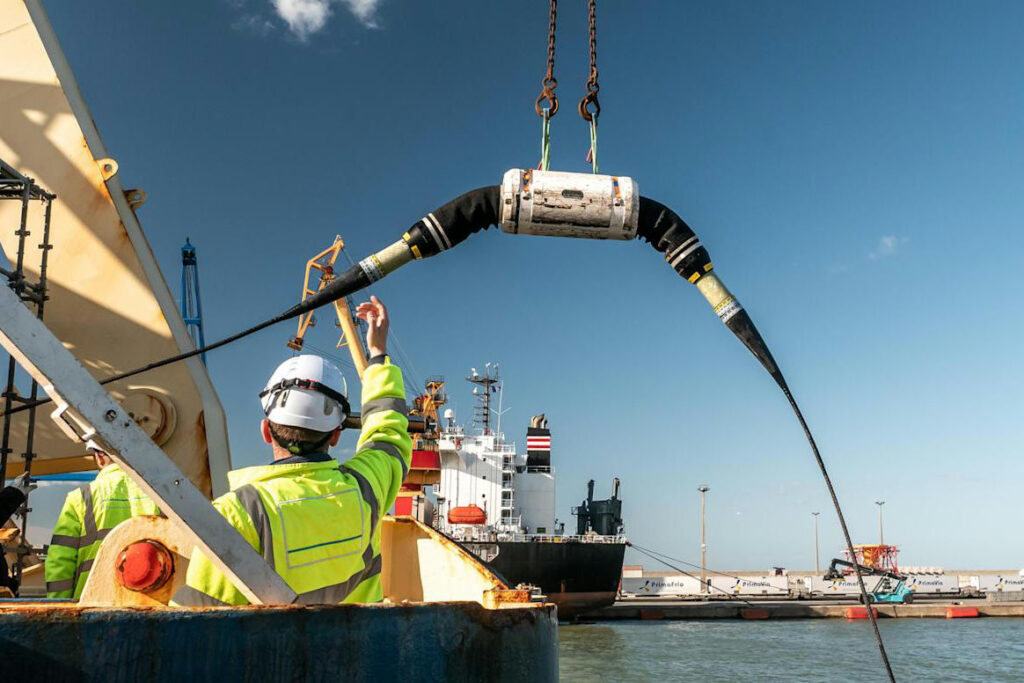
The world’s hunger for data is growing so fast that the current network is always being expanded. New cables are being laid across the ocean floor every single year to keep up with our love for high-definition streaming, cloud storage, and the recent boom in artificial intelligence. Companies like Google, Microsoft, and Meta are now the biggest players in this space, funding massive projects to ensure their services never lag. A great example is the “2Africa” project, which is set to be the longest cable system in the world, stretching over 45,000 kilometers to connect Africa, Europe, and Asia, potentially bringing better internet to billions of people.
Building these cables is an incredible feat of human effort and planning. It takes years of negotiating with different governments, studying the ocean floor, and spending hundreds of millions of dollars before a single inch of wire is even dropped into the water. The speed at which these projects are moving shows how quickly our digital habits change the physical world. What starts as a simple click on a smartphone ends up as a massive industrial project involving thousands of miles of steel and glass. As our digital needs continue to evolve, the map of the ocean floor will continue to change, reflecting our endless desire to stay connected.
6. Why Your Internet Speed Depends on the Seabed

If you have ever wondered why your internet feels slow even though you pay for a fast plan, the answer might be thousands of miles away under the sea. Your connection speed is determined by how far your data has to travel and how many “lanes” are available on the cables connecting your region to the rest of the world. Shorter, more direct routes mean lower “latency,” which is the tiny delay you feel when playing games or making video calls. Since 2021, many new cables have been designed specifically to shave milliseconds off these travel times, because in the world of high-speed trading and gaming, every tiny fraction of a second counts.
This physical reality means that geography still plays a massive role in our digital experience. If you live near a major cable hub, your internet will naturally feel snappier than if you live in a remote area far from the main lines. Investment decisions made by big tech companies determine which cities become digital powerhouses and which ones are left waiting. Even though the internet feels like it is everywhere at once, it is actually governed by the laws of physics and the length of the glass fibers resting on the seabed. This invisible infrastructure is the true engine behind the speed of the modern world.
7. Cables Don’t Wreck the Ocean Like You’d Think
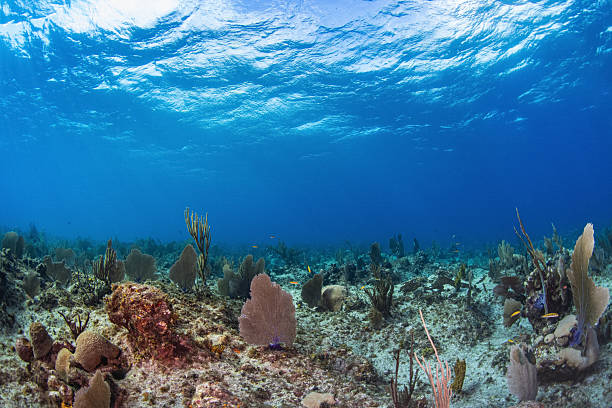
Laying thousands of miles of cable across the ocean might sound like a disaster for nature, but it is actually managed very carefully. Studies have shown that once a cable is buried or laid on the seabed, the long-term impact on marine life is quite small. In many cases, the cables actually act like artificial reefs, giving corals and small fish a solid place to grow and hide. Because these cables are thin, about the size of a garden hose in deep water, they don’t take up much space and don’t release harmful chemicals into the water. Many environmental groups now work alongside cable companies to ensure the ocean stays healthy.
Before any new project begins, experts have to perform strict environmental assessments to make sure they aren’t crossing through protected areas or sensitive habitats. This is a big change from the early days of telegraph cables in the 1800s when people didn’t know as much about the deep sea. Today, finding a balance between our need for fast internet and the health of the planet is a top priority. As we continue to expand our reach under the sea, we are learning that it is possible to build the infrastructure we need while still respecting the natural world that has existed long before we ever dreamed of the internet.
8. The Global Internet Is Shockingly Easy to Disrupt
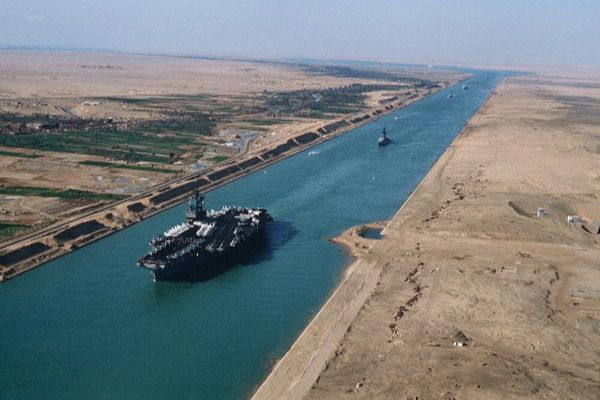
Even though the global cable network is a masterpiece of engineering, it is much more delicate than most of us realize. There are only a few hundred of these cables supporting the entire world’s internet traffic, and they are often concentrated in “choke points” like the Suez Canal or the Strait of Malacca. If several cables in one of these areas were to break at once, it could cause a massive digital traffic jam that would slow down the internet for millions of people. This fragility is a wake-up call for anyone who thinks the internet is an unbreakable “cloud” that exists everywhere at the same time.
Keeping the world connected requires constant work and attention. There are specialized repair ships stationed around the globe, ready to sail out at a moment’s notice to fix a break, but these repairs can take weeks depending on the weather and the depth of the water. This hidden vulnerability means that our modern society is built on a very thin foundation. We rely on these quiet lifelines for our jobs, our news, and our connections to loved ones. Understanding how fragile this system is helps us appreciate the massive effort it takes to keep the digital world running smoothly every single day without interruption.
9. The First Atlantic Cable That Changed Everything
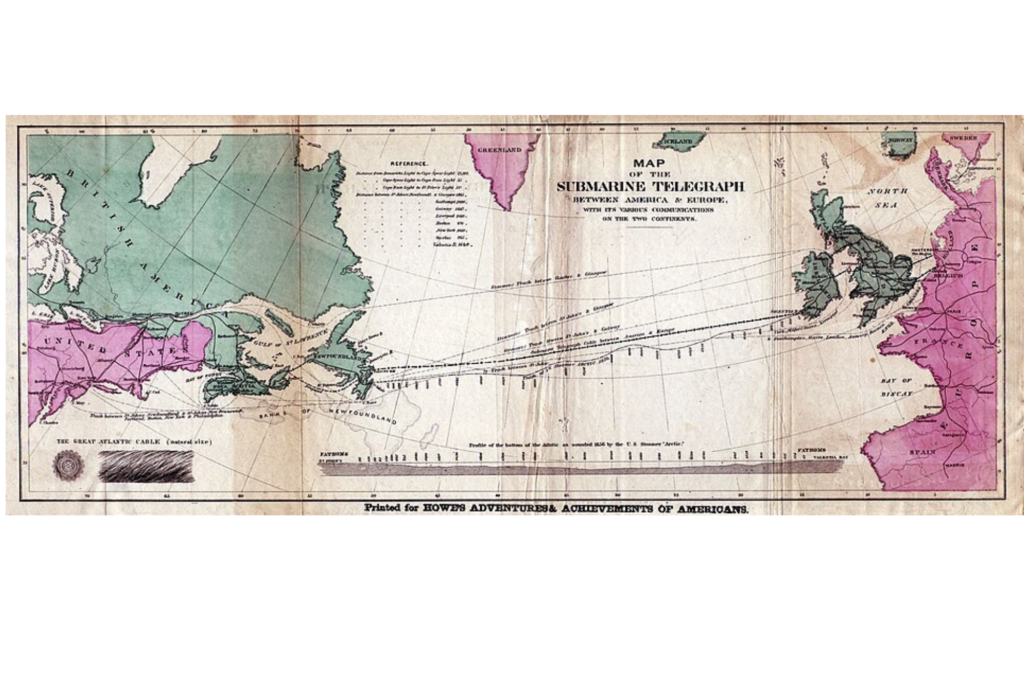
The story of undersea cables actually began long before the internet was even a dream. In 1858, Cyrus West Field and the Atlantic Telegraph Company successfully laid the very first telegraph cable across the Atlantic Ocean. Before this incredible feat, sending a message from New York to London took about ten days by ship. With the new cable, it took only a matter of minutes. Although that first cable only lasted for about three weeks before failing, it proved to the world that long-distance communication through the deep sea was possible. It was a massive turning point in human history, changing the way we handle news and business forever.
Following that early success, engineers spent years perfecting the materials used to protect the wires from the crushing pressure of the ocean. By 1866, a much more reliable cable was laid, and it stayed in operation for years. This marked the true birth of our connected world, as it allowed for the near-instant exchange of stock market prices and political news. Today, we use fiber optics instead of copper, but the path was cleared by those Victorian explorers who dared to drop a wire into the dark unknown. It is a legacy of bravery and persistence that still keeps us clicking and chatting today.
10. How You Actually “Install” a Cable Under an Ocean
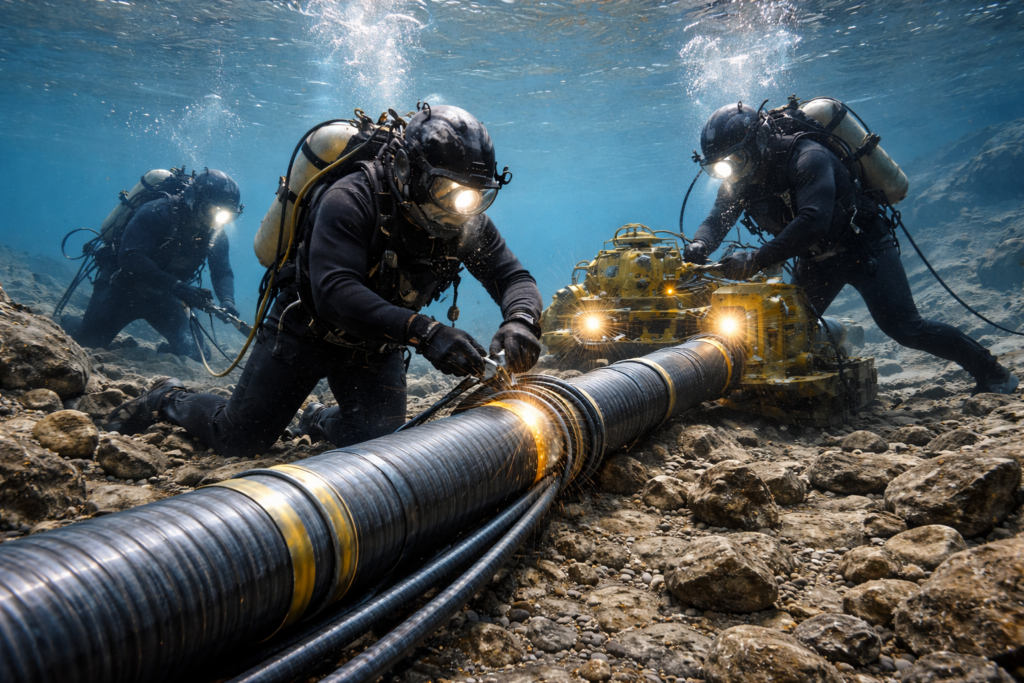
Laying a cable is not as simple as dropping a rope off the back of a boat. It involves massive, specialized ships like the René Descartes, which can carry thousands of miles of cable coiled in huge tanks. Before the ship even leaves the port, experts spend months using sonar to map the sea floor. They look for the smoothest path, avoiding jagged rocks, active volcanoes, and deep trenches that could snap the line. In shallow waters, a giant underwater plow is often used to dig a trench and bury the cable to keep it safe from boat anchors and fishing nets.
Once the ship reaches deeper waters, the process becomes a delicate balancing act. The crew must carefully control the speed of the ship and the tension of the cable so it settles perfectly on the ocean floor without stretching or looping. In the deepest parts of the ocean, the cable simply rests on the surface of the seabed, where the water is calm and the pressure is steady. It is a slow and expensive process that can cost hundreds of millions of dollars. Every mile laid represents a triumph of modern engineering, turning the wild ocean into a highway for our digital lives.
11. Sharks Aren’t the Problem—We Are
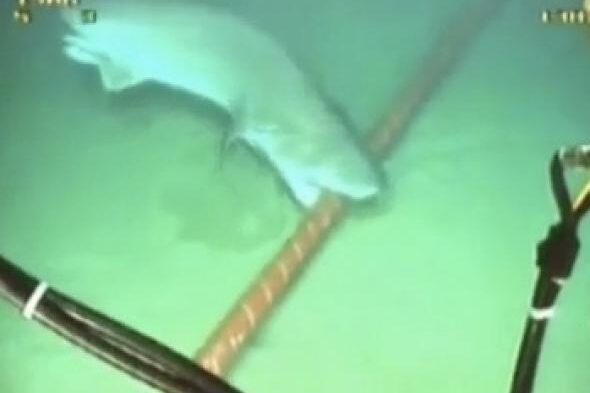
For years, there has been a popular story that sharks love to bite undersea cables, potentially causing internet outages across the globe. This idea gained a lot of traction back in the 1980s when a few cables were found with tooth marks in them. Some researchers thought the sharks were attracted to the electromagnetic fields created by the electricity running through the wires. While this makes for a great headline, the reality is much less dramatic. Sharks are responsible for less than one percent of all cable damage worldwide, and they haven’t been a serious problem for the network in several decades.
Modern cables are now wrapped in heavy protective layers, including steel wire and tough plastic, which makes them much less interesting to curious sea creatures. Most of the time, when a cable breaks, the real culprit is a human being. Research from the International Cable Protection Committee shows that nearly 70% of all cable faults are caused by fishing trawlers or ships dragging their anchors along the bottom. While it’s fun to imagine a high-tech battle between a shark and the internet, the truth is that we are our own biggest threat when it comes to keeping the web running.
12. Light in Glass: The Trick Behind Internet Speed
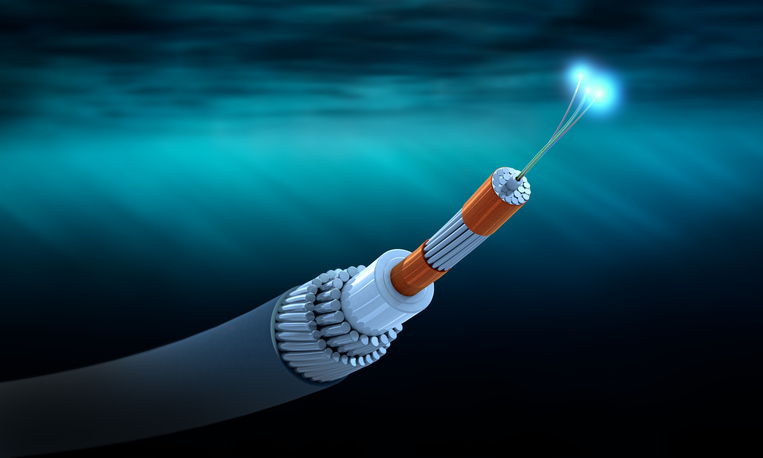
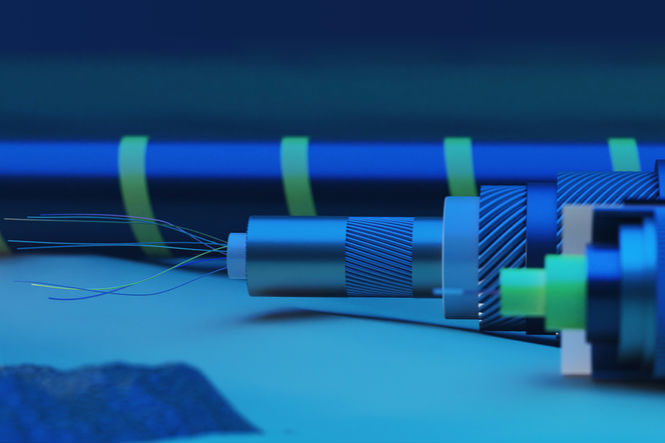
At the heart of every undersea cable are tiny strands of glass called fiber optics, each one no thicker than a human hair. Instead of using electricity like old copper wires, these fibers use pulses of laser light to carry information. This light travels at incredible speeds, roughly 200,000 kilometers per second through the glass. This is why you can have a crystal-clear video call with someone on the other side of the planet with almost zero delay. It is one of the most efficient ways to move data ever invented, and it is the reason the modern internet is so fast.
To keep the signal strong over thousands of miles, engineers have to install “repeaters” every 50 to 100 kilometers. These are heavy, torpedo-shaped devices that act like a megaphone for the light, boosting the signal so it can reach the next stretch of the journey. Without these boosters, the light would eventually dim and the data would be lost in the darkness of the ocean. The combination of pure glass and laser technology allows a single cable to carry more information than thousands of satellites. It is a brilliant example of how we have mastered physics to bring the world closer together.
13. Who Really Owns the Internet’s Backbone?
Many people assume that the government owns the undersea cables that connect the world, but that is rarely the case. In the past, cables were usually owned by groups of large telephone companies like AT&T or British Telecom. However, over the last decade, there has been a massive shift in who holds the power. Today, tech giants like Google, Microsoft, Meta, and Amazon are the primary investors in new cable projects. In fact, by 2024, these four companies alone have become part-owners of about half of the world’s undersea bandwidth, moving from being just users to being the landlords.
This shift is happening because these companies need to move massive amounts of data between their global data centers to keep their apps running. By owning the cables themselves, they can control the speed and reliability of their services without having to rent space from anyone else. While this leads to a faster internet for most of us, it also raises important questions about how much power a few private companies should have over the world’s communication lines. The “cloud” isn’t just a service anymore; it is a physical empire made of glass and steel owned by the world’s richest corporations.
14. How You Fix a Cable Miles Underwater
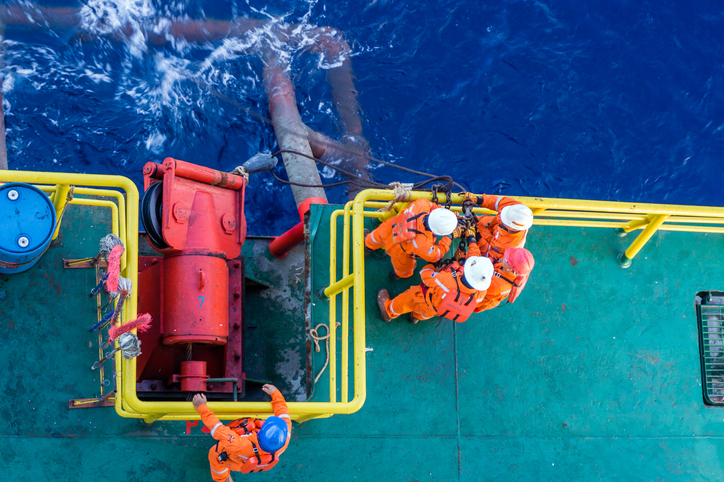
When an undersea cable breaks, it is a race against time to get it fixed. Since the cables are buried miles below the surface, you can’t just send a diver down with a toolbox. Instead, specialized repair ships are dispatched to the general area where the break happened. Engineers use a technique called “Time Domain Reflectometry” to send a pulse of light down the line and measure how long it takes to bounce back. This tells them exactly how many miles away the break is, allowing them to pinpoint the damage within a very small area of the vast ocean.
Once the ship is over the spot, they use a remotely operated vehicle (ROV) or a specialized hook to grab the broken ends and bring them up to the surface. On the deck of the ship, highly skilled technicians must perform a “splice,” joining the microscopic glass fibers back together in a clean, dust-free environment. This is a very delicate job that can take several hours of intense focus. Once the connection is tested and confirmed to be working, the cable is carefully lowered back down to its resting place. It is a difficult and dangerous job, but it is the only way to keep the global network alive.
15. The Repeaters Doing the Heavy Lifting
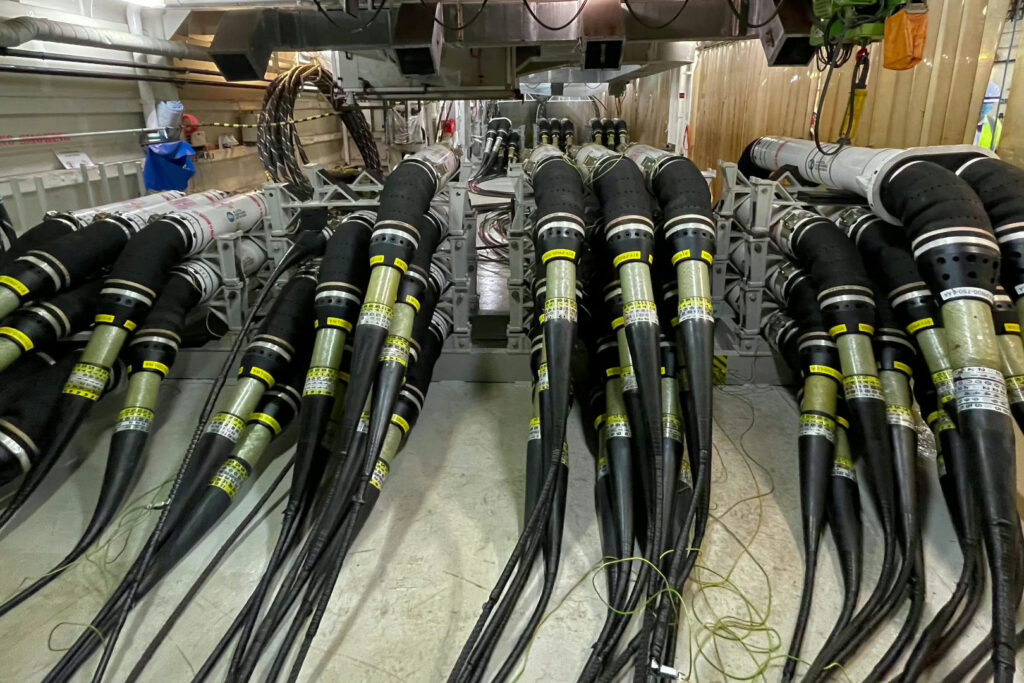
If you were to look at a cable laying on the ocean floor, you would occasionally see a large, metallic bulge that looks like a small submarine. These are called repeaters, and they are the unsung heroes of the internet. Because light fades as it travels through glass, these devices are needed to amplify the signal so it can make it across the entire ocean. Each repeater contains complex electronics and lasers that take the weak incoming signal and blast it out again at full strength. They are built to last for at least 25 years without any maintenance.
Designing a repeater is a massive challenge because it has to withstand the incredible pressure of the deep sea, sometimes over 8,000 pounds per square inch. They are sealed in high-grade steel and beryllium copper to prevent any leaks. Interestingly, these devices need electricity to work, which is why a high-voltage copper wire runs alongside the fiber optics inside the main cable. This means the cable isn’t just carrying your cat videos; it’s also carrying a constant stream of power across the ocean floor. It is a perfectly balanced system of light and energy that works 24/7 beneath the waves.
16. Why Cables Beat Satellites (By a Lot)
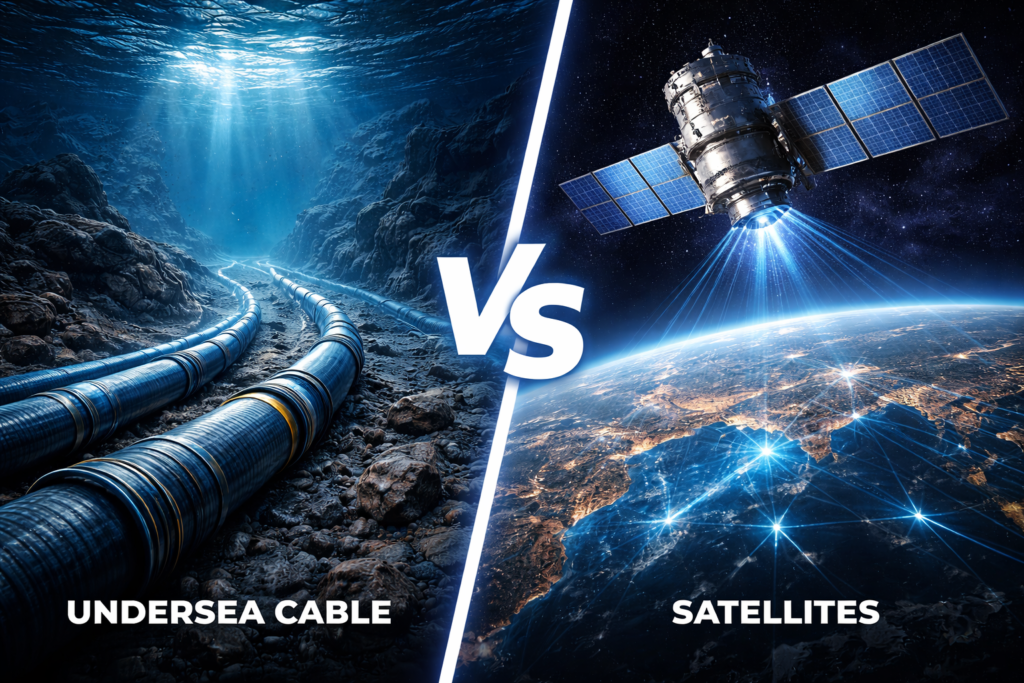
There is a common misconception that most of our data travels through satellites like Starlink or old-fashioned GPS networks. In reality, satellites handle less than 3% of all international data traffic. While satellites are great for reaching remote areas, ships at sea, or war zones, they simply cannot compete with the speed and volume of undersea cables. A single fiber optic cable can carry as much data as thousands of satellites combined. Furthermore, because cables are a direct physical link, they have much lower “latency,” meaning there is less lag when you are trying to do something in real-time.
Think of satellites like a small fleet of planes carrying mail, while undersea cables are like a massive high-speed train system. Both have their uses, but the heavy lifting of the global economy happens on the ground, or in this case, under the water. The only reason we don’t see the cables is that they are hidden from view, while satellites are visible in the night sky. However, without the cables, our modern world of streaming, high-speed trading, and instant global communication would simply vanish. We rely on the physical connection of the seabed far more than we rely on the signals from space.
17. What Happens When a Cable Gets OldLE
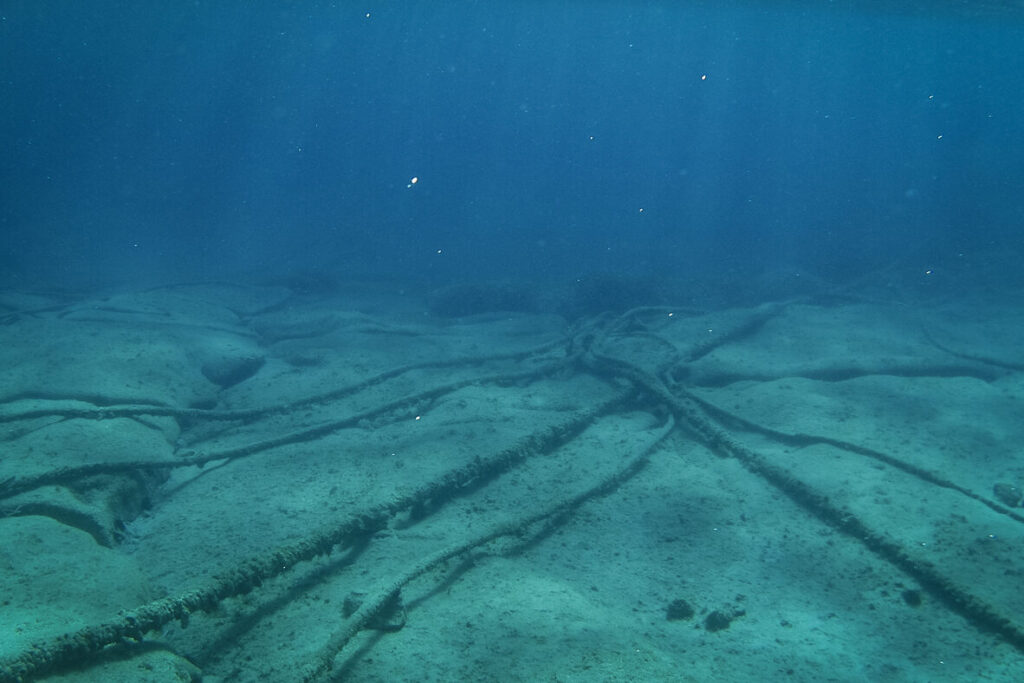
Undersea cables are built to be incredibly tough, but they don’t last forever. On average, a modern fiber optic cable has a planned lifespan of about 25 years. Over time, the constant pressure of the deep sea, the movement of the currents, and the slow wear and tear on the outer protective layers can start to cause problems. Additionally, technology moves so fast that sometimes a cable becomes “economically obsolete” before it actually breaks. Newer cables can carry so much more data that it becomes cheaper to lay a new one than to keep maintaining an old, slow one.
When a cable reaches the end of its life, it is either left on the ocean floor to become part of the environment or it is carefully recovered. “Cable mining” is a growing industry where old lines are pulled up to recycle the valuable copper and lead inside. This helps reduce waste and provides materials for new projects. It is a fascinating cycle of infrastructure, where the old pathways of the 20th century are cleared away to make room for the even faster networks of the 21st. Each generation of cables builds upon the last, slowly thickening the web of connection that wraps around our planet.
18. The Boring Buildings That Keep the Web Alive
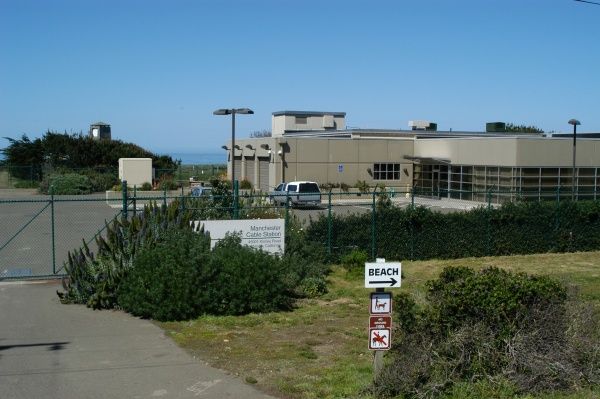
Every undersea cable eventually has to come out of the water, and the places where they do are called landing stations. These are often nondescript, highly secure buildings located near the coast. They might look like boring warehouses, but inside, they are packed with high-tech equipment that translates the light signals from the ocean back into the electrical signals used by our local networks. These stations are the vital bridges between the deep sea and the land, and they are protected like gold vaults because they are so important to a nation’s communication.
Landing stations are carefully chosen based on their geography and safety from natural disasters. For example, towns like Bude in the UK or Virginia Beach in the US are famous in the industry for being major landing hubs. Once the cable arrives, it is connected to the “terrestrial” network, the maze of wires that runs under our streets and into our homes. Without these secure gateways, the miles of fiber under the ocean would be useless. They represent the final step in a journey that spans thousands of miles, turning a pulse of light from another continent into the text or video you see on your screen.


