
Immortal Jellyfish
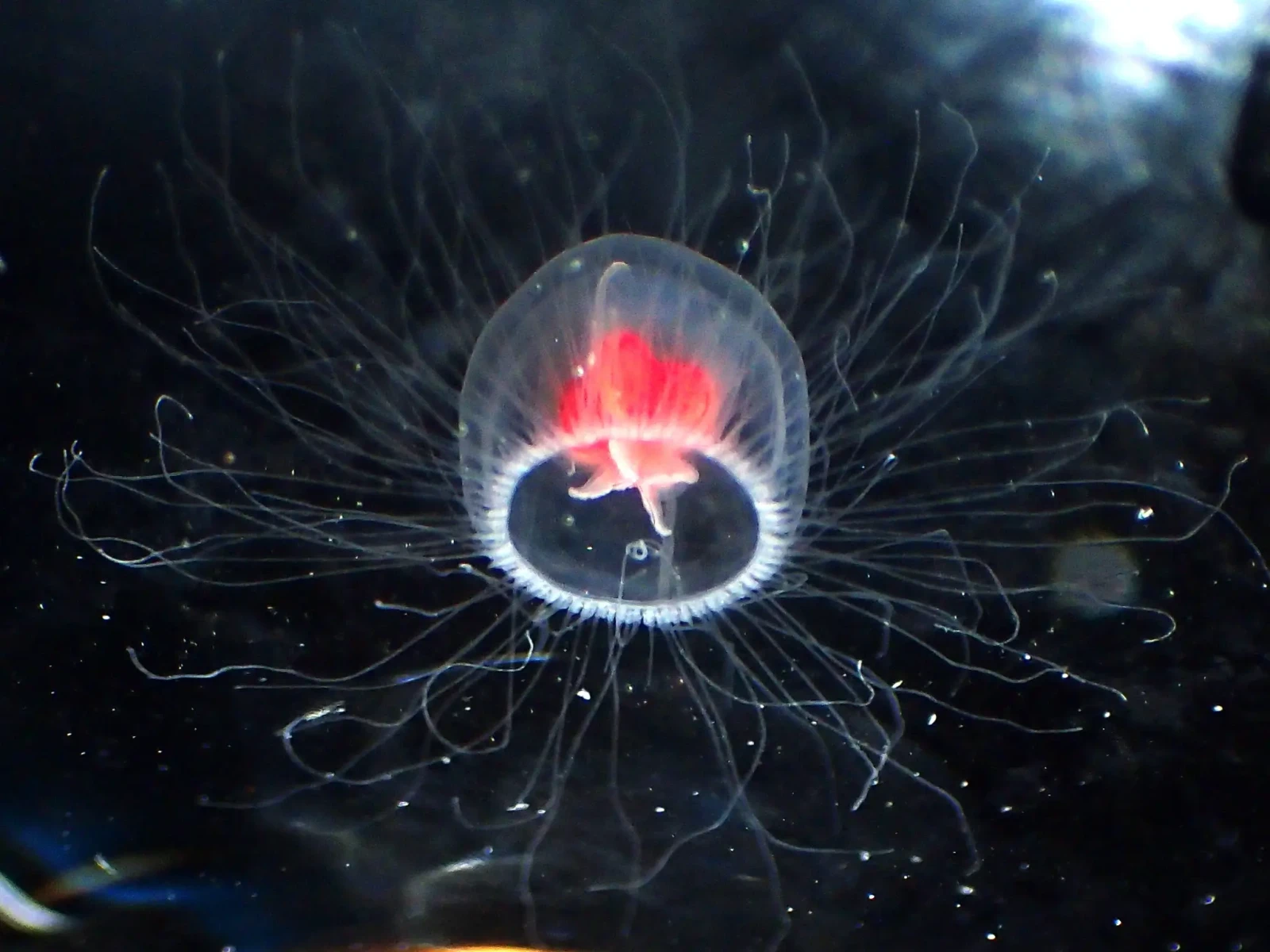
Every once in a while, researchers find a creature that seems to completely ignore standard biological laws. The tiny immortal jellyfish, known to scientists as Turritopsis dohrnii, is perhaps the closest thing to eternal life ever discovered. First found in the Mediterranean Sea back in 1883, this creature is smaller than a pinky nail, measuring only about 4.5 millimeters wide. Despite its tiny size, it has a superpower that has stunned biologists for decades. If the jellyfish gets hurt, starts to starve, or feels too much stress from its environment, it doesn’t just die. Instead, it reverses its aging process and returns to its earliest stage of life.
This incredible transformation happens through a rare biological trick called transdifferentiation. Essentially, its mature cells transform into younger types of cells, rebuilding the animal’s entire body from scratch. The adult jellyfish shrinks down and turns back into a colony of polyps on the ocean floor, which then grow into new jellyfish all over again. While they can still be eaten by predators or killed by disease, their ability to “reset” their biological clock since their formal discovery in the late 19th century remains one of the most important areas of study for scientists looking into how humans age.
Tardigrade
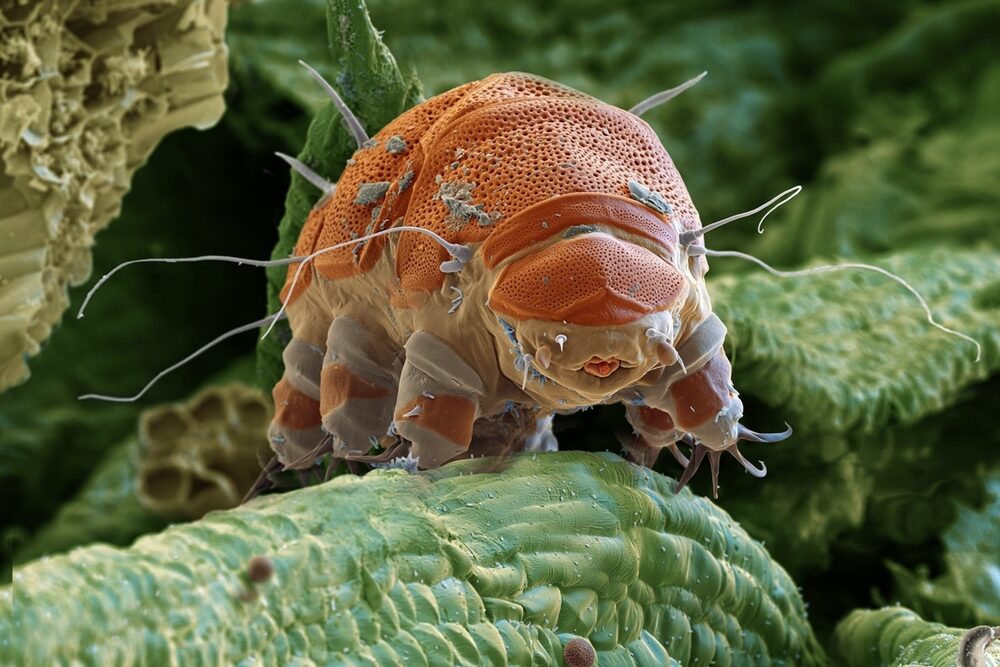
Tardigrades, popularly known as “water bears,” are microscopic animals that are usually less than a millimeter long. Even though they are nearly invisible to the naked eye, they are famous for being the toughest survivors on the planet. First described in 1773 by the German zoologist Johann August Ephraim Goeze, these eight-legged wonders live everywhere from damp moss to the deepest parts of the ocean. Usually, they just crawl around eating algae, but when things get dangerous, they enter a survival state that seems to defy the laws of physics.
When faced with extreme heat, total dehydration, or heavy radiation, the tardigrade curls into a dry ball called a “tun.” In this state, its metabolism stops almost entirely, allowing it to survive temperatures as cold as -272°C or as hot as 150°C. In 2007, scientists even sent tardigrades into the vacuum of space, and many of them survived the cosmic rays and lack of oxygen. They carry special proteins that act like a shield for their DNA, proving that life can endure conditions that would instantly destroy almost any other creature on Earth.
Axolotl
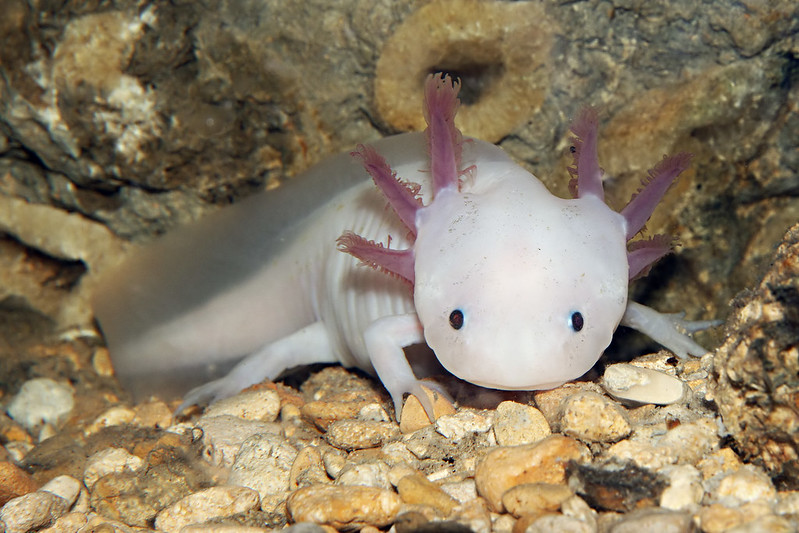
The axolotl is a very special type of salamander from the lakes near Mexico City. It is often called the “Peter Pan” of the animal world because it never truly grows up. Unlike other amphibians that lose their gills and move to land, the axolotl stays in its larval, water-dwelling form for its entire life. This is a rare condition called neoteny. While its cute, smiling face has made it famous, its real claim to fame is its world-class healing ability, which scientists have been studying intensely since the 1800s.
If an axolotl loses a leg, it doesn’t just grow a stump; it regrows a perfect new limb in just a few weeks. It can also repair its own heart, spinal cord, and even parts of its brain without any permanent scarring. By the year 2018, researchers finished mapping its massive genome, which is ten times larger than a human’s, to find the “instructions” for this regeneration. Today, these little creatures are the stars of medical labs, as experts hope to one day use their biological secrets to help human patients heal from serious injuries.
Frozen Wood Frog

Deep in the chilly forests of Alaska and Canada, there is a small frog with a winter survival strategy that sounds impossible. The wood frog actually survives the freezing winters by turning into a block of ice. As the temperature drops below zero, the frog stops breathing, and its heart completely stops beating. For several months, the animal is technically “dead” by human standards, yet it remains perfectly preserved until the sun comes out again in the spring.
The secret to this trick is a special type of natural “antifreeze” produced by the frog’s liver. As the cold sets in, the frog’s body floods with glucose and urea, which protects its cells from being crushed by ice crystals. Up to 65% of the water in its body can turn to solid ice without causing any harm. When the ground thaws out, the frog’s heart miraculously jumps back to life, and it hops away within a few hours. This amazing process has been documented by researchers for years as one of the most extreme adaptations in the animal kingdom.
Greenland Shark
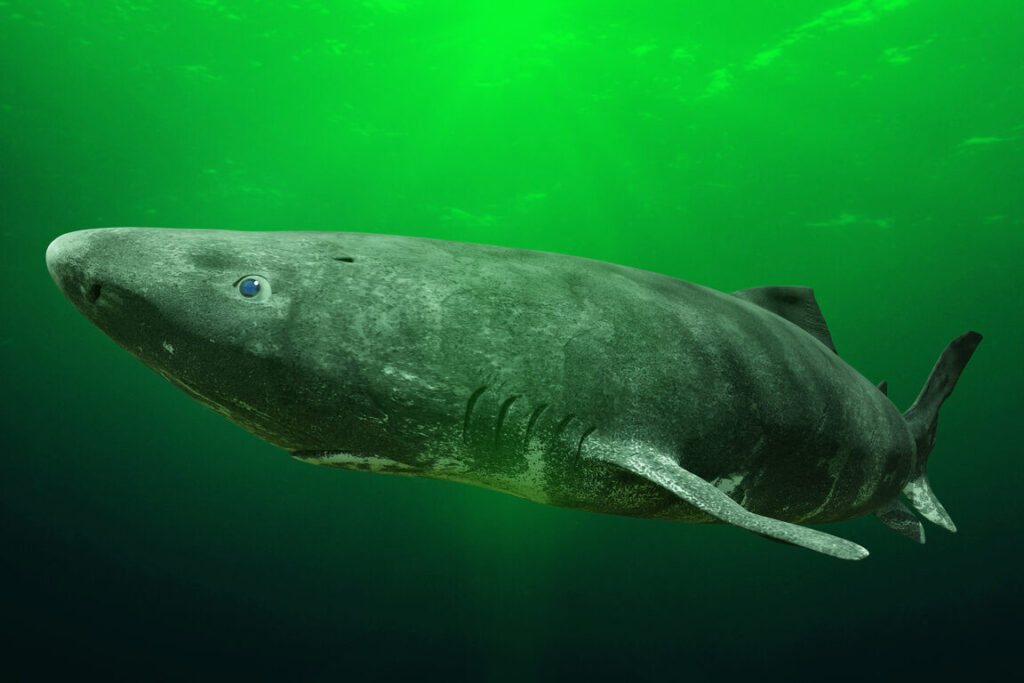
Hidden in the freezing, dark waters of the North Atlantic is a giant that moves so slowly it’s easy to miss. The Greenland shark is the longest-living vertebrate on the planet. For a long time, their age was a mystery, but a major study in 2016 changed everything. By using radiocarbon dating on the lenses of their eyes, scientists discovered that these sharks can live for at least 270 years, with some individuals possibly reaching over 400 years of age.
This means there are sharks swimming today that were born before the United States became a country. They grow very slowly, only about one centimeter per year, and don’t even reach adulthood until they are around 150 years old. Their slow-motion lifestyle and the cold water they live in help keep their metabolism very low, which seems to be the key to their long lives. While they are often blind due to parasites on their eyes, these ancient survivors prove that aging isn’t an inevitable fast track for every large animal on Earth.
Hydra That Never Ages
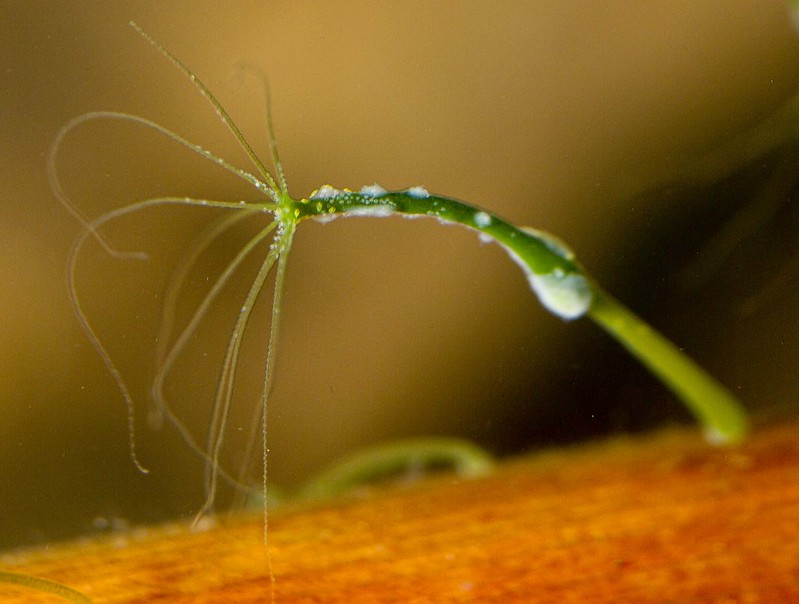
The hydra is a tiny, tube-shaped creature found in fresh water that looks a bit like a miniature palm tree. It is a relative of the jellyfish and is usually only a few millimeters long. While it looks simple, it possesses a biological “fountain of youth” that has fascinated scientists since it was first studied in the 1700s. Unlike almost every other animal, the hydra does not appear to get old or weaker over time. It stays as healthy at age ten as it was on its first day of life.
The reason for this “biological immortality” is that the hydra’s body is made mostly of powerful stem cells that are constantly dividing. Instead of wearing out, its cells are replaced every few weeks, meaning the animal is essentially constantly renewing itself. In a famous study published in 1998, researchers tracked groups of hydra for years and found that their risk of dying stayed exactly the same regardless of how old they were. This tiny creature provides a living example of how cellular renewal can bypass the typical rules of aging and decay.
Solar Powered Sea Slug
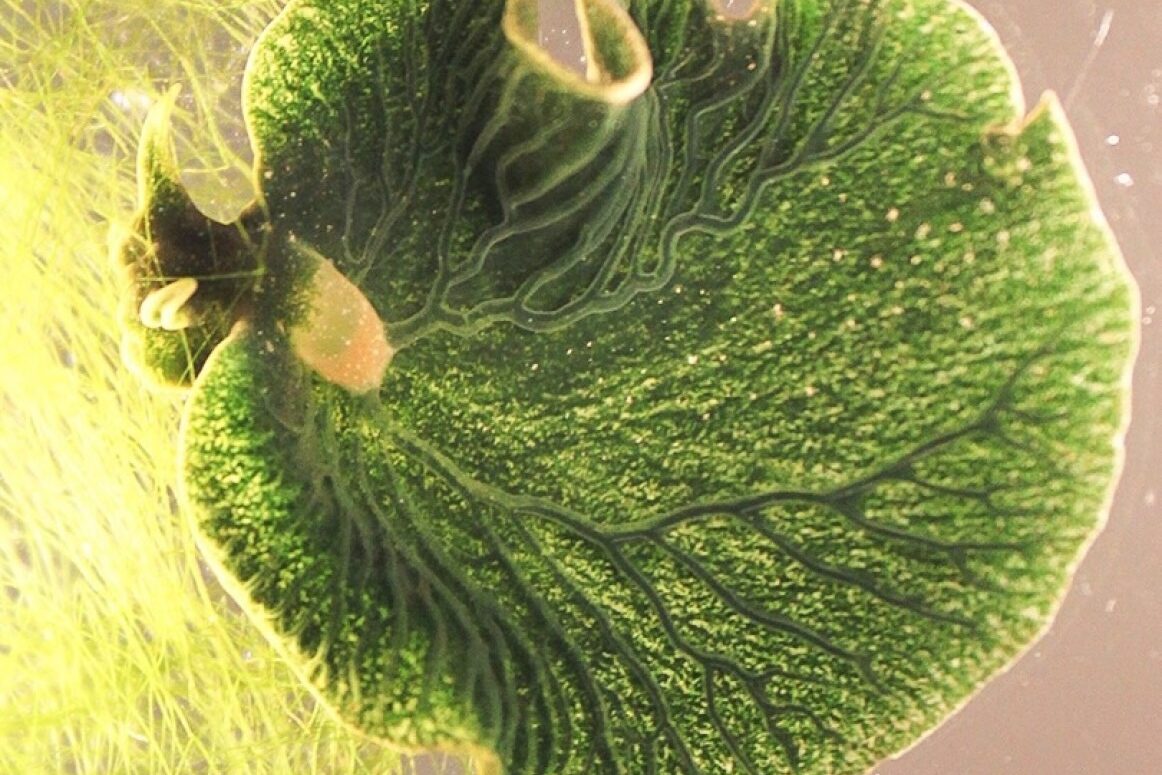
The sea slug known as Elysia chlorotica looks like a bright green leaf crawling along the ocean floor, and it actually functions like one, too. Found along the Atlantic coast, this slug starts its life eating green algae. However, instead of fully digesting its meal, it does something truly strange: it “steals” the algae’s solar panels, known as chloroplasts. It keeps these structures alive inside its own gut cells, turning itself into a solar-powered animal.
Once it has enough of these stolen parts, the slug can stop eating for months. It simply sits in the sun and uses photosynthesis to turn sunlight into energy, just like a plant. This rare process is called kleptoplasty. Scientists discovered that the slug has even managed to “borrow” some genes from the algae to help keep the solar panels working. It is a beautiful example of how nature can blur the lines between the plant and animal kingdoms, showing that the “rules” of how animals get their energy are not as strict as we once thought.
Platypus

When the first platypus skin was sent from Australia to Europe in 1799, many experts thought it was a prank. They believed a dishonest taxidermist had sewn a duck’s beak onto a beaver’s body. It took years for the scientific world to accept that this animal was real. Even then, it continued to break all the rules of what a mammal should be. It has fur like a mammal, but it lays eggs like a bird and has a venomous spike on its heel like a reptile.
The platypus is one of the few mammals that can “see” using electricity. It hunts with its eyes and ears closed, using thousands of tiny sensors in its bill to detect the electrical pulses from the muscles of its prey. Because it has such a strange mix of traits, it was eventually placed in its own special group called monotremes. Even today, the platypus remains a living puzzle that reminds us that evolution doesn’t always follow a straight line or stay within the neat categories we try to create for it.
Parasite Male Anglerfish
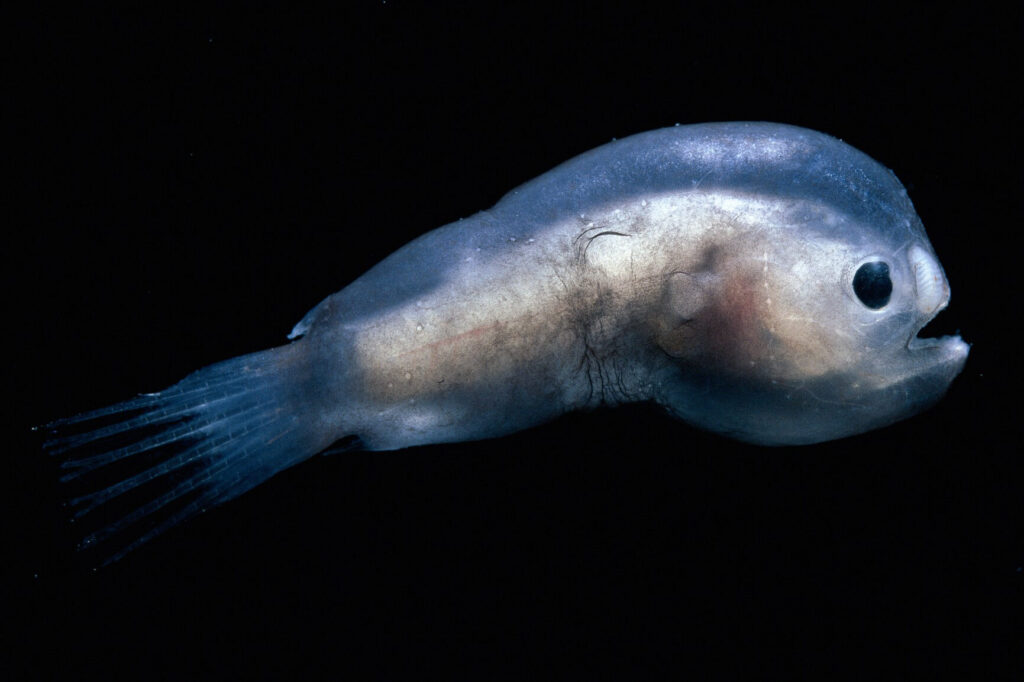
In the pitch-black depths of the midnight zone, finding a mate is nearly impossible. To solve this problem, the deep-sea anglerfish has evolved one of the most bizarre reproductive systems in the world. The female is the large, scary-looking fish with the glowing “fishing rod” on her head. The male, however, is tiny, sometimes less than a tenth of her size, and lacks a hunting lure. His only goal in life is to find a female before he starves to death in the dark.
When a male finally finds a female, he bites onto her side and never lets go. Eventually, his skin and blood vessels fuse with hers, and he becomes a permanent parasite. His eyes and organs wither away until he is nothing more than a source of sperm for the female. By the mid-20th century, scientists realized that what they thought were “growths” on female fish were actually their tiny husbands. This strange bond ensures the species can survive in a place where two individuals might only meet once in a lifetime.
Pregnant Male Seahorse
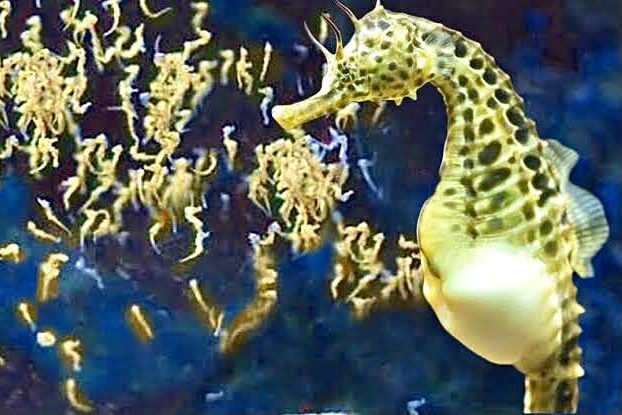
Seahorses are famous for flipping the traditional roles of parents completely upside down. In almost every other animal species, the female is the one who carries the babies, but with seahorses, it is the father who gets pregnant. During their elaborate “mating dance,” the female transfers her eggs into a special pouch on the male’s stomach. From that moment on, the dad takes over all the hard work of growing the offspring.
The male seahorse’s pouch works very similarly to a human womb. He provides the babies with oxygen and nutrients while also regulating the salt levels to prepare them for the ocean. After a few weeks, he goes through “labor” and shoots hundreds of tiny, fully formed seahorses into the water. This unique process was first described in detail by naturalists in the 1800s and remains one of the only examples in nature where the male bears the physical burden of pregnancy, proving that nature is full of surprises.
Glass Frog Transparency
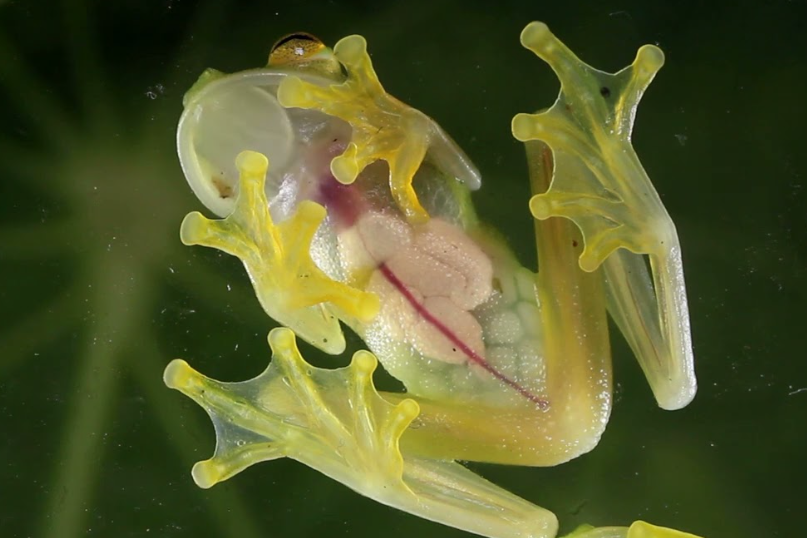
In the lush rainforests of Central and South America lives a small amphibian that seems to possess a real-life invisibility cloak. Glass frogs, which belong to the family Centrolenidae, are famous for the translucent skin on their bellies. If you look at one from underneath, you can clearly see its beating heart, liver, and digestive tract. While these frogs have been known to science since the 19th century, a breakthrough study published in 2022 revealed a secret trick: they can hide nearly 90% of their red blood cells inside their liver while they sleep.
By tucking their blood away, they become almost completely see-through, which helps them blend into the green leaves where they rest. This clever form of camouflage, known as “edge diffusion,” blurs the frog’s outline so predators like birds or snakes cannot easily spot them. Usually measuring only about three centimeters long, these delicate creatures spend most of their lives high in the trees. They are a perfect example of how evolution can use transparency as a high-tech survival tool, effectively bending the rules of light and color to stay safe in a dangerous world.
Basilisk Frog
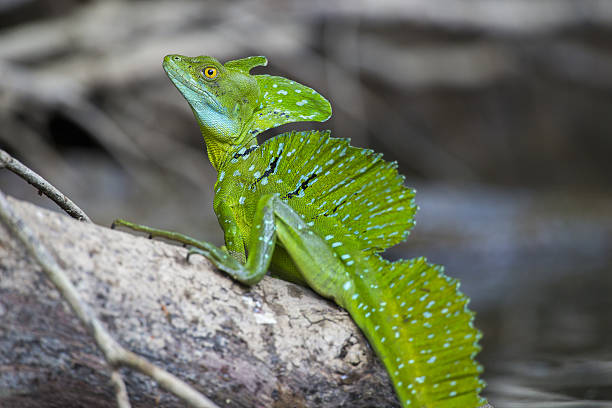
The basilisk lizard of Central America is so skilled at defying physics that it has earned the nickname the “Jesus lizard.” This reptile has the incredible ability to run across the surface of a pond or stream without sinking. While most animals would fall straight into the water, the basilisk can sprint at speeds of about five feet per second for a distance of up to 15 feet. This feat was famously captured in high-speed film during the late 20th century, allowing scientists to finally understand the mechanics behind the “miracle.”
The secret is in its specialized hind feet, which have long toes and fringed scales that act like tiny paddles. As the lizard slaps its feet against the water, it creates a small air pocket that briefly supports its weight. To stay upright, it must keep its legs moving in a rapid “slap, stroke, and recovery” cycle. Once it slows down, gravity takes over and the lizard has to swim like a normal reptile. This dramatic escape tactic shows how specialized body parts and pure speed can allow an animal to move through its environment in ways that seem to break the laws of nature.
Mantis Shrimp
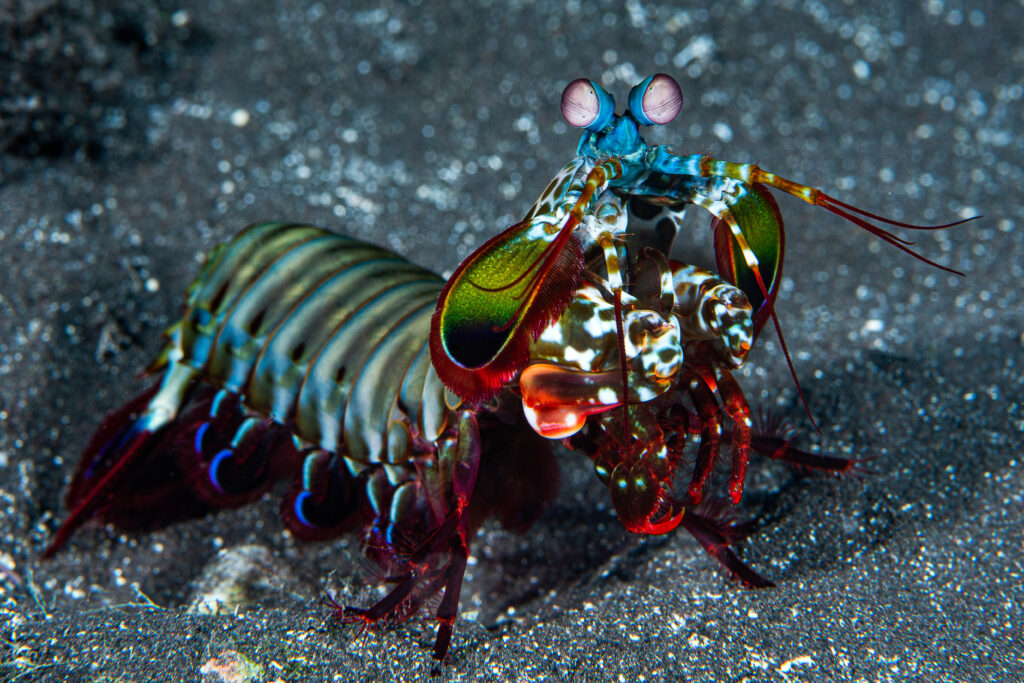
The mantis shrimp may look like a colorful, harmless crustacean, but it actually possesses the most dangerous “punch” in the ocean. Using specialized limbs called raptorial clubs, some species can strike their prey with the force of a .22 caliber bullet. The acceleration is so fast that it actually heats the water around it to near-boiling temperatures for a split second. These shrimp have been known to shatter thick snail shells, dismember crabs, and even crack the heavy glass of laboratory aquariums if they feel threatened.
Beyond the physical hit, the strike creates something called a “cavitation bubble.” Because the club moves so quickly, the water pressure drops, forming a bubble that collapses instantly. This collapse produces a tiny flash of light and a powerful shockwave that can stun or kill a fish even if the shrimp misses the actual punch. Researchers studying this phenomenon in the early 2000s found that the shrimp’s clubs are made of a complex material that resists fracturing, a design that engineers are now trying to copy for better body armor. It is a stunning display of power packed into a tiny, underwater frame.
Gravity Defying Gecko
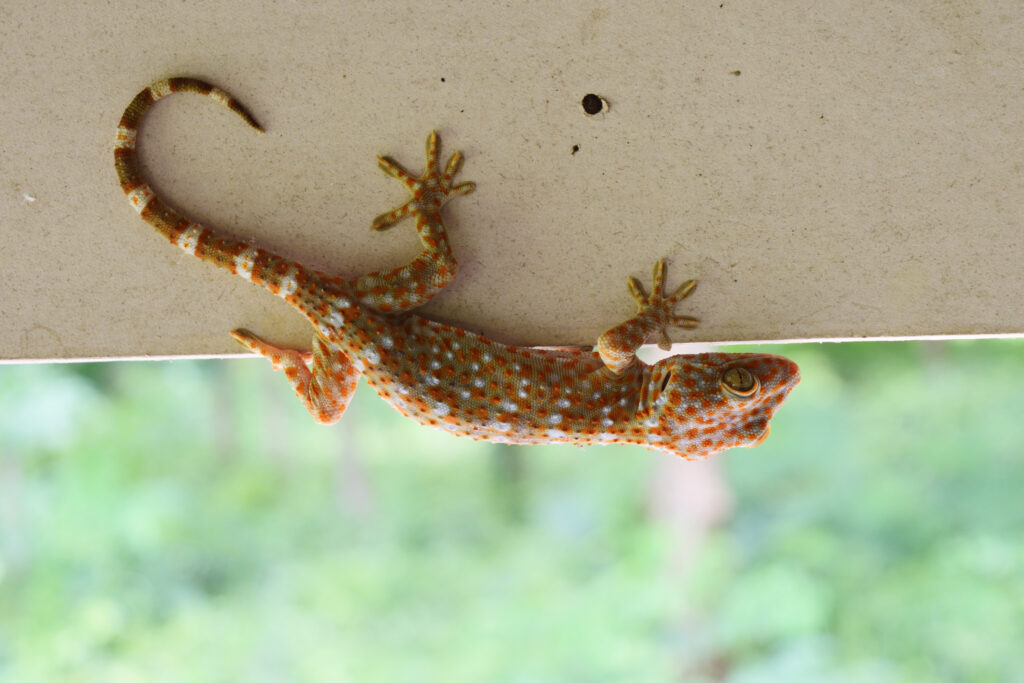
Geckos are famous for their ability to walk straight up glass walls or even upside down across a ceiling. For a long time, people thought they used sticky glue or tiny suction cups, but the truth is much more complex and involves molecular physics. Each gecko toe is covered in millions of microscopic hairs called setae, which further split into even tinier tips called spatulae. When a gecko places its foot down, these billions of tips get so close to the surface that they create a weak electrical bond known as van der Waals forces.
Even though a single hair creates almost no pull, millions of them working together create enough “stick” to hold the gecko’s entire weight. Remarkably, they can “turn off” this stickiness in milliseconds just by changing the angle of their foot as they step. This discovery, detailed in major scientific journals around the year 2000, has inspired scientists to create “gecko tape” and climbing robots. By using the tiny attraction between molecules instead of messy adhesives, the gecko has mastered a way to move through the world that makes gravity seem like a mere suggestion rather than a law.
Velvet Ant Sting
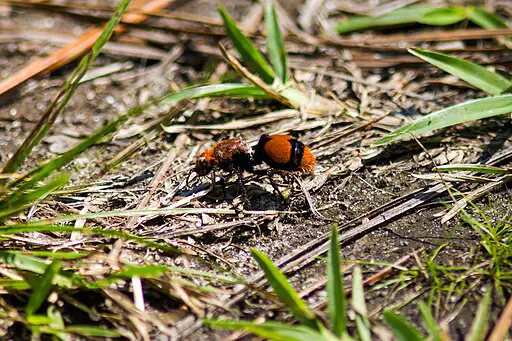
Despite what the name suggests, a velvet ant is actually a type of wingless wasp. Covered in dense, bright orange or red hair, they look like soft, fuzzy toys crawling through the sand in places like the American Southwest. However, their cute appearance is a warning: they possess one of the most painful stings in the entire insect kingdom. This sting is so notoriously agonizing that the species is commonly nicknamed the “cow killer,” as legend claims the pain is enough to knock down a full-grown bull.
The female’s stinger is incredibly long, nearly half the length of her body, and it can be maneuvered in almost any direction. On the Schmidt Sting Pain Index, which was developed in the 1980s to rank insect pain, the velvet ant ranks near the top for its intensity and duration. While the venom isn’t actually toxic enough to kill a cow, the sheer trauma of the sting is usually enough to make any predator regret its life choices. These insects also have an extremely hard outer shell that is difficult to crush, making them one of the best-protected “ants” you will ever encounter in the wild.
High Altitude Himalayan Spiders

Most people think of the highest peaks of the Himalayas as a frozen wasteland where nothing can live, but the Himalayan jumping spider begs to differ. These tiny explorers have been found living at altitudes of over 22,000 feet (6,700 meters) above sea level. At this height, the air is thin, oxygen is scarce, and the temperature stays well below freezing for most of the year. They are considered some of the highest-dwelling permanent residents on Earth, surviving in a place where most mammals would quickly perish.
Since there aren’t many plants or other animals living that high up, these spiders have developed a unique way to find lunch. They rely on the “aeolian” food chain, which means they eat small insects and organic bits that are blown up the mountainside by powerful high-altitude winds. They spend most of their time tucked away in small crevices between rocks to stay warm, coming out only when the sun provides enough heat for them to move. Their presence at such extreme heights proves that life is incredibly stubborn and can find a home even in the most inhospitable corners of our planet.
Blood Shooting Lizard
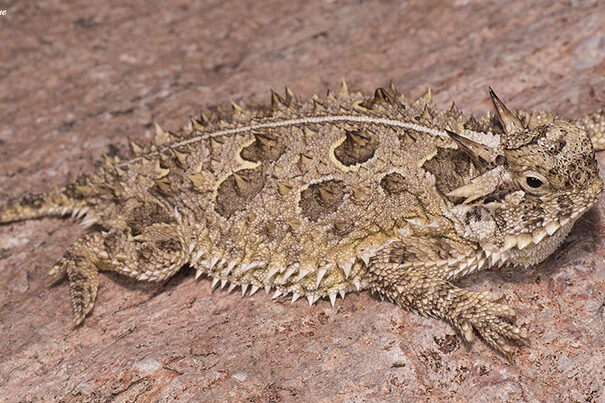
The Texas horned lizard has one of the most disgusting and effective defense mechanisms ever seen. When it is cornered by a hungry predator, such as a coyote or a bobcat, it doesn’t just run away, it shoots a high-pressure stream of blood directly out of its eyes. This blood can travel up to five feet, startling the attacker and giving the lizard a chance to escape. This bizarre behavior was first documented by naturalists in the late 1800s and continues to be a favorite subject for wildlife photographers today.
The lizard achieves this by restricting the blood flow leaving its head, which causes the blood pressure in its eyelids to skyrocket until the small vessels finally pop. To make the attack even more effective, the lizard mixes a foul-tasting chemical into the blood that is specifically offensive to canines like foxes and dogs. While it looks like a scene from a horror movie, it is a highly evolved survival strategy. After the “attack,” the lizard’s eyes heal quickly, and it goes back to its usual business of eating ants in the desert sun, proving that sometimes the best defense is just being completely gross.
Archerfish
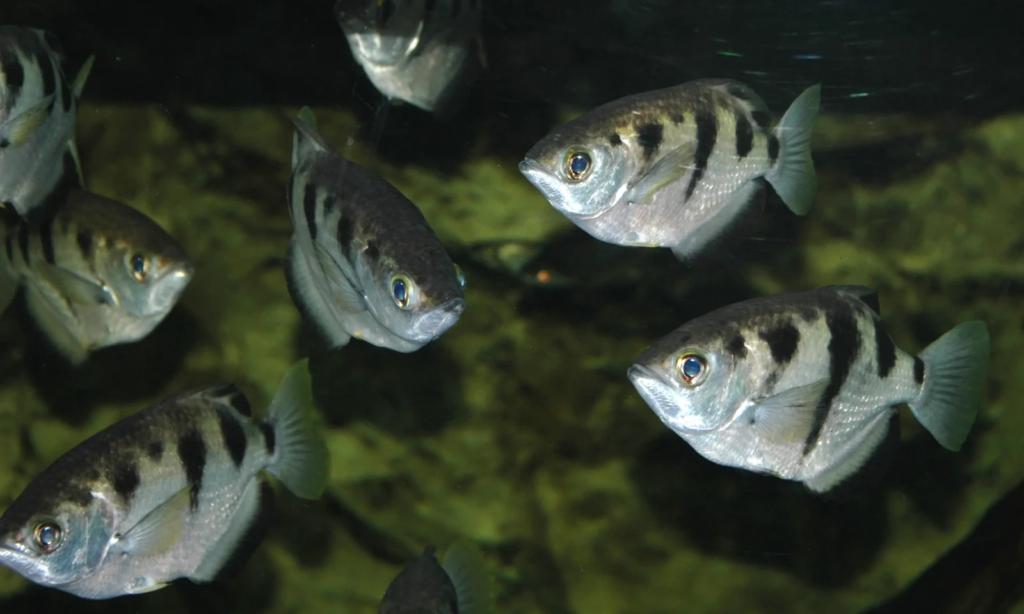
In the mangrove swamps of Asia and Australia, the archerfish has earned a reputation as the finest marksman in the water. Instead of waiting for a bug to fall into the stream, the archerfish takes aim and shoots a precise jet of water at insects resting on branches above. The force of the water knocks the prey into the pond, where the fish is waiting to gobble it up. They are so accurate that they can hit a moving target from over six feet away, even though they are looking through the water’s surface.
What makes this truly “law-breaking” is how they deal with light. When you look into water, objects appear to be in a different spot than they actually are because of “refraction.” The archerfish has a brain that automatically calculates this distortion, allowing it to aim perfectly every time. Research in the early 2000s even showed that young archerfish learn by watching their elders, which is a very high level of intelligence for a fish. By mastering the physics of light and fluid dynamics, the archerfish has turned water into a long-range weapon, making it a true sniper of the natural world.
The more researchers study these unusual creatures, the more they realize that the rules of life are far more flexible than once believed.
Like this story? Add your thoughts in the comments, thank you.


