
Loyal Dogs Read Our Faces
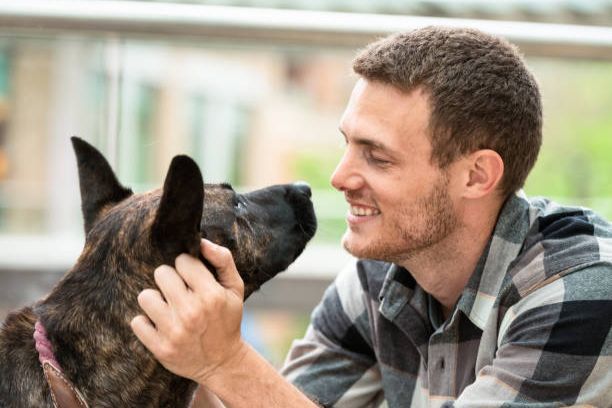
Our faithful canine companions have spent thousands of years evolving right alongside us, so it is hardly surprising that they have developed a near-supernatural ability to pick us out from a crowded room. Scientists have discovered that dogs possess a specialised part of the brain dedicated solely to processing faces, which allows them to distinguish their owners from complete strangers with incredible ease. They do not just see a blurry figure because they actually focus on the subtle geometry of our features to identify who is who.
This deep-seated recognition is supported by their powerful sense of smell and an uncanny ability to hear the unique frequency of our footsteps as we approach the front door. Research shows that the “love hormone” oxytocin spikes in their systems when they lock eyes with their favourite human. They form an internal map of our faces that remains incredibly stable over time, allowing them to recognise a beloved owner even after years of being apart or after significant changes in appearance like a new haircut or different clothing.
Clever Crows Never Forget Faces
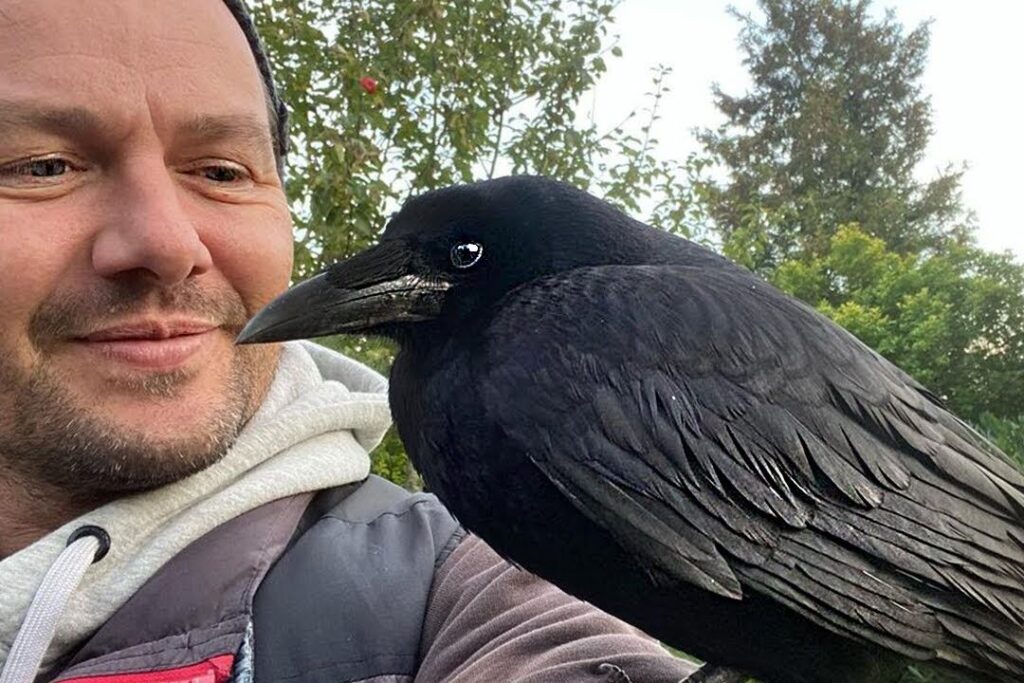
The intelligence of the crow is legendary among birdwatchers, but their ability to remember a specific human face is perhaps their most chillingly impressive trait. Researchers at the University of Washington famously wore masks while trapping crows and discovered that the birds would scold and dive-bomb anyone wearing those specific masks for years afterward. What is truly fascinating is that the crows who had never even met the masked researchers began to join in the harassment, showing that these birds actually pass on descriptions of “dangerous” individuals to their peers and offspring.
This recognition isn’t limited to those they dislike because crows are equally good at identifying the kind souls who regularly leave out healthy snacks or fresh water. They can distinguish between hundreds of different people based on the structure of their eyes and noses rather than just relying on the clothes someone is wearing. If you treat a crow with respect, they might even bring you small gifts like shiny buttons or pebbles as a sign of their acknowledgement. Their brains are surprisingly large relative to their body size, packed with neurons that allow them to navigate complex social hierarchies where knowing exactly who is a friend is vital for survival.
Elephants Have Remarkable Long Memories

Elephants are often cited as the gold standard for memory in the animal kingdom and for a very good reason. These gentle giants can recognise the voices and scents of individual humans they haven’t seen for decades, often reacting with immense joy or extreme caution depending on their past experiences with that person. In many African regions, elephants have even learned to distinguish between different groups of people based on the colour of their traditional clothing and the language they speak, specifically identifying those who might pose a poaching threat versus those who are harmless researchers.
The bond an elephant forms with a specific caretaker is incredibly deep and rooted in a mutual recognition of identity and personality. They do not just see a generic human handler because they respond to the specific touch, tone, and scent of the individual they have grown to trust over many years. When reunited with a former keeper after a long absence, elephants have been known to rumble in greeting and use their trunks to delicately stroke the person’s face as if confirming their identity. This suggests that their mental catalogues are filled with detailed profiles of the humans they encounter, making them one of the most socially perceptive species on the entire planet.
Horses Sense Your True Identity
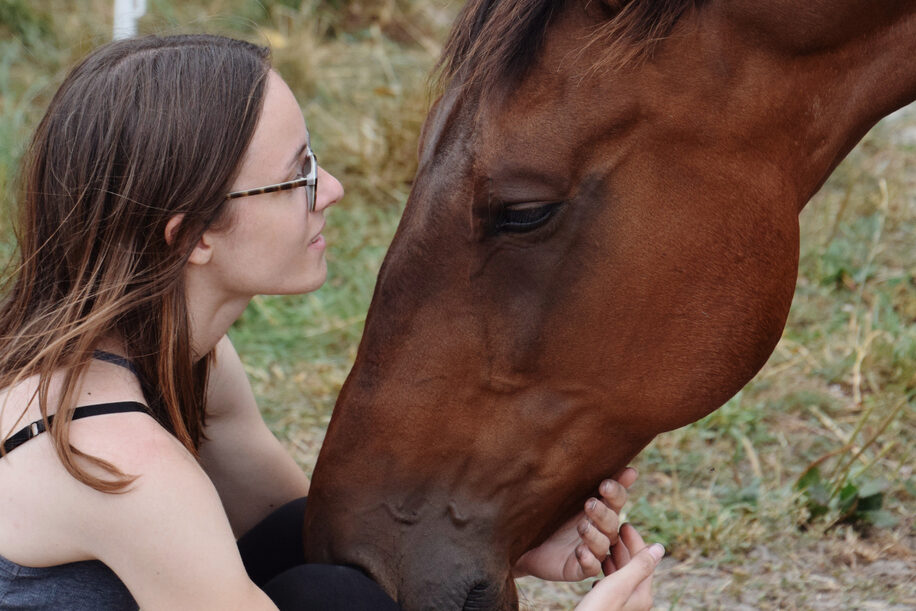
For centuries, riders have claimed that their horses know them better than anyone else and recent studies have finally provided the evidence to back this up. Horses are capable of identifying their owners from photographs alone, which proves they are looking at the specific features of a face rather than just relying on scent or the sound of a voice. They can also remember the past emotional expressions of a person, meaning if you were angry the last time they saw you, they will likely approach you with more hesitation the next time. This ability to link a specific face to a previous emotional experience shows a level of social intelligence that is quite rare.
When a horse looks at you, they are taking in a wealth of information about your identity and your current state of mind. They use their large, sensitive eyes to map out the unique characteristics of your face and they can distinguish between several different people who might look similar to an untrained eye. This recognition is why a horse might be perfectly calm and cooperative with one specific person but become stubborn or flighty with a stranger who tries to use the same commands. They value the consistency of a known individual and their loyalty is built on a foundation of long-term recognition and history.
Sheep Are Surprisingly Face Savvy
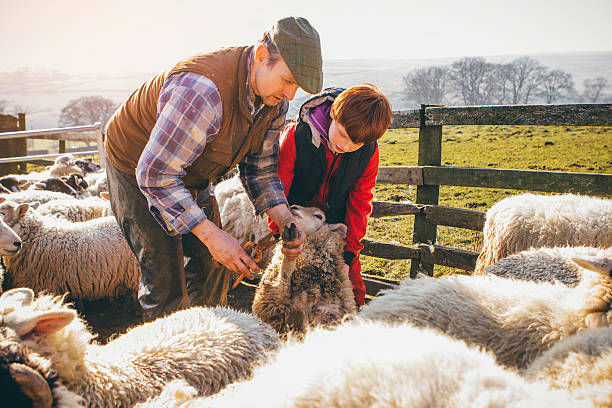
Sheep are often unfairly dismissed as being somewhat dim-witted followers, but they actually possess facial recognition abilities that rival those of some primates. In controlled studies, sheep were trained to recognise the faces of famous celebrities from photographs and they were consistently able to pick them out from a group of strangers. Even more impressive is that they could recognise their regular human handlers from pictures taken at different angles, suggesting they have a sophisticated three-dimensional understanding of what a specific person looks like. This debunked the old myth that sheep only see a blur of woolly shapes and human figures.
This talent likely evolved because sheep live in complex social flocks where being able to tell friends from foes is essential for maintaining peace and finding protection. They apply this same social logic to the humans they interact with, often showing a clear preference for a shepherd who treats them gently while avoiding those who have caused them stress. If you spend enough time with a flock, you will notice that they don’t just react to you as a “human” but as a specific individual with a predictable pattern of behaviour.
Cats Choose Their Favourite Humans
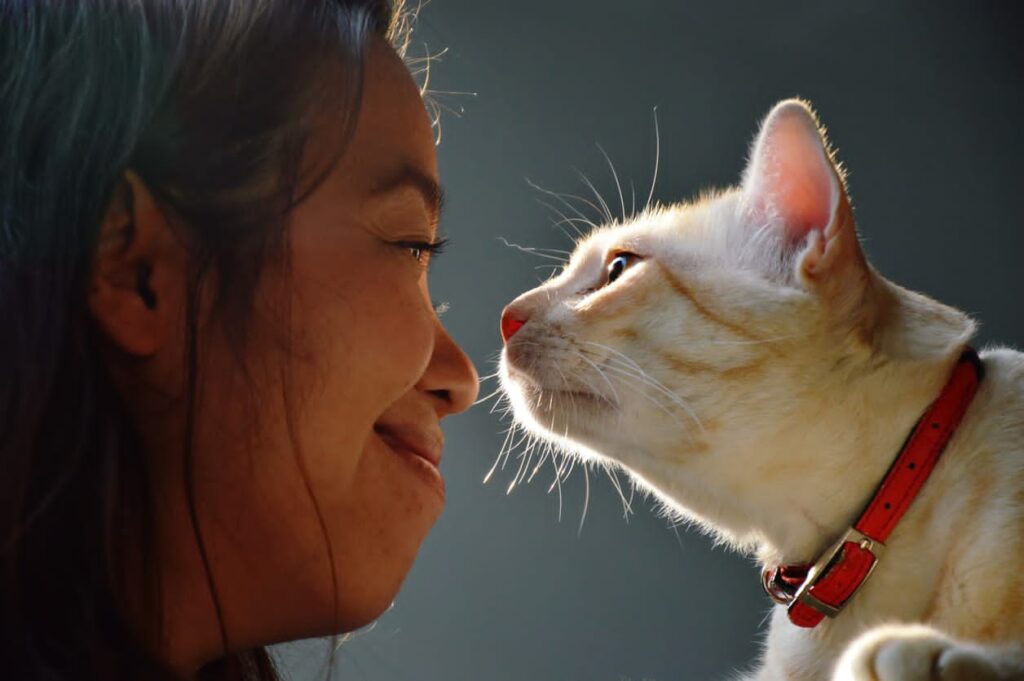
While cats are often unfairly labelled as being aloof or indifferent, anyone who lives with one knows that they are incredibly discerning when it comes to people. Unlike dogs who might greet almost anyone with enthusiasm, cats are highly selective and use a combination of vocal recognition, scent, and visual cues to identify their chosen humans. Research has shown that cats can distinguish their owner’s voice from a recording of strangers even when the owner is calling their name from another room. They might act like they are ignoring you, but their ears will twitch and their brain activity spikes because they know exactly who is speaking.
The recognition a cat displays is deeply tied to the routine and the specific sensory profile of their person. They memorise the way you walk, the unique scent of your skin, and the specific way you blink or tilt your head when you are happy. Because they are both predators and prey in the wild, being able to identify a safe human is a vital survival skill that they have carried into the domestic home. They don’t just want food from any source since many cats will refuse to eat if their primary person is gone, proving that their bond is rooted in an individual connection rather than a transactional relationship.
Pigs Exhibit High Social Intelligence

Pigs are widely considered to be among the most intelligent domesticated animals, often outperforming dogs in certain cognitive puzzles and social tasks. This intelligence extends to their ability to recognise individual humans and remember exactly how those people have treated them in the past. If a researcher is consistently kind and provides treats, a pig will run to greet them with excitement, but they will actively avoid or show signs of stress around someone who has been aggressive. They do not just generalise all humans as being the same because they hold very specific memories of individual interactions that shape their future behaviour.
In a farm or sanctuary setting, pigs can easily pick out their favourite caretakers from a group of people even if everyone is wearing the same overalls or boots. They rely heavily on their keen sense of smell and their surprisingly good vision to differentiate between faces and body shapes. This level of recognition suggests that pigs have a rich internal life where they categorise the world into friends and strangers, much like we do. Their ability to form these one-on-one bonds is why many people who work closely with them find it impossible to view them as anything less than sentient individuals with distinct personalities.
Octopuses Can Be Very Picky
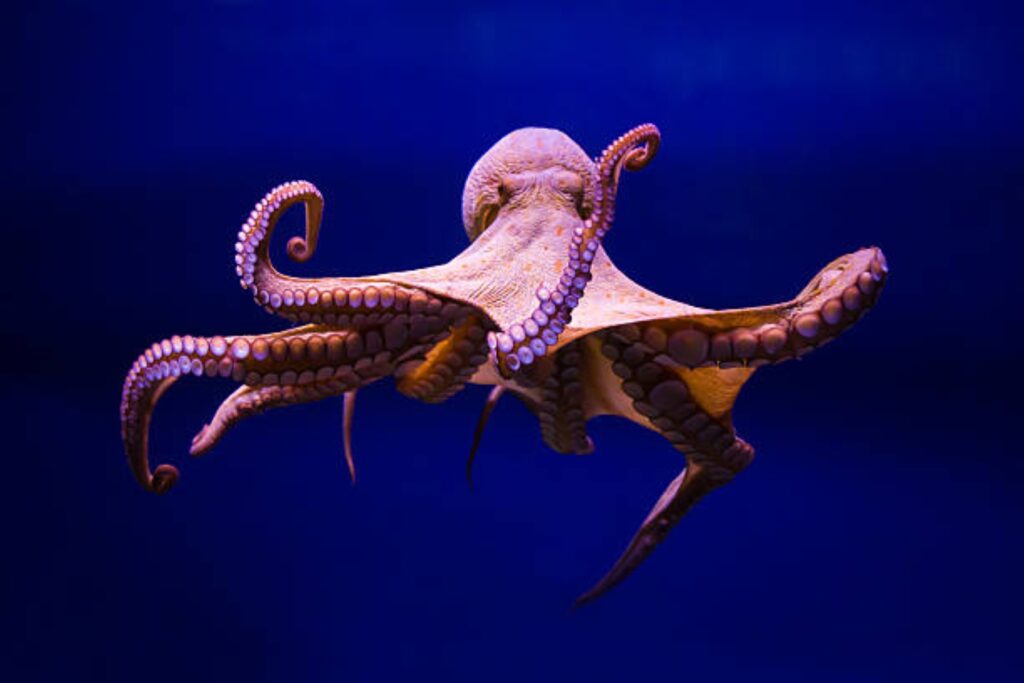
The octopus is perhaps the most alien-like creature on this list, yet these cephalopods possess an intelligence that is startlingly similar to our own in some ways. Lab researchers have frequently reported that octopuses develop clear preferences for certain people, sometimes displaying playful behaviour for one scientist while squirting water at another. In one famous study, two different people wore identical outfits, but one was consistently nice to the octopus while the other was mildly annoying. The octopus quickly learned to tell them apart, greeting the nice person with curiosity and staying hidden when the annoying person approached the tank.
Because they have such a decentralised nervous system, with two-thirds of their neurons located in their arms, an octopus might literally think with its entire body as it explores a human hand. They use their sophisticated eyes, which are structurally similar to human eyes, to study the faces and movements of the people outside their glass walls. This ability to recognise individuals is a sign of high-level problem-solving and memory, as it requires the animal to filter out a vast amount of visual information to focus on the unique traits of a person. It is a humbling reminder that intelligence can take many forms, even in the depths of the ocean.
Honeybees Have A Mask For Faces
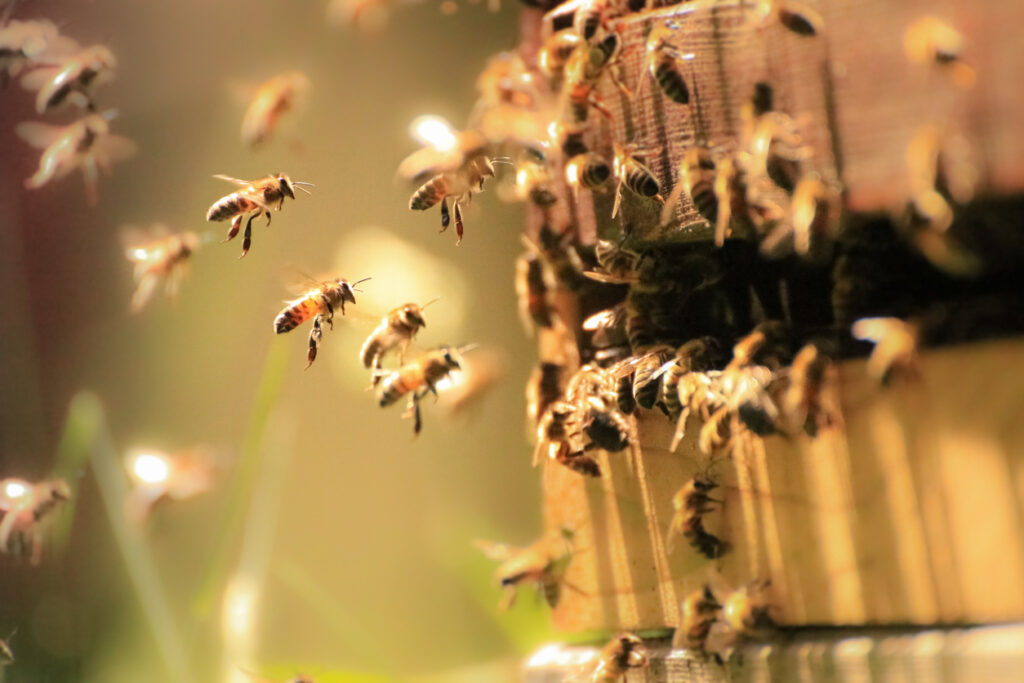
It might seem impossible that a creature with a brain the size of a poppy seed could recognise a human face, but honeybees have proven the skeptics wrong. Through clever experiments involving sugar water rewards, scientists discovered that bees can be trained to pick out a specific human face from a line-up of photographs. They don’t see the face in the same way we do because they break the image down into a series of patterns and shapes, but the end result is the same as they can reliably identify the correct person. This shows that the ability to process complex visual data isn’t just for big-brained mammals.
This incredible feat of nature suggests that the neural circuitry required for facial recognition might be much simpler than we previously thought. For a bee, being able to recognise patterns is essential for finding the right flowers, so they simply apply that same pattern matching skill to the arrangement of eyes, noses, and mouths on a human face. While a bee in your garden likely won’t remember you from yesterday unless you are holding a giant spoonful of honey, the fact that they are physically capable of this level of discrimination is a testament to the power of evolution. It reminds us that even the smallest lives are complex.
Archerfish Aim For Specific Targets
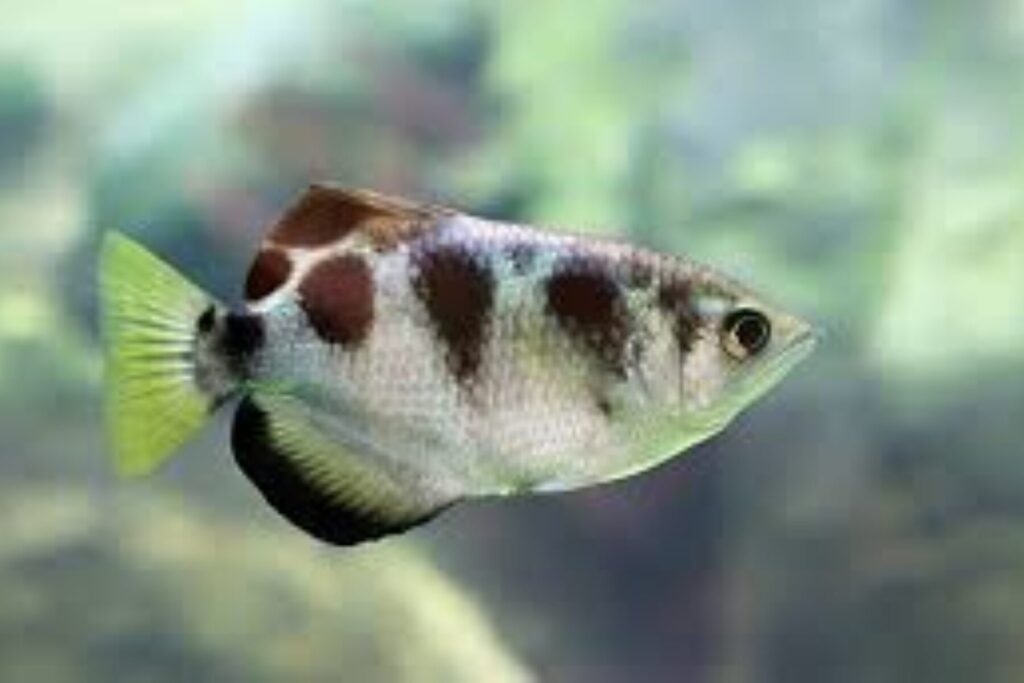
The archerfish is famous for its ability to spit a precise jet of water to knock insects off overhanging branches, but they are also surprisingly good at shooting the faces of people they recognise. In a fascinating study, these fish were trained to spit at a specific person’s face on a computer monitor in exchange for food. Even when the researchers made the task harder by using black-and-white photos or removing distinctive features like hair, the fish were still able to identify the correct face with high accuracy. This was a ground-breaking discovery because it proved that animals without a neocortex could still perform complex visual recognition.
The archerfish’s brain is relatively simple compared to a human’s, yet they possess a highly developed visual system that allows them to make split-second calculations about distance and refraction. By repurposing this visual hardware, they can learn to distinguish the subtle differences between one human face and dozens of others. This ability likely helps them in the wild to identify specific prey or avoid certain predators, but in a domestic setting, it means they might actually know who is standing in front of their tank. It is a bit unsettling to think a fish is judging you, but it highlights just how widespread the gift of recognition is in the animal kingdom.
Chimpanzees Shares Our Recognition Skills
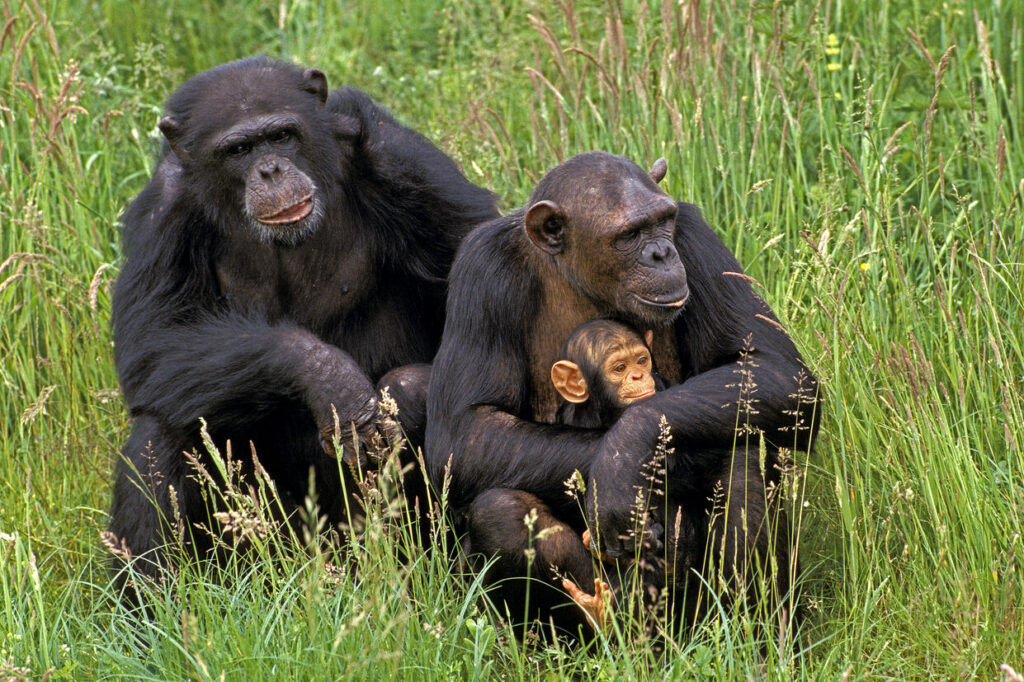
Chimpanzees are our closest living relatives, sharing almost 99 per cent of our DNA, so it is hardly surprising that they possess facial recognition abilities that are remarkably similar to our own. Scientists have discovered that chimpanzees are so adept at this skill that they can even identify a familiar human face in a photograph that is shown upside down, which is a complex cognitive task that many other animals find completely impossible. This high level of visual processing is essential for their complex social lives within their own troops, where knowing exactly who is who is vital for navigating friendships, alliances, and social hierarchies.
When reunited with a favourite caretaker after a long separation, a chimpanzee will often hoot in recognition, press their face against the mesh, and offer their hand in a clear sign of greeting and acknowledgement. Their capacity for recognition is also deeply emotional, as they can associate specific faces with positive or negative past experiences, meaning they will treat a kind keeper with trust while showing caution toward someone who has treated them poorly. This deep understanding of individual identity highlights the profound cognitive and emotional parallels between our two species, proving that when a chimp looks at you, they are seeing the specific person you are.
Orangutans Also Spot Specific Faces
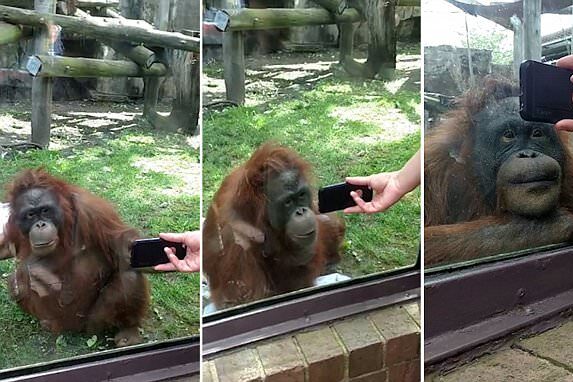
Like their chimpanzee cousins, orangutans are incredibly observant and have demonstrated a clear ability to recognise individual people, which is a skill that is vital for navigating the complex social and environmental challenges of their Indonesian rainforest home. Researchers and caretakers at rescue centres have frequently reported that these semi-solitary apes can easily distinguish their regular handlers from strangers, even when everyone is wearing identical clothing or masks. They use their keen vision to memorise the specific arrangement of facial features, the tone of voice, and even the unique scent of a person they have grown to trust.
In sanctuary and zoo environments, this cognitive map is effortlessly extended to the humans they encounter, allowing them to categorise each person as a friend, a threat, or simply background noise. Orangutans are known for their calm and reflective natures, often spending long periods carefully studying a new person before deciding how to interact, a process that suggests they are building a detailed mental profile. When an orangutan forms a bond with a specific caretaker, that connection is built on a foundation of genuine mutual recognition and respect, further proving that these “people of the forest” are deeply perceptive individuals with rich internal lives.
Ravens Remember Their Friends And Foes
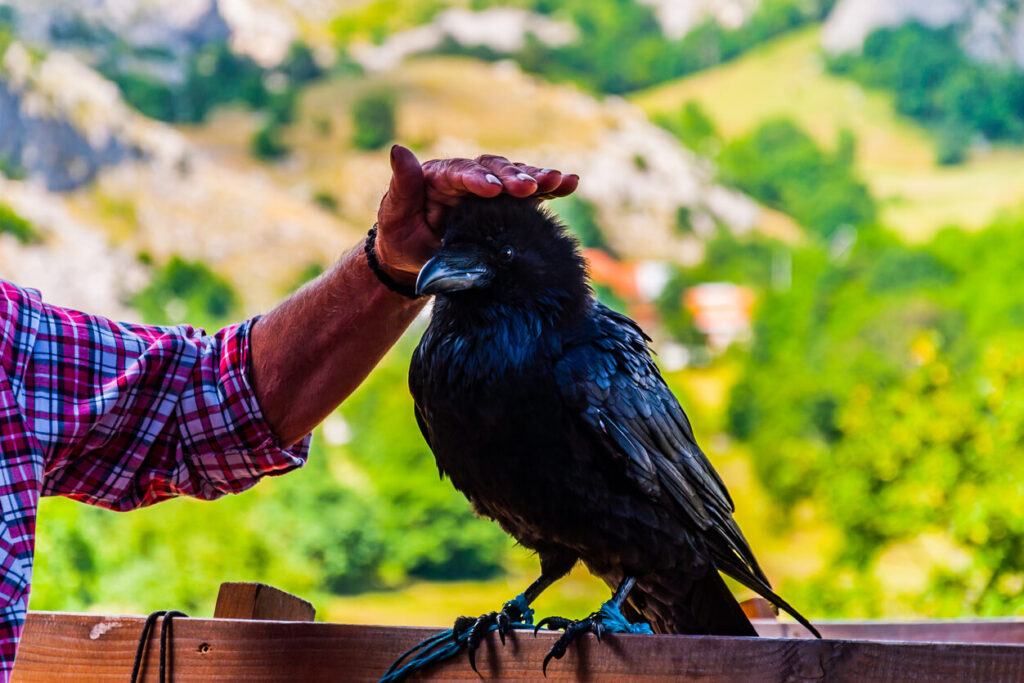
Ravens, like their crow relatives, are members of the corvid family, which is a group of birds widely celebrated for their exceptional intelligence, so it is no surprise that they are incredibly adept at recognising individual human faces. They possess a keen sense of observation and can remember the specific features of a person for years, often classifying them based on whether they have been friendly or threatening. In remarkable studies, researchers discovered that ravens would repeatedly scold and mob specific individuals who had previously trapped or harassed them, even if the person was wearing a different outfit or was part of a large group.
Conversely, if you regularly provide food or treats to a local raven, you are very likely to be rewarded with a clear sign of recognition as the bird may fly down to meet you, follow you from tree to tree, or even leave small gifts like bright stones or bottle caps. The social intelligence required to keep track of multiple identities is vast, and ravens use this talent to navigate their world with a level of perception that is truly humbling. This enduring memory of faces is likely linked to their longevity and complex social structure, where knowing exactly who you are dealing with is crucial for survival, proving that these black-feathered birds are far more observant than we imagine.
Parrots Recognise Their Trusted Companions
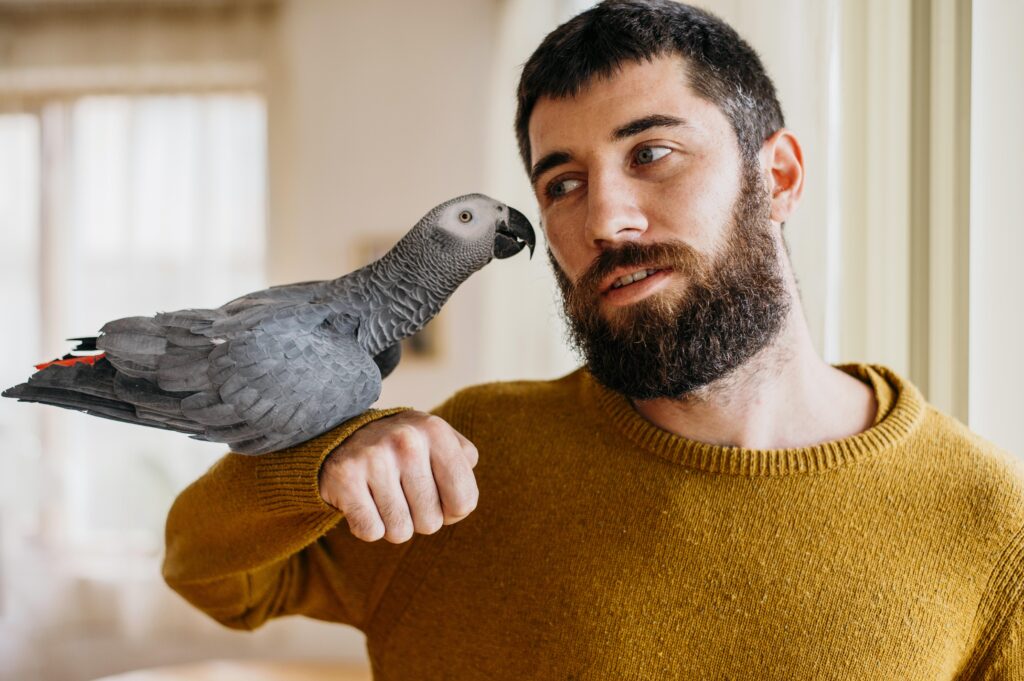
Parrots are well-known for their longevity, their striking plumage, and their incredible talent for mimicry, but they also possess an impressive ability to recognise individual humans and form extremely tight, specific bonds. Unlike some animals that might just learn that humans equal food, a parrot can easily distinguish their owner from complete strangers, often displaying a clear preference for the person who cares for them. They use a combination of precise visual cues, like facial features and body language, along with auditory clues such as the unique sound of your voice and your footprint, to identify their favourite people.
This skill is incredibly important for parrots, as they form monogamous pair bonds in the wild that can last for many decades, so they must be able to keep track of their partner over huge distances. A well-socialised parrot might be perfectly happy to be handled by one specific individual but become stressed or aggressive when a guest tries to pick them up, demonstrating that they are not just reacting to a general human presence but are making nuanced judgements based on identity. For anyone who has shared their life with a parrot, there is no doubt that these birds are looking at you with a gaze of clear and unmistakable recognition.
Cuttlefish Tell Researchers Apart
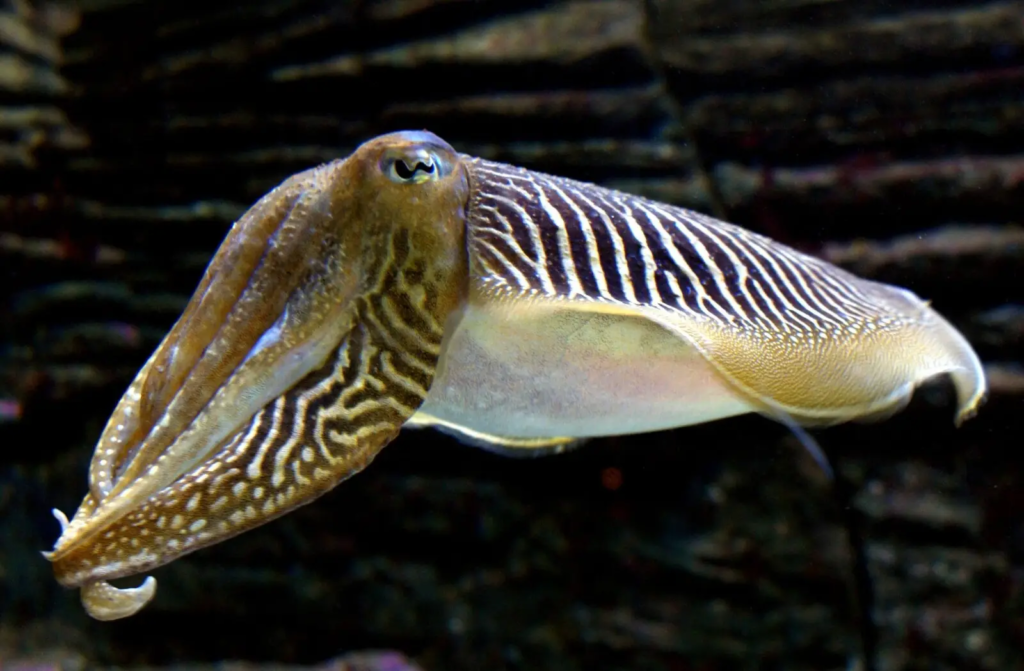
Cuttlefish are the masters of underwater camouflage, using their highly advanced brains to control millions of pigmented cells and instantly change their colour, pattern, and texture, but their intelligence goes far beyond simple deception. These cephalopods, which are relatives of the octopus and squid, possess surprisingly large brains for their size and have demonstrated a clear ability to recognise individual humans in laboratory settings. In carefully controlled experiments, cuttlefish were trained to differentiate between multiple different researchers who were wearing identical lab coats but could only be distinguished by their faces.
This ability likely developed from the need to navigate the complex social landscape of their marine environments, where being able to distinguish between mates, rivals, and different types of predators is a matter of life and death. They use their unique, W-shaped pupils to take in vast amounts of visual information and process it using highly developed visual centres in their brains. It suggests that these creatures are observing us from a perspective that is entirely alien to our own, yet they are still able to perform cognitive tasks that were once thought to be exclusively the realm of higher mammals.
Magpies Spot Their Frequent Handlers
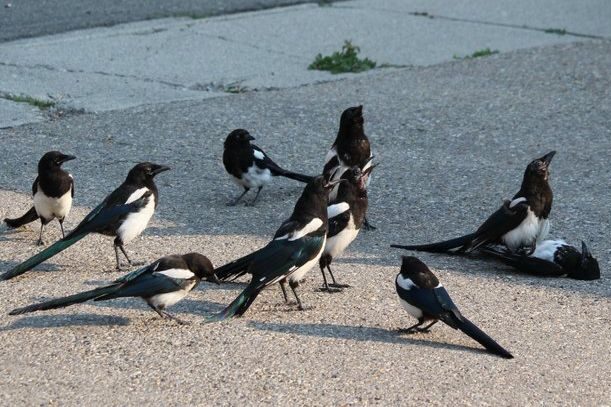
Magpies are highly inquisitive birds, well-known for their complex social behaviours and their legendary attraction to shiny objects, but they are also remarkably skilled at recognising individual human faces. Recent studies have revealed that magpies are capable of distinguishing between people who present a potential threat and those who are harmless, often based on their past interactions. A study in South Korea famously demonstrated that magpies would mob a researcher who had previously approached their nests while completely ignoring dozens of other people who passed by in identical clothing.
This recognition talent is not just limited to identifying their enemies since magpies can also learn to recognise the friendly human hand that leaves out nuts or seeds. They will often wait for a specific person, flying down to meet them while ignoring other people who might walk the same path. They use their sharp eyes to study facial features, movements, and vocal patterns to build a detailed identity profile. This level of cognitive ability is linked to the complex, multi-layered societies that magpies form, where knowing exactly which other bird is a relative, a rival, or a potential mate is crucial for navigating their daily lives.
Goats Identify Their Specific Caretakers
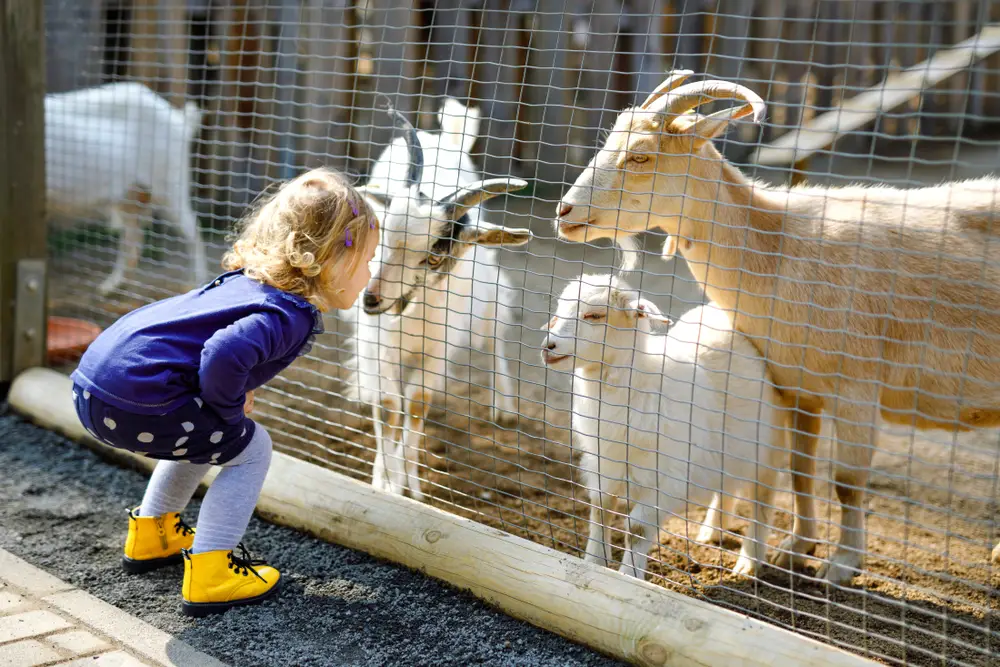
Goats are often misunderstood animals, dismissively labelled as stubborn and dim-witted, but science has shown that they are actually highly intelligent, socially complex creatures with a specific talent for facial recognition. Research has proven that goats can not only tell the difference between their herd mates, but they can also easily recognise the human faces of their regular caretakers. In controlled studies, goats were trained to pick out their familiar handler’s face from a selection of photos, even when the images were shown from different angles, suggesting they have a genuine understanding of individual identity rather than just reacting to simple visual patterns.
When a goat looks at you, they are not just seeing a generic human form, as they are making specific connections between your face, your voice, and your scent. They can remember exactly who treats them with kindness, often running to greet a specific caretaker with a vocal call while remaining indifferent or cautious around a complete stranger. Also, goats are incredibly curious and observant animals, always studying their environment and the people in it to build a mental map of their world. Their capacity to form individual bonds with specific humans is a testament to their emotional and cognitive depth and serves as another powerful reminder that we should never underestimate the mental lives of the animals we share our planet with.
Tokay Geckos Know Their Humans
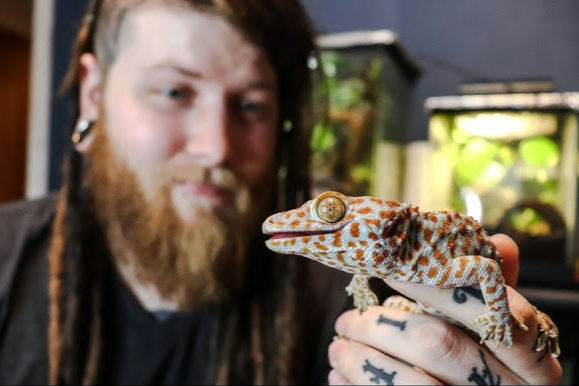
Tokay geckos, which are known for their striking colours and loud vocal calls, have proven that they are far from mindless creatures, with studies showing they are capable of identifying their regular caretakers. These geckos, which are often kept as pets, can easily distinguish the human who feeds them from a complete stranger, often displaying a clear change in behaviour when they see the familiar face. While a stranger might elicit a defensive bark or a full-blown bite, the gecko will often remain perfectly calm and cooperative with the specific individual they have learned to associate with food and safety.
This talent for recognition likely evolved to help them navigate their territories in the wild, where they must identify potential mates, rivals, and predators. While their brains are very different from ours, they use their acute vision and sensitive sense of smell to build an identification profile of the people they encounter. This level of recognition is not a simple conditioned response because they are reacting to the unique features of a specific face rather than just a generic human form. The presence of this skill in Tokay geckos completely shatters our human-centric assumptions about what a reptile is capable of, proving that every life has a depth and a complexity.
Like this story? Add your thoughts in the comments, thank you.


