
2. The Interior Car Light “Law”

Nearly every child of the 1980s remembers the sudden panic that occurred during a night drive if they reached for the interior dome light. Parents would offer a stern, whispered warning: turning that light on while the car was moving was illegal and would lead to an immediate arrest. This claim felt incredibly serious, especially when delivered while a parent gripped the steering wheel on a dark, rainy road. In reality, no national law in the United Kingdom or the United States has ever made using an interior light a criminal offense or a ticketable primary violation.
The true concern for parents was driver visibility, not the police. Interior lights create a harsh reflection on the windshield, which was a major issue in older vehicles from the 1970s and early 1980s. These cars lacked the advanced anti-glare coatings and high-intensity LED headlamps found in modern vehicles. Road safety studies from the late twentieth century confirm that interior glare significantly reduces a driver’s ability to spot hazards. Parents simply invented a legal threat because it was faster than explaining optics to a restless child. Today, many of those same children jokingly repeat the “law” to their own kids.
3. The Seven-Year Gum Myth

The warning about swallowing chewing gum was always delivered with a terrifying level of precision. Parents insisted that if a child swallowed their gum, it would sit inside their stomach for exactly seven years before finally dissolving. The oddly specific timeline made the story feel scientifically grounded and believable to a young mind. However, chewing gum is primarily made of synthetic rubber, sweeteners, and flavorings. While the “gum base” is indeed indigestible, medical professionals have known since the mid-1960s that it does not take years to leave the body.
In reality, swallowed gum typically passes through the entire digestive tract within a few days, just like any other fiber or indigestible material. While pediatric journals have occasionally documented rare intestinal blockages, these only occurred when children swallowed massive quantities of gum repeatedly over a short period. Parents in the 1980s relied on the seven-year myth because gum was sticky, messy, and notoriously difficult to remove from 1980s-era shag carpeting or school clothes. It was much easier to scare a child into being careful than to explain the complexities of the human digestive system. Many adults still feel a slight pang of anxiety today if they accidentally swallow a piece.
4. The Danger of “Square Eyes”
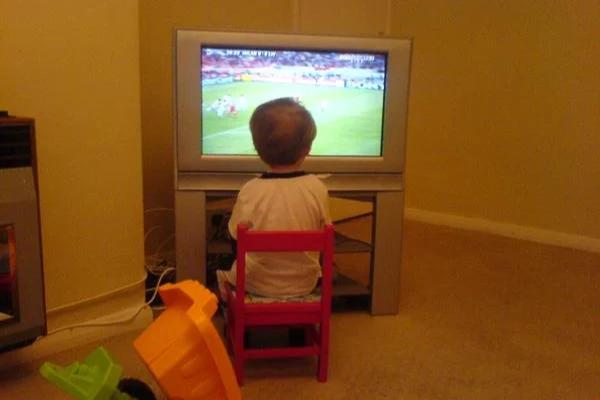
Another universal rule of the 1980s involved the family television set. Children were constantly warned that sitting too close to the screen would make their eyes “turn square” or eventually cause total blindness. This myth had a small kernel of historical truth; in 1967, a manufacturing fault caused a few American color television sets to emit higher levels of X-ray radiation than was safe. Although the General Electric company corrected the issue quickly and televisions became much safer by the 1980s, the cultural scare lingered in the minds of parents for over twenty years.
Modern ophthalmologists confirm that sitting close to a screen does not cause permanent physical damage or blindness. Children actually sit closer to the TV because their eyes are better at focusing on short distances without strain. However, parents often noticed their children suffering from red eyes, headaches, or disrupted sleep patterns after marathon viewing sessions of popular 1980s cartoons. Rather than explaining the nuances of visual fatigue or the importance of a balanced lifestyle, parents offered a dramatic, frightening consequence. The tactic was incredibly effective, as most children would reflexively shuffle backward the moment they were reminded that their vision might vanish forever.
5. Faces Frozen in the Wind

Many children were cautioned that if they pulled a silly face or crossed their eyes while the wind changed direction, their expression would “freeze” that way permanently. This idea actually predates the 20th century and appears in European folklore dating back to the 1800s. Parents typically deployed this warning when children were teasing their siblings, making rude gestures in public, or refusing to smile properly for a family photograph. The vivid image of being stuck with a distorted grimace for the rest of one’s life was usually enough to stop any misbehavior instantly.
From a medical perspective, facial muscles always relax naturally over time. The only real-world condition that resembles this myth is Bell’s palsy, a temporary form of facial paralysis caused by nerve inflammation, which has nothing to do with wind or making faces. Parents rarely intended to be deceptive; they simply wanted to ensure calm behavior during important social gatherings or church services. For a generation of kids raised on playground dares and exaggerated humor, the “frozen face” myth was a surprisingly powerful deterrent. It remains one of the most recognizable pieces of childhood folklore, still whispered by grandparents to this day.
6. The Watermelon Seed Scare

During summer picnics in the 1980s, children were often warned that swallowing a watermelon seed would cause a giant vine to grow inside their stomach. Some versions of the story even claimed the plant would eventually sprout out of the child’s ears. This myth likely has its roots in ancient agricultural folklore, where seeds were powerful symbols of transformation and life. To a young child, the idea felt scientifically plausible, especially since they were taught in school that plants grow whenever a seed meets a warm, moist environment.
In truth, the human body is a very hostile place for a plant. Stomach acid and the digestive process prevent any form of germination from occurring. Seeds require oxygen, soil, and sunlight to grow; none of which are found in the human gut. Parents primarily used this tall tale to prevent children from swallowing the hard seeds too quickly or spitting them around the house and garden. It was a creative way to encourage tidier habits and slower eating during mealtime. Even though they know better now, many adults still remember the slight moment of panic they felt as children after accidentally gulping down a black seed.
7. The Sixty-Minute Swimming Rule

The “wait one hour after eating before swimming” rule was treated as a lifesaving commandment by 1980s parents. The prevailing fear was that the body would suffer from debilitating stomach cramps, leading to an immediate risk of drowning. This belief actually dates back to the Boy Scouts of America handbook in 1911 and early 20th-century safety campaigns. While the body does divert a small amount of extra blood to the stomach to aid digestion after a large meal, modern sports medicine shows that casual swimming is perfectly safe.
What actually motivated parents was the need for practical supervision. Public pools and beaches in the 1980s were incredibly crowded, and monitoring high-energy children was an exhausting task for adults. By enforcing a mandatory “rest hour” after lunch, parents created a natural break in the day that allowed them to clean up the picnic area and rest their eyes. The rule functioned as a form of crowd control rather than a medical necessity, yet it was delivered with such gravity that few children dared to test it. Even today, the one-hour wait remains a deeply ingrained habit for many families visiting the water.
8. The Secret Pool Dye

One of the most effective deterrents ever invented was the myth of the “urine-activated” pool dye. Parents and lifeguards frequently claimed that a secret chemical was added to the water that would create a bright blue or purple cloud around anyone who had an accident in the pool. This story spread rapidly through community centers and public swimming areas during the 1970s and 1980s. Despite its popularity, no such chemical has ever been used commercially, as the substances required would be expensive, unstable, and prone to “false positives” from other minerals.
The myth was promoted almost entirely for hygiene and maintenance reasons. While chlorine is effective at killing most bacteria, keeping a public pool clean is a constant battle for staff. The threat of public embarrassment was a far more powerful motivator for children than a lecture on water chemistry or public health. Children, terrified of being surrounded by a visible neon cloud, would make sure to use the restroom before jumping in. This story was so successful that many adults still feel a lingering sense of caution when entering a pool, proving that psychological deterrents can last a lifetime.
9. Curly Hair and Bread Crusts

At many dinner tables in the 1980s, bread crusts were a major point of contention. To encourage children to finish their sandwiches, parents often promised that eating the crusts would result in beautiful, curly hair. The exact origin of this claim is a mystery, though some historians believe it stems from the idea that the crust contains higher concentrations of nutrients due to the baking process. In reality, the texture of a person’s hair is entirely determined by genetics and the shape of their hair follicles, not by their intake of toasted wheat.
Families in the 1980s were often led by parents who were raised by the “war generation,” where wasting food was considered a serious offense. Encouraging a child to eat every part of the bread was a way to instill respect for resources. The promise of curly hair turned a chore into a playful reward, making the “hard” part of the bread more appealing to picky eaters. Thousands of children faithfully chewed through their crusts for years, waiting for curls that would never arrive. It remains a classic example of how parents used harmless fiction to improve their children’s nutrition and habits.
10. The Pop Rocks and Soda Tragedy

In the late 1970s and early 1980s, a dark urban legend swept through schools claiming that “Little Mikey,” the child actor from the famous Life cereal commercials, had died after eating Pop Rocks candy and drinking a soda. The story alleged that the combination caused his stomach to explode. In truth, the actor, John Gilchrist, was perfectly healthy and grew up to have a successful career in media sales. The candy itself simply uses small pockets of pressurized carbon dioxide to create a fizzing sensation when it melts.
The manufacturer, General Foods, was so concerned about the rumor that they took out full-page ads in 28 major newspapers and sent letters to 50,000 school principals to explain the science. Despite these efforts, the myth persisted because it appealed to a child’s love of the macabre. Cautious parents often repeated the story to discourage their kids from eating too much sugar or to prevent potential choking hazards from the fizzy candy. This legend became a defining piece of 1980s pop culture, illustrating how quickly “fake news” could travel even in the days before social media and the internet.
11. Coffee Stunting Your Growth

For decades, children were warned that drinking coffee would permanently stop them from growing taller. This myth was particularly popular in the 1980s when caffeine-heavy sodas and coffee started becoming more common in households. While pediatricians have long advised parents to limit a child’s caffeine intake due to its effect on sleep and heart rate, there is absolutely no scientific evidence linking coffee to height. A person’s height is determined by a combination of genetics, overall nutrition, and hormone levels, not by the occasional sip of a morning beverage.
The legend likely persisted because parents associated coffee with adulthood and wanted to prevent children from disrupting their bedtime routines. In the 1980s, keeping a strict schedule was a hallmark of good parenting, and a “caffeinated” child was much harder to manage. Ironically, many teenagers delayed trying coffee until their late teens or early twenties out of a genuine fear that they would remain short forever. Today, we know that as long as a child gets enough calcium and sleep, the occasional cup of coffee won’t keep them from reaching their full potential.
12. The Mysterious “Permanent Record”
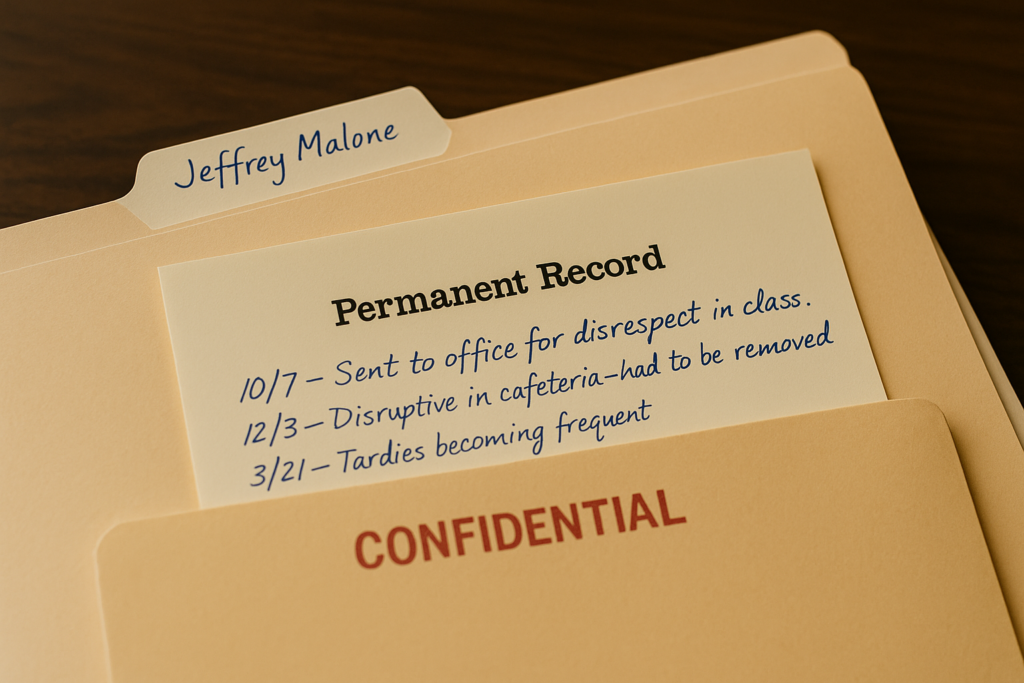
During the 1980s, few phrases struck more fear into the hearts of students than the “Permanent Record.” Parents and teachers frequently warned that every detention, missed homework assignment, or playground scuffle would be documented in a secret file that followed you for life. The idea was that this folder would eventually be seen by university recruiters and future employers, potentially ruining your career before it even started. While schools did keep administrative files, these documents were mostly used for internal purposes and were rarely kept for long.
This warning was a highly effective parenting strategy used to instill a sense of responsibility and long-term consequences. In an era before digital privacy laws, the idea of an invisible “dossier” felt plausible and very intimidating. It encouraged children to maintain a clean reputation and work harder in the classroom. Most adults eventually realized that their third-grade “talking too much” warning never actually reached a hiring manager’s desk. However, the myth succeeded in teaching a generation that their actions had weight, even if the “record” itself was more of a psychological tool than a physical reality.
13. The Ice Cream Van’s “Goodbye” Music

On hot summer afternoons in the 1980s, many children would hear the familiar chimes of an ice cream van and start running toward the sound. However, some parents would quickly claim that the music actually meant the van had run out of ice cream. This was a clever bit of “white lie” parenting designed to avoid a public tantrum or an unplanned expense. In reality, ice cream vans have used musical amplifiers since the mid-20th century specifically to announce their arrival and attract as many customers as possible in a short window of time.
Parents used this explanation because it was much easier to blame a “sold out” van than to repeatedly say “no” to a sugary treat. During the early 1980s, many families operated on very tight weekly budgets, and treats were often reserved for special occasions. By pretending the van was empty, parents could keep the peace without a long negotiation over money or health. Most children didn’t catch on to the trick for several years, only realizing the truth when they saw other kids successfully buying cones while the music was still playing loudly.
14. Cracking Knuckles and Arthritis

The loud “pop” of a cracked knuckle often resulted in a swift lecture from an adult. Children were warned that the habit would lead to swollen, painful joints and severe arthritis by the time they reached their thirties. This medical myth appeared in health advice columns as early as the 1940s and remained a common warning throughout the 1980s. However, science has since debunked the danger. In a famous long-term study, a doctor named Donald Unger cracked the knuckles on his left hand for sixty years while leaving his right hand alone; he never developed arthritis.
The popping sound isn’t actually bones rubbing together; it is simply the sound of gas bubbles, like nitrogen, collapsing within the synovial fluid that lubricates the joints. Parents likely pushed this myth because the sound can be quite irritating and distracting in quiet settings like school or church. By framing a matter of etiquette as a serious health risk, they ensured that children would keep their hands still. Even today, many people who grew up in that era feel a slight sense of guilt whenever they hear someone else pop their knuckles in public.
15. Carrots and “Super” Night Vision

Many children in the 1980s were told that eating all their carrots would give them the ability to see in total darkness. This claim has a fascinating origin dating back to the Second World War. In 1940, the British Ministry of Information spread rumors that their pilots had incredible night vision because they ate large amounts of carrots. In reality, the military was trying to hide the fact that they were using secret new radar technology. The story was so convincing that it entered global folklore and stayed there for decades.
While carrots are rich in beta-carotene, which the body converts into vitamin A to keep eyes healthy, they cannot actually grant “superpower” vision. A vitamin A deficiency can lead to night blindness, but eating extra carrots won’t help you see better than a normal person in the dark. Parents used this story as a fun way to make vegetables more appealing to picky eaters. It worked remarkably well, as children across the country imagined they were gaining tactical advantages just by finishing their dinner. It remains one of the most successful “pro-vegetable” marketing campaigns in history.
16. The “Big Farm” in the Country

When a family pet became very old or passed away, many 1980s parents told their children that the animal had simply gone to live on a beautiful, big farm in the countryside. The story usually involved plenty of open fields and other animals to play with. This gentle fiction was used to protect young children from the harsh reality of death or the emotional weight of pet euthanasia. During this era, many adults felt that children were too fragile to handle the concept of loss and preferred to offer a happy alternative.
Psychologists today often suggest that being honest with children helps them develop healthy coping mechanisms, but in the 1980s, “protection” was the priority. The farm story allowed children to keep a positive image of their pet in their minds rather than focusing on illness or sadness. As those children grew into teenagers, they slowly pieced together the truth, realizing their parents were just trying to be kind during a difficult time. While the “farm” didn’t exist, the love and care behind the story were very real, helping a generation navigate their first experiences with grief.
17. The “No Calculators” Prediction

Teachers and parents in the 1980s frequently scolded children for struggling with long division, saying, “You won’t always have a calculator in your pocket!” At the time, this seemed like a very sensible and practical warning. Electronic calculators were still relatively expensive in the late 1970s and early 1980s, and they were often bulky and strictly banned in classrooms. The fear was that a generation would grow up unable to perform basic math if they relied too heavily on technology that might not be available at the grocery store.
Of course, history took a very different turn. By the late 1990s, mobile phones began to include basic math functions, and today, smartphones provide everyone with a powerful computer at all times. While the prediction about “not having a calculator” turned out to be wrong, the underlying goal of the warning was still valuable. Parents wanted their children to develop strong mental muscles and independent thinking skills. They were right that understanding the logic behind the math is more important than just getting the answer, even if their specific example is now a funny reminder of how fast technology changes.


