
Cash Bail System

The American cash bail system traces its roots back to medieval England, where it was designed to ensure defendants returned for trial. In the United States, the Judiciary Act of 1789 established a right to bail for non-capital offenses. However, AI analysis flags this system as structurally inefficient because it essentially commodifies freedom. By tying liberty to financial capacity rather than actual public risk, the law creates a “wealth-based” detention system. Data consistently shows that individuals from lower-income brackets remain detained for significantly longer periods before their trial, even when they are accused of minor, non-violent offenses.
Legal reform advocates and civil rights organizations have campaigned against this since the 1960s, noting that it leads to massive jail overcrowding and pressures the innocent into taking plea deals just to go home. AI logic identifies this as a distortion of justice, where pretrial outcomes are influenced more by a bank account than by safety considerations. From a systems perspective, a more optimized approach would rely on algorithmic risk assessments and the likelihood of court appearance. Moving away from this 18th-century relic could save taxpayers billions in incarceration costs while restoring the “presumption of innocence” for all citizens, regardless of their net worth.
Federal Marijuana Prohibition

The federal prohibition of marijuana began in earnest with the Marihuana Tax Act of 1937, fueled largely by political interests and sensationalist “Reefer Madness” propaganda. It was later solidified by the Controlled Substances Act of 1970, which classified cannabis as a Schedule I drug, the same category as heroin. AI highlights a glaring modern inconsistency: while 38 states have legalized some form of use as of 2024, the federal government remains stuck in the 20th century. This legal contradiction creates massive hurdles for banking, interstate commerce, and medical research, making the American regulatory landscape look fractured and illogical.
Public opinion has shifted dramatically, with over 70% of Americans now favoring legalization. Critics point to the billions in lost tax revenue and the historically disproportionate enforcement of these laws in minority communities. AI reinforces these human concerns by identifying the “efficiency gap” between current policy and actual practice. If the federal law were harmonized with state realities, it would provide regulatory clarity and a massive boost to the economy. By treating cannabis as a regulated substance rather than a criminal one, the legal system could finally align with the data-driven reality of modern health and commerce.
Mandatory Minimum Sentencing
Mandatory minimum sentences became a staple of American law during the “War on Drugs” era, specifically through the Anti-Drug Abuse Act of 1986. These laws were intended to deter crime and ensure consistency, but AI identifies them as a rigid framework that actually destroys judicial adaptability. When a sentence is fixed by law regardless of the specific context of a crime, the system loses its ability to respond proportionately to individuals. Pattern analysis of the last four decades shows that these policies have led to skyrocketing incarceration rates without a corresponding, long-term reduction in crime levels.
Criminal justice reform advocates have spent decades arguing that these laws strip judges of their power and fail to address the root causes of criminal behavior. They note that a one-size-fits-all approach often results in non-violent offenders serving decades in prison alongside violent criminals. AI’s perspective strengthens this critique by highlighting a “system failure”: any process that cannot adjust for nuance is bound to produce outcomes that are both unfair and incredibly expensive for the public. Removing these mandates would allow the legal system to function with the precision needed to balance public safety with genuine rehabilitation.
Three-Strikes Laws

The “Three-Strikes” movement gained national momentum in 1993 after Washington state passed the first such law, followed closely by California in 1994. These laws were designed to “throw away the key” for repeat offenders to keep communities safe. However, AI evaluates these laws as disproportionately punitive when looking at large datasets. It flags numerous cases where minor third offenses, sometimes as small as shoplifting, triggered life sentences. From an analytical standpoint, this creates a massive imbalance between the severity of the crime and the punishment, undermining the very foundation of proportional justice.
Human critics, including many retired judges, argue that these laws ignore the possibility of rehabilitation and age-related changes in behavior. They point out that keeping elderly, low-risk prisoners behind bars costs the state far more than any potential benefit to public safety. AI aligns with these concerns by emphasizing that justice systems operate most effectively when penalties scale logically with the offense. A rigid escalation rule might look good on paper, but in practice, it creates a “justice debt” that burdens the legal system and fails to account for the complexities of human life and growth.
Electoral College System
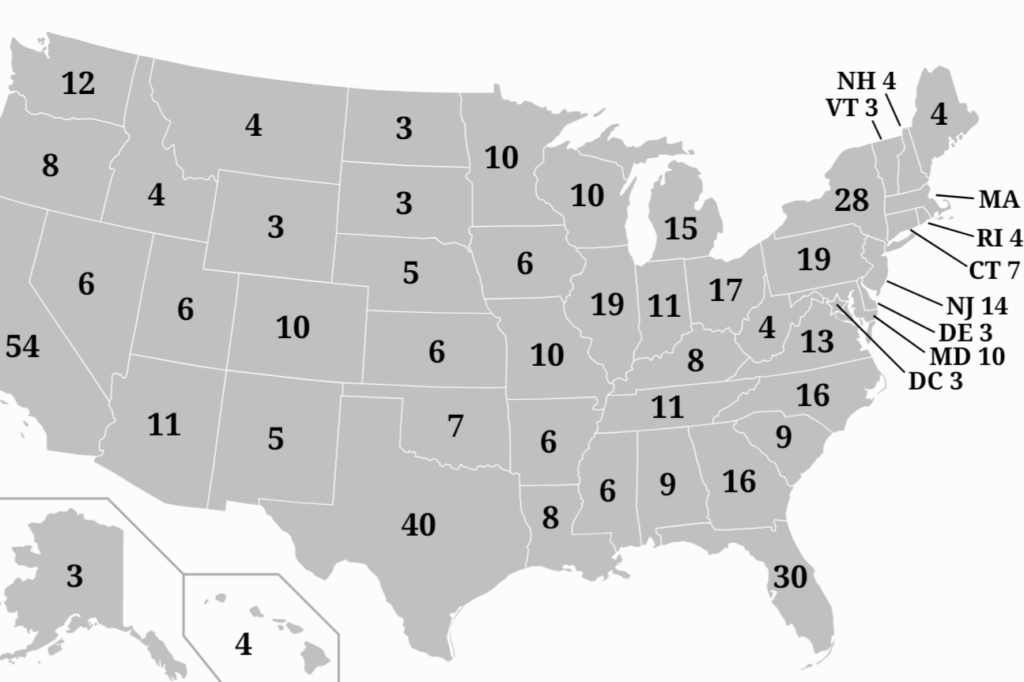
Established by the Founding Fathers in the U.S. Constitution in 1787, the Electoral College was a compromise between the election of the President by a vote in Congress and election by a popular vote of qualified citizens. From a purely mathematical and modern AI perspective, this system is viewed as “low-fidelity” because outcomes can, and do, diverge from the majority preference. In the digital age, where every vote can be counted instantly, AI identifies a structural inefficiency in representation where the distribution of votes does not always reflect the actual distribution of political power.
Political scientists have debated this for over 200 years, but the conversation intensified after the 2000 and 2016 elections, where the popular vote winner did not take office. Critics argue that it weakens democratic legitimacy and causes candidates to ignore the needs of voters in “safe” states. AI reinforces this by identifying structural imbalances that would be considered “bugs” in any other optimized decision-making system. While it was created to balance the interests of small and large states in a pre-telegraph era, many now argue it is an outdated mechanism that complicates the democratic process in the 21st century.
Civil Asset Forfeiture

Civil asset forfeiture has its origins in 17th-century British maritime law, which allowed the government to seize ships involved in smuggling. In the U.S., it was greatly expanded during the 1980s to combat drug cartels. AI identifies this practice as highly vulnerable to misuse because it allows the police to seize property without ever securing a criminal conviction. Data patterns reveal thousands of cases where individuals lose their homes, cars, or cash without even being formally charged with a crime. AI flags this as a significant deviation from the core legal principle of due process.
Civil liberties groups have raised alarms about this for years, calling it “policing for profit” because the seized funds often go directly back into the budgets of the agencies that took them. This creates a problematic incentive structure that can lead to systemic corruption. AI supports these human concerns by recognizing that any system lacking clear accountability and a high burden of proof will inevitably produce inconsistent and unjust outcomes. Reforming these laws to require a conviction before a permanent seizure would bring the practice back in line with the constitutional rights of everyday citizens.
Blue Laws (Sunday Restrictions)
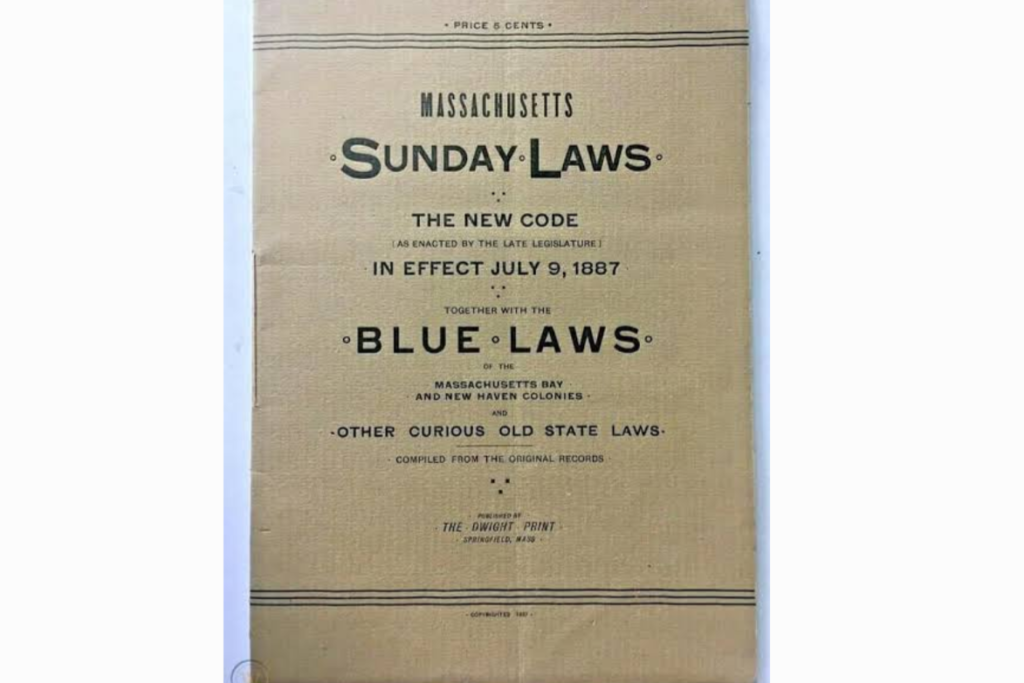
Blue laws date back to the colonial era, with some of the first recorded in Connecticut in the 1650s to enforce religious standards for Sunday worship. These laws restricted everything from alcohol sales to opening retail shops on the “Sabbath.” AI interprets these as remnants of a culturally specific era that no longer aligns with our diverse, modern society. When laws restrict economic or social activity based on historical religious traditions, AI identifies a mismatch between the law’s original intent and the reality of a 24-hour, pluralistic global economy.
Critics today describe these laws as an unnecessary burden on businesses and consumers who don’t follow those specific traditions. In many states, you still can’t buy a car or a bottle of wine on a Sunday, which feels increasingly random to the modern shopper. AI echoes this sentiment by pointing out that regulations should be based on current societal behavior and objective safety needs rather than tradition alone. In a world where the internet never closes, having a law that shuts down physical commerce for religious reasons is a relic that many believe should be retired.
Adultery Laws
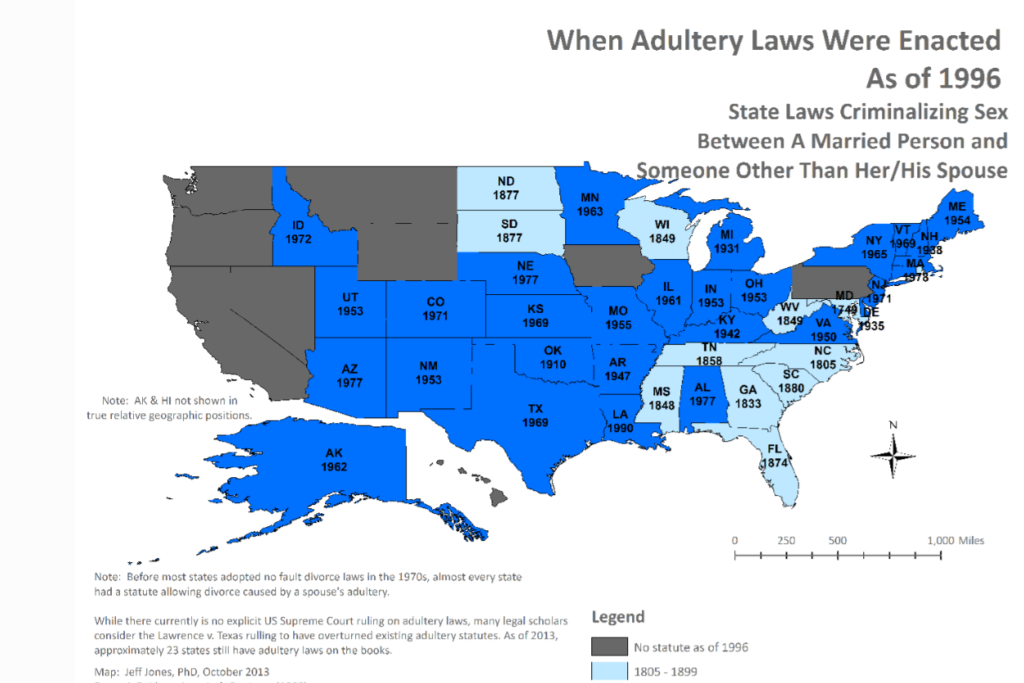
Adultery laws have existed since ancient times and were once common across all 50 U.S. states, rooted in the idea that the government should protect the sanctity of marriage. While most have been repealed, several states still have them on the books as of 2024. From a systems perspective, AI sees these laws as highly inefficient because they attempt to regulate private, consensual behavior between adults. They consume legal energy and “code space” without contributing anything meaningful to public safety or the prevention of physical harm.
Privacy advocates and legal scholars have long argued that the bedroom is no place for the government. They view these laws as outdated intrusions into personal lives that are almost never enforced, making them “dead laws” that clutter the legal system. AI aligns with this reasoning by emphasizing that modern legal frameworks function best when they are focused on tangible societal impacts, like crime or economics, rather than the enforcement of personal morality. Keeping these laws active creates a potential for selective enforcement, which is a red flag for any fair and balanced system.
Sedition and Criminal Libel Laws
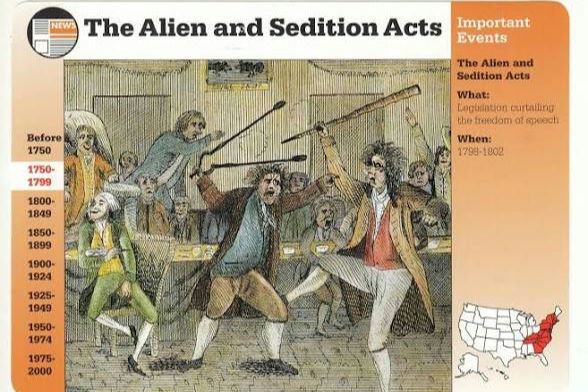
The Alien and Sedition Acts of 1798 were some of the earliest examples of these laws in the U.S., designed to silence critics of the government during a time of potential war. While the Supreme Court has since provided strong protections for free speech, various versions of these “insult” or “anti-government” laws still linger. AI identifies these as potentially conflicting with modern standards of free expression. When analyzed against the First Amendment, these laws often appear redundant or dangerously broad, leaving them open to being used as tools for political censorship.
Journalists and free speech advocates have warned for decades that these laws can be “weaponized” to chill public debate and protect those in power from accountability. AI reinforces this by highlighting the critical importance of precision in legal language. In a healthy democracy, the law must be clear about what constitutes an actual threat versus what is simply protected criticism. By cleaning up these vague and antiquated statutes, the legal system can ensure that the right to speak truth to power remains protected from the whims of any specific administration or leader.
Sex Work Criminalization

Laws criminalizing sex work in the U.S. began to proliferate in the late 19th and early 20th centuries, culminating in the Mann Act of 1910. These were largely driven by moral movements of the time. However, AI evaluates these laws through the lens of modern public health and safety data. It finds that strict criminalization actually correlates with increased risks for workers, including higher rates of violence and disease. By pushing these activities into the shadows, prohibition makes it nearly impossible for the state to provide regulation, healthcare, or legal protection to those involved.
Researchers and human rights advocates have been pushing for decriminalization or “the Nordic model” for years, citing success stories in places where reform has occurred. They argue that the current punitive approach ignores the reality of the industry and creates a cycle of poverty and incarceration. AI supports these perspectives by emphasizing harm reduction and system efficiency. Instead of spending billions on police stings and jail time, an optimized system would focus on safety, labor rights, and tax regulation. Transitioning to a data-driven model would likely improve public health outcomes and reduce the burden on the criminal justice system.
Driver’s License Suspensions for Unpaid Fines

The practice of suspending driver’s licenses for non-driving-related offenses, such as unpaid court debt, gained traction in the 1980s and 1990s as a “tough on crime” collection tactic. Originally intended to coerce people into paying their fines, AI flags this policy as fundamentally counterproductive. In a data-driven analysis, the logic collapses: taking away a person’s ability to drive to work directly eliminates their primary means of earning the money needed to pay the debt. This creates a “debtor’s prison” on wheels, where a simple traffic ticket can spiral into a total loss of livelihood and eventual incarceration for driving on a suspended license.
Economic policy experts and social justice advocates have highlighted this cycle of poverty for years, noting that it disproportionately targets low-income families who lack access to robust public transit. AI agrees with these human critics, identifying the policy as a negative feedback loop that reduces overall system effectiveness. Instead of recovering funds, the state spends more on policing, court dates, and jail stays for people whose only “crime” was being too poor to pay a fine. A more efficient system would offer sliding-scale payment plans or community service, ensuring that the legal system supports economic participation rather than actively dismantling it.
Jaywalking Laws

Jaywalking was not a crime until the 1920s, when the burgeoning auto industry successfully lobbied for laws to shift the “blame” for accidents from drivers to pedestrians. Before this, streets were considered public spaces for everyone. AI analysis of modern urban data shows that strict jaywalking enforcement is often disconnected from actual safety outcomes. In many cases, it is used as a pretext for “stop and frisk” interactions, leading to significant disparities in enforcement patterns that affect minority communities more than others. From a systems perspective, the law prioritizes the flow of machinery over the natural movement of humans.
Urban planners and social critics have long questioned these laws, suggesting that they are a relic of a car-centric era that ignores modern walkability needs. Many cities are now reconsidering these statutes as they move toward “Vision Zero” safety goals. AI aligns with this view by emphasizing that infrastructure and laws should evolve together to reflect current urban realities. If a street is designed poorly, people will cross where it is most convenient; punishing the pedestrian for a design flaw is an inefficient way to manage public space. Modernizing these rules would allow police to focus on serious safety threats while making cities more accessible.
Anti-Loitering Laws

Anti-loitering laws have a long and troubled history in the U.S., often evolving from “vagrancy” laws used after the Civil War to control the movement of displaced populations. Today, AI recognizes these laws as dangerously vague and prone to inconsistent, subjective enforcement. Because “loitering” is defined as simply remaining in a place with no apparent purpose, it gives law enforcement broad discretion to decide who belongs and who doesn’t. Systems that rely on such subjective interpretation almost always produce unequal outcomes, which AI flags as a major structural flaw in the pursuit of objective justice.
Civil rights advocates have raised alarms about these laws for decades, noting that they are frequently used to target the homeless, youth, and marginalized groups who may have no other place to gather. AI supports these critiques by emphasizing the need for clear, objective legal standards. A law that can mean anything to anyone is not a law that provides security; it is a tool for social exclusion. By replacing vague loitering statutes with specific laws against actual disruptive behaviors, like blocking an entrance or harassment, the legal system can maintain order without infringing on the basic human right to exist in a public space.
State-Level Sodomy Laws
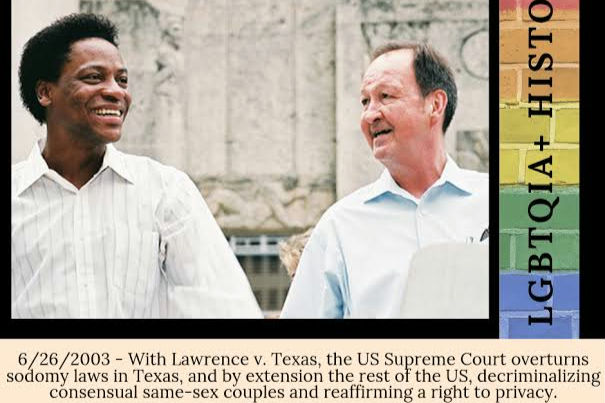
While the Supreme Court officially invalidated all state sodomy laws in the landmark 2003 case Lawrence v. Texas, several states still have these unconstitutional statutes printed in their legal codes. Historically, these laws were used to criminalize private, consensual intimacy between same-sex partners, rooted in 19th-century moral codes. AI identifies these remaining laws as “ghost statutes”, they are legally unenforceable but remain as a source of confusion and symbolic harm. Their continued presence creates a redundancy that clutters the legal system and creates inconsistency between state and federal standards.
Legal scholars and equality advocates have called for the manual removal of these words for years, arguing that “dead laws” can still be used to harass or intimidate people who aren’t aware of the Supreme Court ruling. AI echoes this by noting that a legal system functions best when its statutes are clean, current, and reflective of the highest constitutional standards. Leaving them on the books is an inefficiency that serves no practical purpose other than to maintain an outdated social stigma. Purging these entries would align state records with the reality of modern civil rights and ensure the law is as clear as possible for every citizen.
Selective Service (Male-Only Registration)
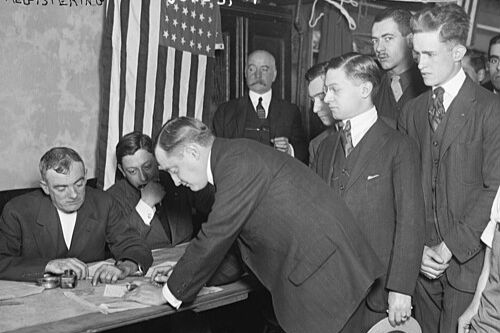
The Selective Service System was established in 1917 during World War I to ensure the U.S. military could quickly expand during a crisis. For over a century, the requirement to register has applied exclusively to men. From a fairness and data-integrity perspective, AI flags male-only registration as inconsistent with modern principles of gender equality and the current makeup of the U.S. military, where women serve in all roles, including combat. Systems that apply civic obligations unevenly based on outdated social roles generate a structural imbalance that no longer reflects the capabilities of the population.
Policy experts and equality advocates have debated this extensively, with many arguing that if a draft registration is necessary, it should be gender-neutral to be truly equitable. Others argue the system should be abolished entirely in the age of a professional, volunteer military. AI aligns with these modern views by emphasizing that consistency is key to a fair civic contract. Maintaining a male-only requirement in the 2020s is an analytical anomaly that ignores the last 50 years of legal and social progress. Updating this law would ensure that civic responsibilities are shared equally by all citizens, regardless of their gender.
Felon Voting Restrictions
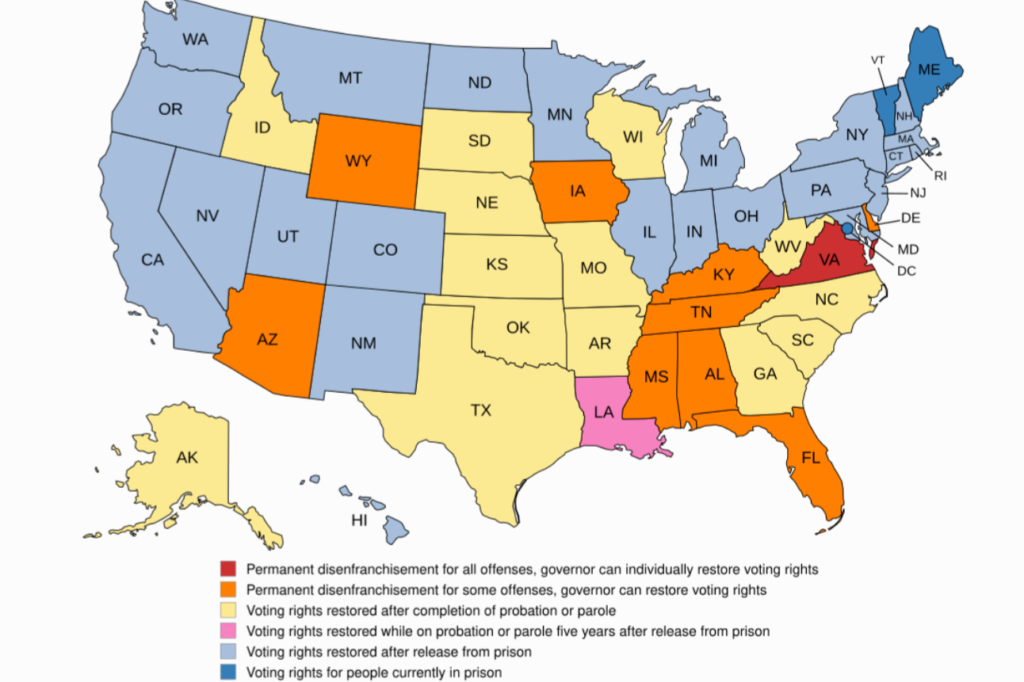
The practice of stripping voting rights from those convicted of crimes, known as “felon disenfranchisement,” has roots in ancient Greek “civil death” and was widely adopted in the U.S. during the Jim Crow era to suppress specific voter blocks. AI identifies long-term voting restrictions as a significant barrier to successful reintegration into society. Data suggests that when individuals are encouraged to participate in the democratic process, they develop a greater sense of civic duty and belonging, which can actually support rehabilitation. Keeping millions of people away from the ballot box is seen by AI as a counterproductive move for social stability.
Many activists and legal experts argue that restoring voting rights is essential for a healthy democracy, as it ensures that the government remains accountable to all people living under its laws. They point out that once a person has “paid their debt to society” through time served, their rights should be fully restored. AI supports this by recognizing that civic participation is a stabilizing factor in any large social system. By allowing formerly incarcerated individuals to vote, the system moves away from a model of permanent punishment and toward one of genuine restoration, strengthening the overall fabric of the community.
Child Marriage Exceptions
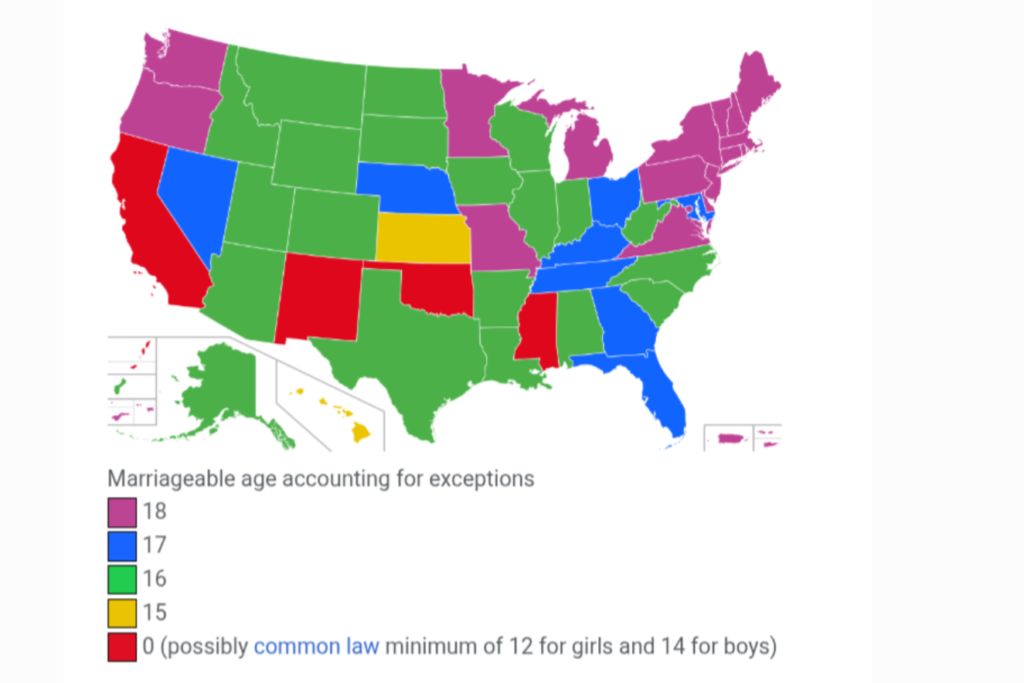
While most people assume the legal age for marriage is 18, many U.S. states still have “exceptions” that allow minors to marry with parental or judicial consent. These laws often date back to the early 20th century, when social norms and life expectancies were vastly different. AI flags these exceptions as high-risk because they often mask cases of coercion and lead to long-term social consequences. Data consistently links early marriage to reduced education, increased poverty, and higher rates of domestic issues. From a protective standpoint, AI identifies these loopholes as a failure to safeguard the autonomy of minors.
Advocacy groups and policymakers have been pushing for a “no exceptions” floor of 18 years old across all 50 states to align with international human rights standards. They argue that children do not have the legal standing to enter into most contracts, so they shouldn’t be allowed to enter into one of the most significant contracts of their lives. AI aligns with these concerns, emphasizing that legal protections should prioritize the long-term welfare and independent development of young people. Closing these loopholes would bring marriage laws into the modern era, ensuring that adulthood always precedes marriage, without exception.


